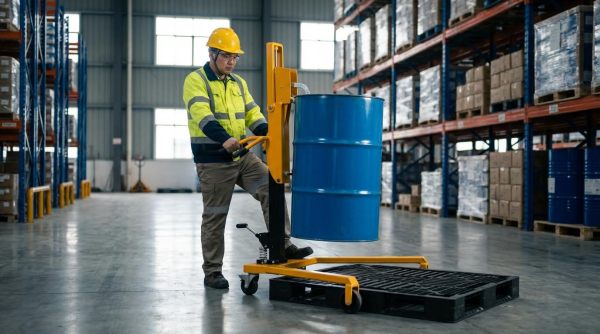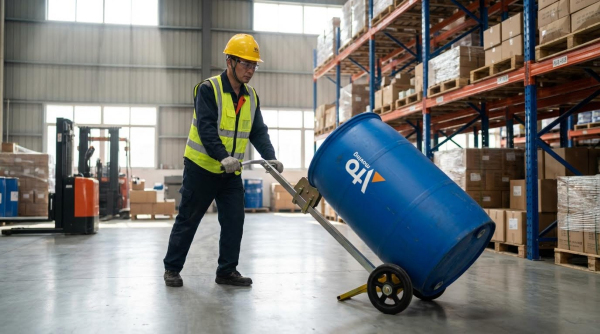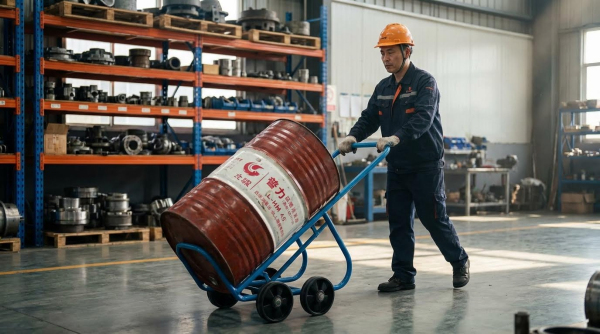
Knowing how to handle hazardous material drums safely protects people, equipment, and the environment. This guide walks through regulatory duties, engineering controls, and day‑to‑day procedures for storage, movement, and transfer of hazardous drums. You will see how layout, manual pallet jack, and emergency planning work together to reduce spill, fire, and exposure risks. Use it as a practical framework to review your current drum operations and close safety gaps before incidents occur.
Regulatory Basics And Risk Profile For Hazardous Drums
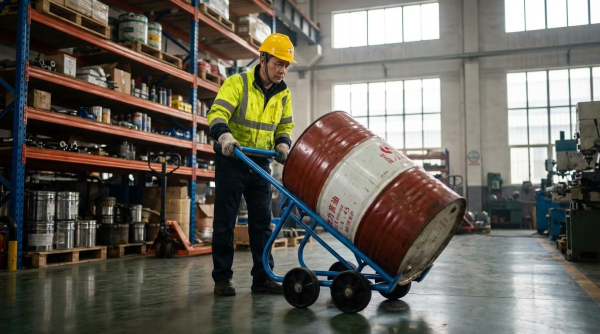
Key OSHA, EPA, And DOT rules for drum handling
Knowing how to handle hazardous material drums safely starts with understanding the regulatory framework. OSHA sets workplace safety rules for drum storage, handling, and cleanup operations, while EPA and DOT regulate environmental protection and transportation. Drums used in cleanup and waste operations must comply with OSHA, EPA hazardous waste rules in 40 CFR Parts 264–265 and 300, and DOT packaging and transport rules in 49 CFR Parts 171–178 for inspection, labeling, and shipment. This combined framework drives requirements for container selection, labeling, storage layout, and movement controls on any site using or remediating hazardous drums.
- OSHA prohibits pressurizing shipping drums and containers to remove contents to avoid rupture and release.
- Drums with flammable or toxic contents must not be stored near open flames, hot metal, or other artificial heat sources to reduce ignition risk.
- Containers of 30 gallons or more must be placed out of high‑traffic areas or protected with barriers or guards against physical impact to prevent puncture or collapse.
- Containers of 55 gallons or more with flammable or toxic liquids must be surrounded by dikes or pans enclosing at least 35% of the total volume to provide secondary containment.
OSHA also requires adequate, hazard‑appropriate fire extinguishers in the immediate area where flammable liquids or gases in drums are stored or used, and they must be ready for use at all times as part of basic fire protection. During cleanup or remediation, employers must minimize drum movement, provide salvage drums and absorbents where spills are likely, and ensure employees understand label warnings and the risks of unlabeled or buried drums to reduce exposure and incident rates. Together, these OSHA, EPA, and DOT rules define the minimum engineering and procedural controls any facility must apply when planning how to handle hazardous material drums safely.
Hazard classes, UN ratings, and drum types
Regulations classify hazardous materials into hazard classes (flammable liquids, corrosives, toxics, oxidizers, etc.), and each drum must be compatible with the material and carry the correct UN rating. UN performance‑tested drums and salvage drums are marked so operators can quickly understand their tested capabilities and limits in the field. Certified salvage drums must pass a leakproofness test for at least five minutes with no leaks, a stack test at 3 meters high with the rated load for 24 hours, a drop test from a height based on packing group, and a vibration test for 60 minutes without ruptures or leaks to ensure integrity during handling and transport. This performance testing is critical when overpacking damaged or leaking drums to maintain containment under mechanical and transport stresses.
Each approved salvage drum must display the term “SALVAGE” or “SALVAGE DRUM” and a full UN marking set, including the UN symbol, container type, material, head type, packing group, maximum gross weight, solid rating, year and country of manufacture, and manufacturer ID so users can verify suitability. In practice, safety teams should align drum type (steel, plastic, open‑head, tight‑head) with the chemical’s hazard class, then confirm UN ratings and markings match the intended use, including any salvage or overpack operations. Correct matching of hazard classes, UN ratings, and drum types is a core element of how to handle hazardous material drums safely because it directly limits the probability of leaks, reactions, and failures during normal handling or upset conditions.
Common failure modes and incident scenarios
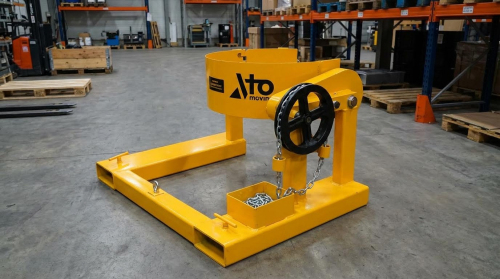
Understanding typical failure modes helps engineers and safety managers design controls that prevent drum incidents. Steel or plastic drums weighing 400–800 lb when filled can be punctured by impacts, dropped from equipment, or damaged by sharp pallet edges, which is why OSHA requires physical protection or isolation for larger containers and prohibits practices such as standing or working from drums to reduce fall and impact hazards. Heat exposure is another common trigger, as storing flammable or toxic drums near open flame or hot metal can drive internal pressure rise, venting, or explosion, which OSHA specifically prohibits for pressure vessels and drums to control ignition sources.
- Bulging, swollen, or crystallized drums can indicate internal reactions or shock‑sensitive contents; they must not be moved until containment procedures are in place to avoid catastrophic rupture.
- Damaged drums that might spill when moved must be emptied with appropriate transfer devices into sound containers or drum cart and then discarded to maintain containment.
- Improper opening without controlled pressure relief can lead to sudden venting; OSHA requires drums be opened in a way that safely relieves excess interior pressure, using remote methods or shielding when necessary to protect workers from blast and spray.
In spill‑prone areas, employers must stage drum dollies, absorbents, and fire‑extinguishing equipment for small fires, and minimize unnecessary drum movement to reduce handling‑related failures as part of spill preparedness. By designing storage, movement, and emergency procedures around these known failure modes, facilities can significantly lower the risk profile and align day‑to‑day operations with best practice for how to handle hazardous material drums safely.
Engineering Controls For Safe Drum Storage And Movement
Storage layout, diking, and secondary containment
Engineering controls for how to handle hazardous material drums safely start with a robust storage layout and containment design. Drums of flammable or toxic liquids must not be stored where they are exposed to open flame, hot metal, or other artificial heat sources that could raise internal pressure or ignite vapors. Drums and pressure vessels containing toxic or flammable liquids or gases must not be stored or used near open flames or other heat sources. For large drums, storage rows should be limited in height and depth to keep containers accessible for inspection and to reduce collapse and spill risk; for example, 55‑gallon drums are often stored in rows no more than two drums high and two drums wide to aid inspections and prevent deterioration. Recommendations for 55‑gallon drums call for storage in rows no higher than two drums and no more than two drums deep.
- Provide clear access aisles for forklifts and responders.
- Separate incompatible chemicals using distance or fire‑rated partitions.
- Locate storage away from high‑traffic impact zones, or install fixed barriers.
Secondary containment is critical for limiting the spread of leaks or ruptures. Containers of 55 gallons or more holding flammable or toxic liquids must be surrounded by dikes or pans that hold at least a defined fraction of the stored volume. For containers of 55 gallons or more, dikes or pans must enclose at least 35% of the total container volume. In practice, many facilities size containment to capture the largest single container plus a safety margin. Barriers or guards are also required where drums of 30 gallons or more could be struck by vehicles or equipment. Drums of 30 gallons or more containing flammable or toxic liquids or gases must either be placed out of traffic or protected by barriers against physical injury.
Key design parameters for drum storage areas
| Design Aspect | Typical Engineering Control |
|---|---|
| Heat and ignition sources | Minimum separation distance, non‑combustible construction, no open flames or hot work nearby |
| Containment capacity | Dikes/pans sized to at least 35% of total volume for ≥55‑gal containers, or largest container plus margin |
| Impact protection | Bollards, guardrails, or locating drums in low‑traffic zones for ≥30‑gal containers |
| Inspection access | Row height/width limits, clear aisles, lighting for label and seam checks |
Specifying handling equipment and forklift attachments
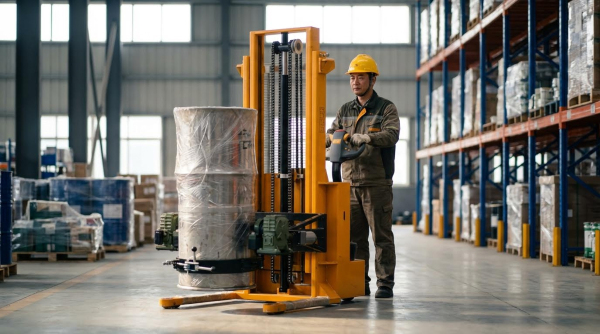
Because a single 55‑gallon drum can weigh several hundred pounds, engineered handling equipment is essential for both safety and productivity. Typical filled steel drums weigh in the 400–600‑pound range, so manual rolling or tilting introduces high injury and drop risk. Steel drums filled with material commonly weigh between 400 and 600 pounds. For short movements in tight spaces, drum dollies and lifter trucks allow operators to move upright drums without dragging or tipping. Drum dollies and drum lifters are designed for easy maneuvering and energy‑saving lifting and lowering of drums over short distances.
- Use drum trolleys with transport locks for longer internal routes to keep drums secured during travel. Drum trolleys with integrated transport locks enable long‑distance drum transport with reduced effort.
- Apply drum tongs or clamps on hoists or cranes where drums must be lifted from pits, racks, or confined locations. Drum tongs made of steel or chains can be hooked to a crane to lift barrels in hard‑to‑reach places.
Forklifts should be the default choice for moving multiple drums or palletized loads, rather than rolling drums on their chimes. Guidance for steel drum transport recommends using forklifts with pallets instead of rolling drums by hand to avoid injury and drum damage. Purpose‑built forklift attachments allow secure gripping, clamping, or rotating of drums without buying new powered trucks. Forklift drum attachments can convert existing forklifts into drum transporters for long distances and outdoor areas. Pallets should be inspected for protruding nails or broken boards that could puncture drum shells, and drums must be blocked and braced during over‑the‑road transport to prevent shifting. Proper blocking and bracing of drums in trailers is critical to prevent shifting and damage in transit.
Checklist for specifying drum handling equipment
- Match equipment capacity to maximum drum weight plus safety factor.
- Confirm compatibility with drum material (steel, plastic, fiber) and diameter.
- Ensure positive retention (locks, clamps) for slopes and uneven floors.
- Provide secondary containment (spill pallets, mobile sumps) where leaks are possible. Mobile spill trays and sump pallets are used to catch drips and losses during transport of hazardous substance containers.
Explosion risk, Ex zones, and ignition control
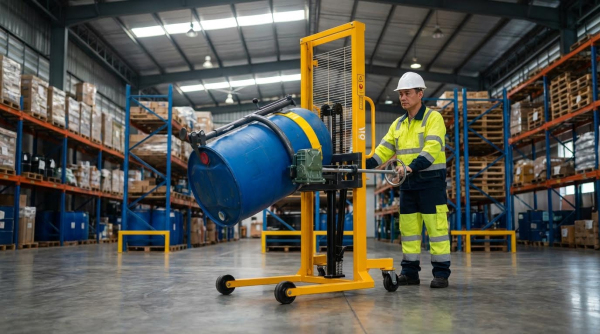
Where flammable liquids, gases, or combustible dusts are present, drum storage and handling areas may qualify as Ex zones, and ignition control becomes a primary engineering objective. Drums containing flammable or toxic materials must not be stored near open flames or hot metal, because external heating can increase internal pressure and drive vapor release. Regulations prohibit storing drums with toxic or flammable contents where they are subject to open flame, hot metal, or other artificial heat. In classified areas, equipment such as drum lifters and trolleys must be designed to avoid static buildup and friction sparks. Electrostatically dissipative drum lifters are used in explosion‑hazardous areas (Ex zones) to prevent ignition from friction.
- Bond and ground drums, transfer equipment, and racks during filling and emptying to control static discharge.
- Specify non‑sparking tools and low‑speed handling where flammable vapors could be present.
- Use rated electrical equipment and lighting appropriate for the classified zone.
Fire protection and emergency access must also be engineered into the layout. Suitable fire extinguishers must be located in the immediate area of drum storage or use and kept ready at all times. Regulations require adequate, hazard‑appropriate fire extinguishers in areas where drums with flammable liquids or gases are stored or used, and these extinguishers must be ready for use at all times. Staging areas should be minimized in size but designed with clear access and exit routes so that operators can evacuate quickly and responders can reach the source. Guidance for drum operations calls for staging areas to be minimized and equipped with adequate access and exit routes. When these engineering controls are combined with trained operators and clear procedures, they form a strong technical basis for how to handle hazardous material drums safely in Ex‑prone environments.
Drum Transfer, Opening, And Emergency Response Planning
Safe drum opening, pressure relief, and venting
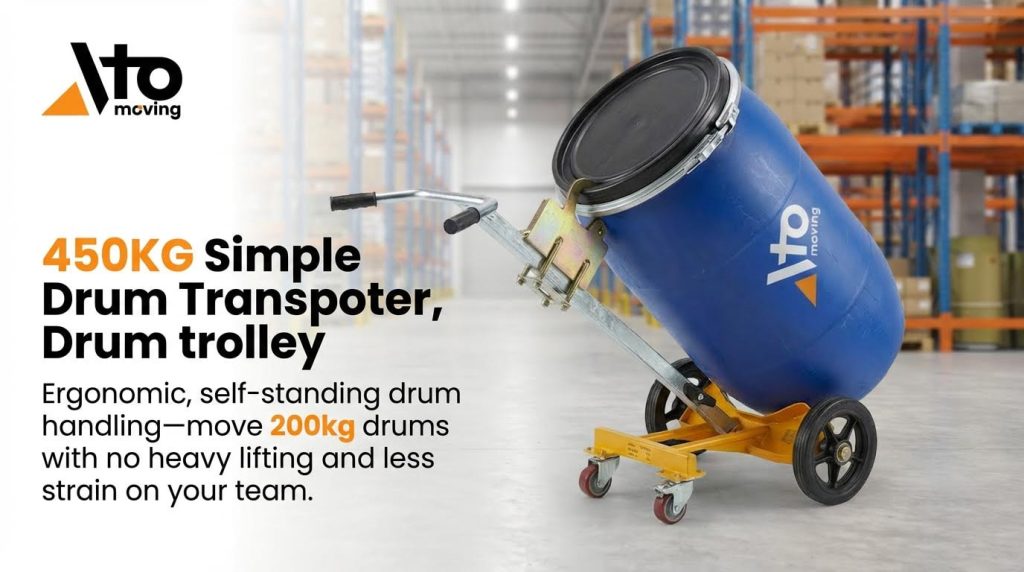
When planning how to handle hazardous material drums safely during opening, start with pressure control. Drums and shipping containers must never be pressurized to remove contents, because added internal pressure can rupture the package and release hazardous vapors or liquids. Shipping drums and containers shall not be pressurized to remove their contents. Before loosening bungs, use remote venting or pressure-relief tools where possible so any excess internal pressure is released away from personnel. If remote relief is not feasible, shielding or barriers must be placed between employees and the drum to reduce injury risk during opening. Drums and containers must be opened in a manner that safely relieves excess interior pressure. Only non-sparking, ignition-preventing tools should be used, especially for flammable contents. Air-line respirators and electrical equipment must stay behind explosion barriers to avoid contamination and ignition sources during drum opening activities. All equipment must remain behind explosion barriers, and only ignition-preventing tools may be used. Non-essential personnel should remain at a safe distance behind protective barriers while the drum is being vented and opened.
Key safe opening steps
- Verify labels, SDS, and potential for gas generation or internal pressure.
- Position drum in a contained area with spill control and fire extinguishers nearby. Adequate extinguishers must be located in the immediate area and ready for use.
- Use remote venting or shielded tools to slowly relieve pressure before full opening.
- Prohibit standing or working on drums at all times. Standing on or working from drums or containers is strictly prohibited.
Transfer systems, leak control, and salvage drum use
Safe liquid transfer is central to how to handle hazardous material drums safely without creating new exposure routes. Any temporarily assembled pressurized transfer line that conveys hazardous liquids or gases must include a relief valve and bypass to prevent rupture and uncontrolled escape of material. Pressurized piping systems shall be provided with a relief valve and by-pass to prevent rupture and escape of hazardous liquids or gases. Transfer areas should have secondary containment, absorbents, and appropriate fire-extinguishing equipment sized for likely spill and fire scenarios. Where spills, leaks, or ruptures are possible, employees must have immediate access to drum dolly, sufficient absorbent material, and approved fire-extinguishing equipment for small fires. In spill-prone areas, workers must be provided with salvage drums, absorbent material, and fire-extinguishing equipment. Salvage drums are engineered to contain leaking or damaged primary drums and must meet strict UN test requirements, including leakproofness, stacking, drop, and vibration tests. Certified salvage drums undergo leakproofness, stack, drop, and vibration tests to maintain UN Ratings. Each certified salvage drum must be clearly marked with “SALVAGE” or “SALVAGE DRUM” and complete UN markings so responders can verify suitability for the waste and transport mode. UN markings on salvage drums identify rating symbol, container type, packing group, maximum gross weight, year and country of manufacture, and manufacturer ID.
| Control element | Main purpose | Key requirement |
|---|---|---|
| Transfer piping with relief | Prevent rupture during pumping | Relief valve and bypass on pressurized systems |
| Absorbents and spill kits | Contain small leaks and drips | Available where spills or ruptures are possible |
| Salvage drums | Overpack leaking or damaged drums | UN-tested and properly marked “SALVAGE DRUM” |
Inspection, damaged drums, and spill response protocols
Routine inspection is the first line of defense in hazardous drum safety and should be built into daily operations. Workers must read labels, check for leaks, confirm closures, and estimate weight before moving any drum; a typical 55-gallon drum can weigh between 400–800 lb, so manual handling is rarely appropriate. Operators should read labels, check for leaks, and note that a 55-gallon drum can weigh 400–800 pounds. Drums that are bulging, swollen, or show crystalline deposits on the exterior must not be moved until proper containment and control measures are in place, because they may be over-pressurized or contain shock-sensitive materials. Bulging or crystallized drums must not be moved unless proper containment procedures are implemented. If a drum is damaged enough that it could rupture or spill when moved, its contents must be transferred out using suitable pumps or transfer devices while the drum remains in a controlled area, and the empty shell then discarded correctly. Damaged drums that could rupture must be emptied using appropriate transfer devices and then discarded. Spill response plans must define isolation distances, PPE, salvage drum deployment, absorbent use, and communication procedures, and they should minimize unnecessary drum movement while focusing on rapid containment and hazard isolation. Movement of drums and containers must be minimized and a program implemented to contain and isolate hazardous substances during transfers.
Core inspection and emergency planning checks
- Verify drum labels, hazard class, and UN markings before handling.
- Look for leaks, corrosion, bulging, or crystallization; escalate any abnormal condition.
- Stage drum dollies, absorbents, and fire extinguishers near high-risk areas.
- Train employees on hazards of unlabeled drums and on spill alarm and evacuation procedures. Employees must be informed of hazard warnings on labeled drums and the dangers of handling unlabeled containers.
“”
Summary Of Best Practices For Hazardous Drum Safety
Safe handling of hazardous material drums depends on matching regulations, engineering design, and daily behavior. OSHA, EPA, and DOT rules define the minimum standard, but facilities must turn those rules into clear layouts, robust containment, and disciplined handling methods. Correct pairing of hazard class, UN rating, and drum type limits failures before they start. Thoughtful storage geometry, impact protection, and secondary containment then control the scale of any leak or rupture.
Engineered handling tools, such as drum dollies, forklift attachments, and lifting devices from Atomoving, remove the need for manual rolling or tilting of 400–800 lb drums. This sharply reduces drop, crush, and strain injuries while keeping shells intact. In Ex‑prone areas, bonding, grounding, and non‑sparking equipment prevent ignition when vapors or dusts are present.
During opening and transfer, strict pressure control, shielded venting, and relief‑equipped piping prevent violent releases. Routine inspection and a drilled spill plan ensure that damaged or reactive drums move quickly into salvage drums and controlled zones.
The best practice for operations and engineering teams is simple: treat every drum as a pressure vessel with chemical hazards. Design the storage and handling system first, select compliant equipment, and then train operators to follow these controls without shortcuts. This integrated approach delivers durable protection for people, assets, and the environment.
Frequently Asked Questions
How do you handle hazardous materials safely?
Handling hazardous materials requires proper safety measures. Always wear appropriate personal protective equipment (PPE) such as gloves and goggles. Ensure the area is well-ventilated to avoid exposure to harmful fumes. Chemical Safety Tips. Properly label and store chemicals in suitable containers to prevent leaks or reactions.
- Use PPE like gloves and goggles.
- Ensure proper ventilation in the workspace.
- Label and store chemicals correctly.
What are the primary hazards when handling drums containing hazardous materials?
The main risks include chemical exposure, fire, explosion, and physical injuries from moving heavy drums. Stacking drums improperly or using deteriorated containers can also lead to accidents. To mitigate these risks, always inspect containers for damage and ensure proper storage. Hazmat Handling Guide.
- Avoid chemical exposure and fire hazards.
- Prevent physical injuries by handling drums carefully.
- Inspect drums for damage before use.
What must a hazardous waste drum have on it?
Hazardous waste drums must be clearly marked with the words “hazardous waste” and include details about the waste’s composition, physical state, and specific hazardous properties. Proper labeling ensures safe handling and compliance with regulations. Waste Label Requirements.
- Mark drums with “hazardous waste”.
- Include waste composition and physical state.
- State specific hazardous properties.