Handling extra-long pallets safely is a structural, stability, and space-optimization problem, not just a question of adding fork length. This article explains how to lift extra long pallet loads without over-stressing equipment, compromising operator safety, or wasting storage capacity. You will see the core engineering challenges, proven equipment and racking solutions, and how to match them to your layout, throughput, and future automation plans. The goal is to give engineers, warehouse planners, and operations leaders a clear, practical framework for safe, efficient long-load handling.
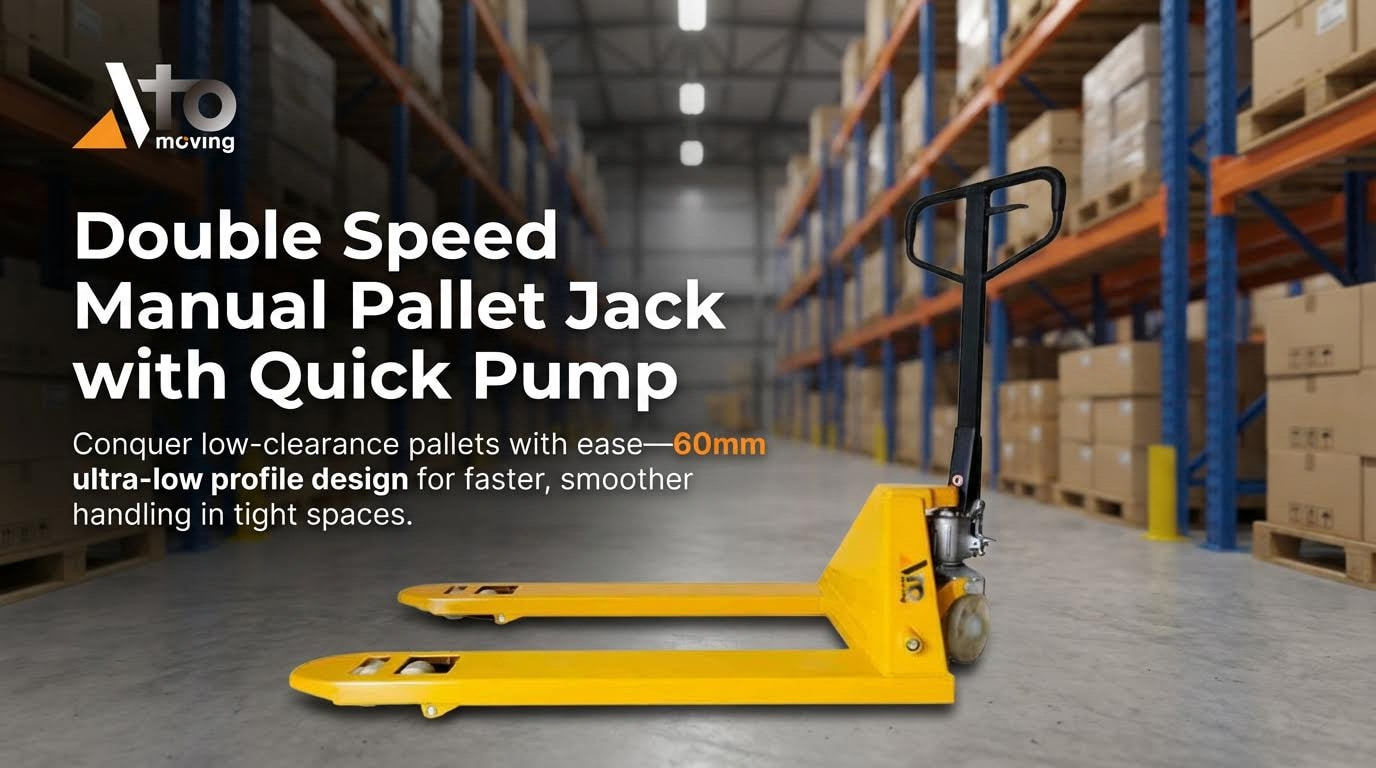
When considering equipment, options like the long pallet truck can be invaluable. Additionally, tools such as the manual pallet jack or drum dolly may also assist in specific scenarios. For heavier tasks, a hydraulic drum stacker could provide the necessary support.
Core Challenges In Lifting Extra-Long Pallets
Load geometry, deflection and center of gravity
When you plan how to lift extra long pallet loads, geometry is usually the first constraint, not capacity. The length of the pallet pushes the load’s center of gravity far away from the mast or operator, which multiplies tipping risk and reduces the effective rated capacity of trucks and stackers. Long bundles of timber, tubes or profiles also behave like beams: if the forks or supports are spaced too far apart, the load will sag in the middle; if they are too close, the overhangs can bounce and whip during travel. Extra-long pallets often carry mixed or unevenly packed product, so the true center of gravity can shift during acceleration, braking or turning, making the load feel “live” and harder to control.
Deflection is not only in the load but also in the forks and attachments. If forks are too thin or too long for the weight, they can elastically bend, changing fork level and reducing contact area under the pallet deck. That increases point loads on boards and blocks and raises the chance of pallet failure under heavy, concentrated weights. Poor weight distribution also transfers excessive moment to truck axles and steering components, especially when the load is handled at height or on uneven floors. All of this means that with extra-long pallets, you must treat rated capacities as conditional, and engineer support spacing, fork length and travel speeds around worst-case center-of-gravity positions rather than nominal dimensions.
Space, storage density and aisle constraints
Even before lifting, the question of how to lift extra long pallet loads is tightly linked to how you store them. Long goods such as bars, planks and tubes often exceeded standard rack dimensions and created unstable and risky storage conditions, which forced operators to reserve large clear zones around them for safety. Bulk stacking of these items on the floor consumed significant floor space and typically allowed only 2–3 units to be stacked vertically to avoid damage, which underused the building’s height and reduced overall storage density. Honeycombing in deep lanes made it worse, because lanes could not be restocked until they were fully emptied, leaving empty pallet positions and wasted capacity. Bulk stacking of extra-long items demanded significant floor space and limited vertical efficiency, and honeycombing left empty slots.
Traditional rack choices also had trade-offs. Cantilever racking lifted product off the floor and improved selectivity for unique SKUs per shelf level, but it did not provide the storage density required for high-volume lines and usually required at least one full-width aisle per rack row for forklift access. Cantilever racks improved organization but needed extra aisle space and lacked density for fast-moving SKUs. As a result, many warehouses faced a three-way compromise between safety clearances, storage density and maneuvering room for trucks. Narrowing aisles to gain capacity quickly made it impossible to turn conventional forklifts with long loads, while widening aisles to maintain maneuverability drove up building size and travel distances. For extra-long pallets, this space–density–access triangle is one of the core engineering challenges to solve before you even specify lifting equipment.
Engineering Solutions For Lifting And Moving Long Loads
Forklift, sideloader and multidirectional options
When deciding how to lift extra long pallet configurations with powered equipment, the first question is usually aisle width and travel path. Standard counterbalance trucks struggle with long loads because the load swings outside the wheelbase, increasing the risk of striking racking or columns. Sideloader forklifts place the forks on the side of the chassis, allowing the truck to travel lengthwise with the long load supported on an integrated platform in narrow aisles, while still offering heavy-duty capacities from roughly 4,500 kg up to about 8,000 kg for demanding applications (9,900–17,600 lb typical sideloader range). Multi-directional forklifts go further by combining counterbalance, sideloader and reach functions, with wheel sets that rotate to move forward, backward or sideways, so the operator can align the truck to the load and then travel in the most space-efficient direction (capacities from about 1,000 kg to 25,000 kg). This 4‑way capability allows very narrow aisle layouts, improves storage density, and lets one machine handle both palletized and long loads, which can reduce total fleet size and operating cost while improving safety in tight spaces by consolidating multiple functions into a single unit.
Extra-long pallet trucks and pedestrian equipment
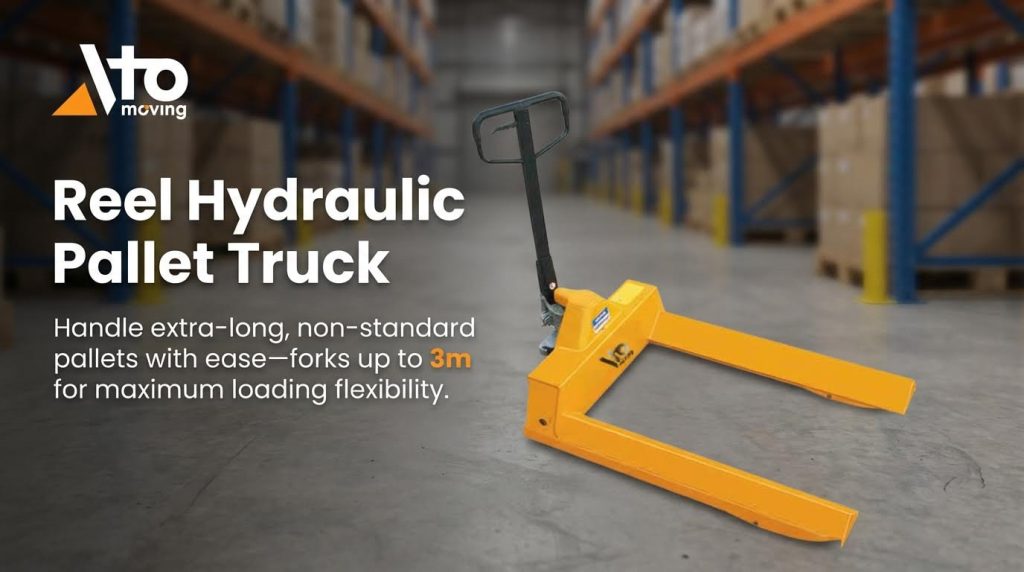
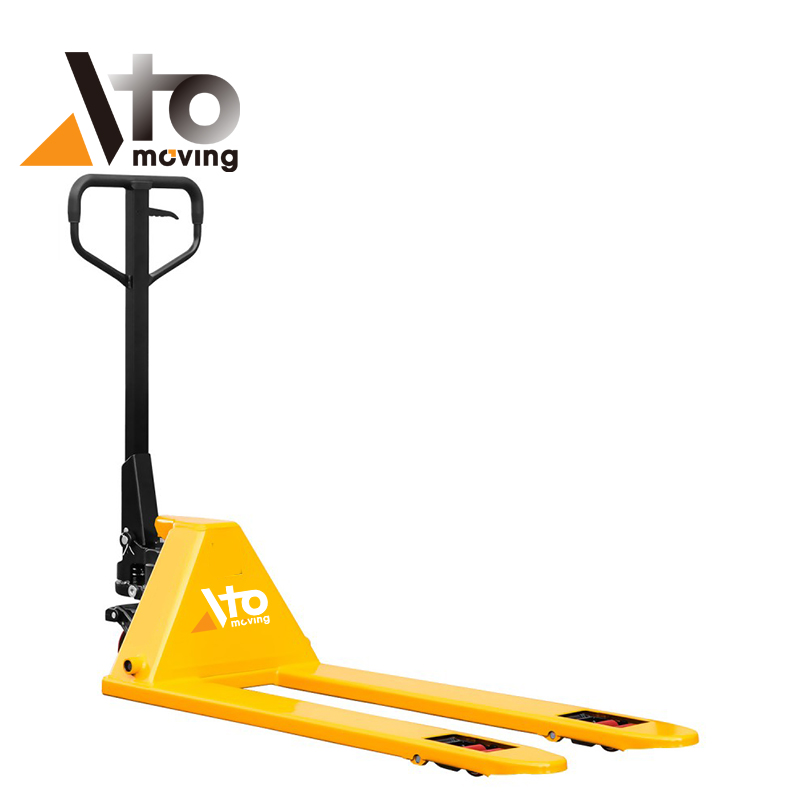
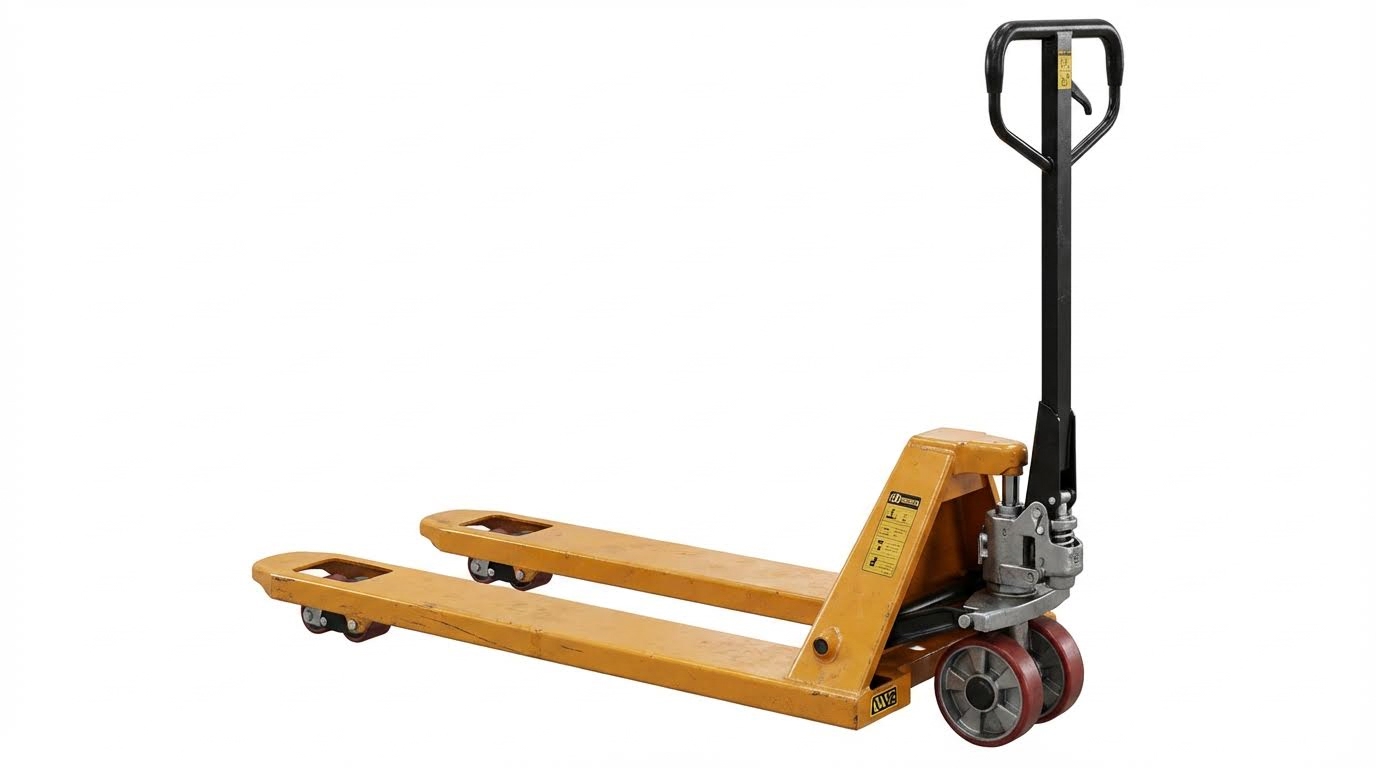
For many operations, the most economical answer to how to lift extra long pallet loads at floor level is a dedicated extra‑long pallet truck. These units use forks extended to around 1,500–2,000 mm with rated capacities commonly in the 2,000–3,500 kg range, so the load is supported along its full length instead of cantilevering off standard forks (typical 1500–2000 mm fork lengths and 2000–3500 kg capacities). Reinforced fork sections and robust hydraulic systems limit bending and twisting, which is critical for lumber packs, long pipes or carpet rolls that would otherwise deflect and destabilize during lifting and transport by maintaining even lift along the fork span. Pedestrian multi-directional stackers and walkie reach trucks extend this concept into racked storage, operating safely in aisles as tight as about 2 m while allowing the operator to stand to the side of the chassis for better visibility and reduced crush risk in confined spaces through multi-position tillers and narrow-aisle designs. These pedestrian solutions are well suited to lower-throughput or mixed-product zones where powered forklifts would be hard to justify but manual trucks lack the reach or lift height required.
Racking, pallet flow and vertical storage systems
Mechanical handling equipment only works safely if the storage system is engineered for long loads. Traditional bulk stacking of long items such as lumber or construction materials consumes large floor areas and usually limits stacking height to only two or three units, which wastes vertical space and creates honeycombing as lanes sit partially empty until fully picked down leading to reduced storage capacity. Cantilever racking lifts long products off the floor and improves selectivity for individual SKUs, with adjustable arms to match different cross-sections, but it still needs generous aisle widths and does not provide the storage density required for high-volume lines because each row typically consumes its own service aisle. Split‑roller pallet flow systems offer a denser answer for how to lift extra long pallet loads into storage while maintaining FIFO: long pallets sit on multiple flow rails sized and spaced to the load, and gravity moves replenishment pallets forward as the front unit is removed, eliminating internal aisles and improving lot rotation at the same time with custom rail layouts based on length and weight. In facilities with severe floor-space constraints, automated vertical storage towers for bars, tubes and profiles can reclaim headroom and provide secure, ergonomic access to long materials, reducing the need for wide travel aisles while still respecting rack weight and height limits that are essential for safety with long, heavy loads in environments where long products otherwise create unstable storage conditions.
Selecting The Right System For Your Application
Matching equipment to load, layout and throughput
Start by defining the load envelope: maximum length, width, weight, and how the load is supported (full-length pallet, partial support, or point loads). For anyone working on how to lift extra long pallet safely, the key is to choose equipment that supports the load along its span and keeps the center of gravity inside the wheelbase. Extra-long pallet trucks with fork lengths around 1500–2000 mm and capacities in the 2000–3500 kg range provide full-length support for many oversize pallets, reducing bending and instability risks when handling extended loads. Where loads exceed what can be safely managed with pedestrian equipment, sideloaders or multidirectional forklifts allow you to move long pallets lengthwise in narrow aisles while maintaining stability and visibility in tight warehouse spaces.
Next, match equipment to your building layout and aisle strategy. If you must keep existing wide aisles, conventional forklifts with extended forks or long pallet trucks may be enough, provided turning radii and door widths are verified. In narrow-aisle or high-density layouts, multidirectional forklifts with 4-way travel reduce required aisle width and let you store long pallets more densely while still accessing them safely by moving sideways as well as forward and backward. For operations with high vertical storage, reach trucks or pedestrian reach stackers can be used for long pallets if rack beam spacing and pallet stiffness are engineered to limit deflection and maintain clearances in narrow aisles in high-density warehouse environments.
Throughput and process flow then determine how many units and which mix of equipment you need. Where operators perform many short moves per hour with relatively light long pallets, pedestrian extra-long pallet trucks provide good control at low speed with minimal training and low energy use across a wide range of industries. High-throughput facilities that combine palletized and non-palletized long loads benefit from multidirectional forklifts that handle both, reducing the number of truck types in the fleet and simplifying traffic patterns by consolidating long-load and pallet handling in one platform. The result is a system where equipment, layout, and process are aligned so each move of an extra-long pallet is predictable, repeatable, and safe.
Safety, standards, TCO and future automation
Safety and compliance must be built into your selection criteria from the start. Long loads and extra-long pallets increase risks of tipping, rack impact, and falling product if equipment is undersized or geometry is ignored. Storage systems for long items need to respect rack load limits, clearances, and safe stacking heights to avoid instability and falling goods that can endanger personnel. When evaluating how to lift extra long pallet in racking, verify that beam deflection, pallet stiffness, and truck mast capacity work together within your applicable safety standards and local regulations.
Total cost of ownership (TCO) for long-load systems goes beyond purchase price. Sideloaders and multidirectional forklifts can replace multiple conventional trucks by handling both palletized and long loads, which reduces fleet size, maintenance points, and operator training complexity while improving space utilization and safety. High-density storage options such as split-roller pallet flow lanes cut aisle count and improve FIFO rotation, which increases storage capacity and reduces honeycombing compared with bulk stacking where lanes often sit partially empty. Over the life of the system, these savings in space, labor, and damage often outweigh the higher initial cost of specialized equipment.
Future automation and data integration should also influence your decision. Vertical storage towers and dense pallet flow systems are more easily automated later than bulk stacking because they already control load positions and interfaces mechanically by organizing long items in defined locations. Choosing trucks with good positional accuracy, stable travel with long loads, and clear sensor mounting points simplifies any future move toward semi-automation or AGV integration. A structured selection process that weighs safety, standards, TCO, and automation readiness will ensure your long-pallet handling system remains efficient and compliant as volumes and technology evolve.
“”
Key Takeaways For Handling Extra-Long Pallets Safely
Safe handling of extra-long pallets depends on how well you control geometry, support, and space, not just rated capacity. Long loads push the center of gravity outward and increase bending in both the load and forks, so engineers must design for worst-case positions, dynamic movement, and deflection limits. Correct fork length, support spacing, and travel speed keep the load stable and protect pallets, trucks, and racking from overload.
Space and storage design matter as much as the truck choice. High-density racking, flow lanes, and vertical systems turn awkward long goods into predictable, repeatable unit loads. This reduces honeycombing, frees aisle space, and cuts impact risk. Matching these systems with the right mix of extra-long pallet trucks, multidirectional equipment, and pedestrian units lets you keep the center of gravity inside the wheelbase while working in tight aisles.
The best practice is clear. Start with the load envelope and layout, then select equipment and storage as one integrated system. Build safety factors, standards compliance, and future automation into every decision. When in doubt, favor solutions that give full-length support, controlled paths, and slow, stable handling. This approach lets Atomoving users run long-load operations that are safe, efficient, and ready to scale.
Frequently Asked Questions
What Equipment Can Be Used to Lift Extra Long Pallets Without a Forklift?
To lift extra long pallets without a forklift, you can use alternatives like pedestrian stackers, high lift trucks, or reach trucks. These options are designed to handle various pallet sizes and weights safely. For narrow aisles, narrow-aisle trucks may also be suitable. Forklift Alternatives Guide.
How Can You Safely Move a Long Pallet?
Moving a long pallet requires proper technique and equipment. Use a hand truck, 4-wheel dolly, or appliance dolly to balance and strap the pallet securely. Always keep your back straight, avoid twisting, and carry the load close to your body to prevent injury. Heavy Load Moving Tips.
Can One Person Safely Lift a Standard Pallet?
A standard reusable wood block pallet weighs between 34 and 36 kilograms. According to OSHA and NIOSH guidelines, it is recommended that two people lift such a pallet to ensure safety and avoid strain or injury. Pallet Lifting Safety Guide.