In many operations, the real question is not just “can you load a trailer with a walkie stacker,” but when it is actually safe and efficient to do so. This article explains where walkie stackers fit compared with forklifts, and what trailer, dock, and surface conditions must be in place. You will see the engineering and safety limits that govern capacity, stability, and grade, along with key OSHA/ANSI expectations for powered industrial trucks. By the end, you will have a practical framework to decide whether a walkie stacker is appropriate for your trailers, or if a different loading solution is required.
When Trailer Loading With a Walkie Stacker Is Feasible
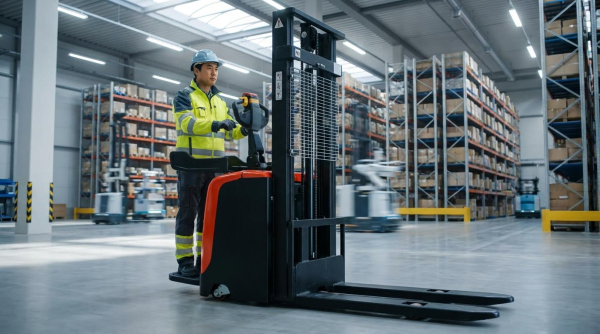
Core differences: walkie stacker vs. forklift
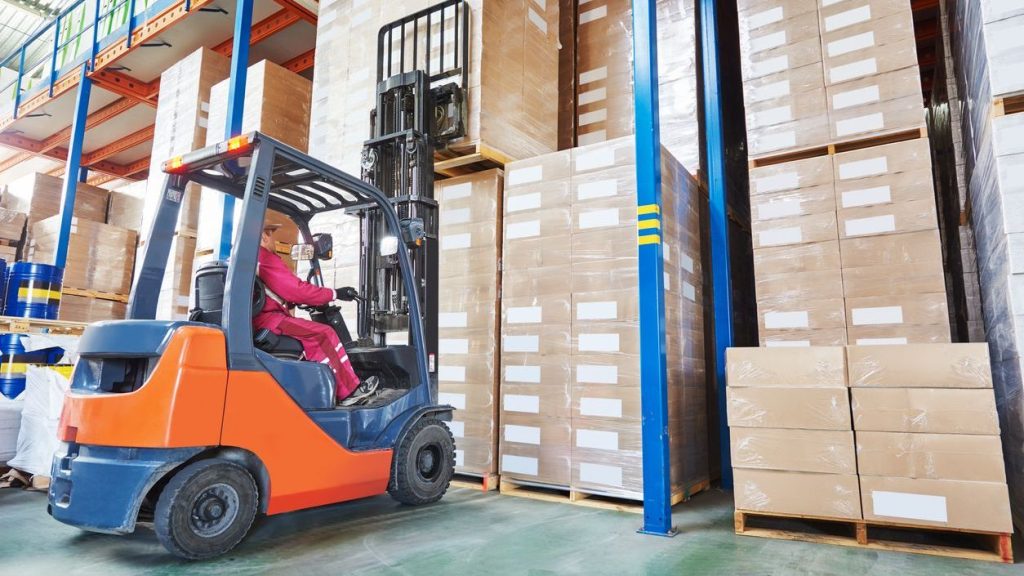
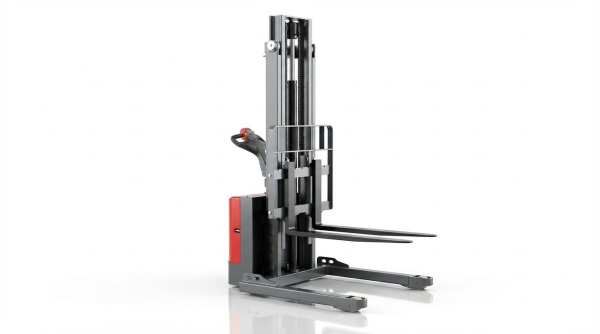
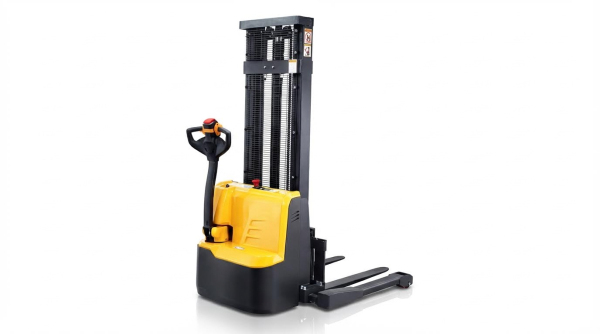
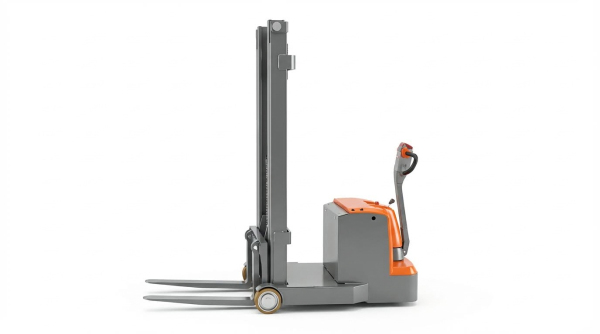
To answer “can you load a trailer with a walkie stacker,” you first need to understand how it differs from a sit-down forklift in power, geometry, and duty cycle. A walkie stacker is a compact, electric, walk‑behind truck designed for short horizontal moves and moderate lift heights in tight spaces and narrow aisles. A counterbalanced or reach forklift, by contrast, is built for higher capacities, longer travel distances, and more uneven conditions, including typical yard and dock approaches with lift heights up to 30 ft and loads above 5,000 lb.
- Capacity and lift height: Walkie stackers typically handle about 2,000–4,000 lb and lift to roughly 10 ft, which is enough to service most trailer deck heights but not deep high-bay racking as forklifts can.
- Stability and footprint: A walkie stacker has a shorter wheelbase and smaller stabilizing footprint than a typical forklift, so it is less tolerant of floor slopes, dock gaps, and trailer deflection under load. This matters when you push loads across a dock plate into a flexible trailer floor.
- Speed and duty: Walkie stackers operate at walking speed and are optimized for short, controlled movements, which can be an advantage for precision trailer loading but limits throughput compared with a forklift.
- Operator position and visibility: The operator walks beside or just behind the stacker, with good visibility around the truck and at lower speed for safety. This improves control in confined trailer interiors but also means the operator is physically closer to the trailer edge and dock plate, so floor conditions and guarding are critical.
In practice, you can load a trailer with a walkie stacker when the load weights are within the truck’s rated capacity, the travel distances are short, and the dock and trailer conditions are as smooth and level as an indoor warehouse aisle. For heavier, high-throughput, or uneven-yard operations, a conventional forklift or other powered industrial truck is usually the safer and more efficient choice given its higher capacity and versatility.
Trailer and dock conditions that must be met
Even if the walkie stacker is technically capable, trailer loading is only feasible when the dock, approach, and trailer all meet strict stability and surface requirements. The trailer must be parked on firm, level ground with the brakes applied, engine off, and wheels chocked before any powered industrial truck enters and the keys should be removed until loading is complete. A dock lock or similar restraint is strongly recommended to prevent trailer creep or early departure as many modern docks provide.
- Dock and approach surface: The dock approach and the area inside the trailer must be firm, level, and free of potholes or debris to maintain walkie stacker stability and clear forklift-style access. Any grade or ramp into the trailer should be shallow enough that a loaded walkie stacker can ascend and descend slowly without losing traction or control, consistent with powered truck guidance on grades where loads must be kept upgrade on steeper slopes.
- Dock plate and floor strength: The dock plate must be rated for the combined weight of the walkie stacker and the heaviest pallet, with adequate width so the outriggers and drive wheels stay fully supported. The trailer floor and supporting landing gear must also be capable of carrying concentrated wheel loads without excessive deflection or risk of tipping, especially if the trailer is not attached to a tractor where weight distribution and overhang are critical.
- Trailer securing and space: There must be enough clear space inside the trailer for the walkie stacker to turn, square up to pallets, and follow a safe loading pattern, such as alternating sides to keep weight balanced from the headboard backward. Racking, bulkheads, or uneven flooring that would be manageable with a larger forklift may be unacceptable for a smaller, more sensitive walkie stacker.
When these trailer and dock conditions are controlled—level surfaces, properly restrained trailer, rated dock equipment, and balanced loading patterns—then the answer to “can you load a trailer with a walkie stacker” is yes, for light to medium pallet loads and short dock operations. If any of these conditions cannot be guaranteed, using a walkie stacker inside the trailer becomes high‑risk, and a more robust powered industrial truck or alternative loading method is usually required to maintain safe handling.
Engineering And Safety Limits For Walkie Stacker Trailer Work

Capacity, stability, and grade constraints
Before you ask can you load a trailer with a walkie stacker, you need to confirm that every move stays within the truck’s rated capacity and stability envelope. Walkie stackers typically handle about 2,000–4,000 lb and lift to roughly 10 ft, so they are inherently more limited than a counterbalance truck for deep trailer work. Their nameplate rating applies at a specific load center on level, firm ground; any slope, dock plate deflection, or off‑center pallet reduces the real margin of safety. OSHA requires powered industrial trucks to handle only stable loads within their rated capacity, with capacities clearly marked and visible to the operator. Trucks must not be used beyond their marked rating or with unsafe loads.
Grade limits are especially critical when you push or pull a walkie stacker over dock plates or into vans. OSHA specifies that drivers must ascend and descend grades slowly, and that on grades over 10% a loaded truck must travel with the load upgrade. Excessive slope greatly increases the risk of uncontrolled movement and tip‑over. With a walk‑behind unit, a heavy pallet on even a modest slope can run away from the operator, similar to the hazard noted for manual pallet jacks on ramps. A heavy pallet on a slope can move uncontrollably and has caused injuries. For trailer loading, that means you should treat any broken pavement, dock transitions, or inclined aprons as hard limits for walkie stacker use, not minor inconveniences.
Trailer securing, weight distribution, and pallet patterns
Even if the truck is within capacity, can you load a trailer with a walkie stacker safely depends on how well the trailer is restrained and how the load is laid out. Before entering, the trailer must be parked on firm, level ground with the engine off and brakes applied, and keys removed so no one can pull away during loading. Many docks use mechanical or hydraulic restraints to lock the trailer; operators must understand and follow these systems. Securing the vehicle and retaining the keys until loading is complete are core controls to prevent unexpected movement. The dock approach and trailer floor must be clear, level, and strong enough for the combined weight of the walkie stacker and load.
Weight distribution inside the trailer is just as important as the truck’s own stability. Unsupported semitrailers have significant overhang from the landing legs to the front wall; concentrating weight at the nose can cause the trailer to tip or “nose down.” Best practice is to keep a tractor attached or use temporary supports, then load from the headboard while alternating sides so the pattern remains balanced. Guidance recommends starting at the headboard, alternating pallet sides, and ensuring equal pallet distribution around the landing legs before removing supports. With standard pallets, picking on the narrow face and placing the first pallet wide‑face to the headboard on one side, then mirroring on the other, creates a stable, symmetric pattern. This alternating sequence continues until the trailer is full and helps avoid side‑to‑side lean or local floor overloads, which are especially dangerous when a walkie stacker operates close to its capacity.
Compliance with OSHA/ANSI and training requirements
The regulatory answer to can you load a trailer with a walkie stacker is: only if the truck, the workplace, and the operator all meet powered industrial truck standards. OSHA requires that industrial trucks be inspected before use and removed from service if any condition affects safety. Daily or per‑shift examinations and prompt correction of defects are mandatory. Truck modifications that change capacity or stability need written approval from the manufacturer or a qualified engineer, and instruction plates must be updated. Only approved equipment may be used in hazardous locations, and trucks must not operate inside damaged highway vehicles or railcars where safety is compromised. Damaged trailers or railcars that could affect safe operation are off‑limits.
Operator training is a non‑negotiable requirement. OSHA mandates a formal program that covers truck controls, capacity, stability, visibility limits, load handling, and workplace‑specific hazards, with refresher training at least every three years or sooner if unsafe behavior appears. Training must address the specific type of truck and conditions of use. Although walkie stackers often seem simpler and slower than sit‑down forklifts, they are still powered industrial trucks and carry similar regulatory expectations. For trailer loading, that means only trained, evaluated operators should drive walkie stackers into or onto trailers, following site rules for speed, horn use at blind spots, and travel with the load trailing when visibility is blocked..
Choosing The Right Equipment And Setup For Trailer Loading
When a walkie stacker is appropriate vs. risky
To decide “can you load a trailer with a walkie stacker,” you first need to match the machine to the trailer, dock, and load pattern. Walkie stackers work best on flat, smooth, indoor approaches where the trailer is fully restrained, the dock plate is within the stacker’s rated grade, and pallet weights stay comfortably inside its capacity range. Their compact design and low travel speed make them suitable for tight docks and short shuttles, especially where a full forklift cannot maneuver or is not economical to run. However, walkie stackers are risky on uneven yards, steep dock approaches, unsupported trailers, or where heavy double‑stacking near the nose could cause trailer instability. In those conditions, higher‑capacity equipment with better suspension and stability, or alternative loading systems, is usually safer.
- Use a walkie stacker for light‑to‑medium pallets, short dock runs, and enclosed, level docks.
- Avoid using it where you must climb significant grades, cross long or flexible dock plates, or push deep into unsupported trailers.
- Consider a different solution if you routinely handle loads near or above 2,000–4,000 lb or lift heights beyond typical walkie stacker limits. Many walkie stackers are rated in this capacity band.
Why walkie stackers are often chosen over other options
Walkie stackers typically have lower purchase and operating costs than larger trucks and are optimized for narrow aisles and confined spaces. Their walking‑speed operation and the operator’s position beside the truck can reduce collision risk compared with faster ride‑on equipment. These characteristics make them attractive for small warehouses and back‑of‑store docks. But they still require structured training and safe‑system‑of‑work when used at a trailer interface.
Specifying walkie stackers, docks, and batteries for the task
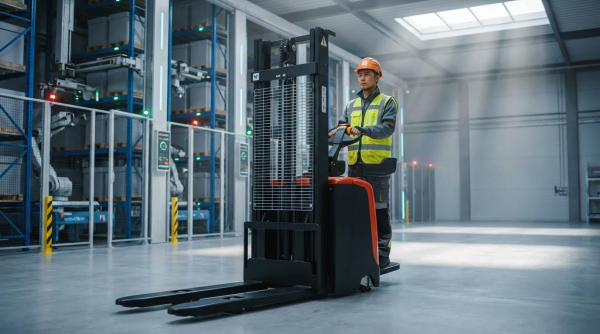
Once you determine that you can load a trailer with a walkie stacker in principle, you need to specify the equipment and dock layout correctly. Start with capacity and lift: select a stacker whose rated capacity at the required load center exceeds your heaviest pallet by a safe margin, and whose mast can reach the trailer deck height plus any dock‑plate offset. Typical walkie stackers handle roughly 2,000–4,000 lb and lift to modest heights, so verify that your trailer floor height and pallet configuration sit within these limits. Heavier or higher stacking often pushes you toward larger trucks.
- Dock and trailer interface: Ensure firm, level ground, trailer brakes applied, and trailer restraint or chocks in place before loading. Best practice is to secure the vehicle, remove keys, and, where possible, lock the trailer to the dock. Choose dock plates rated above the combined weight of the walkie stacker and maximum load.
- Load pattern and stability: Plan pallet placement to keep weight balanced along the trailer length and across the width. For unsupported trailers, start near the headboard, alternate sides, and maintain even distribution around the landing legs to reduce tipping risk. This alternating pattern is standard for palletized trailer loading.
- Battery and duty cycle: Size the battery for your expected number of trailer loads per shift, including travel to and from staging. High‑turn docks may need higher‑capacity batteries or opportunity charging stations. Follow battery‑charging safety rules such as designated charging areas, ventilation, electrolyte spill control, and no‑smoking policies. These requirements apply to powered industrial trucks, including electric walkie stackers.
Checklist for specifying a walkie stacker trailer‑loading setup
- Heaviest pallet weight and load center vs. stacker rating.
- Trailer deck height vs. mast lift and fork travel.
- Dock plate capacity and maximum slope the stacker will see.
- Trailer restraint, chocking, and key‑control procedures in place.
- Battery capacity, charging location, and ventilation compliant with safety standards. OSHA provides detailed guidance on battery charging installations.
When these points are addressed, a walkie stacker can form part of a controlled, efficient trailer‑loading system for suitable loads and dock conditions.
“”
Practical Conclusion On Walkie Stackers For Trailer Loading
Loading trailers with a walkie stacker is possible, but only when engineering limits and site controls line up. Capacity, load center, and grade limits decide whether the truck can safely enter the trailer and cross the dock plate. Trailer restraints, chocking, and floor strength decide whether the trailer can accept that load without creeping, tipping, or excessive deflection. Pallet patterns and weight distribution decide whether the trailer stays stable as each pallet goes in.
When you treat these factors as a single system, walkie stacker trailer work becomes predictable and safe. You select a stacker with enough margin over your heaviest pallet. You design docks and approaches to stay level and smooth. You specify dock plates and landing gear that can carry the combined wheel loads. You enforce OSHA/ANSI rules on inspections, operator training, and trailer condition.
The practical best practice is clear. Use walkie stackers only for light to medium pallets, short, level dock runs, and well‑restrained trailers. For heavy loads, uneven yards, unsupported trailers, or high‑throughput docks, step up to more robust equipment. When in doubt, engineers and safety leaders should default to the more stable truck or a different loading method, and reserve walkie stackers for controlled, low‑risk trailer applications that match their design intent, such as those supported by Atomoving solutions.
Frequently Asked Questions
Can you load a trailer with a walkie stacker?
A walkie stacker can be used to load a trailer, but it depends on the weight capacity and dimensions of both the walkie stacker and the trailer. Walkie stackers are commonly used for low to mid-level pallet handling in warehouses Walkie Stacker Guide.
- Ensure the trailer is on a flat, stable surface.
- Check the weight limits of the walkie stacker and the trailer.
- Use proper safety measures, like chocking the wheels of the trailer.
What class is a walkie stacker?
A walkie stacker falls under Class III: Electric Motor Hand Trucks or Hand/Rider Trucks. This includes electric pallet jacks and similar equipment Industrial Truck Classifications.