A warehouse order picker is a core link between storage locations and on‑time, damage‑free customer orders. This article breaks down what the role involves day to day, the skills and technology you need to perform it well, and how to use order picking machines safely and efficiently. You will see how accuracy, ergonomics, and regulatory compliance fit together on the warehouse floor so you can hit targets without compromising safety. Whether you manage order pickers or work as one, this guide gives you a structured view of the job, from workflow and inventory control to PPE, inspections, and fall protection at height.
Core Responsibilities Of A Warehouse Order Picker
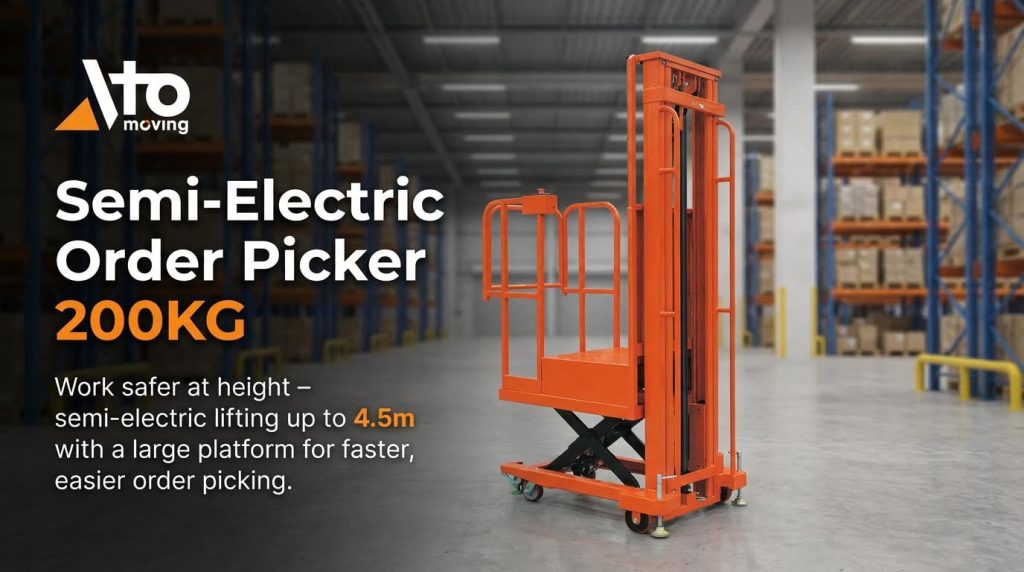
Order picking workflow and accuracy standards
A warehouse operative order picker follows a repeatable workflow to hit strict productivity and accuracy targets. The steps must be simple, traceable, and easy to audit for errors.
- Receive work assignment (paper pick list, RF, or voice task).
- Plan travel path to minimize walking and truck travel.
- Locate storage location (aisle, bay, level, slot).
- Verify item with label, barcode, or description.
- Pick required quantity and double-check count. Operators were expected to verify correct quantity by double‑checking their work.
- Place items on pallet, cart, or tote (heavy items at bottom, soft or fragile items on top). Soft products were kept above heavy products to prevent damage.
- Confirm picks in WMS or scanner and move to next line.
- Stage completed order for packing, loading, or shipping.
Accuracy standards for a warehouse operative order picker are typically very high. Many operations aimed for near error‑free picking using technology support.
| Accuracy Metric | Typical Expectation | How It Is Achieved |
|---|---|---|
| Line item accuracy | Up to about 99.8% in well‑run sites High accuracy targets were referenced for order pickers | Barcode checks, RF or voice confirmation, double‑checks on quantity |
| Order completeness | All lines picked, no shorts | System‑driven pick lists, exception reporting, and discrepancy logging |
| Damage rate | As low as reasonably achievable | Correct stacking pattern and handling of soft or fragile items |
Key habits that improve picking accuracy
- Stop and re‑verify whenever location, product, or packaging looks different from the pick label.
- Use scan‑to‑confirm instead of visual checks where possible.
- Record and report any mis‑slotting or label errors so root causes can be fixed.
- Keep pallets and totes organized to avoid mixing similar SKUs.
Inventory control, FIFO, and quality checks
A warehouse operative order picker also plays a direct role in inventory control. Their daily decisions affect stock accuracy, rotation, and product quality.
- Follow site inventory rules such as First In, First Out (FIFO) for dated or perishable goods. Operators were expected to apply FIFO for proper stock rotation
- Pick from the correct physical lane, pallet, or layer defined by the WMS.
- Visually check packaging for damage, leakage, or contamination at the time of pick.
- Confirm that product codes, batch numbers, or dates match the order where required.
- Record shorts, overages, and substitutions in the system instead of “fixing” them off the books.
Quality and inventory checks should be embedded into the pick itself, not treated as a separate task. This keeps the workflow efficient while still protecting stock integrity.
| Control Task | Picker Action | Impact On Inventory |
|---|---|---|
| FIFO compliance | Select oldest dated pallet or case first | Reduces write‑offs and expired stock |
| Damage detection | Set aside damaged items and flag supervisor | Prevents shipping defective product |
| Discrepancy reporting | Report count or location mismatches to inventory control | Improves cycle count accuracy and slot integrity Operators were responsible for monitoring inventory levels and reporting discrepancies |
| System updates | Confirm picks via RF, voice, or terminal | Keeps real‑time on‑hand balances accurate |
Typical quality checks during picking
- Carton integrity (no crushed corners, open seams, or wet spots).
- Correct label and barcode readable, not torn or obscured.
- Correct temperature zone for chilled or frozen product where relevant.
- Cleanliness of totes, pallets, and picking equipment.
Physical and cognitive demands of the role
The warehouse operative order picker role combines heavy physical work with continuous concentration. Both aspects drive hiring standards, training, and shift planning.
| Demand Type | Typical Requirement | Operational Implication |
|---|---|---|
| Lifting and carrying | Repeated handling of loads around 50–75 lb Repetitive lifting in this range was specified Similar lifting requirements were noted for warehouse pickers | Need for safe lifting techniques, mechanical aids, and job rotation |
| Posture and movement | Long periods of standing and walking, plus stooping, kneeling, crouching, or occasional crawling Multiple postures were required during shifts | Ergonomic layout, good flooring, and suitable footwear become critical |
| Vision | Close, distance, color, peripheral vision, and focus adjustment Specific vision abilities were listed as essential | Accurate reading of labels, screens, and floor markings in varied lighting |
| Environment | Moderate noise and seasonal temperature changes Order pickers were exposed to these conditions | Need for hydration, PPE, and pace management across hot or cold areas |
Cognitive demands are just as important. A warehouse operative order picker must stay focused while moving, lifting, and operating equipment.
- Track multiple orders, locations, and quantities without mixing them.
- Interpret pick lists, RF prompts, or voice commands correctly and quickly.
- Make safe decisions about load placement, route choice, and right‑of‑way.
- Communicate clearly with supervisors about issues that block work. Effective communication to meet daily production goals was emphasized
- Maintain consistent pace to meet productivity targets while keeping error rates low. Order pickers were expected to hit defined productivity and quality targets
Why matching person to task matters
- Underestimating physical demands increases injury risk and turnover.
- Underestimating cognitive load increases mis‑picks, inventory errors, and safety incidents.
- Good fit between worker capability and task design improves throughput, morale, and safety at the same time.
Safe Operation Of Order Picking And Handling Equipment
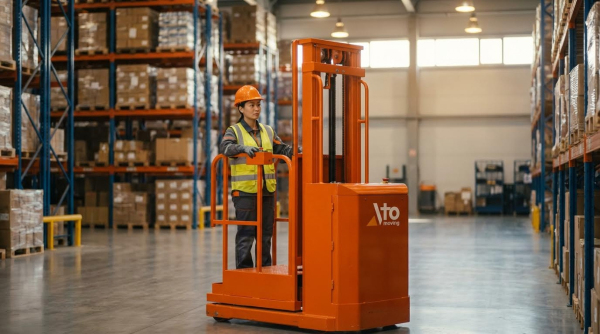
Types of picking equipment and key specifications
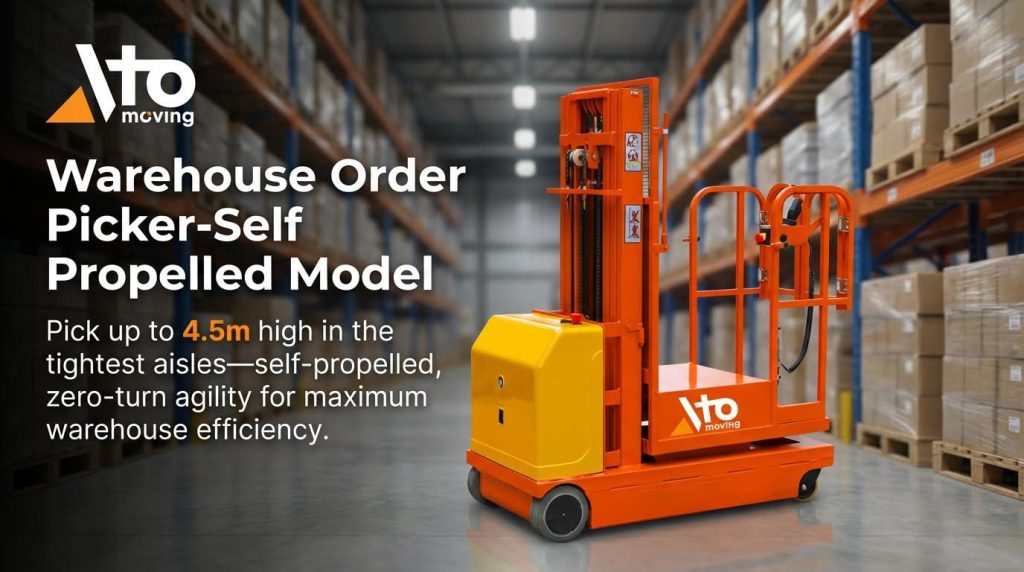
A warehouse operative order picker may use several types of manual and powered equipment. Each has different capacities, reach, and safety implications. Matching the tool to the task is critical for stability, ergonomics, and throughput.
| Equipment type | Typical use | Key specs / limits (typical ranges) | Main safety focus |
|---|---|---|---|
| Manual pallet jack | Short-distance pallet moves at floor level | Load: up to ~5,000 lb; lift height: a few inches | Clear path, controlled speed, proper load positioning |
| Electric pallet jack / walkie | Higher-volume floor-level moves | Similar load to manual; powered travel and lift | Pedestrian awareness, braking distance, pinch points |
| Low‑level order picker | Case picking from ground and first levels | Platform at or just above floor; pallet on forks | Stepping on/off safely, secure product stacking |
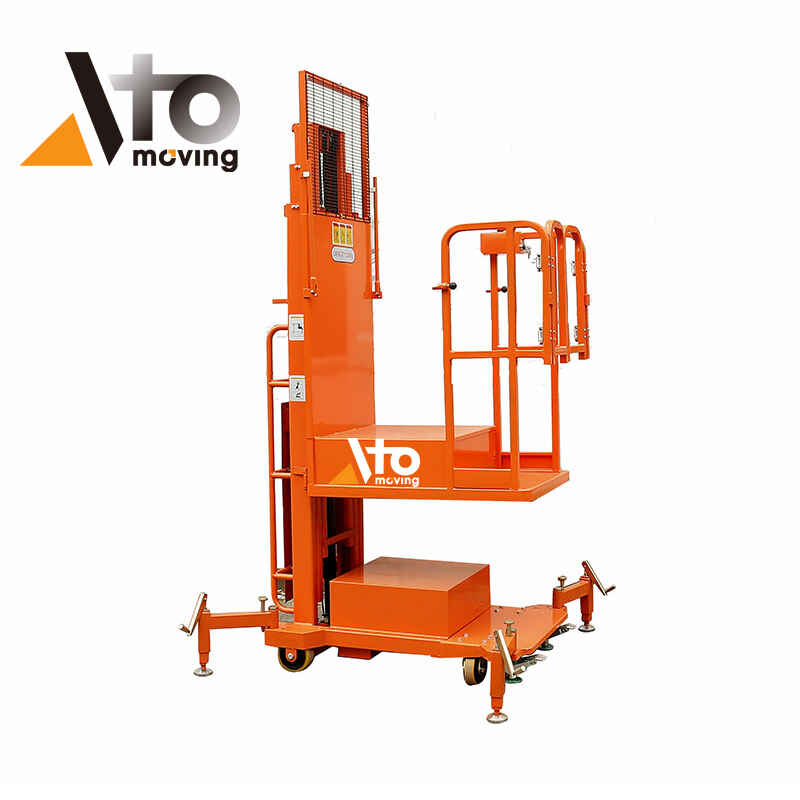
| Mid / high‑level order picker truck | Case picking from racking at height | Platform elevation often 10–30+ ft; load up to several hundred to 3,000 lb total load capacity ranges | Fall protection, stability, clearances, trained operation |
| Mobile lift table | Bringing pallets to ergonomic height | Capacity up to about 1,200 lb; lift height up to ~79 in mobile lift table specs | Even loading, locked casters, pinch‑point control |
For any powered unit, the operator must complete equipment‑specific training and daily pre‑use inspections before operating, as required for a safe warehouse operative order picker role. Proficiency with pallet jacks and similar material handling equipment is commonly expected. Equipment operation requirements
Why matching equipment to task matters
Using an over‑sized truck in narrow aisles, or lifting loads above the rated capacity, sharply reduces the stability margin. Purpose‑built order pickers and lift tables also keep most tasks within the “power zone” (between knees and shoulders) to reduce strain. Ergonomic recommendations
OSHA, ANSI, and fall protection requirements
Order pickers are treated as powered industrial trucks, so OSHA and ANSI standards apply to their design, training, and use. A warehouse operative order picker must understand that these are not optional guidelines but enforceable safety rules.
- OSHA classifies order pickers as Class II electric motor narrow‑aisle trucks, so operators must complete formal training and evaluation before use. Powered industrial truck guidance
- Employers must provide safety training on hazard recognition, traffic rules, and equipment limits, and repeat training when conditions or equipment change. Safety protocol expectations
- Operators must follow facility traffic plans: speed limits, right‑of‑way, and lane markings to avoid collisions with pedestrians and other trucks. Traffic management guidance
- Hands must stay on the controls while the machine is in motion to maintain steering and protect arms in tight spaces. Control‑use recommendation
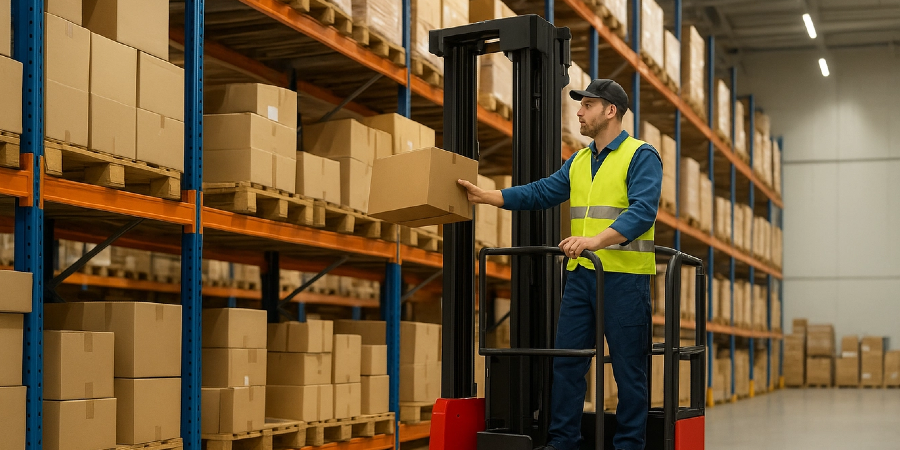
When platforms elevate the operator, fall protection becomes a critical control. Body harnesses, guardrails, and gates are typical engineered measures.
- At height, operators must wear a properly adjusted full‑body harness attached to an approved anchorage on the order picker platform. Fall protection at height
- Platform railings and gates should remain closed whenever the platform is elevated to prevent stepping or falling out.
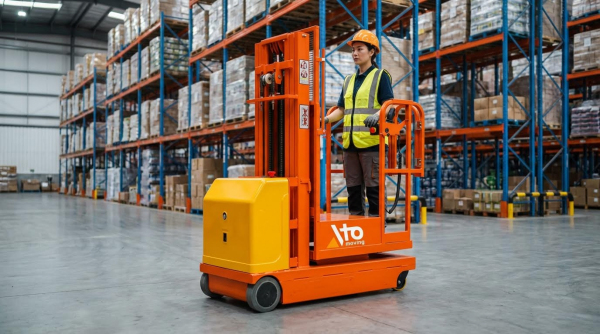
- Appropriate PPE includes safety eyewear, slip‑resistant hard‑soled boots, gloves, high‑visibility vest, and hard hat where overhead loads are present. PPE recommendations
How this ties into daily order picking
For a warehouse operative order picker, these rules translate into routine habits: wearing PPE before entering the floor, clipping into the harness before elevation, respecting aisle speed limits, and never bypassing gates or interlocks to “save time.” Consistent compliance reduces falls, collisions, and musculoskeletal injuries. Safety and certification expectations
Pre-use inspections, load limits, and stability
Safe operation starts before the first move. A warehouse operative order picker must inspect equipment, confirm load limits, and plan how to keep the combined center of gravity inside the stability envelope.
- Perform daily pre‑use inspections of pallet jacks, order pickers, and other equipment, checking controls, brakes, steering, hydraulics, forks, platforms, and visible damage. Pre‑inspection requirement
- Report defects immediately and tag unsafe units out of service until qualified repair.
- Verify that safety devices (horn, alarms, gates, harness anchor points) are present and functional.
| Load / stability factor | Best practice for order pickers |
|---|---|
| Rated capacity | Never exceed the truck’s capacity, which may be “several hundred pounds to 3,000 lb” including operator and tools. Always consult the data plate and manual. Capacity guidance |
| Load positioning | Keep the heaviest items low and closest to the mast; place softer or lighter products on top to avoid damage. Loading practice |
| Center of gravity | Avoid overhanging loads and keep the load centered on the pallet or platform, especially when elevated or turning. |
| Travel conditions | Slow down on ramps, wet or slippery floors, and in congested areas; avoid sudden steering inputs with elevated platforms. |
Ergonomic controls are also part of stability and injury prevention. Mechanical aids should handle loads above roughly 50 lb, and tasks should stay within the power zone to reduce strain. NIOSH‑based lifting guidance
Checklist: pre‑use and loading for a warehouse operative order picker
- Inspect truck: controls, brakes, steering, hydraulics, forks/platform, guards.
- Check environment: aisles clear, floor condition, lighting, traffic routes.
- Confirm data plate and rated capacity for planned load and lift height.
- Build load: heavy items low and against the backrest; light/soft on top.
- Secure load to prevent shifting before raising or traveling.
- Clip into harness and close gates before elevating the platform.
Skills, Technology, And Equipment Selection Criteria
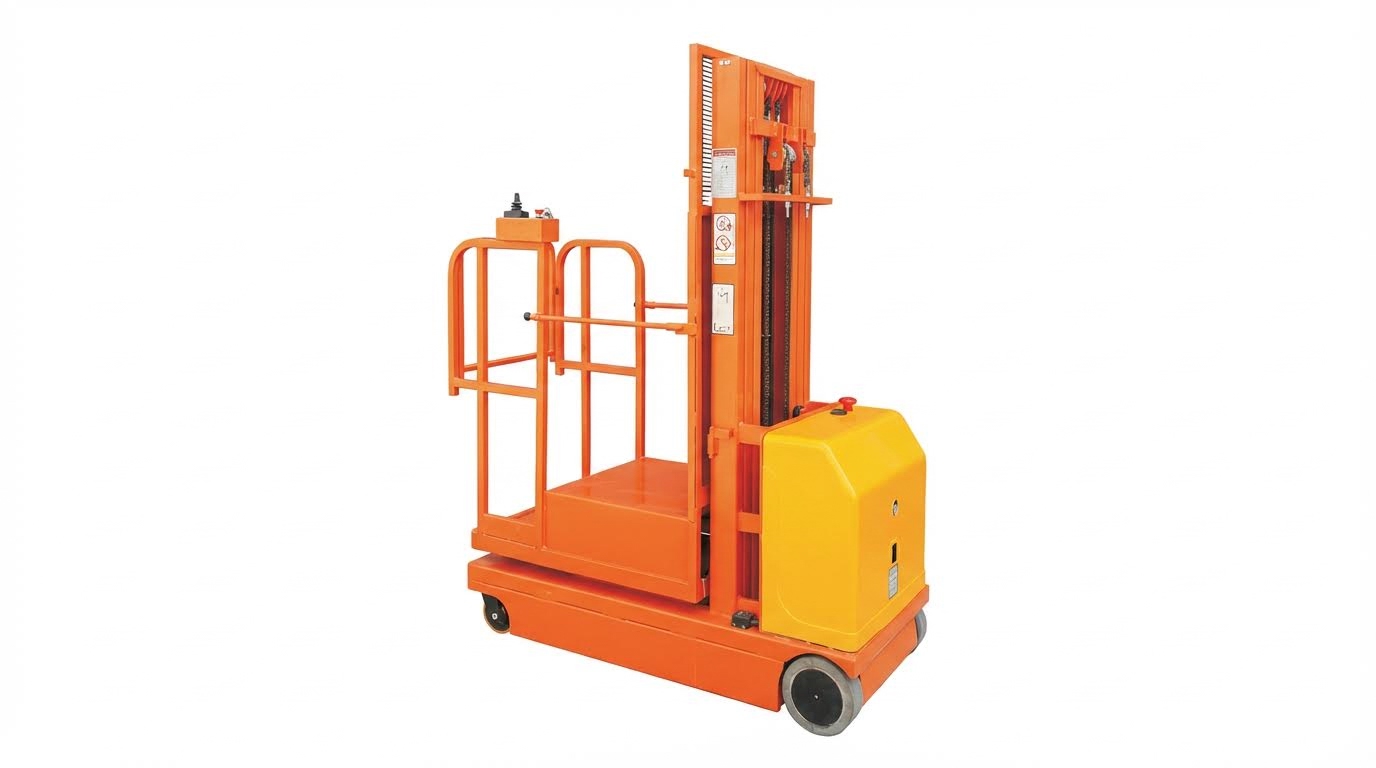
Technical skills: WMS, RF scanners, and voice picking
A warehouse operative order picker must combine system skills with accurate, fast manual handling. Technology drives picking accuracy, traceability, and productivity in modern warehouses.
- Warehouse Management System (WMS)
- Use WMS to receive, allocate, and confirm picks and put-aways. Operators utilized computerized systems and inventory management software to track inventory movements
- Follow system-directed picking routes to cut travel time and congestion.
- Record shortages, damages, and substitutions directly in the WMS for real‑time inventory accuracy.
- RF scanners and barcode readers
- Scan location barcodes and product labels before confirming each pick to prevent mis-picks. Proficiency with RF scanning devices and barcode readers was essential for efficient operations
- Use scan prompts to double-check quantities and lot/serial numbers.
- Support high accuracy targets (often 99%+ picking accuracy) when combined with WMS rules. High picking accuracy minimized errors and returns
- Voice picking systems
- Receive pick instructions via headset to keep hands and eyes free for safe handling. Familiarity with Voice Pick Systems improved order processing efficiency
- Confirm locations and quantities verbally to reduce screen time and scanning steps.
- Perform well in cold, noisy, or low‑light environments where screens are harder to use.
- Data and quality discipline
- Double‑check quantities and item codes before confirming picks in the system. Operators located and accurately pulled orders, ensuring correct quantities by double‑checking their work
- Log all errors, adjustments, and damages to maintain traceability and support continuous improvement. Operators documented errors in databases and resolved discrepancies to maintain standards
How technology supports the warehouse operative order picker role
When WMS, RF scanners, and voice systems are aligned, the warehouse operative order picker works to system-defined priorities, routes, and accuracy checks. This reduces manual paperwork, supports higher throughput, and gives supervisors live visibility of performance and bottlenecks.
Ergonomics, PPE, and injury prevention measures
Ergonomics and PPE protect order pickers from high‑frequency lifting, pushing, and walking. Engineering controls, work design, and personal protection must work together to keep injury rates low.
- Core PPE for order pickers
- Safety footwear with slip‑resistant, hard soles to prevent slips and protect against impact. Slip‑resistant boots with hard soles were recommended
- High‑visibility vest so lift‑truck and order‑picker operators can see pedestrians quickly.
- Gloves to improve grip on cartons and reduce contact stress on fingers and palms. Gloves were listed as standard PPE
- Safety goggles or glasses where dust, debris, or splinters are present.
- Hard hat where there is any overhead storage or lifting equipment risk. Hard hats protected against falling objects
- Ergonomic handling principles
- Use mechanical aids for loads above roughly 50 lb to limit spinal compression. Mechanical aids were recommended for lifting loads exceeding 51 lb
- Work in the “power zone”: between knees and shoulders, close to the body, to reduce bending and over‑reaching. Tasks were recommended within the power zone to reduce strain
- Slide, roll, or use lift tables for heavy items instead of dead‑lifting from floor level.
- Stack heavier cases at mid‑height and lighter cases higher to reduce strain and damage risk. Soft products were kept on top of heavy products during loading
- Engineering controls and equipment
- Mobile lift tables to raise pallets into the power zone and minimize deep bending.
- Adjustable platforms or height‑adjustable pallet positions for high‑frequency pick faces.
- Use of manual pallet jack or powered equipment for long‑distance moves to reduce pushing forces. Proficiency in operating pallet jacks was required
- Work organization and rotation
- Rotate staff between heavy‑lifting zones and lighter tasks to reduce repetitive strain. Job rotation was recommended to reduce musculoskeletal injury risk
- Plan breaks to match peak physical load periods, not just fixed clock times.
- Train each warehouse operative order picker on proper lifting, pushing, and carrying techniques and refresh this regularly. Regular safety training sessions were mandatory
| Risk Factor | Typical Exposure for Order Pickers | Primary Control Type | Example Control Measure |
|---|---|---|---|
| Repetitive lifting | Frequent lifts up to about 50–75 lb per shift | Engineering + administrative | Lift tables, mechanical aids, job rotation |
| Awkward postures | Bending, kneeling, reaching into deep racking | Engineering | Raise pick faces, use adjustable platforms |
| Slip / trip hazards | Busy aisles, debris, variable floor conditions | PPE + housekeeping | Slip‑resistant boots, clean and organized work area |
| Impact from loads or equipment | Working near pallet jacks, lift trucks, and racking | PPE + traffic controls | High‑visibility vests, defined pedestrian routes |
Link between ergonomics and productivity
Good ergonomics lowers fatigue, which helps a warehouse operative order picker maintain speed and accuracy through the whole shift. This supports meeting productivity targets without pushing workers beyond safe physical limits.
Final Thoughts On Managing Order Picker Operations
Effective order picker operations join process discipline, safe equipment use, and ergonomics into one system. Clear workflows, WMS control, and scan or voice confirmation keep accuracy near target levels and protect inventory quality. At the same time, OSHA and ANSI rules, pre‑use inspections, and strict respect for load limits keep trucks stable and operators protected.
Engineering and operations teams should design pick paths, slotting, and equipment selection together. Choose order pickers, pallet jacks, and lift tables that match aisle width, load weight, and lift height, and keep work in the power zone. Build daily checks, PPE use, and harness tie‑off into standard work, not optional steps. Use Atomoving equipment data plates and manuals as the reference for capacity and safe configurations.
The best operations treat order pickers as skilled technicians, not just labor. Train them on WMS, RF, and voice tools, but also on hazard recognition, ergonomic lifting, and when to stop unsafe work. Review incident, damage, and error data often and adjust layout, equipment, or staffing instead of pushing for speed alone. When you align technology, layout, and training around human limits, you get higher throughput, fewer injuries, and more reliable customer service.
Frequently Asked Questions
What does an order picker do in a warehouse?
An order picker in a warehouse is responsible for selecting and gathering items from storage to fulfill customer orders. They often use material handling equipment, such as forklifts or pallet jacks, to move products efficiently. This role requires attention to detail to ensure accuracy in picking the correct items and quantities. Order Picker Career Guide.
What skills are important for an order picker?
Order pickers need strong communication skills to coordinate with team members and supervisors. The ability to handle stress, solve problems quickly, and think on their feet is essential in fast-paced warehouse environments. Reading and writing skills are also important for understanding orders and updating records efficiently. Order Picker Skills Overview.