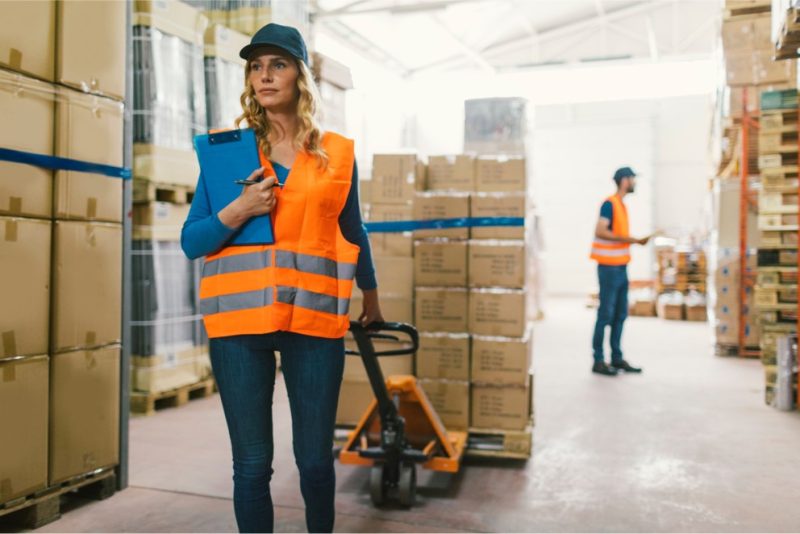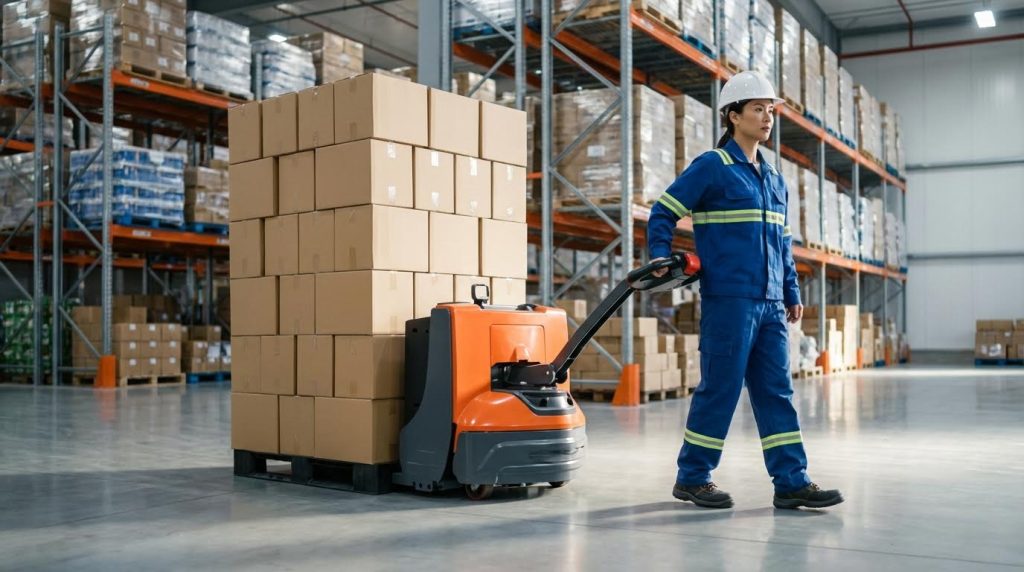
If you are trying to figure out how to move pallets without a manual pallet jack, you have more options than most people realize. This guide walks through manual methods, low-cost mechanical aids, and fully engineered systems so you can match the solution to your loads, distances, and floor conditions. You will see how simple levers and rollers compare with towable drum dolly and conveyor-based pallet transport in terms of safety, throughput, and total cost. Use it as a practical engineering playbook to redesign pallet flow in your facility without defaulting to standard hydraulic pallet truck.
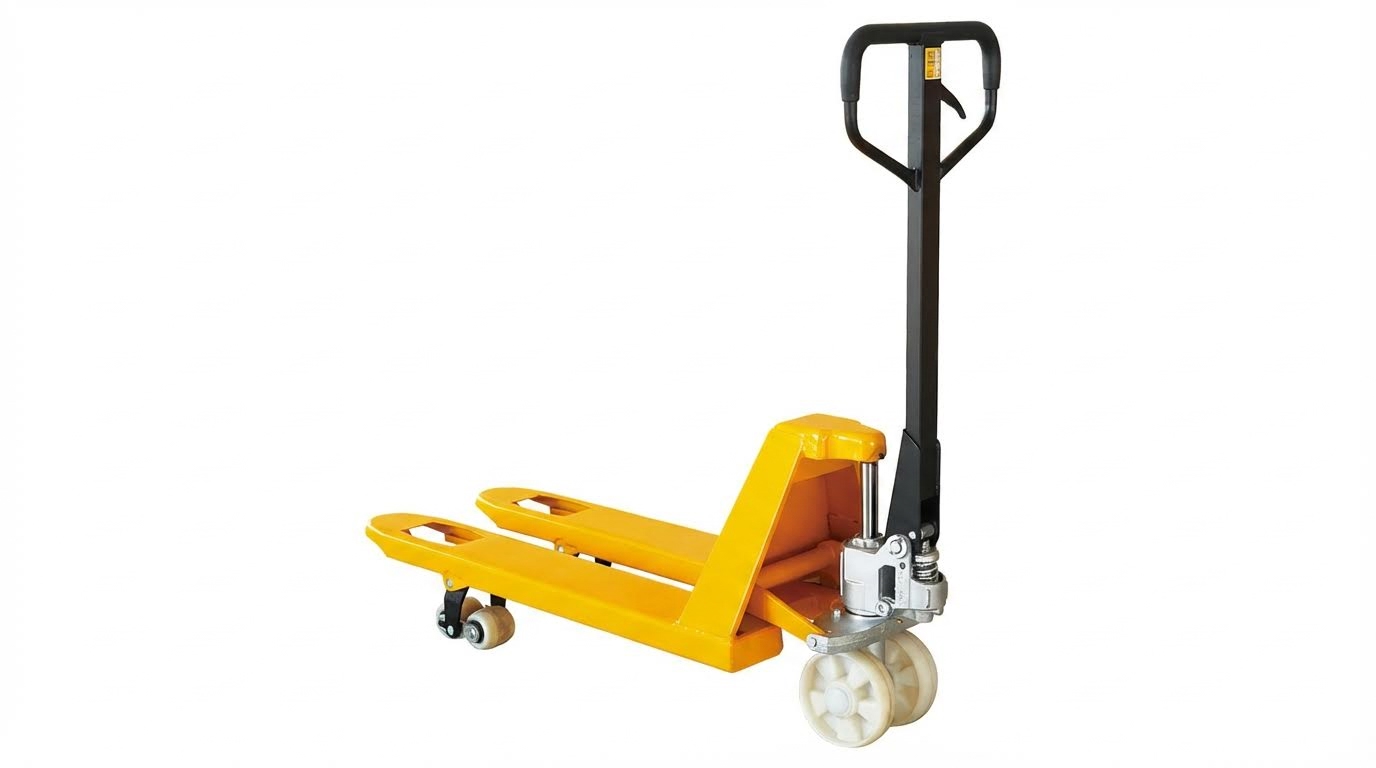
Core Options For Moving Pallets Without A Jack
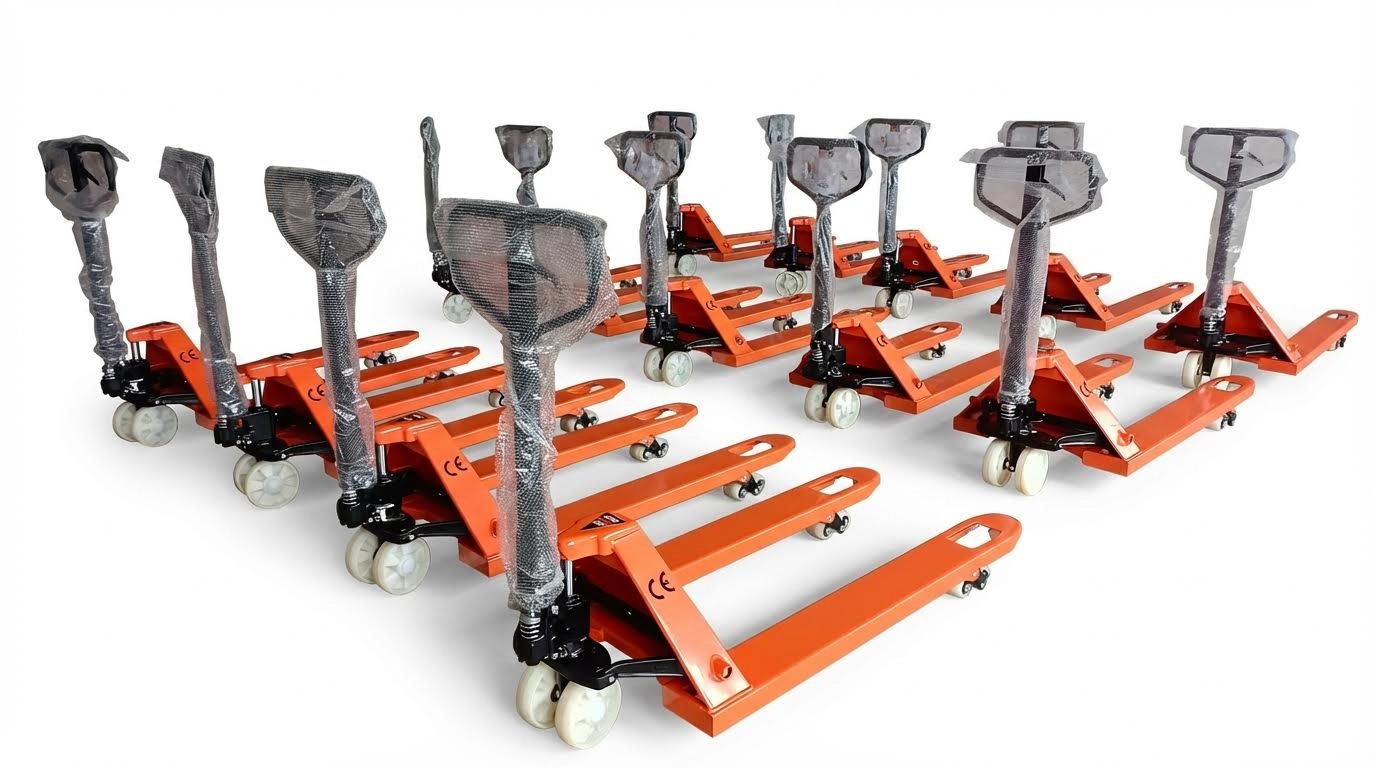
Manual and team handling limits and safety
When you look at how to move pallets without a pallet jack, pure manual handling is the lowest‑tech option but also the highest risk. It only suits light loads, short distances, and very controlled conditions. The key is to understand safe limits, apply correct technique, and know when to stop and bring in mechanical help.
- Where manual lifting is acceptable
- Relatively light pallets or partial loads that can be broken down into smaller units.
- Very short travel distances (a few meters), not full-warehouse transfers.
- Occasional moves, not continuous daily handling.
- Safe manual lifting technique
- Bend at the knees, not at the waist, to keep the spine in a neutral position and avoid back injury.
- Keep the load close to the body to reduce bending moment on the lower back.
- Avoid twisting while lifting; turn with your feet instead.
- Use good grip points on the pallet or load, not broken deck boards.
- Team lifting approach
- Use two or more people to share the pallet weight and reduce individual strain when pallets must be carried.
- Agree commands such as “lift,” “walk,” “stop,” and “set down” before starting.
- Keep the team aligned so the pallet stays level and stable.
- Assign one person as the leader to call movements and watch for obstacles.
- Manual dragging with straps or rope
- Attach a strong tow strap or rope securely through pallet openings, not around loose boards to pull or drag pallets.
- Only use on relatively smooth floors to limit friction and operator effort.
- Keep the pulling angle low to minimize tipping risk.
- Never wrap the strap around hands or body; use handles or hooks.
Key safety limits and red flags
- Stop manual methods if operators report back, shoulder, or knee discomfort.
- Avoid manual handling for full pallets of dense materials (e.g., liquids, metals).
- Do not drag pallets across damaged concrete, floor joints, or steep slopes.
- If frequent moves are needed, move up to engineered aids (rollers, carts, or conveyors).
Lever, pry-bar, and roller-based movement
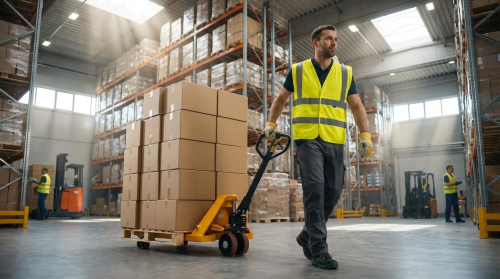
Simple mechanical advantage tools are often the first engineered step when deciding how to move pallets without a pallet jack. They reduce peak forces by using levers and rolling elements, and they work well for occasional moves or tight spaces where powered equipment cannot enter.
- Lever and pry‑bar techniques
- Use a metal bar, pipe, or crowbar as a lever with a wood block as a fulcrum to lift one pallet edge by applying downward force.
- Lift each corner in turn to insert supports, pipes, or low dollies.
- Keep hands and feet clear of pinch points under the deck boards.
- Inspect the pallet first; cracked stringers may fail when pried.
- Turning a pallet into a “sled”
- Use a pry bar to raise one side slightly and slide a smooth, strong plate, sheet, or skid under it on all four sides.
- Once supported, drag the pallet-sled using a tow strap or rope on low-friction floors.
- Apply this only for short moves or where rolling devices cannot be used.
Roller-based methods lower friction dramatically and are much safer for heavier loads than dragging. They need reasonably smooth floors and controlled paths, but they offer a low-cost alternative to pallet jacks in many industrial layouts.
| Method | How it works | Best use case | Key safety notes |
|---|---|---|---|
| Loose pipe or bar rollers | Lift pallet edge with lever, place round pipes under it, then push or pull so the pallet rolls across the pipes acting as rollers. | Occasional moves over smooth concrete, moving into or out of tight machine cells. | Keep at least three rollers under the pallet; control speed to prevent runaway movement. |
| Temporary pallet rollers | Place short roller sections or skates under pallet feet; move pallet along a planned path. | Short transfer between two stations where installing fixed conveyors is not justified. | Ensure rollers are aligned; avoid side loads that could cause tipping. |
| Floor tracks with rollers | Install fixed tracks with integrated rollers so pallets can be pushed or pulled along a defined lane for frequent movement. | Repetitive moves between fixed points in production or staging areas. | Fit end-stops and speed controls; keep tracks clear of debris and spillages. |
Practical engineering tips for lever and roller setups
- Select bar length to balance force reduction and control; longer bars reduce effort but increase swing radius.
- Use steel pipes or rollers with diameter large enough to avoid point loading pallet deck boards.
- Mark roller paths on the floor to standardize routes and avoid pedestrian conflict.
- Combine rollers with tow straps so operators pull in an ergonomic posture instead of pushing bent over.
Engineered Systems To Replace Pallet Jacks
Engineered systems are the long-term answer when you ask how to move pallets without a manual pallet jack at scale. They shift the work from people to mechanical devices, cut travel time, and standardize pallet flow. Below are three core system types that cover most industrial layouts.
Pipe rollers, pallet rollers, and floor tracks
Roller-based systems are the simplest engineered upgrade from ad‑hoc pipes under a pallet. They turn sliding friction into rolling friction, which drastically lowers push and pull forces for operators. You can use loose pipes for short, occasional moves or install fixed pallet roller tracks for repeat paths.
- Best for: Straight, repeat routes between fixed points.
- Floor type: Smooth, hard, and reasonably level surfaces.
- Load pattern: Similar pallet sizes and weights.
- Goal: Reduce manual effort without buying powered trucks.
| Solution type | How it works | Typical use case | Key engineering notes |
|---|---|---|---|
| Loose pipe rollers | Operators tilt pallet and insert several pipes or dowels under the deck so the pallet rolls instead of drags Pipe or Roller System | Low-volume moves on smooth floors; maintenance shops; tight areas where trucks cannot enter | Requires good housekeeping; pipes can shoot out if the pallet stops suddenly; not ideal on slopes |
| Fixed pallet roller tracks | Rollers mounted in steel channels or frames; pallets are pushed or gravity-fed along defined lanes Pallet Roller Systems | High-traffic transfer between production, staging, and shipping; gravity lanes in racking | Requires anchoring and alignment; needs guards at entry/exit; plan for stops and speed control on slopes |
| In-floor or surface tracks | Rollers or low-profile wheels recessed or mounted flush with the floor to create guided paths | Where floor space is tight and you need defined pallet “roads” | Check floor thickness and reinforcement; design for cleaning access to avoid debris jamming rollers |
Practical design and safety tips for roller systems
- Limit slopes on gravity lanes to a gentle gradient to keep speeds controllable.
- Use end-stops or buffer stops to prevent pallets from rolling off the track.
- Specify rollers with diameter and spacing matched to pallet deck board spacing to avoid “dropping” between rollers.
- Plan clear walkways and signage so people do not step into active roller paths.
- Schedule regular inspection and cleaning; debris and damaged rollers increase push forces and accident risk Regular Maintenance of Transport Devices
Towable pallet carts and low-cost tug solutions
Towable pallet carts and simple tugs are often the fastest upgrade when you want to know how to move pallets without a manual pallet jack over longer distances. Instead of lifting the pallet, you place it on a cart or engage it with a low-profile frame, then tow it by hand or with a small tug unit. This converts many individual pallet trips into fewer, more efficient runs.
- Best for: Medium to long internal distances with repeat routes.
- Layout type: Aisles and corridors where trains or carts can pass safely.
- Load pattern: Multiple pallets per trip, moderate to high daily volume.
- Goal: Reduce walking time and strain while avoiding full forklift fleets.
| Equipment | Function | Typical configuration | Engineering / safety points |
|---|---|---|---|
| Towable pallet carts | Flat or recessed deck that accepts a pallet; moved by an operator or tug Towable Pallet Movers | Single- or multi-pallet carts; sometimes with corner guides or side rails for alignment | Size wheels for floor conditions; add brakes or chocks for sloped areas; define safe towing speeds |
| Low-cost manual tugs | Compact powered or mechanical devices that connect to carts and provide tractive force | Used with standardized cart tongues or hitch points to form small trains | Check drawbar load rating vs. total train weight; ensure operators are trained on stopping distance and turning radius |
| Simple tow straps or ropes | Directly attach to a pallet to drag it across the floor Tow Strap or Rope Application | Short, occasional moves where no carts are available | High physical effort; risk of sudden stops and trip hazards; usually a temporary or emergency method only |
When to choose carts and tugs instead of more automation
- Your routes are fixed, but volumes do not justify full conveyor systems.
- You need flexibility to re-route around projects or seasonal storage.
- You want to reduce manual pushing forces but keep capital cost low.
- You operate mixed-use aisles with pedestrians, so you prefer low-speed, highly visible equipment.
Conveyor-based pallet transport and automation
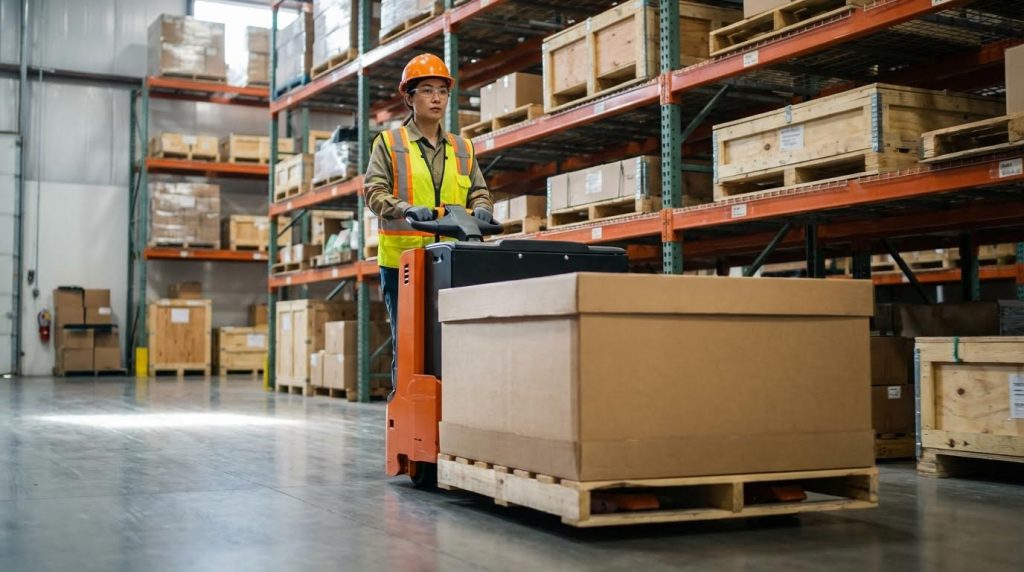
Pallet conveyor systems are the most robust engineered answer to how to move pallets without a manual pallet jack in high-volume plants. They create a continuous, automated path from production to storage or shipping, reducing manual touches, travel time, and forklift traffic. Modern systems include horizontal conveyors, vertical lifts, turntables, and transfer cars to cover complex layouts.
- Best for: High throughput, repetitive flows between fixed zones.
- Layout type: Production lines, automated warehouses, and shipping docks.
- Load pattern: Consistent pallet sizes and steady or high daily volume.
- Goal: Maximize throughput and safety while minimizing labor per pallet.
| Conveyor type | Primary role | Typical application | Key performance / benefit data |
|---|---|---|---|
| Chain-driven live roller (CDLR) | Rollers powered by chains move full pallets along straight runs Chain-Driven Live Roller (CDLR) Conveyors | Rugged environments, accumulation zones, and main pallet highways | Handles heavy pallets reliably; reduces reliance on forklifts and manual labor |
| Drag chain conveyors | Chains pull pallets across support rails or plates Drag Chain Conveyors | Slip-sheet or bottomless pallets and non-standard bases | Good for dirty or harsh areas, but needs protection for chain wear points |
| Turntable conveyors | Rotate pallets 90° or 180° for direction changes Turntable Conveyors | Compact plants with tight corners or orientation changes for scanners and wrappers | Requires precise positioning and guarding to keep operators clear of pinch points |
| Transfer cars | Rail-mounted shuttles move pallets laterally between lanes Transfer Cars | Multi-aisle or multi-zone systems where many lines feed a common area | Eliminates multiple parallel conveyors; improves layout flexibility |
| Vertical conveyors (lifts) | Move pallets between floor levels Vertical Conveyors | Linking production floors, mezzanines, and high-bay storage | Maximizes cubic storage; can operate as continuous or stop-and-go systems |
| Stainless steel pallet conveyors | Conveyors built with corrosion-resistant materials Stainless Steel Conveyor Solutions | Wet, cold, or hygienic environments such as food or cold storage | Use splash-proof drives and protected components for long service life |
Throughput, labor, and energy advantages
- Pallet conveyors can cut the time to move a 1-ton pallet from packaging to dispatch from around 10–15 minutes manually to about 2 minutes via automated paths Time Efficiency of Conveyors.
- Facilities that implemented pallet conveyors have reported roughly 30–40% reductions in manpower needed for pallet movement tasks Labor Reduction with Conveyors.
- Reduced forklift traffic improves overall safety and lowers accident exposure in high-traffic zones Safety Improvements with Conveyors.
- Smart drives and sensors reduce energy use during idle periods, improving energy efficiency over time Energy Efficiency of Conveyors.
Control, integration, and safety for automated pallet lines
- Integrate pallet conveyors with your warehouse management system for real-time pallet tracking, automated routing, and coordination with palletizing cells Integration with Warehouse Management Systems (WMS).
- Use vibration and condition sensors on drives and rollers to support predictive maintenance and avoid unplanned downtime Vibration Sensors for Predictive Maintenance.
- Install physical safety barriers to keep people out of hazardous zones and place emergency stop buttons within about 3 meters of any operator station Safety Barriers and Emergency Stop Buttons.
- Train all operators and maintenance staff on proper use, lockout procedures, and emergency response to minimize human error and keep the system reliable Operator Training.
Selecting The Right Alternative For Your Facility
Choosing how to move pallets without a pallet jack is an engineering decision, not a guess. You need to match load, distance, floor, and safety requirements to the right combination of manual methods, carts, rollers, or conveyors. Use the following structured approach as a quick decision framework for your facility.
Load, distance, and floor condition assessment
Before you pick any solution, quantify what you are actually moving and where it must go. This turns “how to move pallets without a pallet jack” from a trial-and-error exercise into a controlled design choice.
| Factor | Typical Ranges / Conditions | Best-Fit Solutions (No Pallet Jack) | Notes |
|---|---|---|---|
| Unit load weight | Up to ~200 kg (light) / 200–500 kg (medium) / 500–1000+ kg (heavy) | Light: team lift, crowbar/pry-bar sled, tow strap; Medium: pipe/roller systems, towable carts; Heavy: floor tracks, pallet rollers, conveyors | Manual lifting is only acceptable for relatively light loads and short durations Cited Text or Data |
| Travel distance (per move) | <10 m (very short) / 10–40 m (short) / 40–150 m (medium) / >150 m (long) | Very short: lever/fulcrum repositioning, pipe rollers; Short–medium: towable pallet carts, pallet roller tracks; Long: tow straps with carts, conveyor-based transfer | Long manual drags raise fatigue and injury risk; use wheeled or automated systems for >40 m |
| Move frequency | <10 moves/shift (low) / 10–50 (moderate) / >50 (high) | Low: simple manual aids (pry-bars, rollers); Moderate: towable carts, basic floor tracks; High: conveyor-based pallet transport, automated systems Cited Text or Data | High-frequency movement benefits most from conveyors, which can cut handling time by more than half |
| Floor condition | Rough / cracked; smooth concrete; coated/epoxy; wet/cold | Rough: sled-style dragging, robust carts; Smooth: pipe rollers, pallet rollers, towable carts; Wet/cold: stainless or corrosion-resistant conveyors Cited Text or Data | Rollers need smooth, clean floors; wet zones need materials and drives rated for splash and low temperatures |
| Path complexity | Straight, few turns / many turns / level changes | Straight: roller tracks, drag-chain or CDLR conveyors; Many turns: towable carts, turntable conveyors; Level changes: vertical conveyors, inclined roller/chain conveyors Cited Text or Data | Vertical conveyors and turntables handle height changes and corner transitions efficiently |
Use a simple scoring matrix to narrow options.
- Classify your typical pallet weight into light, medium, or heavy.
- Measure average and maximum travel distances.
- Inspect and rate floor quality (smooth, uneven, wet, sloped).
- Count pallet moves per shift for each route.
- Mark which non-jack options fit all four constraints; discard the rest.
Example: Short, heavy moves across a smooth floor
If you move 800 kg pallets 20 m from packaging to staging on smooth concrete, pipe or pallet rollers under the pallet allow push/pull movement with far less force than dragging. The pallet is slightly tilted, rollers inserted, and then pushed along the path Cited Text or Data. For higher frequency, fixed pallet roller tracks or a short conveyor run will reduce manual effort even more.
Safety, standards, and total cost of ownership
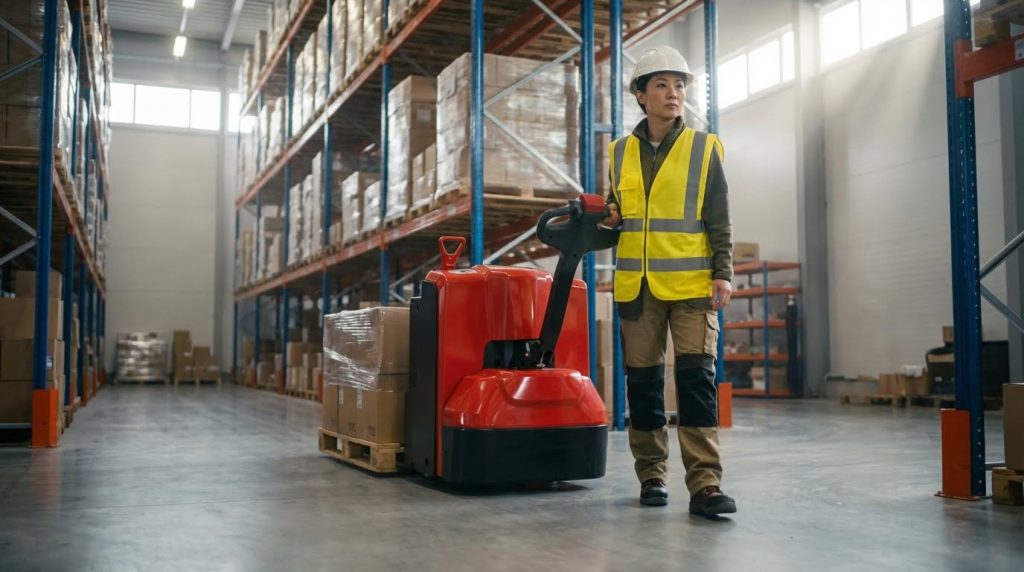
Once the physics works, you still need to prove the option is safe, compliant, and economically sound over its life. This is where many “cheap” ideas for how to move pallets without a pallet jack fail.
| Dimension | Manual / Simple Aids (pry-bar, pipes, tow straps) | Carts & Tugs | Conveyors & Automation |
|---|---|---|---|
| Typical safety profile | Higher risk of strain and overexertion; depends heavily on technique and supervision Cited Text or Data | Improves ergonomics; still requires walk-behind vigilance and clear paths | Best safety profile; minimizes manual handling and forklift traffic Cited Text or Data |
| Standards & guarding | Rely on general manual handling and PPE rules | Requires brakes, rated hitches, and path marking | Needs safety barriers, emergency stops within reach, and interlocks Cited Text or Data |
| Capex | Lowest; mostly hand tools and simple rollers | Medium; carts and basic tugs | Highest; conveyors, controls, and structural work |
| Opex (labor) | High; many operators and low productivity | Moderate; fewer operators per pallet moved | Lowest; conveyors can cut required manpower by 30–40% Cited Text or Data |
| Throughput impact | Limits line speed; bottlenecks at manual transfer points | Good for low–medium throughput | Can increase packaging throughput by ~50–60% in case studies Cited Text or Data |
| Maintenance needs | Minimal; inspection of bars, straps, rollers | Periodic wheel, bearing, and brake checks | Requires scheduled inspections, lubrication, and sensor checks; vibration sensors support predictive maintenance Cited Text or Data |
- Safety controls to implement for any non-jack solution:
- Clear walkways and marked pallet routes to separate people and loads Cited Text or Data
- Mandatory PPE: safety shoes, gloves, and helmets where overhead risks exist Cited Text or Data
- Operator training on proper lifting, lever use, and emergency procedures Cited Text or Data
- Emergency stop buttons within easy reach along conveyor lines Cited Text or Data
To evaluate total cost of ownership (TCO), combine labor, maintenance, and risk costs over a 5–10 year horizon.
- Estimate labor hours per pallet move for each option and multiply by your wage rate.
- Add expected maintenance hours and parts costs using vendor or in-house data.
- Factor in injury risk reduction; automated and conveyor systems often cut handling-related injuries and associated costs significantly Cited Text or Data.
- Include any infrastructure work (floor repairs, guards, power, controls) in year-one capex.
- Compare payback periods; many automated pallet systems recoup investment in a few years through labor and throughput gains Cited Text or Data.
When a conveyor beats “cheap” manual methods
In a high-volume plant, manual pallet transfer between packaging and storage can consume 10–15 minutes per pallet, while a conveyor can move the same pallet in about 2 minutes Cited Text or Data. Over thousands of pallets, this time difference, combined with a 30–40% drop in required manpower, often outweighs the higher initial cost.
Final Thoughts On Non‑Jack Pallet Handling Solutions
Non-jack pallet handling only works well when you treat it as an engineering problem, not a workaround. Manual lifting, levers, and simple rollers can be safe and efficient, but only inside clear limits on weight, distance, and frequency. Once loads get heavier or routes get longer, you must shift the work onto wheels, rollers, or conveyors to protect people and keep flow stable.
Roller tracks, towable carts, and conveyor systems all apply the same physics. They cut friction, control paths, and remove peak forces from the operator. As you move up this ladder, capital cost rises, but labor, injury risk, and travel time drop sharply. The best choice is rarely a single device. It is a layered system that uses manual aids at the edge, carts in the aisles, and fixed automation on the main routes.
For operations and engineering teams, the verdict is clear. Start with hard data on load, distance, floor, and volume. Reject any method that relies on “pushing harder” instead of better mechanics. Then build a standard, documented pallet flow that favors rolling, guided, and automated movement. If you need a reference design or hardware starting point, review Atomoving solutions against your routes and TCO model before you buy.
Frequently Asked Questions
How to Move Pallets Without a Pallet Jack?
Moving pallets without a pallet jack can be done using alternatives like manual stackers, carts, or even hand trucks designed for heavy loads. These tools allow you to safely lift and transport palletized goods in environments like warehouses or retail stores. For lighter pallets, a simple two-wheeled dolly might also work.
- Use manual stackers for lifting and moving heavier pallets.
- Employ heavy-duty carts for transporting pallets over short distances.
- Consider hand trucks with load straps for smaller or lighter pallets.
For more information on manual methods, check this guide: Manual Pallet Moving Tips.
What Are Alternatives to a Pallet Truck?
If you don’t have access to a pallet truck, there are several alternatives available depending on the weight and size of your load. Options include:
- Manual pallet movers that function similarly to pallet jacks but may have different designs.
- Roller conveyors for moving pallets along fixed paths within a facility.
- Lever hoists combined with dollies for lifting and relocating pallets manually.
These solutions help maintain efficiency while reducing dependency on traditional equipment. Learn more about equipment options here: Pallet Moving Equipment Guide.