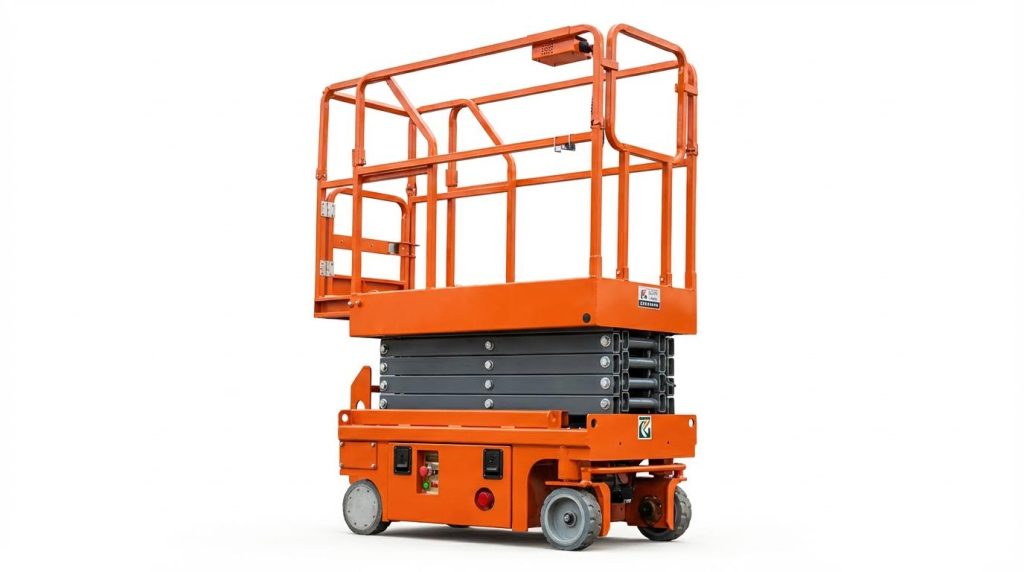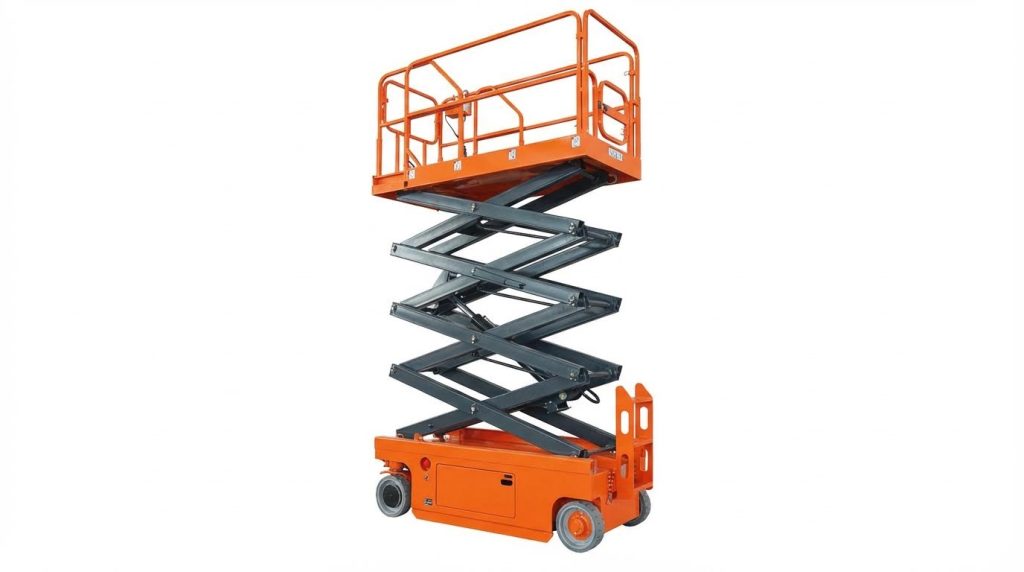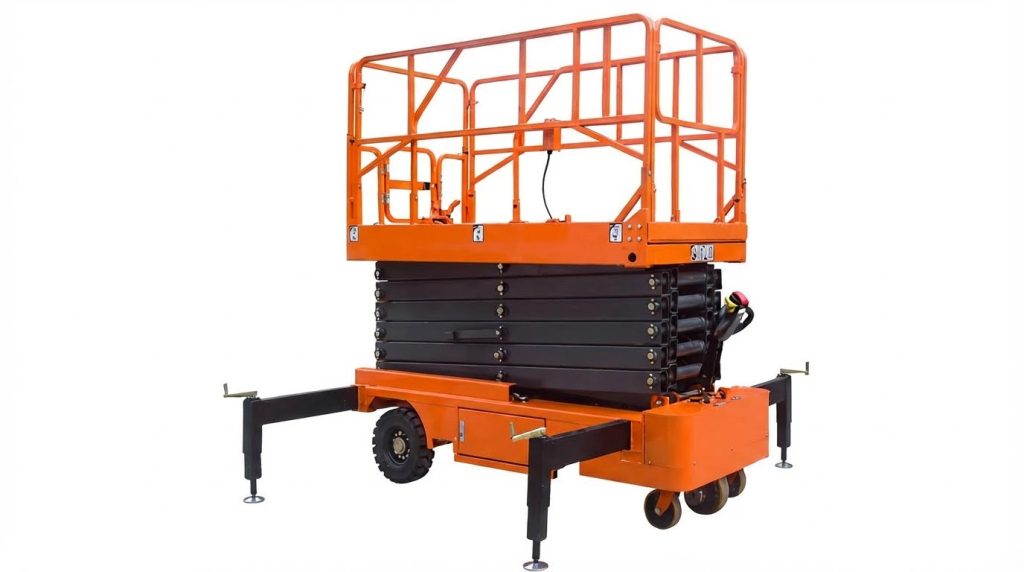
Compact and micro scissor lifts give you vertical access in the tightest aisles, corridors, and plant spaces, but they come with strict limits on height, load, and floor conditions. This article explains what counts as a micro or compact scissor platform, typical sizes, and what is the smallest scissor lift you can practically use indoors. You will see how platform height, footprint, powertrain, and safety standards define the working envelope, and how to match these machines to your building constraints. Use it as a practical guide to specify, compare, and safely operate the smallest scissor platform lift in your fleet.
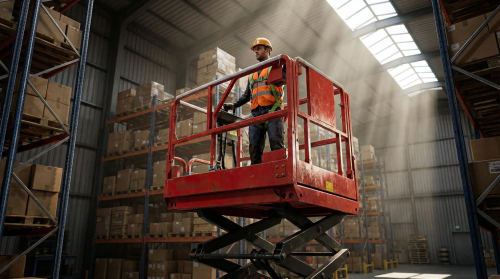
What Counts As A Micro Or Compact Scissor Lift?
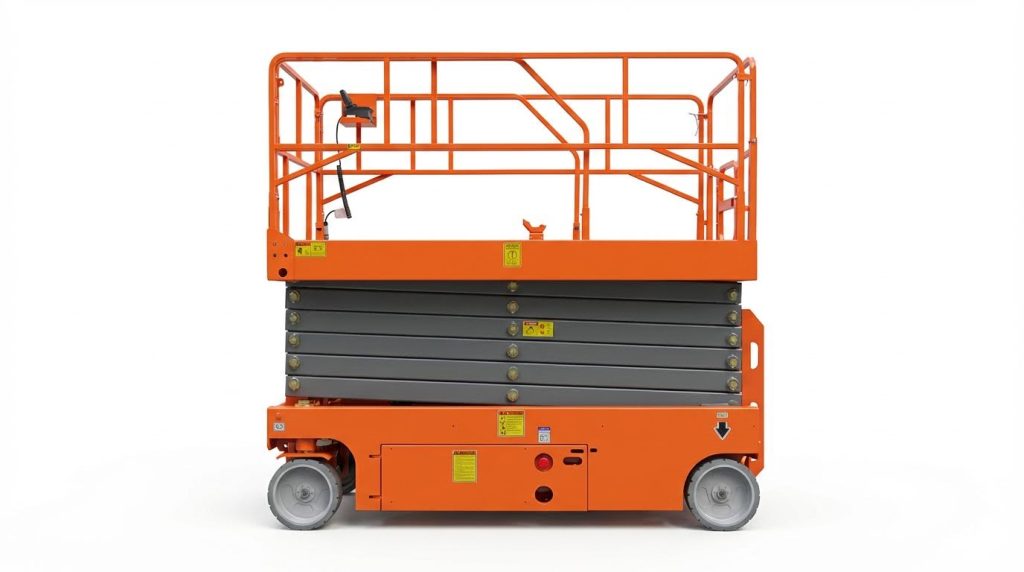
Defining micro vs compact scissor lifts
In practice, “micro” and “compact” describe the smallest class of self-propelled scissor platform lift designed for tight indoor spaces and frequent repositioning. Micro scissor lifts typically have a very short overall length around 1.1–1.3 m and a narrow width near 0.76 m, so they can pass easily through standard doorways and narrow aisles based on typical machine dimensions of 1160 mm × 760 mm. They usually offer low to moderate platform heights, optimized for work under typical warehouse and retail ceilings rather than very high construction work. Compact scissor lifts overlap this range but run slightly larger in footprint and working height, still staying small enough for indoor logistics, light maintenance, and facility work. When people ask what is the smallest scissor lift, they are almost always talking about these micro units at the bottom end of the compact category.
Key characteristics that define “micro” and “compact” lifts
- Self-propelled electric drive for indoor use and zero emissions to suit low-noise, indoor environments.
- Very small chassis footprint, typically around 1.1–1.3 m long and 0.76 m wide, with folded heights roughly 1.3–1.6 m for door clearance as indicated by folded and extended height ranges.
- Platform capacities around 300 kg, enough for one or two workers plus tools with some models allowing an extra 100 kg on extensions.
- Electric powertrains using 24 V battery systems for quiet, low-maintenance operation such as dual 12 V/80 Ah batteries with integrated chargers.
Smallest typical sizes and height ranges
From an engineering and rental-market perspective, the smallest common micro or compact scissor lifts usually offer platform heights starting around 1.8 m and running up to about 4.8 m for this class. That means a typical working height (platform plus operator reach) of roughly 3.8–6.8 m, which covers lighting, racking, signage, and MEP work in many commercial interiors. Compact scissor lifts in this size band often keep the chassis footprint near 1300 mm × 760 mm, so they stay agile in narrow aisles while still delivering useful reach and capacity with typical platform dimensions and 300 kg ratings. When you compare options to answer what is the smallest scissor lift you can practically use, you need to balance minimum platform height, folded height for transport, and footprint against the building’s doorways, floor loading, and the actual working height you need.
| Parameter | Typical micro / compact range | Notes |
|---|---|---|
| Platform height | ≈ 1.8–4.8 m | Covers most indoor maintenance and stocking tasks for mini scissor lift platforms |
| Overall length | ≈ 1.16–1.30 m | Short chassis for tight turning in aisles based on 1160 mm length examples |
| Overall width | ≈ 0.76 m | Fits standard single doors and narrow warehouse aisles with 760 mm width |
| Folded height | ≈ 1.34–1.58 m | Allows passage through low door frames and under mezzanines using typical folded height data |
| Capacity | ≈ 300 kg (plus ~100 kg on extension) | Supports one or two workers plus tools and materials for standard mini scissor lift designs |
Why you rarely see lifts smaller than this
- Below about 1.8 m platform height, step platforms or podiums often handle the work more economically.
- Very small scissor geometries limit capacity and stability, especially with a 300 kg design target.
- Regulatory requirements for guardrails, controls, and safety systems set a practical minimum platform size and rail height because lifts must function as mobile supported scaffolds with full guardrail systems.
Key Specifications, Design Limits, And Safety
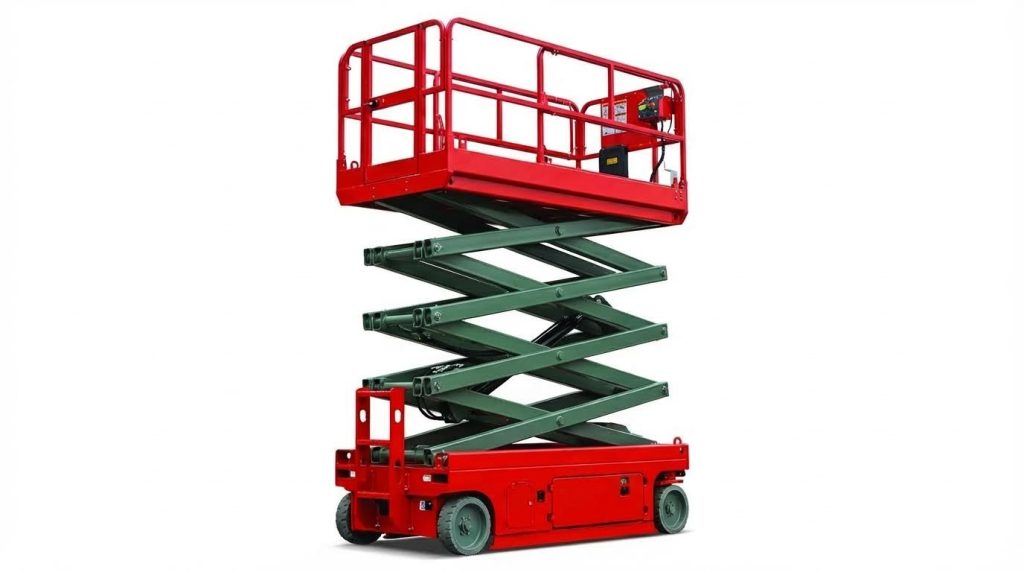
Platform height, footprint, and floor loading
When people ask what is the smallest scissor lift, they usually mean the micro class with very short platform height and a tight footprint. Typical compact and micro scissor lifts reach platform heights of about 1.8 m to 4.8 m, covering low-level indoor work such as ceiling services and racking access platform heights ranging from 1.8 m to 4.8 m. Micro units often have an overall length around 1160–1300 mm and width near 760 mm, which allows them to pass through standard doorways and work in narrow aisles overall length of 1160 mm, width of 760 mm typically measure 1300 mm in length and 760 mm in width. Stowed heights in the 1.3–1.6 m range allow these machines to pass under low mezzanines and into small freight elevators folded height reduces to 1340–1580 mm.
- Platform capacity is commonly around 300 kg, enough for one or two workers plus tools platform capacity of 300 kg load rating of approximately 300 kg.
- Some compact models add a small roll-out deck extension, typically around 600 mm, for extra reach without moving the base 24-inch (61 cm) extension.
- Floor loading is usually specified both as average and local pressure so facility engineers can verify slab and mezzanine capacity; for example, some data sheets list uniform pressures around a few hundred pounds with lower localized limits uniform pressure ratings of 224 lbs., localized pressure 112 lbs..
Design limits come from this combination of height, footprint, and floor loading. As platform height increases on a very small base, side-load and overturn risk grow, so manufacturers cap height, capacity, and allowable occupants for micro units. For indoor projects, always check the machine’s published wheel load and floor pressure against the building engineer’s limits, especially on mezzanines, raised floors, or older slabs.
Powertrain, batteries, and duty cycle
Micro and compact scissor lifts are almost always electric, optimized for short, frequent cycles in tight indoor spaces. Many models use a 24 V DC architecture with paired 12 V batteries in the 70–80 Ah class to power both drive and lift functions two 12V/80Ah batteries at 24V 24/80 V/Ah batteries. Typical lift motors are under 1 kW and drive motors are smaller still, which keeps energy use and heat low while still giving adequate performance for indoor grades and short runs lifting motor 24V/0.8kW, dual 24V/0.4kW drive motors.
- Integrated chargers in the 24 V / 15 A range allow overnight charging from standard power, which supports a daily duty cycle of intermittent use rather than continuous multi-shift operation 24V/15A charger 24/15 chargers.
- Manufacturers recommend regular top-up charging instead of deep discharges to extend battery life over several years in typical service top-up charges for optimal battery life.
- Travel speeds are usually limited to a walking pace, around 4 km/h, to keep control predictable in crowded interiors travel speed capped at 4 km/h.
For buyers, understanding duty cycle is critical when deciding what is the smallest scissor lift that will still meet daily throughput. If the lift will run many hours per shift or travel long distances, a higher-capacity battery pack or opportunity charging strategy may be necessary. Features such as drawer-style battery trays and clear battery status displays reduce maintenance time and help operators avoid unplanned downtime from discharged packs drawer-style battery trays and clear control panels.
Stability, gradeability, and OSHA/ANSI safety
Stability is the main engineering limit on how small a scissor lift base can be for a given height. Micro scissor lifts often offer gradeability up to about 25% for transport on ramps, but they are intended to work on firm, level floors during elevation gradeability up to 25%. Ground clearance is usually around 60 mm, which is enough for small thresholds but confirms that these units are not designed for rough terrain minimum ground clearance 60 mm ground clearance of about 60 mm.
- OSHA treated scissor lifts as mobile supported scaffolds and required guardrails on all platforms, with workers trained not to stand on rails or lean out excessively guardrails for fall protection.
- Safe practice required operation only on stable, level surfaces, away from drop-offs, holes, or debris, and not in high winds or severe weather firm, level surfaces and wind limits avoid adverse weather and unstable surfaces.
- Manufacturers added safety systems such as automatic brakes, tilt sensors with alarms, emergency lowering, and hose-rupture protection to prevent collapse or uncontrolled movement tilt sensors, emergency lowering, automatic brakes hose rupture protection and electronic tilt sensors.
From an OSHA/ANSI standpoint, operators needed training on hazards such as overloading, abrupt movements, and proximity to overhead power lines, with guidance to keep at least 10 ft clearance from electrical sources overloading and abrupt movements minimum distance of 10 feet from electrical power sources. Regular inspections, functional tests, and respecting the manufacturer’s rated capacity are non-negotiable to avoid tip-over or structural failure maintenance, inspection, and load rating limits. When selecting the smallest scissor lift for a job, safety margins on stability, gradeability, and training requirements should carry at least as much weight as platform height and footprint. scissor platform lift, manual pallet jack, drum cart, and aerial platform are examples of equipment that complement these considerations.
Best-Fit Applications And Selection Criteria
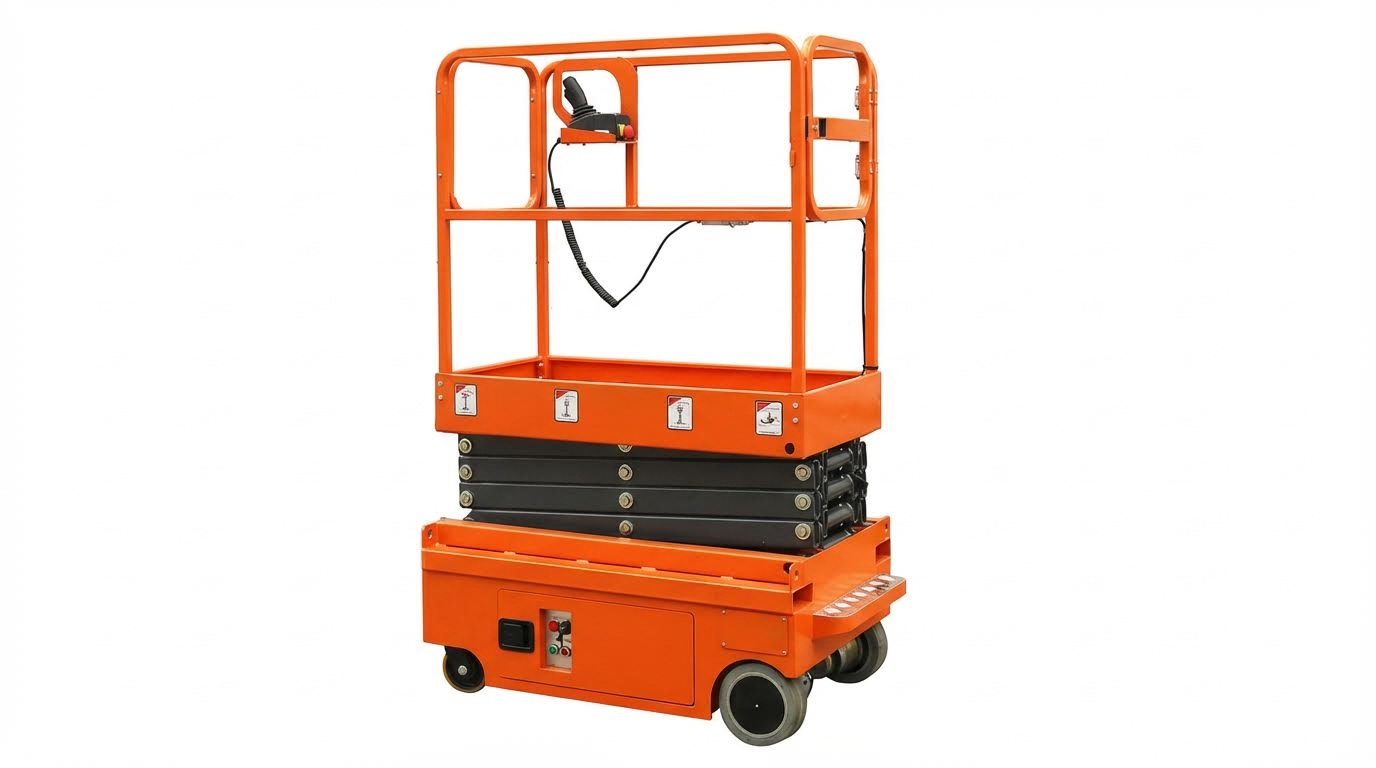
Matching lift size to task and building constraints
When teams ask what is the smallest scissor lift that will safely do the job, the starting point is always the work height and building envelope. Typical compact and micro units reach platform heights of about 1.8–4.8 m, with overall machine lengths near 1160–1300 mm and widths around 760 mm, so they fit narrow aisles and standard doorways platform height and machine dimensions compact dimensions. You then compare this envelope to ceiling height, beam locations, sprinkler lines, and door or elevator openings. Turning radius, often near 1200 mm, also matters in tight corridors and between racking minimal turning radius. Ground clearance of roughly 60 mm and the need for flat, firm floors limit these machines mainly to smooth indoor slabs or well-finished outdoor surfaces ground clearance and floor suitability.
- Define maximum required working height (platform height plus operator reach).
- Check door, elevator, and aisle constraints against machine length, width, and stowed height.
- Confirm floor type and loading capacity versus lift floor loading and weight distribution floor loading data.
- Evaluate turning radius and any need for deck extension for reach into racking or over obstacles deck extension example.
Typical micro-lift fit check example
A micro lift with about 1.8 m platform height, 760 mm width, and 1340–1580 mm stowed height can pass through internal doors and work under low mezzanines, while still replacing ladders for stock picking and light maintenance stowed dimensions.
Evaluating TCO, maintenance, and technology options
Once the physical fit is clear, selection shifts to total cost of ownership (TCO) and reliability. Quality small scissor lifts typically carry platform ratings around 300 kg, enough for two people plus tools, with some models allowing an extra 100 kg on an extension deck platform dimensions and load. Better-built units use stronger structures and improved hydraulics, which reduced breakdowns and unplanned downtime compared with low-cost designs that relied on thin arms and basic components cost of low-quality lifts. Electric micro lifts with 24 V battery systems and integrated chargers offered low noise, zero local emissions, and simpler maintenance, which cut operating costs in indoor facilities battery and charger indoor environmental benefits.
- Include service access (pull‑out drawers, clear control layout) in your TCO model, since easier maintenance shortens downtime windows maintenance accessibility.
- Assess battery capacity and charging strategy versus shift pattern; regular top‑up charging extended battery life and reduced replacement frequency battery maintenance.
- Factor in safety technology such as tilt sensors, emergency lowering, and automatic brakes, which reduced incident risk and potential downtime safety features tilt and hose-rupture protection.
- Consider versatility: a single mini lift could handle warehouse picking in the morning and office maintenance later, improving utilization and payback warehouse order picker.
| Selection factor | Impact on TCO |
|---|---|
| Build quality and components | Drives failure rate, repair cost, and residual value over life. |
| Battery system and charger | Affects energy cost, battery replacement interval, and uptime. |
| Service access design | Determines labor hours and duration of each maintenance event. |
| Safety and control technology | Reduces incident risk, damage, and regulatory exposure. |
Final Considerations On Using The Smallest Scissor Lifts
Micro and compact scissor lifts only work safely when you respect their geometric and structural limits. Short platforms on narrow bases give excellent access in tight aisles, but they also leave less margin against overload, side‑load, and poor floor conditions. Engineers must always check platform height, footprint, and floor loading against real building data, not just brochure numbers. Operations teams must treat duty cycle and battery capacity as hard constraints. Undersized packs or weak charging plans quickly turn a “small and handy” lift into a bottleneck. Stability and regulatory rules close the loop. OSHA/ANSI requirements on guardrails, training, and inspections exist because small lifts can still tip or fail if misused. Grade limits, tilt alarms, and automatic brakes only help if supervisors enforce them. The best practice is clear. Start with the task and building envelope, then choose the smallest lift that still leaves safety and capacity headroom, not the absolute minimum size. Favor well‑engineered electric units with strong structures, clear floor‑loading data, and robust safety systems. Used this way, micro and compact scissor lifts can replace ladders, raise productivity, and cut risk across your facility and within an Atomoving fleet plan.
Frequently Asked Questions
What is the smallest scissor lift?
The smallest scissor lifts are designed for tight spaces and lightweight applications. One example is the Hy-Brid 14′ Model: PS-1430, which weighs only 1,780 lbs and has a platform capacity of 700 lbs. These lifts are ideal for indoor use or areas with weight restrictions. Ultra Light Scissor Lifts.
What can I use instead of a scissor lift?
If a scissor lift isn’t suitable, alternatives include dumbwaiters for small freight transport or vertical personnel lifts for moving people in tight spaces. Dumbwaiters are often used in restaurants or private buildings to transport items like food or documents between floors. Types of Elevators.