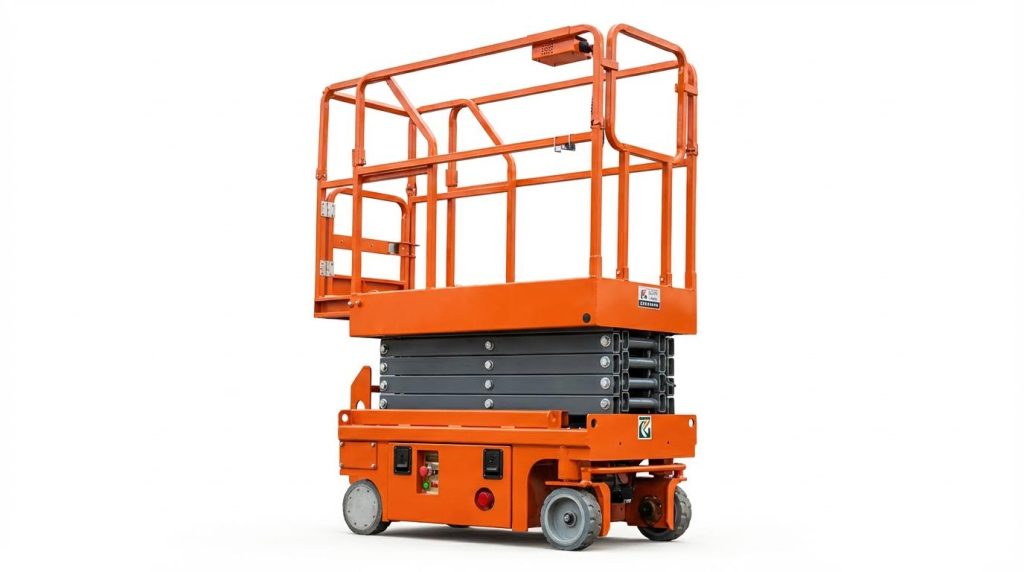
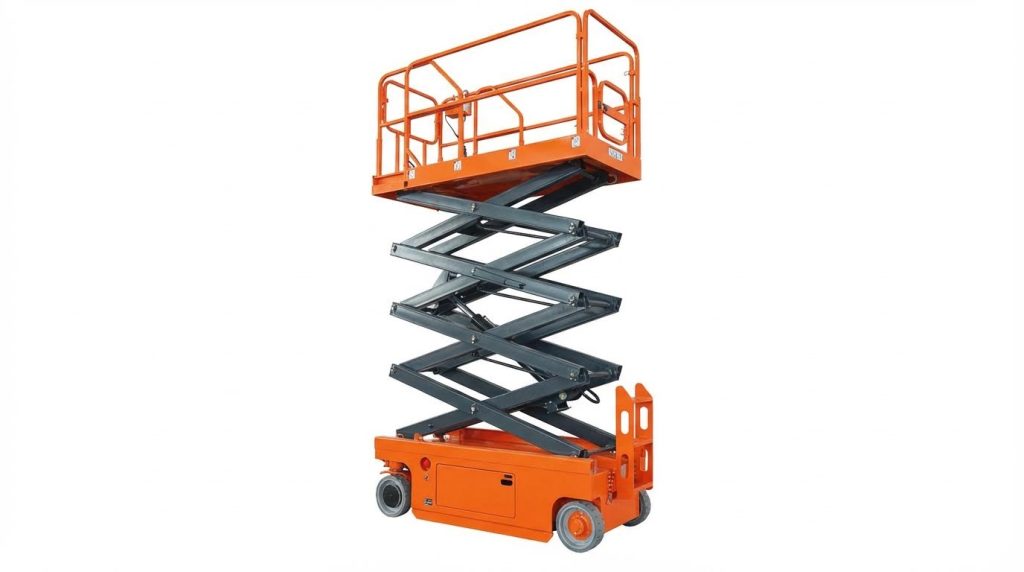
Safe operation of MEWPs on slopes and uneven ground depends on understanding stability limits, ground conditions, and strict compliance with manufacturer ratings. This guide explains what to check, how to calculate slopes, and how to react when tilt alarms sound. You will see how OSHA and ANSI rules translate into practical controls for real jobs, especially when traveling on a slope aerial platform. Use it as a planning and toolbox resource before you ever raise a platform off level ground.

Core Principles Of MEWP Stability On Slopes
Core stability on slopes comes from MEWP geometry, centre-of-gravity control, and strict limits on slope, load, and wind. When traveling on a slope mobile elevated work platform operators must stay within manufacturer ratings and standards-based safety margins.
💡 Field Engineer’s Note: Treat every slope as steeper than it looks. Visual judgement is unreliable; always verify with a measured gradient before you trust a MEWP’s slope or tilt rating.
How MEWP design affects stability margins
MEWP design affects stability margins by fixing how far the centre of gravity can move before crossing the tipping line. Different groups and types behave very differently on slopes and uneven ground.
ANSI groups and types define where the platform sits relative to tipping lines and how the machine can move while elevated. Group A platforms (like vertical and scissor platform) stay inside the tipping lines, while Group B platforms (boom-type) can project the load well outside these lines, making them more sensitive to slope and wind. Types 1, 2, and 3 describe whether the MEWP can travel with the platform elevated and where the travel controls are located, which directly affects control on gradients and rough ground. ANSI group/type overview.
| Design Feature | Typical Variation | Stability Effect On Slopes | Operational Impact |
|---|---|---|---|
| Platform position vs tipping lines | Group A (inside) vs Group B (outside) | Group B has smaller stability margin when elevated on slopes or in wind | Use Group A where possible on sloping slabs; keep Group B booms lower and retracted |
| Travel capability when elevated | Type 1, 2, 3 | Travel while elevated increases dynamic loading and risk of crossing tipping line | Avoid driving elevated on any gradient unless explicitly allowed and within rating |
| Outriggers / stabilizers | None, fixed, or adjustable | Outriggers widen the base and improve stability but concentrate load at feet | Always use spreader plates on weak ground to keep support points level and firm |
| Chassis and wheelbase geometry | Narrow indoor vs wide rough-terrain | Wider wheelbase and larger tyres give better resistance to lateral tipping | Choose rough‑terrain units for soft or uneven ground, not compact indoor machines |
| Structural and stability design standard | Compliant with ANSI A92.20 | Defines minimum stability margins for static, dynamic, and wind loading | Operate only within published limits; design margin is not spare capacity |
Design standards such as ANSI A92.20 require stability tests on rated slopes and in rated wind, including dynamic effects from braking and slewing, to prove resistance to tip-over before a MEWP is placed on the market. These tests assume the machine is used on firm, level surfaces unless it is specifically designed and rated otherwise, so any extra slope, soft ground, or overloading quickly eats into the built-in safety margin. A92.20 design and stability themes.
- Group/Type selection: Match MEWP group and type to the terrain – this preserves the intended stability margin on gradients.
- Outrigger configuration: Use full extension and proper supports – partial or uneven deployment destroys the design assumptions.
- Load within rating: Keep below platform capacity – extra mass raises and shifts the centre of gravity toward the tipping edge.
- Wind and dynamic forces: Respect wind ratings and avoid sudden movements – dynamic loads can momentarily exceed tested limits.
Why level support under each wheel or outrigger matters
Even a few millimetres of settlement under one wheel or outrigger can tilt the whole MEWP. That tilt shifts the centre of gravity sideways, reducing the remaining slope margin and making a tip-over more likely when the platform moves or the wind gusts.
Slope ratings, gradeability, and tilt limits
Slope ratings, gradeability, and tilt limits define how steep a surface a MEWP may travel on, and how much out-of-level it may safely tolerate when elevated. When traveling on a slope mobile elevated work platform operators must stay within all three limits, not just one.
The maximum slope or gradeability rating is published in the operator’s manual and on the machine. Before using a MEWP on a gradient, the actual slope of the work area must be measured, either with a digital inclinometer or by measuring rise and run with a level and tape. For example, a rise of 305 mm over a run of 3 658 mm (12 in over 144 in) gives about an 8.3% grade. If the measured slope exceeds the MEWP’s rating, it is not safe to operate or travel on that surface. Slope rating and calculation method.
| Limit Type | What It Controls | How It Is Determined | Operational Impact On Slopes |
|---|---|---|---|
| Gradeability / slope rating (travel) | Maximum gradient the MEWP may drive on, usually with platform stowed | Published by manufacturer in manual and on decals | Do not drive up/down or across slopes steeper than this, even with platform lowered |
| Allowable tilt (elevation) | Maximum out‑of‑level condition when platform is raised | Verified by stability tests under ANSI A92.20 | Many units must be essentially level before elevating; some allow only small degrees of tilt |
| Tilt alarm threshold | Angle at which the tilt sensor triggers an alarm | Set by manufacturer relative to stability margin | If the alarm sounds while elevated, lower and reposition; continuing work risks tip-over |
| Ground condition requirement | Firmness and strength of supporting surface | Assessed by ground survey and inspection | Soft or collapsing ground can effectively increase tilt beyond the rated limit |
Most modern self-propelled MEWPs include a tilt alarm that warns when the machine is on a slope steeper than allowed. If the alarm sounds with the platform raised, the response depends on the machine type: scissor platform lift should be lowered and the unit moved to a firm, level surface, while boom lifts must have the boom carefully lowered and retracted without slewing until the alarm clears. Tilt alarm guidance.
- Before travel: Measure the slope and compare with the MEWP’s gradeability rating – never guess based on appearance.
- During travel: Keep the platform fully lowered on any gradient – this keeps the centre of gravity as low as possible.
- Before elevation: Confirm the machine is within its allowable tilt limit – if in doubt, treat it as “elevation not permitted.”
- If tilt alarm sounds: Follow the specific recovery procedure for that MEWP – incorrect movement can shift the load further toward the tipping edge.
Design and safe-use standards tie these limits together. ANSI A92.20 defines how stability and tilt tests must be run, while OSHA regulations require operation only within manufacturer ratings and design limits, with daily checks of controls and safety devices before use. OSHA/ANSI duties on ratings and inspections.
How to measure slope quickly on site
Use a smartphone inclinometer app placed on the slab or ramp where the MEWP will travel, or measure rise over a known horizontal run with a level and tape. Convert rise/run to a percentage grade and compare directly with the machine’s published rating.
💡 Field Engineer’s Note: When planning where and when traveling on a slope mobile elevated work platform, treat the published slope rating as an absolute ceiling, then derate further for wet, icy, or contaminated surfaces. Traction loss on a slippery 10% slope can be as dangerous as exceeding a 15% rating on dry concrete.
Technical Controls For Working On Slopes
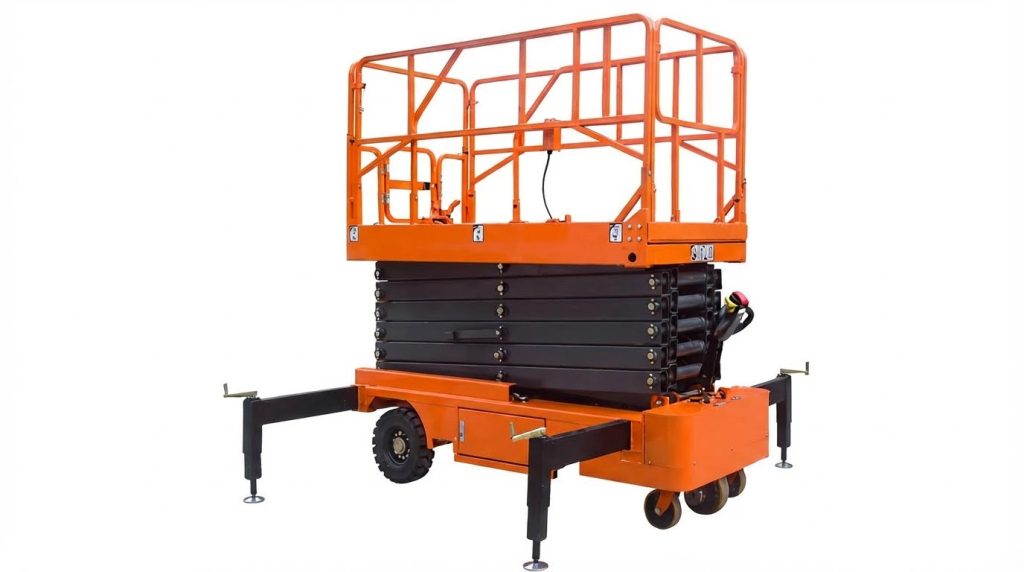
Technical controls for working on slopes keep a Mobile Elevating Work Platform stable by matching real ground conditions to the machine’s slope ratings, alarms, and support systems before and during use. This section turns theory into practical field checks you can apply when traveling on a slope mobile elevated work platform, so stability margins are protected instead of guessed.
Calculating slope and verifying against ratings
Calculating the actual ground slope and comparing it to the aerial platform’s published ratings is the first non‑negotiable control before you drive or elevate on an incline. You are simply proving, with numbers, that the ground is within what the machine was designed and tested to handle.
- Find the official slope/grade rating: Use the operator’s manual stored on the machine – it lists maximum allowable slope or grade for travel and elevation. This is the legal and engineering limit, not a suggestion. Documented ratings
- Measure slope with a digital inclinometer: Place a smartphone inclinometer app or digital level on the travel path or setup area to read the angle directly in degrees. This gives fast, repeatable measurements when traveling on a slope mobile elevated work platform. Digital methods
- Measure rise and run manually: Use a straight board, carpenter’s level, and tape. Level the board, measure horizontal run, then vertical rise to the ground. This works where you cannot place a phone directly on the surface. Manual method
- Convert rise/run to grade: Grade (%) = (rise ÷ run) × 100. Example: rise 305 mm over run 3,658 mm (12 in over 144 in) ≈ 8.3% grade. This lets you compare to manuals that list grade in percent instead of degrees. Worked example
- Compare measured slope to both travel and elevation limits: Check the path for driving and the final setup area for elevating. A surface may be acceptable to drive across with the platform stowed but unsafe to elevate on.
- If the slope exceeds rating, do not use that MEWP: You must relocate, re‑route, or select a different machine (e.g., with outriggers or more outreach). Operating beyond rating removes the designed stability margin and invites a tip‑over. Rating limits
| Item | Typical Data / Action | Operational Impact When Traveling On A Slope Mobile Elevated Work Platform |
|---|---|---|
| Manual slope rating location | Operator’s manual in weatherproof compartment | Ensures you use the exact tested grade/tilt limits, not assumptions. |
| Digital inclinometer use | Place on ground or board along travel path | Quick go/no‑go decision for each section of the route. |
| Manual rise/run method | Example: 305 mm rise over 3,658 mm run ≈ 8.3% grade | Allows slope checks even on rough or obstructed terrain. |
| Exceeding rating | Any measured slope > published maximum | Must not travel or elevate; choose different setup or MEWP. |
How to document slope checks for compliance
Record date, location, MEWP ID, measured slope (degrees or %), method used, and the applicable rating from the manual. Attach photos of the inclinometer reading where possible. This supports OSHA and ANSI A92.22 safe use planning and worksite risk assessment duties. Planning and risk assessment
💡 Field Engineer’s Note: Always measure at the steepest part of the travel path, not just at the parking spot. Many tip‑overs started on a short, unseen “hump” or gutter that momentarily pushed the machine beyond its rated slope while traveling with the platform raised.
Using tilt alarms, outriggers, and spreader plates
Tilt alarms, outriggers, and spreader plates are engineered safety systems that detect or correct unsafe slope and ground conditions, but they only work if operators respond correctly and set them up on suitable foundations.
- Understand what the tilt alarm monitors: The system compares actual chassis angle to the manufacturer’s maximum allowable slope. When it sounds, the machine is at or beyond its designed stability envelope. Tilt alarm function
- Immediate actions when tilt alarm sounds with platform raised: For scissor lifts, lower the platform fully, then relocate to firm, level ground. For boom lifts, lower and retract in the sequence specified, without slewing. This reduces overturning moment before you move. Emergency procedures
- Do not bypass or ignore tilt alarms: Never override, silence, or continue elevation after a tilt warning. These devices are part of the stability verification required by ANSI A92.20 design and test rules. Design and stability requirements
- Deploy outriggers or stabilizers fully: Extend outriggers to their locked positions and follow the manufacturer’s leveling indicators. Partial deployment destroys the assumed support geometry used in stability tests. Outrigger use
- Use spreader plates on weak or uneven ground: Place steel or timber pads under outrigger feet to increase contact area and reduce ground pressure. This prevents punch‑through on soft soils, paving, or voided slabs. Spreader plate guidance
- Confirm ground can carry the full MEWP load: Consider machine mass plus people, tools, and materials. If the surface cannot support this, no amount of leveling will keep the machine upright. Ground capacity and stability
| Control | Key Requirement | Operational Impact On Slopes |
|---|---|---|
| Tilt alarm | Warns when slope exceeds max rating | Triggers immediate corrective action; prevents elevating into an unstable angle. |
| Scissor lift response | Lower platform, move to level surface | Removes high center of gravity before travel, reducing tip‑over risk. |
| Boom lift response | Lower/retract in specified sequence; no rotation | Minimizes side load on outriggers/tyres during correction. |
| Outriggers | Must be fully deployed and locked | Creates a wider base to resist overturning on mild slopes or uneven ground. |
| Spreader plates | Used on soft or suspect surfaces | Spreads load, avoiding local failure that can suddenly tilt the MEWP. |
Checking tilt alarms during pre‑start inspection
As part of pre‑start and shift inspections, test the tilt alarm by carefully raising the machine on a known small angle or using the manufacturer’s recommended procedure. Confirm that both the audible alarm and any interlocks function before working on slopes. Inspection requirements
💡 Field Engineer’s Note: Outriggers can generate extremely high point loads. On suspended slabs or near underground services, always assume the concrete may bridge over voids; use large spreader mats and, if in doubt, get a structural check before you elevate.
Ground surveys, load management, and wind effects

Ground surveys, strict load management, and wind controls are the “environmental” side of MEWP stability that determine whether the rated slope limits are still valid in real conditions.
- Survey the entire work area, not just the setup point: Walk the travel path and platform work zone looking for holes, trenches, soft spots, ramps, kerbs, and buried services. These can locally increase slope or cause sudden settlement while you are elevated. Ground survey guidance
- Account for weather and seasonal changes: Rain, thawing frost, or recent excavation can weaken soil and backfill that looked firm the day before. Ground that marginally held yesterday may fail under today’s load. Weather impact
- Assess indoor and paved surfaces carefully: Floors over basements, cellars, or services may not be designed for MEWP wheel or outrigger loads. Hidden voids can collapse, instantly changing levelness and slope. Subsurface risks
- Stay within rated platform load: Never exceed the capacity marked on the platform, which includes people, tools, and materials. Extra mass raises overturning forces, especially on slopes and in wind. Load management protocols
- Avoid lateral loading and “crane” use: Do not pull, push, or suspend loads from the platform or guardrails. Side forces can combine with slope and wind to push the MEWP outside its tested stability envelope. Prohibited loading
- Respect wind speed limits: Check the maximum allowable wind speed in the manual, often around 12.5 m/s (28 mph) for many outdoor machines. Wind on the platform and occupants creates overturning moment that adds to the effect of slope. Wind limits
- Maintain required clearances to overhead power lines: Keep at least 3 m (10 ft) from energized lines unless de‑energized and grounded. On sloping ground, unexpected chassis movement can reduce this clearance faster than on level surfaces. OSHA/ANSI electrical approach distances
| Factor | Key Check | Operational Impact On Sloped Work | |||||||||||||||||||||||||||||||||||||||||||
|---|---|---|---|---|---|---|---|---|---|---|---|---|---|---|---|---|---|---|---|---|---|---|---|---|---|---|---|---|---|---|---|---|---|---|---|---|---|---|---|---|---|---|---|---|---|
| Ground survey | Identify weak ground, voids, services | Prevents sudden sinkage that can exceed tilt limits while elevated. | |||||||||||||||||||||||||||||||||||||||||||
| Weather | Recent rain,
Selecting And Applying MEWPs For Challenging TerrainSelecting and applying MEWPs for challenging terrain means matching MEWP group, type, and drive system to the actual ground, slope, and regulatory limits on your site. The goal is simple: no surprises when traveling on a slope mobile elevated work platform. Choosing MEWP group, type, and drive systemChoosing group, type, and drive system for slopes means balancing stability margins with how and where the machine must travel and elevate. On uneven or sloped ground, mis‑selection is a direct route to tip‑over risk.
ANSI groups and types define how the platform behaves and moves, and therefore how it reacts to slopes and uneven ground. Group A machines keep the centre of gravity within the chassis, while Group B machines can shift it outside the tipping lines, which makes them more sensitive to ground strength and tilt when booms are extended according to ANSI MEWP groups and types. Drive system and undercarriage choice matters just as much as group and type on challenging terrain. Rough‑terrain axles, oscillating axles, foam‑filled or lug tyres, and 4×4 drive all improve traction, but they do not increase the safe slope rating; that is fixed by the manufacturer and must be checked in the operator’s manual before entering the work area where slope ratings are defined.
How to shortlist MEWPs for a sloped or uneven siteStart by mapping the steepest approach slopes in percent grade or degrees. Compare these with the machine’s maximum travel/gradeability rating from the manual. Then check the maximum allowable side‑slope or tilt for elevation. If the site slopes exceed either rating, you must change the MEWP selection, re‑grade or shore the ground, or relocate the work so the machine can sit level.
Planning safe use under OSHA and ANSI A92 Planning safe MEWP use on slopes under OSHA and ANSI A92 means building a written safe‑use plan, doing a formal risk assessment, and then enforcing manufacturer slope and ground limits on site. The paperwork must drive real decisions about where and how the machine moves.
Practical checklist before using a MEWP on a sloped or uneven site1. Confirm the MEWP’s maximum travel slope / gradeability and maximum allowable tilt for elevation from the operator’s manual. 2. Measure the steepest slope on the travel route and work area with an inclinometer or rise‑run method, as described in field guidance. 3. Conduct a ground survey for soft spots, voids, underground services, and recent weather effects that may weaken support. 4. Plan travel paths that avoid side‑slopes and sharp transitions; use compacted ramps if needed. 5. Define exclusion zones where the MEWP must stay in the stowed position or is not allowed to enter. 6. Brief operators and spotters on the plan, including responses to tilt alarms and emergency procedures.
“” Final Considerations For Safe MEWP Slope OperationSafe MEWP work on slopes depends on one simple rule: never let real conditions get ahead of the machine’s design limits. Geometry, centre of gravity, and tipping lines set a hard boundary. Slope ratings, tilt limits, and wind ratings tell you exactly where that boundary sits in the field. When you measure gradients, survey the ground, and respect alarms, you keep the built‑in stability margin intact. When you overload platforms, guess at slopes, or ignore soft ground, you spend that margin without knowing it. That is when a small change in boom position, wind, or ground support can turn into a tip‑over. OSHA and ANSI A92 standards give a clear framework, but they only work if planners and supervisors turn them into site‑specific controls. That means written slope checks, defined travel routes, and clear rules for when elevation is banned. It also means choosing the right MEWP group, type, and drive system for each task, not forcing one machine to do every job. The best practice verdict is direct. Treat slope and ground limits as critical engineering data, not guidance. Build them into planning, training, and daily checks. If any doubt remains, stop, lower, re‑measure, or change the setup. Atomoving equipment will only perform safely when the site protects the physics it was designed around. Frequently Asked QuestionsWhat should you do when traveling on a slope with a mobile elevated work platform?When traveling on a slope with a mobile elevated work platform, always ensure the platform is level and stable before raising it. Avoid operating the equipment on inclines unless specifically designed for such use. Scissor Lift Safety Tips. What safety equipment should workers use on mobile elevated work platforms?Workers should wear personal protective equipment (PPE) such as hard hats, safety harnesses, and non-slip footwear when using mobile elevated work platforms. Proper PPE minimizes injury risks and ensures a safer working environment. MEWP Safety Guide. Can you operate a scissor lift on an incline?Standard electric scissor lifts are designed to be safely operated only on firm, level surfaces. They cannot function properly on inclines, and the platform may become inoperable if raised on a slope. Scissor Lift Safety Tips. |