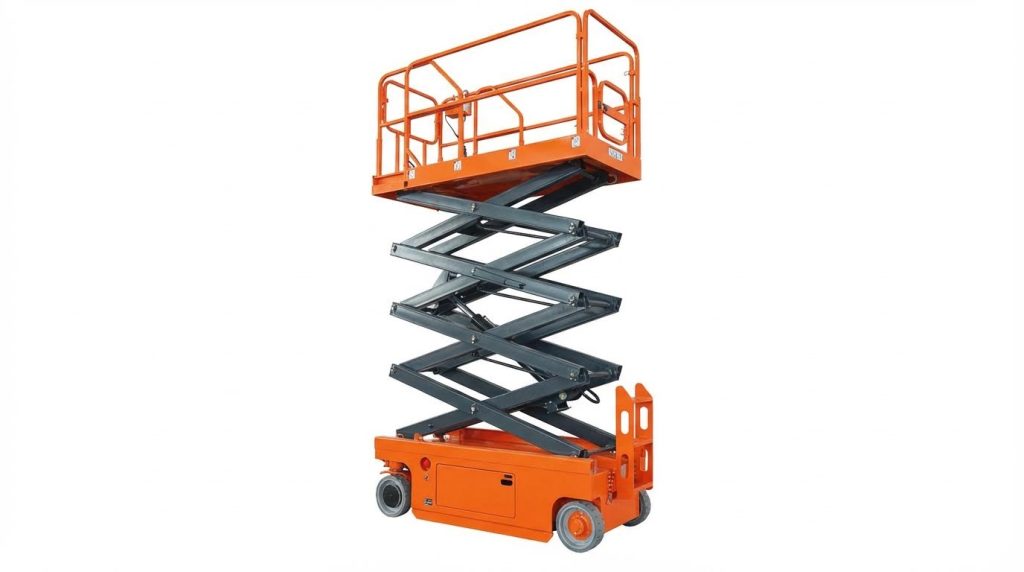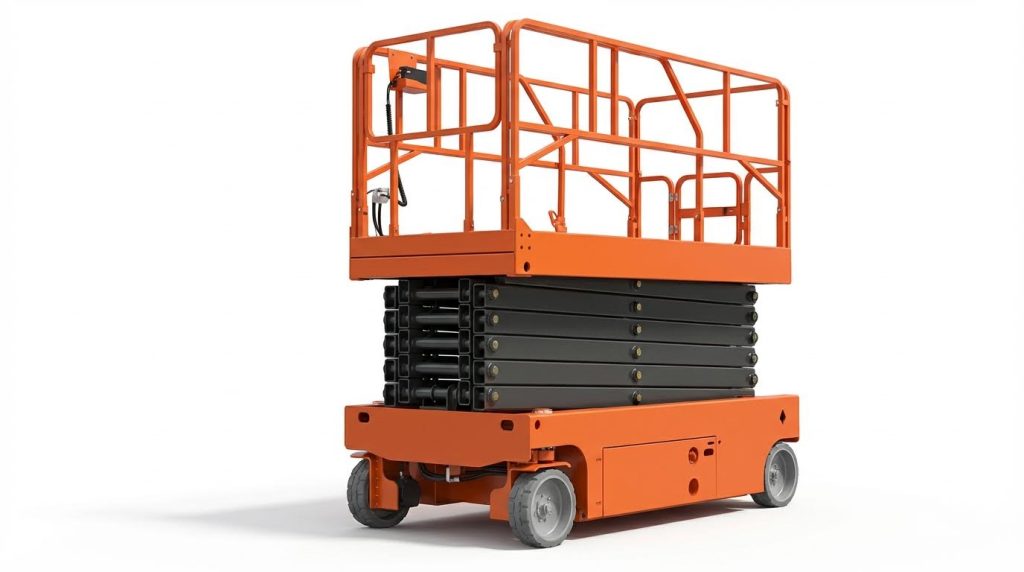
This guide explains when and how you can move a aerial platform by hand without losing control or stability. You will learn the limits set by manufacturers, how ground conditions affect safety, and what team procedures reduce crush and rollaway risks. Use it to turn vague “just push it a bit” instructions into a clear, defensible method on site.

When Manual Movement Is Acceptable And Safe
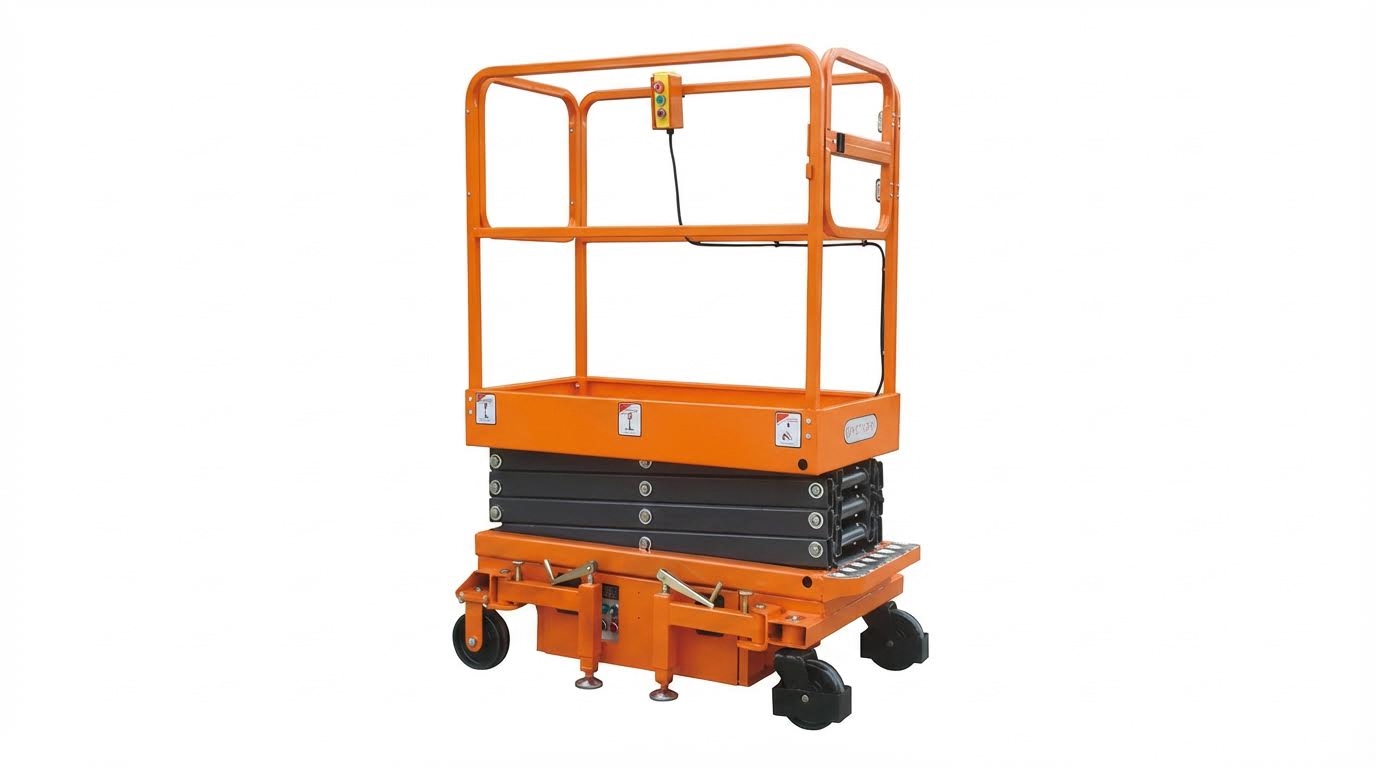
Manual movement of a towable aerial platform is only acceptable for very short, controlled adjustments on firm, level ground with the boom fully stowed, brakes proven, and a formal risk assessment in place. The safe answer to “can you move a towable aerial platform by hand” is: yes, but only within tight manufacturer, standard, and site limits.
OEM limits, standards, and site rules
Whether you can move a towable scissor platform by hand depends first on the manufacturer’s manual, then on safety standards and finally on your site rules. All three must allow manual movement for the specific situation before you even touch the drawbar.
- OEM manual limits: Always check the operator’s manual for maximum manual push gradient, permitted directions of movement, and any prohibition on hand-moving – this defines the absolute boundary of what is allowed. Source
- Ground conditions: OEM guidance and good practice only accept manual moves on level, firm, stable ground, with no voids or fragile slabs – this prevents sudden sinkage and rollaway. Source
- Lift configuration: The boom must be fully stowed and locked, with outriggers fully raised before any hand movement – this keeps the centre of gravity low and avoids bending cylinders. Source
- Scope of movement: OEM and industry guidance restrict manual movement to small corrections near the work area, such as aligning with a doorway or avoiding an obstacle – this avoids long uncontrolled pushes. Source
- Formal risk assessment: A task-specific risk assessment should cover crush, rollaway, overturn and electrical risks along the route before deciding to move by hand – this documents why manual movement is acceptable at all. Source
- Standards and guidance: General aerial lift rules require stable, level support, working brakes, and hazard control for slopes, drop-offs, and overhead power lines – these apply equally when the unit is being moved by hand. Source
- Site-specific rules: Many sites set stricter internal limits on maximum slope, wind, and exclusion zones for any aerial lift movement – these can forbid manual moves even if the OEM allows them. Source
| Condition | Typical Requirement | Operational Impact |
|---|---|---|
| Ground slope | Level; stay well below OEM max manual push gradient | Only very slight slopes are acceptable for hand moves; anything “noticeable” should be towed mechanically. |
| Boom position | Fully stowed and locked | Prevents high centre of gravity and reduces overturning risk during pushing. |
| Outriggers | Fully raised before moving | Avoids structural damage and snagging; no dragging with outriggers partly deployed. |
| Movement distance | Short, local corrections only | Good for aligning to doors, kerbs, or exact work position, not for moving across a site. |
| Personnel | Enough people so each exerts modest force | Prevents overexertion and loss of control if the unit starts to roll. |
How to decide between hand-moving and towing
If you need to move more than a few metres, cross a slope, or deal with unknown ground, treat the move as a towing job, not a manual push. Re-run the risk assessment, select a suitable tow vehicle, and follow legal towing and pre-towing checks instead of relying on manpower. Source
💡 Field Engineer’s Note: If the drawbar feels “heavy” or the lift wants to roll on its own, you are already beyond safe manual control. Stop, chock the wheels, and re-plan with a tow vehicle or a different route rather than adding more people to the push.
Required pre-move inspections and checks
Before you even test whether you can move a towable scissor platform lift by hand, you must complete focused pre-move inspections on the machine, the route, and the emergency systems. These checks turn a high-risk shove into a controlled, engineered manoeuvre.
- Full pre-operation inspection: Inspect structure, hydraulic hoses, tires, and fluid levels; test emergency stop, alarms, and tilt sensors – hidden defects can turn a simple hand move into a serious incident. Source Source
- Brake function test: Check service and parking brakes engage and release cleanly; on level ground, the unit must not roll with the parking brake set – if it moves, manual repositioning is off the table. Source Source
- Tire and wheel condition: Inspect for damage, low pressure, or flat spots; confirm wheel nuts and rims are sound – poor tires increase rolling resistance and can suddenly grab or fail during a push. Source
- Outrigger and stabilizer status: Verify outriggers are undamaged and fully raised and locked before moving; only redeploy on firm, level ground with pads – this preserves stability and prevents structural damage. Source Source
- Work area and route inspection: Walk the entire intended path to identify holes, drop-offs, slopes, debris, soft spots, low ceilings, and overhead power lines – this avoids mid-move surprises. Source Source
- Wheel chocks and pads ready: Select chocks sized for tire diameter and machine weight, and outrigger pads for final setup – these control unintended movement and spread the load once positioned. Source Source
- Emergency systems check: Confirm emergency stop, manual descent, alarms, and communication methods work – if something goes wrong during a hand move, you need a fast, reliable way to stop and recover. Source
| Pre-move check | What to verify | Impact on manual movement safety |
|---|---|---|
| Parking brake test | Lift must not roll on level ground with brake set | Failing this test means no hand movement; use a tow vehicle or repair first. |
| Route survey | No holes, kerbs, loose debris, or low overheads on path | Prevents sudden snags, wheel lift, or overhead contact while pushing. |
| Ground firmness | Surface does not deform under body weight | If your foot sinks, the tires will too; use mats or choose another route. |
| Weather/wind | Conditions within site and OEM limits | High winds increase overturn risk once set up; reconsider whole task, not just the move. |
| Team briefing | Roles, commands, and stopping signals agreed | Reduces crush risk between machine, walls, and personnel during the push. |
Red flags that cancel a manual move
Cancel any plan to move by hand if: the drawbar feels excessively heavy, the unit rolls with the brake set, the route includes noticeable slopes, you cannot maintain at least 3 m clearance from power lines, or you lack enough trained personnel to control both ends of the machine. In these cases, treat the task as a towing operation or re-engineer the access method instead of forcing a manual push. Source Source
💡 Field Engineer’s Note: I always treat the pre-move brake test as a go/no-go gate. If a 1,500–2,000 kg towable platform creeps even a few millimetres with the brake applied, the risk of losing it on a slight gradient is too high for any manual positioning.
Engineering Controls For Stable, Controlled Movement
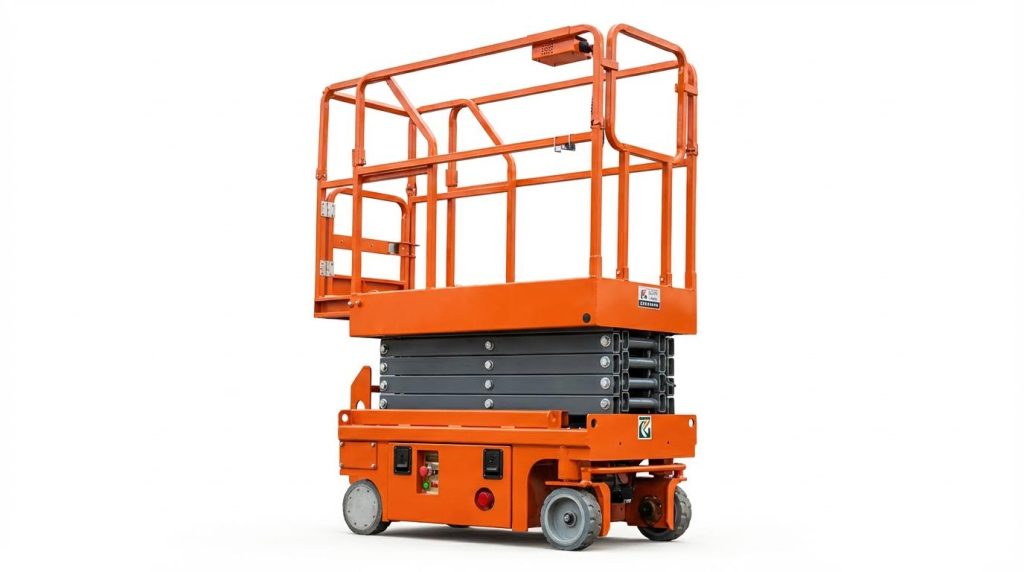
Engineering controls keep a towable aerial platform stable and predictable when you move it by hand, turning “can you move a towable aerial work platform by hand” into a controlled, low‑risk operation instead of a guess. This section focuses on brakes, chocks, slopes, soft ground, and route design so the lift only moves when and where you intend.
- Core Rule: Only hand‑move on firm, level ground with boom fully stowed, outriggers raised, and brakes proven to hold – this keeps overturning and rollaway risk within acceptable limits. Reference
- Engineering Focus: Treat every manual move like a short towing job with reduced power but the same crush, roll, and tip‑over hazards – this mindset drives better controls and supervision.
💡 Field Engineer’s Note: On many sites, the “dangerous” part is not lifting at height but the 5–10 m hand move around obstacles. Most incidents I have seen started with a casual shove on a slight slope or soft patch that nobody had properly assessed.
Brakes, chocks, and rollaway prevention
Brakes and wheel chocks are your primary engineering controls to prevent an uncontrolled rollaway whenever you move or stop a towable scissor platform by hand. If these are not working or not used correctly, the answer to “can you move a towable aerial work platform by hand” is simply “no.”
- Brake test first: Confirm service and parking brakes engage and release cleanly on level, firm ground – proves the unit can be held if you lose grip or footing. Reference
- Parking brake hold check: With the brake fully applied, try to move the lift gently by hand on level ground – if it rolls, do not hand‑move at all. Reference
- Tyre condition: Inspect tyres for cuts, low pressure, flat spots, or damaged rims – poor tyres increase rolling resistance unpredictably and can cause sudden jerks or steering losses. Reference
- Chock every planned stop: Place wheel chocks tight against the downhill tyre face at each pause on any gradient – gives a positive mechanical stop, not just trust in the brake. Reference
- Correct chock sizing: Use chocks sized for tyre diameter and rated above the lift’s gross weight – prevents the chock from being crushed or climbed over. Reference
- Outriggers fully raised: Always raise outriggers completely before any movement – prevents bending cylinders and avoids sudden shifts in centre of gravity. Reference
| Control | Typical Use Case | Engineering Effect | Operational Impact |
|---|---|---|---|
| Parking brake | Holding on level, firm concrete | Applies static friction at wheels to resist motion | Allows safe coupling/uncoupling and short hand moves without rollaway |
| Wheel chocks (pair) | Stopping on slight slopes >1–2% | Mechanical block resists wheel rotation even if brake fades | Enables controlled pauses during manual positioning on mild gradients |
| Tyre inspection | Before first move on shift | Ensures predictable rolling resistance and load sharing | Reduces risk of sudden pull‑through or steering loss during push |
💡 Field Engineer’s Note: On polished concrete or wet pavers, a “good” parking brake can still slide once the tyres lose grip. Treat low‑friction surfaces as if you are on a steeper slope: add chocks and extra spotters, or tow with a vehicle instead of pushing by hand.
How to decide if brakes and chocks are adequate for hand movement
First, verify the parking brake holds on level ground and the unit does not creep over 60 seconds. Second, simulate the worst case you expect: if you must stop on a slight slope, chock both sides of at least one axle and check that the lift cannot be rocked over the chocks by firm pushing. If you cannot achieve a solid, non‑moving condition with brakes plus chocks, do not attempt manual movement.
Slopes, soft ground, and bearing capacity
Slopes and weak ground quickly turn a simple manual push into an uncontrolled slide or sink, so engineering controls must limit gradients and verify bearing capacity before you decide that you can move a towable hydraulic pallet truck by hand. The goal is to prevent acceleration you cannot restrain and avoid any local ground failure under tyres or outrigger pads.
- Avoid noticeable slopes: Manual moves should generally not occur on visible gradients; stay well below the manufacturer’s maximum manual push gradient – prevents run‑away acceleration beyond human control. Reference
- Plan path on slight slopes: Where slight slopes are allowed, pre‑plan the route, keep the boom on the uphill side, and define stopping points with chocks – reduces overturning moment and keeps the move segmented. Reference
- No one downhill: Never let operators stand directly downhill of the lift on any gradient – removes the crush zone if the unit escapes control. Reference
- Check soft ground: On mud, sand, or loose gravel, inspect for water, trenches, ducts, or voids and assess if the surface deforms under body weight – indicates low bearing capacity and high sinkage risk. Reference
- Use mats or plates: Where ground deforms, place ground mats or steel plates under tyres and later outrigger pads – spreads load, reducing contact pressure and preventing rutting or punching through. Reference
- Outrigger pad discipline: Position outrigger pads after chocking and applying the parking brake, on firm, flat ground – ensures even load sharing and avoids twisting the chassis. Reference
- No dragging on pads: Never drag or push the lift with outriggers partly deployed – prevents bending outrigger tubes and damaging welds or cylinders. Reference
| Surface / Condition | Manual Move Suitability | Required Controls | Operational Impact |
|---|---|---|---|
| Level concrete or asphalt | Generally acceptable | Brake test, wheel chocks at stops | Best surface for short hand moves up to 5–10 m near work area |
| Slight slope on hard surface | Restricted, case‑by‑case | Route plan, boom uphill, chocks each stop, extra spotters | Only very short, supervised moves; consider towing vehicle instead |
| Mud, sand, loose gravel | Usually unsuitable without mats | Ground mats/plates, bearing‑capacity check | Often safer to re‑route or tow with vehicle; avoid hand pushing |
| Unknown fill, near trenches or ducts | Not acceptable | Reassess route or engineer‑approved bridging | Do not move by hand; serious overturn and collapse risk |
💡 Field Engineer’s Note: A common mistake is to think “it’s hard to push, so it’s safe.” On a slope, resistance can suddenly drop if you pass from soft to hard ground or vice versa, and the lift will lurch. Design the path so resistance stays as constant and predictable as possible.
Simple field check for ground bearing capacity
First, walk the planned wheel track and press your heel in firmly. If your heel sinks more than a few millimetres or water seeps, treat the surface as soft and use mats or reroute. Second, observe existing tyre ruts from other equipment; deep, narrow ruts suggest high contact pressure and low bearing capacity. If in doubt, do not hand‑move; use engineered ground protection or a different access method.
Obstacle management and route engineering

Obstacle control and route engineering ensure that when you decide you can move a towable drum dolly by hand, the path does not introduce new overturn, snag, or crush hazards. The route should be continuous, firm, and free from steps, kerbs, overhead strikes, and electrical risks.
- Formal route walk‑through: Walk the entire intended path before moving, including tight corners and doorways – identifies kerbs, debris, low beams, and cables early. Reference
- Remove loose obstacles: Clear debris, hoses, small timbers, and waste from the wheel path – prevents sudden wheel lift and sideways tipping moments. Reference
- Bridge small steps and kerbs: Use strong ramps or plates over kerbs, cable protectors, and small steps – avoids shock loads into the tow eye or axle when pushing by hand. Reference
- Monitor chassis twist: Watch for any wheel lift or chassis twist when crossing ramps or uneven joints – signals you are close to tipping or overstressing the frame. Reference
- Overhead and electrical clearance: Maintain at least 3 m
Practical Procedures And Team Setup On Site
This section explains exactly how to move a towable aerial work platform by hand on site, who should be involved, and how to control the risks step by step.
Anyone asking “can you move a towable aerial work platform by hand” needs a clear, repeatable procedure and the right team structure, not just a yes/no answer.
Step-by-step manual positioning workflow
This workflow gives a practical, repeatable sequence for short, controlled hand moves on firm, level ground only.
- Step 1: Confirm manual movement is allowed – You only proceed if OEM, standards, and site rules permit hand pushing on that surface and gradient.
- Step 2: Perform a pre-move inspection – Check structure, hydraulics, tires, brakes, and safety systems so you are not pushing a defective lift.
- Step 3: Stow the machine correctly – Ensure the boom is fully stowed and locked, outriggers fully raised, and all doors and trays secured to keep the centre of gravity low.
- Step 4: Verify brakes and chocks – Test that the parking brake holds on level ground and place chocks until the team is ready to push.
- Step 5: Walk and clear the route – Inspect for holes, soft spots, slopes, kerbs, and overhead hazards, and remove or control them before starting.
- Step 6: Assign positions and a leader – Put the strongest, most experienced person at the drawbar and appoint one clear controller for commands.
- Step 7: Release brakes and chocks in sequence – Remove chocks and release the brake only on the command of the leader, with everyone in position.
- Step 8: Push in short, controlled bursts – Use coordinated pushes over very short distances, stopping often to check control and alignment.
- Step 9: Re-apply brake and chock at each pause – Secure the lift every time you stop so it cannot roll away if someone slips or lets go.
- Step 10: Fine-position and secure at final location – Once aligned, apply the parking brake, chock wheels, then deploy outriggers on firm pads before any elevation.
What to check in the pre-move inspection
Before any manual move, operators should confirm there is no visible structural damage, leaks, or worn components, and that hydraulic fluid levels, batteries, and connections are sound. Safety devices such as emergency stop, tilt sensors, and alarms should function correctly, and outriggers and stabilizers should be undamaged and fully retractable so they can be raised for travel during pre-operation checks. Vehicle-mounted aerial lift components like wheels, tires, brakes, and lower controls must also pass inspection before any movement by hand or by tow vehicle as required for each work shift.
Manual positioning is only acceptable under strict conditions: firm, level ground, boom fully stowed and locked, and brakes that clearly hold the lift in place. If the drawbar feels heavy or the unit starts to roll by itself, the move must stop and be re-planned with a tow vehicle instead according to manual movement guidance.
- Firm, level surface only: No visible slope, no voids or fragile slabs – Prevents uncontrolled rolling and slab failure.
- Boom fully stowed and locked: No partial elevation or outreach – Lowers overturning moment and keeps weight close to the axle line.
- Outriggers fully raised: No dragging feet or partial deployment – Avoids bending cylinders and welds when the chassis moves.
- Parking brake proven to hold: Tested by a gentle push on level ground – Confirms the brake can secure the lift at each stop.
- Wheel chocks available and sized correctly: At least two, matched to tire diameter and unit mass – Provides mechanical backup if the brake slips.
💡 Field Engineer’s Note: On very smooth concrete, a towable lift can start moving with surprisingly little force once rolling. Always plan to stop it, not just to start it: keep chocks and a clear escape path ready, and never rely on body weight alone to “hold” the unit on even a slight gradient.
Staffing, communication, and supervision
Safe manual movement depends on having the right number of trained people, clear communication, and a supervisor who can stop the job instantly.
Because “can you move a towable aerial work platform by hand” is fundamentally a risk question, site rules should define minimum staffing, competency, and supervision for any hand move.
Role Typical Tasks Minimum Competence Operational Impact Move Leader Route check, commands, go/stop decisions Trained operator familiar with OEM manual and site rules Single point of control; prevents conflicting actions and confusion. Drawbar Operator Steering at the tow eye, brake operation Strong, experienced person briefed on pinch/crush risks Controls direction and pace; first to feel loss of control. Rear Pushers (1–3) Provide most of the push force Inducted on body position and hand placement Share load so no one exceeds safe force or loses footing. Spotter(s) Watch wheels, obstacles, and overhead hazards Trained to recognize electrical and crush hazards Early warning for kerbs, holes, or power lines. Supervisor Authorizes move, monitors compliance Responsible person with authority to stop work Ensures risk assessment and site rules are followed. - Move Leader: Stands where both ends of the lift are visible – Can see pushers, wheels, and path to give safe commands.
- Drawbar Operator: Hands on the drawbar only, never on the chassis – Reduces crush risk if the unit swings or contacts an obstacle.
- Rear Pushers: Push low on the chassis, not on guards or hoses – Applies force through the structure without damaging components.
- Spotter: Walks beside the downhill side, not in front – Can intervene without standing in the rollaway path.
- Supervisor: Confirms risk assessment and conditions before “go” – Prevents casual, undocumented manual moves.
Communication and command system
A clear, simple command set avoids mixed actions. The Move Leader should use agreed words or signals such as “Ready”, “Push”, “Stop”, and “Chock”. No one releases the brake, removes chocks, or starts pushing until the leader gives the “Push” command, and anyone may shout “Stop” at any time. This aligns with the requirement to control aerial lift operations through designated operators and to prevent unexpected movement near crushing or electrical hazards in regulated work areas.
Before any move, a formal task risk assessment should identify crush, rollaway, overturn, and electrical contact hazards along the entire route. The decision whether you can move a towable aerial work platform by hand, or must tow it with a vehicle, should come from that assessment and documented site rules, including maximum slopes, wind limits, and no-go zones for manual movement manual pallet jack.
Final Thoughts On Hand-Moving Towable Platforms
Safe manual movement of towable aerial work platforms depends on treating every push as an engineered lifting operation, not a casual task. OEM limits, standards, and site rules define when you may move by hand at all. Ground conditions, slopes, and bearing capacity then decide if your team can actually keep control.
Brakes, chocks, and correct boom and outrigger positions work together to keep the centre of gravity low and the platform stationary whenever you stop. Route engineering, obstacle removal, and ground protection prevent sudden changes in resistance that can turn a controlled push into a run‑away. Clear roles, commands, and supervision turn this technical design into reliable behaviour on site.
The practical rule for operations teams is simple: only hand‑move for short, local corrections on firm, level ground, with a proven parking brake, correct chocks, boom fully stowed, and a trained team under one leader. If you face noticeable slopes, soft or unknown ground, tight congested paths, or doubt about control, stop and re‑plan as a towing or alternative access job. That disciplined approach protects people, preserves equipment like Atomoving platforms, and gives you a documented, defensible method whenever you decide to move by hand.
Frequently Asked Questions
Can you move a towable aerial work platform by hand?
Yes, you can move a towable aerial work platform by hand, but it depends on the specific model and its design. Most towable boom lifts are equipped with wheels and a handle for manual maneuvering when they are not in use or need to be repositioned. Ensure the platform is in the down position and that the outriggers, if extended, are retracted before attempting to move it. Moving the equipment manually should only be done on stable, level surfaces to avoid tipping or damage.
Can you use a towable boom lift on uneven ground?
Towable boom lifts are designed to operate on various surfaces, including uneven ground, but precautions must be taken. Always extend and stabilize the outriggers to ensure the equipment is level and secure before use. Avoid using the lift on excessively sloped or unstable terrain, as this could compromise safety. For more details on safe usage, refer to Boom Lift Safety Tips.