
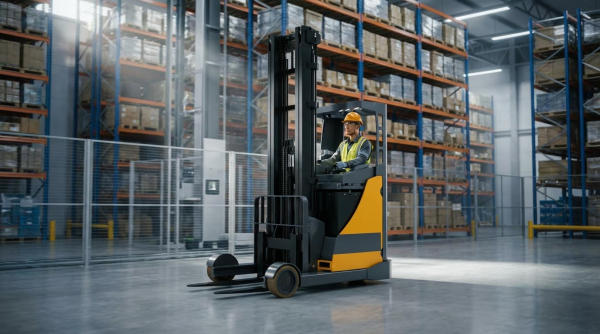
Automated warehouse picker technology has moved from pilot projects to mainstream investment, but it does not replace traditional forklifts and manual picking in every operation. This article compares automated pickers with conventional warehouse equipment on throughput, accuracy, labor, and cost. You will see where automation delivers the strongest productivity and safety gains, and how to calculate realistic payback periods. The goal is to help you decide when to keep manual methods, when to automate, and how to phase changes with minimal risk to your operation.
Defining Automated Pickers and Traditional Warehouse Gear
What Counts as an Automated Warehouse Picker?
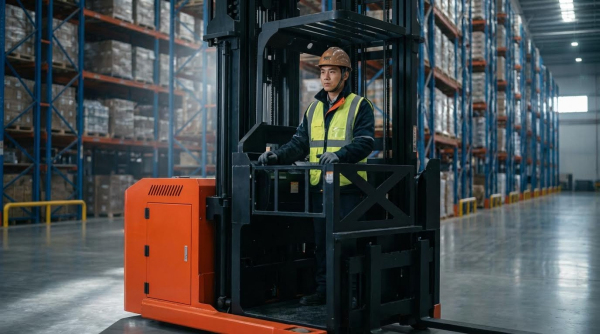
An automated warehouse picker is any system that automatically brings goods to an operator or robot, or automatically extracts items from storage, with minimal human walking or driving. Typical technologies include goods-to-person shuttles, AS/RS cranes, autonomous mobile robots with shelving, robotic bin picking cells, and conveyor-based picking stations. These systems combine mechanical handling with software such as WMS, WES, or WCS to sequence work, balance loads, and track inventory in real time. A modern warehouse order picker often reaches 400–800+ picks per hour, several times faster than manual methods in typical bin-picking applications. Many solutions also integrate vision systems and machine learning to keep error rates below 0.5%, improving order accuracy and reducing rework.
Traditional Picking: Forklifts, Trucks, and Manual Methods
Traditional warehouse picking relies on people moving to the product using basic material handling gear. Core equipment includes manual pallet jack, forklifts, reach trucks, semi electric order picker, and manual carts working in wide-aisle racking or shelving. Operators travel through the aisles, read paper or RF instructions, and manually select, scan, and place items into totes or pallets. This approach has a low initial cost, often under $10,000 for basic equipment and racking in many conventional facilities. However, manual pick rates usually stay in the 60–200 picks per hour range, and error rates of 1–5% are common, especially in high-SKU operations where processes depend heavily on human judgment and walking time.
Technical Comparison: Throughput, Accuracy, and Labor
Pick Rates, Uptime, and System Bottlenecks
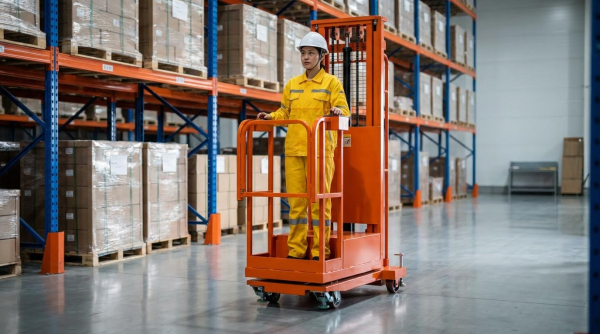
An automated warehouse order picker typically delivers 400–800+ picks per hour, while manual operators average about 60–200 picks per hour, giving a 2–5x throughput uplift for comparable tasks in bin-picking applications. Because these systems run without fatigue or breaks, effective uptime over a 24-hour window is much higher than labor-based picking. Traditional forklifts and manual pallet jacks often create bottlenecks at pick faces, staging lanes, and packing, since people must walk, search, and sequence orders manually. Automated solutions shift bottlenecks to system design choices such as tote buffering, conveyor merge points, and order release logic. Adding a second or third automated warehouse picker usually scales throughput more linearly than adding the same number of workers, as software can rebalance work across machines. To maximize the benefit, engineers should pair automation with a WES/WCS that meters work to avoid congestion and keep each picking asset near its design rate.
Error Rates, WES/WCS, and Quality Performance
Manual picking commonly runs at 1–5% error rates, while automated systems and guided technologies can cut this below 0.5% in typical distribution operations and robotic bin-picking cells. Pick-to-light and similar systems reach around 99.99% accuracy by giving clear visual cues and confirmation steps to operators in high-density pick modules. A modern WES coordinates order release, cartonization, and picking methods so each SKU is handled by the most accurate process, while a WCS provides real-time control of conveyors, sorters, and robots across the automation layer. Together, WES/WCS platforms can lift overall order accuracy toward 99.9%+ by enforcing scan validation, weight checks, and exception handling. This directly reduces returns, rework, and customer complaints, which are major hidden costs in traditional, paper-based or RF-only picking.
Labor Dependency, Safety, and Maintenance Demands
One automated warehouse picker can often replace 2–4 manual pickers, cutting direct labor requirements and supervision load significantly in typical pallet and case-pick environments. Broadly deployed automation and AMRs can reduce labor dependency by up to about 70% by removing walking, cart-pushing, and repetitive lifting from human operators in high-volume e-commerce fulfillment. This improves safety by lowering exposure to strains, impacts, and forklift traffic, while also easing recruitment challenges in tight labor markets. Traditional equipment has low capex but ties capacity directly to headcount, overtime, and shift premiums. Automated systems shift the cost profile to capital plus light technical staffing, with many solutions needing only periodic, often annual, preventive maintenance to keep uptime high for typical mechatronic subsystems. For most operations running multiple shifts, the labor and safety gains outweigh the added maintenance planning and technical skill requirements over the system life.
Selecting the Right Solution and Calculating Payback
Sizing Automation: Volume, Shifts, and SKU Profile
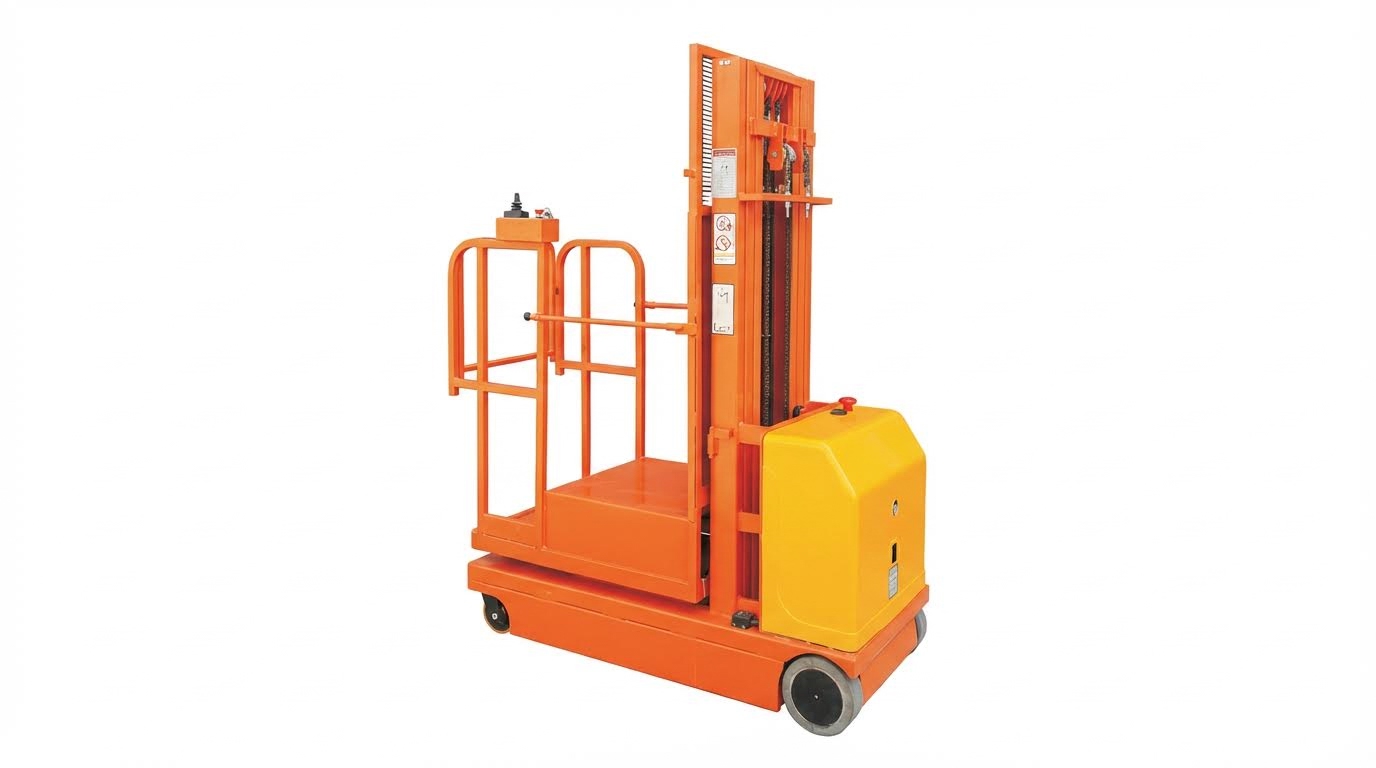
Right-sizing an automated warehouse order picker project starts with hard numbers on volume, labor, and operating hours. Automated systems typically deliver 400–800+ picks per hour, versus 100–200 for manual methods, so higher daily order lines favor automation strongly. Automated bin picking systems achieve 400–800+ picks per hour while manual averages 100–200. More shifts improve utilization and ROI; moving from a single shift to 24/7 can compress payback from about 3.1 years to 0.7 years at 500 picks/hour and $25 fully loaded wages. More shifts can reduce payback from 3.1 years to 0.7 years. SKU profile also matters: high line-item repeatability and carton/bin-friendly products suit automated warehouse picker solutions, while extremely fragile or ultra-random items may stay manual. Space constraints can tip the decision; AS/RS-style automation can save 50–70% floor space versus shelving, which is critical in high-rent locations. Automated storage and retrieval systems save 50–70% storage space compared to traditional shelving.
Quick sizing checklist
- Daily/peak order lines and target service level.
- Number of shifts now and in 3–5 years.
- SKU count, velocity profile, and unit of measure.
- Available clear height and floor area.
- Labor cost, turnover, and hiring risk.
ROI, Payback Period, and Total Cost of Ownership
For an automated order picking machines project, start with a simple ROI and payback model, then expand to full total cost of ownership (TCO). ROI is (Net Gain ÷ Investment Cost) × 100; payback is Investment ÷ Annual Savings. An investment of £40,000 with £55,000 annual savings yields 37.5% ROI and ~9‑month payback. Automation often pays back in 1.5–3 years, driven by labor and error reductions; one automated picker can replace 2–4 workers and cut error-related costs by roughly 90%. One automated picker can replace 2–4 workers and reduce error costs from $15,000 to $1,500 annually, with 1.5–3 year payback. In TCO, include maintenance, software, integration, and energy, but also space savings and throughput gains; a conveyor/ASRS investment of £180,000, for example, can return 16.7% in year one with ~10‑month payback. A £180,000 conveyor system can yield 16.7% ROI with a 10.3‑month payback. High-utilization, larger operations usually see lower cost per pick and stronger long-term ROI, especially with scalable systems that can grow with demand. Larger operations spread fixed costs over more units, reducing cost per pick and improving ROI.
| Metric | Manual Picking | Automated Picker |
|---|---|---|
| Typical payback | Not applicable | ~1.5–3 years |
| Upfront cost | $0–$10,000 | $50,000–$2M+ depending on scope |
| Key savings drivers | Low capex | Labor, errors, space, higher throughput |
Summary: When Automation Outperforms Traditional Gear
Automated warehouse pickers deliver higher throughput, tighter accuracy, and lower labor dependency than traditional trucks and manual carts. They shine where order lines are high, shifts run long, and labor markets stay tight. In these settings, each automated picker can replace several manual roles, while also cutting error costs and safety incidents. Traditional forklifts and pallet jacks still fit low-volume, seasonal, or highly irregular work, where flexibility and low capex matter more than peak speed.
The best results come when engineers treat automation as a system, not a gadget. You must size equipment to real volumes, SKU profiles, and building limits, then pair it with capable WES/WCS software. That software keeps work balanced, protects design pick rates, and locks in accuracy with scan checks and clear workflows. Maintenance planning and basic technical skills then protect uptime over the full life of the asset.
For most multi-shift, growth-focused operations, the numbers now favor automated pickers on total cost per pick. Teams should build a clear ROI and payback model, pilot in one zone, then scale in phases. Use Atomoving manual gear where it fits best, and let automation carry the stable, repeatable load.
Frequently Asked Questions
What are the duties of a warehouse picker?
A warehouse picker is responsible for several key tasks, including operating material handling equipment safely and efficiently. They move around the warehouse, lifting and carrying items to fulfill orders. Their role is critical in ensuring accurate and timely order processing.
- Operating order pickers or other material handling equipment
- Moving around the warehouse to locate items
- Lifting and carrying items to complete orders
Is warehouse picker a hard job?
Working as a warehouse picker can be physically demanding. It involves constant movement around the warehouse and lifting items, which requires stamina and focus. However, with proper training and safety measures, the job becomes manageable and rewarding. For more details on this role, check out Warehouse Picker Job Guide.