
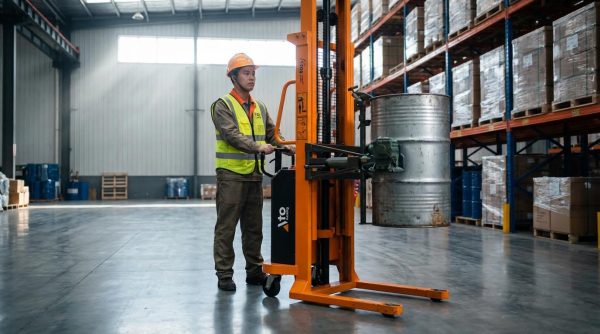
Double-stacking Class 3 flammable drums in transit is the engineered practice of transporting two vertical drum tiers while still meeting DOT/UN packaging rules, OSHA stability requirements, and carrier-specific loading conditions. This article answers “can you double stack flammable 3 drums for transport” by tying legal limits, UN drum ratings, and real-world stacking physics into one clear decision framework. You will see how regulations define what is allowed, how drum stacker and pallet design control safe stack height, and how restraint systems and vehicle setups prevent collapse or leaks under transport accelerations. By the end, you will be able to specify compliant double-stacked arrangements, recognize when double-stacking must be prohibited, and document a defensible engineering basis for your transport configuration.
Regulatory Framework For Double-Stacked Class 3 Drums
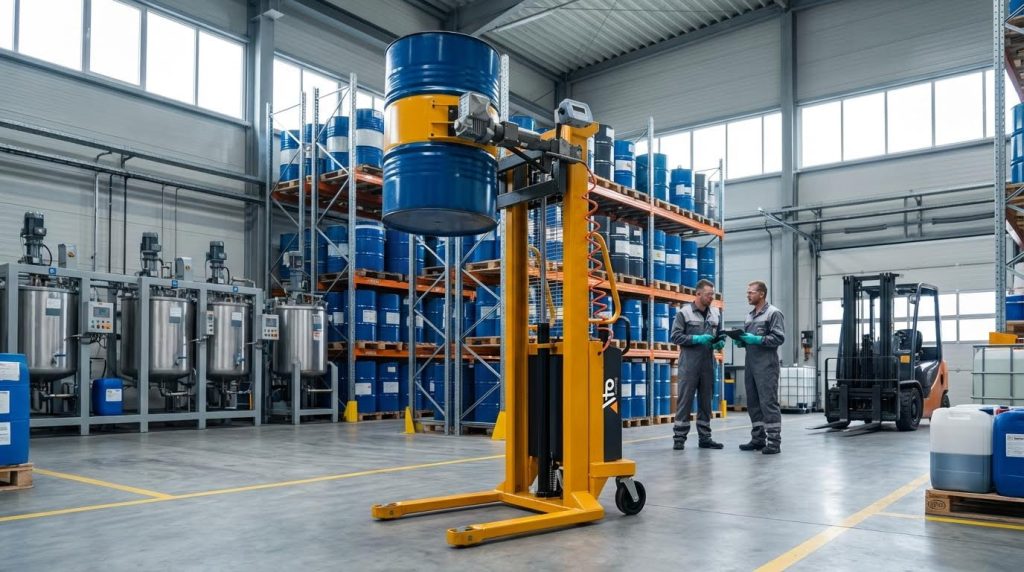
The regulatory framework for double-stacked Class 3 drums combines DOT/UN packaging rules with OSHA-style stacking and load-securement requirements to answer “can you double stack flammable 3 drums for transport” without breaching safety or compliance limits.
Key DOT and UN rules for drum transport
Key DOT and UN rules for drum transport require Class 3 flammable liquid drums to use compliant UN/DOT packagings, be carried in suitable vehicles, protected from heat and damage, and secured against movement throughout transit.
| Regulatory Aspect | Key Requirement / Typical Rule | Field Impact for Double‑Stacked Class 3 Drums |
|---|---|---|
| Authorized rail cars for Class 3 drums | Drums with Class 3 liquids may be moved in steel gondola, flatcar, or stock car, but not in hopper bottom cars for these drum loads. | Engineer double-stacked pallets only for permitted car types; hopper-bottom cars are excluded because openings and geometry cannot safely support drum stacks. |
| Heat and ignition controls | Class 3 materials must not be loaded, transported, or stored in rail cars with lighted heaters, open flames, or internal combustion heating; heated/refrigerated trucks on flatcars must meet strict conditions, including not heating lading above 54 °C (129 °F) for Class 3 service. | When drums are double‑stacked, upper tiers see higher temperatures; you must verify that any heating or solar gain cannot push product near flash or decomposition limits. |
| Protection from tampering and discharge | Containers must not be tampered with, and contents must not be discharged between origin and destination unless specifically authorized; drums must not be manifolded together during transportation for drum loads. | Double‑stack layouts must not connect bungs or manifolds between tiers; each drum remains an independent package with closed, secured closures for the entire trip. |
| Drum handling and transfer limits | For Class 3 PG II and III, product transfer must use pumps mounted on the vehicle or an indirect injection system; hoses may not remain attached during transportation and drums must be attended by a qualified person during unloading for these operations. | Double‑stacking must not obstruct safe access for unloading pumps or hose connections; designs must allow an attendant to reach bungs and valves without climbing unstable stacks. |
| UN/DOT drum design and rating | Steel, plastic, and fiber drums around 200 L (55 gal) are classified with UN codes (e.g., 1H1, 1H2) and must meet design tests for chemical resistance, aging, and permeation for hazardous materials transport. | Only drums with an appropriate UN performance level and stacking test rating should be considered for double‑stacking in transit, especially with higher specific‑gravity liquids. |
| General drum stacking guidance | Industry guidance limits stacking of 55‑gallon drums to two tiers high and two drums wide to manage variability in shell strength and prevent collapse, consistent with OSHA requirements to stack, block, and interlock materials to avoid sliding or falling for drum tiers. | This two‑high limit is the practical ceiling for “can you double stack flammable 3 drums for transport” and forms the baseline assumption for safe in‑transit drum tiers. |
| Load securing and lashing | Straps, chains, and lashing systems sized per standards such as DIN EN 12195‑1 convert friction‑limited stacks into mechanically restrained loads, using lashing capacity, angle, and preload to resist design accelerations for road and rail moves. | Double‑stacked drums must be strapped or otherwise restrained so both tiers withstand longitudinal and lateral transport accelerations without shifting or toppling. |
| Spill containment expectations | Drums with 208 L or more of flammable or toxic liquid should be stored in dikes or pans that hold at least 35% of their total volume, with salvage drums and absorbents available where leaks or ruptures are possible for spill control. | While written for storage, this containment logic informs the use of spill pallets or lined decks under double‑stacked pallets at transfer yards and intermodal interfaces. |
💡 Field Engineer’s Note: Regulations rarely spell out “double‑stack exactly like this,” but they do require that packages withstand normal transport conditions; in practice, that means you engineer the stack to survive real 0.5–0.8 g braking and cornering loads, not just gentle handling.
Secondary regulatory themes that affect drum double‑stacking
High‑hazard flammable train rules cap speeds (typically 50 mph, lower in high‑threat urban areas) and require specific braking and tank car standards for bulk Class 3 loads for HHFT operation. While these primarily target tank cars, they set the risk context: your double‑stacked drum solutions must not undermine the broader risk controls that DOT applies to flammable liquid movements.
When double-stacking is prohibited or restricted
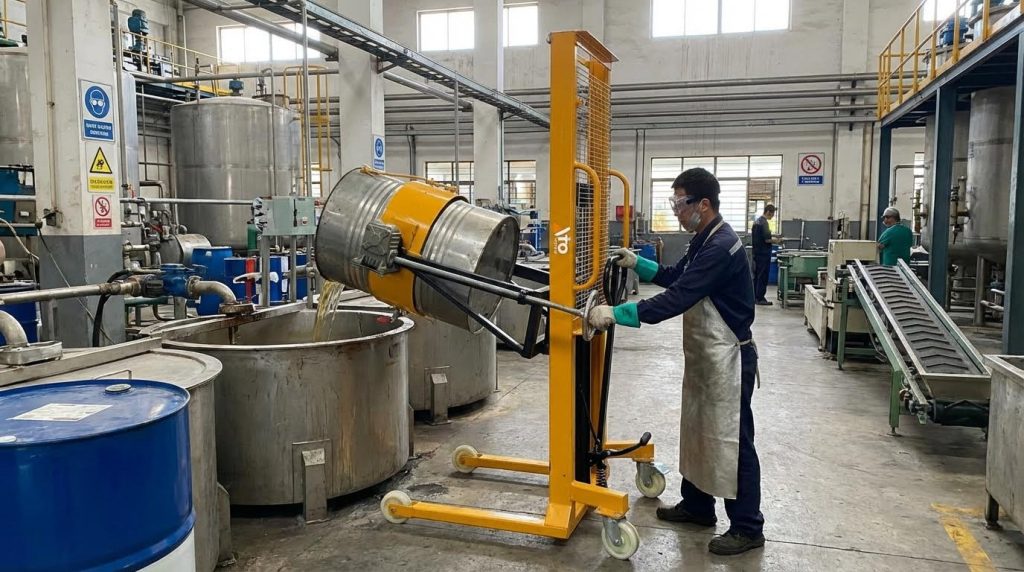
Double‑stacking Class 3 drums is prohibited or restricted whenever vehicle type, drum condition, stacking height, access, heat exposure, or load‑securement cannot meet DOT, OSHA, and engineering safety expectations for stable, non‑collapsing tiers.
- Unsuitable rail car types: Double‑stacking is effectively prohibited in hopper bottom rail cars because Class 3 drums are not allowed there at all, so any stacked configuration would violate car‑type restrictions for these materials. This car exclusion removes double‑stacking as an option on that equipment.
- Stacks higher than two tiers: Industry and OSHA‑aligned guidance limits drum stacks to a maximum of two drums high and two wide to prevent collapse and allow inspection access for stable tiers, so triple‑stacking Class 3 drums in transit would be outside accepted safe practice.
- Drums with uncertain integrity or reuse status: Reused drums must meet specific reuse requirements or have an active special permit for continued use; if corrosion, dents, or aging reduce shell strength, stacking them under a second tier is a practical no‑go because bottom drums may not support the added load.
- Inadequate blocking, bracing, or lashing: OSHA requires materials stored in tiers to be stacked, blocked, interlocked, and height‑limited to prevent sliding or collapse, and load‑securing standards expect lashings sized for transport accelerations for securement design; where you cannot implement proper bracing or strapping, double‑stacking is effectively restricted.
- Obstructed access for inspection and emergency response: Guidance on drum storage and handling stresses clear aisles and access so drums can be inspected for dents, corrosion, or leaks and relocated if stacks block access for safe handling; if double‑stacking in a vehicle prevents visual checks or safe leak response, it conflicts with these expectations.
- Heated environments above safe limits: Class 3 drums must not be exposed to heating systems that can raise product temperatures above specified limits such as 54 °C (129 °F) in certain rail contexts for flammable liquids; stacked drums near heaters or unventilated roofs can see localized overheating, making double‑stacking unsuitable in those zones.
- Configurations that encourage manifolded systems: Drum transport rules explicitly prohibit manifolded drum systems during transit for Class 3 operations; if a proposed double‑stack layout relies on shared piping between drums or tiers, it is not allowed.
- Mixed or incompatible chemical loads: Chemical segregation guidance warns against co‑loading incompatible groups and stresses separation between flammables and other hazards or sensitive goods for safe segregation; where segregation requires physical distance or barriers, stacking flammable drums above other hazard classes may be restricted.
💡 Field Engineer’s Note: When clients ask “can you double stack flammable 3 drums for transport,” I translate it to: “Can we prove two‑high stacks will not collapse, shift, overheat, or block emergency access under worst‑case braking?” If you cannot confidently demonstrate that, you treat double‑stacking as off‑limits for that route or configuration.
Engineering Criteria For Safe Drum Double-Stacking
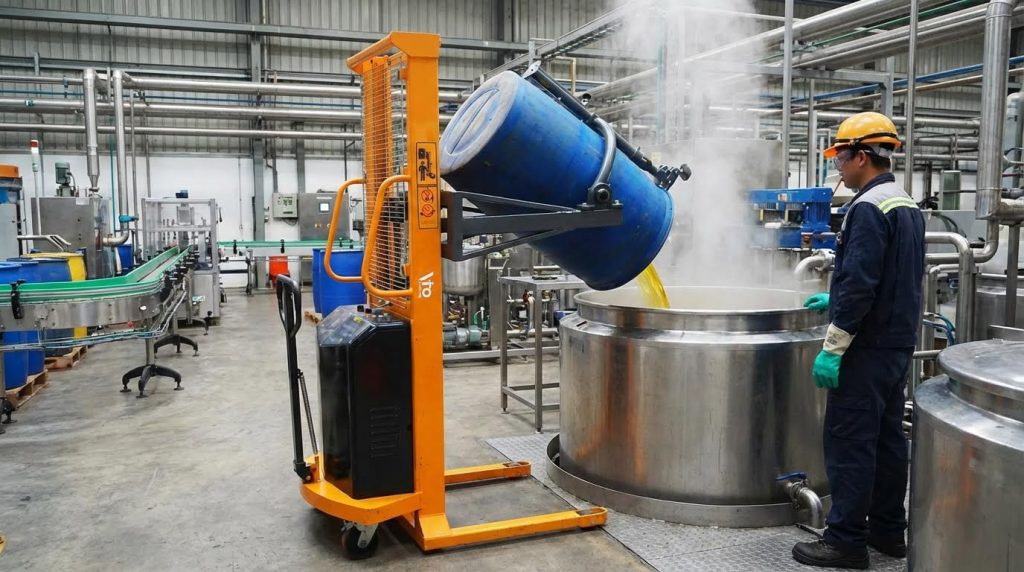
Engineering criteria for double-stacking Class 3 drums define when can you double stack flammable 3 drums for transport by checking drum UN design strength, pallet layout stability, and restraint capacity against expected transport accelerations.
💡 Field Engineer’s Note: Most drum “stacking failures” in transit are not shell collapses; they are slow shifts from poor pallet layout and loose strapping that only show up after the first hard brake or corner.
Drum design, UN rating, and stacking strength
Drum design and UN rating set the structural limit for how many Class 3 drums you can safely stack and whether those stacks will survive real-world vibration, impact, and temperature during transport.
| Parameter | Typical Options / Guidance | Field Impact for Double-Stacking |
|---|---|---|
| Drum type and material | Steel, plastic, or fiber drums around 200 L (55 gallons) classified under UN/DOT codes such as 1A1, 1A2, 1H1, 1H2 etc. Drum classification reference | Determines shell strength, chime geometry, and compatibility with flammable liquids; weaker drums reduce the safety margin when placing a second tier on top. |
| UN performance tests | UN/DOT design qualification requires drums to resist contents, aging, UV, and permeation, and to pass drop and leakproofness tests for the assigned Packing Group. Performance basis | Confirms that a compliant drum design can handle typical transport shocks; however, it does not automatically guarantee safe double-stacking without proper palletization and restraint. |
| Stacking practice limits | Engineering guidance for 55-gallon drums recommends limiting stacks to two tiers high and two drums wide to manage variability in shell strength, corrosion, and dimensional tolerances. Stacking limit guidance | Supports the engineering position that, in many cases, you can double stack flammable 3 drums for transport, but going beyond two high rapidly increases collapse and buckling risk. |
| OSHA stacking requirements | OSHA 1910.176(b) and 1926.250(a)(1) require materials stored in tiers to be stacked, blocked, interlocked, and limited in height to prevent sliding, falling, or collapse. OSHA stacking rules | Even in transit staging areas, drum stacks must be configured so that a second tier cannot walk off or topple during loading, unloading, or emergency braking. |
| Condition of reused drums | Each reused drum must meet prescribed requirements or operate under an active special permit; drums must be inspected for dents, corrosion, bulging, or leaks. Reused drum conditions | Any loss of wall thickness or chime damage reduces stacking strength; marginal reused drums should not sit in the bottom tier of a double stack carrying flammable liquids. |
| Inspection focus areas | Inspect chimes, seams, welds, labeling, gaskets, and signs of seepage or bulging before loading. Inspection protocol | Prevents placing damaged drums in load-bearing positions where a minor defect could become a full rupture under the weight of an upper tier and transport vibration. |
Why “two high” is a practical engineering limit
Two-high stacking of 200 L drums keeps compressive stress and buckling risk within a range that typical UN-rated drums can handle, while still allowing visual inspection and access for emergency response. Above two high, small variations in wall thickness, corrosion, or pallet flatness cause uneven load paths, which can lead to progressive collapse under dynamic loads.
Pallet layout, center of gravity, and load stability
Pallet layout and center of gravity control whether a double stack of Class 3 drums stays upright and in place when the vehicle experiences longitudinal and lateral accelerations during normal and emergency maneuvers.
| Design Aspect | Engineering Guidance / Criteria | Field Impact for Transport Stability |
|---|---|---|
| Pallet layout patterns | Engineers arrange 200 L drums on pallets using square or diamond patterns, avoiding any overhang beyond pallet edges. Pallet layout criteria | Keeping all drum chimes fully supported prevents rim deformation and local stress spikes when you add a second tier and exposes the stack to braking forces. |
| Center of gravity (CoG) height | Double-stacking raises the combined CoG significantly above the pallet deck; engineers aim for the lowest practical CoG by tight packing and avoiding unnecessary dunnage height. | Higher CoG increases tipping moment during lateral accelerations or when a trailer hits a pothole; this is the main constraint on when can you double stack flammable 3 drums for transport without risking rollover of the stack. |
| Load distribution on pallet | Uniform distribution prevents pallet deck and stringer deformation under concentrated drum footprints. Load distribution guidance | Reduces risk of pallet bowing or cracking, which can tilt the bottom tier and start a chain reaction that ends with the upper tier walking off the stack in transit. |
| Design accelerations – road transport | Stability checks often apply longitudinal design accelerations around 0,8 g and lateral accelerations around 0,5 g for road transport scenarios. Acceleration criteria | Pallet layout and restraint must keep drums from sliding or tipping when the vehicle brakes hard, swerves, or encounters uneven road surfaces up to these acceleration levels. |
| Stack width and OSHA guidance | Industry guidance limits drum stacks to a maximum of two drums high and two drums wide to maintain stability and allow inspection access. Stack width limits | Limiting the footprint avoids tall, narrow stacks that are prone to overturning when a trailer floor flexes or when a forklift brakes sharply during loading. |
| Secondary containment interaction | Portable spill pallets placed under drum pallets provide secondary containment without significantly affecting stability when properly sized and rated. Containment systems | Containment decks must have enough stiffness and flatness to support double-stacked pallets; soft or undersized spill pallets can introduce tilt and dynamic rocking under vehicle motion. |
💡 Field Engineer’s Note: Before approving a double-stacked configuration, I simulate a “panic stop” by pulling the pallet with a forklift and braking hard; if the upper tier shifts visibly, it will almost certainly move in transit.
Practical CoG check without calculations
Stand a few meters away from a fully strapped double-stacked pallet and imagine a line from the floor through the centerline of the drums. If that line appears to fall close to the pallet edge, the CoG is too high or too far outboard for safe road transport and the layout or restraint needs redesign.
Restraint systems, accelerations, and test verification
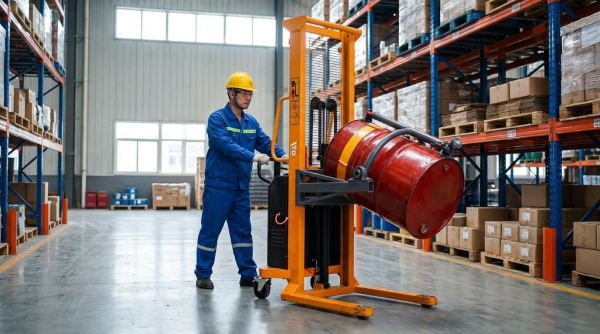
Restraint systems and verification tests ensure that a double stack of Class 3 drums behaves as a single, mechanically restrained block that resists specified transport accelerations without drum movement, leakage, or stack collapse.
| Restraint / Test Element | Engineering Guidance / Typical Standard | Field Impact on Double-Stacked Drum Safety |
|---|---|---|
| Load securing systems | Straps, chains, and lashing systems convert friction-limited drum stacks into mechanically restrained loads; polyester or composite straps are common due to high tensile strength and controlled elongation. Engineers size lashing using standards such as DIN EN 12195-1, considering lashing capacity, angle, and preload. Load securing systems | Properly tensioned straps clamp both tiers together and to the pallet, allowing you to double stack flammable 3 drums for transport while still meeting design accelerations without relying on friction alone. |
| Prohibition on manifolded drums | Drums must not be manifolded together during transportation, and hoses should not remain attached to container outlets. Transit precautions | Eliminating connected piping reduces the chance that a small stack shift will shear fittings or hoses and turn a mechanical stability issue into an immediate flammable liquid release. |
| Reasonable care during transit | Regulations require reasonable care to prevent undue temperature rise in containers; containers must not be tampered with, and contents must not be discharged between origin and destination unless authorized. Transit handling rules | Restraint design must account for thermal expansion and vibration without needing mid-route adjustments; once loaded, double-stacked drums should remain untouched and stable for the entire journey. |
| Design accelerations vs. lashing capacity | Lashing systems are sized so their combined securing force exceeds the inertial load from design accelerations (e.g., ~0,8 g longitudinal, ~0,5 g lateral) applied to the total mass of double-stacked drums and pallet. Acceleration and lashing design | Ensures that even in emergency braking or lane-change events, the upper tier cannot slide relative to the lower tier or the pallet, preserving stack integrity and preventing impact damage to drums. |
| Pre-use inspection of restraint hardware | Pre-use inspections include checking straps, buckles, and anchor points for damage, corrosion, or deformation, and confirming pallet and drum mass versus equipment ratings. Restraint inspection | Prevents under-rated or damaged securement equipment from becoming the weak link in an otherwise sound double-stacked configuration when exposed to repeated dynamic loads. |
| Practical verification tests | Facilities often conduct trial load tests, simulating transport conditions such as sharp braking, cornering, and vibration on-site to confirm that stacks remain intact and restraint systems stay tensioned. | Provides evidence that a given double-stacked layout and lashing pattern behaves as intended in real-world conditions before deploying it broadly for Class 3 flammable drum shipments. |
💡 Field Engineer’s Note: When I audit a lane, I look for two things: calculated lashing capacity versus design g-loads, and whether the driver can visually confirm strap tension after the first 10–20 km; if either is missing, I do not sign off on double-stacking for flammable liquids.
Simple in-yard verification routine
After loading and strapping a double-stacked pallet of Class 3 drums, move the vehicle through a controlled route with at least one firm brake from moderate speed and one tight but safe turn. Re-inspect drum alignment, strap tension, and pallet condition. Any visible shift, strap slack, or pallet damage signals that the restraint design or stacking configuration needs to be improved before routine use.
Operational Best Practices For Transport Setups
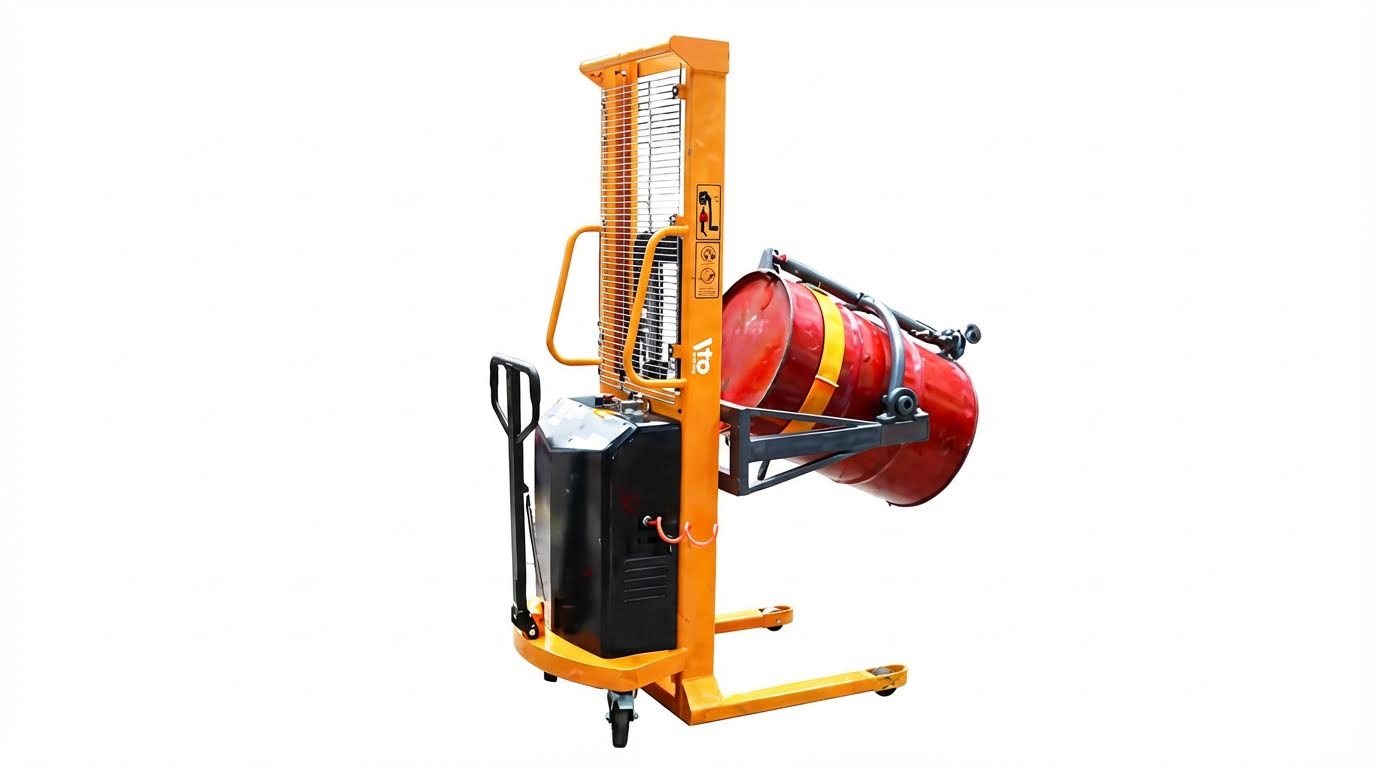
Operational best practices for double-stacked Class 3 drums focus on vehicle selection, containment, segregation, handling equipment, inspection, and static control so you can safely answer can you double stack flammable 3 drums for transport in real-world operations.
💡 Field Engineer’s Note: Most incidents with double-stacked flammable drums come from poor restraint and mixed-incompatible cargo, not from the drums themselves—treat layout, lashing, and segregation as critical engineered systems, not afterthoughts.
Vehicle type, secondary containment, and segregation
Vehicle, containment, and segregation choices determine whether double-stacked Class 3 drums stay intact under transport accelerations and whether any leak is controlled and kept away from incompatible cargo or ignition sources.
- Choose compatible vehicle types: For rail, drums of Class 3 liquids may ride in steel gondola, flatcar, or stock cars but not in hopper-bottom cars, which cannot safely contain leaks or failures. 49 CFR 174 subpart G
- Avoid heated or lighted vehicles: Class 3 drums must not be in rail cars with lighted heaters, open flames, or internal combustion devices, and trucks with heating or refrigeration must meet strict conditions so the lading never exceeds 54 °C (129 °F). 49 CFR 174.204
- Provide secondary containment under pallets: Use rated spill pallets or pans sized per regulatory guidance, typically at least 35% of the total drum volume for large flammable containers, to capture leaks without destabilizing the pallet stack. Spill containment requirements
- Use bunded or spill-pallet systems thoughtfully: Bunds and portable spill pallets should be engineered so their grating and sump geometry still support the pallet footprint and keep the drum stack vertical during braking and cornering. Secondary containment requirements
- Segregate by hazard class and compatibility: Group Class 3 drums away from oxidizers, strong oxidizing acids, and reactive materials using bulkheads, pallet spacing, or separate vehicles; consult SDS incompatibility sections before deciding mixed loads. Chemical segregation practices
- Keep flammables away from food and sensitive goods: Avoid co-loading Class 3 drums with food, feed, or consumer products; if sharing a vehicle is unavoidable, use physical barriers and clear segregation zones to limit cross-contamination risk. Segregation guidance
- Control temperature rise in transit: Route and schedule vehicles so Class 3 drums are not exposed to extended solar heating or hot process areas, as regulations require “reasonable care” to avoid undue temperature rise of containers. Transit precautions
- Design pallet layouts for stability first: Arrange 200 L drums in square or diamond patterns with no overhang, maintaining a low center of gravity and ensuring resistance to ~0.8 g longitudinal and ~0.5 g lateral accelerations typical for road transport. Pallet layout criteria
- Respect stacking limits when asking can you double stack flammable 3 drums for transport: Industry guidance and OSHA tiering rules support a maximum of two drums high and two wide, with stacks blocked, interlocked, and restrained to prevent sliding or collapse in transit. Stack height limits
How vehicle choice interacts with double-stacked drum stability
Vehicle suspension stiffness, deck flatness, and tie-down points directly affect how double-stacked Class 3 drums behave under dynamic loads. Flatbeds with rigid decks and well-placed anchor points allow symmetric lashing patterns that clamp both tiers to the pallet and the pallet to the deck. In contrast, flexible trailers or warped railcar floors can introduce rocking and twist that concentrate stress into individual drums, so you may need load spreaders, anti-slip mats, or even to revert to single-stacking for sensitive products.
Handling equipment, inspection, and static control
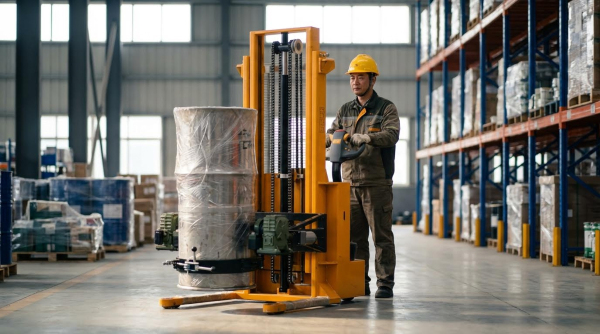
Handling equipment, inspections, and static control keep double-stacked Class 3 drum loads intact during loading/unloading and prevent ignition from leaks or vapors when drums are moved, opened, or connected to transfer systems.
- Plan handling routes and equipment capacity: Before loading, survey floors, ramps, and dock plates for rating, slope, and obstructions, then match drum dollies, trucks, forklifts, or hoists to the drum mass and route conditions. Pre-use inspection protocols
- Select purpose-built drum handling equipment: Use drum dollies for short, flat moves, two-wheel drum trucks for 200 L drums over thresholds, and powered handlers or cranes with certified grabs for stacking, decanting, or placing drums into double-tier pallet patterns. Handling equipment selection
- Perform structured pre-use inspections: Before moving or stacking, inspect each drum for legible labels, tight closures, corrosion, bulging, seepage, and damage at chimes or seams; remove suspect drums from double-stack service. Inspection protocols
- Verify labeling and documentation before loading: Treat any unlabeled drum as hazardous and unknown; confirm contents, hazard class, and UN number before including it in a double-stacked flammable load so segregation and emergency response remain accurate. Labeling protocols
- Use proper manual handling only as a last resort: When drums must be moved by hand, apply controlled rolling techniques instead of lifting, keeping the drum close to the body with hands on the chime and using leg power to control speed and direction. Manual rolling techniques
- Bond and ground during any transfer: Before opening bungs or connecting hoses, bond all conductive components—drum, pump, hose, receiving vessel—and ground the system to earth to dissipate static charges that could ignite Class 3 vapors. Static control and grounding
- Control static generation at the source: Use submerged fill pipes, minimize free-fall distance, and set conservative pump flow rates when filling or emptying drums so charge generation stays below what your bonding and grounding system can safely dissipate. Static control practices
- Never leave hoses connected in transit: Regulations prohibit hoses remaining attached to drum outlets during transportation; disconnect and secure all transfer equipment before the vehicle moves, especially for double-stacked loads where movement can lever on fittings. Drum handling conditions
- Equip spill response at loading and unloading points: Stage spill kits with compatible absorbents, overpacks, and non-sparking tools at docks and transfer areas so any leak from a double-stacked pallet can be contained before it spreads under adjacent loads. Spill kits and response tools
- Integrate PPE and permits into drum operations: Use task-based PPE (gloves, eye/face, footwear, respiratory) and permit systems for higher-risk operations like opening suspect drums or working in confined loading bays with flammable vapors. PPE and permits
💡 Field Engineer’s Note: If you are asking can you double stack flammable 3 drums for transport, my rule is simple: if your handling gear, inspection regime, and bonding/grounding program are not robust enough for single stacks, you are not ready for doubles—fix the basics first.
Why inspection and static control matter more when double-stacking
Double-stacked drums see higher compressive loads and more relative movement between tiers, which amplifies the consequences of small defects like dented chimes, marginal gaskets, or slightly loose bungs. Any leak on the upper tier also has a direct path onto the lower drum tops, pallet deck, and containment surface, increasing vapor and slip hazards. At the same time, operators working at height to connect pumps or vents are closer to vapor clouds, so any static discharge or unbonded tool has a better chance of finding a flammable mixture. That is why engineering controls—inspection, certified equipment, bonding, grounding, and conservative transfer rates—are non-negotiable when you move from single- to double-stacked Class 3 drum transport.

Final Considerations For Compliance And Risk Reduction
Double-stacking Class 3 flammable drums is not a simple space-saving choice. It is an engineered decision that must align regulatory rules, drum strength, pallet geometry, and restraint capacity with real transport accelerations. When you respect the two-high, two-wide stack limit, keep centers of gravity low, and use verified lashing sized to design g-loads, double-stacked drums can travel with controlled risk.
The same physics that govern stacking in storage also apply in transit, but with higher dynamic loads. Poor pallet layout, marginal reused drums, flexible decks, and weak lashing turn a compliant load into a collapse or leak hazard. Vehicle selection, segregation, and secondary containment then decide how any failure behaves in the wider system.
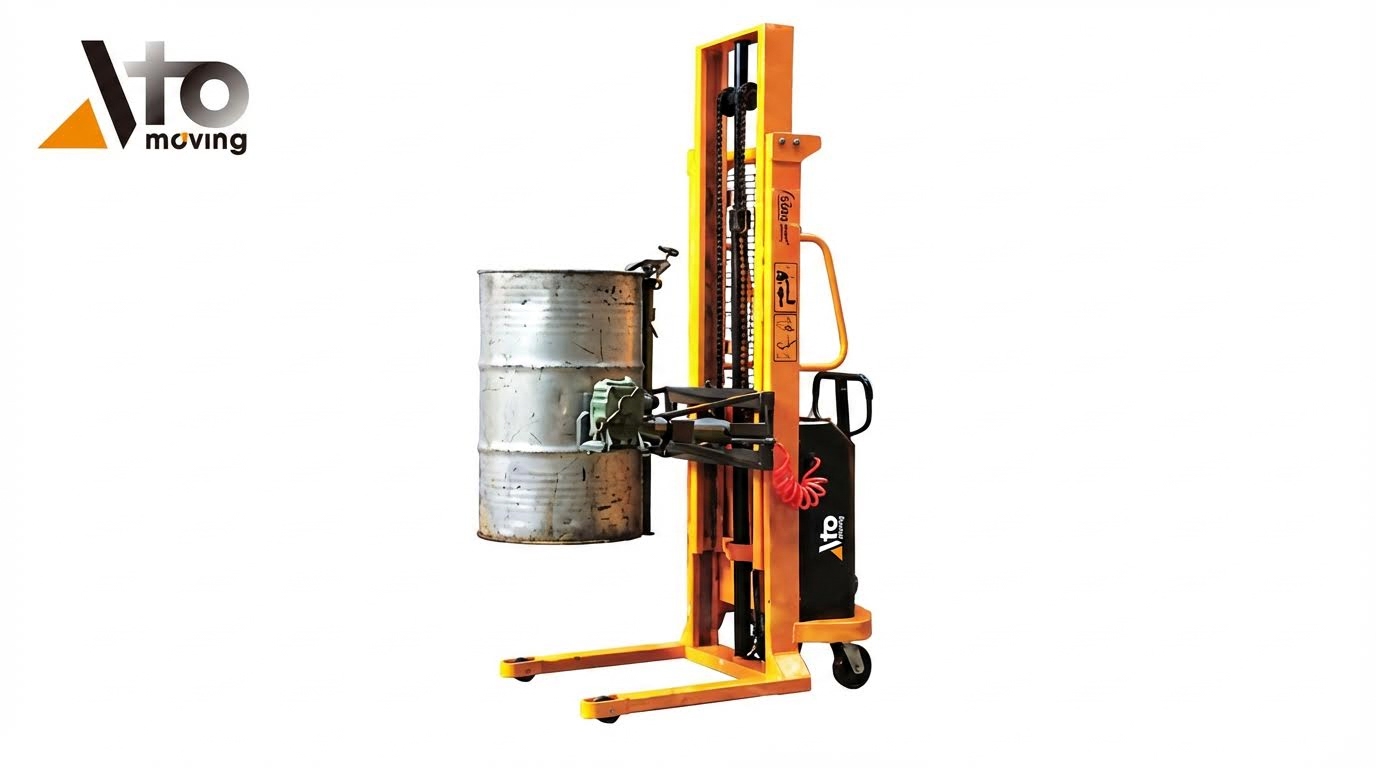
Operations and engineering teams should treat double-stacked drum transport as a defined standard, not an ad-hoc practice. Set clear criteria for drum condition, pallet patterns, lashings, vehicle types, and handling equipment such as Atomoving drum stackers. Prove new layouts with simple in-yard tests before approving routes. If you cannot show that the stack will not collapse, shift, overheat, or block emergency access under worst-case maneuvers, do not double-stack for that lane—stay single-tiered until the design is upgraded.
Frequently Asked Questions
Can you double stack flammable drums for transport?
No, you should not double stack flammable drums (Class 3 Flammable Liquids) during transport unless specifically approved by safety guidelines. Stacking can increase the risk of spills, leaks, or accidents due to instability. Always follow regulations like those outlined in transport standards for dangerous goods. For more details on handling Class 3 Flammable Liquids, refer to DSV Flammable Liquids Guide.
- Ensure drums are properly secured in an upright position.
- Use spill containment pallets to minimize risks during transport.
- Check compatibility with other hazardous materials before stacking.
What precautions should be taken when storing flammable liquids?
When storing Class 3 Flammable Liquids, always keep them in a well-ventilated area away from ignition sources. Drums should be stored on stable racks or pallets and never stacked unless explicitly allowed by local safety codes. Avoid storing incompatible materials together, such as flammable gases and liquids. For additional guidance on storage practices, see Flammable Liquids Compatibility.
- Store at temperatures below their flashpoint.
- Label all containers clearly with hazard warnings.
- Conduct regular inspections for leaks or damage.