Drum handling equipment answered the question “what is drum handling equipment” by turning heavy drum work into a controlled, repeatable process. Plants used it to lift, move, rotate, dump, and unload steel, plastic, and fiber drums with less risk and less strain on workers. Across the full scope of this guide, you will see how different manual and hydraulic systems handled drums, how engineers sized and specified them, and how these units tied into conveyors, mixers, AGVs, hot-melt unloaders, and drying systems. The later sections then connected those design choices to OSHA-driven safety, lifecycle performance, and a practical roadmap for implementing drum handling solutions in real industrial sites.
Core Types Of Drum Handling Equipment
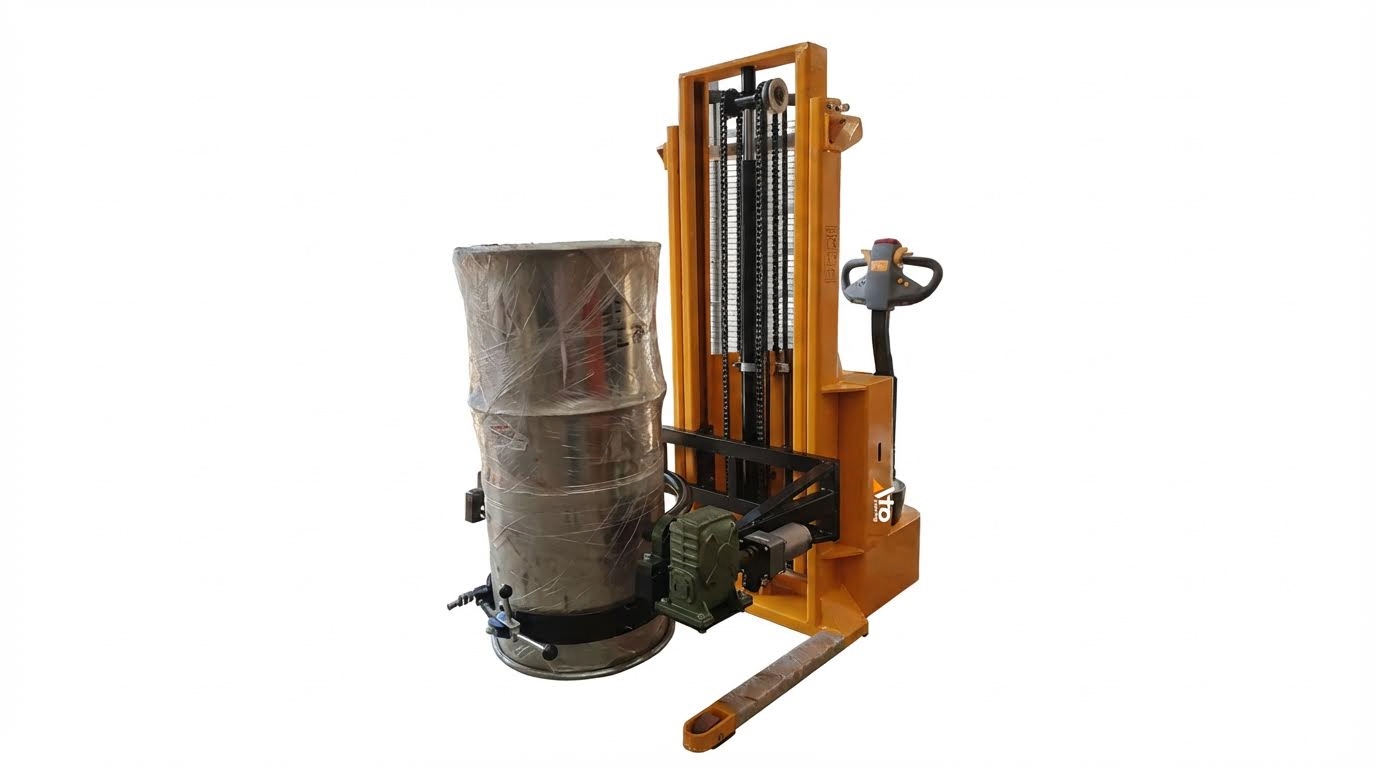
Engineers who ask “what is drum handling equipment” usually deal with four core groups of solutions. These groups cover simple manual movers, hydraulic lift and tilt devices, powered rotation and dumping systems, and specialized hot-melt and drying lines. Each group targets a different mix of load, viscosity, hygiene, and safety needs. Understanding these types is the first step to matching equipment to a specific drum-handling workflow.
Manual Trucks, Dollies, And Caddies
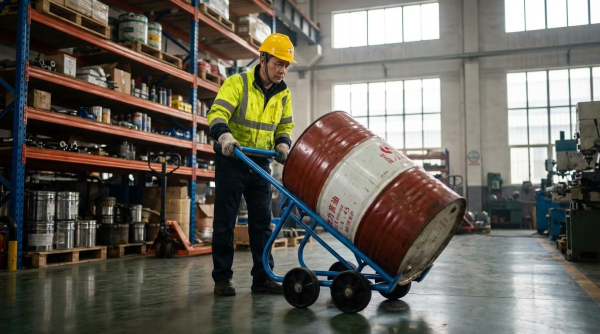
Manual drum trucks, dollies, and caddies answer the basic part of “what is drum handling equipment” in most plants. They move 30 to 55 gallon drums over short distances with low capital cost and minimal maintenance. Typical capacities range from about 150 kilograms for bucket dollies up to roughly 500 kilograms for heavy drum dollies and caddies. Designs use two or four wheels, chime hooks, or cradle frames to keep the drum stable during tipping and transport. Stainless steel variants support food and pharmaceutical use where corrosion and hygiene are critical. These units fit tight aisles and loading zones where powered equipment is not justified or allowed.
Hydraulic Lifters, Tilters, And Palletizers
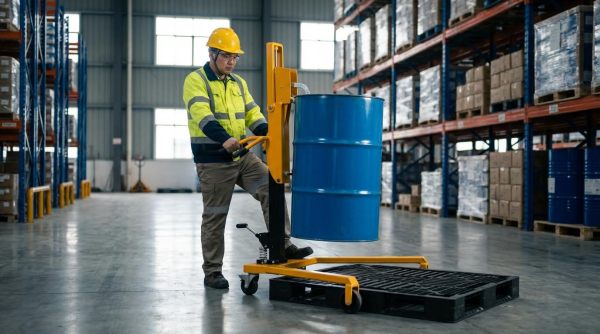
Hydraulic lifters, tilters, and palletizers answer “what is drum handling equipment” for vertical lifting and precise positioning. Hand-pump or foot-pump hydraulics raise drums to heights around 1.5 to 1.6 meters in typical designs, suitable for loading mixers, platforms, or pallets. Rated capacities often fall between 200 and 600 kilograms, so engineers must verify maximum drum mass including contents. Spring-loaded clamps or adjustable gripping heads secure steel, plastic, or fiber drums by the rim or body. Drum palletizers straddle standard pallets and place or remove drums without extra forklifts, improving throughput and reducing manual strain. Hydraulic tilters combine lifting with controlled rotation for decanting liquids into tanks or vessels.
Drum Rotators, Dumpers, And Unloaders
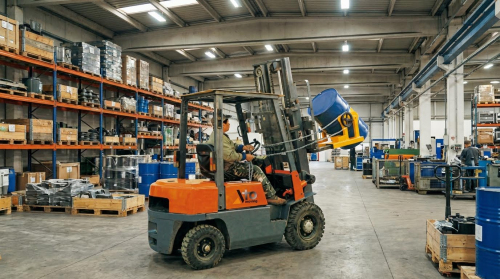
Drum rotators and dumpers define “what is drum handling equipment” when a process needs controlled rotation or full emptying. Rotators often allow 360 degree drum rotation with capacities up to about 450 kilograms, using mechanical locks to hold vertical or horizontal positions. This supports mixing, re-suspension of settled solids, and safe pouring of viscous fluids. Drum dumpers and tipplers lift drums and tilt them over hoppers or conveyors, using hydraulic cylinders for smooth, repeatable motion. Sealed or semi-sealed designs limit dust and vapor release in chemical, food, and pharmaceutical plants. Safety features such as fail-safe locking mechanisms, drip pans, and guarded moving parts reduce spill and entanglement risks and help align with OSHA guarding expectations.
Specialized Systems For Hot Melt And Drying
Specialized hot-melt drum unloaders and drum dryers show the high end of “what is drum handling equipment” in continuous production. Hot-melt unloaders heat and pump high-viscosity materials from drums, handling viscosities up to the order of millions of centipoise. High-force hydraulic rams press heated platens into the product, achieving pump rates on the order of hundreds to thousands of pounds per hour in documented cases. Control systems manage platen temperature, ram force, and flow rate to protect product quality and operator safety. Single-drum dryers support bulk solids or sludge, reducing high inlet moisture to low outlet levels while saving roughly 15–30% energy versus some traditional dryers. These systems integrate with burners, exhaust treatment, and downstream handling, and require careful selection based on moisture load, required throughput, and fuel type.
Engineering Selection Criteria And Design Considerations
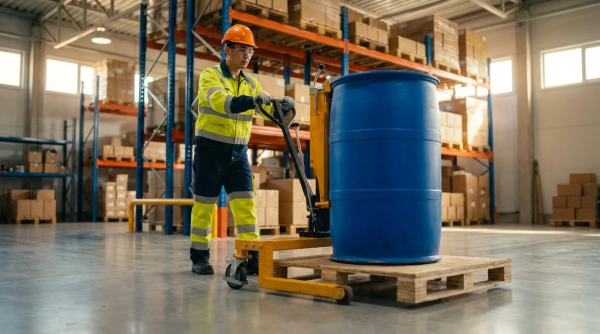
When engineers ask “what is drum handling equipment” in a project context, they usually mean a complete handling system matched to drum, product, and process. Selection is not only about safe lifting. It also links load rating, ergonomics, throughput, and plant integration. This section explains how to translate process requirements into concrete design criteria for drum trucks, lifters, tilters, rotators, and specialized hot-melt or drying systems.
Load, Drum Geometry, And Material Compatibility
Selection starts with load. Engineers define maximum gross mass per drum, including liquid, solids, liner, and lid. Typical industrial drum handlers cover ranges from about 50 kilograms for light lifters to 500 kilograms for hydraulic lifter–tilters, with some heavy systems above this. Safety factors must satisfy internal standards and local regulations, often using at least 125% of rated working load for proof tests.
Drum geometry drives the gripping method. Common sizes include 5, 30, and 55-gallon drums, plus 13–55 gallon ranges for transporters. Steel drums usually offer robust top chimes for mechanical grippers. Plastic and fiber drums may need cradle support or adjustable clamps to avoid local crushing. Engineers also check height, diameter, and any rolling hoops to confirm clearance through tilters, dumpers, and palletizers.
Material compatibility affects frame, contact surfaces, and seals. Mild steel frames with powder coating suit non-corrosive duties. For corrosive chemicals, food, or pharmaceuticals, stainless steel structures and fasteners reduce contamination risk and extend life. Contact pads, rollers, and seals must resist product attack and cleaning agents. Engineers also consider temperature limits when drums carry hot melts or when dryers work with high inlet gas temperatures.
Actuation Methods, Ergonomics, And Throughput
Actuation choice strongly influences both ergonomics and throughput. Manual dollies, caddies, and hand trucks suit low-volume areas where operators move a few drums per shift. They reduce capital cost but increase physical effort. Hydraulic hand pumps, common on drum transporters and lifter–tilters, give higher lift heights, often above 1.5 meters, with controlled movement and moderate operator effort.
Powered systems use electric or hydraulic drives for lifting, rotation, or travel. These systems support higher drum counts per hour and reduce musculoskeletal risk. For hot melt drum unloaders, hydraulic rams can apply several tons of force to press platens into viscous materials. Engineers match ram force and pump capacity to target production rates, which can reach hundreds or even thousands of pounds per hour in high-speed lines.
Ergonomics covers handle height, control placement, and required push–pull forces. Controls should sit within easy reach, in line with safety rules for hoists and handling devices. Travel speed must balance productivity and control; for example, powered drum trucks that moved above 3 miles per hour needed stable wheelbases and effective braking. Throughput analysis compares cycle time for pick-up, travel, lift, dump, and return against line takt time, then defines how many units are needed per shift.
Integration With Conveyors, Mixers, And AGVs
When engineers ask “what is drum handling equipment” in a modern plant, they often think of integrated cells, not stand-alone carts. Integration with conveyors, mixers, and automated guided vehicles (AGVs) starts with interface geometry. Drum palletizers must straddle standard pallets and align with roller or belt conveyors. Lift heights must match mixer inlets, hopper rims, or platform levels, sometimes in the 1–3 meter range.
Drum dumpers and rotators often feed mixers, reactors, or dryers. Their discharge angle, chute design, and tip height determine whether powders bridge or flow cleanly. Sealed transfer systems help when handling dusty powders or hazardous chemicals, limiting emissions during dumping. Engineers specify guarding and interlocks so that conveyors and dumpers stop safely when access doors open or when drums sit out of position.
AGV integration requires predictable pick-up and drop-off points. Drum stands, dollies, or pallets must have consistent fork pockets and clear approach zones. Control systems share signals between AGVs, conveyors, and drum equipment to avoid collisions and deadlocks. In some plants, drum unloaders and dryers connect to higher-level execution systems, which schedule drum movements based on batch recipes and real-time inventory.
ATEX, Cleanroom, And Corrosion-Resistant Designs
Hazardous and hygienic areas need special design rules. In ATEX or comparable explosive atmospheres, drum handling equipment must avoid ignition sources. That can mean non-sparking wheels and tools, conductive bonding, and explosion-protected electrical components. Mechanical designs also minimize rubbing contacts that could create hot spots. Controls for drum-opening or dumping in such zones should sit behind blast-resistant barriers when there is explosion risk.
Cleanroom and pharmaceutical areas require easy-to-clean surfaces and low particle generation. Stainless steel frames with smooth welds and minimal crevices support wash-down and disinfection. Sealed bearings and enclosed drives reduce contamination traps. For viscous or sticky products, hot melt drum unloaders and dryers must balance high heat transfer with cleanability, using accessible platens and ducts.
Corrosion-resistant designs protect both equipment and product quality. Engineers select stainless steels or coated materials based on chemical exposure, temperature, and cleaning cycles. Spill control features, such as drip pans under rotators and secondary containment dollies, help manage leaks and meet environmental rules. Across ATEX, cleanroom, and corrosive duties, the engineer’s task is to define risks, then choose drum handling equipment whose materials, guarding, and controls keep operators safe and processes stable.
Safety, Compliance, And Lifecycle Performance

Safety and long-term performance define how well drum handling equipment works in real plants. When engineers ask “what is drum handling equipment,” they also need to understand the risks over the full lifecycle. This section links OSHA rules, mechanical safeguards, digital maintenance, and cost planning into one framework. It helps you align design choices with compliance, uptime, and total cost.
OSHA, Guarding, And Drum-Opening Hazards
Drum handling equipment must follow OSHA rules for hoists, rotating parts, and hazardous waste work. Exposed gears, chains, drums, and couplings need fixed guards to stop contact during lifting, rotating, or dumping. Controls must sit within easy reach of the operator, but behind shields where explosion risk exists. For base-mounted drum hoists, OSHA required devices that cut power on fault and prevent automatic restart.
Drum-opening tasks add extra hazards from pressure, vapors, and unstable contents. Procedures placed workers and controls behind explosion-resistant barriers whenever possible. Shields had to protect staff from flying fragments if a drum failed during venting or cutting. Non-sparking tools and ignition-safe equipment were required in flammable atmospheres to avoid sparks.
Safe practice kept non-essential staff away from drum-opening zones. Air monitoring during opening checked for toxic or flammable gases. Fire extinguishers that met 29 CFR Part 1910, Subpart L, had to be available and sized for the worst credible fire scenario.
Mechanical Restraints, Locks, And Spill Control
Mechanical restraints are central to safe drum lifting, tilting, and transport. Gripping systems used chime hooks, adjustable clamps, or cradle saddles to lock drums before any lift. Dual fingertip-operated locks or fail-safe latches held drums in vertical or horizontal positions during rotation. Designs aimed to keep clamping forces high enough to stop slip without crushing thin-wall drums.
Spill control worked in parallel with restraint systems. Drum dumpers, rotators, and tilters often included drip pans or catch trays under the discharge zone. Drum dollies with containment rims captured leaks during transport inside plants. For staging unstable or shock-sensitive drums, diked and fenced areas limited the spread of spills or fire water.
Engineers matched restraint type to drum geometry, mass, and center of gravity. For example, tall 55-gallon drums with high liquid levels needed deeper cradles and positive locks during 180° tilting. Transport routes were checked for floor flatness and slope so that casters, brakes, and wheel materials controlled runaway risk and chemical attack.
Predictive Maintenance And Digital Twins
Lifecycle performance of drum handling equipment depends on structured maintenance. Predictive strategies monitored wear on hoist drums, hydraulic seals, bearings, and brakes before failure. Typical indicators included abnormal vibration, rising hydraulic oil temperature, or longer lift times at constant load. These signals allowed planned shutdowns instead of emergency stops that disrupted production.
Digital twins extended this idea by mirroring equipment behavior in software. A twin could track duty cycles, load spectra, and shock events for each lifter or dumper. Engineers then used these data to refine inspection intervals and choose upgraded components where actual loads exceeded design assumptions. This approach fit well in plants that already used connected PLCs and sensors.
For hot melt unloaders and high-throughput dumpers, predictive maintenance protected expensive heaters, rams, and pumps. Stable performance over time kept melt rates, dump times, and cycle counts within specification. That stability also supported safety, because worn brakes or sticking valves often increased accident risk during lifting or tilting.
Cost Of Ownership And Upgrade Path Planning
When you ask “what is drum handling equipment” from a business view, it becomes a long-term asset, not just a tool. Total cost of ownership covered purchase price, installation, training, energy use, maintenance, downtime, and eventual replacement. Simple manual trucks had low capital cost but higher ergonomic load and lower throughput. Hydraulic and powered systems cost more up front but reduced labor strain and increased moves per shift.
Upgrade planning looked at future drum types, viscosities, and regulatory demands. Plants handling hazardous or flammable products often planned a path to explosion-protected drives, sealed dump systems, and better guarding. Modular frames, bolt-on clamps, and scalable controls made upgrades easier without full replacement. Digital maintenance records supported replacement timing by showing rising failure rates or repair costs.
Well-chosen drum handling equipment kept lifecycle risk and cost in balance. It allowed safe lifting, rotating, and dumping while meeting OSHA rules and internal standards. With a clear roadmap, engineers could phase in better ergonomics, higher automation, and stronger containment as process needs evolved.
Summary And Practical Implementation Roadmap
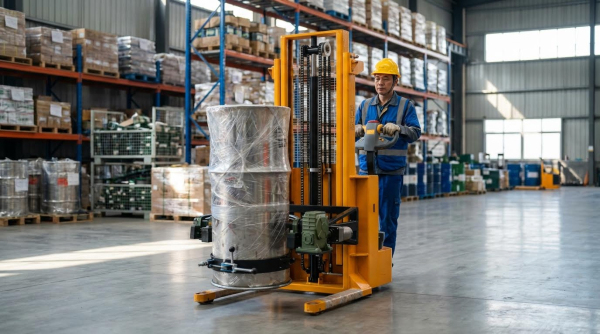
Drum handling equipment answered the core question “what is drum handling equipment” by covering a wide family of tools that lifted, moved, rotated, dumped, and unloaded drums in a controlled way. The article outlined manual trucks and dollies, hydraulic lifters and palletizers, powered rotators and dumpers, and specialized hot melt and drying systems. It also reviewed engineering selection criteria, safety and compliance, and lifecycle performance, from OSHA guarding to predictive maintenance and digital twins. This section brings these threads together into a practical roadmap for specifying, deploying, and upgrading drum handling systems.
Plant teams should start with a structured requirements list. Define drum sizes, wall thickness, chime style, and materials handled, including viscosity and hazard class. Map each handling step in the process flow: receipt, storage, transfer to mixers or reactors, decanting, and waste handling. For each step, define required motions such as vertical lift, 360° rotation, controlled tilting angle, and horizontal transfer distance. Use these data to narrow equipment classes, for example manual caddies for low-throughput zones and hydraulic tilters or drum dumpers for high-cycle transfer to hoppers or mixers.
Next, align equipment choice with safety and regulatory needs. Check OSHA and local regulations for guarding, control placement, and hoist or lifting device requirements. Where flammable atmospheres exist, specify ATEX-rated or equivalent explosion-protected designs and non-sparking contact points. In cleanroom or food and pharma areas, prioritize stainless steel, smooth welds, and easy-wash geometries. Build spill containment and drip management into the layout, using drum stands, sumps, or containment dollies around transfer points. Include mechanical locks, positive grip clamps, and interlocked guards where operators work near elevated or rotating drums.
Implementation should follow a phased, data-driven plan. Start with a pilot cell that combines the selected drum handling equipment with conveyors, mixers, or AGVs. Instrument the cell where possible with counters, load sensors, and basic condition monitoring to log cycle times, operator strain indicators, and unplanned stops. Use these data to refine ergonomics, such as handle height, pump stroke effort, or control location. Then standardize successful configurations across similar process lines to simplify training, spares, and maintenance routines.
Lifecycle planning is critical. When preparing budgets, consider not only purchase price but also expected maintenance intervals, wear parts, and inspection time under internal safety programs. Evaluate upgrade paths such as adding powered lift to manual units, retrofitting digital sensors for predictive maintenance, or integrating drum dumpers with automated recipe control. Over time, plants can move from isolated manual handling toward semi-automated cells and, where justified by volume, to fully integrated drum unloading and drying systems. This balanced approach lets facilities improve safety and throughput today while staying ready for future changes in product mix, regulatory demands, and automation strategy.