Handling 55-gallon drums posed significant safety, ergonomic, and environmental risks, especially when contents were hazardous, corrosive, or flammable. This article outlined how to identify chemical and mechanical hazards, interpret labels and Safety Data Sheets, and verify drum integrity before any movement. It then examined engineering controls and equipment choices, from drum trucks and dollies to forklift attachments, cranes, and spill containment systems, including differences between steel, plastic, and salvage drums. Finally, it detailed safe handling techniques, ergonomics, PPE, preventive maintenance, and emerging AI-based monitoring, concluding with consolidated best practices for compliant, low-risk drum handling operations.
Hazard Identification And Regulatory Compliance
Effective drum handling safety started with systematic hazard identification and strict regulatory compliance. For 55-gallon drums, engineers and safety managers needed to treat every movement task as a potential chemical, mechanical, and ergonomic risk scenario. A structured approach integrated label review, physical inspection, regulatory requirements, and documented training into one coherent control strategy. This foundation reduced incident rates, supported OSHA and EPA compliance, and enabled safe use of engineered handling equipment.
Reading Labels, SDS, And Hazard Classifications
Before touching a drum, personnel had to read the label and identify hazard classes such as flammable, corrosive, toxic, or oxidizing. If a drum lacked a legible label, best practice treated its contents as hazardous until positively identified through documentation or analytical testing. The Safety Data Sheet (SDS) for the product defined specific handling requirements, including required personal protective equipment, incompatible materials, and spill-response procedures. Engineers used GHS pictograms and SDS sections to determine necessary engineering controls, such as ventilation, explosion protection, or secondary containment. Clear label management and SDS access, whether paper-based or digital, formed the first barrier against chemical exposure and fire or explosion events.
Assessing Drum Integrity, Leaks, And Pressure
Visual and tactile inspection of drum integrity preceded any movement. Operators checked for rust, dents, bulging, damaged chimes, deformed lids, or missing bungs, since these defects indicated potential weakness or internal pressure. Any visible leaks triggered immediate containment and identification of the spilled substance, followed by reference to the SDS and site spill-response plan. Technicians avoided moving compromised drums until they applied temporary containment, overpacked them in salvage drums, or used specialized lifting devices that minimized additional stress. For drums showing signs of internal pressure, such as domed ends or stressed lids, hot work and impact loads were strictly prohibited until pressure equalization and gas testing verified safe conditions. This inspection step reduced the likelihood of catastrophic rupture, uncontrolled releases, and secondary injuries during handling.
OSHA, EPA, And Hot-Work Permit Requirements
OSHA regulations required employers to provide appropriate material-handling equipment, PPE, and documented procedures for drum handling, especially when hazardous chemicals were involved. EPA rules governed storage, secondary containment capacity, and waste drum management, including sump sizing based on either the largest container or a defined percentage of total volume. Facilities that performed cutting, welding, or other hot work on drums had to implement a formal hot-work permit system. This system included pre-cleaning, vapor testing, elimination of ignition sources, and verification that the container no longer contained flammable residues or vapors. Guidance from safety regulators and national standards bodies emphasized the use of cold-cutting methods, such as hydraulic shears, wherever practicable as a lower-risk alternative. Compliance audits typically examined documentation of permits, inspection records, and training logs to confirm that drum-handling operations met regulatory expectations.
Training, Authorization, And Written Procedures
Only trained and authorized personnel should handle 55-gallon drums, particularly those containing hazardous substances or pressurized contents. Training programs covered label interpretation, SDS usage, equipment operation, manual-handling techniques, spill response, and emergency communication protocols. Written standard operating procedures (SOPs) translated regulatory requirements and risk assessments into step-by-step instructions for inspection, movement, stacking limits, and storage patterns, such as restricting rows to two drums high and two wide for inspection access. Facilities integrated periodic refresher training, drills, and competency assessments to ensure that operators applied procedures consistently under real conditions. Management roles included verifying that staff followed SOPs, updating procedures after incidents or near-misses, and aligning internal rules with evolving OSHA, EPA, and local authority guidance. This closed-loop approach ensured that engineering controls and human factors worked together to maintain a high level of drum-handling safety.
Engineering Controls And Equipment Selection
Engineering controls determined the baseline risk level during drum handling. Proper equipment selection reduced manual exertion, minimized spill probability, and improved compliance with OSHA and EPA requirements. This section focused on how to match handling devices and containment systems to drum type, contents, and movement patterns in industrial environments.
Comparing Drum Trucks, Dollies, Trolleys, And Stands
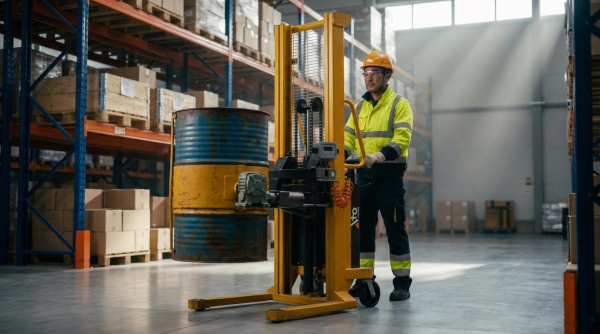
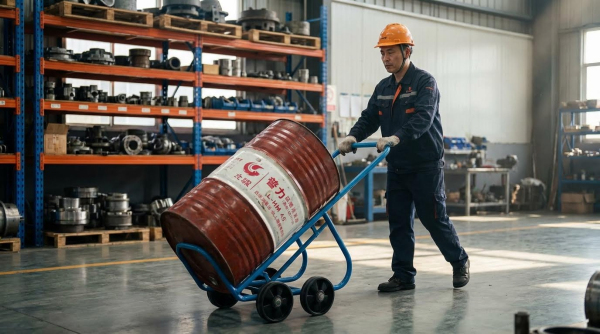
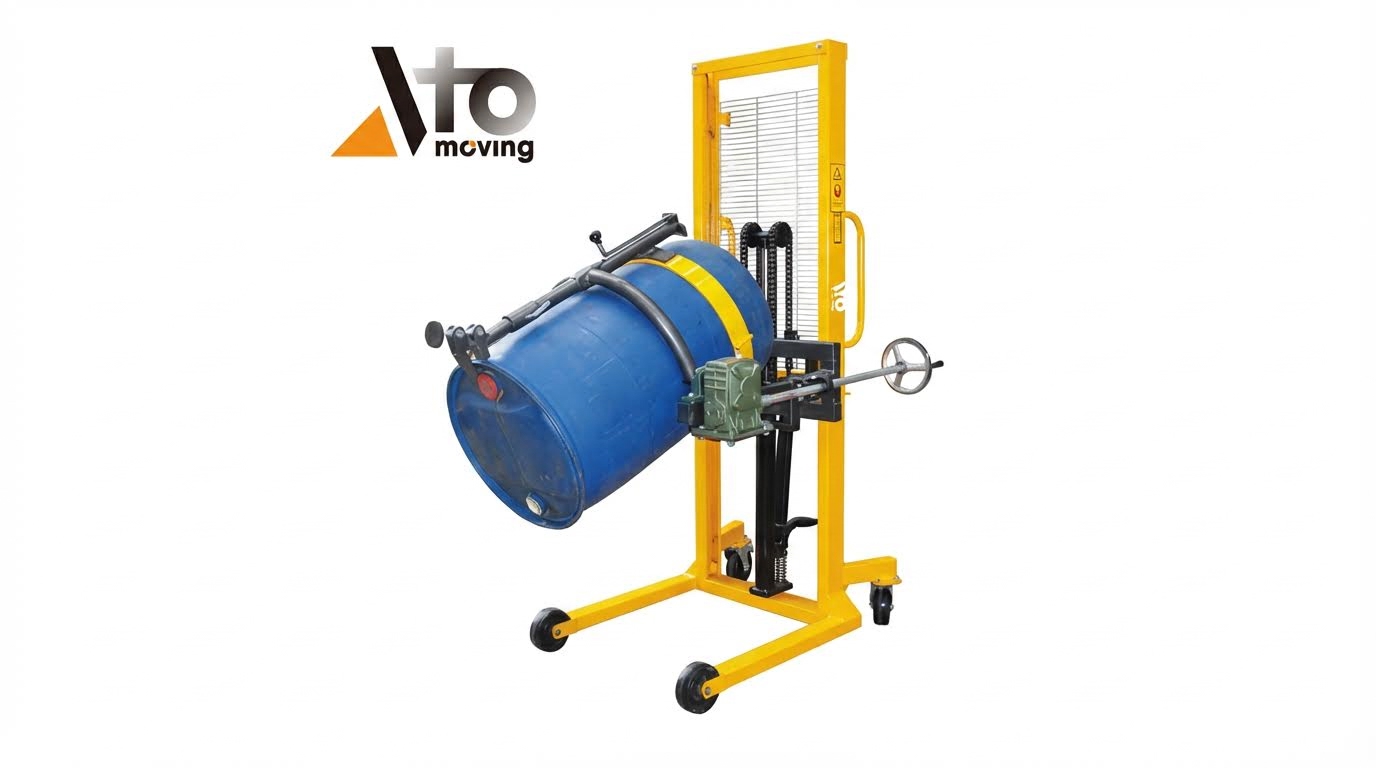
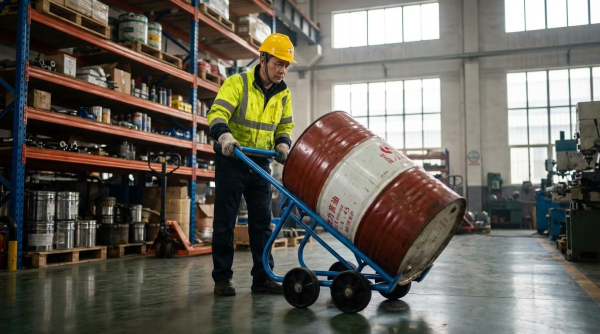
Drum trucks and trolleys carried the main load on wheels and allowed operators to tilt and transport 200 L to 220 L drums with reduced spinal loading. They typically incorporated a clamping or belt-type transport lock to prevent the drum from slipping during acceleration, deceleration, or over thresholds. Drum dollies supported upright drums on a low-profile wheeled ring or platform, ideal for short moves and fine positioning in congested areas, but they required separate means for initial drum upending. Tilting drum stands supported drums horizontally or at an angle for decanting and facilitated safe rotation without lifting the full weight. Engineers selected between these devices by comparing travel distance, floor conditions, drum mass, and the need for controlled dispensing versus simple relocation.
Forklift Attachments, Cranes, Hoists, And Tongs
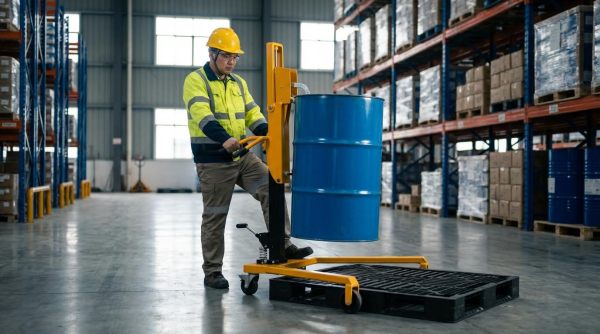
Forklift drum attachments converted existing fork trucks into dedicated drum movers, eliminating unsafe practices such as lifting drums directly on bare forks. Typical attachments used gripping jaws, rim clamps, or cradle designs to secure one or multiple drums, improving stability on uneven yards or ramps. Overhead cranes and hoists equipped with drum tongs or C-hooks allowed vertical lifting in tight interiors or over obstacles, such as into containment sumps or behind front rows. Drum tongs, whether rigid or chain-based, required correct sizing to the chime geometry and verification of working load limits, with operators trained to avoid side loading and sudden shock loads. Selection between forklift-based and overhead systems depended on building layout, aisle width, stacking strategy, and whether vertical placement or long horizontal transport dominated the operation.
Handling Steel Vs. Plastic Drums And Salvage Drums
Steel drums had ribbed, high-friction chimes that engaged reliably with most mechanical grippers, which made them comparatively easier to handle. Plastic drums presented smooth, often tapered surfaces that reduced friction and could deform under point loads, so specialized clamps or cradle-type attachments were recommended to prevent slippage. When dealing with salvage drums or overpacks, equipment needed sufficient jaw opening and gripping geometry compatible with the larger diameter and sometimes irregular shape. Salvage drums frequently contained damaged or leaking inner drums, so handling strategies prioritized minimal tilting, controlled acceleration, and strict use of secondary containment beneath lift paths. For all drum materials, engineers verified compatibility of contact surfaces with the chemical contents to avoid stress cracking or unwanted reactions.
Spill Containment, Sumps, And Secondary Containment
Spill containment integrated directly with drum handling to limit environmental releases during storage and transfer. Mobile spill trays and bunded trolleys allowed operators to move individual drums while maintaining a capture volume sized to at least the volume of the largest container or 10% of the aggregate volume, whichever was greater, in line with typical EPA benchmarks. Fixed drum storage buildings used welded and leak-tested sumps, often designed to meet stricter criteria such as 25% of total stored volume as required by Factory Mutual guidance. Engineers located sumps and secondary containment so that forklift or crane access remained clear, avoiding blocked egress routes while still intercepting potential leaks. When specifying containment systems, they considered chemical compatibility of sump materials, ease of cleaning, and integration with spill response plans and monitoring devices.
Safe Handling Techniques And Ergonomics
Pre-Move Planning, Weight Estimation, And Routing
Pre-move planning reduced strain injuries and spill incidents during drum handling. The operator first verified drum contents by reading the label and Safety Data Sheet (SDS), then treated any unmarked drum as hazardous until identified. They visually inspected the drum for dents, bulging, corrosion, and leaks, and ensured bungs or lids were present and tight before movement. A typical 55-gallon (≈208 L) drum weighed 180–360 kg depending on the liquid density, so workers estimated weight from contents and decided if mechanical aids or team handling were required.
Routing decisions considered floor condition, slopes, thresholds, and potential ignition sources for flammable materials. The operator selected paths that avoided stairs, confined corners, and passenger traffic, and used freight elevators for chemical transport when available. They ensured emergency exits and access to spill kits and eyewash stations remained unobstructed along the route. For indoor transfers, planners minimized travel distance and avoided manual carriage over long spans, favoring drum trucks, dollies, or trolleys.
Manual Rolling, Tilting, And Two-Person Lifting Methods
Manual techniques applied only when mechanical aids were unavailable and the risk assessment allowed it. For rolling an upright drum, the handler stood in front of the drum, placed both hands on the far side of the top chime, and pulled the drum toward themselves until it balanced on the lower chime. They rolled the drum by walking it forward, keeping hands on the chime without crossing arms, and maintained control to prevent sudden tipping. To lower the drum from the rolling position, the worker moved hands to the lower chime, kept fingers away from pinch points, bent at the knees, and lowered the drum in a controlled motion with a straight back.
Upending or righting a drum worked best with a drum lifter bar or tilting lever to reduce effort and limit back loading. If performed manually, the worker crouched with feet staggered, knees apart, and grasped the chime on both sides, then used leg muscles to initiate the tilt while keeping the spine neutral. Two-person lifts followed the same biomechanics, but each person squatted on opposite sides of the drum, coordinated the lift count, and kept the drum close to the body. No worker attempted to manually raise a full 55-gallon drum; manual lifting occurred only with verified empty or near-empty drums.
PPE Selection For Chemical And Mechanical Hazards
PPE selection followed the hazard assessment from labels and SDS information. For non-hazardous contents, baseline protection included safety shoes with toe protection, work gloves, and safety glasses to mitigate crush and impact risks. For corrosive, toxic, or flammable liquids, operators added chemical-resistant gloves matched to the chemical type, splash goggles or face shields, and chemical aprons or coveralls. Where airborne exposure or vapors were possible, respiratory protection followed occupational hygiene evaluations and regulatory requirements.
Workers handling leaking drums or performing spill response used higher-level PPE, including fully chemical-resistant footwear covers and, when indicated by the SDS, disposable suits. In areas classified as explosive atmospheres, they verified that PPE and equipment were suitable for Ex zones and minimized static discharge. Supervisors ensured PPE remained compatible with cleaning agents used on drums and with any decontamination procedures. Training emphasized correct donning, doffing, and inspection of PPE to prevent cross-contamination and premature failure.
Preventive Maintenance And AI-Based Monitoring
Preventive maintenance programs for drum handling equipment reduced failure rates and unplanned downtime. Facilities scheduled inspections of drum trucks, dollies, trolleys, tongs, and forklift attachments at defined intervals, checking welds, wheels, bearings, hydraulic components, and securing devices such as chains or belts. They removed from service any device showing deformation, corrosion, fluid leaks, or reduced braking or locking performance. Documentation of maintenance supported regulatory compliance and incident investigations.
By 2026, some operations integrated sensors and AI-based monitoring into drum handling workflows. Load cells on drum lifters and forklift attachments tracked actual weights and prevented overloading. Vibration and temperature sensors on
Summary Of Best Practices For Drum Handling Safety
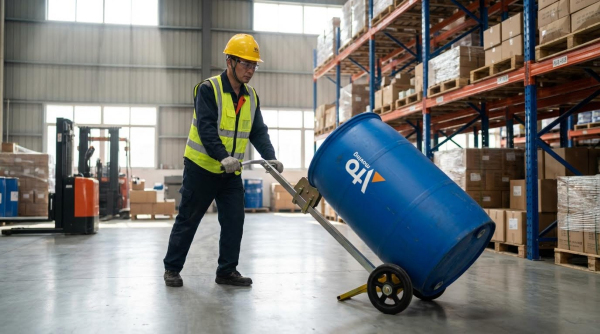
Drum handling safety relied on a structured combination of hazard identification, engineered controls, and disciplined procedures. The most effective programs started with rigorous label reading, SDS review, and conservative assumptions for unknown or unlabeled drums. Facilities inspected every 55-gallon drum for corrosion, deformation, leaks, missing bungs, and signs of internal pressure before any movement, and they kept hot work on drums under a strict permit and cleaning regime. Only trained and authorized personnel handled hazardous drums, following written procedures that aligned with OSHA, EPA, and local regulatory requirements.
Engineering controls significantly reduced strain injuries and spill risks compared with manual handling. Plants prioritized drum trucks, dollies, trolleys, tilting stands, cranes, hoists, and purpose-designed forklift attachments instead of bare forks or manual lifting. They matched equipment to drum type and task, recognizing that plastic and salvage drums required higher-friction or form-fitting devices. Secondary containment, including mobile spill trays and compliant sumps sized to EPA and FM criteria, limited environmental impact from leaks during storage and transfer.
From an implementation standpoint, sites benefited from standardized routes, pre-move weight estimation, and restrictions on manual upending or lifting of full drums. PPE selection followed chemical hazard and mechanical risk assessments, with safety footwear, gloves, eye and face protection, and aprons treated as baseline for hazardous contents. Preventive maintenance and periodic inspection of drum handling equipment maintained load ratings and functional safety. Emerging AI-based monitoring and sensor systems offered trend analysis for equipment condition, incident precursors, and unsafe handling patterns, but they complemented rather than replaced basic training and supervision.
Looking ahead, drum handling safety will likely move toward more automation, smarter attachments, and integrated spill and vapor detection. However, the core controls remain stable: identify hazards early, isolate workers from loads using engineered devices, contain potential releases, and enforce clear, practiced procedures. Organizations that combine these fundamentals with data-driven monitoring and continuous training should achieve lower injury rates, fewer spills, and higher operational reliability in drum handling operations.