Industrial drum storage required careful coordination between drum footprints, pallet geometry, and regulatory containment rules. This article examined standard 55-gallon drum and pallet configurations, including one- to ten-drum spill pallet layouts and their dimensional constraints. It then analyzed load ratings, sump capacities, and compliance with EPA 40 CFR 264.175, OSHA requirements, and NFPA 30 stacking rules. Finally, it discussed design and selection strategies for industrial facilities, covering four-way entry pallets, AGV compatibility, digital layout optimization, predictive maintenance, and lifecycle safety tradeoffs to support safe, compliant drum palletization decisions.
Standard Drum And Pallet Configurations
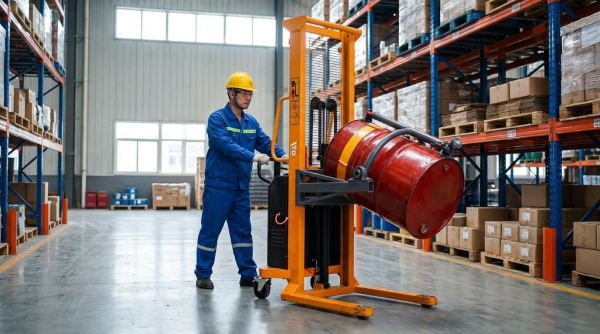
Standard drum and pallet configurations governed safe, repeatable layouts in warehouses and process plants. Engineers matched drum footprints, pallet dimensions, and containment geometry to regulatory and handling constraints. Correct configuration selection reduced damage, leakage risk, and non-compliance with EPA, OSHA, and NFPA rules. This section detailed practical layout patterns for 55-gallon drums on conventional and spill-containment pallets.
Typical 55-Gallon Drum Footprints And Clearances
A standard 55-gallon (≈208-liter) steel drum typically had a nominal outside diameter of about 584 mm and a height near 880–900 mm. When engineers laid out drums on pallets, they allowed clearance for chimes, label visibility, and handling equipment such as drum grippers. Industry practice recommended at least 25–50 mm lateral clearance between drums on a pallet to accommodate manufacturing tolerances and slight out-of-round conditions. Pallet deck boards needed sufficient width and spacing to support the circular drum base uniformly and prevent local bearing stresses. Clearances also considered drum overhang relative to pallet edges, keeping the combined footprint compatible with racking beams and four-way entry forklift tines.
How Many 55-Gallon Drums Fit On 48″ x 48″ Pallets
Guidance for steel drums recommended a 1 219 mm by 1 219 mm pallet as the preferred footprint for four 55-gallon drums. This square pallet allowed a two-by-two drum pattern with minimal but adequate edge clearance, keeping the overall center of gravity inside the pallet perimeter. Industry documents stated that 1 168 mm by 1 168 mm was the minimum acceptable pallet size for four drums, but 1 219 mm by 1 219 mm provided more robust support and handling tolerance. Engineers typically limited stacking to one pallet layer per unit load, then stacked these palletized units up to three or four high depending on specific gravity and ambient temperature. The four-way entry design simplified forklift and pallet jack access from any side, which improved safety in tight aisles.
One-, Two-, Three-, And Four-Drum Spill Pallet Layouts
Commercial spill pallets for 55-gallon drums used standardized layouts that balanced sump volume, drum spacing, and handling geometry. Polyethylene units such as the HERMEQ range provided dedicated footprints for one, two, three, or four drums with integrated sumps from 60 to 66 gallons, depending on model. For example, a typical 2-drum poly pallet measured about 1 300 mm by 750 mm by 440 mm with a rated load near 650 kg, supporting two drums side by side over a grating surface. Steel containment pallets like the Beacon BVSRB series used 686 mm by 1 245 mm by 356 mm for two drums and 1 245 mm by 1 245 mm by 356 mm for four drums, with capacities of 545 kg and 1 090 kg respectively. Layouts maintained drum top access for pumps and funnels while keeping drum centers inside the sump perimeter to capture leaks and meet EPA 40 CFR 264.175.
Six- And Ten-Drum Containment Pallet Arrangements
Larger containment systems for six or ten drums served bulk storage zones and staging areas. UPQUAK designs illustrated typical geometry, with a six-drum pallet footprint around 3 400 mm by 1 600 mm by 460 mm and sump capacities up to 1 100 liters. These systems usually arranged drums in two or more rows, maintaining aisles or service gaps for inspection and drum handling attachments. Ten-drum units extended this concept, using elongated basins with sump volumes up to 1 600 liters and drum layouts that still respected forklift approach paths and sprinkler discharge patterns. Engineers evaluated floor loading, traffic patterns, and emergency access when placing these large pallets, ensuring that combined drum, pallet, and liquid weights remained within slab and racking design limits.
Load Ratings, Sump Capacity, And Compliance

Load ratings, sump capacity, and regulatory compliance defined how many drums a pallet safely supported. Engineers evaluated drum mass, liquid specific gravity, and pallet structural limits together. Spill pallets also needed adequate containment volume and compatibility with fire and environmental codes. Aligning these factors reduced risk of structural failure, loss of containment, and non-compliance penalties.
Drum Weight, Specific Gravity, And Pallet Load Limits
Drum pallet capacity depended first on drum weight, which varied with liquid density and fill level. A standard 55-gallon (≈208-liter) drum filled with water-like liquid weighed roughly 200 to 220 kg including drum tare. For higher specific gravity contents, such as 1.5, the same drum approached 300 kg, which pushed pallet and stacking limits. Beacon BVSRB steel pallets carried 2 drums at 1,200 lb (≈545 kg) and 4 drums at 2,400 lb (≈1,090 kg), which matched typical fully loaded 55-gallon drums with safety margin. Polyethylene spill pallets from HERMEQ offered rated loads from 882 lb (≈400 kg) for 1-drum units up to 2,756 lb (≈1,250 kg) for 4-drum units, so users needed to confirm that combined drum mass and any additional equipment stayed below these limits. Engineers also considered dynamic loads from forklift handling and potential impact, so they often applied internal derating factors rather than running pallets at nameplate capacity.
Comparing Steel vs Polyethylene Spill Pallet Designs
Steel spill pallets, such as the Beacon BVSRB series, provided high mechanical strength and temperature resistance. They tolerated hot drums, welding sparks, and higher point loads, and they were inherently non-flammable. Polyethylene designs, as used by HERMEQ and UPQUAK, offered excellent chemical resistance to a wide range of corrosive liquids and resisted UV degradation when UV-stabilized. Poly pallets were lighter, which simplified manual repositioning and reduced forklift energy consumption, but they deformed more under concentrated loads and high temperatures. Steel pallets typically integrated four-way fork entry and robust grating, while polyethylene pallets relied on molded sumps and removable decks that concentrated load on designed ribs. Selection therefore balanced chemical compatibility, fire exposure, temperature profile, and handling frequency, while verifying that the chosen material met site-specific codes and insurance requirements.
Sump Volume Requirements And EPA 40 CFR 264.175
Spill pallet sump sizing followed secondary containment rules, especially EPA 40 CFR 264.175 in the United States. That regulation required containment for the greater of 110% of the volume of the largest single container or 25% of the total volume stored in the area. For a group of 55-gallon drums, 110% of one drum equaled about 60.5 gallons, which set the minimum for a single-pallet installation. HERMEQ’s 1-drum pallet with a 66-gallon sump and 2-drum pallet with a 66-gallon sump both exceeded this minimum for their rated drum counts. UPQUAK’s multi-drum pallets provided sump capacities from 80 liters up to 1,600 liters, which allowed compliance even for larger arrays, provided the containment system was evaluated as a whole. Beacon steel drum pallets complied with EPA 40 CFR 264.175 and UFC 8003.1.3.4 by integrating sufficient containment and compatible construction materials. Facility engineers still needed to verify that combined containment across adjacent pallets met area-wide requirements, especially in shared sumps or sloped floors.
OSHA, NFPA 30, And Hazardous Material Stacking Rules
OSHA regulations, NFPA 30, and transport codes such as 49 CFR set stacking and fire protection rules for drum storage. Steel drums containing hazardous liquids with specific gravity up to 1.5 could stack four-high under tested conditions, but only when total palletized height stayed below about 4.2 m and pallet condition remained sound. For higher specific gravity or elevated ambient temperatures above 30 °C, guidance reduced stacking to three-high, with a maximum stack height near 3 m. Title 49 CFR 178.606 required drums to pass a stacking test equivalent to a 3 m column for 24 hours, which validated the drum but did not override site-specific fire codes
Design And Selection For Industrial Facilities
Four-Way Entry, Fork Pockets, And AGV Compatibility
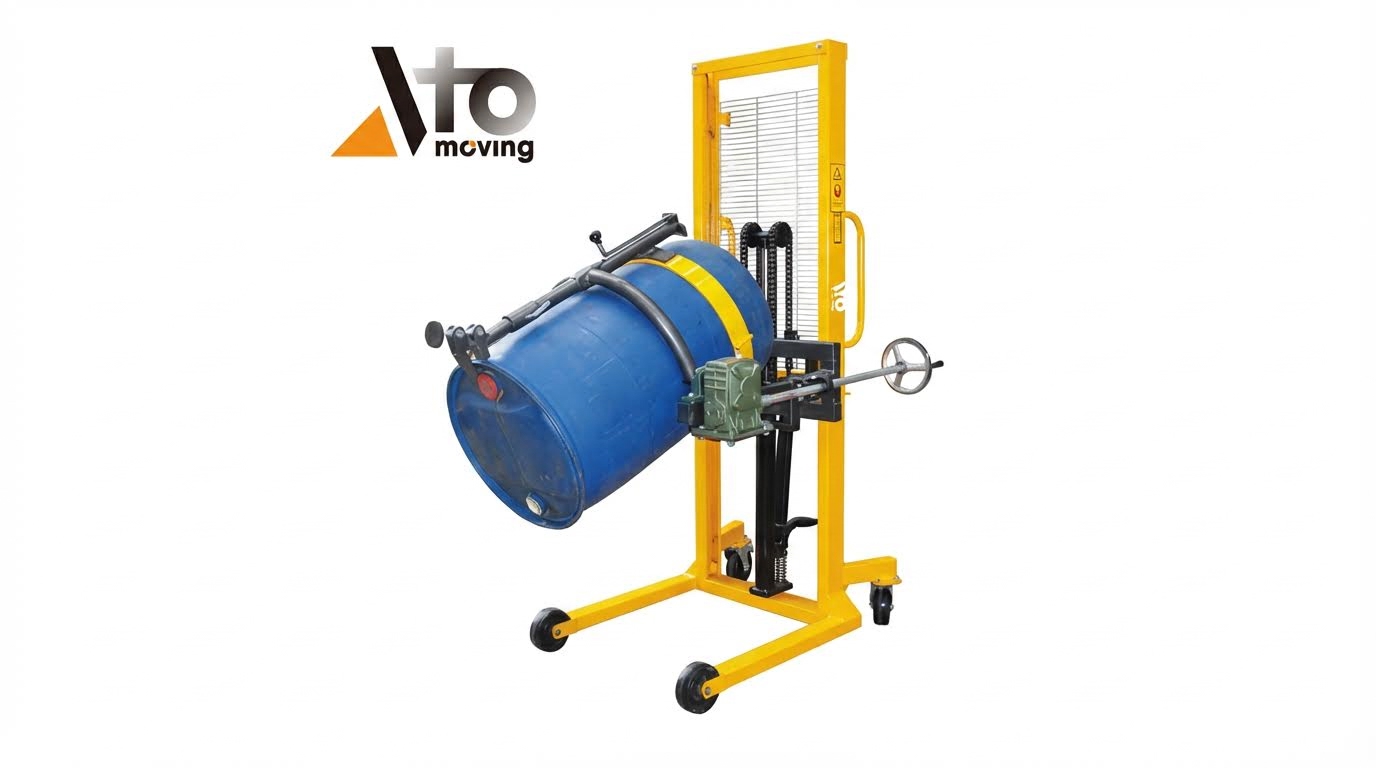
Four-way entry improved maneuverability and reduced aisle width requirements in drum storage areas. Steel transport pallets such as the Beacon BVSRB series used four-way fork access to support flexible approach angles and faster cycle times. When specifying pallets for forklift and AGV use, engineers evaluated fork pocket width, pocket height, and chamfer geometry against the truck or AGV fork profile. Consistent pocket spacing and robust bottom deck design limited point loading and reduced deckboard damage, which was critical when handling 1,200 kg-class four-drum loads.
Facilities that introduced AGVs or automated pallet trucks required tighter dimensional tolerances than purely manual systems. Pallets with welded steel bases or molded polyethylene structures provided repeatable fork entry locations, which improved AGV docking reliability. Designers also checked that pallet underside geometry did not interfere with AGV sensors or lift mechanisms. Clearance between pallet bottom and floor, typically 90 mm to 110 mm, needed to align with AGV lift stroke while still keeping drum center of gravity low for stability.
Digital Twins And Layout Optimization For Drum Storage
Digital twins of drum storage areas allowed engineers to test pallet configurations before physical implementation. They modeled standard 48 × 48 inch pallets, dedicated spill pallets for 1–4 drums, and larger 6- and 10-drum containment platforms with their exact footprints and sump heights. By simulating forklift paths, AGV routes, and emergency egress, teams identified congestion points and non-compliant stacking zones. They also evaluated sprinkler coverage, ceiling height limits, and maximum stack heights defined by NFPA 30 and 49 CFR stacking criteria.
Layout optimization in the digital twin environment balanced storage density against access and containment. For example, engineers compared rows of 2-drum steel pallets with rows of 4-drum polyethylene spill pallets that integrated 60–80 L-class sumps. They adjusted aisle widths to maintain safe turning radii while keeping travel distances short for loading docks and blending areas. Sensitivity studies around drum throughput, product mix, and maintenance access helped define standard rack bay widths and pallet positions that stayed robust under demand variation.
Predictive Maintenance For Drum Handling Equipment
Predictive maintenance strategies reduced unplanned downtime for forklifts, AGVs, and drum handling attachments. Sensors on lift trucks recorded lift cycles, load weights, and mast vibration while moving 400–1,000 kg palletized drum loads. Data analytics platforms used this information to predict wear on forks, hydraulic seals, and drive components, triggering maintenance before failures affected drum stability or containment integrity. Similar approaches monitored AGV drive wheels, guidance sensors, and lift modules to avoid mid-aisle stoppages in hazardous liquid storage zones.
Engineers also tracked condition indicators on spill pallets and transport pallets. For steel pallets, inspection regimes focused on weld fatigue around fork pockets, corrosion in sump areas, and deformation of drum support grids. For polyethylene spill pallets, visual inspection and occasional non-destructive checks verified that chemical exposure had not embrittled the structure or reduced sump volume below EPA 40 CFR 264.175 requirements. Integrating inspection results into a computerized maintenance management system allowed objective replacement decisions based on risk and lifecycle cost rather than calendar age alone.
Cost, Lifecycle, And Safety Tradeoffs In Pallet Choice
Selection of drum pallets in industrial facilities required a structured comparison of cost, lifecycle, and safety performance. Steel transport pallets with 1,200–2,400 lb capacities offered high mechanical robustness and good fire resistance but higher initial cost and greater mass, which increased forklift energy use. Polyethylene spill pallets provided integrated secondary containment and strong chemical resistance at lower weight, but they required careful evaluation for fire behavior and mechanical impact resistance under repeated handling. Lifecycle assessments considered purchase price, expected service life, maintenance effort, and disposal or recycling options.
Safety considerations often dominated final decisions, especially in flammable or toxic liquid storage. Pallets that inherently met EPA 40 CFR 264.175 sump volume criteria and aligned with NFPA 30 storage configurations reduced the need
Summary: Safe, Compliant Drum Palletization Decisions
Safe drum palletization relied on matching drum geometry, pallet size, and containment features to the stored product and process. Standard 55-gallon steel drums fit efficiently on 1 220 mm to 1 220 mm (48 in × 48 in) pallets, while spill pallets for 1, 2, 3, 4, 6, or 10 drums provided integrated secondary containment. Steel transport pallets, such as Beacon BVSRB units, offered high load ratings and fire resistance, whereas polyethylene designs, like HERMEQ and UPQUAK, provided chemical resistance and lighter handling. Facilities selected between these based on chemical compatibility, indoor or outdoor use, and handling method.
Regulatory compliance centered on EPA 40 CFR 264.175 for sump volume, OSHA rules for material handling, and NFPA 30 plus 49 CFR stacking and fire protection requirements. Designers verified that sump capacities met or exceeded 110% of the largest container or the required aggregate volume, depending on the jurisdiction. They also checked pallet load ratings against drum gross mass, including contents with specific gravity above 1.0, and applied conservative stacking limits. Sprinkler density, ceiling height, and drum closure torque followed codified values to limit fire and leakage risk.
In practice, engineers integrated four-way entry pallets, fork pockets, and AGV-compatible geometries into digital layouts and digital twins to test aisle widths, turning radii, and evacuation routes. Predictive maintenance on drum handling equipment reduced dropped-drum incidents and unplanned downtime. A balanced strategy treated pallets as part of a larger system that included containment, fire protection, automation, and lifecycle cost. Future facilities increasingly combined smart sensors, simulation, and standardized pallet families to keep drum storage compact, traceable, and demonstrably compliant.