Modern warehouses move thousands of litres of liquids and powders every day, often stored in steel or plastic drums. Understanding what is drum handling equipment, how it works, and which designs fit your layout is critical for safe, efficient operations. This guide explains core functions, key equipment types, and selection criteria, with a strong focus on safety, ergonomics, and compliance. Use it as a practical reference when specifying new drum movers, lifters, and manipulators for your facility.
What Drum Handling Equipment Is And Why It Matters
Core functions and safety objectives
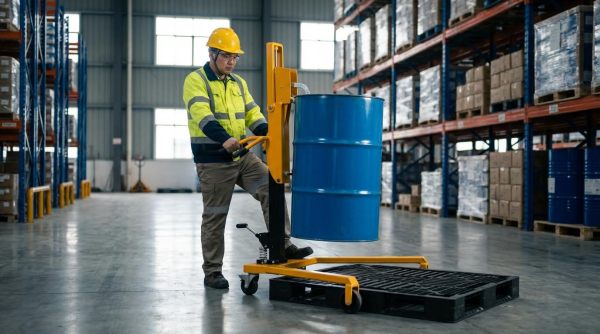
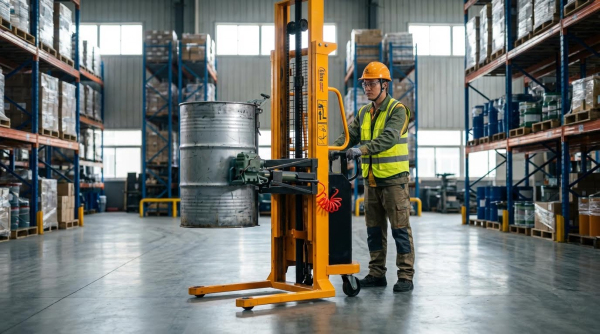
When people ask what is drum handling equipment, they usually mean the full set of tools used to lift, move, tilt, and rotate heavy drums and barrels safely. Typical systems include drum trolleys, drum lifters, drum rotators, and drum trucks, all designed to reduce manual strain and lower the risk of injury when handling liquid- or powder-filled drums. These tools assist in lifting and transporting heavy barrels while keeping operators a safe distance from pinch points and spill risks.
- Core functions of drum handling equipment include:
- Vertical lifting and lowering of full drums using mechanical or hydraulic lifters.
- Horizontal transport across warehouse floors with drum trucks and trolleys.
- Controlled rotation and tilting for decanting, dosing, and draining.
- Secure gripping and clamping to prevent slippage during movement.
- Safety objectives focus on:
- Removing or reducing manual lifting, twisting, and carrying of 200 L drums.
- Preventing spills through positive drum locking, clamps, and belts. Drums must be secured correctly using adjustable clamps or belts and sit evenly without wobbling.
- Maintaining control with smooth, steady movements and avoiding sharp turns that can destabilize a full drum. Sudden jolts or tight turns increase spill and tip-over risk.
- Protecting operators in hazardous or explosive areas by using purpose-designed equipment.
In more advanced environments, drum handling equipment also supported containment and hazard control. For example, drum tipping and filling systems for hazardous powders used remote-operated tipping, dust-tight connections, and active dust extraction to meet nuclear decontamination requirements. These systems were often integrated into gloveboxes, fume cupboards, or downflow booths for tipping, decanting, and bulk filling under containment. In explosive atmospheres, ATEX drum handling systems were built to directive 94/9/EC and EN-1755, classed as equipment group II for zone 1 areas, so they could operate without igniting flammable gases or dusts. These ATEX designs combined strong construction, long operating life, and low maintenance requirements, which is critical for safety-critical sites.
Key safety practices when using drum handling equipment
- Carry out a visual pre-use inspection for wear, rust, or damaged wheels, clamps, and safety locks, and remove defective gear from service. Damaged parts should be repaired or replaced before use.
- Ensure only trained operators use the equipment and that they understand weight limits and load balance. Training should be supported by appropriate PPE such as safety boots and high-visibility clothing.
- Keep travel paths clear of debris and tight obstructions that can destabilize the drum or handling device.
Drum types, sizes, and load ranges
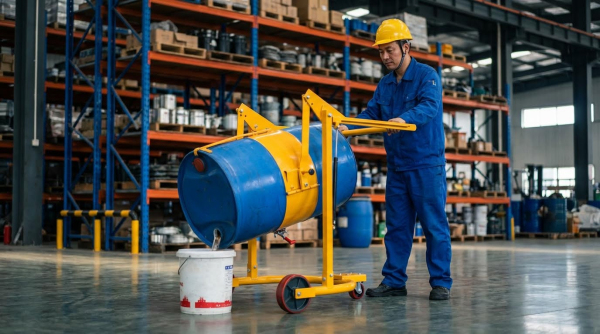
A core part of understanding what is drum handling equipment is knowing the drums it is designed to work with. Modern systems covered a wide range of drum sizes, materials, and fill types. Typical warehouse and process plant equipment handled standard steel or plastic drums from 25 L up to 220 L, with batch capacities up to around 250 kg for many contained handling systems. These capacities were common across nuclear, pharmaceutical, and chemical processing applications.
| Drum parameter | Typical range / option | Equipment considerations |
|---|---|---|
| Volume | 25–220 L | Clamp and cradle geometry must match drum diameter and height. |
| Mass | Up to ~250 kg per drum in many systems | Frame, wheels, and hydraulics must be rated above maximum working load. |
| Material | Steel, plastic, fibre | Gripping pads and jaw profiles must prevent damage and slippage. |
| Contents | Liquids, granules, powders, hazardous materials | Need for containment, dust extraction, or ATEX compliance. |
For standard warehouse work, manual or hydraulic drum lifters often targeted 200–210 L drums with safe working loads around 300 kg. Typical designs used a four-wheel chassis with locking castors and a mechanical adjustable drum lock with a safety latch, giving stability while moving and during lift. Many units also offered a 180° controlled tilt function so operators could pour or drain drums in chemical, paint, food, or pharmaceutical plants without manual tipping. This tilt control was key for precise, low-spill decanting.
At the heavier end, industrial manipulators handled drums above 600 kg and combined lifting with rotation and tilting in a single device. These manipulators used customised gripping tools to adapt to different drum shapes and allowed precise, fast movements with reduced risk of damage to the drum or its contents. For hygienic or corrosive environments, drum handling frames and contact parts were available in powder-coated mild steel or stainless steel such as SS304, improving cleanability and corrosion resistance in food and pharmaceutical facilities. Material selection was therefore a key part of matching equipment to drum type and process.
Key Drum Handling Equipment Types And Design Features
Drum trucks, trolleys, and basic movers
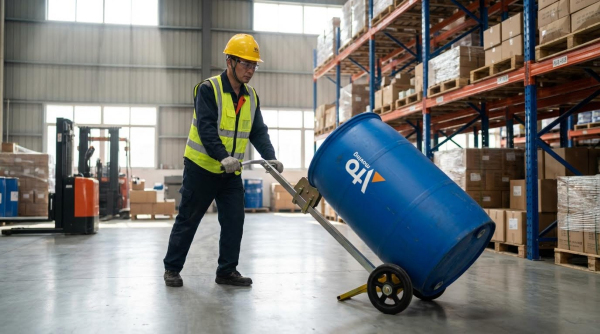
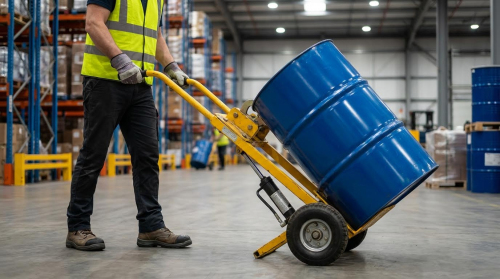
Drum trucks, trolleys, and basic movers are the entry-level answer when a warehouse first asks what is drum handling equipment in practical terms. These units are designed to move single drums over short distances, typically on flat, smooth floors. Common designs include two-wheel drum trucks for tipping and rolling, and four-wheel trolleys that keep the drum upright and stable. They reduce manual strain and lower the risk of back injuries by taking the weight of drums that can easily exceed 200 kg. Drum trolleys, drum lifters, drum rotators, and drum trucks are widely used to move heavy barrels filled with liquids or materials. Key design features include:
- Wheeled bases sized for 200 L drums, with larger wheels for thresholds or rougher floors.
- Curved backrests and straps or clamps to keep the drum from rolling off.
- Low toe plates or cradle arms that slide under the drum rim with minimal effort.
Safe operation depends on good inspection and housekeeping. Operators should visually check wheels, clamps, and safety locks for wear, rust, or damage before use, and remove any damaged units from service. Pre-operation inspection of lifting mechanisms, wheels, clamps, and safety locks is essential. Clear routes and controlled, smooth movement further reduce tipping and spill risks.
Lifters, rotators, and tilting systems
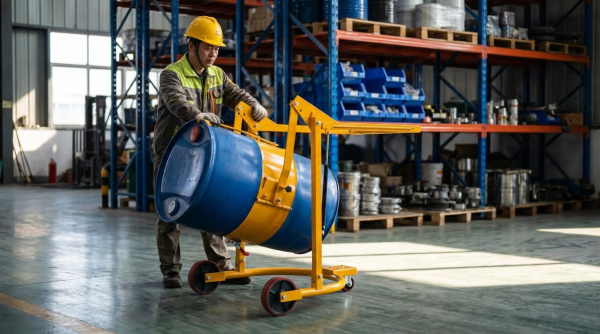
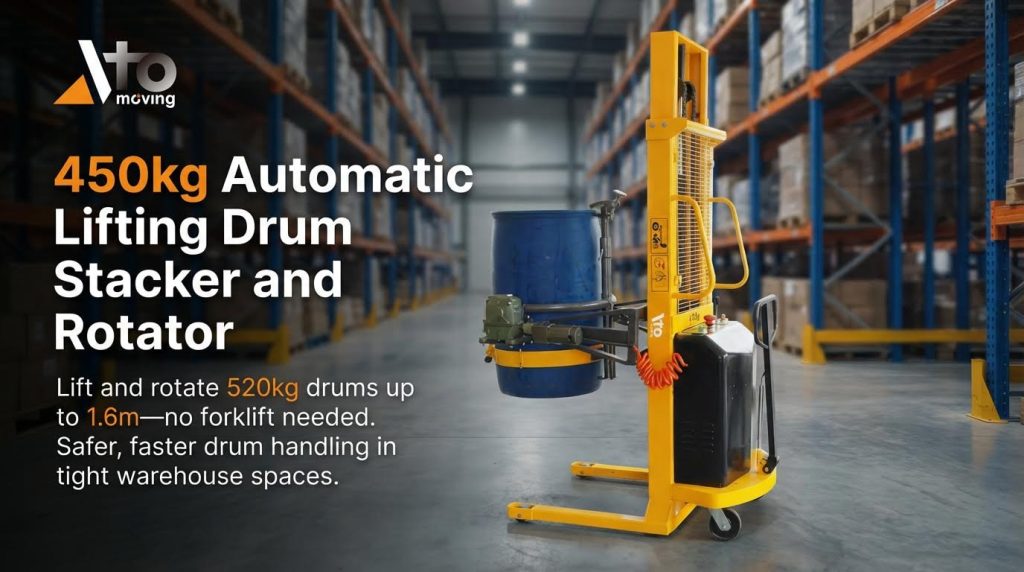
Lifters, rotators, and tilting systems extend basic movers by adding controlled vertical lift and rotation. These units answer what is drum handling equipment for decanting, dosing, or feeding process lines, rather than just transport. Hydraulic drum lifters typically handle 200–210 L drums up to around 300 kg, using a manual pump to raise the drum and a mechanical lock with safety latch to hold it during movement. Four-wheel bases with locking castors and adjustable drum locks are common design features. Tilting and rotating mechanisms allow operators to pour or drain product under control. Many designs provide up to 180° of rotation so the drum can be fully inverted for emptying. Hydraulic drum stacker is particularly useful in chemical, paint, food, and pharmaceutical applications. For hazardous or high-spec processes, drum tipping systems can be integrated into containment equipment such as gloveboxes, fume cupboards, or downflow booths. These systems support dust-tight connections, active dust extraction, and controlled tipping or bulk filling of hazardous or sensitive powders. Nuclear-grade drum tipping systems use remote-operated tipping, dust-tight interfaces, and dedicated extraction to meet decontamination specifications. Typical capacity ranges cover drums from 25 L to 220 L and batch weights up to about 250 kg, giving good flexibility across chemical, pharmaceutical, and general industrial operations. Systems are commonly used across nuclear, pharmaceutical, and chemical processing, with 25–220 L drum compatibility and up to 250 kg per batch. Materials of construction are usually powder-coated mild steel for general use, with stainless steel (for example SS304) options where hygiene or corrosion resistance is critical. Stainless steel versions are preferred in food and pharmaceutical environments.
Manipulators, hoist systems, and ATEX designs
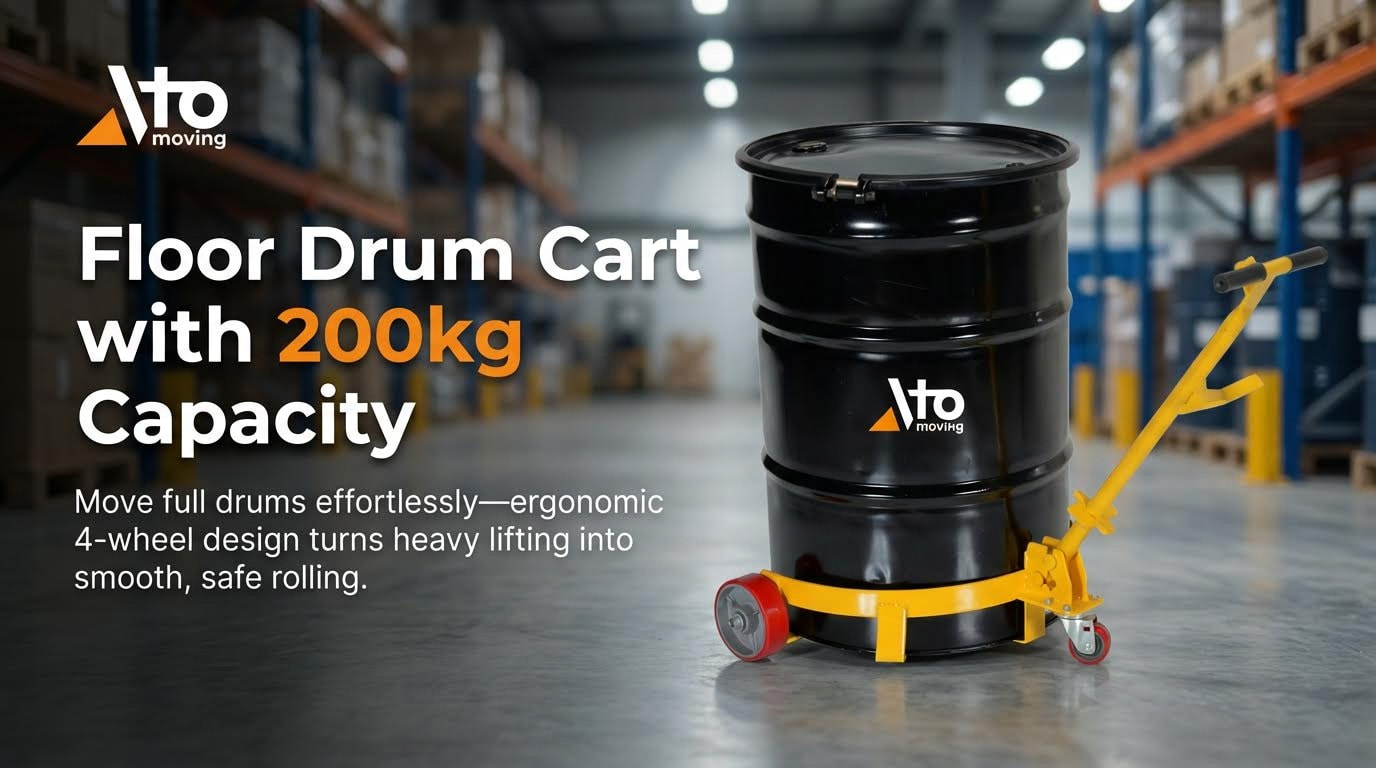
Manipulators, hoist systems, and ATEX-rated designs cover higher loads, overhead handling, and explosive atmospheres. Overhead drum lifters interface with chain blocks, cranes, or electric hoists to lift drums vertically and position them in racks, mixers, or process lines. These lifters are designed to securely grip both open and closed-top drums during hoisting. Industrial manipulators provide powered vertical and horizontal movement with articulated arms and custom grippers. They are suited for drums above roughly 600 kg, or where precise positioning and rotation are needed in tight spaces. Manipulators can handle drums over 600 kg, offering fast, precise movement, rotation, and tilting while minimizing damage and improving handling times. Custom gripping tools adapt to different drum diameters, materials, and closure types, and can include rotation and tilting functions for controlled emptying. Drum cart enable safe handling in confined spaces and support complex operations like rotating and tilting while monitoring discharged quantities. Where flammable gases or dusts are present, ATEX-compliant drum handling equipment is required. These systems are built in line with European directive 94/9/EC and EN 1755, and are categorized in equipment group II for use in zone 1 explosive atmospheres. ATEX drum handling systems are designed for areas where an explosive atmosphere may occur occasionally, with robust construction, long service life, and low maintenance. In this context, what is drum handling equipment becomes a question of risk control as much as ergonomics: fail-safe locking, antistatic materials, and spark-reducing designs are as important as load capacity and reach.
Selecting And Managing Drum Equipment In Your Facility
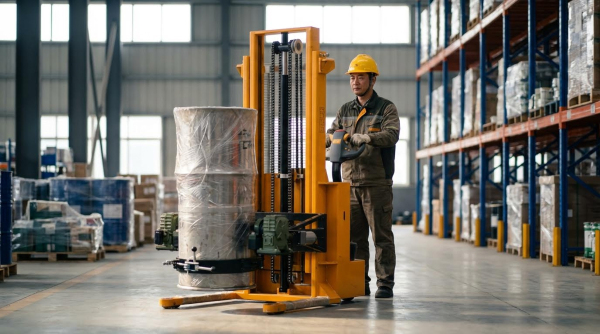
Matching equipment to product, process, and layout
Start by defining what is drum handling equipment in the context of your operation: all devices that lift, move, tilt, or rotate drums to reduce manual effort and risk. Typical options include drum trolleys, lifters, rotators, and trucks that handle heavy, liquid-filled barrels and reduce strain and injury risk. Drum handling equipment types Match each tool to your product: viscous liquids and powders usually need controlled tilting or rotation, while sealed liquids may only need vertical lifting and transport. Check drum formats and weights, since common systems cover 25–220 L drums with batch capacities up to 250 kg, and some industrial manipulators safely handle drums over 600 kg for high-throughput lines. Drum size compatibility Industrial manipulators for heavy drums
Then align equipment with your process steps and building layout. For short, flat moves between adjacent workstations, manual or hydraulic drum lifters are often sufficient, but they are limited to short distances and require more operator input. Manual drum lifters limitations Where drums must be raised to mezzanines, tipped into reactors, or loaded into containment, hoist-type lifters and integrated drum tipping systems with dust-tight connections and active dust extraction are more appropriate. Hoist-type drum lifter Drum tipping systems
- Use compact drum trucks or manipulators with customized gripping tools where aisles are narrow or access is restricted, so operators can work safely in confined spaces.
- For hazardous, dusty, or sterile processes, choose equipment that integrates with gloveboxes, fume cupboards, or downflow booths to maintain containment while tipping, decanting, or bulk filling. Containment integration
- Where explosive atmospheres are possible, specify ATEX-compliant designs built to EN 1755 and ATEX 94/9/EC for use in zone 1 areas. ATEX drum handling systems
Finally, balance capital cost against lifecycle performance. Industrial manipulators with precise lifting, rotation, and quantity indication reduce product loss, damage, and operator fatigue, improving throughput and cutting long-term operating costs. Operational cost savings and efficiency Apply standard warehouse automation ROI thinking: compare initial spend on drum handling equipment with annual savings from reduced manual handling, fewer incidents, and higher throughput to confirm a payback period that fits your investment criteria. Warehouse automation ROI calculation
Safety, compliance, and maintenance best practices
Effective management of drum handling equipment starts with operator competence and safe working habits. Only trained staff should operate drum trolleys, lifters, and rotators, with clear understanding of weight limits, balance, and maneuvering, supported by appropriate PPE such as safety footwear and high-visibility clothing. Operator training and PPE Before each shift, carry out visual inspections for wear, rust, or damage on lifting mechanisms, wheels, clamps, and safety locks, and remove any defective unit from service until repaired. Pre-operation inspection
- Keep travel routes clear of debris and tight obstacles so loads remain stable and equipment does not snag or overturn.
- Always secure drums using the designed clamps, belts, or jaws, checking that the drum sits evenly without wobble before lifting or moving.
- Move slowly and smoothly, avoiding sharp turns or sudden stops, especially with full or high-mounted drums, to minimize spill and tip-over risk. Work area clearance, securing and controlled movement
Planned maintenance is essential for compliance with lifting and work equipment regulations. Inspect structural components such as frames, arms, jaws, and load-bearing sections for cracks, deformation, or fatigue, and verify that clamps, bolts, and locking mechanisms operate correctly. Structural and attachment inspection On hydraulic units, check hoses, seals, couplings, and oil levels for leaks or slow response, and test rotators and tilters through their full range to detect tight spots that may indicate internal wear or lack of lubrication. Hydraulic parts and movement testing
Storage and documentation also affect safety. Store drum handling equipment clean and dry, away from corrosive substances, using racks or stands to keep larger tools upright and protected from impact, and schedule regular condition checks even when equipment is idle. Storage conditions and regular inspections Confirm that identification plates, safe working load labels, and manuals are present and legible, and that each attachment matches the host truck’s capacity and current load profile. Safety labelling and compatibility Combine this with periodic refresher training and timely servicing or replacement of worn components to keep your drum handling system safe, compliant, and reliable throughout its service life. Training and servicing
“”
Final Considerations For Drum Handling Investments
Effective drum handling depends on more than buying strong equipment. Geometry, load rating, and stability all need to match your drums, floors, and process steps. Correct clamp shape, wheel size, and frame design keep the centre of gravity inside a stable base, which prevents tip-overs and spills. Rated capacities that exceed real drum weights give a safety margin and reduce fatigue in structural parts.
Process and hazard controls then refine the design choice. Containment features, dust extraction, and ATEX compliance turn a basic lifter into a risk-control system for toxic or explosive products. Planned inspections and maintenance keep clamps, hydraulics, and frames performing as designed, so safety factors remain intact over time. Training links all this engineering to daily behaviour, ensuring operators use locks, belts, and routes correctly.
For engineering and operations teams, the best practice is clear. Start with a detailed map of drum sizes, weights, contents, and paths. Select equipment that meets or exceeds these demands, using containment or ATEX options where needed. Partner with a specialist such as Atomoving for well-matched designs, then back the hardware with strict inspection, maintenance, and training. This approach delivers safer handling, higher throughput, and lower lifecycle cost.
Frequently Asked Questions
What is drum handling equipment?
Drum handling equipment refers to specialized tools and devices designed to assist in the safe transportation, storage, and management of drums, which are cylindrical containers often used for storing liquids, powders, or other materials. This type of equipment reduces physical strain on workers and improves operational efficiency. Examples include drum lifters, dollies, pallet jacks, and stackable drum racks. ScienceDirect Overview.
How do you safely move a 55-gallon drum?
Moving a 55-gallon drum safely requires proper equipment and techniques:
- Use a drum lifter or dolly rated for the drum’s full weight.
- Position the lifter around the drum’s center of gravity, usually at the upper third.
- Engage the lifting mechanism fully before moving.
- Avoid manual lifting; use mechanical aids like forklifts or hand trucks to prevent injury.
Can you stack 55-gallon drums?
Yes, 55-gallon drums can be stacked if they are designed for stacking and proper safety measures are followed. For example:
- Ensure drums are stored on a stable pallet or rack system.
- Limit stack height based on OSHA guidelines: no more than three-high (10 feet) or four-high (13 feet, 9 inches).
- Chock the bottom tier of drums to prevent shifting or rolling.
What is the purpose of a spill pallet?
A spill pallet is used to provide secondary containment for drums and barrels, preventing leaks or spills from contaminating the surrounding environment. It also ensures compliance with safety regulations for hazardous material storage. Key purposes include:
- Containment of spills to avoid environmental damage.
- Protection against fire hazards by isolating flammable materials.
- Compliance with OSHA and EPA requirements for hazardous substances.