Engineers who asked what device did the engineers use to lift the drums evaluated a wide range of mechanical drum handling solutions. The complete article compares core device types such as overhead lifters, forklift attachments, mobile drum trucks, and drum rotators used with steel, plastic, and fiber drums. It explains design features, load capacities, power options, and gripping mechanisms that determine safe performance in heavy industrial environments. The article also covers safety standards, lifecycle performance, and practical selection guidelines so engineers can specify reliable, compliant drum handling systems for demanding operations.
Core Types Of Mechanical Drum Handling Devices
Engineers who asked “what device did the engineers use to lift the drums” evaluated several mechanical drum handling families. Each device type addressed specific lifting, rotating, and transport tasks for steel, plastic, and fiber drums. Selection depended on drum mass, handling frequency, and integration with existing cranes, forklifts, or pedestrian workflows. Understanding these core categories helped engineers match equipment to process, hazard level, and space constraints.
Overhead Drum Lifters, Slings, And Hoists
Overhead drum lifters, slings, and hoists answered the question “what device did the engineers use to lift the drums” in crane-served areas. These devices attached to hooks on overhead cranes, jib cranes, or hoists and engaged the drum rim or body mechanically. Three-arm overhead drum grabbers centered closed-head drums using the top lip and provided secure 360-degree support during vertical lifting. Chain drum lifters used grade 80 alloy chain and spring-loaded latches to satisfy OSHA and ANSI requirements for rated load and secure engagement. Drum slings and horizontal lifters handled capacities up to about 900 kg, with options in carbon steel, galvanized steel, brass, or stainless steel for corrosive or spark-sensitive zones. Engineers preferred overhead systems where drums moved between levels, into overpacks, or into confined bunds without floor access.
Forklift And Crane-Mounted Drum Attachments
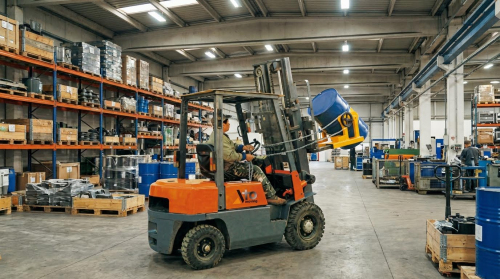
Forklift and crane-mounted drum attachments provided a direct answer when engineers considered what device did the engineers use to lift the drums in high-throughput yards or loading docks. These attachments slid over forklift forks or pinned to crane hooks and converted general-purpose equipment into dedicated drum handlers. Typical designs used mechanical jaws, rim clamps, or saddle cradles that locked automatically when the driver advanced into the drum. Rated capacities often matched or exceeded 1,000 kg per drum, enabling handling of 210 L steel or plastic drums filled with high-density liquids. Some attachments carried multiple drums side by side to increase pallet-to-truck transfer efficiency. Engineers selected these attachments when fleets already included forklifts or cranes and when drum handling had to integrate with palletized materials and racking layouts.
Mobile Drum Trucks, Carts, And Tilters
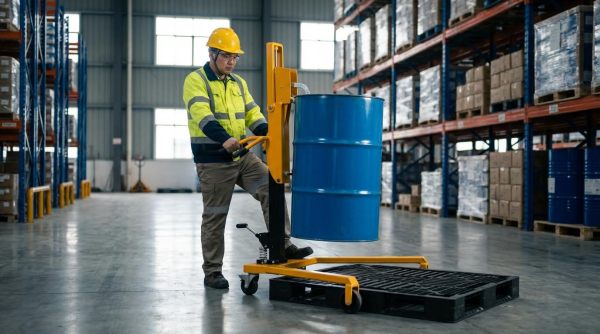
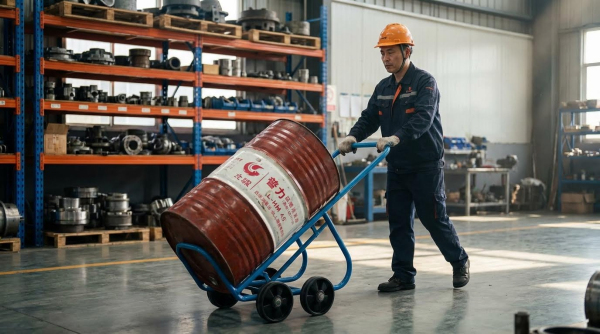
Mobile drum trucks, carts, and tilters were the devices engineers used to lift the drums in congested production areas and laboratories where cranes and forklifts were impractical. These wheeled units supported the drum close to floor level and used levers, foot pumps, or hydraulic jacks to raise drums just enough for rolling or short transfers. Two-wheel drum trucks allowed a single operator to tip and move a drum by shifting to the balance point, reducing manual lift forces and lowering injury risk. More advanced drum trolleys combined a straddle or counterweighted base with a vertical mast and hydraulic lift, achieving lift heights up to about 2.1 m while remaining pedestrian-operated. Tilting stands and carts allowed controlled decanting of emptied or partially filled drums into smaller containers or process vessels. Engineers chose mobile trucks where aisles were narrow, floor conditions variable, and handling tasks frequent but low to medium volume.
Drum Rotators, Pourers, And Inverters
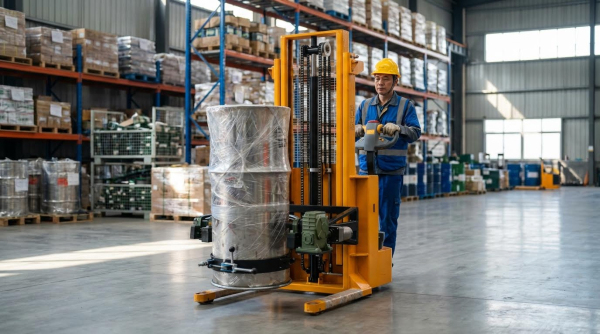
Drum rotators, pourers, and inverters were the specialized devices engineers used to lift the drums when the process required controlled rotation rather than simple vertical lifting. Manual units used hand cranks or gearboxes to rotate drums 360 degrees while supported in a saddle or clamp, enabling full inversion for mixing, draining, or cleaning. Semi-powered and fully powered systems employed electric or pneumatic drives to lift drums up to about 2.1 m and rotate them at controlled speeds, typically up to around 6 revolutions per minute. These machines handled steel, plastic, and fiber drums in the 30 to 210 L range, using adjustable straps, jaws, or rim clamps to accommodate different diameters and rim geometries. Engineers specified rotators and pourers for charging reactors, feeding blenders, or decanting hazardous liquids where precise positioning, minimal splashing, and repeatable cycle times were critical.
Design Features, Capacities, And Power Options
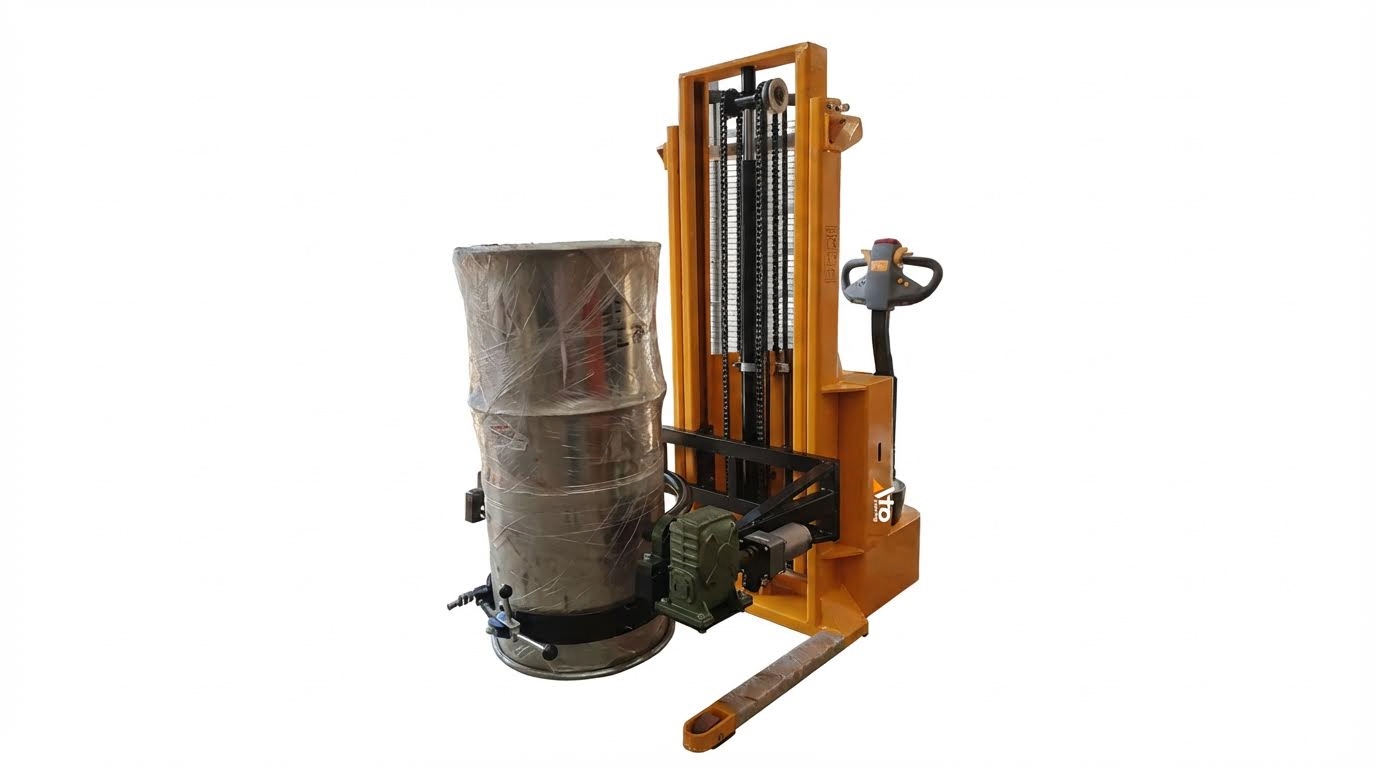
Engineers answered the question “what device did the engineers use to lift the drums” with a range of mechanical lifters tailored to drum geometry, mass, and process requirements. Proper selection depended on drum size, material, rim profile, and the required level of power assistance. Design engineers balanced gripping method, structural materials, corrosion resistance, and ergonomics to achieve safe, repeatable drum handling in heavy industrial environments.
Drum Size, Material, And Rim Geometry Constraints
When engineers decided what device did the engineers use to lift the drums, they first specified drum size and mass. Standard lifters targeted 114–208 liter drums with rated capacities from 450 kg to 900 kg. Steel, plastic, and fiber drums required different contact surfaces and clamping geometries to avoid crushing or slippage. Closed-head steel drums with a pronounced top rim worked well with three-arm overhead grabbers or chain lifters that engaged the lip. Fiber and thin-wall plastic drums often needed cradle or saddle supports that distributed load along the shell instead of concentrating it at the rim. Devices for horizontal drums or overpacks used adjustable arms or saddles to accommodate diameter tolerances while maintaining centered lifting.
Manual, Semi-Powered, And Fully Powered Systems
Power configuration strongly influenced which device engineers used to lift the drums in a given plant area. Manual drum trucks and rotators used foot-pedal hydraulic lifts and hand-crank rotation, suitable for moderate throughputs and drum masses below roughly 360–450 kg. These units eliminated external power and simplified maintenance but imposed higher operator effort and lower cycle rates. Semi-powered systems used electric or pneumatic actuation for clamping and lifting while retaining manual push or tow movement. They lifted drums to about 2.1 m in less than 30 s and rotated 360° hydraulically, ideal for dosing into reactors or mixers. Fully powered drum handlers integrated drive, lift, and rotation with 24 V battery systems, typical lift heights near 2.1–2.4 m, and rotation speeds around 6 rpm. Engineers selected fully powered units where traffic density, ramp gradients, and drum weights made manual movement a safety risk.
Clamping, Grabbing, And Saddle Support Mechanisms
The answer to what device did the engineers use to lift the drums also depended on how the device gripped the container. Overhead grabbers used two- or three-point arms with spring-loaded latches that locked under the rim, automatically centering the drum during vertical lifting. Chain lifters with grade 80 chain provided high strength and compliance with OSHA and ANSI requirements, especially for vertical or horizontal lifting of steel drums up to about 900 kg. Jaw-type clamp heads gripped the drum body or chime using cam surfaces that increased clamping force with load, suitable for powered lifters that rotated drums for pouring. Strap and band clamps wrapped around the drum circumference, distributing pressure to protect thin-wall plastic or fiber drums. Saddle and cradle mechanisms supported the drum over a large arc, often combined with trunnions or gearboxes for controlled 360° inversion during decanting or mixing operations.
Structural Materials, Corrosion Resistance, And Finishes
Structural design and materials determined long-term performance where engineers repeatedly used the same devices to lift the drums. Heavy-gauge carbon steel frames provided the baseline for indoor, dry environments and supported rated loads up to 900 kg with adequate safety factors. Powder-coated finishes improved abrasion resistance and reduced corrosion from incidental spills, while zinc-plated hardware protected fasteners. In corrosive or hygienic applications, such as chemical processing or food plants, stainless steel frames and contact components minimized corrosion and contamination risk. Stainless drum lifters with two- or three-point contact maintained typical 450 kg capacities while surviving aggressive washdown and chemical exposure. Designers specified sealed bearings, protected hydraulic cylinders, and compatible elastomers where acids, solvents, or elevated wash-water temperatures were present. By aligning structural material, finish, and sealing with the process environment, engineers maintained rated capacity and safety margins across the full lifecycle of drum handling equipment.
Safety, Compliance, And Lifecycle Performance
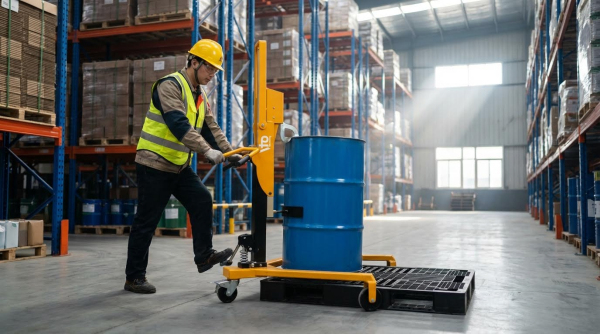
Engineers who asked what device did the engineers use to lift the drums usually evaluated safety, compliance, and lifecycle performance before specifying any barrel lifter or rotator. Mechanical drum handling devices had to align with OSHA and ANSI rules, provide stable and ergonomic operation, and deliver predictable performance over years of industrial duty. This section explains how compliance, operator factors, maintenance strategy, and cost modeling interacted when selecting overhead lifters, forklift drum grabber, drum trucks, and powered drum handlers for heavy industrial use.
OSHA/ANSI Compliance And Rated Load Verification
OSHA and ANSI standards defined how mechanical drum handling devices were designed, labeled, and used in industrial plants. Engineers verified that chain drum lifters, overhead grabbers, and forklift drum attachments double grips used grade‑rated components and carried clear working load limits in kilograms. Third‑party or in‑house calculations confirmed that rated capacities exceeded the maximum filled drum mass, including liquid slosh and any added fixtures such as mixers or heaters. Compliance also required that devices gripping drum rims, chimes, or saddles maintained positive engagement under dynamic conditions such as crane acceleration or sudden forklift braking. Periodic proof tests, typically at 125% of rated load, and inspection records formed part of the documented safety program that answered audits and incident investigations about what device did the engineers use to lift the drums.
Stability, Ergonomics, And Operator Training
Stability analysis considered the combined center of gravity of the device, drum, and any elevated load path. Forklift‑mounted drum handlers had to keep the resultant center of gravity within the truck’s stability triangle across the full lift height and tilt range. Mobile drum trucks and tilters used wide wheelbases, low mast pivots, and controlled rotation speeds to prevent tip‑over when operators moved 200‑liter drums across uneven floors. Ergonomic design reduced push forces, hand‑arm repetition, and awkward postures by using balanced control handles, low‑effort foot pedals, and powered lift or rotation for higher duty cycles. Formal operator training covered safe approaches to drums, verification of clamp engagement, travel speed limits, and procedures for stacked or overpacked drums, so that workers relied on engineered devices instead of unsafe manual lifting techniques.
Maintenance, Predictive Monitoring, And Digital Twins
Lifecycle performance depended on scheduled maintenance of structural, hydraulic, and mechanical elements. Weekly to annual routines included visual checks for cracked welds, deformed hooks, worn chains, and distorted drum contact points, as well as hydraulic leak inspection and brake or caster servicing on mobile units. Plants handling corrosive chemicals specified stainless steel or coated finishes and cleaned devices after spills to prevent stress corrosion and seizing of pivots or latches. Higher‑value powered drum lifters increasingly used sensors for load, tilt angle, and duty hours, feeding data into predictive maintenance systems that flagged abnormal trends before failures occurred. Digital twins modeled stresses in frames and gripping mechanisms under different drum sizes and impact events, allowing engineers to refine designs and justify replacement or upgrade cycles using quantified fatigue life rather than reactive repairs.
Total Cost Of Ownership And System Integration
Total cost of ownership for drum handling devices included acquisition, installation, training, inspection, maintenance, downtime, and incident‑related costs. Manual trucks and tilters had low purchase prices but increased ergonomic risk and required more operator time per drum move, which raised labor costs at higher throughputs. Semi‑powered and fully powered drum lifters cost more initially but reduced handling time, improved consistency of clamping and rotation, and lowered injury rates, which cut indirect costs linked to lost time and compensation claims. Integration with existing cranes, forklifts, and storage layouts avoided duplicate equipment and minimized change to traffic patterns and racking geometry. When engineers evaluated what device did the engineers use to lift the drums for a given facility, they compared options using life‑cycle cost models that monetized safety improvements, compliance assurance, and productivity gains rather than focusing only on purchase price.
Summary And Practical Selection Guidelines
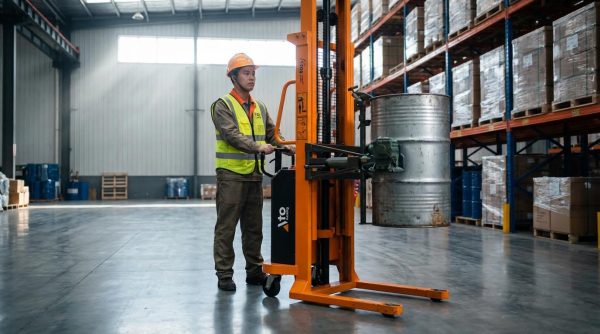
Engineers evaluating what device did the engineers use to lift the drums in heavy industrial environments needed a structured decision framework. Mechanical drum handling devices covered a spectrum from simple overhead lifters to fully powered transport, lift, and rotation systems. The optimal choice depended on drum type, process requirements, hazard level, and integration with existing material flow. This summary linked technical characteristics with practical selection criteria for safe, compliant, and economical operation.
From a technical standpoint, overhead drum lifters, chain grabbers, and slings provided efficient vertical lifting where cranes or hoists already existed. Forklift and crane-mounted attachments suited facilities that needed to move drums over distance while minimizing additional equipment. Mobile drum trucks, tippers, and rotators addressed frequent floor-level transfers and controlled pouring, especially for 30–55 gallon steel, plastic, or fiber drums. Fully powered drum lifters and rotators with 24 V battery systems, lifting heights near 2.1 m, and rotation speeds around 6 rpm supported high-throughput, repetitive handling with reduced ergonomic risk.
In practice, selection started with drum geometry, mass, and contents, then moved to required motions: lift only, lift and tilt, or lift, transport, and invert. Engineers also checked compliance with OSHA and ANSI requirements, verified rated capacities up to 450–900 kg as needed, and considered corrosion resistance where chemicals or washdown were present. Lifecycle factors included preventive maintenance, availability of replacement parts, and the possibility of adding sensors or digital monitoring later. Future trends pointed toward more semi electric order picker and fully powered devices, integrated safety interlocks, and data-driven maintenance, but correctly specified mechanical devices already delivered substantial risk reduction and productivity gains when matched carefully to the application. Devices such as forklift drum grabber and hydraulic drum stacker are examples of solutions tailored for specific needs.