Safe handling of steel, plastic, and fiber drums in industrial plants and warehouses required an integrated approach. The complete article examined risk assessment, regulatory obligations, and the specific hazards associated with drum contents. It then addressed engineering controls and dedicated drum handling equipment, followed by detailed operating and storage practices. Finally, it outlined how to design a robust, standards-compliant drum handling program that reduced injuries, spills, and damage across the entire material handling lifecycle.
Risk Assessment, Regulations, And Drum Hazards
Risk assessment for drum handling in industrial plants and warehouses required a structured review of tasks, environments, and materials. Facilities evaluated both routine operations and non-routine activities such as spill cleanup, overpacking, and waste consolidation. Effective programs combined incident data, regulatory requirements, and engineering controls to reduce exposure to mechanical and chemical hazards. This section addressed injury mechanisms, hazard recognition, regulatory context, and specific risks from hazardous and shock-sensitive contents.
Typical Injury Modes And Incident Statistics
Typical injury modes during drum handling included musculoskeletal strains, crush injuries, and chemical exposures. Back sprains occurred when workers attempted to tilt, upend, or roll 55-gallon drums weighing 180–360 kilograms without mechanical aids. Smashed toes and fingers resulted from uncontrolled drum movement, pinch points at chimes, and improper hand placement under or beside the rolling edge. Transportation incident data from agencies such as PHMSA showed that forklift damage, dropping packages, and inadequate blocking and bracing were major contributors to drum-related releases.
Leaking or punctured drums exposed workers to corrosive, toxic, or flammable substances, particularly when labels were missing or ignored. Incident investigations frequently identified lack of training, poor housekeeping, and ad hoc handling methods as root causes. Effective risk assessment therefore quantified both mechanical energy (mass and movement of drums) and chemical hazard severity (toxicity, flammability, reactivity). Plants that tracked near-misses, minor leaks, and container damage trends could proactively adjust procedures and equipment specifications.
Hazard Identification, Labeling, And SDS Review
Hazard identification started with the drum label and any associated placards or markings. Operators reviewed symbols and wording indicating corrosive, flammable, oxidizing, toxic, or environmentally hazardous contents. When drums were unlabeled or illegible, best practice treated their contents as hazardous until analysis or documentation confirmed otherwise. Before moving a drum, personnel inspected for leaks, bulging, corrosion, or crystalline deposits that indicated internal reaction or pressurization.
Review of the Safety Data Sheet (SDS) for the product was a mandatory step before handling, transfer, or opening. The SDS provided information on physical properties, vapor pressure, flash point, incompatibilities, and specific PPE and spill-control requirements. Workers used this information to select gloves, eye and face protection, footwear, and respiratory protection, and to define exclusion zones. For cleanup or overpack operations, hazard identification also considered mixtures, unknown lab packs, and buried or partially buried drums, where detection systems were used to locate and characterize containers. Clear labeling and updated SDS access significantly reduced handling errors and exposure events.
Regulatory Framework: OSHA, DOT, EPA Requirements
Safe drum handling operated within a combined OSHA, DOT, and EPA regulatory framework. OSHA standards governed worker protection, container integrity during cleanup operations, hazard communication, PPE, and emergency response planning. Drums used during hazardous waste operations had to comply with OSHA requirements for inspection, labeling, and compatibility with contents. Employers were required to provide salvage drums, absorbents, and appropriate fire-extinguishing equipment where leaks or ruptures might occur.
DOT regulations in 49 CFR Parts 171–178 specified design, testing, closure, and packaging requirements for drums used in transportation. Facilities had to follow manufacturer closure instructions and Department of Transportation guidance to ensure lids, bungs, and gaskets were sealed to prevent leaks in transit. EPA regulations in 40 CFR Parts 264–265 and 300 addressed storage, treatment, and disposal of hazardous wastes, including container management standards. Compliance required proper labeling, secondary containment for large-volume flammable or toxic liquids, and shipment only to licensed disposal facilities. A robust drum program aligned internal procedures with these regulations and subjected them to review by an internal safety committee.
Hazardous, Flammable, And Shock-Sensitive Contents
Drums containing hazardous, flammable, or shock-sensitive materials presented elevated mechanical and process safety risks. Flammable liquids in 55-gallon containers required segregation from ignition sources such as open flames, hot metal surfaces, or unclassified electrical equipment. Regulations required
Engineering Controls And Drum Handling Equipment
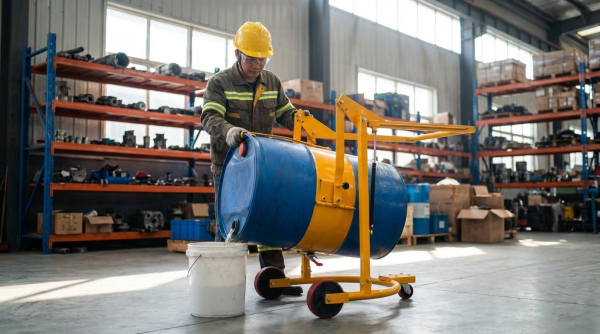
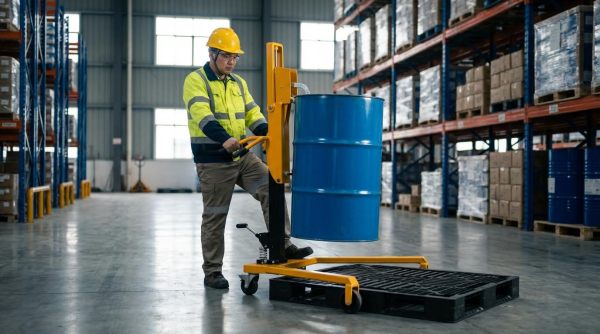
Engineering controls for drum handling reduced manual exertion, limited chemical exposure, and improved repeatability. Plants used purpose-built trucks, dollies, stackers, and attachments instead of ad‑hoc methods. Proper selection depended on drum type, mass, contents, and required motion, such as lifting, tilting, or rotating. Integrating these devices with training and procedures formed the core of a safe drum handling system.
Selecting Trucks, Dollies, Stackers, And Forklift Tools
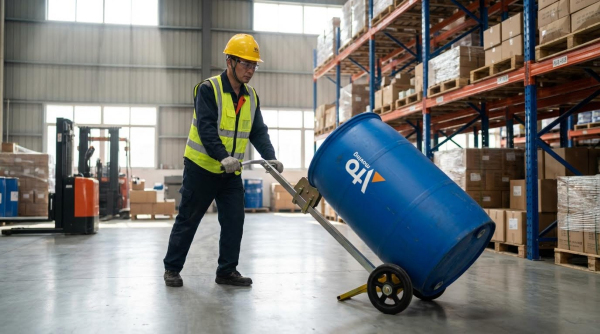
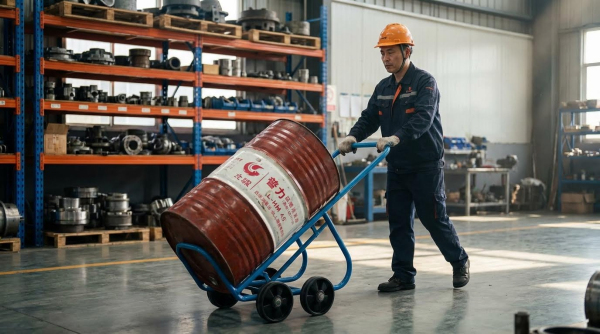
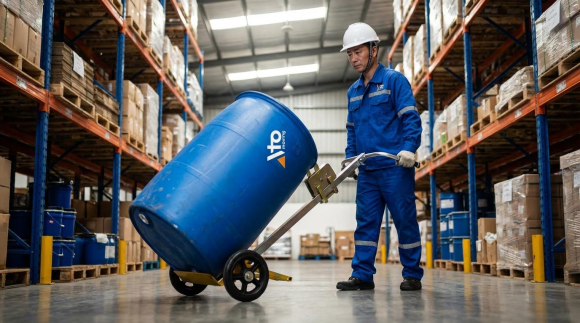
Facilities selected drum trucks and dollies when moving individual drums over short internal distances. A typical four-wheel pneumatic drum truck with a steel frame carried up to 450 kg and handled both 30-gallon and 55-gallon drums. Adjustable feet, chime hooks, and secure cradles kept steel, plastic, or fiber drums constrained during transport. For higher throughput or vertical storage, operators used drum stackers or forklift-mounted clamps that engaged the drum body or chime while maintaining rated capacity and avoiding puncture of the shell.
Forklift drum attachments allowed palletized movement and high stacking but required strict attention to fork spacing and pallet condition. Operators verified pallets were free of nails or sharp edges that could puncture drums or cause load shift. Where aisle widths were limited, compact hand trucks with rear casters improved maneuverability and reduced turning radius. Selection always considered floor condition, gradients, and the need for braking capability on ramps or uneven surfaces.
Drum Lifters, Rotators, Pourers, And Below-Hook Devices
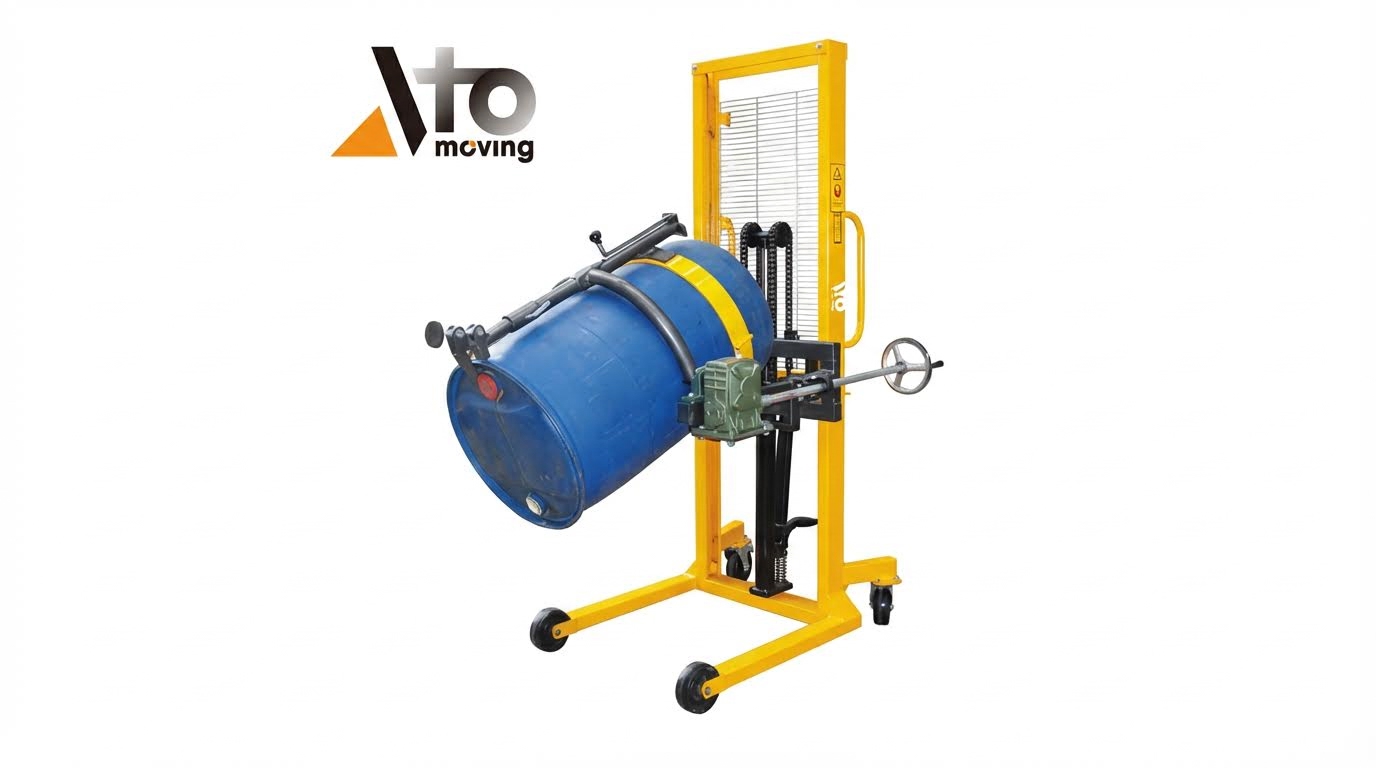
Drum lifters and below-hook devices enabled vertical lifting with overhead cranes or hoists. These devices engaged the chime or body using clamps, jaws, or adjustable bands, distributing load to avoid local deformation. Powered drum rotators and pourers allowed controlled tilting and rotation for decanting viscous or hazardous liquids without manual tipping. Fully powered models provided variable-speed rotation and locking mechanisms to hold a set pour angle.
For batch processing, drum tumblers and rollers mixed contents in a closed drum, eliminating separate transfer steps and reducing spill risk. Below-hook rotators integrated with hoists allowed lifting, rotating, and pouring in a single setup, improving workflow in chemical and food plants. Engineers matched lifter geometry to drum diameter and material, verifying compatibility with steel, plastic, or fiber construction. All lifting accessories required clear marking of rated load and periodic inspection according to site lifting standards.
Spark-Resistant And Corrosion-Resistant Designs
Where flammable vapors or combustible dusts were present, facilities specified spark-resistant drum handlers. These units used nonferrous metals, such as bronze or aluminum, at contact points to minimize ignition risk from impact or friction. In corrosive environments, such as acid storage or marine terminals, corrosion-resistant finishes and materials extended equipment life. Stainless steel components, sealed bearings, and powder-coated frames reduced degradation from chemical exposure.
Selection considered both the drum’s external environment and its contents. For example, equipment handling corrosive liquids required compatibility with potential splashes and fumes. Spark-resistant and corrosion-resistant features often overlapped in chemical processing and oil and gas facilities. Engineers ensured that these specialized designs still met structural capacity requirements and did not reduce safety factors under dynamic loading.
Capacity Ratings, Stability, And Ergonomic Criteria
Drum handling equipment capacity had to exceed the maximum realistic drum mass, not just nominal volume. A 208-litre (55-gallon) drum weighed between roughly 180 kg and 360 kg when filled, depending on product density, so a 450 kg-rated truck or lifter provided adequate margin. Engineers accounted for dynamic effects from starting, stopping, and uneven floors when selecting capacity. Stability analysis considered wheelbase, center-of-gravity height, and tilt angle during movement, especially on ramps.
Ergonomic criteria focused on handle height, grip design, and required push or pull force. Twin handles with rubber grips and integrated brakes reduced strain and improved control on inclines. Designs that allowed operators to keep backs straight and use leg muscles aligned with manual handling guidance and reduced back injuries. Facilities favored equipment that minimized the need for manual upending, rolling, or catching a tipping drum, transferring those tasks to mechanical devices wherever feasible.
Safe Operating Procedures And Storage Practices
Manual Handling, Rolling, Upending, And Pinch Points
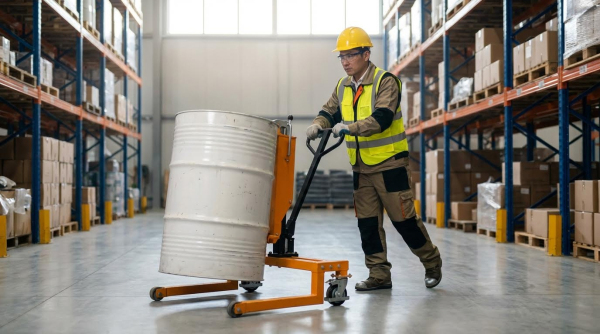
Manual drum handling required strict technique to control high loads and reduce musculoskeletal injury. Operators first verified labeling, estimated weight, and confirmed closures before attempting any movement. For rolling, they stood in front of the drum, placed both hands on the far side of the chime, and pulled until the drum balanced on the lower chime. They rolled the drum with hands clear of the ends, avoided crossing hands, and never used feet as steering points.
Lowering a drum to the floor demanded a straight back, bent knees, and hands positioned on the bottom side of the chime away from crush zones. Upending used a drum lifter bar where available; otherwise, operators crouched with knees apart, gripped the chime, and used leg muscles to lift and balance on the lower chime. Pinch points existed at chimes, under rolling drums, and between drums and fixed structures, so procedures prohibited standing on drums or working from them. Facilities minimized manual handling by prioritizing purpose-built drum trucks, carts, and forklifts.
PPE, Exclusion Zones, And Spill Response Planning
PPE selection depended on drum contents, which operators identified from labels and Safety Data Sheets. Safety shoes with protective toes protected against crush injuries from drums weighing 180–360 kilograms. Chemical-resistant gloves, eye or face protection, and aprons protected personnel from corrosive, toxic, or flammable materials. Respiratory protection followed hazard assessments for volatile or toxic substances and complied with regulatory requirements.
Exclusion zones around handling, transfer, and opening areas limited access to trained staff and reduced the risk to bystanders. Facilities established clear demarcation using floor markings, barriers, or cones and prohibited non-essential personnel in areas with shock-sensitive or explosive wastes. Spill response plans defined containment methods, absorbent types, salvage drum use, and fire-extinguisher placement compatible with the stored chemicals. Employers positioned absorbents, overpack drums, and appropriate extinguishers within immediate reach of drum storage and transfer points and maintained communication and alarm systems for emergency coordination.
Blocking, Bracing, And In-Transit Load Securement
Effective blocking and bracing prevented drum movement that could cause punctures, leaks, or structural damage during transport. Before loading, operators inspected pallets for protruding nails or broken boards that could compromise drum integrity. Drums on pallets were arranged to eliminate gaps, using dunnage, chocks, or load bars to lock them in position. Forklift operators controlled fork spacing and entry angle to avoid chime or sidewall impact.
Inside trailers or containers, engineers specified blocking patterns that resisted longitudinal and lateral accelerations expected in transit. Load securement devices such as straps, wedges, and friction mats limited sliding and tipping under braking or cornering. Procedures required verification that drums could not move independently or contact trailer walls. These practices aligned with incident data that linked inadequate blocking, forklift damage, and human error to a significant share of drum-related transportation events.
Drum Stacking Limits, Layout, And Inspection Access
Storage design limited drum stacks to maintain stability and allow safe inspection. Industry guidance recommended stacking 208-litre (55-gallon) drums no more than two high and two wide per row to control load paths and reduce overturning risk. Variable drum condition, pallet quality, and container geometry made higher stacks unreliable and increased stress on lower drums. Layouts preserved aisles wide enough for handling equipment and emergency egress.
Engineers arranged rows to provide clear sightlines to labels, hazard markings, and leak points without using ladders. Secondary containment, such as dikes or pans, surrounded groups of large drums holding flammable or toxic liquids, with capacity at least 35% of the stored volume. Facilities avoided locating pressurized or flammable drums near open flames or hot surfaces and used barriers where vehicle impact was possible. Regular visual inspections checked for corrosion, bulging
Summary: Designing A Robust Drum Handling Program
A robust drum handling program integrated risk assessment, engineered controls, and disciplined operating procedures. Facilities first characterized drum-related hazards, including weight ranges of 400–800 pounds for 208-litre drums, chemical toxicity, flammability, and potential for shock-sensitive or reactive contents. They then aligned handling practices with OSHA worker-protection rules, DOT packaging and transport requirements, and EPA hazardous waste and spill-control standards, using SDS data and labeling as the primary information backbone.
Engineering controls formed the next layer. Plants deployed purpose-built trucks, dollies, drum carts, stackers, and forklift attachments instead of ad hoc methods. For high-frequency or high-risk tasks, they specified drum lifters, rotators, and below-hook devices with verified capacity ratings and stability margins, and used spark-resistant or corrosion-resistant designs where flammable or aggressive chemicals were present. Ergonomic criteria such as handle geometry, wheel selection, and required push–pull forces reduced manual strain and back injuries.
Operationally, written procedures standardized manual rolling, lowering, and upending techniques, defined PPE combinations by hazard class, and established exclusion zones and alarm protocols for explosive or shock-sensitive materials. Storage rules limited drum stack heights, preserved inspection access, and required blocking, bracing, and secondary containment for large-volume flammable or toxic inventories. In transit, proper pallet condition, blocking, and bracing minimized puncture and shift-related incidents documented in PHMSA data.
Over time, high-performing organizations treated drum handling as a continuous-improvement system rather than a static set of rules. They used incident reports, near-miss data, and regulatory updates to refine equipment selection, training content, and layout. This balanced approach, combining conservative design margins with practical workflow considerations, allowed facilities to handle heavy and hazardous drums efficiently while keeping injury rates, spills, and regulatory violations low.