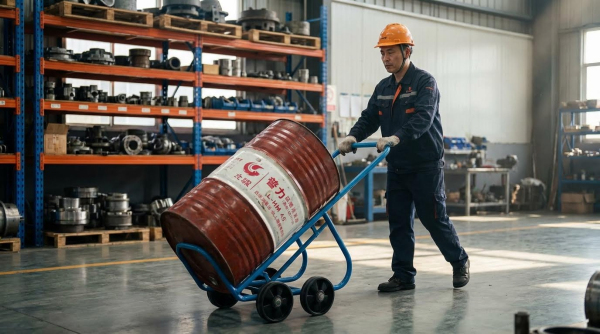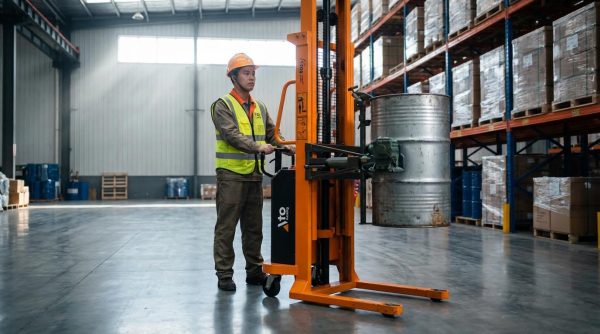
Drum lifters and stackers enabled safer handling of heavy drums and palletized loads in warehouses, plants, and logistics hubs. This article examined key equipment types, from fork-mounted drum lifters and hydraulic drum lift–rotate–transport units to manual and electric stackers. It then analyzed engineering selection factors such as capacity, lift height, stability, gripping methods, and power options, including integration with AGVs, cobots, and digital twins. Finally, it detailed preventive maintenance, safety compliance, and lifecycle optimization strategies to keep drum handling systems reliable, efficient, and aligned with regulatory expectations.
Key Types of Drum Lifters and Stackers
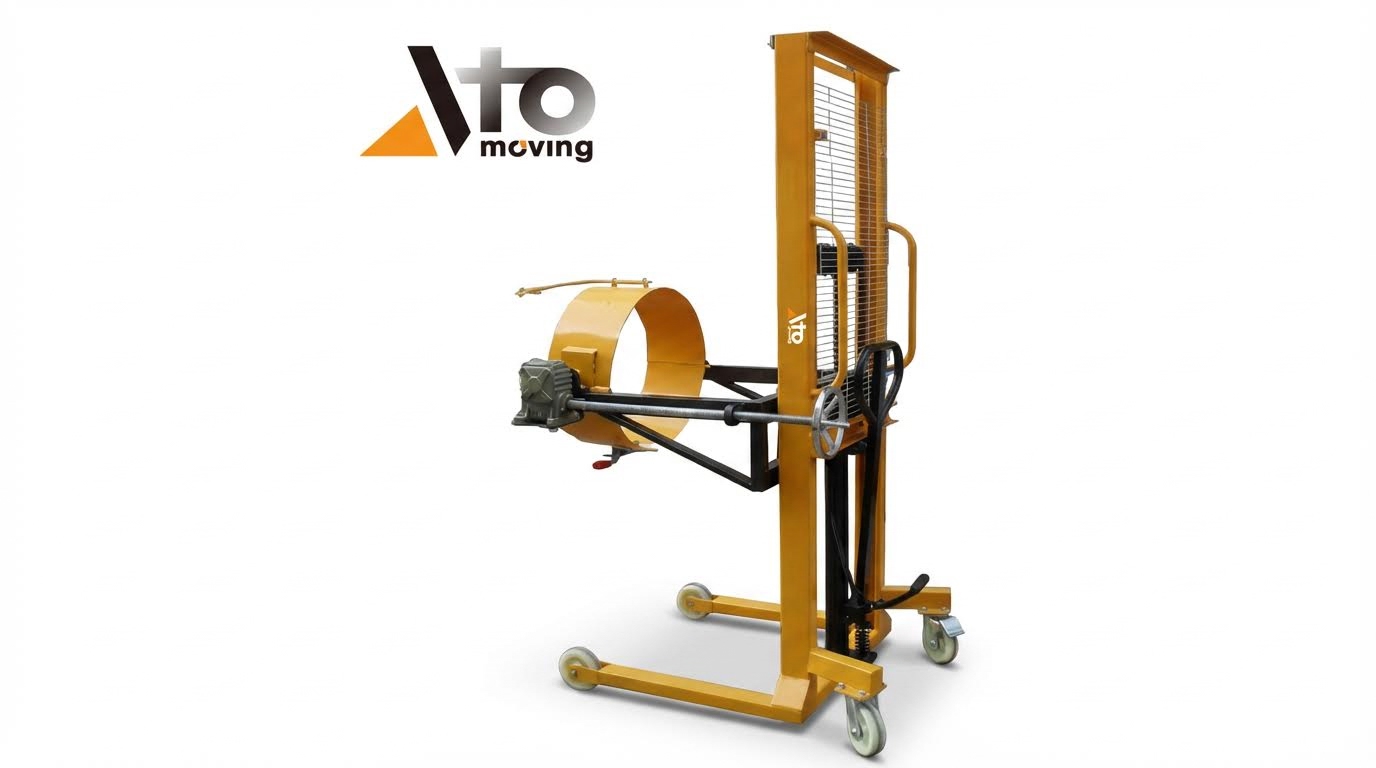
Industrial drum handling relied on several standardized equipment families. Each type addressed specific handling modes such as vertical lifting, rotation for dispensing, or stacking at height. Engineers evaluated them based on drum mass, material, geometry, and the required handling cycle. Understanding these categories allowed safer layouts and better lifecycle cost control.
Fork-Mounted Drum Lifters on Lift Trucks
Fork-mounted drum lifters attached directly to forklift forks and converted a standard truck into a drum handler. A typical unit, such as the fork-mounted drum lifter with a maximum fork section of 125 mm by 50 mm at 408 mm centers, used mechanical arms or jaws to capture the drum body or rim. The driver engaged and released drums without leaving the seat, which reduced exposure to crush zones and improved cycle time in low to medium throughput operations. Weekly inspections focused on weld integrity, fork pockets, swinging arms, and thumb screws, because distortion or wear in these areas directly affected grip reliability and load security.
Hydraulic Drum Lift, Rotate, and Transport Units
Hydraulic drum lift, rotate, and transport units combined vertical lifting with controlled rotation for pouring or draining. A representative design handled 55-gallon steel drums up to approximately 360 kg, using a clamp-style cradle and a hydraulic pump actuated by hand or foot. Operators raised the drum, transported it on wheels, then used a manual crank to tilt it to a specified angle for metered discharge. These devices relied on a sealed hydraulic circuit, so maintenance centered on checking for fluid leaks, verifying cylinder smoothness, and confirming that overload protection or locking mechanisms functioned correctly.
Manual vs. Electric Drum Stackers
Manual drum stackers used mechanical or hydraulic hand power for lifting and positioning, which suited short duty cycles and lighter drums. They typically required more operator effort but had lower capital cost and minimal infrastructure needs, making them attractive for small facilities or infrequent drum handling. Electric drum stackers used battery-powered drive and lift systems, enabling higher lift heights, faster cycles, and reduced ergonomic strain. Their maintenance regime was more complex, involving traction batteries, electric motors, contactors, and detailed hour-based service schedules, yet they supported higher throughput and more consistent positioning accuracy.
Matching Equipment to Drum Types and Tasks
Matching equipment to drum type required considering drum material, diameter, height, and whether the drum used an open or closed head. Clamp-style cradles and rim-gripping mechanisms worked well with standard 55-gallon steel drums but needed verification before use on plastic or fiber drums to avoid crushing or slippage. Task analysis also mattered: vertical-only lifters sufficed for simple transport, whereas lift-rotate units were better for decanting, and stackers were necessary for multi-level storage. Engineers balanced capacity, lift height, maneuverability, and floor conditions against safety margins and regulatory requirements, selecting equipment that met load cases without exceeding rated limits in any operating scenario.
Engineering Selection and Design Considerations
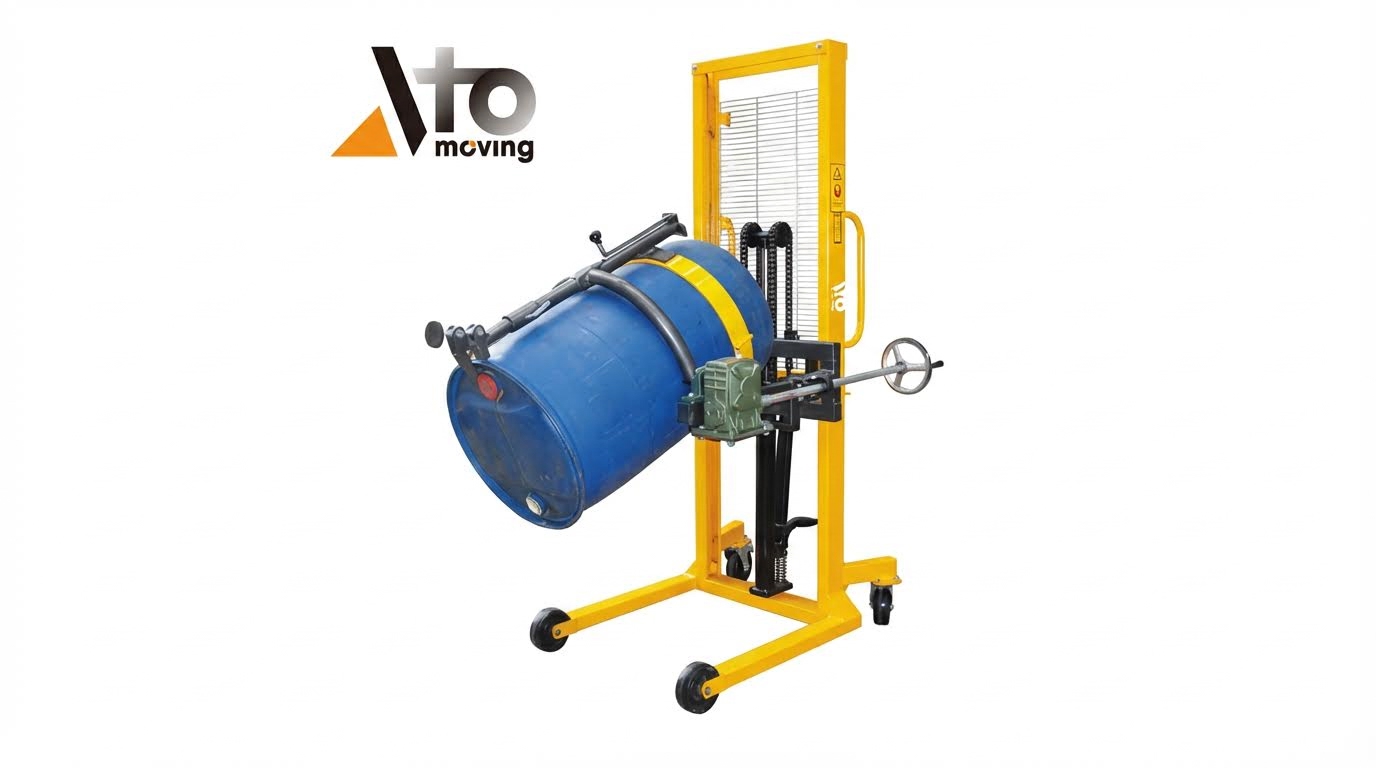
Engineering selection of drum lifters and stackers requires a structured comparison of capacity, geometry, power source, and control architecture. Designers must align equipment characteristics with drum mass, material, and flow paths while respecting regulatory safety margins. The following subsections focus on the main design levers that influence stability, drum integrity, energy use, and future automation integration.
Load Capacity, Lift Height, and Stability Limits
Engineers should define rated capacity based on the heaviest drum plus contents, including density variations and potential overfill. Hydraulic drum lifters for 55-gallon (≈208 L) drums typically handled up to about 360 kg, while forklift-mounted devices often matched the host truck’s residual capacity. Designers must consider the combined center of gravity of truck, attachment, and load at maximum lift height. Stability envelopes should meet or exceed applicable standards and include factors of safety against overturn and loss of load. Longer load centers and higher lift heights reduce residual capacity, so selection must reference the truck’s derating charts and the attachment’s moment arm. Frame stiffness, wheelbase length, and caster layout on walk-behind units strongly influence tipping resistance during braking, acceleration, and cornering.
Drum Gripping Methods and Rim Protection
Drum lifters used clamp-style cradles, top-rim hooks, or fully enclosed cradles depending on drum type and hazard level. Clamp cradles with adjustable jaws allowed handling of open or closed head steel drums while maintaining secure grip during rotation and transport. Top-rim gripping devices needed shaped profiles and protective inserts to avoid deforming or cutting the drum chime. For corrosive or food-grade products, designers favored non-marring contact surfaces and corrosion-resistant materials at all drum interfaces. Rim and shell contact pressures should remain below the yield strength of typical drum steels or plastics, verified by simple bearing stress calculations. Where drums were rotated for dispensing, positive locking mechanisms and secondary latches reduced the risk of accidental release.
Power Options and Energy-Efficient Actuation
Drum lifters operated with manual, hydraulic, or electro-hydraulic actuation depending on duty cycle and ergonomics. Manual hand or foot pumps suited low-throughput applications, limiting operator strain through favorable lever ratios and low-friction linkages. Battery-electric stackers and drum handlers used DC motors driving gear pumps, with relief valves and flow controls for safe, controlled lifting. Engineers optimized hydraulic circuit design to minimize throttling losses and unnecessary bypass flow, improving energy efficiency and heat management. Correct pump sizing, matched to typical lift speeds and duty cycles, reduced peak current draw and extended battery life. For facilities with sustainability targets, high-efficiency motors, regenerative braking on drive systems, and smart chargers supported lower total energy consumption.
Integration With AGVs, Cobots, and Digital Twins
Modern drum lifters increasingly interfaced with automated guided vehicles (AGVs) and collaborative robots (cobots) to support higher automation levels. Attachment points, overall dimensions, and sensor fields needed compatibility with AGV chassis envelopes and navigation systems. Engineers specified standardized communication interfaces so lifters could exchange status data with fleet management software and warehouse control systems. Digital twins of drum handling cells enabled simulation of traffic patterns, stability margins, and collision risks before physical deployment. High-fidelity models incorporated drum mass properties, friction coefficients, and lift dynamics to validate throughput and safety. Provision for encoders, load cells, and proximity sensors on lifters allowed real-time data acquisition, feeding both digital twins and predictive maintenance algorithms.
Preventive Maintenance and Safety Compliance
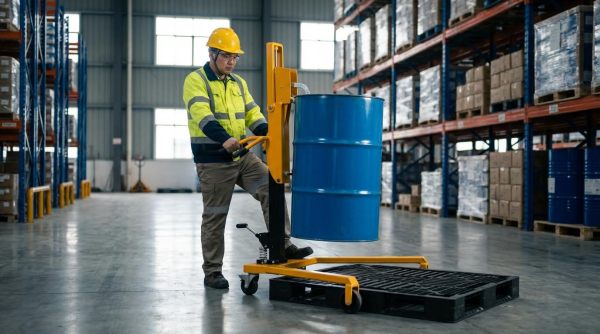
Preventive maintenance and structured safety programs determined the long-term reliability of drum lifters and stackers. Engineering teams linked checklists, inspection intervals, and operator training directly to reduced incident rates and lower lifecycle cost. Modern facilities also integrated sensor-based monitoring and data logging to support compliance with OSHA and HSE guidance. This section detailed practical routines and technologies that kept hydraulic drum handlers and stackers operating within safe design limits.
Daily and Weekly Inspection Checklists
Daily and weekly inspections focused on components that affected immediate safety and handling performance. For fork-mounted drum lifters, operators checked fork pockets, zinc-plated twist screws, swinging arms, and thumbscrews for wear, distortion, or looseness before use. Stackers required verification of steering, brakes, chains, traction batteries, and controls, with any malfunction removed from service until corrected. Checklists also included hydraulic oil levels, visible leaks, tire and wheel condition, and correct operation of horns and emergency stops. Facilities often aligned these routines with OSHA preventive maintenance expectations and manufacturer manuals to standardize records and prove compliance.
Hydraulic Systems, Pivots, and Structural Welds
Hydraulic drum lifters depended on leak-free, correctly pressurized circuits for safe lifting and tilting. Maintenance teams inspected cylinders, hoses, fittings, and pumps for seepage, damage, or abrasion and verified that lift and tilt functions operated smoothly without abnormal noise or drift. Regular greasing of pivots, thumbscrews, and mast articulation points limited wear and reduced actuation forces. Structural welds around fork pockets, mast sections, and drum cradles required close visual checks for cracking, deformation, or corrosion, especially on high-stress joints. Surface rust on frames and weld toes needed removal and repainting to prevent section loss, while any structural defect triggered immediate repair and, where required, re-certification by a competent person.
Operator Training, Signage, and Safe Practices
Safe drum handling relied on trained operators who understood machine limits, load balance, and emergency procedures. Training programs covered correct drum securing, clamp or strap adjustment, lift and rotation controls, and prohibition of lifting people or unstable loads. Facilities used floor markings, directional arrows, and warning signs to define traffic routes, loading zones, and exclusion areas, reducing collision risk with pedestrians and other equipment. Operators followed rules on speed limitation, fork or drum height during travel, and correct parking with attachments lowered and power off. Personal protective equipment, fitness for duty, and a “see and report” culture around defects and near-misses completed the safety framework.
Predictive Maintenance, Sensors, and Data Logging
Advanced drum lifter and stacker fleets increasingly used sensors and digital tools to move from reactive to predictive maintenance. Hour meters, load sensors, and tilt or mast-position encoders fed usage and stress data into maintenance systems for condition-based scheduling. Camera systems, proximity sensors, and RFID tags improved situational awareness and allowed automatic speed reduction or braking in high-risk zones. Data logging of overload events, hydraulic pressure anomalies, and fault codes helped engineers identify recurring issues and refine inspection intervals. Combined with digital maintenance checklists and traceable service records, these technologies supported regulatory audits and extended equipment life while keeping safety margins intact.
Summary and Lifecycle Optimization Conclusions
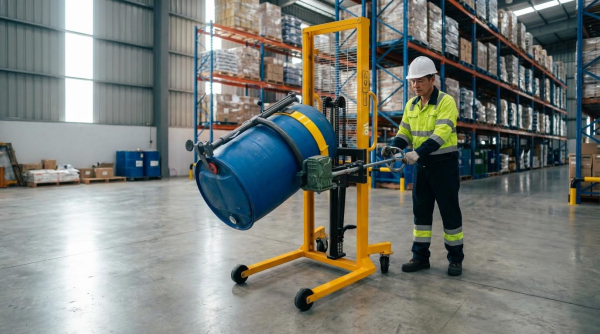
Safe, efficient drum handling depended on matching equipment type to task, then sustaining that performance through disciplined maintenance. Fork-mounted drum lifters on lift trucks offered high throughput for steel drums when operators respected fork dimensions, inspection intervals, and certification periods. Hydraulic drum lift/rotate/transport units provided precise positioning and controlled dispensing for 55-gallon drums, but required systematic checks of hydraulic circuits, clamps, and structural elements. Manual and electric stackers extended vertical reach and storage density, while imposing strict limits on floor conditions, speed, and rated capacity versus lift height.
Across all designs, lifecycle cost hinged on preventive maintenance and operator competence rather than hardware alone. Daily and weekly inspections of welds, pivots, forks, gripping mechanisms, brakes, and control systems reduced unplanned downtime and aligned with OSHA and HSE expectations for periodic re-inspection. Structured service intervals, from weekly through annual, supported predictable component replacement and extended service life of hydraulic pumps, cylinders, contactors, and batteries. Facilities that implemented checklists, clear recordkeeping, and “see and report” cultures achieved lower incident rates and more stable availability.
Future practice moved toward higher integration and data-driven control. Sensors, overload indicators, and interlocks increased protection against misuse, while camera systems, RFID, and automatic emergency braking improved situational awareness for powered stackers and AGV-integrated handlers. Digital twins and connected maintenance platforms enabled trend analysis on hydraulic leaks, motor currents, and structural fatigue, supporting condition-based interventions. For engineers and safety managers, lifecycle optimization meant specifying equipment with appropriate capacity margins, designing layouts with defined traffic routes and signage, and embedding training, monitoring, and predictive diagnostics into normal operations rather than treating safety and maintenance as add-ons.