Industrial facilities that manage 55-gallon drums must control high mass, hazardous contents, and complex logistics in tight spaces. Understanding how to safely handle a 55 gallon drum requires integrating risk assessment, compliant handling methods, and engineered storage design. This article explains injury mechanisms, regulatory drivers, and safe movement techniques using appropriate manual and powered equipment like barrel lifter, forklift drum grabber double grips, and drum dolly. It then covers storage layouts, containment sizing, and digital optimization tools, before closing with a structured summary of best practices and implementation steps for facility teams.
Risk Assessment And Regulatory Requirements
Understanding how to safely handle a 55 gallon drum starts with systematic risk assessment and compliance. Industrial facilities must evaluate injury modes, chemical hazards, and container integrity before any movement or storage. Regulations required structured approaches to labeling, documentation, and characterization, especially when drum contents were unknown. This section explains how to link practical drum-handling decisions to labels, Safety Data Sheets, and U.S. regulatory frameworks.
Typical Injury Modes And Failure Scenarios
Improper handling of a 55-gallon drum historically caused back sprains, fractures, smashed toes or fingers, and hernias. Drum failures also exposed workers to corrosive, toxic, or flammable substances through leaks, ruptures, or failed closures. A filled drum often weighed 400–800 kilograms, so even minor loss of control created high kinetic energy and crush hazards. Typical scenarios included drums tipping during rolling, collapsing from unstable stacks, or failing due to corrosion and impact damage. Risk assessments therefore needed to consider both mechanical failure of the container and chemical exposure pathways. Facilities reduced risk when they enforced no-manual-lifting policies, mandated route inspections, and prohibited attempts to “catch” a falling drum. Evaluating incident history, near-misses, and inspection records helped engineers refine handling procedures and equipment selection.
Interpreting Labels, SDS, And Hazard Classifications
Safe handling started with reading the drum label before any movement. Labels indicated whether contents were flammable, corrosive, toxic, oxidizing, or environmentally hazardous under GHS and transport classifications. If a drum lacked a legible label, best practice treated the contents as hazardous until sampling and analysis confirmed otherwise. Safety Data Sheets provided detailed information on physical properties, incompatibilities, required personal protective equipment, and emergency measures. Engineers used SDS data to define safe temperature ranges, segregation requirements, and ventilation needs along handling routes. Consistent label verification and SDS review allowed supervisors to assign correct handling methods, from vented bungs to non-sparking tools. This documentation-driven approach directly supported search intent around how to safely handle a 55 gallon drum by tying every move to known hazard classes.
Applicable OSHA, EPA, DOT, And HAZWOPER Rules
In the United States, multiple regulations governed drum handling in industrial facilities. OSHA standards in 29 CFR 1910 addressed hazard communication, walking-working surfaces, and material handling equipment used around heavy drums. HAZWOPER rules in 29 CFR 1910.120 and 29 CFR 1926.65 covered hazardous waste operations, drum sampling, spill containment programs, and emergency response training. EPA regulations in 40 CFR 261 and related parts defined hazardous waste characteristics, container management, and secondary containment criteria. DOT regulations controlled packaging, marking, labeling, and shipping papers for drums transported on public roads. Compliance required documented training so workers could recognize container types, read hazard markings, and follow site-specific drum-handling procedures. Aligning facility practices with these rules ensured that methods for how to safely handle a 55 gallon drum met both safety and legal expectations.
Sampling, Characterization, And Unknown Contents
Drums with unknown or uncertain contents posed the highest risk and required conservative handling strategies. Facilities treated unlabeled or deteriorated drums as hazardous until characterization confirmed the material type and hazard level. Before sampling, engineers evaluated external signs such as corrosion, leaks, crystal formation, or bulging lids that might indicate internal pressure or reactions. Procedures often specified remote or shielded opening methods, intrinsically safe tools, and gas monitoring before breaching closures. Representative sampling supported correct waste codes, compatible storage groupings, and proper selection of overpacks or salvage containers. Regulatory frameworks required that characterization data accompany shipping documentation and waste profiles. By integrating structured sampling and analysis into drum workflows, facilities created a controlled pathway for how to safely handle a drum handler when initial information was incomplete or unreliable.
Safe Drum Handling And Movement Methods
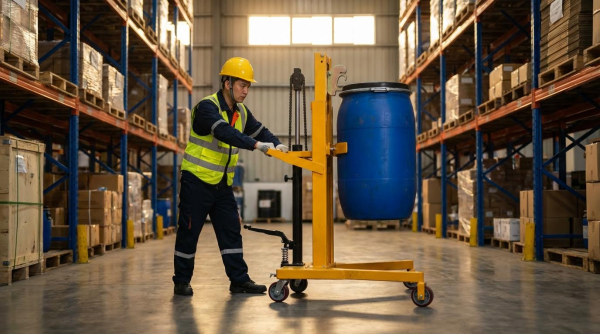
Safe movement of 55-gallon drums depends on disciplined inspection, route planning, and the correct combination of manual and mechanical techniques. Each handling method must account for drum mass, center of gravity, and potential chemical hazards to avoid injuries and loss of containment. This section explains how to safely handle a 55 gallon drum during pre-move checks, manual manipulation, equipment selection, and technology-enabled monitoring in industrial facilities.
Pre-Move Inspection, Route Planning, And Weight Estimation
Before touching a drum, verify its identity and condition. Read the label and Safety Data Sheet to confirm whether the contents are flammable, corrosive, toxic, or reactive. Treat any unlabeled or illegible drum as hazardous until sampling and characterization confirm otherwise. Inspect the shell, chimes, and welds for rust, deep dents, or deformation that might reduce structural integrity.
Check bungs and lids for tight engagement and gasket condition, because loose closures increase leak risk during tilting or impact. Look for seepage, staining, or crystallization around fittings and seams, which indicate prior or ongoing leakage. If the lid appears bulged, assume internal overpressure and do not move the drum until qualified personnel depressurize it using approved procedures. Document defects and follow facility protocols for quarantining compromised containers.
Plan the travel route before moving any 55-gallon drum. Verify that aisles provide sufficient width for equipment and that the route does not block exits, eyewash stations, or emergency equipment. Remove trip hazards such as loose banding, hoses, and debris, and confirm that floor surfaces are dry and have adequate friction. Inspect pallets for broken deck boards or stringers, because a collapsing pallet under a 400–800 kilogram load can cause catastrophic spills.
Estimate drum weight using fill level, density from the SDS, and tare mass of the container. A typical 55-gallon drum filled with liquids weighs roughly 180–360 kilograms, which exceeds safe manual lifting limits for a single worker. Use this estimate to select appropriate handling equipment, determine the required number of operators, and verify that floors, mezzanines, and lift devices have adequate load ratings. Integrate these steps into a written standard operating procedure so operators know how to safely handle a 55 gallon drum in routine and non-routine tasks.
Manual Rolling, Upending, And Lowering Techniques
Manual techniques are sometimes necessary, especially in tight spaces or during maintenance activities. Workers must never attempt to lift a full 55-gallon drum by hand; instead, they should rely on controlled rolling, tilting, and upending methods that keep the load close to the body and use leg strength. Proper gloves and safety footwear with toe protection reduce pinch and crush injuries at chimes and floor contact points.
When rolling a drum on its lower chime, stand slightly to one side with the body turned away from the drum. Place one hand high on the chime and the other low, then walk the drum forward while alternately pushing and guiding, keeping hands from crossing to avoid loss of balance. Maintain control of the drum’s speed, staying ahead of it so it cannot overtake the operator on sloped or uneven surfaces. Avoid sliding hands or shuffling feet, which increase friction burns and slip hazards.
To upend a horizontal drum, a drum lifter bar or specialized lever tool is preferred, because it provides mechanical advantage and keeps the operator outside the immediate fall zone. If no device is available and the procedure allows manual upending, crouch with knees apart in front of the drum, grasp the chime on both sides, keep the back straight, and use leg muscles to raise the drum to its balance point on the lower chime. Shift hands to the far edge and ease the drum upright in a controlled motion, never jerking or twisting the spine. This technique minimizes shear forces on the lumbar region while maintaining three-point contact.
Lowering an upright drum to the floor also requires control to prevent sudden impact and rebound. Place hands on the near and far chime, keep feet clear of the projected path, and bend at the knees while guiding the drum down. Maintain a straight back and avoid leaning over the drum, which can pull the torso off balance if the drum shifts unexpectedly. If a drum begins to fall or roll uncontrollably, workers should step clear rather than attempt to catch it, then follow facility spill and incident response procedures if the container fails.
Selecting Forklifts, Dollies, Carts, Hoists, And AGVs
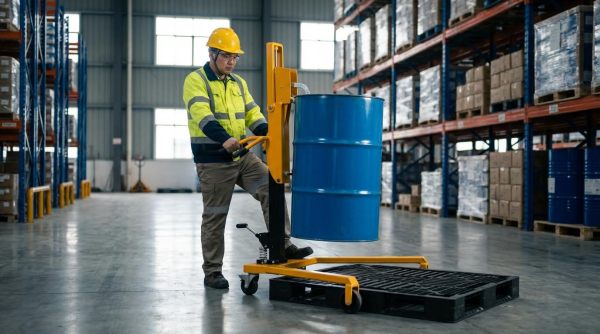
Choosing appropriate material handling equipment is central to how to safely handle a 55 gallon drum in industrial environments. Selection should consider drum weight, travel distance, floor conditions, aisle width, and the hazard class of the contents. For most routine movements, dedicated drum trucks, dollies, or cradle carts provide better stability and ergonomics than improvised methods such as rolling drums across long distances.
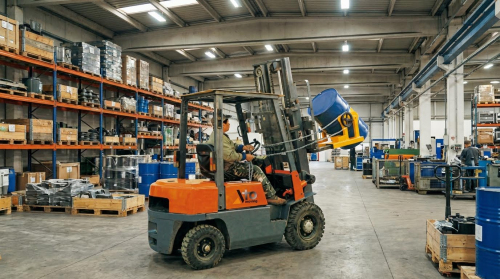
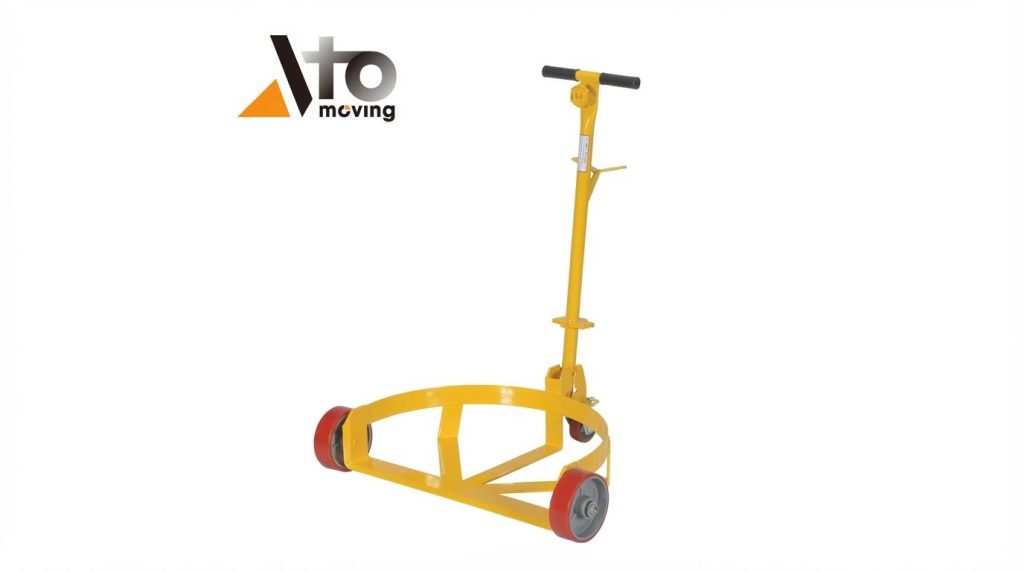
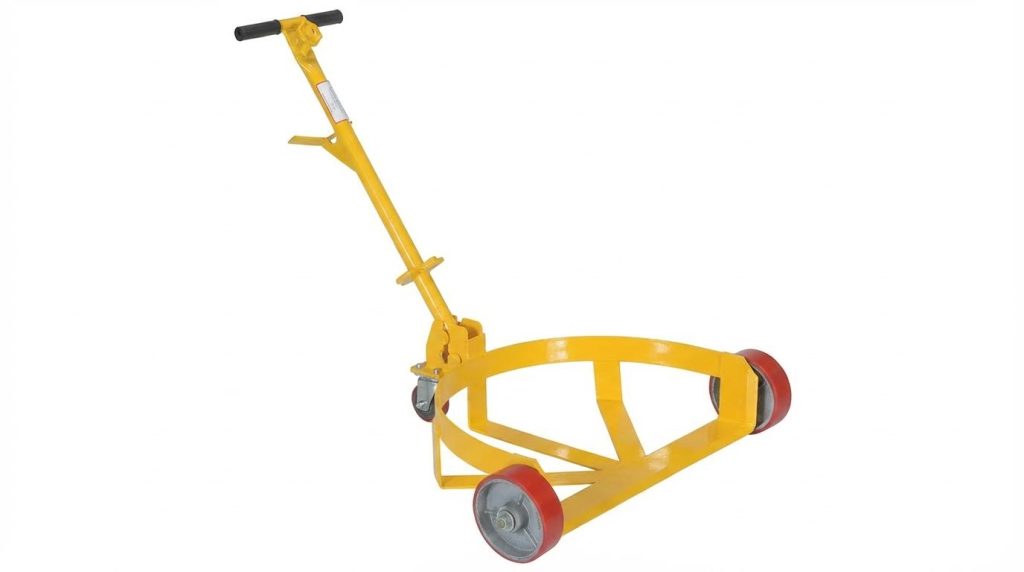
Drum dollies and hand trucks with curved backs support the drum’s cylindrical geometry and keep the center of gravity within the wheelbase. Straps or positive clamping mechanisms reduce the risk of the drum slipping during acceleration, deceleration, or minor impacts. For palletized drums, forklifts or manual pallet jack can move multiple units simultaneously, provided that pallet condition, fork spacing, and load center match the equipment’s rated capacity. Operators should avoid pushing drums directly with forklift blades, which can puncture shells or damage chimes.
Overhead hoists and cranes equipped with drum grab attachments are effective in congested areas, containment berms, and sumps where floor access is limited. Vertical lift systems must include rated drum clamps that engage under the rolling hoops or chime and prevent accidental release if the drum tilts. Load charts, sling angles, and lift points must comply with applicable standards so that dynamic forces from starting and stopping do not exceed equipment ratings. In hazardous locations, hoists and powered trucks should meet the appropriate electrical classification to prevent ignition.
Automated guided vehicles and other robotic systems increasingly handled repetitive drum transport in large facilities. These systems require accurate mapping of aisles, transfer stations, and storage zones to avoid collisions with personnel or fixed obstacles. Integration with warehouse management systems allows AGVs to adjust routes around temporary barriers and high-traffic areas. Regardless of the technology, human workers must still verify that drums are secured, closures are tight, and loads do not exceed the equipment’s design envelope before initiating any move.
AI-Based Monitoring And Predictive Maintenance Of Equipment
AI-based monitoring enhances the reliability of drum handling equipment and reduces the likelihood of failures during critical moves. Sensors on forklifts, drum handlers, hoists, and AGVs can track vibration, hydraulic pressure, motor current, and structural strain in real time. Machine learning models analyze these data streams to detect early signs of wear such as bearing degradation, cylinder seal leakage, or misalignment in mast and boom assemblies. Maintenance teams can then schedule interventions before a defect leads to dropped loads or uncontrolled motion.
Telematics systems also record load weights, travel distances, and impact events for each asset. AI algorithms use this history to identify patterns of misuse, such as frequent overloads or high-speed cornering with drums on elevated forks. Facilities can respond with targeted retraining, revised speed limits, or engineering controls like speed governors and soft-start features. This feedback loop directly supports safer practices for how to safely handle a 55 gallon drum by aligning operator behavior with equipment capabilities.
Computer vision and proximity sensing further improve situational awareness around drum handling operations. Cameras and lidar mounted on trucks or AGVs can detect pedestrians, obstructions, and unexpected drums in the travel path, triggering automatic slow-downs or stops. AI models classify these objects and adjust behavior based on risk level, for example maintaining larger clearances near occupied workstations or emergency egress points. These controls reduce collision risk without relying solely on human reaction time.
Predictive analytics extend to facility-level planning as well. Aggregated data on near-misses, equipment alarms, and minor incidents reveal high-risk zones such as tight corners, uneven transitions, or frequently congested aisles. Engineers can simulate alternative layouts or routing strategies and prioritize modifications that yield the largest reduction in risk. By combining robust mechanical design, disciplined procedures, and AI-enabled monitoring, industrial facilities can significantly lower incident rates and maintain consistent, compliant handling of 55-gallon drums over the full equipment life cycle.
Storage Design, Containment, And Facility Layout
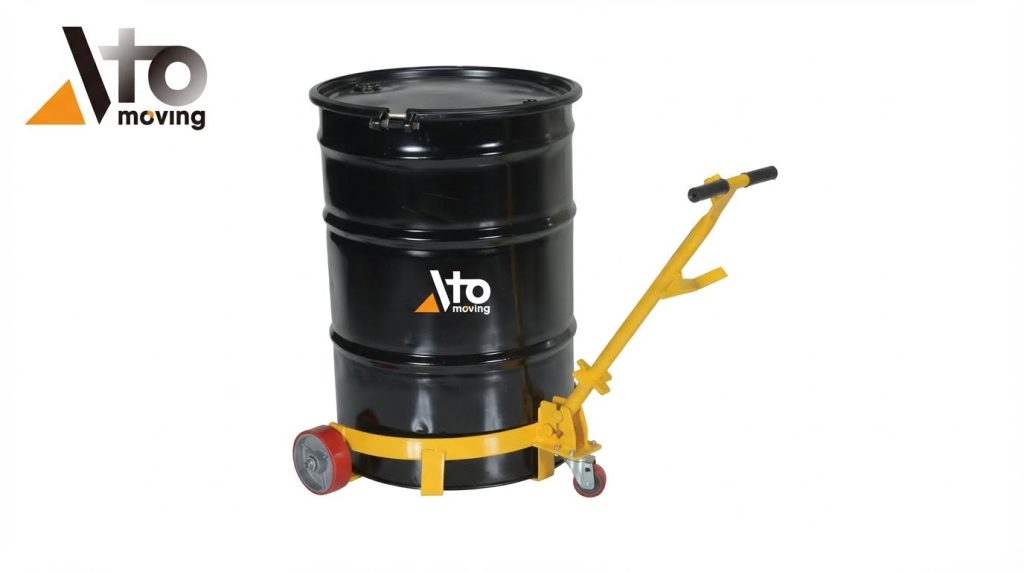
Storage design strongly influences how to safely handle a 55 gallon drum over its full life cycle. Proper stacking, containment, venting, and layout reduce ergonomic loads, limit spill consequences, and support compliant inspections. Engineers should integrate structural limits, regulatory sump sizing, and airflow paths into the facility layout instead of treating drum storage as leftover space.
Stack Height Limits, Pallet Stability, And Access Aisles
Stacking geometry directly affects how to safely handle a 55 gallon drum in storage. Industry guidance limited rows to a maximum of two drums high and two drums wide to maintain stability and inspection access. Higher stacks increased the risk of collapse because drum strength, wall thickness, and dent damage varied between units. Wider rows obscured inner drums, forcing extra handling just to inspect for leaks or corrosion.
Engineers needed to verify pallet capacity and condition before loading drums weighing 400–800 kilograms each. Pallets with broken deck boards or skewed stringers created uneven bearing surfaces and tilt under dynamic walkie pallet truck loads. Some pallets practically supported only three drums without overhang, which reduced lateral stability and increased tipping risk during transport. Storage plans had to reflect the actual pallet pattern and not assume ideal four-drum layouts.
Access aisles played a key role in safe handling and emergency response. Layouts should maintain clear egress routes and ensure drums never blocked exits, fire doors, or equipment access panels. Aisle width must accommodate turning radii of forklifts, drum trucks, and hoist paths without forcing operators into awkward angles near stacked drums. Clear sightlines along aisles support early leak detection and reduce collision risk between powered trucks and pedestrians.
Spill Containment Sumps And Regulatory Sizing Criteria
Spill containment design determined whether a minor leak remained localized or became an environmental release. For facilities handling 55-gallon drums, engineers sized sumps using regulatory formulas based on stored volume. United States Environmental Protection Agency guidance required secondary containment capacity of at least 10% of the total stored volume or 100% of the largest single container, whichever was greater. Factory Mutual approval criteria were more conservative and used 25% of total volume or the largest container, whichever was greater.
Designers calculated worst-case scenarios that combined drum rupture, sprinkler water, and fire-fighting runoff where applicable. Sump floor elevations and slopes had to direct liquids away from door thresholds and occupied walkways. Materials for sumps and curbing required chemical compatibility with the stored liquids to prevent degradation and leakage through cracks. Integration with drum racks, pallets, and loading docks ensured that every drum sat within a defined containment footprint, not on unprotected floor areas.
Operationally, containment systems had to remain accessible for inspection and cleaning. Narrow or obstructed sumps encouraged deferred maintenance and allowed residues to accumulate. Facilities benefited from standardized grate systems that supported drum loads while allowing visual inspection of the sump floor. Clear labeling and level indicators helped operators verify that containment remained empty and ready before receiving additional drums.
Venting, Bulging Lids, And Pressure Management
Pressure management was critical to how to safely handle a 55 gallon drum containing volatile or reactive materials. Temperature swings, gas evolution, or incompatible reactions could increase internal pressure and deform the lid. A visibly bulging lid indicated potential overpressure or ongoing reaction; such drums should not be moved or opened until a qualified specialist evaluated them. Moving an over-pressurized drum without controls increased the risk of lid ejection, rapid venting, or structural failure.
Engineers specified venting strategies based on material properties, vapor pressure, and explosion hazard classification. For flammable or volatile contents, approved pressure-relief devices or flame arresters maintained safe internal pressures while limiting ignition risk. Storage areas required adequate general ventilation and, where necessary, local exhaust to keep vapor concentrations below occupational exposure limits and lower explosive limits. Ventilation design had to consider drum arrangement so that stagnant pockets did not form behind stacks or within dense rows.
Routine inspections focused on lids, bungs, gaskets, and visible deformation. Operators checked for corrosion at chimes, thread damage at bungs, and any seepage around closures before moving a drum. Any drum with compromised closure integrity was a poor candidate for stacking and should remain at floor level within robust containment. Written procedures needed to define escalation steps when workers identified bulging, hissing, or unusually warm drums, including isolation distances and notification chains.
Digital Twins And Simulation For Layout Optimization
Digital twins and discrete-event simulations provided powerful tools for optimizing drum storage layouts and handling flows. Engineers could build virtual models of racks, aisles, containment systems, and handling equipment to test how to safely handle a 55 gallon drum under varying demand and traffic patterns. Simulations evaluated forklift paths, congestion points, and travel distances to minimize reverse movements and tight turns near stacked drums. They also allowed sensitivity studies on stack height limits and pallet patterns without exposing workers or inventory to experimental risk.
Finite element and structural simulations supported verification of rack and pallet loading under dynamic conditions. These models incorporated drum mass ranges, impact loads from forklifts, and potential seismic accelerations. Results informed conservative load ratings and helped identify where bracing or rack redesign was necessary. Coupling digital twins with real-time sensor data, such as floor vibration or rack deflection, enabled continuous verification that storage operated within design envelopes.
From a regulatory and safety perspective, simulation outputs supported documented justifications for aisle widths, containment sizing, and emergency access routes. Scenario modeling of spill events, including sump filling and flow paths, helped refine containment geometry and drain locations. As facility throughput increased or product mixes changed, engineers could update the digital twin to test revised layouts before any physical rearrangement. This approach reduced downtime, improved safety margins, and maintained compliance while adapting storage systems to evolving operational needs.
Summary Of Best Practices And Implementation Steps
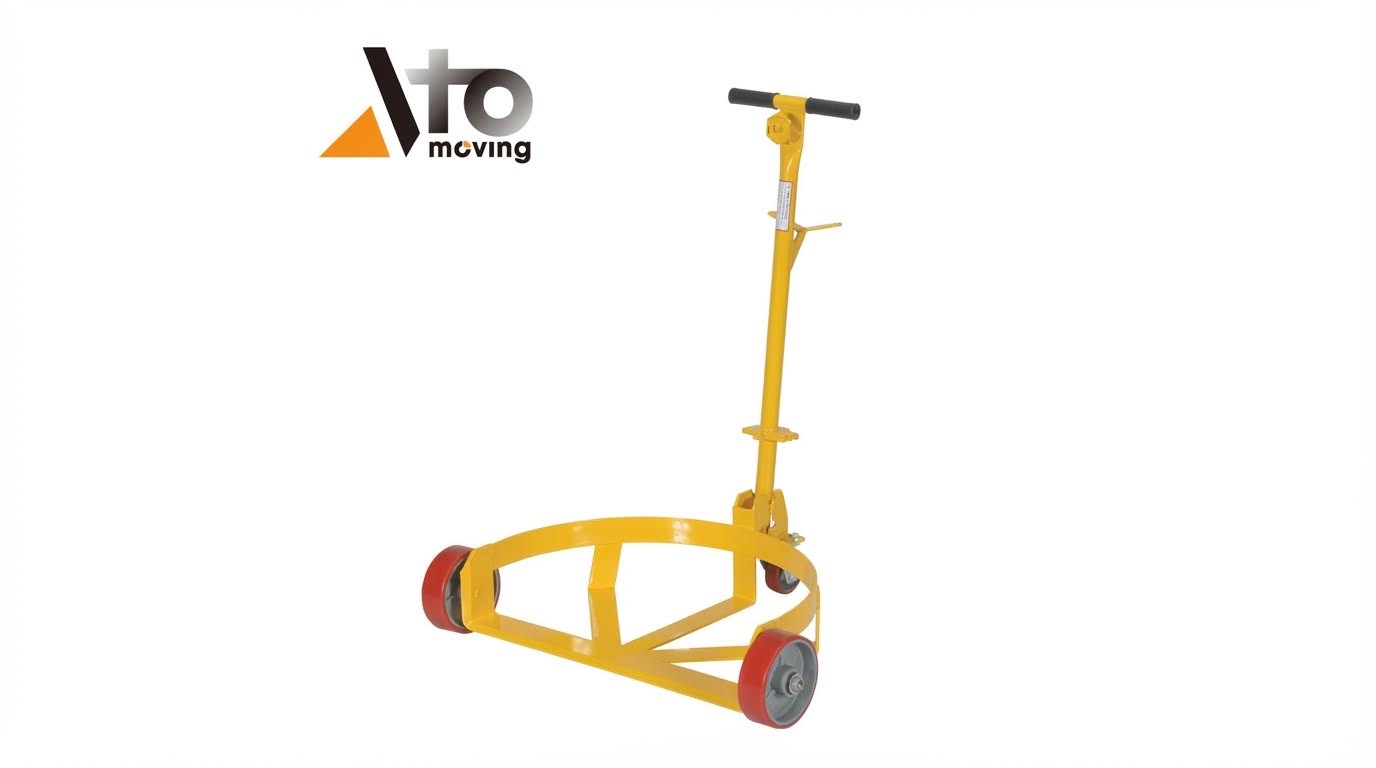
This section consolidates the essential guidance on how to safely handle a 55 gallon drum in industrial facilities. It links risk assessment, compliant handling methods, storage design, and technology-enabled monitoring into a practical implementation roadmap.
Safe handling starts with a structured pre-task assessment. Treat every drum as hazardous until labels, markings, and Safety Data Sheets confirm the contents and hazard class. Inspect the drum body, chimes, and closures for rust, dents, leaks, missing bungs, or bulging lids. If you see deformation or pressure indicators, isolate the drum and escalate to qualified personnel instead of moving it.
Plan each move based on realistic weight estimates. A 55-gallon drum typically weighs 400–800 kg including contents, so manual lifting is not acceptable. Select appropriate equipment such as drum carts, forklifts with drum attachments, hoists, or AGVs, and verify inspection status before use. Operators should follow defined techniques for rolling, upending, or lowering drums, always using leg strength, maintaining a straight back, and abandoning the drum rather than trying to catch a falling unit.
Storage design strongly influences how to safely handle a 55 gallon drum over its full life cycle. Limit stacks to two drums high and two drums wide to keep loads stable and maintain inspection access. Use sound pallets, maintain clear aisles and emergency egress paths, and size spill containment sumps to at least 10% of total stored volume or the largest container volume, with higher capacities where standards such as FM require 25%. Integrate venting and pressure management practices for reactive or volatile contents.
Implementation requires more than equipment and layouts. Facilities should develop written procedures, aligned with OSHA, EPA, DOT, and HAZWOPER requirements, that cover inspection, handling, storage, spill response, and waste shipment. Train workers on hazard recognition, PPE selection, and emergency actions, then reinforce this with drills. Looking forward, digital tools such as condition monitoring, AI-based predictive maintenance, and layout simulations can reduce failure rates and optimize flow, but they complement rather than replace fundamental handling discipline.