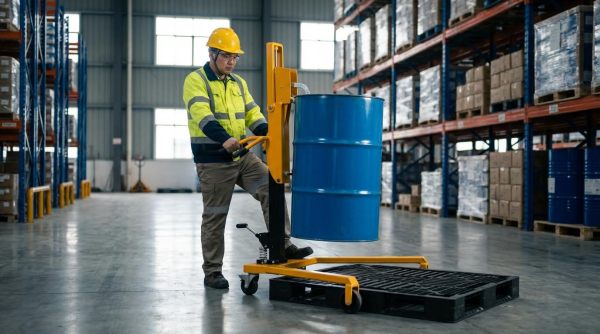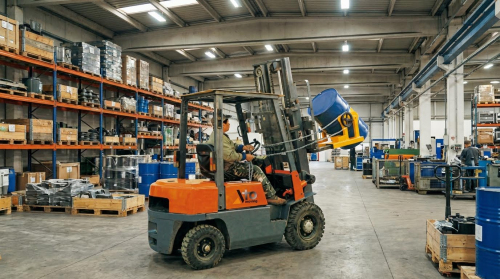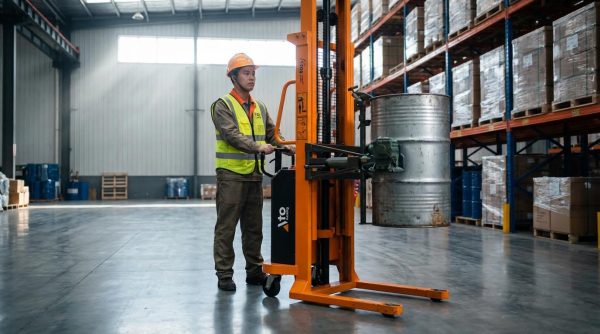
Safe, long-term stacking of steel and plastic drums in warehouses is the engineered combination of drum design limits, stacking geometry, and fire / spill controls that prevents collapse, leaks, and non-compliance over years of storage. In practice, “how to stack drums for storage” means matching stack height to specific gravity and temperature, using correct pallets and patterns, and integrating NFPA 30 and OSHA containment rules into your layout. This guide walks through drum types and UN markings, engineered stack design (pallets, patterns, securing), and risk controls for fire protection, segregation, inspections, and FIFO. By the end, you can specify drum stacking rules in mm, kg, and tiers that protect people, product, and pavement while passing any regulatory audit.
Core Principles Of Drum Stacking For Long-Term Storage
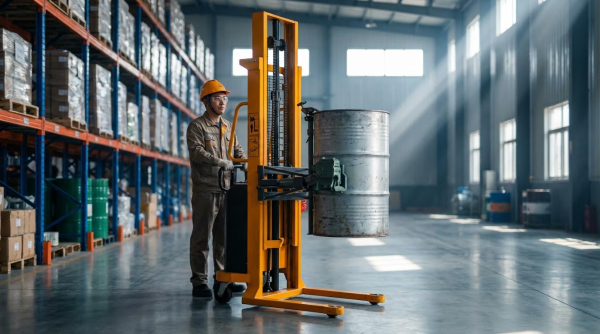
Core drum stacking principles define how to stack drums for storage so that compressive loads, chemical hazards, and fire risks stay within tested and regulatory limits over months or years of warehouse life.
Long-term safe stacking starts with understanding what each drum is built and tested to handle, then matching stack height to real loads, temperatures, and regulatory caps. In practice, that means reading UN performance markings, decoding stacking tests, and then derating for your actual warehouse conditions, not the lab.
This section explains the core engineering and regulatory logic behind safe drum stacks, so supervisors can set clear rules on “how high, with what, and where” before a single pallet goes into racking.
Understanding drum types and UN performance markings
Drum type and UN markings determine how to stack drums for storage by telling you the material, test regime, and allowable specific gravity that govern safe long-term stacking loads.
Steel and plastic drums behave very differently under long-term compressive loading. Steel offers higher impact resistance and stiffness, while plastic (HDPE) offers superior chemical and corrosion resistance but can creep under constant load, especially at elevated temperatures. Understanding those behaviours is the foundation of any stacking rule set.
| Drum / Marking Element | What It Means | Typical Range / Example | Field Impact On Stacking |
|---|---|---|---|
| Material – Steel | Carbon or stainless steel shell with high impact and puncture resistance (material data) | ≈20–25 kg empty for 210 L | Resists denting; better for tall, dense stacks and rough handling. |
| Material – Plastic (HDPE) | Moulded high‑density polyethylene with high chemical and corrosion resistance (material data) | ≈8–12 kg empty for 210 L | Lighter and easier to handle but more sensitive to creep and deformation in tall stacks. |
| UN Packaging Code (e.g. 1A1 / 1H1) | Indicates drum type (1 = drum), material (A = steel, H = plastic), and closure style | 1A1: tight‑head steel; 1A2: open‑head steel; 1H1: tight‑head plastic | Helps match stack design to mechanical strength and closure integrity. |
| Packing Group Marking (X / Y / Z) | Performance level for hazard severity (X = PG I, Y = PG II, Z = PG III) | X = highest performance; Z = lowest | Higher performance groups typically have more robust test margins for stacking and drop. |
| Specific Gravity Rating | Maximum tested liquid density the drum is certified to hold | Commonly up to 1.5 or higher depending on design | Directly limits allowable product density and stack height; exceeding it invalidates test assumptions. |
| UN Stacking Test Reference | 49 CFR 178.606 stacking test applies top load for 24 hours (stack test) | Top load simulates a 3 m stack for 24 h (field explanation) | Confirms drum can withstand specified stack height without excessive deformation for at least 24 h. |
| Temperature Sensitivity | Deformation and creep increase with temperature, especially for plastic drums | Above ≈30 °C requires more conservative limits (guidance) | Higher ambient temperature reduces safe stack height and service life. |
The UN stacking test (49 CFR 178.606) applies a top load that simulates a 3 m stack for 24 hours, confirming that the drum can carry that compressive load without unacceptable deformation or failure (stack test requirement). For long‑term storage, engineers then compare actual drum mass, pallet patterns, and ambient conditions to that certified test to maintain a safety margin over months or years, not just 24 hours (engineering practice).
💡 Field Engineer’s Note: When you decide how to stack drums for storage, always derate plastic drum stacks in warm rooms—creep over six months can flatten ribs and push loads into bungs and closures.
How to read a full UN drum code in practice
A typical marking might read: “1A1/Y1.5/200/24/USA/M1234.” In sequence, that tells you: drum type and material (1A1 = tight‑head steel), performance level (Y = Packing Group II), specific gravity rating (1.5), hydrostatic test pressure (200 kPa), year of manufacture (2024), country (USA), and manufacturer code. From a stacking point of view, the key items are the material, performance group, and specific gravity rating.
Regulatory limits on stacking height and load
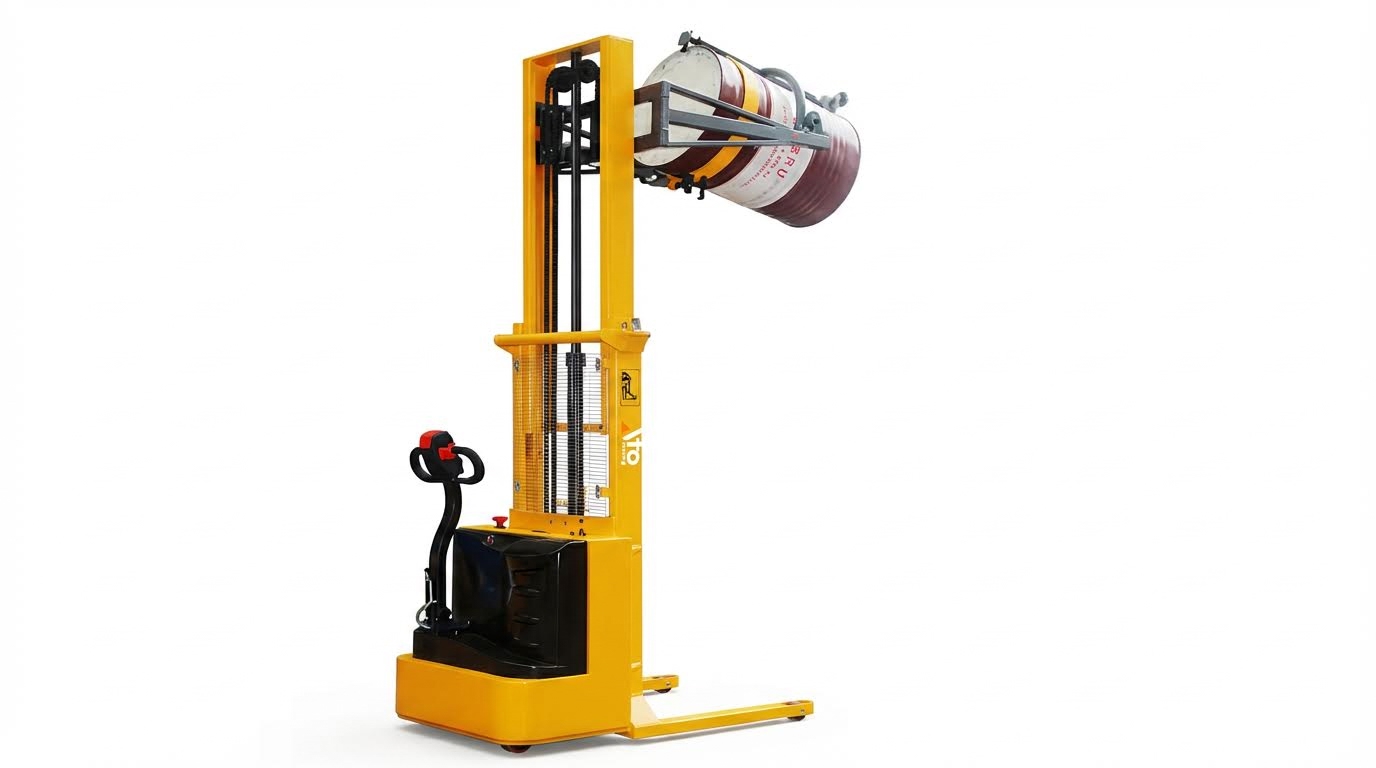
Regulatory stacking limits cap how to stack drums for storage by tying maximum stack height to product specific gravity, temperature, and fire protection criteria under OSHA and NFPA 30.
Regulations and best‑practice guidance link allowable stack height to what the drum has been tested for and the environment it sits in. Two parameters dominate: the specific gravity (density) of the contents and the ambient temperature, because together they drive compressive stress and buckling risk in the sidewall and chimes.
| Limit / Condition | Regulatory / Guidance Basis | Typical Numeric Limit | Field Impact On Stack Design |
|---|---|---|---|
| Steel drums – low SG and moderate temperature | Engineering guidance referencing stacking tests and service conditions (stack height) | Up to 4‑high when specific gravity ≤1.5 and temperatures <30 °C | Allows taller stacks for lighter products in controlled warehouses, improving space utilization. |
| Steel drums – higher SG or higher temperature | Same guidance, derated for higher compressive stress and creep (high SG) | Limit to 3‑high when specific gravity >1.5 or temperatures ≥30 °C | Reduces risk of wall buckling and chime deformation in heavy or warm product storage. |
| OSHA drum storage controls | OSHA 1915.173 requirements for safe drum and container storage (OSHA rule) | Requires safe stacking, prohibits unsafe pressurization, mandates fire separation and containment | Forces you to combine mechanical stability with fire and spill controls in any stacking plan. |
| UN stacking test reference height | 49 CFR 178.606 stacking test for UN performance packaging (test requirement) | Top load equivalent to ≈3 m stack for 24 h (interpretation) | Use as an upper bound; real‑world long‑term stacks should be at or below this equivalent height. |
| Fire protection – NFPA 30 interaction | NFPA 30 storage criteria for flammable/combustible liquids in drums (NFPA interaction) | Foam‑water densities ≈0.45–0.60 gpm/ft² with stack height limits of 3–4 pallets high in typical designs | Even if the drum can take more, sprinkler and ceiling limits often cap practical stack height. |
| Secondary containment volume | OSHA 1915.173 containment requirement for ≥55‑gal (≈210 L) drums (containment) | Dikes or pans must enclose ≥35% of total stored volume; many designs use 110% of largest drum | Limits footprint and practical stack height within a given bunded area. |
From an engineering standpoint, the safe “how to stack drums for storage” rule is: start with the UN stacking test height, then take the lower of (a) the mechanical limit based on specific gravity and temperature and (b) the fire‑protection‑driven height from NFPA 30 and your sprinkler design. That avoids the common mistake of copying a supplier’s “4‑high possible” note into a warehouse SOP without checking ceiling height, sprinkler density, or actual product density.
Quick field check: is this stack height reasonable?
- Confirm product density: Use SDS data to estimate specific gravity; if >1.5, plan for 3‑high maximum indoors under most conditions.
- Check ambient temperature: If the area regularly exceeds 30 °C, treat it as “high temperature” and derate by one pallet level.
- Read the UN code: Verify the specific gravity rating and that the drum is UN‑tested for stacking (per 49 CFR 178.606).
- Review fire design: Compare proposed stack height to your NFPA 30‑based storage design and sprinkler data sheet.
- Apply the lowest limit: Use the most conservative of mechanical, regulatory, and fire‑protection limits as your SOP maximum.
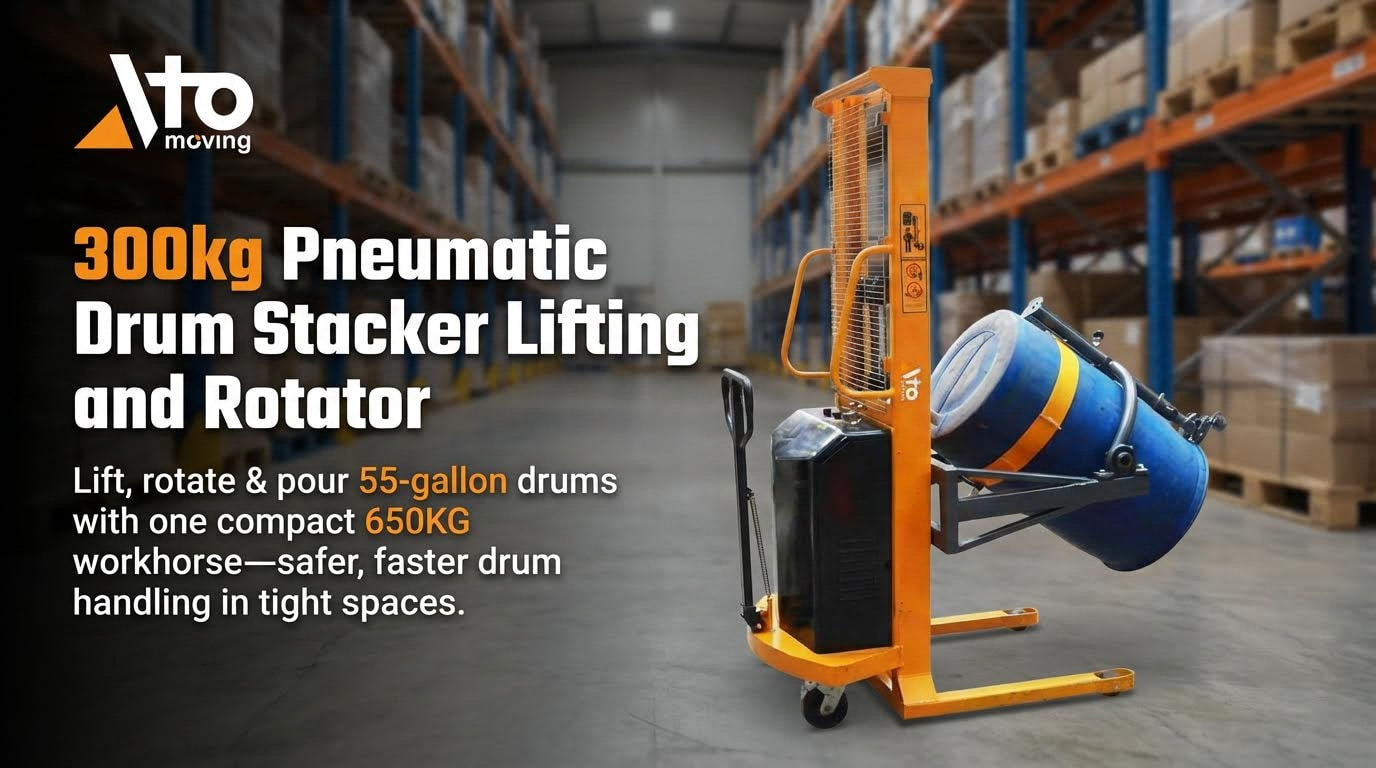
When considering equipment for handling these stacks, tools like the drum stacker or drum dolly can significantly improve efficiency and safety. Additionally, using a manual pallet jack or hydraulic pallet truck ensures smooth transportation across the warehouse floor.
Engineering The Stack: Pallets, Patterns, And Stability
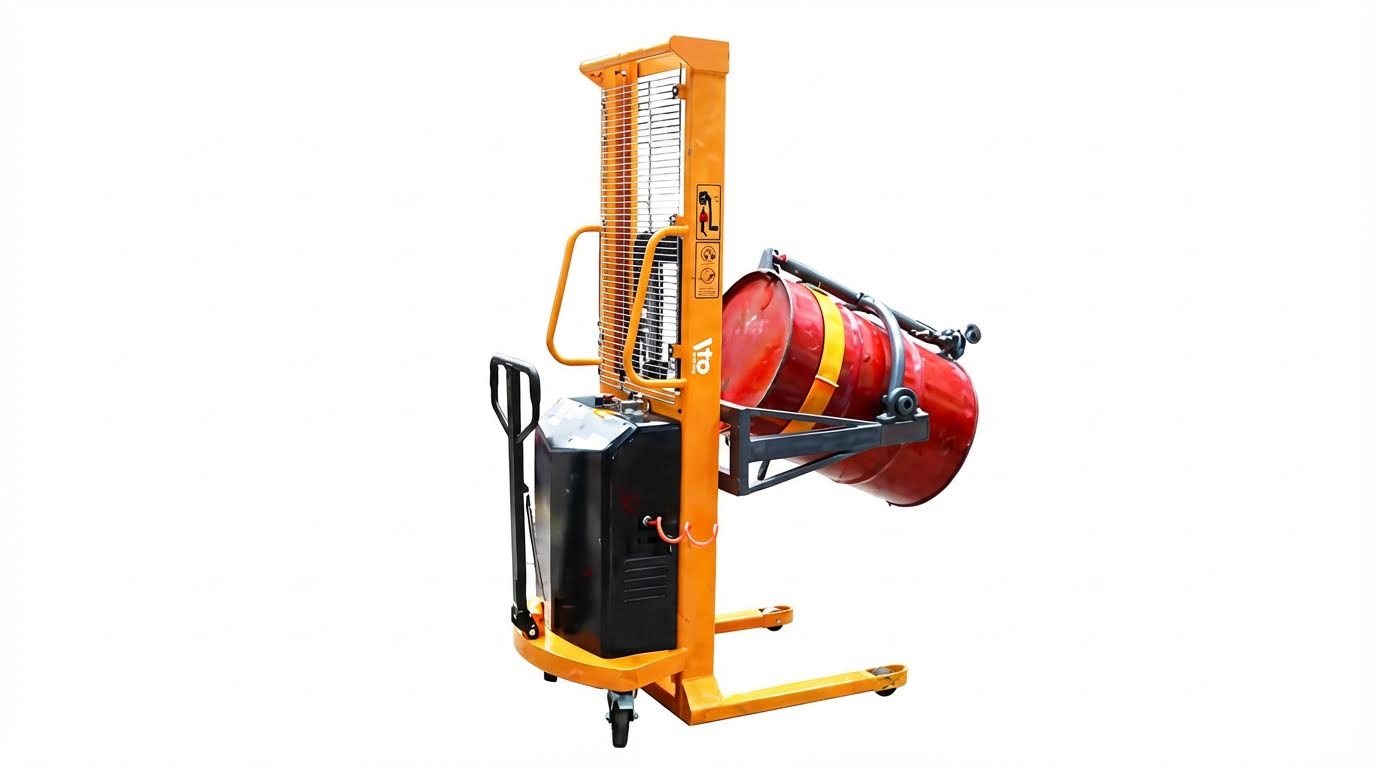
Engineering the stack means you design pallets, patterns, and restraints so drum loads stay stable for months, not hours, which is the core of how to stack drums for storage safely.
This section translates UN test markings, pallet specs, and OSHA/NFPA limits into practical stacking rules your operators can actually follow. The goal is predictable load paths, controlled clearances, and robust lateral restraint so stacks survive vibration, minor impacts, and long-term creep without collapsing.
💡 Field Engineer’s Note: Most drum collapses in warehouses start with a single bad pallet or a small sideways nudge from a forklift. If you control pallet quality and lateral restraint, you eliminate 80–90% of real-world failures.
Pallet specifications and load distribution for 210 L drums
Pallet specifications for 210 L drums focus on a square footprint, full drum support, and four-way entry so vertical loads travel cleanly through the pallet into the floor without point loading or rocking.
For standard 210 L (≈55 gal) drums, guidance recommends a nominal 1,220 mm × 1,220 mm (48 in × 48 in) pallet with at least a 1,170 mm × 1,170 mm fully supported footprint and four-way entry to carry four drums with no overhang pallet specifications for drum stacking. Damaged pallets with broken deck boards, protruding nails, or excessive sag must be rejected because they create concentrated point loads into the drum chime and shell, which can trigger local buckling and leaks under stacked conditions.
| Pallet / Load Parameter | Typical / Recommended Value | Why It Matters For Drum Stacking | Field Impact |
|---|---|---|---|
| Plan size for 4 × 210 L drums | 1,220 mm × 1,220 mm (min. 1,170 mm × 1,170 mm footprint) recommended pallets for 210 L drums | Keeps drum chimes fully supported with no overhang, preventing shell denting at the edge. | Reduces dented lower chimes and “mystery leaks” at stack bottoms. |
| Entry type | Four-way entry | Allows approach from all sides, reducing tight maneuvers near stacks. | Improves pick rates and lowers collision risk with adjacent stacks. |
| Deck condition | No broken boards, no protruding nails, no excessive sag | Prevents sharp point loads into drum bases and avoids rocking. | Fewer damaged drums and less rework from re-palletizing. |
| Load distribution | Four drums in 2 × 2 pattern, chimes aligned | Concentrates load on strongest drum regions and pallet stringers. | Enables safe three- to four-high stacking where allowed by contents SG and temperature. |
| Drum stacking rating | Per UN marking & 49 CFR 178.606 stacking test | Confirms drum can withstand load equivalent to ≈3 m stack for 24 h stacking test compliance. | Lets you verify that planned pallet stack height stays within tested limits. |
| Specific gravity (SG) of contents | ≤ 1.5 → up to 4-high; > 1.5 or > 30 °C → limit to 3-high stacking height based on specific gravity | Higher SG and temperature increase compressive stress and risk of drum buckling. | Directly sets your maximum safe pallet stack height indoors. |
UN performance markings and the 49 CFR 178.606 stacking test apply a top load equivalent to a 3 m stack for 24 h, validating long-term compressive strength and deformation limits stacking test requirements. When you decide how to stack drums for storage, you should always compare your intended pallet stack height, drum mass (product SG), and warehouse temperature with these certified test conditions to maintain a safety margin.
How to quickly check a pallet is fit for drum stacking
Walk the pallet and check: (1) all top deck boards present and not cracked, (2) no nails or screws proud of the surface, (3) stringers not crushed, (4) no visible sag when you stand on the center. Any failure → reject for drum use.
💡 Field Engineer’s Note: A drum that passes a UN stacking test can still fail in your warehouse if the pallet sags. Treat pallets as part of the “container system” and include them in inspection checklists.
Floor vs palletized stacking patterns and clearances
Floor vs palletized stacking patterns determine how loads transfer into the slab, how air and heat move around the drums, and how easily operators can access and inspect stacks over time.
Palletized stacking gives more uniform load distribution and easier mechanical handling compared with direct floor stacking, especially for standard 210 L drums on 1,220 mm × 1,220 mm four-way pallets supporting four drums with no overhang palletized stacking provides more uniform load distribution. Palletized stacks also reduce drum‑to‑floor point loading and improve airflow beneath drums, which helps with corrosion control and leak detection.
| Aspect | Floor Stacking (Direct on Slab) | Palletized Stacking | Field Impact for Long-Term Storage |
|---|---|---|---|
| Load distribution | High point loads at drum chimes directly on concrete. | Loads spread through pallet deck and stringers. | Pallets reduce slab damage and drum denting in long-term storage. |
| Handling method | Drums moved individually with clamps or dollies. | Drums moved as palletized units by forklift. | Pallets improve throughput and reduce handling touches per drum. |
| Stack alignment | Harder to keep rows straight and chimes aligned. | Consistent row/column alignment from pallet geometry. | Better vertical load paths and easier visual inspection. |
| Underside inspection | Base hidden; corrosion and small leaks harder to spot. | Gap under pallet allows visual inspection and airflow. | Earlier leak detection and less hidden corrosion. |
| Typical use | Short-term staging or low-risk contents. | Preferred for long-term, higher stacks, or hazardous liquids. | Pallets are generally the safer choice for multi-tier drum storage. |
Regardless of pattern, stack height is constrained by contents specific gravity and temperature: drums with materials of SG ≤ 1.5 may be stacked up to four-high indoors, while SG > 1.5 or ambient temperatures above 30 °C should be limited to three-high to reduce compressive stress and buckling risk stacking height based on specific gravity. These limits apply whether drums are floor-stacked or palletized, but palletization makes it easier to keep stacks plumb and within marked height lines.
Choosing a stacking pattern: 2 × 2 vs “pyramid” layouts
For 210 L drums, a simple 2 × 2 pattern on each pallet is usually best. Avoid pyramid patterns that offset upper drums over gaps; they create eccentric loads and make lateral slippage more likely under vibration.
💡 Field Engineer’s Note: On polished concrete, friction between pallet and floor is low. If you stack more than two pallet tiers, consider anti-slip mats or anchored rack stops to prevent slow “walking” of stacks over time.
Securing steel and plastic drums against lateral movement
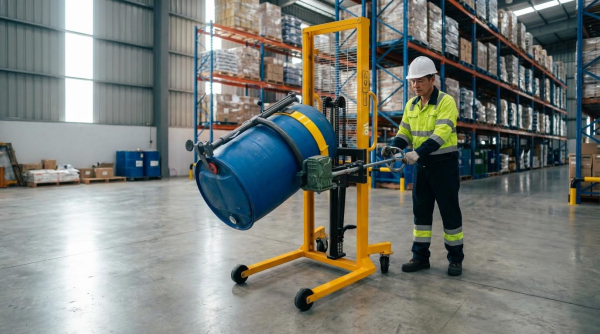
Securing drums against lateral movement means adding mechanical restraint—rings, straps, wrap, and edge protection—so drums behave like one rigid block rather than four loose cylinders that can roll or shear under impact.
Retaining rings clamp drum lids tightly to prevent spillage and maintain integrity during transport, which also improves structural stability when drums are stacked retaining rings clamp drum lids tightly. Additional securing devices such as banding straps, corner protectors, edge guards, shrink wrap, and traditional strapping all help prevent lateral movement of drums on pallets, especially during handling and seismic or impact events banding straps and shrink wrap stabilize drums.
- Retaining rings (steel drums): Keep closures tight and maintain drum roundness at the chime, which improves stacking contact and reduces leak risk if a stack shifts.
- Plastic drum closure checks: For HDPE drums, verify bungs and lids are fully torqued before stacking; a loose closure can vent product into wrap and soften it over time.
- Horizontal banding straps: Two steel or high-strength plastic straps around the drum group lock four drums into a unit load, resisting side impacts from forklifts.
- Corner protectors and edge guards: Spread strap pressure and prevent local crushing of drum ribs or pallet edges, improving long-term strap tension.
- Shrink wrap or stretch film: Adds friction and “ties” drums together; best used in combination with banding, not as the only restraint.
- Rack or wall stops: For high-density rows, low-profile stops behind the bottom pallet prevent the entire column from sliding backwards during impact or seismic events.
These securing methods are especially important where drums contain flammable or toxic materials, which must not be stored near open flames or artificial heat sources under OSHA rules drums and containers – proximity to heat. In practice, a well-secured pallet of four drums behaves like a single rigid cube, making it much more predictable to handle with forklifts and far less likely to shed a drum if nudged.
Minimum securing setup I recommend for most warehouses
For each pallet of four 210 L drums: (1) verify all closures/retaining rings are tight, (2) apply at least two horizontal straps, one high and one low, (3) add corner boards, and (4) apply stretch wrap from pallet deck up to at least two-thirds of drum height.
💡 Field Engineer’s Note: Never rely on friction alone to keep drums on a pallet. Over months, vibration, temperature cycles, and film relaxation reduce friction; mechanical strapping is what still holds the stack together when an operator makes a mistake.
When handling pallets, using equipment like a manual pallet jack or a hydraulic pallet truck can significantly improve efficiency. Additionally, specialized tools like a drum dolly or a electric drum stacker ensure safe and precise movement of drums.
Risk Controls: Fire Protection, Containment, And Inventory
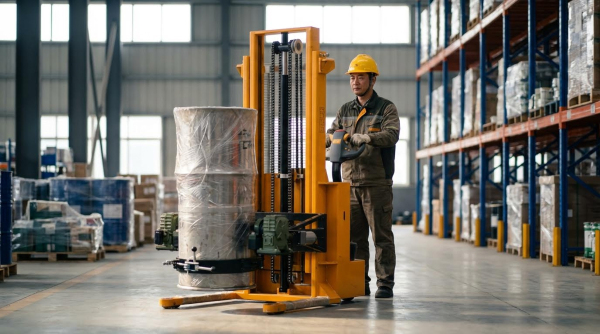
Risk controls for drum stacking combine fire protection, spill containment, and inventory discipline so that how to stack drums for storage stays within NFPA, OSHA, and environmental limits for long-term, high-density warehousing.
💡 Field Engineer’s Note: In real warehouses, most drum incidents start as “small” leaks or mislabeled pallets, not dramatic collapses—tight control of layout, containment, and FIFO quietly prevents nearly every major loss event.
NFPA 30-driven limits on stack height and layout
NFPA 30-driven limits tie maximum drum stack height and layout directly to ceiling height, sprinkler density, and commodity hazard so fire water actually reaches burning drums and controls heat release.
| Design / Limit Factor | Typical NFPA 30 / Practice Guidance | Operational Implication | Field Impact on Drum Stacking |
|---|---|---|---|
| Ceiling / roof height | Steel drum flammable storage usually capped around ≈10 m ceiling height for standard sprinkler schemes for drum storage | Higher roofs need more aggressive sprinklers or reduced stack height. | Prevents tall drum piles that block sprinkler spray and create untenable heat layers. |
| Sprinkler density vs. stack height | Foam‑water densities around 0.45 gpm/ft² for three‑high and 0.60 gpm/ft² for four‑high drum stacks in practice guidance | More tiers require higher flow and larger supply; otherwise stack height must be reduced. | Directly caps how many pallet tiers you can safely and legally build in a bay. |
| Drum content & specific gravity | Steel drums with SG ≤1.5 can be stacked up to four‑high under controlled indoor conditions; SG >1.5 or >30°C limited to three‑high to reduce buckling risk per OSHA guidance | Heavier or hot products generate higher compressive loads on lower drums. | Combines with NFPA 30 fire limits: you may be “mechanically” allowed four‑high but “fire‑code” limited to three‑high. |
| UN stacking test (49 CFR 178.606) | Top load equivalent to a ≈3 m stack for 24 h validates long‑term compressive strength for UN‑marked drums | Gives an upper bound on safe static load but not fire behavior. | You must cross‑check UN test rating with NFPA 30 height and your pallet pattern before approving a stack design. |
| Horizontal layout & aisles | NFPA 30 requires aisles for access, hose streams, and separation between arrays of flammable liquids. | Reduces maximum storage density but improves fire‑fighting access. | Aisles must stay clear; creeping “temporary” drum pallets in aisles are a major non‑compliance trigger. |
How NFPA 30 interacts with mechanical stacking limits
UN and OSHA stacking limits focus on structural strength and specific gravity, while NFPA 30 focuses on fire control. A drum might structurally handle four‑high, but NFPA 30 plus your sprinkler design may still cap you at two‑ or three‑high in certain hazard classes. Engineering sign‑off must consider both.
In practice, how to stack drums for storage safely starts with your sprinkler design sheet and hazard classification, then backs into allowable tiers and bay layout. Structural limits from specific gravity and UN tests are your second check, not the first.
Secondary containment, segregation, and spill control
Secondary containment and segregation ensure that if a stacked drum leaks, the liquid stays within a controlled volume and does not react with incompatible chemicals or reach drains, soil, or occupied areas.
- Secondary containment volume: Drums ≥55 gal (≈210 L) with flammable or toxic liquids must sit within dikes or pans enclosing at least 35% of total stored volume, with many designs aiming for 110% of the largest drum for added safety per OSHA guidance.
- Containment construction: Bunded bays, spill pallets, or bermed concrete with compatible coatings capture leaks and resist attack from stored chemicals, preventing floor degradation and under‑pallet erosion in practice.
- Segregation of incompatibles: Flammables are separated from oxidizers, and acids from bases, following OSHA/EPA rules, to prevent violent reactions if multiple drums fail in the same incident on segregation.
- Labeling and identification: Each drum carries durable product ID, hazard class, UN number, and handling warnings; regular inspections verify labels stay legible so emergency teams and operators know what is stacked where per OSHA.
- Spill control procedures: Written SOPs define how to isolate a leaking stack, recover product, and decontaminate containment areas, including safe drum handling tools and PPE for corrosive or flammable contents.
- Heat and ignition control: Drums with flammable or toxic substances are kept away from open flames, hot metal, or artificial heat sources to avoid pressure build‑up and ignition per OSHA.
💡 Field Engineer’s Note: The most common containment failure I see is not undersized bunds—it is blocked sump grates and spill pallets overloaded with debris, so the first real leak simply runs across the floor under pallets.
Checking containment capacity for a drum bay
To verify a bunded bay: (1) sum the volume of all drums stored; (2) confirm the diked area volume is ≥35% of that total (and ideally ≥110% of the largest drum); (3) subtract any displacement from platforms or ramps inside the bund; and (4) confirm drains are valved and normally closed.
From an operations perspective, how to stack drums for storage in bunded zones means matching pallet footprints to containment modules, keeping walkways above sump level, and ensuring incompatible families never share the same containment volume.
Inspection, FIFO, and predictive maintenance practices
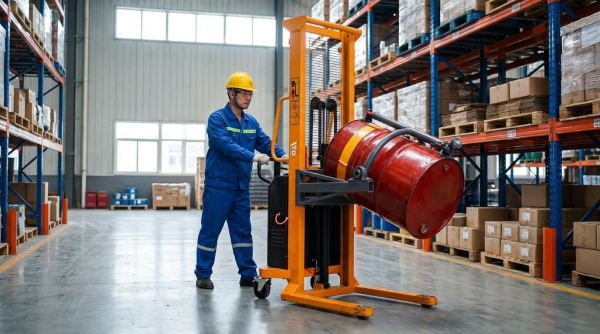
Inspection and FIFO programs turn static drum stacks into a managed system where container condition, labeling, and dwell time are continuously controlled, preventing silent degradation that can undermine even well‑engineered stacks.
- Define inspection frequency: Set routine visual checks (daily/shift walk‑throughs) and formal inspections (weekly or monthly) focused on all drum stacks within flammable and hazardous zones per industry practice.
- Inspect structural condition: Check for rust, dents, bulging, damaged bungs or lids, and weakened seams; any suspect drum is removed from high stacks and isolated for reconditioning or decommissioning as OSHA expects.
- Verify markings and labels: Confirm UN/DOT markings, hazard labels, and product IDs remain legible; faded or missing labels are replaced immediately so segregation and emergency response plans remain valid.
- Check pallets and securing devices: Inspect pallets for broken boards, protruding nails, or sag, and verify strapping, rings, or wrap are intact, since damaged pallets introduce point loads that compromise stack stability per OSHA guidance.
- Implement FIFO discipline: Use receipt dates and electronic or durable tag tracking so older drums are always picked first, minimizing time in storage and reducing corrosion and label deterioration per best practice.
- Analyze inspection data: Trend defects by location, product, or drum type to predict where failures are likely, then adjust stack height, pallet type, or inspection frequency as a predictive maintenance measure.
- Train operators and auditors: Teach lift drivers and warehouse staff to recognize early signs of drum distress and to report mis‑stacking, leaks, or over‑height pallets before they become structural or fire risks.
💡 Field Engineer’s Note: When I see frequent bulging on the second tier of a stack, it is often a temperature or overfill issue upstream—not a stacking problem—so your inspection findings should feed back to filling and venting procedures.
Done well, inspection and FIFO convert how to stack drums for storage from a one‑time layout exercise into a living program where every movement, every check, and every pick decision reinforces long‑term safety and compliance.
For efficient material handling, using equipment like a manual pallet jack or a drum dolly can significantly improve workflow. Additionally, a electric drum stacker can assist in stacking drums safely and efficiently.
Final Considerations For Safe, Compliant Drum Stacking
Safe, long-term drum stacking depends on three linked decisions: how much load each drum can carry, how that load travels through pallets into the floor, and how fire and spill controls contain the worst credible failure. UN markings, specific gravity, and temperature set the mechanical ceiling. NFPA 30, OSHA, and containment capacity then pull that ceiling down to a level your building and emergency systems can handle.
When you design stacks, treat drums, pallets, strapping, and containment as one engineered system. Use square, four-way pallets with full chime support. Lock drums together with bands and wrap so each pallet behaves as a rigid block. Cap tiers at the lowest limit from UN tests, product density, temperature, and sprinkler design. Keep aisles, bunds, and labels clear so fire crews and operators can see and reach every stack.
Build inspection and FIFO into daily work, not annual audits. Remove damaged drums from high tiers. Trend defects and adjust stack rules before a leak or collapse forces change. With clear rules in mm, kg, and tiers, the right handling tools from Atomoving, and disciplined inspections, operations teams can run dense drum warehouses that stay stable, dry, and compliant year after year.
Frequently Asked Questions
How to Properly Stack Drums for Storage?
To stack drums safely, use stackable drum racks that allow horizontal storage in tight spaces. These racks can hold up to four drums high and are designed to maximize storage density and efficiency. Ensure the drums are stored on stable shelving to prevent accidents. Drum Storage Solutions.
What Are the Best Practices for Drum Storage?
Store drums on their sides on shelving that adequately protects them. The storage area should be well-ventilated and free from external contamination like dust, excess humidity, or water. Avoid placing drums near drains, sewers, or water sources. This helps maintain the integrity of the contents inside the drums. Oil Drum Storage Tips.
Can You Store Drums on Top of Each Other?
Yes, drums can be stacked on top of each other using appropriate equipment like portable drum racks. These racks allow you to stack drums two wide and up to four high, ensuring efficient use of space while maintaining safety standards.
How to Store Drums in a Storage Unit?
When storing drums in a storage unit, ensure they are placed on stable shelving or racks designed for heavy items. Keep the storage area clean, dry, and well-ventilated to protect the drums and their contents from environmental damage.