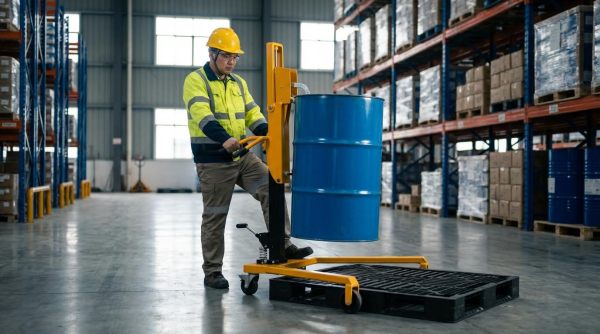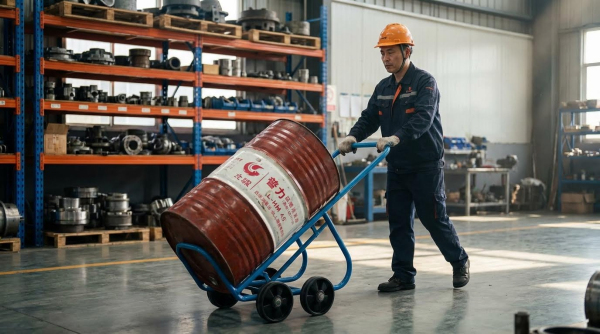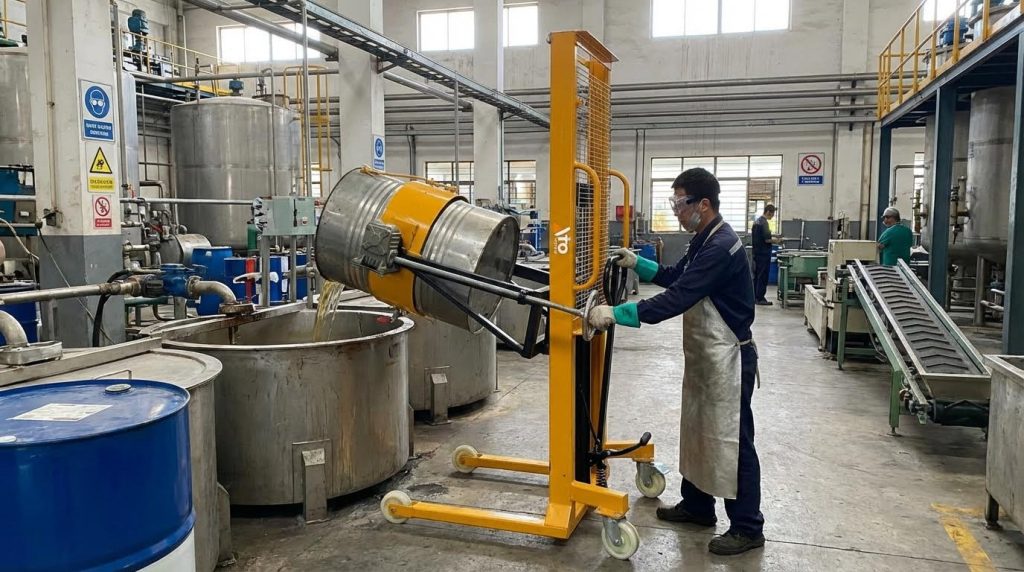
Safe, solo handling of full 55-gallon drums means moving and positioning 200–350 kg containers using purpose-built mechanical aids instead of raw muscle, to prevent back injuries, spills, and regulatory violations. A full 55-gallon (210 L) drum typically weighs 180–360 kg (400–800 lbs), which is far beyond safe manual lifting limits and exposes workers to serious musculoskeletal injuries if handled incorrectly when lifted or tilted by hand. If you’re asking “how can I move full 55 gallon drums by myself,” the real answer is not “get stronger,” it’s “use the right drum handler, lifters, and attachments on suitable floors with clear procedures and PPE.” In this guide, we’ll walk through why solo drum handling is high risk, the specific manual and mechanical drum handling tools you can use alone, how to match methods to your drum type and facility layout, and the final safety practices that keep one-person drum handling compliant with OSHA and ANSI expectations.
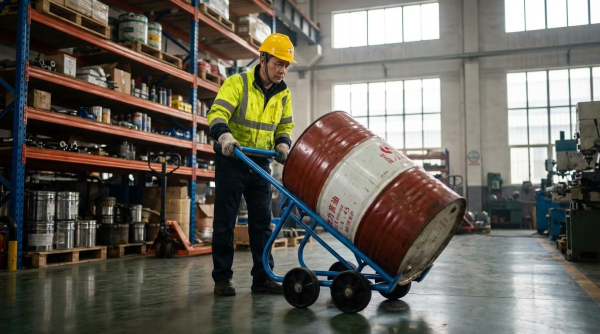
Why Moving Full 55-Gallon Drums Alone Is High Risk
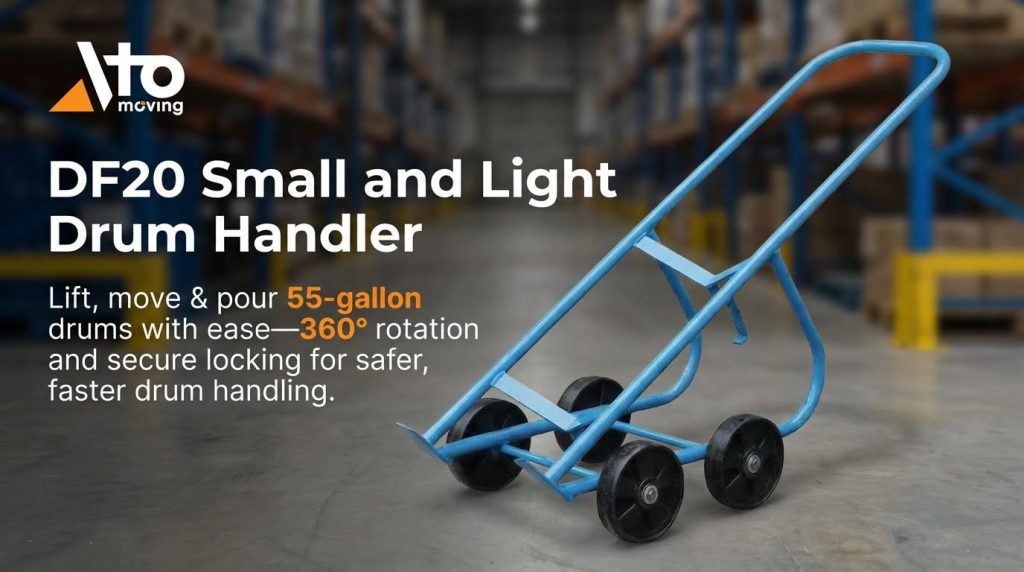
Moving a full 55-gallon drum solo is high risk because you are effectively handling a 180–360 kg load with a tall, unstable center of gravity that can crush, overexert, or chemically injure you in a split second. When people ask “how can I move full 55 gallon drums by myself,” the real answer is that you must rely on mechanical aids and strict procedures, not raw strength, to stay within OSHA and ANSI expectations. This section explains the actual drum weights, the physics behind common injuries, and how regulators expect facilities to control those risks.
💡 Field Engineer’s Note: The most serious drum injuries I see are not from “hero lifts” but from a drum starting to tip and a worker instinctively trying to catch 300+ kg of moving mass with their hands or back.
Typical drum weights and injury mechanisms
A full 55-gallon drum typically weighs 180–360 kg and can easily exceed safe manual handling limits, driving high rates of back, shoulder, crush, and chemical exposure injuries when moved by one person without equipment.
| Factor | Typical Range / Description | Field Impact on Solo Handling |
|---|---|---|
| Empty drum weight | Approx. 20–25 kg for steel/plastic 210 L drums | Even empty drums are awkward; size and lack of handholds make them unstable to carry. |
| Full drum total weight | Approx. 180–360 kg (400–800 lbs) depending on product density documented range | Far exceeds safe one-person lift; any attempt to lift or “muscle” a full drum is a high-risk maneuver. |
| Height and center of gravity | Drum height ~860–920 mm; COG is high off the floor | High center of gravity makes drums easy to tip and hard to stop once they start falling. |
| Common injury types | Back sprains, musculoskeletal injuries, crushed toes/fingers, impact trauma noted in guidance | Direct result of overexertion, uncontrolled rolling, or drums shifting during manual handling. |
| Manual handling recommendation | Manual lifting of full drums should be avoided whenever possible per safety guidance | Solo movement should rely on drum trucks, lifters, or attachments, not direct lifting. |
From an ergonomics standpoint, even a 90 kg load is beyond typical one-person safe lift limits; at 180–360 kg the only realistic option is mechanical assistance. The taller the drum and the rougher the floor, the more side loading and twisting your spine absorbs when you try to “walk” or roll the drum by hand.
Why rolling a drum on its chime is still risky solo
Rolling a drum on its chime is accepted when done correctly, with hands on the far side of the chime, back straight, and knees bent as described in safety manuals. But solo, any floor defect, slope, or sudden stop can cause the drum to veer or tip, and workers often cross hands or twist their back—multiplying injury risk.
When people search “how can i move full 55 gallon drums by myself,” they often underestimate how little force it takes to lose control of a tall, heavy cylinder. Once a 250 kg drum starts to tip or roll off course, your body simply cannot safely counter the momentum without mechanical leverage.
- Overexertion: Trying to lift, drag, or “bear hug” a full drum overloads the spine and shoulder girdle, leading to acute sprains and long-term musculoskeletal disorders.
- Crush and impact: A tipping drum can crush toes, feet, or fingers against floors, pallets, or walls, especially when workers try to “save” the drum.
- Chemical and slip hazards: If a leaking or damaged drum is moved manually, product can spread underfoot, turning the floor into a low-friction surface that amplifies fall risk.
Mechanical aids—drum stackers, drum lifters, and forklift attachments—are specifically recommended to minimize operator strain and incidents during movement in industry guidance. Using these is the only realistic way to move full drums solo while keeping injury probability and severity within acceptable limits.
OSHA, ANSI, and facility safety expectations
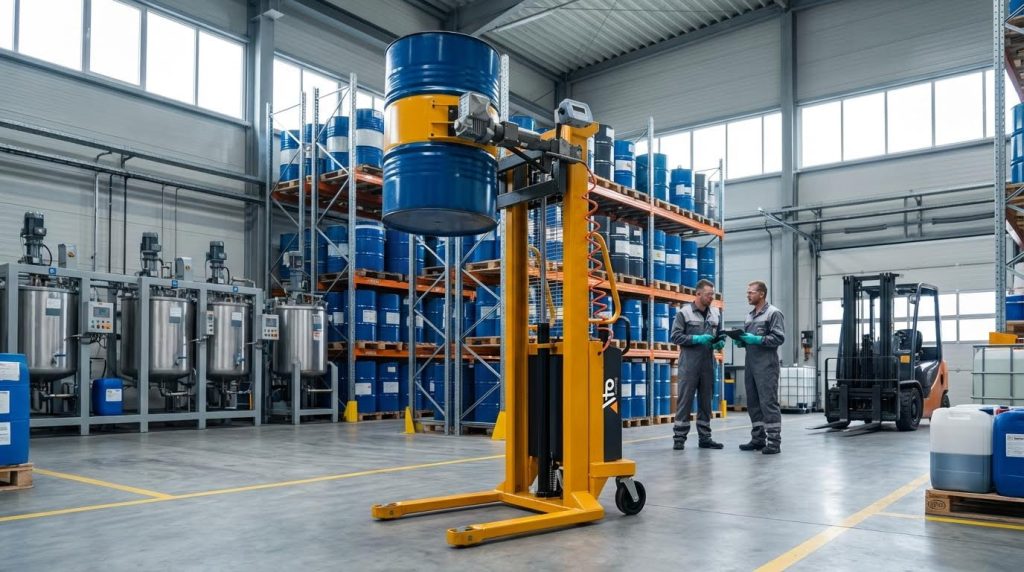
OSHA, ANSI, and most facility safety programs expect that full 55-gallon drums are moved with mechanical aids, pre-use inspection, PPE, and spill/fire controls—not by a single person manually lifting or wrestling the drum.
- Pre-move inspection: Drums should be checked for leaks, damage, missing bungs, or hazardous contents before movement, and weight should be estimated to decide if mechanical aids or extra help are required per safety manuals.
- Mandatory mechanical aids: Guidance explicitly recommends drum trucks, drum lifters, drum rotators, and lever bars to move drums instead of manual lifting or dragging to reduce strain and accidents.
- PPE expectations: Safety shoes are essential, and depending on contents, gloves, eye protection, aprons, and chemical-resistant clothing may be required during drum handling to prevent exposure and impact injuries.
- Spill and fire containment: For drums containing flammable or toxic liquids, regulations require containment (dikes or pans) that enclose at least 35% of total container volume and suitable fire extinguishers in the immediate area per OSHA 1915.173.
- Physical protection and placement: Drums ≥30 gallons with flammable/toxic contents must be placed out of traffic routes or protected by barriers or guards and kept away from open flames or heat sources to prevent impact and ignition.
- No pressurizing to empty: Shipping drums must not be pressurized to remove contents; any temporary pressurized system must include relief valves and bypass to prevent rupture and hazardous releases under OSHA rules.
💡 Field Engineer’s Note: When a facility asks me “how can i move full 55 gallon drums by myself and still be OSHA-compliant,” the first thing I audit is whether they’ve normalized “just roll it” behavior instead of issuing drum dollies and writing that into their SOPs.
Most internal safety programs build on OSHA and ANSI principles: eliminate manual lifting of full drums, engineer out uncontrolled tipping, and control chemical and fire hazards around drum storage and transfer areas. That means a solo operator is expected to:
- Inspect: Confirm drum integrity, closures, and labeling before movement.
- Equip: Use appropriate mechanical aids (electric drum stacker, lifter, or attachment) rather than brute force.
- Protect: Wear required PPE based on drum contents and impact risks.
- Control environment: Keep travel paths clear, dry, and away from ignition sources, with spill and fire protection in place.
In practical terms, compliance frameworks do not recognize “I’m strong enough to move it alone” as a control measure. The compliant answer to “how can i move full 55 gallon drums by myself” is: by using purpose-built equipment, following written procedures, and staying within OSHA/ANSI expectations on inspection, PPE, and hazard control—not by manually lifting or wrestling the drum.
“”
Selecting The Right Drum Handling Method For Your Site
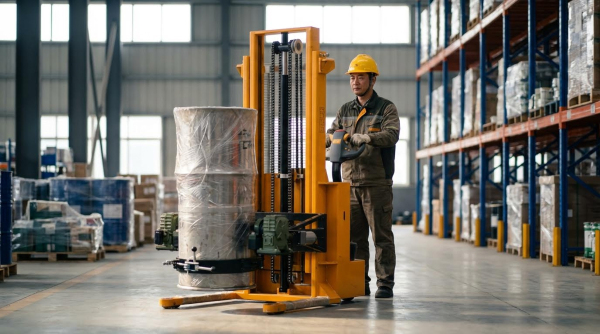
Selecting the right drum handling method means matching equipment to drum type, weight, contents, floor, pallet, and aisle constraints so one person can move full 55-gallon drums without exceeding safe force or stability limits.
When you’re asking “how can i move full 55 gallon drums by myself,” the honest answer is: you only do it safely when the equipment, surface, and layout are all in your favor. A full 55-gallon (210 L) drum can weigh 180–360 kg (400–800 lbs) and should not be manually lifted, so your selection focus is on rolling, gripping, lifting, and tilting with mechanical aids, not with your back.
💡 Field Engineer’s Note: In real warehouses, the wrong combination is almost always “smooth steel drum + dusty floor + tight aisles.” Even good drum gear loses traction there—sweep and degrease before you trust any one-person move.
Matching equipment to drum type, weight, and contents
Matching equipment to drum type, weight, and contents means choosing trucks, spotters, lifters, or forklift attachments that are rated for your drum mass, rim style, and chemical or food-contact requirements.
Different 55-gallon drums behave very differently under load: steel rims are rigid, plastic rims can flex, and fiber drums can crush if clamped incorrectly. Purpose-built gear is designed around those rim diameters and heights, so using the wrong device can pop a lid, deform a fiber shell, or slip off a plastic chime. You also must respect rated capacity—never exceed the equipment’s published drum size and weight limits to avoid structural failure and dropped drums during handling.
| Selection Factor | Typical Options / Ranges | What To Choose | Field Impact (for solo handling) |
|---|---|---|---|
| Drum material & rim | Steel, plastic, fiber; rim Ø about 560–600 mm; height about 860–920 mm for 55-gallon drums | Use adjustable rim-grip or band-style holders that specify steel/plastic/fiber compatibility. | Prevents rim slip or crushing, so one person can tip/roll without sudden loss of control. |
| Drum weight | Approx. 180–360 kg (400–800 lbs) full, depending on product density and fill | Select gear whose rated capacity clearly exceeds your heaviest drum by a margin (e.g., ≥25%). | Reduces risk of equipment overload, frame bending, or hydraulic failure during a one-person move. |
| Required actions | Simple move; move + raise; move + pour/decant | • Move only: drum truck/dolly/spotter. • Raise/pour: drum lifter or pourer with tilt control. • Long transport: forklift with drum attachment. | Limits how many times you re-handle the drum, cutting error and strain risk per move. |
| Contents hazard | Benign liquids, flammable, toxic, corrosive per OSHA 1915.173 | Use corrosion‑resistant equipment (e.g., stainless) and secure drum clamps/locks; enforce PPE (gloves, eye protection, safety shoes). | Reduces spill and exposure risk when one operator is alone at the drum during movement or pouring. |
| Environment & hygiene | Food, pharma, washdown, outdoor chemical | Choose stainless, bead‑blast or similar corrosion‑resistant finishes suitable for washdown and hygienic use. | Prevents rust contamination and premature failure, keeping solo operations reliable over years, not months. |
| Need for controlled pouring | Occasional vs frequent decanting | For regular decanting, use a drum pourer with manual hand crank or hand wheel tilt control and a positive locking mechanism for rotation. | One operator can meter flow slowly, reducing splash, foaming, and overfill incidents at receiving vessels. |
| Power availability | No power, limited outlets, or full power | Manual drum trucks/spotters and hand‑crank pourers when no power is available; hydraulic assist where allowed. | Makes “how can i move full 55 gallon drums by myself” feasible even in remote or non‑electrified areas. |
How to quickly classify your drums for equipment matching
1) Confirm material (steel/plastic/fiber) from purchase records or visual inspection. 2) Measure rim diameter and height and compare to the 560–600 mm and 860–920 mm envelope typical for 55-gallon drums supported by drum spotters. 3) Estimate weight from product density and fill level, then choose equipment capacity accordingly.
Floor conditions, pallet design, and aisle constraints
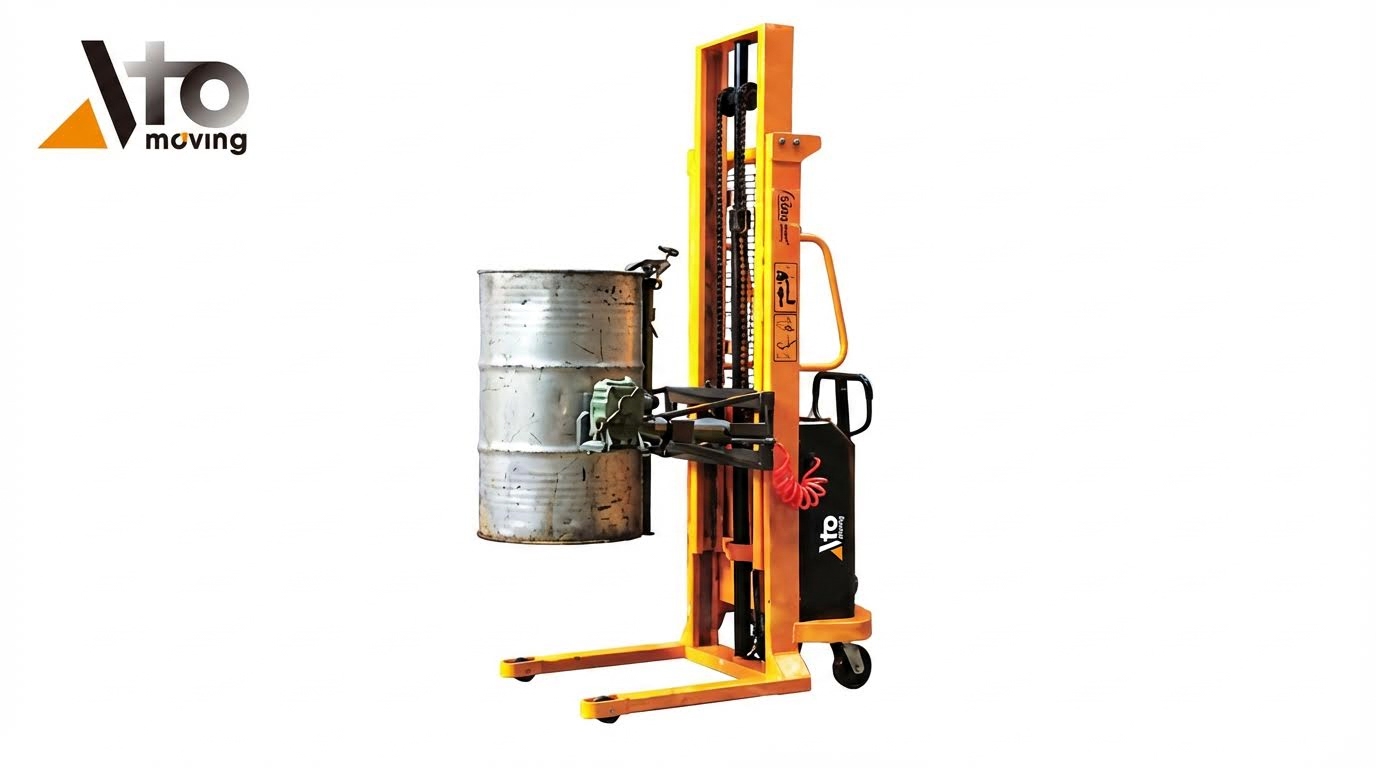
Floor conditions, pallet design, and aisle constraints directly determine whether a single operator can safely roll, turn, and extract a full drum without exceeding safe push/pull forces or tipping the load.
Even the best drum truck or spotter will struggle if you’re fighting broken concrete, steep ramps, or oversized pallets. For example, some drum spotters are explicitly designed to lift drums off standard pallets with a maximum pallet height of 150 mm, enabling corner removal without tilting the drum or the pallet beyond design. If your pallets or mezzanine decks don’t match those assumptions, you either change the pallet spec or choose a different drum handler.
| Site Constraint | Key Considerations | Preferred Equipment / Setup | Field Impact (for solo operator) |
|---|---|---|---|
| Floor flatness & friction | Cracks, slopes, oil, water, dust, floor drains | Use large‑diameter wheels and keep routes clean and dry; operate pourers on a stable, level surface only to avoid tipping. | Reduces push/pull effort and prevents sudden wheel stop that can throw a 300 kg drum off balance. |
| Ramps & thresholds | Height of dock plates, door sills, slope % of ramps | Minimize solo moves over steep ramps; where unavoidable, use powered equipment or forklift with drum attachment rather than a manual truck. | Prevents the common failure mode where an operator loses control of a heavy drum on a downhill grade. |
| Pallet type & height | Standard 4-way vs non‑standard, height ≤150 mm or higher | For standard pallets up to about 150 mm high, use a drum spotter designed for corner removal without tilting the drum; for higher pallets, use forklift attachments. | Makes it realistic for one person to pull a single drum from a full pallet without destabilizing the stack. |
| Aisle width | Clear width vs drum + equipment footprint | In narrow aisles, use compact drum trucks or spotters with minimal turning radius; for wider aisles and long runs, forklift drum attachments are more efficient over distance. | Prevents the “stuck in the aisle” scenario where you must twist or muscle the drum, increasing ergonomic risk. |
| Travel distance | Few meters vs 30–50 m+ between storage and use | Short distances: manual drum trucks, dollies, or spotters. Long distances: forklift attachments with secure ratchet/strap and rim‑clamp systems for transport. | Cuts travel time and fatigue, so one operator can move multiple drums per hour without exceeding safe exertion. |
| Stability & tipping risk | Center of gravity height, sudden stops, uneven loads | Use devices with built‑in counterweights for lifting/maneuvering stability during operation; always keep drum as low as practical when moving. | Allows a solo operator to correct minor disturbances without a tip‑over turning into a major incident. |
| Pouring / decanting location | Height of receiving vessel, clearance, obstructions | Use a drum pourer with hydraulic or manual lift to raise to the required height and a hand crank to control tilt and pouring speed to avoid splashing. | Enables one person to align and pour accurately into tanks or smaller containers without spills. |
Pre-move checklist before solo drum handling
- Inspect drum: Check for leaks, damage, or missing bungs and lids before moving any drum per drum safety guidance.
- Inspect equipment: Verify there is no wear, damage, or loose components and that all moving parts function correctly before use.
- Clear path: Remove obstructions and keep the work area clear to allow smooth drum handling operations along the route.
- Secure drum: Position the drum correctly in the holder, adjust clamps for a snug fit, and engage the locking mechanism to prevent unintended movement during handling.
- Wear PPE: Use safety shoes, gloves, and eye protection appropriate to the drum contents to protect against impact and spills.
Consider using a drum cart or drum dolly for easier mobility. Additionally, a electric drum stacker can help with stacking tasks efficiently.
Final Considerations For Safe One-Person Drum Handling
Safe solo drum handling depends on one core idea: you never rely on human strength to control a tall 180–360 kg load. You rely on engineered stability instead. Purpose-built trucks, dollies, stackers, and forklift attachments shift the problem from your spine to steel frames, wheels, and clamps that manage weight, center of gravity, and momentum.
OSHA and ANSI expectations reinforce this. They assume you inspect drums and gear, use mechanical aids, wear PPE, and control spill and fire risks every time. If your floors, pallets, and aisles do not support stable rolling and turning, then a “one-person move” is not safe, no matter how strong the operator feels.
For operations and engineering teams, the best practice is clear. Ban manual lifting of full drums. Standardize on rated drum handlers that match your drum types, pallet heights, and travel routes. Write solo drum handling into procedures with checklists, not tribal knowledge. Train operators that “just roll it” is a failed control, while an Atomoving drum handler, used on a clean, level path with the right PPE, is a valid one. That is how you keep productivity high and injury and spill risk low.
Frequently Asked Questions
How can I move full 55-gallon drums by myself?
Moving full 55-gallon drums alone is challenging and requires proper equipment. Using a drum lifter or dolly rated for the drum’s weight is essential for safety. Position the equipment around the drum’s center of gravity, engage it fully, and move slowly to maintain balance. Drum Lifting Equipment Guide.
- Use a drum hand truck or lifter designed for heavy loads.
- Ensure the equipment is rated for the drum’s full weight (up to 400 kg or more).
- Avoid manual lifting to prevent injury.
How much does a 55-gallon drum weigh when full?
The weight of a full 55-gallon drum depends on its contents. For example, water weighs approximately 208 kg (459 lbs), while denser materials like corn or gasoline can exceed 340 kg (750 lbs). Always check the material’s density before moving. Feed Storage Guide.