If you are asking what is electric stacker and how it differs from walkie and manual designs, this guide gives you a data-first answer. We break down components, power sources, and safety systems so you can see where each type fits. You will also see how load, lift speed, aisle width, and labor cost drive the real engineering choice. Use this as a practical baseline before you dive into detailed specs, quotes, or site surveys.
Defining Electric, Walkie, And Manual Stackers
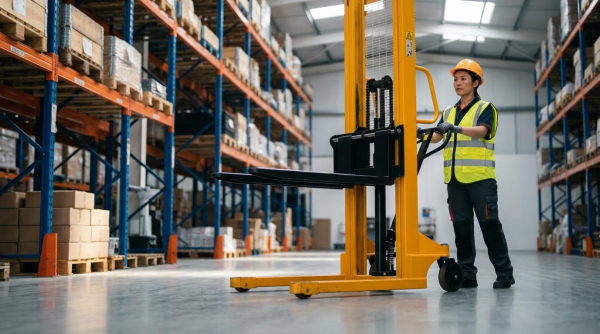
Core components and operating principles
All stackers share a common job: lift and position palletized loads safely in tight warehouse spaces. To understand what is electric stacker and how it differs from walkie and manual designs, start with the core components and how each type moves and lifts the load.
| Component / Aspect | Electric Stacker | Walkie Stacker | Manual Stacker |
|---|---|---|---|
| Power source | On-board battery (typically lead-acid or lithium-ion) | On-board battery for drive and lift | Operator muscle via pump handle and push/pull |
| Drive system | Electric traction motor powers wheels | Electric traction motor; operator walks behind | No motor; manual pushing and steering |
| Lift system | Electric hydraulic power pack drives mast cylinders | Electric hydraulic power pack | Manual hydraulic pump actuated by handle or foot pedal |
| Control interface | Tiller head or control handle with buttons / switches | Tiller-type walk-behind controls | Mechanical levers and simple release valve |
| Typical load capacity range | Up to about 3,000 lb for common models (motorized stackers) | Up to about 4,500 lb for many walkie units (electric walkie stackers) | Typically up to about 2,200 lb manual platform stacker |
| Typical lift speed (under load) | Around 0.12 m/s for many electric units (electric stackers) | About 1.5 ft/s (≈0.46 m/s) in some walkie designs (walkie stackers) | About 0.8 ft/s (≈0.24 m/s) for typical manual units (manual stackers) |
| Operator position | Walk-behind or stand-on, depending on design | Walk-behind (operator “walks” with the truck) | Walk-behind; always on foot |
| Typical use duration | High-frequency, multi-shift, powered lifting and travel | Frequent moves in compact warehouse aisles | Intermittent, low-throughput tasks |
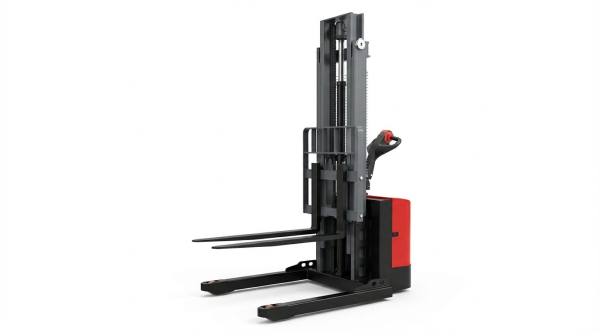
The basic operating principle is similar across all three types. A mast and fork assembly lift the pallet using hydraulic pressure, while a chassis with steer and load wheels supports and stabilizes the load. The difference is how energy gets into the system: either from the battery and electric motors, or directly from the operator.
Key subsystems found in most stackers
Most modern stackers, regardless of power source, include:
- Mast and carriage (single, duplex, or triplex sections)
- Forks or load arms (fixed or adjustable, including straddle legs)
- Hydraulic circuit (pump, cylinder, valves, reservoir)
- Chassis and counterweight or straddle legs for stability
- Steer and load wheels (often polyurethane in warehouses)
- Braking and parking brake systems
- Controls and safety devices (emergency stop, horn, limit switches)
For electric and walkie units, the battery and control electronics are critical components. Lithium-ion batteries offered faster charging, longer life, and no maintenance compared with lead-acid types, and some designs used swappable packs for continuous operation. (battery technology impact)
Electric vs. walkie vs. manual: Functional differences
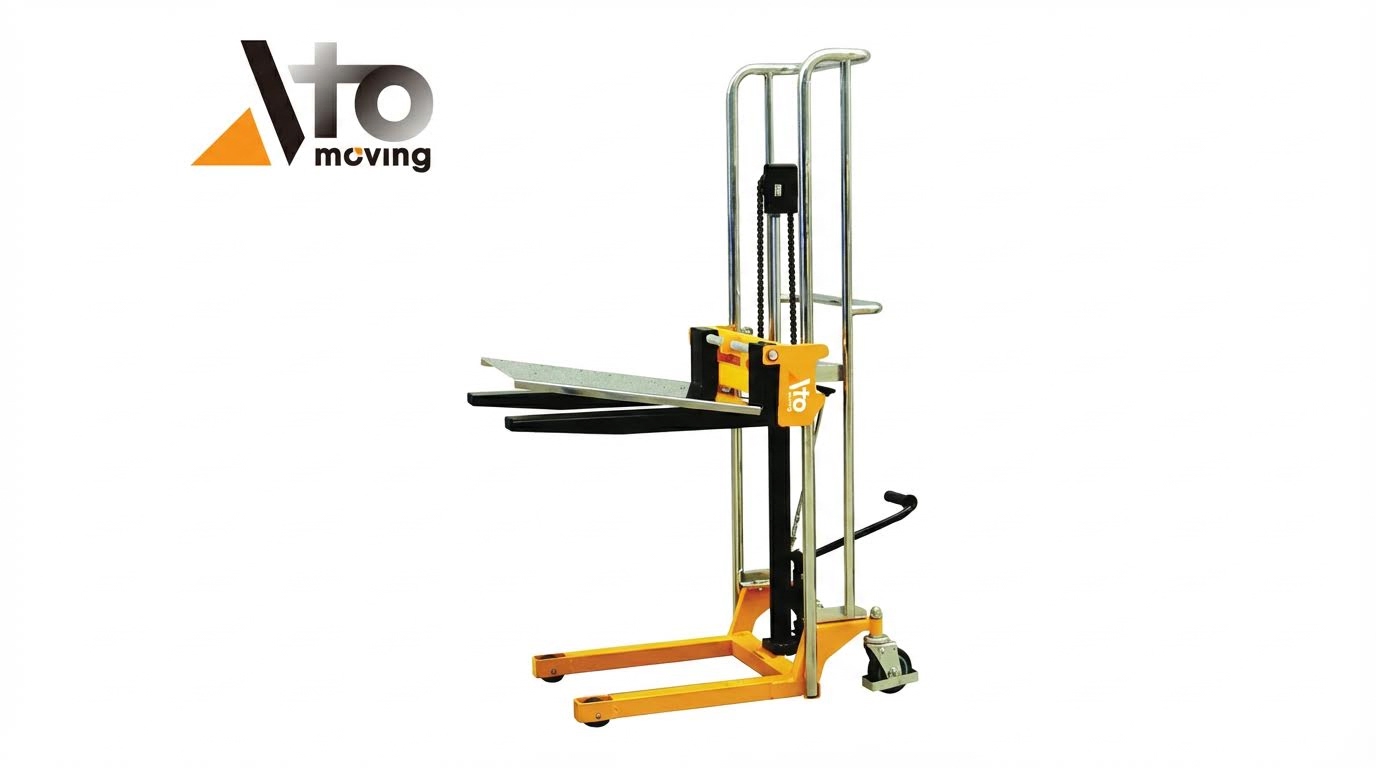
From an engineering and operations standpoint, the main differences between electric stackers, walkie stackers, and manual stackers show up in how they move, how fast they work, and how much operator effort they need. These functional gaps drive safety, throughput, and total cost of ownership.
| Functional Aspect | Electric Stacker | Walkie Stacker | Manual Stacker |
|---|---|---|---|
| Movement | Fully motorized travel and powered lift; minimal physical effort | Motorized travel and lift; operator walks behind unit | Manual push/pull travel and manual pump lift |
| Typical daily throughput | Up to about 180 pallets/day recommended (electric stackers) | High-volume pallet handling in busy aisles (operational efficiency) | Typically advised up to about 60 pallets/day (manual stackers) |
| Cycle time to 2.7 m rack | ≈28 s per cycle under load (electric) | Fast cycles due to high lift speed and powered travel | ≈55 s per cycle under load (manual) |
| Operator effort and ergonomics | Very low physical strain; ergonomic controls reduce injuries (ergonomic benefits) | Reduced strain vs manual; still requires walking but no pumping | High physical effort; fatigue and efficiency drop after long use (efficiency drop) |
| Safety performance | Lower share of lowering accidents (<2%) with overload protection and sensors (safety performance) | Enhanced safety vs manual with brakes and warning devices (safety features) | Higher incident share (~12% of lowering accidents) when misused (safety performance) |
| Capital cost | Higher upfront cost; offset by labor savings in multi-shift work (cost efficiency) | Higher than manual; lower than many ride-on trucks | Lowest upfront cost (often ~40% less than electric) (cost efficiency) |
| Typical applications | High-speed loading, multi-level racking, cold storage, multi-shift use (application-specific use cases) | Medium-to-high throughput in narrow aisles, dock work, staging | Light loads, short distances, power-restricted or budget-limited areas (application-specific use cases) |
In simple terms, what is electric stacker in functional language? It is a powered pallet stacker that uses an electric drive motor and electric hydraulic lift to move and raise loads with minimal human effort, delivering higher throughput and better ergonomics than a manual unit. Electric walkie stackers sit in the same family but emphasize walk-behind operation and compact dimensions for tight aisles.
- Electric and walkie designs cut cycle times almost in half versus manual units for typical rack heights. (cycle time comparison)
- Manual units keep capital cost low but shift the “energy cost” to the operator, which limits safe daily pallet counts.
- Electric units often include regenerative braking that recovers a portion of energy during deceleration, improving efficiency. (energy recovery)
Functionally, the choice between electric, walkie, and manual stackers is a trade-off between capital cost, operator effort, and required throughput. For low-volume, occasional lifting, a manual platform stacker can be adequate. Once daily pallets and lift heights increase, electric and walkie stackers deliver safer, faster, and more repeatable performance with lower ergonomic risk.
“”
Matching Stacker Types To Applications And TCO
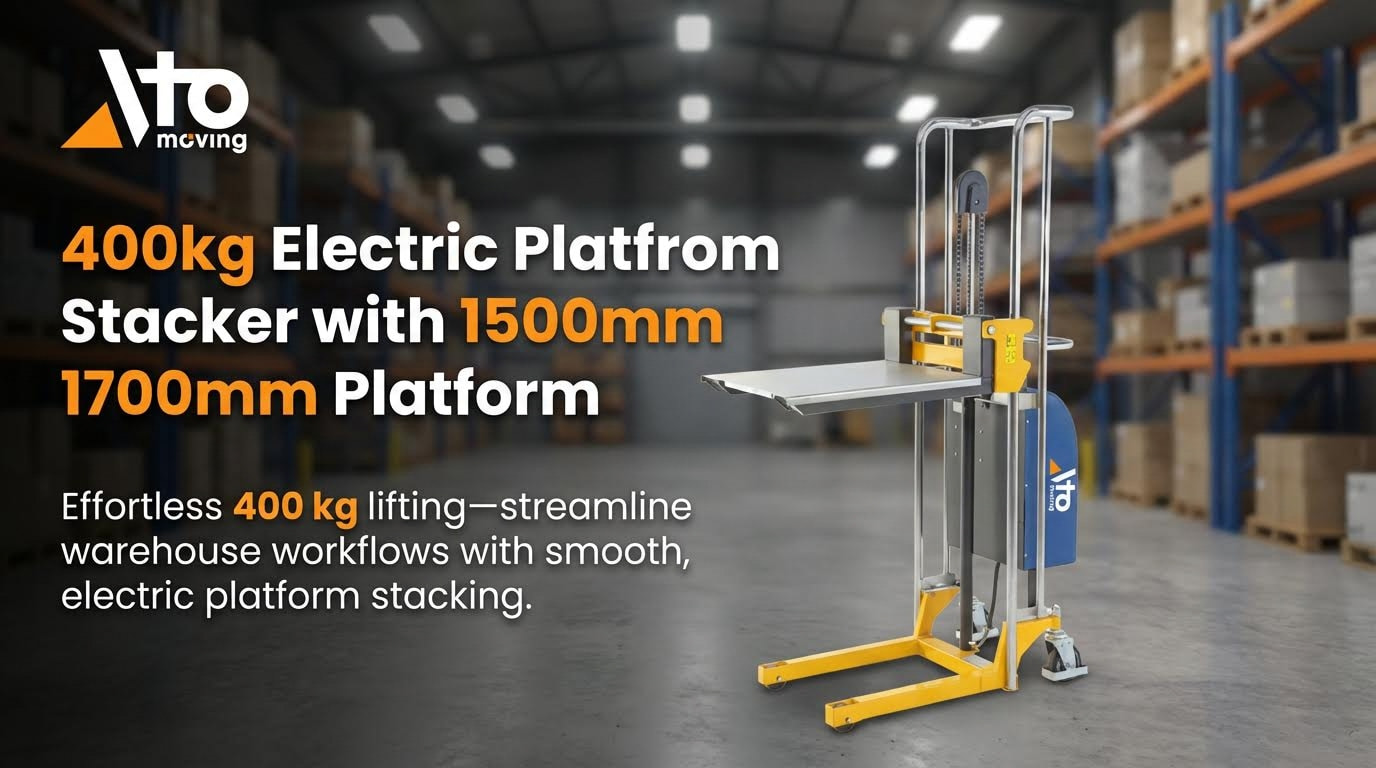
Stacker choice should start from your building, not the brochure. To match electric, walkie, and manual stackers to real applications and total cost of ownership (TCO), you need to link layout, throughput, labor, and maintenance into one simple decision matrix. This is also where many teams first ask what is electric stacker in practical, ROI terms rather than just technical specs.
Facility layout, aisle width, and racking height
Facility geometry is usually the first hard constraint. Aisle width, turning radius, and racking height quickly narrow which stacker type is even feasible.
| Criterion | Manual Stacker | Electric Walkie / Electric Stacker | Typical Engineering Guideline |
|---|---|---|---|
| Minimum workable aisle width | ≈ 1.8 m aisles (manual maneuverability) | Optimized for ≈ 2.2 m aisles (electric performance) | Keep ≥ 0.2–0.3 m safety clearance beyond truck + load envelope |
| Typical lift height band | Low–medium racking (up to ≈ 3 m) | Medium–high racking (> 3 m, multi‑level) (application guidance) | Check rated capacity at height, not just at ground level |
| Load capacity band | Up to ≈ 2,200 lb (typical manual max) | ≈ 3,000–4,500 lb depending on model (electric / walkie range) | Use ≥ 20% safety margin over typical pallet weight |
| Pallet variety / straddle need | Basic models struggle with non‑standard pallets | Straddle versions can handle mixed pallet sizes with adjustable base legs (straddle design) | Straddle design adds stability and density in mixed‑pallet warehouses |
| Cold‑store or harsh environments | Hydraulic systems can work down to about −25 °C with proper fluids (low‑temperature operation) | Electric units often need insulated batteries from ≈ −15 °C downward (battery protection) | Factor battery heating/insulation into TCO for cold storage |
To use the keyword naturally: when teams ask what is electric stacker in layout terms, the answer is a powered stacker designed to work best in standard aisle widths, higher racking, and longer horizontal runs where walking distance and vertical travel add up quickly.
Quick layout-based selection guide
If your aisles are very tight (< 1.8 m):
- Re‑measure with pallets on the floor and with upright frames.
- Manual stackers or very compact walkies may be the only options.
- Consider re‑slotting or selective rack changes before buying equipment.
If you are designing or remodeling aisles (around 2.2 m or more):
- Plan around electric walkie / electric stacker dimensions plus turning radius.
- Reserve wider cross‑aisles for passing and staging.
- Use higher racking (3–6 m) to leverage the vertical reach of electric units.
Throughput, labor cost, and lifecycle maintenance
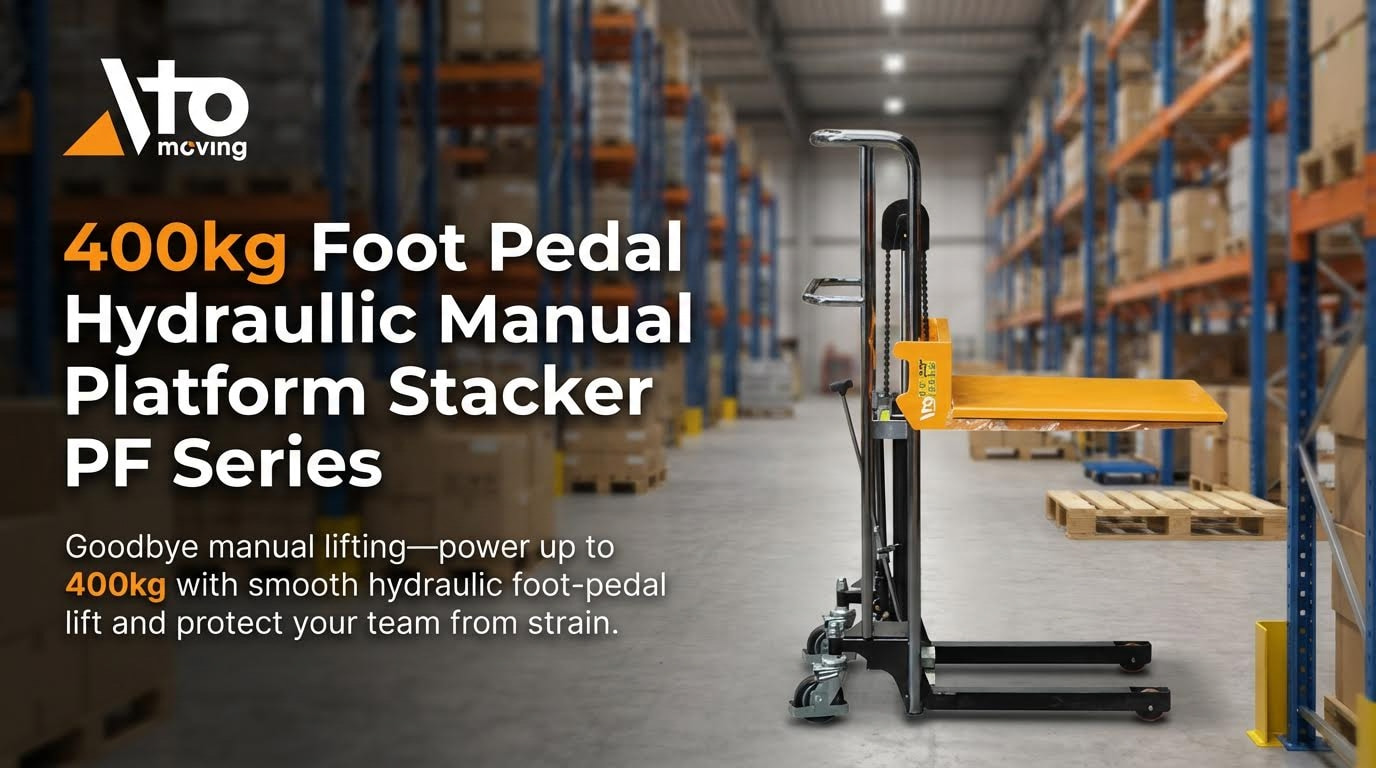
Throughput and labor are where electric units usually win the TCO battle. Manual units are cheaper to buy but far more expensive in operator time once volume increases.
| Metric | Manual Stacker | Electric Stacker / Walkie | Engineering / TCO Implication |
|---|---|---|---|
| Recommended daily throughput | ≈ 60 pallets/day (advised limit) | Up to ≈ 180 pallets/day (electric capacity) | Above ~70 pallets/day, electric usually gives lower cost per pallet |
| Lift speed (full load) | ≈ 0.08 m/s (manual) | ≈ 0.12 m/s (electric) | Faster lifting cuts cycle time and boosts hourly pallet moves |
| Typical cycle time to 2.7 m rack | ≈ 55 s (manual) | ≈ 28 s (electric) | Almost 2× more cycles per hour with electric in the same aisle |
| Capital cost | ≈ $1,200–$3,500 (manual range) | ≈ $6,000–$15,000 (electric range) | Manual capex is roughly 40% lower, but this is only part of TCO (cost comparison) |
| Labor cost (2‑shift example, 250 days, $15/h) | ≈ $60,000/year (manual) | ≈ $30,000/year (electric) | Electric can cut labor by about 50–65% in multi‑shift use (labor savings) |
| Maintenance time / consumables | ≈ 30 min/year; ≈ $35/year consumables (manual upkeep) | Battery replacement ≈ every 3 years ($220–$350); ≈ $95/year consumables (electric upkeep) | Electric has higher planned maintenance cost but better uptime |
| Uptime / fatigue | Operator efficiency can drop ≈ 18% after 6 hours of use (manual fatigue) | 24‑hour operation possible with spare batteries (electric uptime) | Electric is the only realistic option for 2–3 shift warehouses |
So when you evaluate what is electric stacker from a TCO angle, it is essentially a labor‑saving, high‑throughput machine: you trade higher purchase price for lower cost per pallet and less operator fatigue.
Simple decision rules linking throughput and TCO
Use a manual stacker if:
- Daily volume is consistently below ~60 pallets/day.
- Operation is single‑shift, with many idle hours.
- Budget is tight and labor rates are low.
- Lift heights are modest and loads are light to medium.
Use an electric walkie / electric stacker if:
- Throughput regularly exceeds ~70 pallets/day or peaks are intense (throughput guidance).
- You run two or three shifts, or need near‑continuous uptime.
- Labor costs are significant and you want a payback in months, not years; one study showed < 1‑month payback from labor savings alone (payback example).
- Ergonomics and injury reduction are strategic priorities.
From an engineering and financial standpoint, the right way to answer what is electric stacker for your operation is to calculate cost per pallet moved over the equipment life. When you plug in real volumes, labor rates, and maintenance, electric solutions usually dominate in medium‑ to high‑throughput facilities, while manual units hold their own only in low‑volume,
Final Considerations For Selecting The Right Stacker
Selecting the right stacker is a design problem, not just a catalog choice. Geometry, load, and duty cycle must align with power, stability, and brakes if you want safe, low‑cost handling. Aisle width and racking height set the physical envelope first. Within that envelope, rated capacity at height, mast design, and straddle layout protect against tip‑over and pallet damage.
Throughput and labor then decide whether manual effort is still acceptable. As pallet counts and lift heights rise, manual units turn into a bottleneck and a safety risk due to fatigue. Electric and walkie units use motors, sensors, and better ergonomics to hold cycle time and incident rates steady across the shift. Battery choice and maintenance planning close the loop on uptime and TCO.
The best practice is clear. Start with accurate site measurements and real pallet data. Map current and future daily volumes. Then compare cost per pallet over the full life of manual versus electric options. In low‑volume zones, a simple manual stacker still fits. In core warehouse flows, an electric solution from Atomoving will usually deliver safer operation, higher throughput, and lower lifetime cost.
Frequently Asked Questions
What is the purpose of an electric stacker?
An electric stacker is a compact lifting machine designed for handling light to medium loads, typically up to 2 tons. It is ideal for small warehouses where space efficiency and ease of operation are crucial. By enabling vertical storage, it maximizes floor space usage, making it indispensable in environments where space is limited. Stacker vs Forklift Guide.
What skills are needed to operate a stacker?
To operate a stacker effectively, you need mechanical aptitude, attention to detail, and a basic understanding of warehouse operations. A high school diploma or equivalent is often required. These skills ensure safe and efficient handling of materials within the warehouse. Stacker Operator Skills.
How does an electric stacker improve warehouse productivity?
Electric stackers enhance warehouse productivity by allowing vertical storage, which optimizes available floor space. Their versatility and adaptability make them valuable assets in improving workflow efficiency and maintaining high safety standards. This equipment is essential for operations focused on maximizing space and productivity.