Manual pallet stacking seems simple until a stack leans, a back strains, or a fire inspector asks how high you went. This guide explains how high to manually stack pallets safely, how stack geometry and floor conditions affect stability, and how to protect workers with sound ergonomics. You will see practical height ranges, key OSHA and fire-protection concepts, and simple tools and habits that keep stacks upright and people uninjured. Use it to shape day‑to‑day practice and to write clear, defensible manual pallet stacker policies.
Defining Safe Manual Pallet Stack Heights
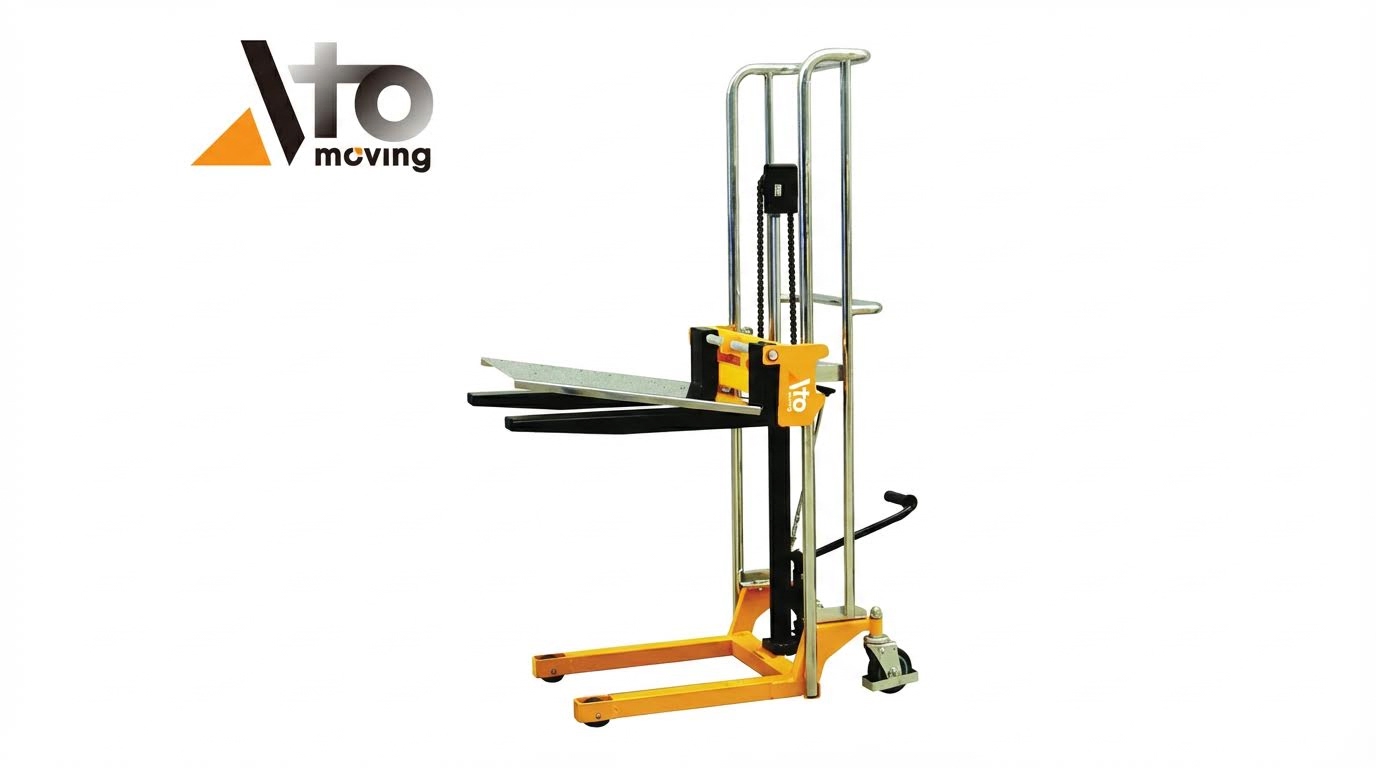
When deciding how high to manually stack pallets, you must balance stability, fire code limits, and human lifting capability. This section defines typical manual stack heights and shows how fire protection and building codes cap your maximum safe height, even when the stack feels stable. Use these guidelines as an engineering baseline, then tighten them for your own site risk assessment.
Typical height limits for manual stacking
Before you set any rule on how high to manually stack pallets, separate three cases: empty pallets, mixed-use warehouse floors, and sprinklered high-bay areas. The practical limit for manual stacking is usually driven by what a person can safely reach, control, and de‑stack without ladders or climbing.
The data below summarizes commonly cited ranges and typical in‑plant rules for manual stacking, not what a semi electric order picker or automated system can achieve.
| Scenario | Typical manual limit (height) | Typical manual limit (count) | Key constraints |
|---|---|---|---|
| General warehouse – empty pallets, hand stacked | Approx. 6–8 ft (1.8–2.4 m) | Often limited to 6 pallets high for manual stacking for safety and ergonomics | Reach envelope, manual handling risk, OSHA 1910.176(b) stability requirement |
| De‑stacking by hand from taller machine‑built stacks | Up to about 9 pallets high | De‑stacking from stacks taller than 9 pallets is typically prohibited due to fall and collapse risk | Worker exposure to falling pallets, visibility, control of tilt |
| Common 48×40 in pallet stacks in mixed operations | 8–12 ft (2.4–3.7 m) for total stack height when handled mechanically under typical guidelines | Varies by pallet thickness and load | Usually above safe reach for pure manual stacking; treat as mechanical-handling only |
| Small pallets (e.g., 36×36 in) | Often limited to about 6 ft (1.8 m) total height due to reduced base footprint | Depends on pallet thickness | Higher center of gravity relative to base; more sensitive to tilt and impact |
For manual-only operations, a conservative engineering approach is:
- Limit hand-stacked pallet columns to about worker shoulder–head height (roughly 5–6.5 ft for most adults).
- Use manual pallet jack when stacks must exceed this envelope, even if the floor and pallets could support more.
- Apply a tighter limit for small or damaged pallets, or where floor impact from traffic is high.
Why “stable” stacks can still be unsafe to hand stack
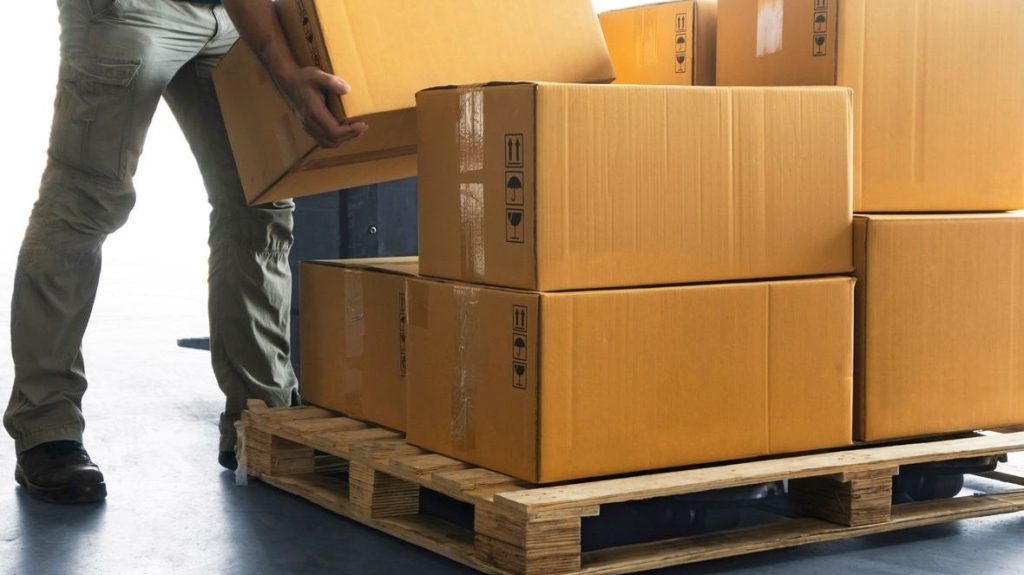
A stack can be structurally stable yet still be unsafe to build or break down manually. Manual stacking adds risks from overreaching, loss of balance, and limited ability to control a shifting pallet. Stability calculations do not account for a worker standing close to the stack, twisting with a load, or reacting to sudden tilt. That is why ergonomic limits on reach and load handling usually define how high to manually stack pallets, even when codes allow more.
Code and fire protection constraints
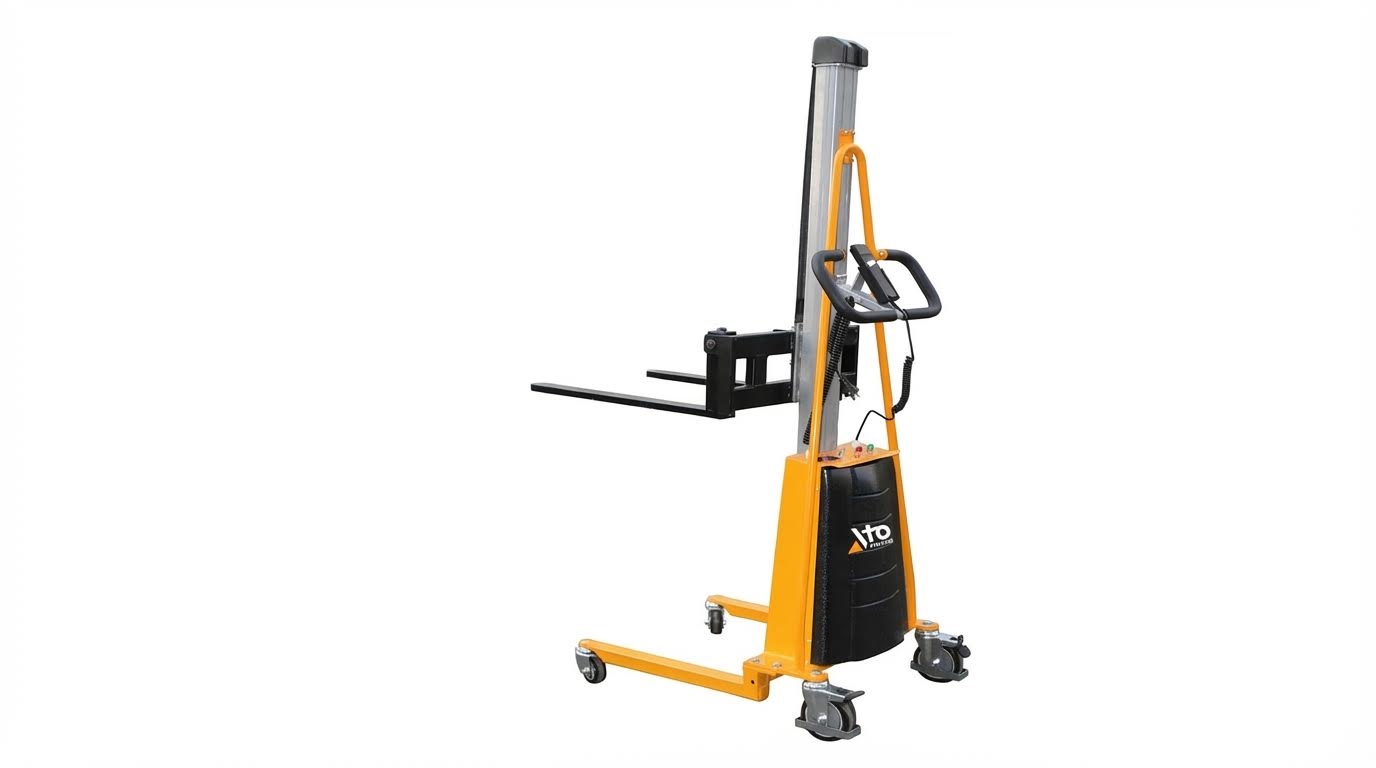
Even if a stack is stable and within ergonomic reach, fire codes and insurance rules can cap the maximum height and footprint. These limits apply regardless of whether pallets are stacked manually or mechanically.
The table below summarizes key fire-protection-related constraints that influence how high to manually stack pallets in a compliant layout.
| Regulatory / guidance aspect | Typical limit or requirement | Implication for manual pallet stacking |
|---|---|---|
| Maximum pallet stack height (general guidance) | Pallet stacks not to exceed about 15 ft in height or 400 ft² in area per pile under typical fire safety guidance | Manual stacking should be well below 15 ft; treat this as an absolute ceiling for any method, not a manual target. |
| Floor stacking of wood pallets in groups | Wood pallet piles no higher than about 6 ft when grouped in fours with at least 8 ft clear between groups; taller stacks require automatic sprinklers above according to typical NFPA-based guidance | If your area lacks sprinklers or spacing, cap manual pallet stack height around 6 ft even if ergonomics would allow slightly more. |
| Clearance to ceiling / structure | Minimum of about 200 mm (~8 in) clearance from top of stack to ceiling structure in some guidance for palletized loads to avoid sprinkler obstruction | When calculating maximum stack height, subtract this clearance from the low point of sprinklers or ceiling fixtures. |
| OSHA general material storage rule | Materials must be “stacked, blocked, interlocked, and limited in height so that they are stable and secure against sliding or collapse” (1910.176(b)) as cited in pallet safety guidance | You must reduce allowed height if stacks show tilt, damage, or impact exposure, regardless of numeric limits. |
To translate these constraints into a simple rule set for your site, use a layered approach.
- Start from fire code: determine the maximum allowed pile height and area, and required ceiling clearance.
- Check sprinkler design: confirm whether your sprinkler system was designed for exposed idle pallets or only for palletized product.
- Apply OSHA stability language: reduce height where you cannot guarantee flat floors, good pallets, and proper interlocking.
- Overlay ergonomics: set a lower “manual only” height limit inside the code envelope, and require drum dolly above it.
Example: converting building constraints into a manual stacking limit
Assume a warehouse with a 20 ft roof and sprinklers at 18 ft. Fire guidance caps pallet piles at 15 ft and requires at least 8 in clearance to the sprinklers. The effective regulatory ceiling for any pallet stack becomes about 14 ft 4 in. However, workers can safely handle empty pallets only up to about 6–7 ft without overreaching. The engineering control is to set a manual stacking limit around 6 ft, require pallet jacks or other mechanical aids above that, and prohibit any pallet pile above 14 ft 4 in.
Engineering Stability: Base, Load, And Stack Geometry
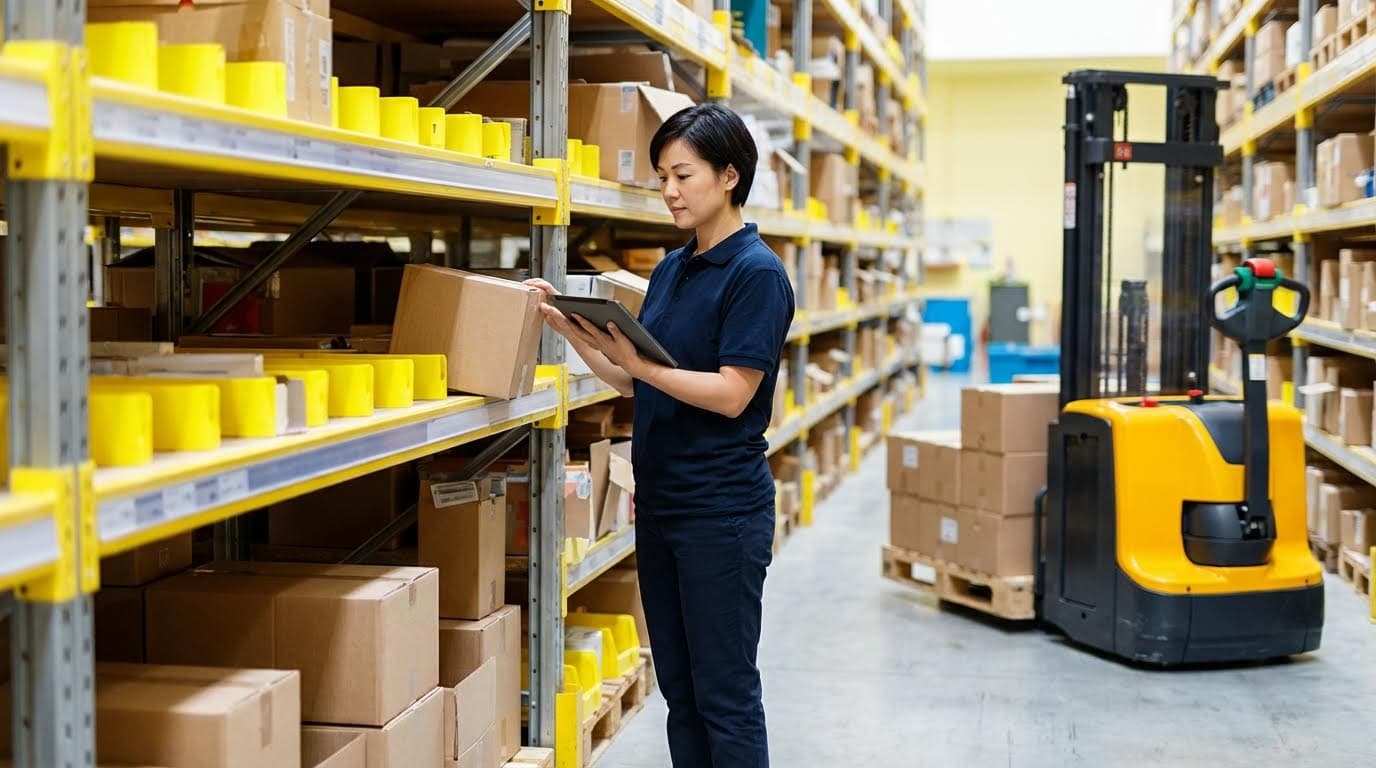
Stability is the hard limit on how high to manually stack pallets. Even before you hit code or fire limits, floor conditions, load geometry, and pallet type decide whether a stack is safe or ready to fail. The sections below break stability into base, interlocking, and load/center-of-gravity so you can set practical height limits, not guesses.
Floor conditions and base pallet alignment
Your floor and first pallet define the “foundation” of the stack. If this foundation is weak or uneven, stability drops fast as height increases.
- Use only smooth, level, and solid floor areas for pallet stacks. Uneven or sloped floors increase tilt and collapse risk.
- Keep stacks inside designated storage zones, away from high‑traffic aisles where impacts and side loads are more likely. Good housekeeping and clear zones reduce slips, trips, and collisions.
- Inspect the base pallet for broken boards, loose blocks, or twisted stringers before stacking above it.
- Align the base pallet square to walls, columns, or floor markings so the stack centerline is vertical.
- Avoid stacking pallets sideways or at angles; this weakens the load path and violates stability best practice. Sideways stacking reduces stack integrity.
Key engineering idea: any small base misalignment amplifies with height. A 1–2° lean at the bottom can turn into several inches of offset at the top of a tall stack, directly affecting how high to manually stack pallets safely in that area.
| Base condition | Effect on stability | Impact on safe manual stack height |
|---|---|---|
| Level, smooth, undamaged floor | Vertical load path, minimal tilt | Allows use of typical height guidelines (e.g., 8–12 ft for common pallets, subject to load and codes) Typical stack height ranges |
| Slight slope or uneven joints | Progressive lean, higher tilt percentage | Reduce manual stack height well below typical limits; monitor tilt closely |
| Damaged base pallet (cracked, twisted) | Concentrated stress, rocking under load | Do not stack above; replace base pallet before use |
| Stack in high‑traffic impact zone | Higher chance of side impacts and vibration | Use lower stack heights and greater separations from aisles |
Practical setup checklist for a stable base
- Survey the floor with a straightedge or level in new storage areas.
- Mark “no‑stack” zones near drains, ramps, and floor transitions.
- Standardize base pallet orientation (stringers or deckboards in one consistent direction).
- Train workers to reject any damaged pallet as a base pallet.
Interlocking, blocking, and tilt control
Once the base is sound, stability depends on how each layer is locked to the one below. This is where blocking, interlocking, and tilt limits come in.
- OSHA requires loads to be “stacked, blocked, interlocked, and limited in height” so they are secure against sliding or collapse. Guidance on blocking and interlocking
- Keep vertical “columns” of weight aligned; avoid overhang that shifts the center of gravity outward.
- Use block stacking (square-on-square) with heavy product low and lighter product high to build a strong core. Block stacking improves base stability
- Use cross‑stacking or interlocking patterns where package design allows, so layers tie into each other and resist shear.
- Secure unstable or irregular loads with stretch wrap or banding before you add height. Wrapping and banding reduce falling‑load risk
Engineering standards also limit how much tilt a stack may have before it is considered unsafe. Safe stacking practice uses a maximum tilt of about 2% of stack height; beyond that, the stack should be corrected or dismantled. Tilt limits for pallet stacks
| Stack height (approx.) | Max 2% tilt (horizontal offset) | What to do if exceeded |
|---|---|---|
| 6 ft (1.8 m) | ~1.4 in (~35 mm) | Stop manual stacking, re‑square or rebuild the stack |
| 8 ft (2.4 m) | ~1.9 in (~48 mm) | Lower height or restack; check floor and pallet damage |
| 10 ft (3.0 m) | ~2.4 in (~60 mm) | Do not continue stacking manually; investigate cause |
In practice, the higher you go, the less tilt you can tolerate before you must stop. This is a critical control when deciding how high to manually stack pallets in older buildings or on imperfect floors.
Typical interlocking and blocking errors to avoid
- Mixing different carton sizes in the same layer without a clear pattern.
- Allowing “chimney stacking” (four-corner columns with hollow centers) that buckle under load.
- Leaving gaps between pallets so loads can sway into the gap.
- Failing to rework a leaning stack that has been bumped by equipment.
Pallet type, load weight, and center of gravity
Pallet construction, footprint, and load weight all influence the stack’s center of gravity and therefore its safe height. Different pallet sizes and materials demand different limits.
- Common 48 × 40 in pallets often stack in the 8–12 ft range in typical warehouse conditions, depending on load weight and stability. Typical stack heights for standard pallets
- Smaller pallets (e.g., 36 × 36 in) are less stable and are often limited to about 6 ft stack height. Stricter limits for small pallets
- Heavier loads raise compressive stress and can crush lower pallets or product, even if the stack does not tip.
- Top‑heavy or offset loads move the combined center of gravity upward and outward, cutting the safe height sharply.
- Stacks that mix pallet types (wood, plastic, pooled) are harder to predict; uniform stacks by pallet type are more stable and easier to assess. Benefits of uniform pallet types
| Factor | Condition | Effect on safe manual stack height |
|---|---|---|
| Pallet footprint | Large (e.g., 48 × 40 in) | Wider base supports higher stacks if loads are stable and well centered |
| Pallet footprint | Small (e.g., 36 × 36 in) | Narrow base; reduce height to control tipping risk |
| Load weight per pallet | Light, compact, wrapped | Allows closer to typical height ranges, subject to fire and code limits |
| Load weight per pallet | Heavy or dense product | Lower height to avoid crushing and reduce kinetic energy if a fall occurs |
| Center of gravity | Low and central (heavy items at bottom) | Improves stability; supports higher but still code‑compliant stacks |
| Center of gravity | High or offset (heavy items high or overhanging) | Severely limit stack height; consider re‑palletizing |
When you combine these factors, the safe answer to how high to manually stack pallets is rarely a single number. Instead, you define ranges based on pallet size, load weight, and geometry, then cap them further using fire, code, and ergonomic limits from elsewhere in your program.
Quick field rules for matching height to pallet and load
- Start from your most conservative site rule (for example, 6 ft for small or mixed pallets).
- Increase height only when pallets are uniform, loads are wrapped, and the base is perfect.
- Immediately downgrade height limits in any zone where you see lean, damage, or mixed pallet types.
- Reassess limits whenever product mix or pallet sourcing changes.
Ergonomic Practices And Tools For Manual Stacking
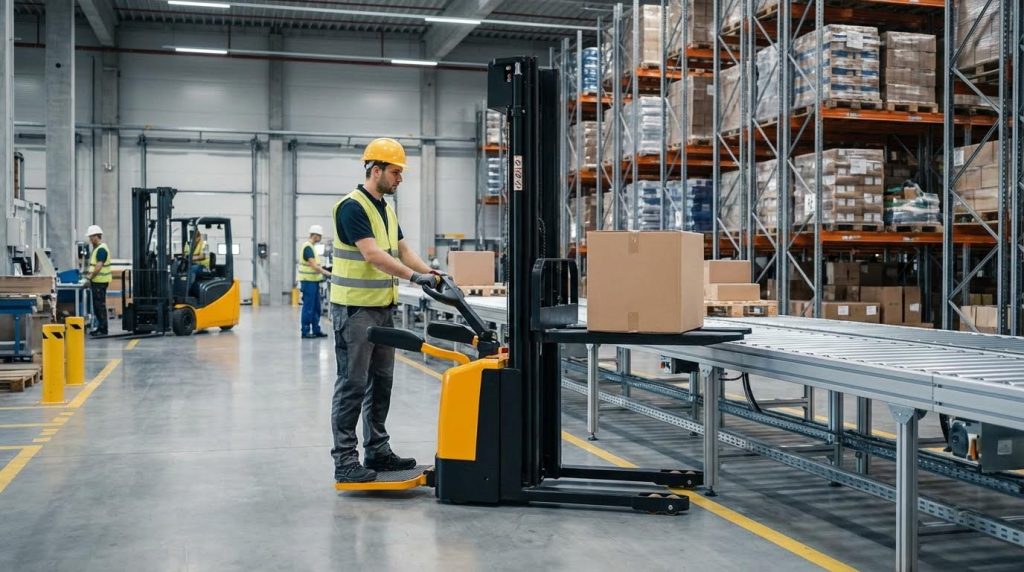
Safe lifting limits and body mechanics
Ergonomics decides how high to manually stack pallets before fatigue and injury risks outweigh any storage benefit. The goal is to keep forces on the spine, shoulders, and knees within safe limits while still moving product efficiently.
For most facilities, the ergonomic ceiling is lower than the structural or fire-code limit. Above shoulder height, every extra layer multiplies the risk of strains, dropped loads, and loss of control.
Key ergonomic principles before you start stacking
Use these as gate checks before setting any stacking rule:
- Keep loads in the body “power zone” (mid-thigh to mid-chest) whenever possible. This zone minimizes leverage on the spine.
- Limit manual lift weights and require team lifting above that limit. Many programs cap individual lifts around 40–50 lb.
- Avoid twisting with a load; pivot the feet instead.
- Keep the load close to the body to reduce bending moment on the back.
- Use mechanical aids whenever repetition or awkward height cannot be eliminated.
For empty pallets, the question of how high to manually stack pallets is mainly about reach and control. For loaded pallets, it is about both reach and the weight of each case or item being handled.
- Empty wood pallets often weigh 30–50 lb; above about chest height, two-person lifts are strongly recommended.
- For heavier pallets above 40 lb, two-person lifting was recommended to reduce injury risk. Guidance called out team lifts for heavier empty pallets.
- High-frequency lifting (hundreds of lifts per shift) requires more conservative height and weight limits than occasional handling.
Good body mechanics are non‑negotiable when workers build or break down pallet stacks by hand.
- Feet shoulder-width apart for balance.
- Bend at hips and knees, not the back, keeping the torso straight. This technique was highlighted for empty pallet lifts.
- Grip with the whole hand, not fingertips, to prevent slips. Full-hand grips were recommended for secure handling.
- Keep the pallet or case close to the body, within the power zone, whenever possible.
- Turn with the feet instead of twisting the spine under load.
Practical height guidance from an ergonomic perspective
These are engineering-style rules of thumb to bridge safety, ergonomics, and productivity:
- Design normal hand stacking so that most lifts occur between about 18 in and 48 in off the floor (power zone).
- Limit routine manual stacking of heavy cases above shoulder height; use step platforms or mechanical assists instead.
- For empty pallets, many facilities cap manual stacking around 6–9 pallets high when workers must lift overhead, even though structural limits are higher. One guideline advised not to manually stack more than six pallets and not to de‑stack from stacks taller than nine.
- Above those heights, use manual pallet jack, forklifts, or hoists to build and break stacks.
Use of pallet jacks and mechanical assists
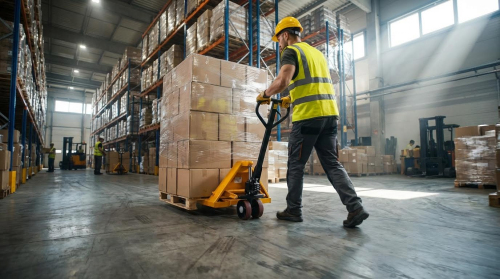
Mechanical assists are the fastest way to lower strain and answer how high to manually stack pallets without overloading the body. They shift work from the spine and shoulders to wheels, hydraulics, and steel.
Once stack heights move beyond the power zone or pallet counts exceed a handful per cycle, tools should take over most of the vertical and horizontal movement.
- Manual pallet jacks
- Powered pallet jacks / walkies
- Forklifts and stackers
- Hoists, jib cranes, or gantry cranes
- Lift tables, pallet positioners, and turntables
Using pallet trucks instead of dragging or carrying pallets by hand significantly reduced injury risk. Guidance specifically recommended pallet trucks to reposition pallets and advised against manual stacking beyond six pallets and de‑stacking from stacks taller than nine.
| Tool / Aid | Main ergonomic benefit | Best use case in pallet stacking |
|---|---|---|
| Manual pallet jack | Eliminates carrying and dragging forces; only push/pull effort remains. | Moving single pallets or short pallet stacks across the floor instead of manual dragging. |
| Powered pallet jack | Reduces push/pull forces and travel effort over longer distances. | High-throughput areas where operators move many pallets per shift. |
| Lift table / pallet positioner | Keeps work in the power zone by raising or lowering the pallet automatically. | Building or breaking down pallet loads without repeated bending or overhead reaching. |
| Jib or gantry crane with hoist | Takes nearly all weight off the worker for heavy or awkward items. | Handling oversized or very heavy components that sit on pallets. |
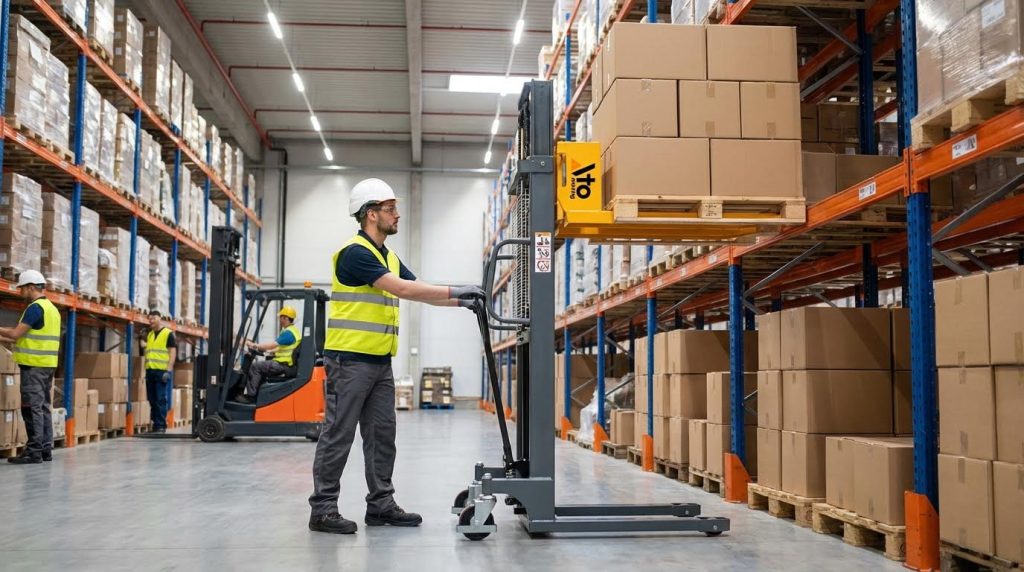
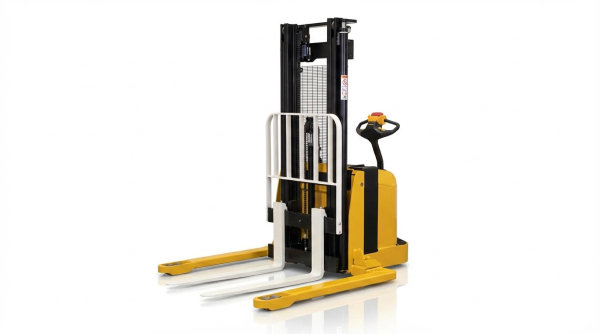
| Forklift / walkie stacker | Removes the need for manual stacking beyond a few layers. | Creating tall pallet stacks and accessing upper layers without climbing or overhead lifting. |
Mechanical aids only work safely if the surrounding layout and housekeeping support them.
- Provide clear, wide travel paths for pallet jacks and forklifts to avoid awkward pushing angles. Guidance emphasized clear pathways and staging areas to prevent trips and collisions.
- Designate pallet storage zones away from high-traffic aisles to reduce slips, trips, and collisions. Data showed slips, trips, and falls accounted for a large share of workplace fatalities, prompting dedicated storage zones.
- Maintain housekeeping around stacks by removing broken boards and nails to avoid trips and punctures. Housekeeping around pallets was called out as an OSHA expectation.
When to switch from manual to mechanical stacking
Use these triggers to decide when mechanical aids should replace pure manual stacking:
- Workers must lift above shoulder height to add or remove layers from the stack.
- Individual items or empty pallets approach or exceed 40–50 lb per lift.
- Repetitive lifts (for example, more than a few lifts per minute for a full shift) are required.
- Stacks exceed about 6–9 pallets high and require overhead handling. One guideline limited manual stacking to six pallets and de‑stacking from stacks no taller than nine.
- Workers report fatigue, discomfort, or near-miss incidents while stacking or unstacking.
At that point, engineering controls (jacks, lifts, cranes) are more reliable than trying to “lift better” or “be more careful.”
Final Considerations For Policy And Compliance
Safe manual pallet stacking depends on three linked controls: height limits, structural stability, and worker ergonomics. Codes and fire protection set hard ceilings on pile height, footprint, and clearance to sprinklers. Engineering rules on base condition, pallet geometry, tilt, and center of gravity then narrow those ceilings to what will actually stay upright in your building. Ergonomic limits finally decide how much of that envelope workers can handle by hand without injury.
Operations teams should treat manual stacking as a low-height, low-strain activity, not a way to reach code maximums. Keep hand stacking near the power zone and around shoulder–head height. Above that, require pallet jacks, stackers, or other mechanical aids from Atomoving and enforce tighter limits for small footprints, damaged pallets, or heavy, top‑heavy loads.
Translate these principles into clear, written rules: defined maximum manual heights by pallet type, rejection criteria for floors and base pallets, tilt limits, and triggers for switching to mechanical handling. Train workers to stop when stacks lean, when reach becomes awkward, or when loads feel too heavy, and back them with supervision that enforces these stops. When you align policy, layout, and tools with these engineering and ergonomic controls, you reduce collapse risk, protect people, and keep inspectors satisfied.
Frequently Asked Questions
What is the ideal pallet stacking height?
The ideal pallet stacking height depends on safety regulations and practical handling. According to NFPA guidelines, idle pallet stacks should not exceed 15 feet (4.5 meters) in height. Taller stacks are harder to move safely and may require equipment like forklifts to manage. Pallet Stacking Safety Tips.
How high can you manually stack pallets?
While there’s no fixed national standard for manual pallet stacking height, OSHA requires that storage arrangements must not create hazards. A common recommendation is to limit manual stacking to 48 inches (1.2 meters) or lower to ensure stability and safety during handling. For higher stacks, equipment like pallet stackers or forklifts is recommended. Pallet Shipping Dimensions.
What does OSHA say about stacking pallets?
OSHA emphasizes that pallet stacking must not obstruct sprinklers or create unsafe conditions. Facilities should maintain at least 18 inches (45 cm) of clearance between the top of the stack and ceiling sprinklers. Additionally, stacks must be stable and not pose a risk of collapse. OSHA Pallet Stacking Guidelines.