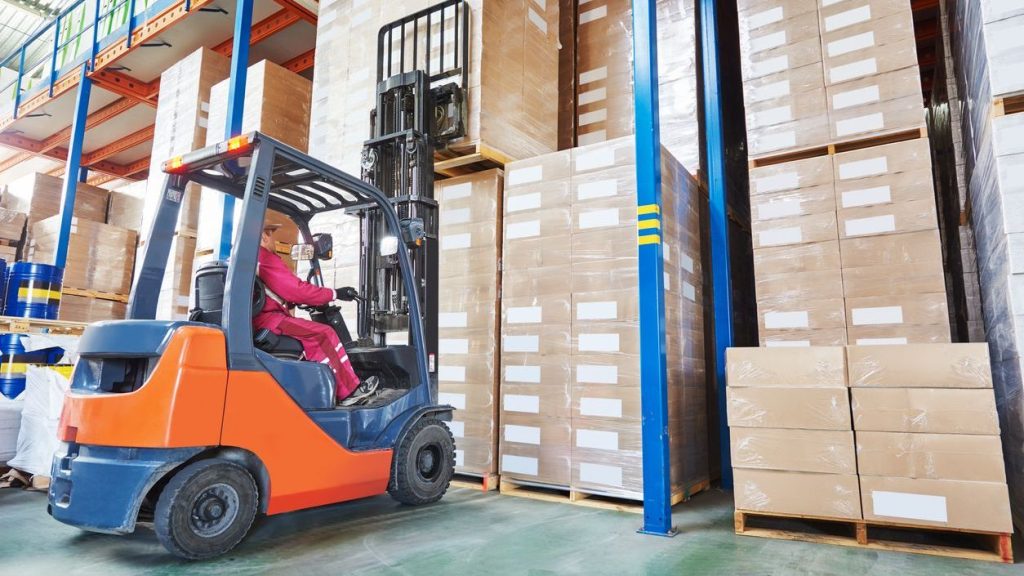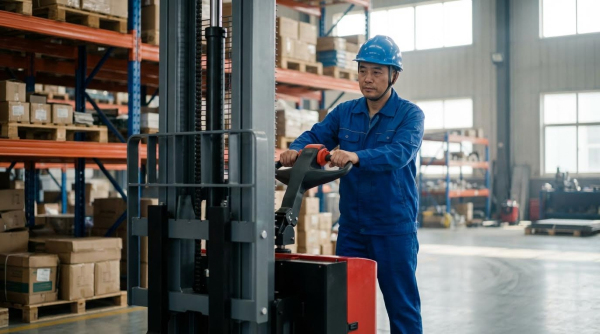
Knowing exactly how to use a walkie stacker is critical for preventing injuries, product damage, and unplanned downtime. This guide walks through components, regulations, pre-use checks, and safe operating steps so operators can work confidently in tight warehouse aisles. You will also see engineering best practices for batteries, load stability, and maintenance planning to improve performance and total cost of ownership. Use this as a practical, step-by-step reference to align your team’s daily operation with safety and efficiency goals.
What A Walkie Stacker Is And Why Safe Use Matters
Key components and operating principles
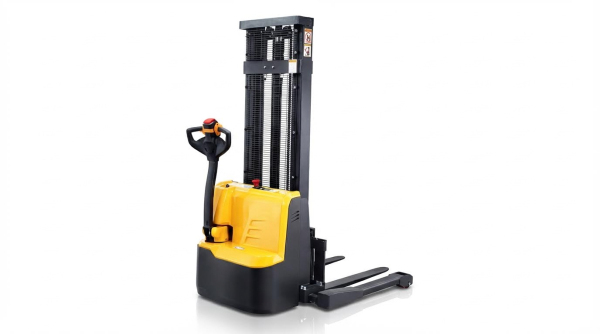
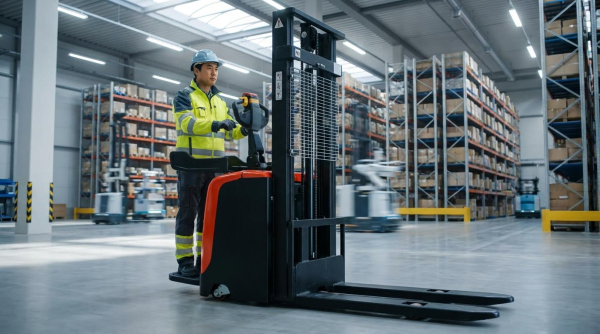
A walkie stacker is a pedestrian-operated, electric-powered truck designed to lift and move palletized loads in tight indoor spaces. Operators walk behind or alongside the truck and control travel, lift, and lowering from a tiller arm, which makes it a common choice for facilities focused on how to use a manual pallet stacker safely in narrow aisles. Typical applications include dock areas, small warehouses, and production cells where full-size forklifts are impractical. Because the operator is on foot and close to the load, the design and condition of each component directly affect safety.
Key components usually include:
- Power unit and battery pack – houses the electric drive motor, pump motor, and traction battery. Daily checks of charge level and connectors are critical to avoid mid-shift failures and unsafe slow responses. Daily inspection requirements emphasize battery condition and control mechanisms.
- Tiller handle and control head – provides throttle, direction, lift/lower, horn, and emergency-reverse or emergency-stop. Functional tests of these controls before use confirm that the truck can stop and reverse quickly if a hazard appears. Pre-operation checks should always verify emergency stop and lift/lower responsiveness.
- Mast, lift chains, and hydraulic system – convert hydraulic pressure into vertical lift. Operators raise and lower the forks via an electric pump and cylinder; chain tension and lubrication keep the mast stable under load. Undetected hydraulic leaks and compromised mast components contributed to 42% of incidents in one analysis, showing why regular inspection is essential.
- Forks and load wheels – forks support the pallet; load wheels and drive wheels carry and transmit forces to the floor. Fork cracks, bends, or deformation greater than about 10% of the original section are grounds to remove the truck from service. Routine checks of forks, hydraulics, and tires form part of best-practice daily maintenance.
In operation, the drive motor propels the battery-powered stacker, while the hydraulic pump raises the mast. Stability depends on the “stability triangle” formed by the wheels and the combined center of gravity of truck and load. When learning how to use a manual pallet jack, operators must understand that pushing rather than pulling, keeping the load low while traveling, and avoiding sudden turns keep the center of gravity inside this triangle and reduce tip-over risk. Guidance on safe speed, visibility, and pushing instead of pulling shows measurable reductions in tipping incidents.
Regulatory and training requirements
Walkie stackers are classified as powered industrial trucks, so they fall under the same core regulatory framework as other powered warehouse trucks. Anyone planning how to use a drum dolly in their facility must treat it as regulated equipment, not as a simple manual pallet jack. Regulations require employers to ensure that only trained and authorized personnel operate these units and that the equipment is inspected and maintained on a defined schedule. Guidance for electric pallet trucks and walkie stackers details employer duties for training, inspection, and maintenance.
Operator training normally combines classroom instruction, practical demonstration, and hands-on evaluation. Topics include:
- Truck controls, load charts, and rated capacity limits.
- Load assessment, weight distribution, and stability fundamentals.
- Site-specific hazards such as ramps, intersections, and pedestrian traffic.
- Emergency procedures and safe parking practices.
Certification is only valid after both knowledge and practical skills are assessed. Regulatory guidance calls for formal instruction, hands-on evaluation, and periodic recertification, typically every three years. Refresher training is also recommended after incidents or near-misses. Facilities that implemented regular refresher programs and scenario-based drills, such as emergency stops and obstacle avoidance, reported fewer lifting-related issues. One review noted a 43% reduction in lifting problems where annual refreshers were in place.
Employers must also manage traffic and environment. This includes marked travel lanes, speed control, and signage at crossings where pedestrians and walkie stackers share space. Traffic management protocols specify designated routes, right-of-way rules, and floor markings. Finally, regulations expect employers to maintain records of training, inspections, incidents, and maintenance. Documented maintenance programs and incident reporting systems are part of a compliant and safe walkie stacker operation, and they provide a feedback loop to improve procedures over time.
Pre-Use Checks And Safe Operating Steps
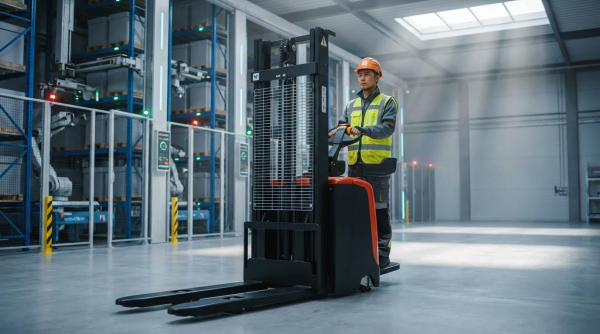
Daily inspection and functional test sequence
Before deciding how to use a manual pallet stacker safely on any shift, start with a structured daily inspection. Check the forks for cracks, bends, or wear; damage over roughly 10% of the original thickness is a withdrawal-from-service condition. Inspect mast chains for even tension, correct lubrication, and any broken or elongated links, and scan hydraulic hoses and cylinders for leaks or misalignment, as almost half of serious incidents involve undetected hydraulic or mast faults. A 2023 analysis linked about 42% of incidents to leaks or compromised mast components. Verify battery charge level, connector condition, and charger cables, and then test all controls, including horn, emergency stop, lift/lower, and direction. Daily checks on brakes, forks, and controls are a core OSHA expectation. Finish with a short no-load functional test in a clear area to confirm smooth braking, steering, and lift speed before handling product.
Quick daily checklist
- Visual: forks, mast, chains, hydraulics, wheels/tires, guards, labels.
- Power: battery charge, cable damage, connectors, indicator lights.
- Controls: horn, emergency stop, direction, lift/lower, speed control.
- Braking/steering: verify predictable stop distance and full steering range.
- Documentation: record defects and tag out equipment if any safety item fails.
Verifying capacity, load stability, and aisle conditions
Safe planning for how to use a walkie pallet truck starts with respecting capacity and stability limits. Always read the nameplate to confirm rated capacity at the specified load center, and compare this to the actual pallet weight; do not guess when loads are near the limit. Training guidance stresses that operators must stay within manufacturer capacity and maintain proper load distribution to avoid instability and accidents. Formal programs emphasize accurate weight assessment and strict compliance with load limits. Keep the heaviest side of the load against the mast, fully insert the forks, and ensure the load is unitized and wrapped or banded so it cannot shift mid-lift; audits have shown that a large share of incidents come from loads moving unexpectedly. One review found about a third of events involved poorly secured loads shifting while traveling. Before moving, walk the planned route to confirm floor condition, clearance, and traffic. Check for narrow aisles, blind intersections, slopes, wet spots, or debris, and ensure floor markings and right-of-way rules are clear in shared pedestrian areas. Traffic management rules and marked travel paths are a key part of safe powered truck operation.
| Item | What to Verify |
|---|---|
| Capacity | Load weight ≤ rated capacity at stated load center |
| Load stability | Even distribution, heaviest side to mast, forks fully under pallet |
| Aisles | Clear of obstacles, dry floor, adequate width and height clearance |
| Traffic | Pedestrian zones, blind spots, and intersections controlled |
Step-by-step travel, lifting, and stacking procedure
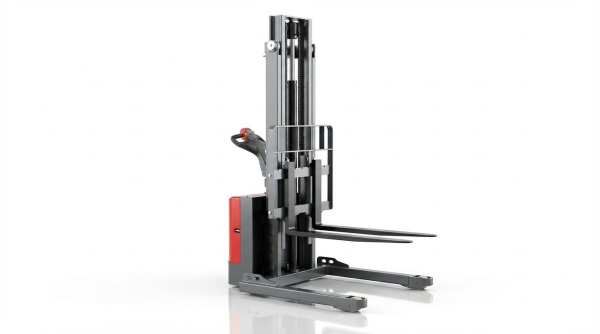
Once checks are complete, the step-by-step method for how to use a drum dolly should be consistent and repeatable. Approach the pallet squarely at low speed, align the forks with the pallet openings, and drive forward until the forks are fully inserted to support the whole pallet length. Training materials for pedestrian stackers stress assessing load weight, positioning the truck directly in front of the load, and securing it with the forks before any lift. Operators are advised to raise loads slowly and avoid exceeding rated lift height to prevent tipping. Lift the pallet just high enough to clear the floor, then travel with the load low, at walking speed, and with the operator positioned to maintain clear sightlines; slow further near people, doorways, and intersections. Guidance on safe operating practices recommends modest speeds in open areas and even lower speeds where pedestrians are present, with particular attention to visibility and blind spots. Analysis of accidents showed roughly one in five occurred when operators moved without clear rear visibility. At the rack, stop square, ensure the mast and truck are level, then raise only as high as needed to enter the target position. Ease the load into place, lower it until fully supported, then withdraw the forks slowly to avoid dragging or disturbing adjacent pallets. On ramps or uneven surfaces, move slowly, maintain a firm grip on controls, and avoid sudden turns that could compromise stability. Safety guidance calls for cautious speeds and extra attention on inclines or slippery floors.
Engineering Best Practices For Performance And TCO
Battery care, Li-ion trends, and charging safety
Good battery management is one of the fastest ways to lower total cost of ownership on a walkie stacker. For lead-acid and lithium-ion systems, keep the state of charge in a mid-band (about 20–80%) during shifts to limit stress on the cells and extend life. Dedicated charging areas should be clean, ventilated, and kept roughly within 50–86°F (10–30°C) to cut degradation risk by around one‑third in controlled tests. Use only approved chargers with automatic shutoff and clearly marked connectors to avoid mismatches and overheating.
- Schedule weekly or bi‑weekly visual checks for cable insulation, connectors, and locking devices.
- Log monthly cell‑voltage checks and investigate any variance above about 0.05 V between cells to catch weak cells early.
- Install temperature or BMS alarms at roughly 50°C (122°F) to prevent thermal events during charging in busy fleets.
Modern Li‑ion packs support opportunity and fast charging, which suits multi‑shift operations that focus on how to use a battery-powered stacker for high throughput. A hybrid charging strategy that avoids deep discharges and uses short top‑ups during breaks can extend battery life by close to 20% while keeping productivity high in field studies. Always enforce lock‑out of the stacker during charging and prevent operators from “yanking” connectors, which damages plugs and raises fire risk.
Charging safety checklist
- Verify charger rating matches battery voltage and chemistry.
- Park with drive wheel straight, brake applied, forks lowered.
- Disconnect battery before any electrical work on the truck.
- Keep metal tools and jewelry away from terminals to avoid arcing.
Load dynamics, stability triangle, and mast design limits
Understanding load dynamics is central to learning how to use a electric platform stacker safely and efficiently. The truck, load wheels, and drive wheel form a stability triangle; the combined center of gravity of truck plus load must stay inside this triangle at all times. Moving the load’s center of gravity forward, raising it, or braking hard shifts this combined center of gravity toward the triangle edge and increases tip‑over risk. Shifting a mid‑range load forward by only a few inches can reduce the effective safe capacity by more than 10–15% according to incident reviews.
| Parameter | Effect on stability | Best practice |
|---|---|---|
| Load height | Higher loads raise center of gravity and reduce margin against tip‑over. | Travel with forks as low as practical; raise only for stacking. |
| Load distance from mast | Further out shifts center of gravity forward, reducing capacity. | Keep heavy items tight to the backrest or mast. |
| Turning while elevated | Combines lateral and longitudinal forces, stressing mast and chassis. | Avoid sharp turns with raised loads; lower before steering in tight aisles. |
Never exceed the rated capacity at the specified load center given on the data plate; this rating already includes mast deflection and frame strength limits. Overloading by small percentages accelerates tire wear and mast fatigue and has been linked to a large share of mechanical failures within a year in cost analyses. Operators should verify pallet condition, ensure full fork insertion, and avoid unnecessary lift height, especially on uneven or slightly sloped floors.
Quick rules for stable stacking
- Center the load on both forks and avoid single‑fork picks.
- Keep the heaviest side of the load toward the mast.
- Reduce speed before turning; do not steer abruptly with a raised load.
- Stop and lower the load immediately if the mast or chassis behaves abnormally.
Maintenance planning, inspections, and incident tracking
Planned maintenance is a major driver of uptime and TCO for any fleet focused on how to use a manual platform stacker safely over many years. Daily pre‑use checks should cover forks, mast chains, hydraulics, brakes, steering, controls, and safety devices such as horns and emergency stops based on incident statistics. Weekly reviews can add battery health, error codes, tire wear, and hydraulic fluid levels to catch slow‑developing problems early as part of a three‑stage process. Following the manufacturer’s maintenance schedule for lubrication, chain adjustment, and electrical checks reduces unplanned downtime and supports compliance with safety rules.
- Use standardized digital or paper checklists for every pre‑shift inspection to improve consistency.
- Lock out and tag any unit with hydraulic leaks, bent forks, or defective brakes until repair.
- Track total operating hours and schedule major services on hour‑based intervals.
Incident and near‑miss tracking is just as important as mechanical maintenance. A simple system that logs collisions, overload events, and stability problems helps identify patterns in routes, shifts, or operators for targeted interventions. Facilities that combine structured inspections, scheduled maintenance, and data‑driven training updates typically see fewer failures, lower repair costs, and longer service life from each walkie stacker.
“”
Final Thoughts On Implementing Safe Walkie Stacker Use
Safe walkie stacker use depends on three linked pillars: sound engineering limits, disciplined procedures, and trained people. Geometry and load dynamics define what the truck can do without tipping or overstressing the mast. When operators keep loads low, tight to the mast, and within the nameplate rating, they keep the center of gravity inside the stability triangle and cut the risk of structural fatigue.
Daily inspections, route checks, and a fixed travel and stacking routine turn these design limits into repeatable safe behavior. Structured pre-use checks catch cracks, leaks, and control faults before they become failures under load. Clear traffic rules, marked aisles, and controlled speeds then protect pedestrians and product.
Battery care, planned maintenance, and incident tracking close the loop. They keep performance stable over years and reduce life-cycle cost. Teams that log defects, hours, and near-misses gain hard data to adjust training and procedures instead of relying on guesses.
The best practice is simple: treat every walkie stacker as engineered lifting equipment, not a hand cart. Set site-specific rules that align with the truck’s rated limits. Train and refresh operators often. Enforce inspections and lockout. This approach delivers fewer injuries, fewer breakdowns, and better long-term value from each Atomoving unit.
Frequently Asked Questions
How to Use a Walkie Stacker?
A walkie stacker is a versatile piece of material handling equipment used to lift and move pallets in warehouses. To use it effectively, follow these steps:
- Conduct pre-operation checks: Inspect for damages, ensure fluid levels are adequate, and verify that safety features like brakes and controls are functioning properly.
- Position the walkie stacker forks under the pallet by lowering them and aligning with the pallet’s openings.
- Lift the pallet slightly off the ground using the hydraulic controls.
- Move the pallet to the desired location by guiding the walkie stacker with its handle.
- Lower the pallet gently onto the storage rack or floor before removing the forks.
For more detailed safety tips, refer to this Straddle Stacker Safety Guide.
How High Can a Walkie Stacker Reach?
The maximum reach height of a walkie stacker depends on the model and manufacturer specifications. For example, some models can handle stacking and loading of pallets up to 5.5 meters high with a lift capacity of 1500 kg. Always check the equipment manual for specific details about your model’s capabilities.