Walkie stacker forklifts bridge the gap between manual pallet jacks and full-size counterbalance trucks, offering compact, electric lifting for tight warehouse spaces. This article compares core equipment types, including walkie stackers, rider stackers, and counterbalance forklifts, and explains where each fits best based on aisle width, lift height, duty cycle, and safety requirements. From engineering design and lifecycle cost to integration with warehouse management systems and cobots, it examines how technology choices affect performance and total cost of ownership. By the end, you will understand what a walkie stacker forklift is, how it differs from rider and counterbalance machines, and how to select the right configuration for your operation.
Core Types Of Stackers And Forklifts
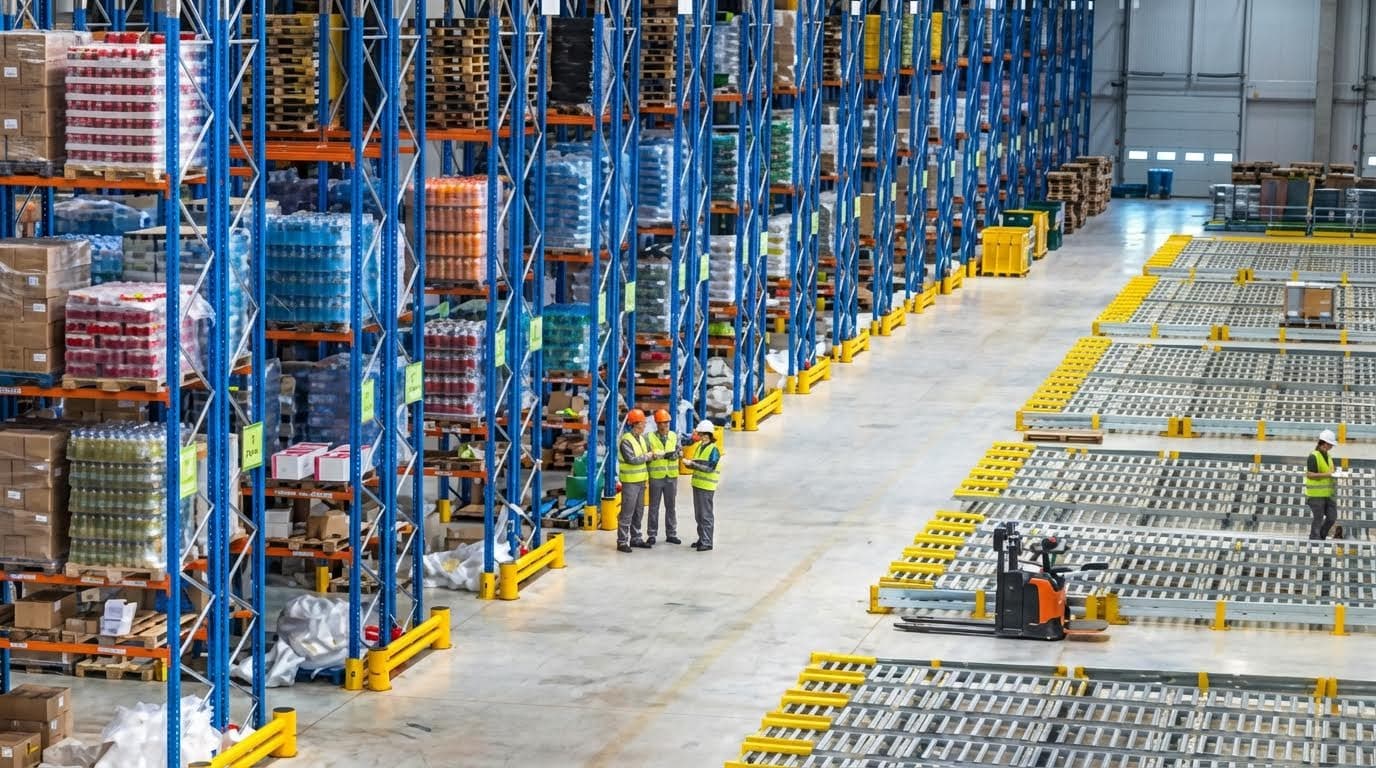
Core stacker and forklift types define how a facility answers the question “what is a walkie stacker forklift” in practice. Each architecture trades off maneuverability, load capacity, reach height, and operator productivity. Understanding walkie, rider, counterbalance, and manual variants helps engineers match equipment to aisle width, racking height, and duty cycle. The following subsections compare these designs using geometry, power, and application constraints.
Walkie Stackers And Straddle Variants
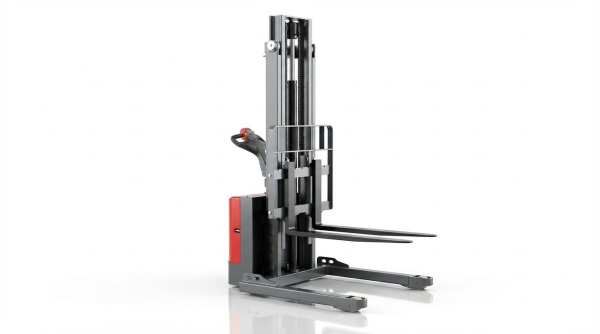
A walkie stacker forklift is a pedestrian-operated electric stacker that the operator walks behind or beside. It uses a tiller arm for steering and controls, and typically handles light to medium pallet loads over short distances. Standard walkie stackers carry load on outrigger legs beneath or beside the forks, which shift load reactions into the floor instead of a rear counterweight. This design produces a tight turning radius and compact chassis, ideal for narrow aisles and small storerooms. Straddle walkie stackers use adjustable straddle legs that sit outside the pallet footprint, allowing them to lift closed pallets and stack closer to racking. Typical lift heights range from about 1.8 m to 5.0 m, with rated capacities usually between 1.0 t and 1.6 t. Engineers favored walkies where low noise, zero exhaust emissions, and low acquisition cost outweighed the need for long-distance travel or very high throughput.
Rider Stackers And Walkie-Riders
Rider stackers and walkie-riders extend the walkie stacker forklift concept by adding a standing or fold-down platform. The operator rides on the truck instead of walking, which reduces fatigue during long shifts and repetitive cycles. These machines retain compact mast and outrigger geometries but use higher travel speeds and more robust drive systems than pure walk-behind units. Typical applications included medium to large warehouses with mixed travel distances, where operators shuttle pallets between receiving, racking, and marshalling zones. Walkie-riders often required a formal forklift license because the operator rode on the powered industrial truck, triggering stricter regulatory classification. Lift heights commonly extended from about 2.0 m up to more than 6.0 m, with capacities up to roughly 2.0 t depending on mast configuration. Engineers selected rider formats when ergonomic benefits and higher cycle productivity justified the added purchase cost and training requirements.
Counterbalance Forklifts And Walkie Counterbalance
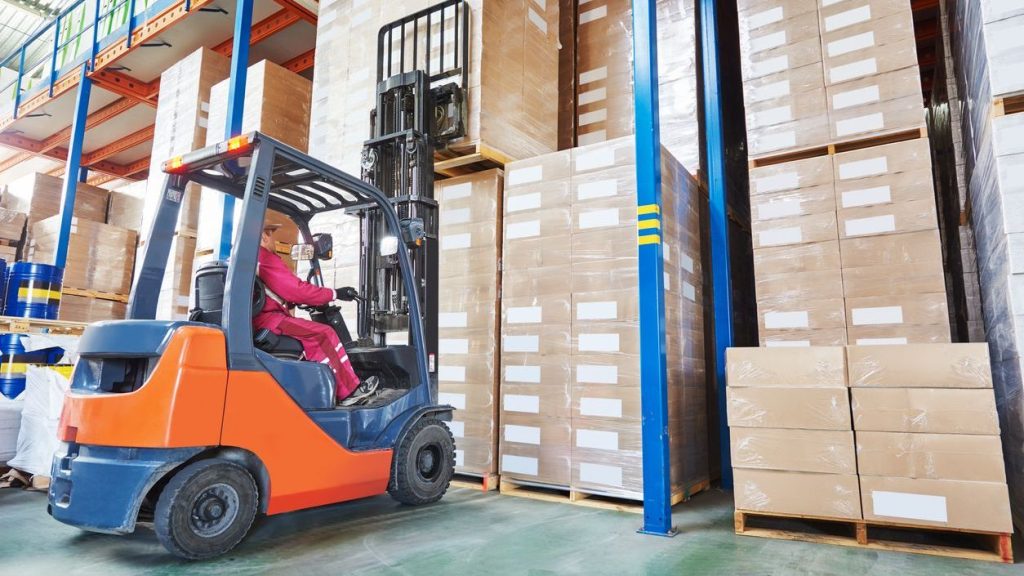
Counterbalance forklifts use a rear counterweight to balance the load on the forks, eliminating front outriggers or straddle legs. This geometry allows them to handle standard pallets directly from the floor, dock plates, or truck beds without interference from support legs. Electric counterbalance trucks usually feature sit-down or stand-up operator compartments, higher travel speeds, and lift capacities of several tonnes. They suit long horizontal runs, intensive loading docks, and high-bay racking with robust mast and hydraulic systems. Walkie counterbalance stackers apply the same counterweight principle in a smaller walk-behind format. They remove straddle legs, which reduces interference in narrow aisles and allows work in tighter rack openings, but they increase overall truck length and required turning radius. Typical lift heights ranged from about 2.0 m to 6.0 m, with moderate capacities. Engineers compared walkie counterbalance units against sit-down forklifts where emissions constraints, tighter spaces, or lower budgets made full forklifts less attractive.
Manual Stackers And Low-Duty Uses
Manual stackers rely on mechanical or hydraulic hand-pump systems instead of electric traction and lift motors. Operators typically push or pull the unit and actuate a foot or hand pump to raise the forks, which limits feasible load mass and cycle frequency. These devices usually provided low to moderate lift heights and modest capacities, making them unsuitable for intensive pallet racking operations. They fit low-duty scenarios such as occasional equipment lifting, maintenance tasks, or light pallet handling in workshops and small retail backrooms. Because manual stackers lacked powered drive, they imposed higher ergonomic loads on operators, especially on ramps or rough floors. Engineers specified manual stackers only where volumes, travel distances, and lift heights remained low, and where capital budgets could not justify powered walkie stacker forklifts or rider solutions.
Application Scenarios And Selection Criteria
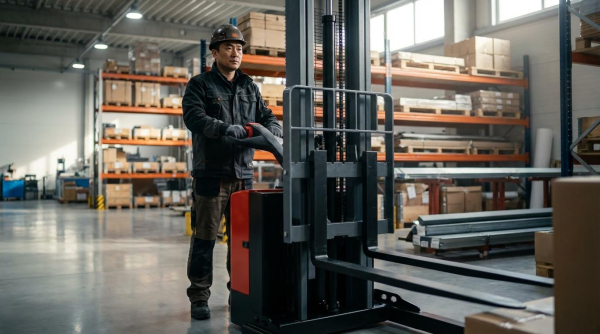
When engineers ask “what is a walkie stacker forklift” in a practical sense, they usually mean “where does this machine outperform rider or counterbalance trucks.” Application engineering focuses on aisle width, lift height, duty cycle, load spectrum, and regulatory constraints. Matching these parameters to walkie stacker, walkie-riders, or counterbalance forklifts determines lifetime cost, safety margins, and throughput. The following criteria help structure that selection process for warehouses, factories, and logistics hubs.
Narrow Aisles, Height, And Turning Radius
Walkie stacker forklifts use a compact chassis and a tiller arm, which minimizes their turning radius. They operate effectively in aisles close to pallet width plus clearance, where sit-down counterbalance forklifts cannot turn safely. Electric walkie stackers with straddle or reach masts suit short to medium lift heights, typically up to about 5–6 m depending on model. For mid-level racking in tight customer zones or storerooms, walkie and walkie straddle stackers maximize storage density. Counterbalance forklifts become preferable once lift heights increase, load centers grow, or the facility includes dock loading and outdoor yards. In very tight aisles, engineers may also compare walkie reach stackers against articulated or VNA trucks, using turning-circle and stability calculations to justify the choice.
Load Capacity, Duty Cycle, And Throughput
Defining “what is a walkie stacker forklift” from a capacity perspective means recognizing its role as a light to medium-duty stacker. Walkie stackers typically handle moderate pallet weights and lower daily pallet counts than full counterbalance fleets. They work best in operations with frequent starts and stops, limited load mass, and constrained floor space. For high-throughput cross-docking or heavy unit loads over several tonnes, electric counterbalance forklifts deliver higher hydraulic power and mast stiffness. Ride-on stackers and walkie-riders bridge the gap when throughput increases but aisles remain narrow. Engineers should quantify peak pallet moves per hour, average load weight, and lift frequency to size motors, batteries, and hydraulic systems correctly.
Travel Distance, Operator Fatigue, And Ergonomics
Lift stacker forklifts require the operator to walk behind or alongside the truck, guided by a tiller. This configuration minimizes machine size but increases walking distance for the operator on long travel routes. For compact production halls or short shuttle movements between adjacent racks, walking is acceptable and keeps capital cost low. Once travel distances extend across large warehouses or between distant zones, operator fatigue and walking time start to dominate operating cost. In those cases, walkie-rider or stand-on rider stackers with platforms reduce fatigue and increase average travel speed. Sit-down counterbalance forklifts provide the highest comfort for long shifts and outdoor use but need wider aisles and turning space. Ergonomic evaluation should include handle height, control effort, vibration, and required walking distance per shift.
Safety, Licensing, And Regulatory Compliance
Understanding what a battery-powered stacker forklift is also involves its regulatory status and safety profile. Walk-behind walkie stackers usually fall under less stringent licensing requirements than ride-on or sit-down forklifts, depending on local regulations. However, safety obligations remain strict: operators must receive formal training, perform pre-use inspections, and follow site traffic rules. Ride-on stackers and rider forklifts often require a full forklift license because they reach higher speeds and lift heights. Engineers must design routes with safe gradients, typically below about 7° for loaded travel, and enforce maximum lift heights during transport. Compliance also includes battery charging procedures, exclusion zones around raised loads, and restrictions on carrying passengers or lifting people. Selecting between walkie, rider, and counterbalance equipment should always incorporate a documented risk assessment and alignment with current safety standards.
Engineering, Lifecycle, And Technology Factors
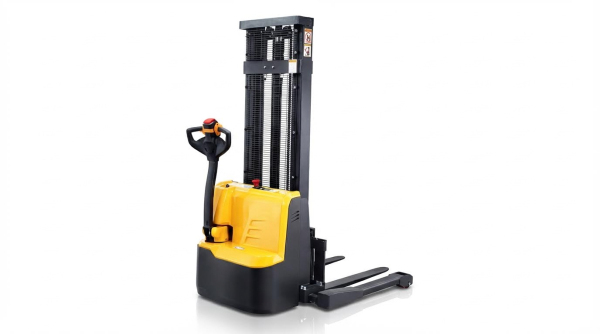
Engineering choices in walkie stacker forklifts strongly influence safety, uptime, and lifecycle cost. Understanding powertrain, hydraulics, mast design, energy use, and digital integration helps answer what is a walkie stacker forklift from an engineering perspective rather than only as a basic warehouse tool.
Powertrain, Hydraulics, And Mast Design
Walkie stacker forklifts typically used electric traction motors and electro‑hydraulic lift systems. The drive unit converted battery DC power into tractive effort at the drive wheel through a compact gearbox. Engineers sized motors and reduction ratios to balance acceleration, gradeability, and precise low‑speed control in narrow aisles. Hydraulics powered lifting and tilting, using gear or vane pumps driven by electric motors, with relief valves to protect against overload and cylinder failure.
Mast design determined maximum lift height, residual capacity, and compatibility with racking. Single, two‑stage, or three‑stage masts offered different collapsed heights and free lift, critical in low doorways and mezzanine applications. Walkie reach and straddle stackers used pantograph or extending carriage mechanisms to reach into racking or across vehicle decks. Structural engineers validated mast sections against bending, torsion, and deflection limits according to relevant industrial truck standards, while also optimizing visibility through nested channels.
Because walkie stackers operated in tight spaces, designers minimized chassis length and optimized steer geometry around the drive wheel. Frame and outrigger leg design controlled load distribution, especially in straddle and counterbalance walkie configurations. The interaction between wheelbase, mast offset, and battery mass defined stability triangles and tipping margins. These engineering trade‑offs directly affected how safely the truck could handle rated loads at height in real warehouses.
Energy Use, Emissions, And Total Cost Of Ownership
Electric walkie stacker forklifts operated with zero tailpipe emissions and very low noise, which suited indoor logistics and food or pharmaceutical environments. Their energy use depended on duty cycle, lift height, and travel profile, with traction and hydraulic demand dominating consumption. Engineers specified battery capacity in ampere‑hours to cover typical multi‑shift patterns, while matching chargers to avoid over‑ or under‑charging that shortened battery life. Compared with internal‑combustion counterbalance trucks, walkie stackers reduced local emissions and eliminated fuel handling infrastructure.
Total cost of ownership (TCO) included acquisition cost, energy, maintenance, downtime, and residual value. Walkie stackers usually had lower upfront prices than sit‑down forklifts and required fewer wear parts, which reduced lifecycle maintenance expense. Electricity costs per tonne‑kilometre of moved goods were typically lower than diesel or LPG, especially when operators respected correct charging practices. However, batteries and chargers represented significant capital items, and incorrect charging or high‑temperature operation could accelerate degradation.
When evaluating what is a walkie stacker forklift for a given project, engineers compared TCO across alternative equipment types. For short travel distances, moderate lift heights, and light to medium loads, walkie stackers offered favorable cost and energy profiles. For long horizontal runs or heavy loads, ride‑on or counterbalance solutions could offset higher purchase cost with productivity gains. Lifecycle modeling tools helped quantify these trade‑offs using site‑specific throughput data and energy tariffs.
Maintenance, Diagnostics, And Predictive Tools
Walkie stacker forklifts relied on disciplined maintenance to sustain safe lifting performance and availability. Routine tasks included visual inspections of forks, mast rollers, chains, and welds, as well as checks on drive wheels, load wheels, and tiller linkages. Technicians monitored hydraulic oil level and condition, looking for aeration, contamination, or leaks at hoses and fittings. Electrical inspections covered contactors, wiring harnesses, emergency stop switches, and battery connectors to prevent heat buildup and intermittent faults.
Modern walkie stackers incorporated electronic controllers that supported built‑in diagnostics and fault codes. Service personnel used handheld tools or display menus to read error histories, test actuators, and calibrate sensors. This reduced troubleshooting time compared with older relay‑based systems and improved first‑time‑fix rates. Event logs also captured overloading, impacts, and low‑voltage operation, giving engineers objective data on misuse that accelerated wear or caused failures.
Predictive maintenance approaches increasingly used run‑time counters, lift cycle counts, and battery charge histories to schedule service before breakdowns. Some fleets integrated telematics modules that transmitted utilization and alarm data to maintenance management software. For operators asking what is a walkie stacker forklift in a modern warehouse, it became not just a simple manual pallet jack but a connected asset that generated operational data. This shift supported condition‑based replacement of chains, wheels, and hydraulic components, improving uptime and reducing unplanned stoppages.
Integration With WMS, Cobots, And Digital Twins
Engineering teams started to integrate walkie stacker forklifts into wider intralogistics systems that included warehouse management systems (WMS), collaborative robots, and simulation models. Basic integrations used barcode or RFID terminals on the truck, allowing operators to receive tasks from the WMS and confirm pallet moves in real time. This reduced paper handling and improved inventory accuracy, especially in high‑turnover racks served by walkie reach or straddle stackers. Task interleaving logic in the WMS optimized travel paths and reduced empty runs.
In advanced facilities, walkie stackers shared space and workflows with cobots and automated guided vehicles. Safety engineering focused on clear traffic zoning, speed limits, and visual or audible warnings to prevent conflicts between manual and automated flows. Sensors and geofencing helped enforce low‑speed areas and pedestrian‑only zones. Engineers considered the maneuverability and stopping distances of walkie units when designing mixed‑mode aisles and transfer points between automation and manual handling.
Digital twins of warehouses increasingly modeled fleets of walkie stacker forklifts alongside conveyors and shuttles. These virtual models simulated order profiles, rack layouts, and equipment mixes to answer what is a walkie stacker forklift best suited for within a specific network. By adjusting parameters such as lift speed, acceleration, and battery change time, planners could predict bottlenecks and evaluate alternative truck types before purchasing. Over time, feedback from telematics and WMS data refined these models, closing the loop between design assumptions and operational reality.
Summary: Choosing The Right Stacker Or Forklift
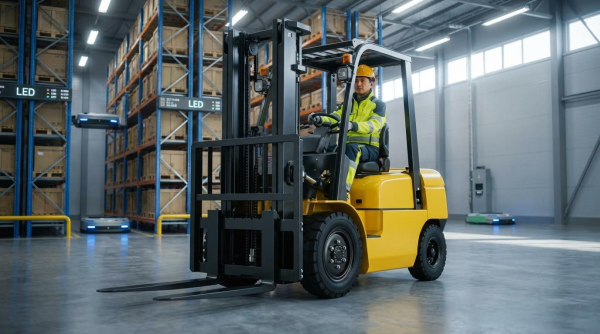
Walkie stacker forklifts answered the question “what is a walkie stacker forklift” by providing a compact, electric, walk‑behind solution for light to medium pallet handling. They suited short travel distances, narrow aisles, and moderate lift heights, especially in small warehouses or production cells. Rider stackers and walkie‑riders extended that concept for higher throughput and longer runs, while counterbalance forklifts addressed heavy loads, truck loading, and mixed indoor–outdoor work. Manual stackers filled very low‑duty, low‑height niches where capital budgets were tight and cycle volumes stayed minimal.
From an engineering and lifecycle perspective, the choice between walkie, rider, and counterbalance equipment depended on powertrain type, mast geometry, hydraulic performance, and energy strategy. Electric walkie stackers and walkie counterbalance units minimized emissions and noise, and they reduced operating cost per pallet in indoor environments. Counterbalance forklifts delivered higher capacities and mast stiffness but required larger turning radii and stricter licensing and training regimes. Integration with warehouse management systems, cobots, and digital twins increasingly influenced selection, because data connectivity supported optimization of fleet size, charging infrastructure, and preventive maintenance.
In practice, engineers defined the right solution by mapping aisle width, rack height, pallet type, and daily pallet movements, then matching these parameters to load charts and duty cycles. Walkie stackers worked best where operators walked less, stopped often, and valued maneuverability over speed. Rider stackers and walkie‑riders fit medium to high throughput with repetitive routes. Counterbalance forklifts remained the tool of choice for high‑bay storage, heavy or offset loads, dock work, and mixed terrain. Future fleets would likely combine these platforms, using data‑driven sizing and safety‑led ergonomics to balance productivity, cost, and regulatory compliance.