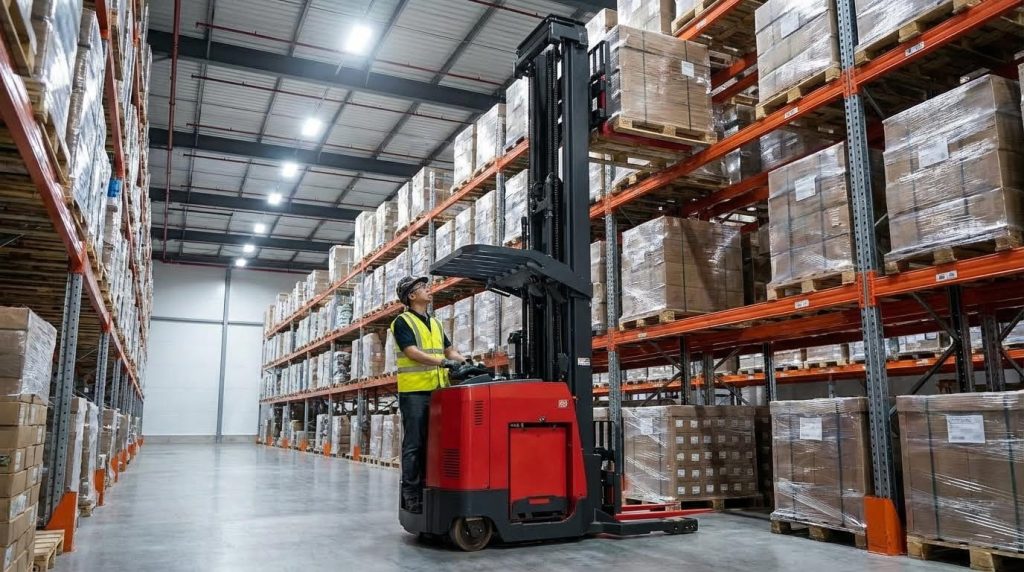
Knowing how to lift a pallet with a forklift safely is about physics, visibility, and disciplined steps, not guesswork. This guide walks operators through load centers, pallet prep, fork positioning, mast control, and inspections so you can move pallets efficiently while staying within OSHA and ANSI safety expectations.
Using clear steps, real load-handling numbers, and practical examples, you will learn how to approach, lift, travel, and stack without tipping the truck or damaging the load. Apply these methods in warehouses, docks, and trailers to cut incidents and extend equipment life.
Fundamentals Of Forklift Load Handling
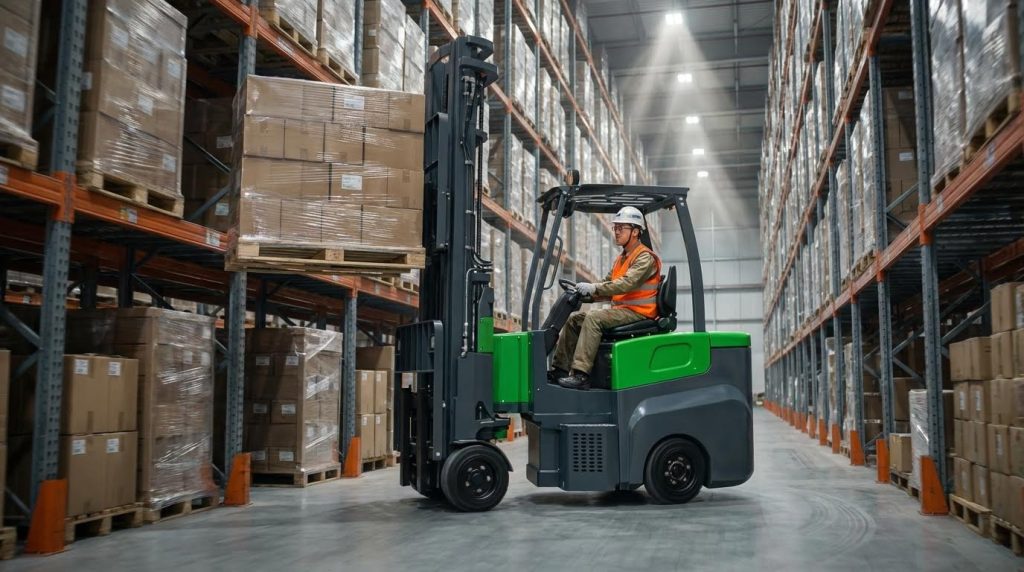
Fundamentals of load handling explain the physics that keep a forklift upright so you can safely follow any step‑by‑step method for how to lift a pallet with a forklift. Master these basics before you touch the controls.
- Goal: Keep the combined center of gravity inside the stability triangle – prevents side and forward tipovers.
- Tools: Capacity plate, load center, pallet condition, and load securing – turns theory into simple visual checks.
- Result: Predictable, stable lifts even with heavy or tall pallets – cuts damage and near‑miss incidents.
Load center, capacity plate, and stability triangle
Load center, capacity plate, and stability triangle work together to define the safe “envelope” for how to lift a pallet with a forklift without tipping. If you ignore any one of them, the truck can become unstable even below its nominal capacity.
| Concept | What It Means | Typical Value / Rule | Operational Impact |
|---|---|---|---|
| Load center | Horizontal distance from fork face to load’s center of gravity | 610 mm (24 in) rating is common for pallets | Longer loads shift the center forward and effectively reduce capacity |
| Capacity plate | Manufacturer plate showing rated load, load center, and mast position | Capacity only valid at the stated load center and mast configuration | Tells you if a specific pallet height/length is safe before you lift |
| Stability triangle | Imaginary triangle between front wheels and steer axle pivot | Combined center of gravity must stay inside this triangle | Off‑center or high loads can move the center outside and cause tipover |
| Load distribution | Where the heaviest part of the load sits on the pallet | Heaviest part nearest front wheels | Improves longitudinal stability and reduces rear‑wheel lift risk |
The load center is the core number that links the pallet to the forklift’s physics. It is measured from the vertical face of the forks (or backrest) to the load’s center of gravity in the horizontal direction. Many counterbalance trucks are rated at a 610 mm (24 in) load center for standard pallets, so if you pick up a longer load and the center of gravity moves out to 700–800 mm, your real safe capacity drops even if the scale reading is below the plate rating.
The capacity plate converts this physics into a quick visual rule. It lists the maximum rated load, the rated load center, and often different capacities for various mast heights or attachments. Because the capacity is only valid at the specified load center, an off‑center, oversized, or poorly stacked pallet can exceed the safe limit even when its mass in kg looks acceptable.
- Before lifting: Read the plate and compare it to your pallet weight and dimensions – confirms the truck is suitable.
- Watch load length: Long pallets or overhanging loads move the center forward – treat them as heavier than they are.
- Avoid off‑center stacking: Uneven weight left/right shifts the center sideways – increases side‑tip risk when turning.
All of this ties into the stability triangle. The truck and load have a combined center of gravity that moves like a pendulum when you raise the mast, tilt forward, brake, or drive on a slope. As you lift a pallet higher or extend the load center, that combined center moves toward the front axle; if it crosses the triangle edge, the truck tips. That is why forward tilt with an elevated pallet is restricted and why operators are taught to travel with the mast tilted slightly back.
💡 Field Engineer’s Note: In real warehouses, the fastest way to get into trouble is combining a long pallet, a clamp or other attachment, and a high lift. Every millimeter you add in front of the fork face acts like a lever arm; even a 10–15% forward shift in load center can wipe out your safety margin on a full‑height lift.
How to estimate load center on a typical pallet
For a uniformly loaded 1,200 mm long pallet, the load center is about 600 mm from the fork face when the pallet is fully on the forks. If heavy items are stacked only on one half of the pallet, the center of gravity moves toward that side or end, effectively increasing the load center and reducing safe capacity.
Pallet and load preparation for safe lifting
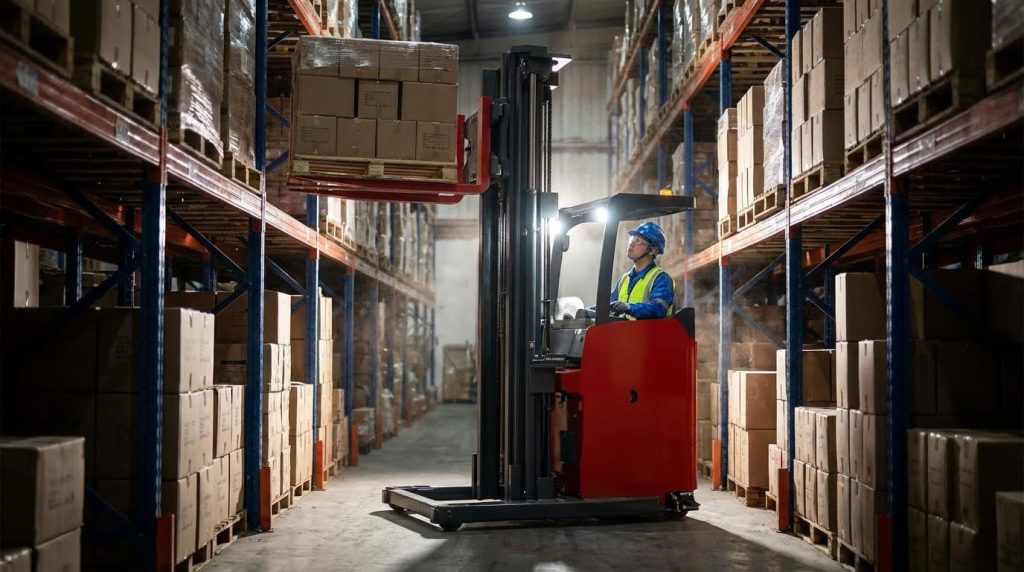
Pallet and load preparation makes the difference between a stable, predictable lift and a sudden collapse even when you follow every other rule on how to lift a pallet with a forklift. The goal is a sound pallet, centered load, and secure packaging before the forks ever move.
| Preparation Item | Good Practice | Risk If Ignored | Operational Impact |
|---|---|---|---|
| Pallet condition | Use pallets with intact deck boards and stringers | Broken boards can fail under fork blades | Prevents dropped loads and fork punctures into product |
| Load stability | Secure with wrap or banding if damaged or loose | Cartons slide or fall when lifting or braking | Reduces product loss and keeps aisle clear of falling items |
| Load centering | Center load on pallet and between forks | Side‑heavy pallet can cause lateral tip or rack strikes | Improves steering control and reduces rack and mast impacts |
| Heaviest part location | Place heaviest items closest to the fork face/front wheels | Rear‑heavy pallets increase forward tip risk when tilted | Keeps the combined center of gravity further inside stability triangle |
| Fork engagement | Insert forks fully, at least two‑thirds of load length | Short engagement can punch through boards or tip the pallet | Spreads weight over more deck boards and reduces point loading |
Before you approach, visually scan the pallet: look for broken top boards, missing bottom boards, or twisted stringers. A 1,000 kg load on a pallet with a cracked center stringer can fail the moment the forks lift, because all the weight concentrates on one or two boards instead of the full footprint. Reject or re‑stack onto a sound pallet rather than trying to “baby” a bad one with delicate driving.
Next, make sure the load itself is stable. OSHA guidance requires securing damaged or loose merchandise by wrapping or banding before lifting. Mixed‑size cartons, drums on pallets, or tall, narrow stacks are especially prone to shifting. Use stretch film, corner boards, or straps so the load behaves like a single rigid block when you accelerate, brake, or turn.
- Center the pallet: Align the pallet openings with the forks so the pallet sits square – avoids diagonal loading and rack strikes.
- Adjust fork width: Set forks as wide as practical under the load – improves lateral stability.
- Check overhead clearance: Confirm no beams, sprinklers, or doors will contact the load as you raise it – prevents snagging and partial pallet pull‑offs.
When you finally insert the forks, they should be level and at the correct entry height. OSHA recommends placing the forks under the load as far as possible and at least two‑thirds of the load length. This spreads the load across more deck boards and reduces the bending stress at the fork tips. Be careful not to drive the forks through to the opposite side when pallets are closely stacked, or you can lift or damage the far pallet as you back out.
💡 Field Engineer’s Note: In high‑throughput docks, most “mystery” product damage comes from poor pallet prep, not bad driving. A 20‑second check for broken boards, off‑center heavy items, and loose wrap before you lift saves far more time than dealing with a collapsed pallet in a congested aisle.
Quick pre‑lift checklist for any pallet
Ask yourself: Is the pallet structurally sound? Is the load wrapped or banded if unstable? Is the heaviest part toward the fork face? Can my forks go at least two‑thirds under the load without hitting another pallet? Is the total weight within the capacity plate rating at this load center and lift height? If all are yes, you are ready to move to the next step of lifting.
Step‑By‑Step Procedure To Lift A Pallet
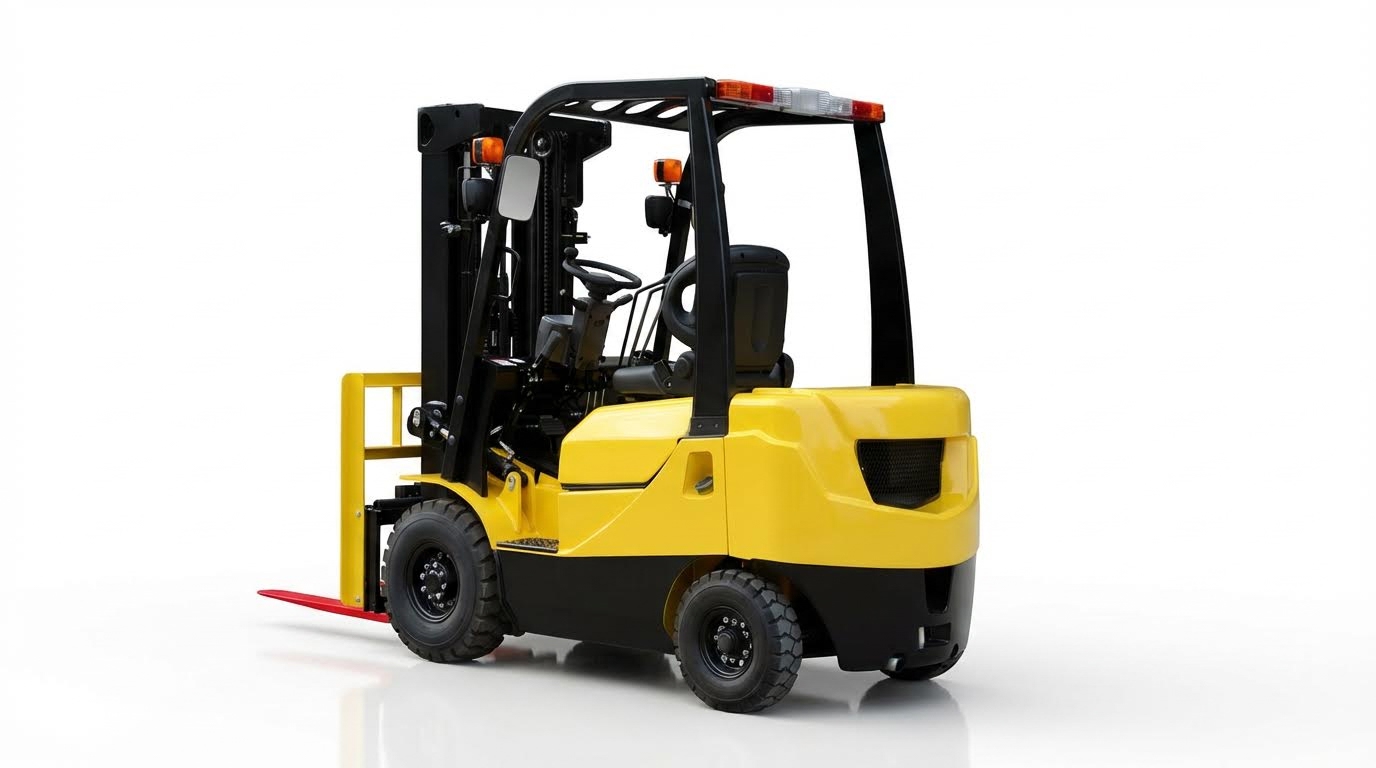
This section explains how to lift a pallet with a forklift step by step so you stay within capacity, keep the truck stable, and avoid damage to product, racking, or dock equipment.
The process below assumes you already have a stable, centered load on a sound pallet and a pre‑use‑checked truck.
Approaching the pallet and fork positioning
To safely approach a pallet with a forklift, you must control speed, line up square, and fully support the load with correctly spaced forks before lifting.
- Step 1: Verify load and pallet condition: Confirm the load is stable, wrapped or banded if needed, and within the truck’s rated capacity and load center – prevents tipovers and falling product. Capacity and load center guidance
- Step 2: Approach straight and slow: Drive in a straight line toward the pallet at low speed and stop about 200–300 mm in front – keeps forks aligned and gives space to level them. Recommended stopping distance
- Step 3: Set to neutral and apply brake: Place the direction control in neutral and set the brake before raising or lowering forks – prevents unintended creep while you position the forks. Neutral and brake requirement
- Step 4: Level the forks to pallet entry: Adjust mast and carriage so forks are level and at the correct height for the pallet openings – prevents gouging boards and binding.
- Step 5: Insert forks fully under the load: Drive slowly forward until the forks extend as far as possible, ideally fully under the pallet, and at least two‑thirds of the load length – maximizes support and reduces fork heel overload. Fork length guidance
- Step 6: Adjust fork spread and load centering: Space the forks as wide as the pallet allows and center the load between them, with the heaviest side toward the mast – keeps the center of gravity inside the stability triangle. Load distribution guidance
- Step 7: Check for obstructions around forks: Confirm adjacent pallets, boards, or floor debris will not snag when lifting – prevents sudden load shifts or pallet breakage.
| Approach / Fork Action | Key Metric / Rule | Operational Impact |
|---|---|---|
| Stopping before pallet | 200–300 mm gap | Gives space to level forks and check height before entry. |
| Fork insertion depth | ≥ 2/3 of load length | Reduces risk of pallet nose‑diving or board failure. |
| Load center (typical rating) | ≈ 610 mm from fork face | Staying within this keeps the truck within rated capacity. |
| Fork spread | As wide as pallet allows | Improves lateral stability of tall or uneven loads. |
Why full fork insertion matters
Partial insertion shifts the effective load center forward. That can exceed the rated 610 mm load center even if the kg value is under the plate rating, sharply increasing tipover risk.
💡 Field Engineer’s Note: In tight aisles, operators often “short fork” pallets to avoid hitting the load behind. That quietly pushes the load center forward. If you cannot insert forks fully, treat the load as de‑rated and consider restacking or using a different truck.
Lifting, mast tilt, and travel height control
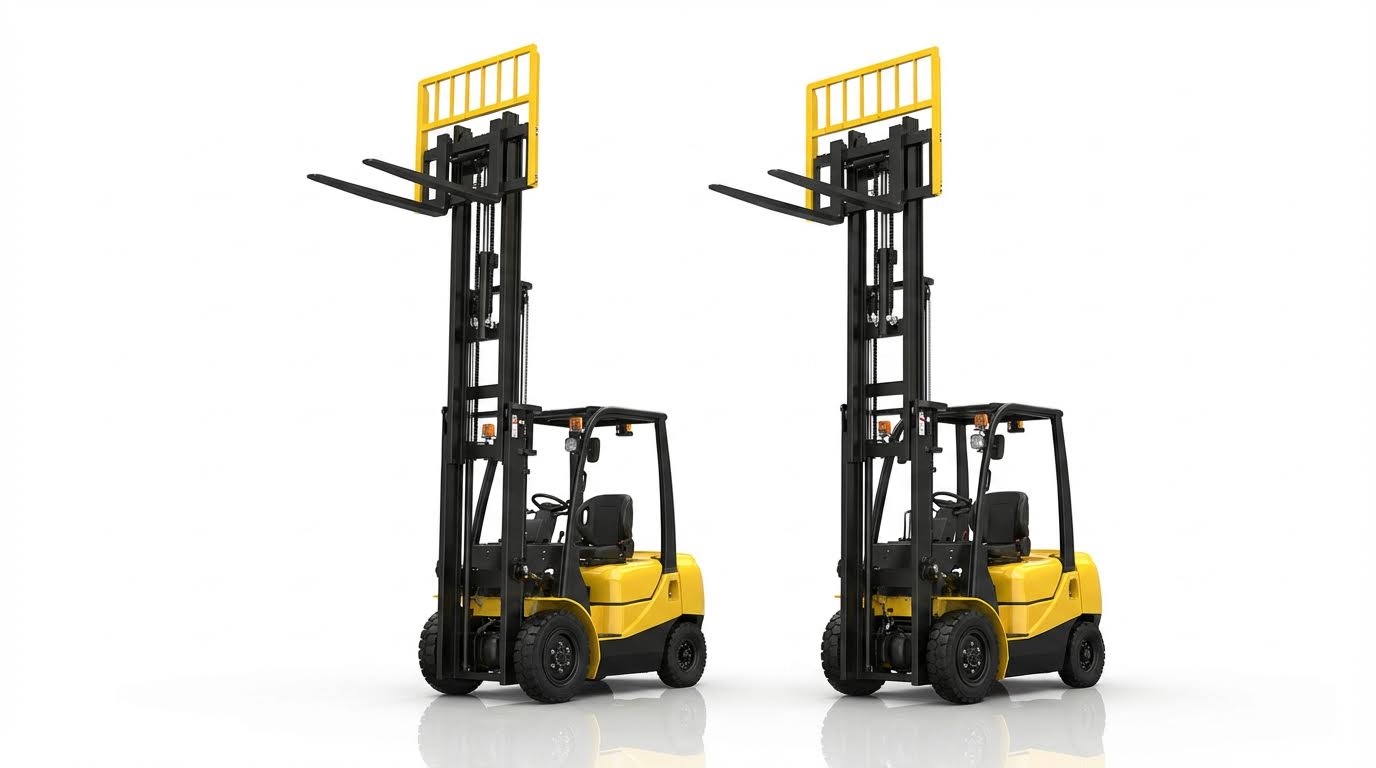
To lift a pallet safely and travel with it, you must control vertical movement, use mast tilt correctly, and keep the load at a low, stable travel height with clear overhead space.
- Step 8: Check overhead clearance before lifting: Look for beams, sprinklers, doors, and lights above the load path – prevents collisions with overhead fixtures. Overhead clearance measurements
- Step 9: Smoothly raise the pallet off the support: Lift until the pallet clears the supporting surface by roughly 100 mm, watching for snag points – ensures a clean break without dragging. Recommended lift clearance
- Step 10: Apply slight back tilt to seat the load: Tilt the mast back just enough so the load rests against the backrest – locks the load to the carriage and improves stability. Mast tilt recommendations
- Step 11: Return hydraulic controls to neutral: After reaching the desired height and tilt, center the levers – prevents unintended drift while you start to travel.
- Step 12: Set safe travel height: Lower the load so the fork tips are roughly 100–150 mm above the floor and heels about 50 mm – keeps the center of gravity low while clearing floor irregularities. Travel height guidance
- Step 13: Travel with mast tilted slightly back: Keep a slight rear tilt during travel and never travel with a forward‑tilted raised load – reduces risk of load spilling or the truck tipping forward. Mast tilt while traveling
- Step 14: Control speed and steering: Drive at walking pace, reduce speed on wet or uneven floors, and avoid sharp turns with an elevated load – prevents lateral tipovers and sliding. Travel speed and surface rules
| Lifting / Travel Parameter | Typical Value / Rule | Operational Impact |
|---|---|---|
| Initial lift height | ≈ 100 mm above support | Clears boards or stack without lifting higher than necessary. |
| Travel fork tip height | ≈ 100–150 mm | Clears floor joints and debris while keeping COG low. |
| Travel fork heel height | ≈ 50 mm | Prevents heels from striking ramps and dock plates. |
| Mast tilt when traveling | Slight back tilt only | Holds load against backrest; avoids forward tip risk. |
Forward tilt and why it is dangerous in motion
Forward tilt shifts the combined center of gravity toward the fork tips. With any braking or a bump, that shift can cross the front axle line, causing a forward tipover even if the load is technically under the rated kg capacity.
💡 Field Engineer’s Note: In cold storage, hydraulic oil thickens and mast response slows. Operators tend to “over‑pull” the tilt lever. Train crews to pause between inputs and verify mast angle visually, especially when handling tall, shrink‑wrapped pallets.
High stacking, dock work, and confined clearances
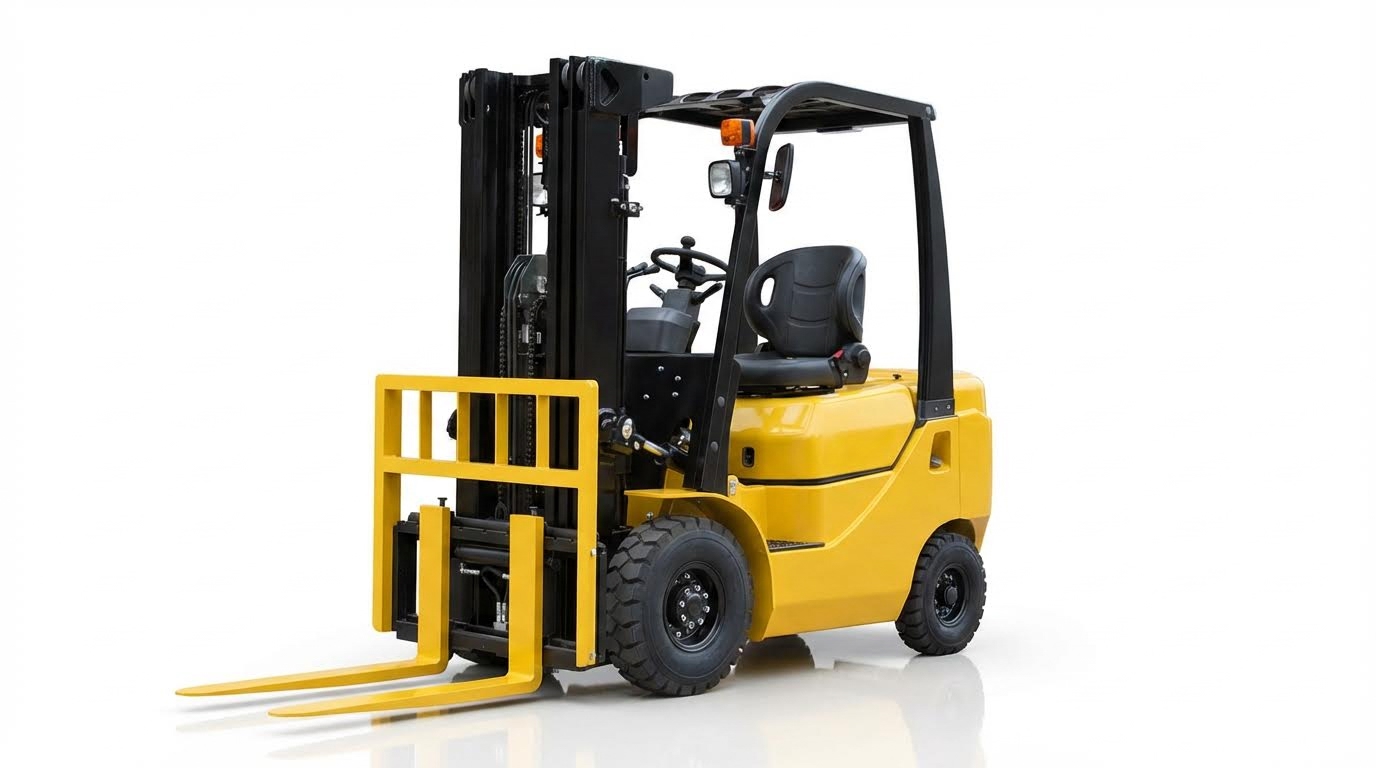
When learning how to lift a pallet with a forklift in real warehouses, you must adapt the basic steps for high stacking, dock loading, and tight clearances where small mistakes have big consequences.
- Step 15: Plan stack pattern for high tiers: Place heaviest pallets on the bottom levels and lighter ones higher up – keeps the racking or stack stable as height increases. High tiering recommendations
- Step 16: De‑rate loads at full mast height: Use smaller loads as the mast nears maximum fork height (MFH), especially on reach trucks – reduces overturning moment at full extension. MFH and height data
- Step 17: Use slow, deliberate mast movements aloft: When placing or removing high pallets, raise, reach, and tilt using small corrections only – limits sway and rack contact.
- Step 18: Level forks precisely before entry/withdrawal: At high levels, ensure forks are perfectly level going into and out of pallets – prevents racking strikes and pallet damage.
- Step 19: Dock and trailer entry checks: Before driving into a trailer or railcar, ensure brakes are set, wheels chocked, and dock plates or boards are secured and rated for the combined truck and load weight – prevents trailer creep, roll‑away, or plate collapse. Trailer safety Dock safety measures
- Step 20: Keep clear of dock edges: Drive slowly on docks, avoid backing right up to the edge, and obey painted or physical barriers – prevents the truck from going off the dock.
- Step 21: Manage confined overhead and side clearances: In low doors or tight tunnels, know your overall raised and lowered heights, and raise or lower before entry, not under the obstruction – prevents impacts with lintels, pipes, and conveyors. Height measurement guidance
- Step 22: Lower before turning in tight aisles: When maneuvering in narrow aisles, lower the pallet to a safe travel height before making turns – reduces mast sway and rack strikes.
| Scenario | Key Check / Metric | Operational Impact |
|---|---|---|
| High stacking | Heaviest loads on bottom tiers | Improves stack stability and reduces rack overload at height. |
| Full mast extension | Use reduced load vs. plate rating | Compensates for increased overturning moment. |
| Dock plate use | Rated for combined truck + load | Prevents plate failure under dynamic loading. |
| Trailer entry | Brakes set, wheels chocked | Prevents trailer movement during loading/unloading. |
| Low doorway | Compare OALH/OARH to opening height | Avoids mast or backrest striking the frame. |
How to quickly estimate combined dock load
Add the truck’s rated capacity (for example 2,000 kg) to your actual pallet mass (for example 1,200 kg
Safety Checks, Inspections, And Technology
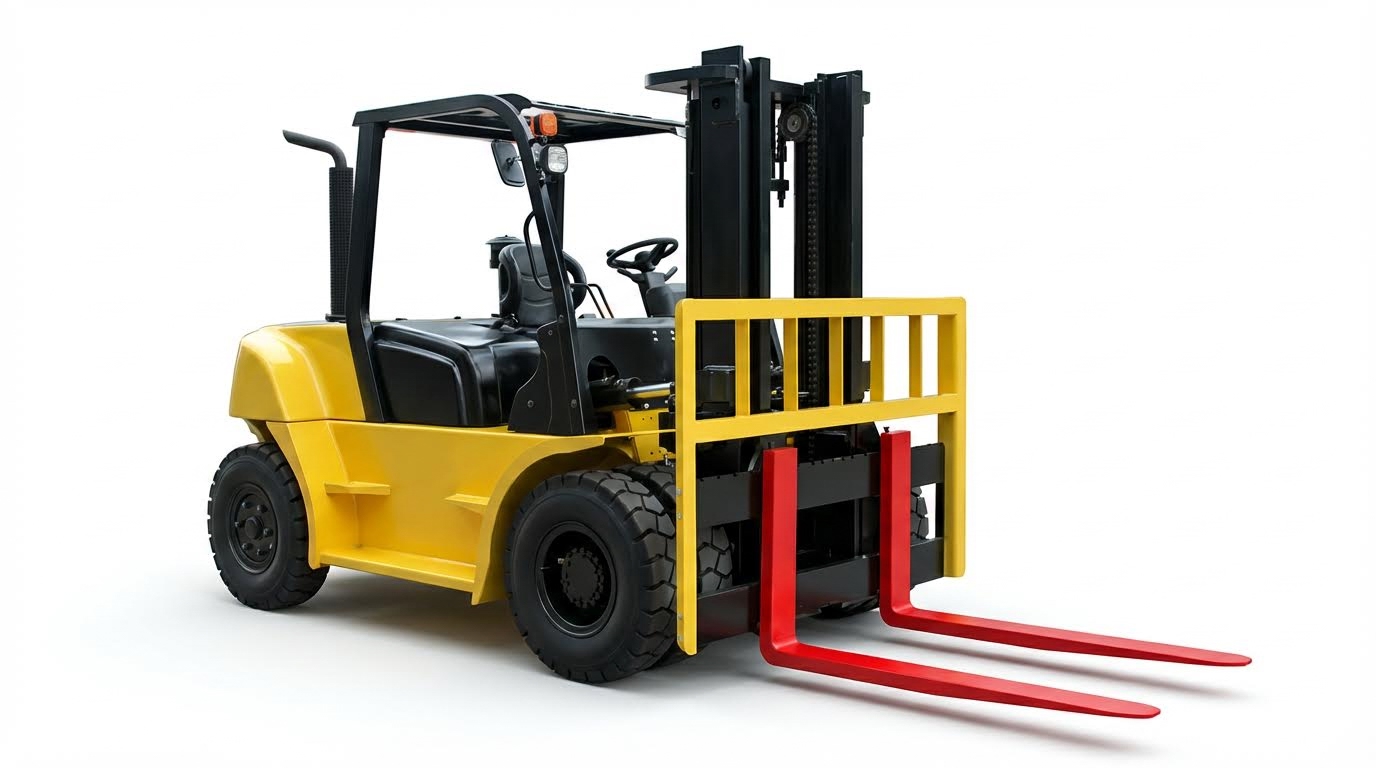
Safety checks, inspections, and modern technology form the control system that makes how to lift a pallet with a forklift repeatable, compliant, and low‑risk in daily operations.
Before every lift, the operator must confirm the truck is mechanically sound, the power source is safe, and the operator and site both comply with OSHA/ANSI rules.
💡 Field Engineer’s Note: In busy warehouses, most “mystery” pallet drops trace back to skipped pre‑use checks or ignored warning lights, not dramatic driving errors. Build inspection time into shift planning, not into unpaid overtime.
Pre‑use inspection and defect lockout
Pre‑use inspection and strict defect lockout ensure the forklift can safely handle rated loads before you attempt to lift a pallet.
- Daily requirement: Inspect at the start of each shift – catches issues before the first pallet moves.
- Operator responsibility: The assigned driver performs and signs off – creates personal accountability.
- Lockout rule: Any critical defect means “out of service” – prevents unsafe trucks from re‑entering traffic.
| Component | What to Check | Typical Defects | Operational Impact |
|---|---|---|---|
| Mast & rails | Cracks, bends, roller track lubrication | Dry rollers, twisted channels | Jerky lifting, risk of mast seizure under load Inspection guidance |
| Forks | Cracks, heel wear, straightness, locking pins | Thin fork heels, bent tips | Reduced fork capacity, higher risk of fork failure mid‑lift |
| Hydraulic system | Oil level, hose condition, lift/tilt cylinders | Leaks, damaged hoses, pitted rods | Unexpected mast drop or loss of tilt while travelling Hydraulic checks |
| Tyres | Tread, chunking, inflation (pneumatic) | Flat spots, low pressure | Reduced stability margin, longer stopping distance |
| Steering & brakes | Pedal feel, parking brake hold | Spongy brakes, weak park brake | Inability to stop or hold on ramps during pallet lifts |
| Safety devices | Seat belt, horn, lights, alarms | Inoperative horn, dead beacons | Poor communication in aisles and at blind corners |
Inspection findings link directly to safe load handling. If forks are cracked, the truck is not safe to use, even if you “only” plan to lift a light 300 kg pallet.
Typical lockout‑trigger defects
Examples include hydraulic oil dripping on the floor, visible fork cracks, non‑functional service brakes, steering play, broken seat belt, or mast chains with visible broken links. Any of these must trigger immediate lockout until repaired by qualified maintenance personnel. Pre‑use inspection process
Power source checks: battery and LPG systems
Power source checks for battery and LPG systems prevent fires, explosions, and mid‑lift power loss when you lift and move pallets.
- Dedicated areas: Charge and refuel only in marked, ventilated zones – controls fumes and ignition sources.
- PPE use: Gloves, goggles, and sleeves for battery work – protects against acid and arc burns.
- No smoking: Strictly no flames near LPG or charging – avoids gas ignition.
| Power Source | Pre‑Use Checks | Main Hazards | Operational Impact |
|---|---|---|---|
| Lead‑acid battery | Case cracks, cable insulation, tight terminals, vent caps clear | Acid leaks, hydrogen gas, electrical arcing | Reduced run time, risk of fire during pallet handling Battery handling |
| Battery charging area | Ventilation, eyewash, spill kit, signage | Gas accumulation, chemical exposure | Allows safe charging between shifts without production stops |
| LPG (propane) cylinder | Dents, gouges, valve and gauge condition, leak signs | Gas leaks, cylinder rupture, fire | Safe, consistent engine power for high‑cycle pallet lifting LPG inspection |
| LPG change area | No smoking, no open flames, clean floor | Ignition of leaked gas | Prevents flash fires during cylinder swaps |
When planning how to lift a pallet with a forklift over a full 8‑hour shift, size the battery or LPG capacity so you avoid emergency refuelling with a raised load.
Battery handling basics
Only trained staff should connect or disconnect batteries. Always switch the truck off, use insulated tools, and keep metal jewellery away from terminals. Charging should occur in ventilated areas to disperse hydrogen gas. Battery safety guidance
Training, OSHA/ANSI compliance, and telematics
Formal training, regulatory compliance, and telematics systems create a closed loop: teach operators how to lift a pallet with a forklift correctly, then monitor and correct real‑world behaviour.
- Mandatory training: Operators must be trained and evaluated as competent – this is a legal requirement, not a suggestion.
- Refresher cycles: Typically every three years or after incidents – resets bad habits and updates on new risks.
- Standards framework: OSHA rules and ANSI B56.1 define minimum practices – your site rules should meet or exceed them.
Operator training must cover truck controls, load charts, stability, and site‑specific hazards. Refresher training is required if an operator had an accident, was observed driving unsafely, or moved to a different truck type. Training requirements
| Compliance / Tool | What It Covers | Why It Matters When Lifting Pallets |
|---|---|---|
| OSHA powered industrial truck rules | Operator training, inspections, safe operation, dock work | Defines baseline for safe pallet lifting and travel in US workplaces OSHA guidance |
| ANSI B56.1 (conceptual) | Design, stability, and operation of fork trucks | Ensures trucks are rated and labelled correctly for load center and capacity |
| Telematics (impact sensors, access control) | Driver log‑ins, impact recording, speed zones | Identifies unsafe driving patterns around racks and docks; locks trucks to trained operators only |
| Pre‑operation measurements | OALH, OARH, FFH, MFH of each truck | Confirms if a truck can safely clear doors and racks before attempting high lifts Height measurements |
Telematics data should feed back into toolbox talks: if impact events spike at a certain dock or aisle, review that location in your next session on how to lift a pallet with a forklift safely.
When to schedule refresher training
Trigger refresher sessions after any collision, near‑miss, observed rule violation, change in attachment, or major layout change. This keeps operator mental models aligned with the real risks on your floor. Refresher criteria
“”
Final Thoughts On Safe Pallet Lifting Practices
Safe pallet lifting depends on how well you link physics, preparation, and procedure into one routine. Load center, capacity plate limits, and the stability triangle define your hard boundaries. Pallet condition, load securing, and fork placement decide whether each lift stays inside those boundaries or pushes the truck toward a tipover.
The step‑by‑step approach in this guide turns those principles into repeatable actions. You approach square, support the pallet fully, lift just high enough, and travel with a low, slightly tilted‑back load. At height, you slow down, de‑rate, and place or retrieve pallets with precise fork control. Around docks and trailers, you treat dock plates, chocks, and edges as critical structural elements, not background details.
Pre‑use inspections, power‑source checks, and formal training close the loop. They ensure the truck, operator, and site all match the loads you plan to handle. For engineering and operations teams, the best practice is clear: set capacity and geometry limits, standardize pallet prep and lifting steps, enforce lockout rules, and use telematics data to correct behaviour. Do this consistently and your forklifts will move pallets quickly while keeping people, product, and Atomoving equipment safe.
Frequently Asked Questions
How do forklifts pick up pallets?
To lift a pallet with a forklift, approach the load squarely and insert the forks fully under the pallet. Drive forward until the pallet touches the carriage, then tilt the forks back slightly to secure the load. For unbalanced loads, keep the heavier side closer to the forklift. Lift the load just enough to clear the ground and tilt it back slightly more before moving. Forklift Safety Guide.
What can I use instead of a forklift to lift a pallet?
If you don’t have access to a forklift, you can use manual or electric pallet jacks to lift and move pallets safely. These tools are efficient for handling pallets in confined spaces like warehouses or trailers. Other alternatives include lift tables, stackers, or utility vehicles depending on the weight and size of the load.
- Manual Pallet Jacks: Ideal for small spaces and lighter loads.
- Electric Pallet Jacks: Suitable for heavier loads and frequent use.
- Lift Tables: Adjustable height platforms for ergonomic lifting.