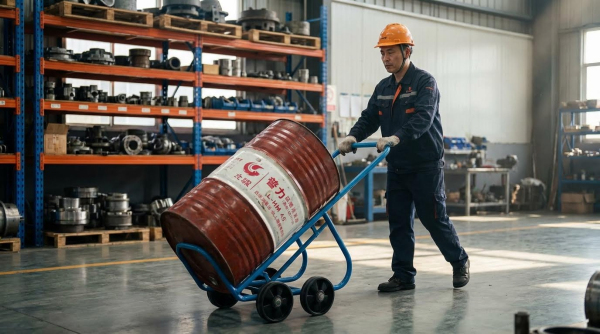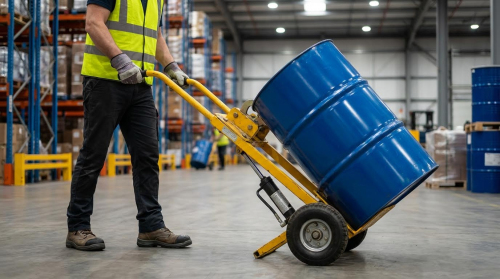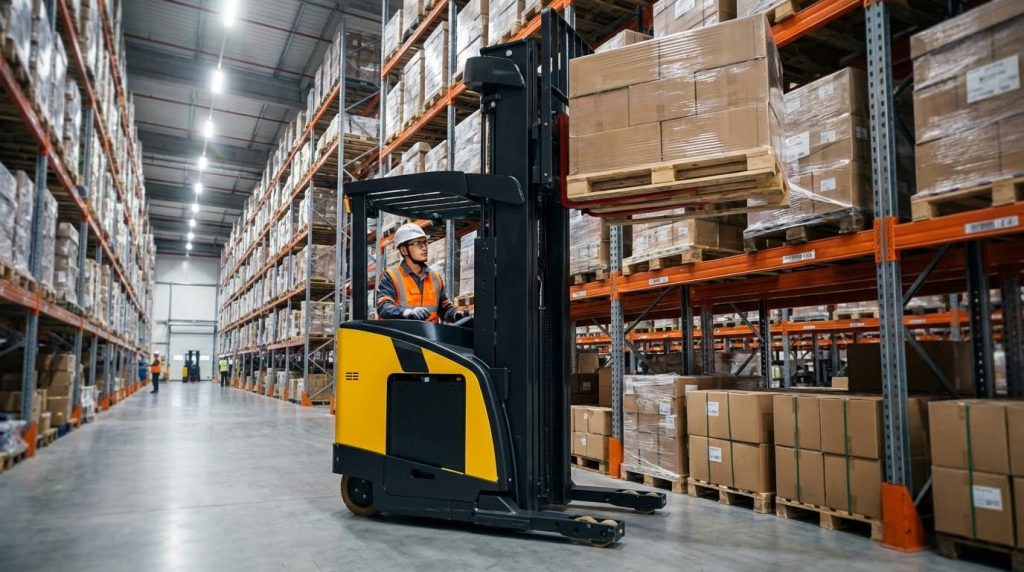
Safe forklift practices for lifting palletized loads start with understanding capacity, load centers, and real-world pallet geometry, then applying disciplined driving and stacking habits. This guide turns standards into clear, practical rules you can apply on every shift when lifting pallets of ae using a forklift, reducing tip-over risk, product damage, and downtime while staying compliant with safety regulations.
Fundamentals Of Forklift Load Stability
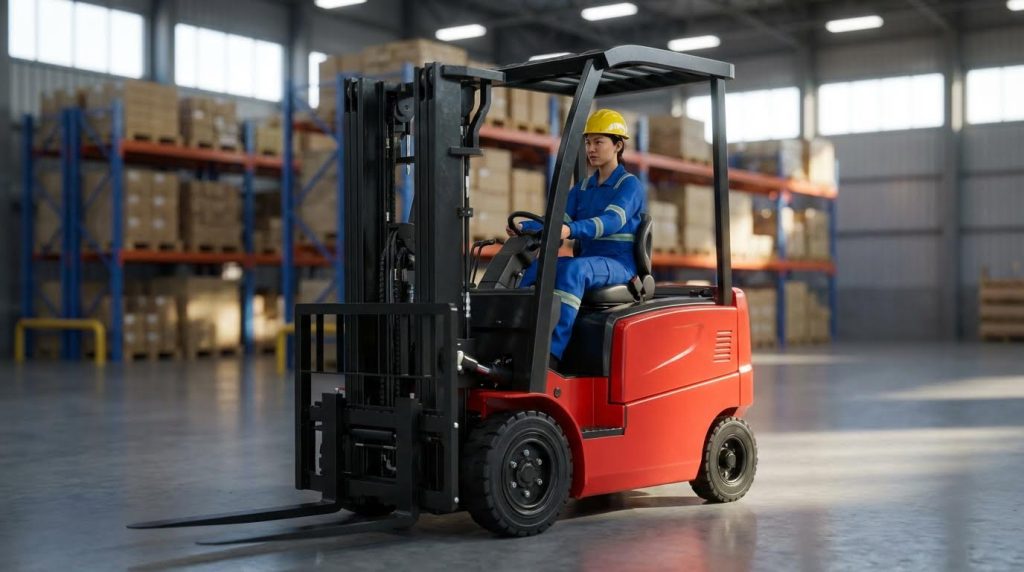
Fundamentals of forklift load stability explain why a truck that feels “strong” can still tip when lifting pallets of AE using a forklift if geometry and capacity are ignored. This section turns data-plate numbers into simple, daily operating rules.
Rated capacity, load center, and data plate
Rated capacity, load center, and the data plate define the maximum safe load and where its weight must sit on the forks to keep the truck stable when lifting pallets of AE using a manual pallet jack. Misreading or ignoring these values is the fastest way to overload a truck.
| Key Term | Typical Meaning | Engineering Effect | Operational Impact When Lifting Pallets |
|---|---|---|---|
| Rated Capacity | Maximum load weight the truck can carry at the stated load center | Based on maximum allowable load moment | Load must never exceed this value on the data plate for safe handling |
| Load Center | Horizontal distance from fork face to load’s center of gravity | Longer load center increases overturning moment | Long pallets, overhanging boxes, or drums reduce safe capacity compared to the rating |
| Data Plate (Nameplate) | Stamped plate showing truck capacity, load center, mast height, attachments | Legal source of truth for what the truck can safely lift | Operators must check this plate before handling unusual pallet sizes or heavy loads to avoid overload |
- Rated capacity is conditional: It only applies at the specified load center – any longer load effectively lowers the true safe capacity.
- Standard reference load: Many ratings assume about a 600 mm (24 in) load center with a 1 200 mm × 1 200 mm pallet – real pallets often deviate from this ideal cube.
- Attachments change ratings: Clamps, rotators, or long forks shift the center of gravity – the data plate must be updated and rechecked.
- Off-center loads are dangerous: Weight biased to one side pulls the center of gravity sideways – this increases tip-over risk even if total weight is under the number on the plate during pallet handling.
How load center reduces safe capacity (simple formula)
Safe Load Capacity ≈ (Rated Load Center / Actual Load Center) × Stated Capacity. For example, if a truck is rated 2 500 kg at 600 mm, but the pallet’s center of gravity is at 700 mm, the safe capacity drops to roughly (600 / 700) × 2 500 ≈ 2 140 kg. This relationship is described in OSHA guidance on load composition. See OSHA’s example calculations.
💡 Field Engineer’s Note: In audits, the most common overload I see is not “too heavy” but “too long.” A 900 mm deep pallet stacked high with cartons can push the load center out past the rating even when the weight on the paperwork looks safe.
Stability triangle and combined center of gravity
The stability triangle and combined center of gravity explain why a counterbalanced forklift will stay upright or tip when lifting pallets of AE using a hydraulic pallet truck, especially during braking and turning.
| Concept | What It Is | Effect On Stability | Practical Impact When Moving Pallets |
|---|---|---|---|
| Stability Triangle | Triangle formed by the front axle wheels and pivot point of rear axle | Defines the safe area for the combined center of gravity | Truck is stable while the combined center of gravity stays inside this triangle during pallet handling |
| Unloaded Center of Gravity | Location of the truck’s own weight with no load | Sits toward the rear, well inside the triangle | Truck feels very stable and forgiving when empty, which can give operators false confidence |
| Combined Center of Gravity (CCG) | Resultant of truck weight plus load weight | Shifts forward and upward as load weight and height increase | Heavy, high pallets pull the CCG toward the front axle and outside the triangle if mishandled especially when tilted forward |
- Forward tip-over: Occurs when the CCG moves past the front edge of the stability triangle – commonly caused by overloading, long load centers, or tilting forward at height during pallet lifting.
- Lateral tip-over: Happens when sharp turns, ramps, or side slopes push the CCG over a side edge of the triangle – especially risky with raised loads.
- Traveling with elevated loads: Raising the pallet increases the load center distance and moves the CCG up and forward – OSHA notes this makes the truck much less stable and should be avoided except at low height.
- Sudden stops and turns: Hard braking or fast steering shifts the CCG dynamically – this can push it outside the triangle even when the static load is technically within capacity.
💡 Field Engineer’s Note: Many tip-overs I investigated started with “just a quick shuffle” of a pallet with the mast raised. The truck felt fine until the operator braked or turned; the dynamic shift of the center of gravity did the rest.
Palletized load geometry and stacking rules
Palletized load geometry and stacking rules control how weight, height, and overhang affect the center of gravity and stability when lifting pallets of AE using a drum dolly in real warehouses, not just in theory.
| Load Feature | Good Practice | Risk If Ignored | Operational Impact |
|---|---|---|---|
| Load Weight vs Capacity | Keep within rated capacity on data plate | Overloading drives CCG forward and risks tip-over | Weigh or calculate heavy palletized loads before lifting to stay within limits |
| Overhang and Load Center | Keep product within pallet footprint where possible | Overhang shifts the center of gravity outward | Long cartons or drums on the edge increase effective load center and reduce safe capacity during pallet moves |
| Stack Height | Keep stacks as low as practical and uniform | High, top-heavy stacks raise the CCG | Increases risk of both tip-over and falling product when braking or crossing uneven floors |
| Load Stability on Pallet | Use stretch wrap, banding, or corner boards | Loose units can shift or fall | OSHA requires loads to be “stable and safely arranged” to prevent collapse or loss of control during forklift handling |
- Keep the heaviest layer low: Heavy cartons or drums should sit on the bottom – this lowers the overall center of gravity of the pallet stack.
- Avoid uneven stacks: High columns on one side of the pallet create a side bias – this can pull the CCG sideways and increase lateral tip risk.
- No loose items on top: Single boxes or parts placed loosely on the top layer can fall – OSHA highlights falling loads as a key hazard when arranging pallets during forklift work.
- Check pallet condition: Broken boards or stringers allow the load to shift or drop – this instantly moves the center of gravity and can cause a sudden tip or falling product.
Practical stacking rules for mixed or awkward loads
When building or handling palletized loads of mixed cartons, drums, or bags: place the heaviest, densest items on the bottom layer; interlock boxes where possible to “tie” the stack; avoid single tall columns; keep the overall stack height reasonable for the aisle and rack clearances; and secure the entire stack with wrap or banding so nothing can shift when you brake or turn. These practices align with OSHA’s requirement that loads be “stable and safely arranged” before moving. See discussion of 29 CFR 1910.178(o)(1).
💡 Field Engineer’s Note: If a pallet looks “leaning” or “loose” while still on the floor, assume the effective center of gravity is already off-center. Fix the stack before you lift; once it is 3–4 m in the air, you have no safe way to correct it.
Correct Techniques For Lifting And Moving Pallets
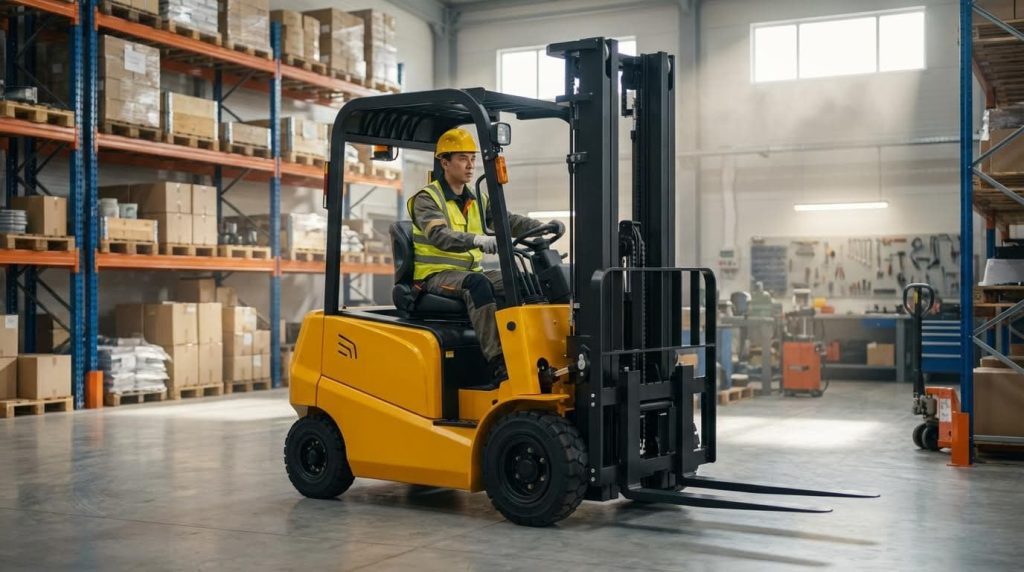
Correct technique when lifting pallets of AE using a manual pallet jack means controlling fork position, mast tilt, load height, and travel direction so the combined center of gravity stays inside the truck’s stability triangle at all times. These habits directly prevent tip‑overs, falling pallets, and steering loss in real warehouses.
- Goal: Keep the load low, centered, and tilted back – maximizes stability and protects the operator.
- Focus: Fork spacing, entry depth, tilt, and visibility – controls the load center and load moment.
- Standard: Always stay within the rated capacity on the data plate – complies with OSHA 29 CFR 1910.178 and manufacturer limits.
Fork spacing, entry depth, and fork leveling
Correct fork spacing, full fork entry, and level forks keep palletized loads stable, reduce broken boards, and maintain the designed load center distance. This is the first control layer when lifting pallets of AE using a hydraulic pallet truck.
- Spread forks wide: Adjust forks as far apart as the pallet allows while staying inside the stringers – maximizes support area and reduces tipping of narrow or tall loads.
- Center under load: Position the fork pair under the pallet’s centerline, not just “visually close” – keeps the load center aligned with the truck centerline, reducing side‑tip risk.
- Full fork entry: Insert forks as far as possible, ideally at least two‑thirds of the load length, before lifting as recommended for safe load positioning – reduces pallet breakage and short‑forked tip‑overs.
- Level forks before entry: Approach with forks level, not tipped up or down – prevents gouging deck boards and dragging the pallet.
- Lift straight, then tilt: Raise the pallet just clear of the floor while forks remain level, then tilt back – avoids “hooking” or pushing the pallet before it is free.
- Check load condition: Confirm pallet boards and stretch‑wrap are intact before lifting – prevents collapse of damaged pallets when fully engaged forks apply load.
| Fork Parameter | Recommended Practice | Engineering Reason | Operational Impact |
|---|---|---|---|
| Fork spacing | As wide as pallet allows, inside stringers | Increases support width and reduces tipping moment | More stable tall loads in 1.0–1.2 m wide aisles |
| Entry depth | ≥ 2/3 of load length fully engaged | Reduces bending load on pallet deck boards | Fewer broken pallets and dropped loads at docks |
| Fork level | Level when entering and exiting pallet | Prevents prying forces on boards | Smoother entry in tight racking with 75–100 mm clearances |
How to quickly check fork level
Use a painted line or column in front of the truck. With the mast vertical, adjust the tilt until the top and bottom of the backrest visually align with the reference line. Mark that tilt position as “level” for that truck.
💡 Field Engineer’s Note: In cold rooms, pallets often warp and plastic decks become brittle. Always slow fork entry and avoid “ramming” the pallet; high impact plus cold brittleness is a classic recipe for sudden deck failure under a 1,000–1,500 kg load.
Tilting, mast position, and load height in transit
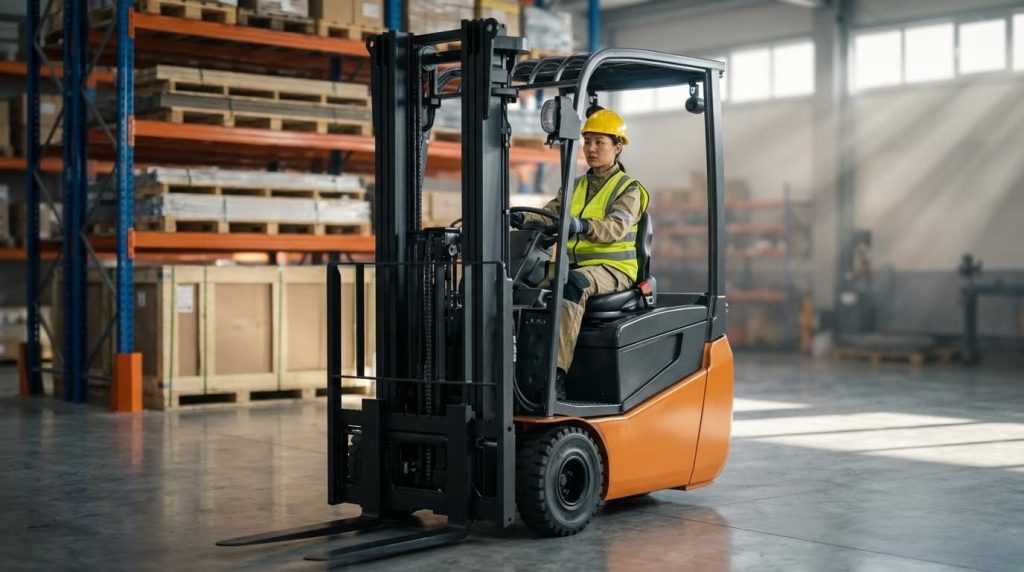
Correct mast tilt and low travel height keep the combined center of gravity inside the stability triangle and protect the mast, overhead guard, and building structure. This is where many tip‑overs start when lifting pallets of AE using a battery-powered stacker.
- Tilt back to secure: After lifting, tilt the mast back just enough to bring the load against the carriage/backrest as recommended for stability – moves the load center closer to the front axle and reduces forward tip risk.
- Do not over‑tilt high loads: At elevation, keep tilt minimal – excessive back‑tilt can shift a tall, light load over the backrest and into the operator zone.
- Travel low: Keep the pallet 100–150 mm off the floor (roughly 4–6 in) during travel as advised for stability – lowers the center of gravity and limits damage if the load drops.
- Never travel with elevated loads: Do not move with the pallet near rack beam height or above – raising the load increases load center distance and load moment, making the truck unstable per OSHA guidance on traveling with a load.
- Vertical mast for stacking: When placing into rack, square the truck and bring the mast close to vertical before final lift – reduces the chance of hitting beams and dragging pallets.
- No raising or lowering while moving: Stop the truck before lifting or lowering the pallet as recommended for traveling techniques – prevents sudden CG shifts that can cause loss of steering or tip‑over.
| Condition | Safe Mast / Tilt Practice | Physics Effect | Operational Impact |
|---|---|---|---|
| Approach to rack | Mast near vertical, load just above beam level | Minimizes forward CG shift | Clean entry into 2.5–3.0 m high beams |
| Travel in aisle | Load 100–150 mm high, slight back‑tilt | Keeps CCG low and within triangle | Stable travel in 2.5–3.0 m wide aisles |
| On ramps | Load upgrade, extra back‑tilt, low height | Prevents load sliding off forks | Safer movement on 5–10% dock gradients |
Why elevated travel is so dangerous
When you raise a 1,000 kg pallet from 0.2 m to 2.0 m, the combined center of gravity of truck plus load moves upward and forward. That increases the overturning moment dramatically, so even a small turn or floor defect can push the CG outside the stability triangle and flip the truck.
💡 Field Engineer’s Note: In real sites, many mast and sprinkler strikes happened at “just one more bay” height. Lock in a rule: if the pallet is above 300–400 mm, the truck does not travel more than a pallet length before lowering.
Visibility, travel direction, and use of spotters
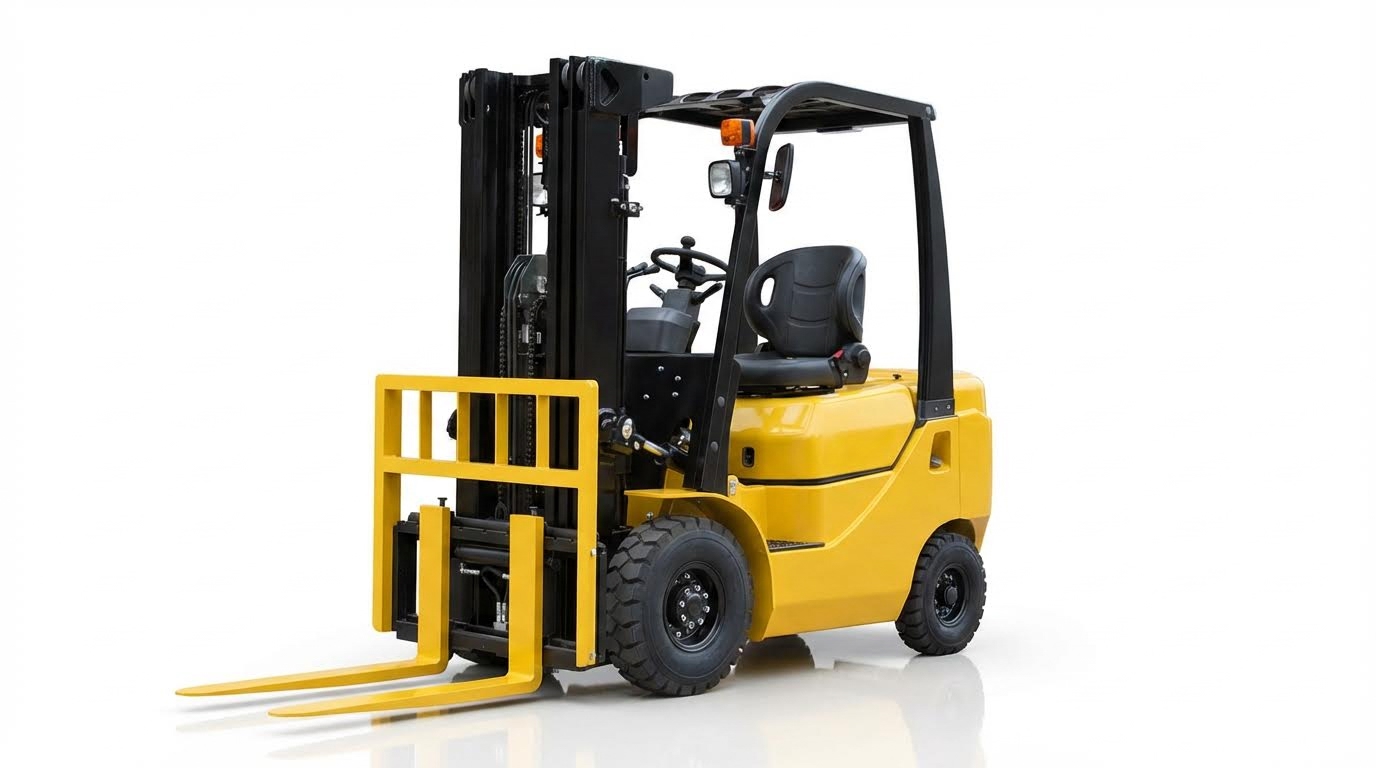
Safe visibility practices determine travel direction and when to use a spotter so the operator can see pedestrians, rack uprights, and dock edges. This becomes critical when lifting pallets of AE using a drum dolly that block the forward view.
- Always look in direction of travel: Turn your head and body to face where the truck is moving as required by warehouse safety guidance – reduces collisions with pedestrians and structures.
- Travel in reverse if load blocks view: If the pallet blocks forward vision, drive in reverse while keeping the load leading as recommended for obstructed visibility – maintains line of sight and control.
- Use spotters in blind areas: In tight cross‑aisles, dark trailers, or around blind corners, assign a trained spotter – adds a second set of eyes where mirrors and lights are not enough.
- Sound horn at intersections: Use the horn when exiting trailers, entering aisles, or crossing doorways as part of loading/unloading procedures – warns pedestrians before the truck appears.
- Respect pedestrian zones: Keep pedestrians in marked walkways and never assume they see or hear the truck as advised for workplace conditions – prevents side‑impact accidents in shared zones.
- Use lights in dark trailers: Turn on dock lights and truck lights inside trailers or containers as part of safe loading practice – reveals stacked pallets, voids, and damaged flooring.
| Scenario | Recommended Travel Direction | Visibility Control | Best For… |
|---|---|---|---|
| Tall pallet blocking forward view | Reverse, load leading | Operator faces travel direction | 1.6–1.8 m high loads in standard warehouse aisles |
| Dark trailer interior | Forward in, reverse out | Dock lights + horn + spotter | Dock operations with 2–3 m trailer height |
| Blind intersection in racking | Slow, usually forward | Horn + mirrors + possible spotter | High‑traffic cross‑aisles at 2.4–3.0 m rack spacing |
How to use a spotter effectively
Agree on clear hand signals before starting. The spotter must stay in the operator’s line of sight and never walk backward blindly. If visual contact is lost, the operator must stop the truck immediately until contact is re‑established.
💡 Field Engineer’s Note: Many near‑miss reports showed operators “trusting” backup alarms instead of their eyes. Treat alarms and blue lights as supplements only; the real control is low speed, eye contact with pedestrians, and disciplined horn use at every blind point.
Engineering Controls, Environment, And Equipment Choice
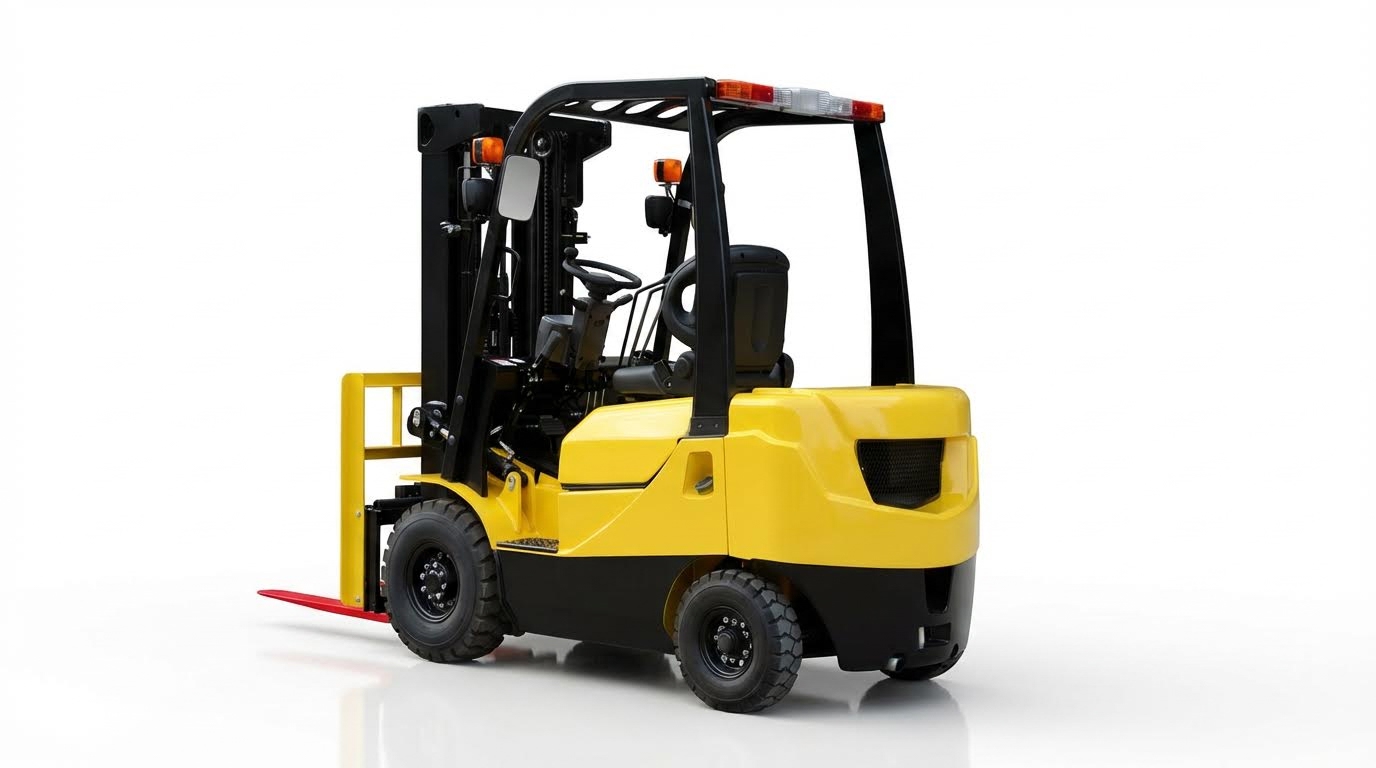
Engineering controls, the operating environment, and the forklift you choose are the backbone of safe practice when lifting pallets of AE using a forklift. Matching truck class, clearances, and safety systems to your site prevents tip-overs, impacts, and product loss.
Truck class, environment rating, and aisle design
Truck class, environment rating, and aisle design determine which forklift can safely operate in your building, around your pallets, and near your people when lifting pallets of AE using a forklift.
- Truck class selection: Match truck type to load and duty cycle – Ensures the truck can handle pallet weights and lift heights without overstressing components.
- Environment rating: Use trucks rated for dust, moisture, or explosive atmospheres – Prevents ignition or electrical hazards in special environments.
- Aisle width design: Keep aisles wide enough and clear of clutter – Reduces collision risk and allows full steering control with palletized loads.
- Pedestrian separation: Mark walkways and restrict foot traffic – Cuts down on struck‑by accidents in busy pallet handling areas.
- Visibility at intersections: Use mirrors and good lighting at blind corners – Gives operators more time to react with raised pallets.
Only forklifts rated for the specific environment should be used. For example, trucks in combustible dust areas need special explosion‑proof ratings to avoid ignition sources. Aisles must be wide enough for safe operation and kept free of clutter and obstructions according to best‑practice guidance. Pedestrian traffic should stay in designated walk areas, and mirrors at key locations help eliminate blind spots in crossing aisles to reduce collision risks.
| Design / Rating Item | Typical Engineering Guideline | Operational Impact When Lifting Pallets Of AE Using A Forklift |
|---|---|---|
| Environment rating | Use trucks specifically rated for dusty, wet, or explosive zones | Prevents ignition or electrical faults near AE pallets and packaging lines. |
| Main aisle width | Wide enough for full steering and load swing plus safety margin | Allows turning with 1.0–1.2 m wide pallets without clipping racking or walls. |
| Cross‑aisle visibility | Convex mirrors and lighting at blind corners | Gives operators time to stop with loads at 150–250 mm fork height. |
| Pedestrian walkways | Clearly marked and separated from truck lanes | Reduces struck‑by risk when reversing with tall AE pallets. |
| Floor condition | Flat, free of holes, oil, and loose debris | Maintains steering control and stability triangle when cornering with loads. |
💡 Field Engineer’s Note: When aisles are “just wide enough” on paper, real‑world factors like leaning pallets, shrink wrap tails, or slightly skewed racking quickly eat up clearance. Always design at least 100–150 mm extra aisle width beyond the minimum truck turning envelope to maintain steering control and avoid pallet or rack strikes.
How to sanity‑check your aisle design
Measure your widest pallet (typically 1,000–1,200 mm), add the truck body width, plus at least 300–400 mm clearance for steering and sway. Verify this against the tightest aisle in the building, not just the drawing.
Critical height measurements and overhead clearance
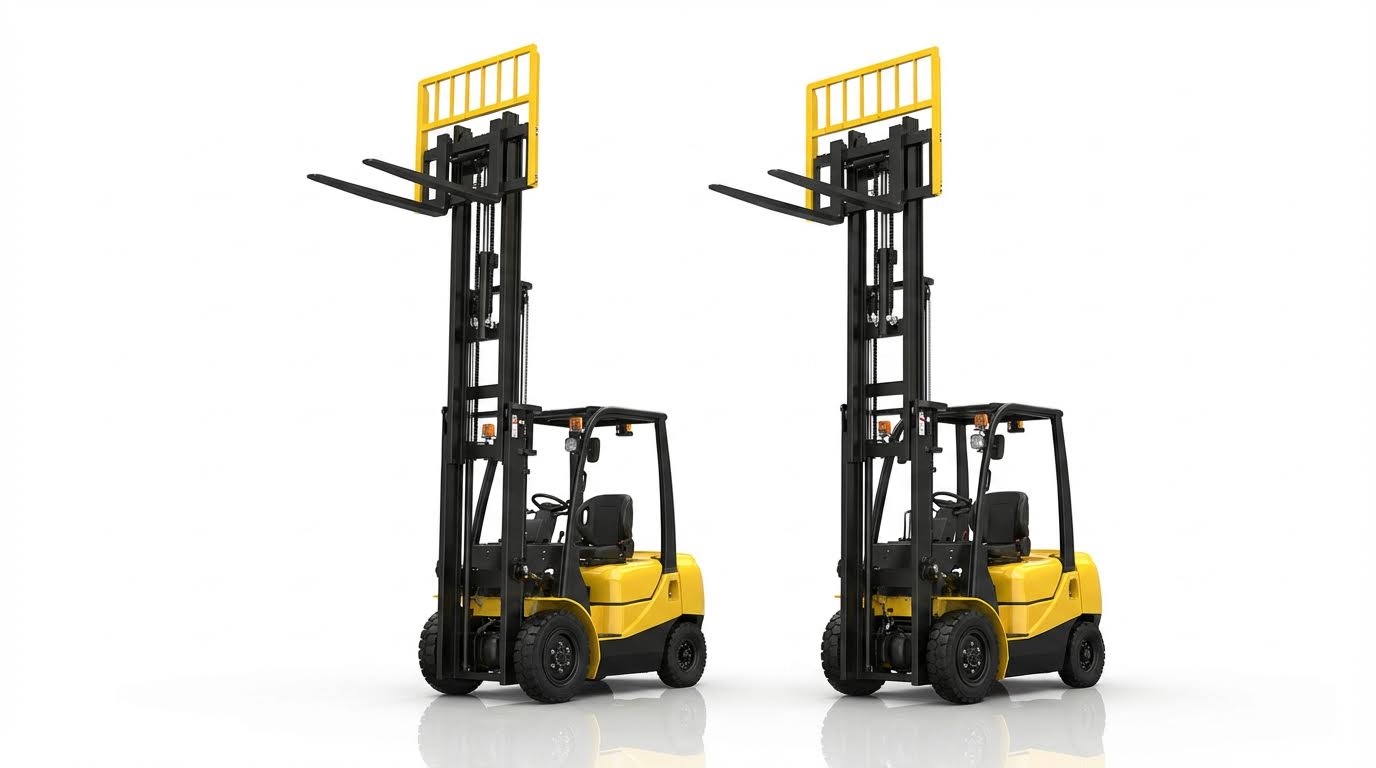
Critical forklift height measurements and overhead clearance determine whether you can move palletized loads without hitting doors, mezzanines, or sprinklers when lifting pallets of AE using a forklift.
Key dimensions like overall lowered height, free lift, maximum fork height, and overall raised height must match your building and racking geometry. Knowing these numbers prevents mast, overhead guard, or load from striking fixed structures during entry, travel, and stacking.
| Height Term | What It Means | Operational Impact |
|---|---|---|
| Overall Lowered Height (OALH) | Height of mast/overhead guard with forks fully lowered | Ensures the truck can enter doors, trailers, and low mezzanines without impact per OSHA guidance. |
| Free Fork Height (FFH) | Lift height before mast extends | Allows lifting pallets to lower rack beams inside trailers or low ceilings without hitting the roof. |
| Maximum Fork Height (MFH) | Highest fork level at full lift | Confirms you can reach the top pallet position while keeping clearance to roof and sprinklers. |
| Overall Raised Height (OARH) | Total height of mast and load at full lift | Prevents contact with overhead pipes, lights, or sprinkler mains at full elevation. |
| Overhead clearance | Gap between highest point of truck/load and any obstruction | Maintains a safety buffer (often 50–100 mm minimum) to account for floor unevenness and mast flex. |
Forklift measurements such as overall lowered height are essential to ensure safe entry into doorways, aisles with low fixtures, and trucks or semi‑trailers that often require around 2.4 m (8 ft) of clearance according to OSHA eTools. Free fork height is critical to know if you can lift to the required stack height without extending the mast in confined spaces. Maximum fork height and overall raised height indicate whether the truck can reach necessary storage levels without striking overhead structures in your warehouse.
- Check overhead before lifting: Visually confirm pipes, cables, and sprinklers are clear – Prevents impact when raising tall AE pallets.
- Control dock operations: Inspect floors, chock wheels, lock brakes, and secure dock plates – Stops trailer movement while you raise or lower pallets.
- Maintain side clearances: Keep 50–75 mm clearance on all sides of the load in trailers or racks – Reduces risk of scraping walls or uprights during placement.
- Use lighting and horns: Turn on dock lights and sound the horn when entering/exiting dark trailers – Improves visibility and alerts others in shared dock areas as recommended by safety guidance.
💡 Field Engineer’s Note: The dimension that causes the most damage is often not MFH but OARH with a slightly bouncing mast on rough floors. When designing racking under sprinklers, keep at least 150 mm extra clearance above your highest loaded pallet to allow for mast flex and pallet overhang during placement.
Quick checklist before lifting near overhead obstructions
1) Confirm pallet height including wrap and labels. 2) Add fork thickness and any attachments. 3) Compare to measured clearance under lights, beams, and sprinklers. 4) Keep a safety margin for uneven floors and mast deflection.
Batteries, telematics, and predictive safety systems
Batteries, telematics, and predictive safety systems act as engineering controls that reduce human error and mechanical failure when lifting pallets of AE using a forklift.
Battery condition directly affects acceleration, lift speed, and braking. Telematics and safety systems monitor impacts, speed, and operator behavior, enabling early intervention before unsafe practices lead to an incident.
- Battery health monitoring: Track state of charge and maintenance intervals – Prevents sluggish lifts or unexpected shutdown with pallets raised.
- Access control and log‑ins: Require operator identification to start trucks – Ensures only trained personnel handle AE pallets.
- Impact and speed sensors: Record collisions and overspeed events – Highlights high‑risk areas and behaviors for corrective training.
- Pre‑shift inspection prompts: Digital checklists for brakes, mast, forks, and guards – Ensures defects are caught before lifting operations start.
- Zone‑based speed limiting: Automatically reduce speed in congested or dock areas – Lowers stopping distance when visibility is poor.
Safe operation also depends on following core forklift safety protocols. Operators must fully lower the load engaging means, neutralize controls, shut off power, and set brakes when leaving a forklift unattended. They must maintain a safe distance from edges of ramps or platforms and ensure sufficient headroom under overhead installations like lights and pipes. Overhead guards should protect operators from falling objects, and traffic rules such as authorized speed limits and looking in the direction of travel must be followed. Dock boards need to be properly secured during loading and unloading, and stunt driving or horseplay is prohibited. All loads must be stable, safely arranged, and within the truck’s rated capacity in line with OSHA warehouse safety guidance.
| Control / System | Function | Best For… |
|---|---|---|
| Battery management | Monitors charge, temperature, and usage | High‑throughput AE pallet operations where under‑voltage can slow lifts and extend cycle times. |
| Telematics platform | Logs usage hours, impacts, and operator IDs | Sites needing traceability after rack strikes or pallet damage. |
| Speed / zone control | Limits speed in defined areas | Busy docks and mixing areas with mixed pedestrian and truck traffic. |
| Pre‑shift digital checklists | Forces daily safety inspections | Ensuring forks, chains, and overhead guards are safe before handling AE pallets. |
| Seat / presence switches | Disables travel and lift without the operator correctly positioned | Preventing unintended movement if the operator leaves the seat or platform. |
💡 Field Engineer’s Note: In multi‑shift warehouses, most “mystery” pallet damage comes from unreported low‑speed impacts. Telematics that auto‑log impacts above a set threshold, tied to operator ID, change behavior fast and usually cut rack and pallet damage by 30–50% within a few months.
How batteries and safety systems tie into your SOPs
Integrate telematics alerts with your safety meetings. Review impact reports weekly, link them to refresher training, and use battery data to schedule maintenance so lift performance stays consistent across all shifts.
Final Considerations For Safe Pallet Handling
Final safety checks when lifting pallets of ae using a forklift focus on operator discipline, load stability, and site controls to prevent tip-overs, falling loads, and collisions in real warehouses.
Think of this section as your last-minute checklist before every shift and every lift. It pulls together operator behavior, pallet/load rules, and workplace layout into a simple, repeatable routine.
Operator Discipline And Core Safety Behaviors
Safe pallet handling starts with trained operators who follow the same basic rules every single time, without shortcuts.
- Formal training: Operators must complete structured powered industrial truck training and evaluation – this is the base layer for every other control. Training requirement
- Seat belts and guards: Use seat belts and rely on overhead guards for falling-object protection – this reduces injury severity during tip-overs or dropped pallets. Overhead guard guidance
- Correct response in a tip-over: On sit-down trucks, stay with the truck, hold on, and lean away; on stand-up, step backward out the rear – this aligns with tested survival practice. Tip-over behavior
- Unattended truck rules: Lower forks, neutralize controls, set brakes, and shut off power when leaving the seat – prevents roll-away and accidental actuation. Unattended truck requirements
- No stunt driving: Avoid sudden turns, high speed, or horseplay – these are the fastest ways to push the combined center of gravity outside the stability triangle. Traffic rules
💡 Field Engineer’s Note: Many “mystery” pallet incidents trace back to operators rushing the last hour of a shift. Enforce the same driving discipline on the final run as on the first – fatigue and time pressure quietly erode judgment.
Last-Check Rules For Load, Pallet, And Fork Position
When lifting pallets of ae using a forklift, the final pre-lift checks should confirm capacity, pallet integrity, fork position, and visibility before you touch the hydraulic controls.
- Stay within rated capacity: Never exceed the capacity on the data plate at the stated load center – this keeps the load moment inside the truck’s design envelope. Capacity vs load center
- Stabilize the pallet load: Stack or tie loose or uneven items so nothing can shift or overhang – this prevents falling boxes when you tilt or brake. Load stability rules
- Fork spread and depth: Spread forks as wide as the pallet allows and insert fully (at least two-thirds of load length) – this shortens the effective load center and reduces bending on the tines. Fork positioning
- Tilt back and keep low: After lifting, tilt the mast back and travel with forks about 100–150 mm above the floor – this pulls the combined center of gravity back inside the stability triangle. Travel height guidance
- Never travel with an elevated load: Do not move with the pallet raised high – raising the load lifts the center of gravity and increases tip-over risk, especially in turns. Elevated load hazard
Quick check: Is this pallet safe to lift?
Before lifting, confirm: 1) Pallet boards and stringers are not broken. 2) Load is wrapped, banded, or interlocked. 3) Mass is within truck capacity at the actual load center. 4) Forks can fully enter without hitting obstacles or racking.
Travel Path, Visibility, And Dock Safety
Safe pallet handling ends with controlled travel, clear visibility, and disciplined dock practices, especially in tight warehouse traffic.
- Low, tilted load in motion: Keep the pallet low and tilted back while moving and avoid raising or lowering on the move – this keeps the truck stable and reduces mast shock loads. Traveling techniques
- Direction of travel: If the pallet blocks forward view, drive in reverse or use a trained spotter – this prevents blind collisions with pedestrians or racking. Visibility controls
- Overhead and side clearance: Verify at least 50–75 mm clearance to lights, pipes, and sprinkler lines and 50–75 mm around the pallet in racks – this avoids snagging, product damage, and pipe strikes. Critical height measurements Rack clearance guidance
- Dock and trailer safety: Before entering a trailer, chock wheels, lock brakes, and secure dock plates, then use dock lights and sound the horn when entering or exiting – this prevents trailer creep and entry collisions. Loading/unloading procedures
- Edge protection on docks and ramps: Maintain a safe distance from dock edges and ramp sides – this is your last barrier against a catastrophic drop with a palletized load. Dock edge safety
💡 Field Engineer’s Note: Many dock accidents happen because operators trust “muscle memory” more than their eyes. Make it standard to pause 1–2 seconds at every dock plate and trailer threshold, visually confirming plate position and trailer stability before committing the front axle.
Pulling this together, your safest operations when lifting pallets of ae using a forklift will always combine three habits: respect the data plate, keep the load low and stable, and treat visibility and clearances as non‑negotiable engineering limits, not suggestions.
Final Considerations For Safe Pallet Handling
Safe pallet handling depends on one simple idea: never let the combined center of gravity move outside the forklift’s stability triangle. Every rule in this guide supports that goal. Capacity limits, load centers, and pallet geometry control the basic physics. Fork spacing, entry depth, tilt, and travel height turn those limits into daily driving habits. Aisle design, overhead clearance, and environment ratings shape the workplace so those habits stay effective and repeatable.
When you respect the data plate, you keep overturning moments within design limits. When you build stable pallets and keep loads low and slightly tilted back, you keep the center of gravity inside the triangle even during bumps and braking. When you design clear aisles, protect docks, and use telematics and battery controls, you catch problems before they turn into incidents.
The best practice for any site handling palletized loads is clear: engineer the layout, choose the right Atomoving equipment, and then enforce one consistent operating standard. Train operators to pause, check capacity and clearances, and choose the safest travel path every time. If a lift looks marginal for weight, geometry, or visibility, treat that as a stop signal, not a challenge.
Frequently Asked Questions
How do forklifts pick up pallets?
To lift a pallet with a forklift, approach the load squarely and insert the forks fully under the pallet. Ensure the load touches the carriage before tilting the forks back slightly. For unbalanced loads, keep the heavier side closer to you. Lift the load carefully and tilt it back a little more before moving. Forklift Safety Guide.
What are the proper lifting techniques for a forklift?
When lifting pallets with a forklift, always approach squarely and fully insert the forks under the pallet. Ensure the load is stable against the carriage and tilt it slightly backward. Keep the load low while traveling and move cautiously around corners or blind spots. Safe Forklift Operation Tips.
What can I use instead of a forklift?
If you need alternatives to a forklift for lifting pallets, consider low-lift pallet trucks, electric pallet jacks, pedestrian stackers, or reach trucks. Conveyor belts and tugger trains with trailers are also viable options in specific warehouse setups. These tools help handle materials efficiently without requiring a traditional forklift. Forklift Alternatives Overview.