This guide explains how high a pallet can lift safely on different equipment types, and what really limits you: stability, load center, aisle width, and mast design. You will see typical lift height ranges in meters, how they derate with height, and how to choose the right truck for your racks and pallets.
Core Principles Of Safe Pallet Lift Heights
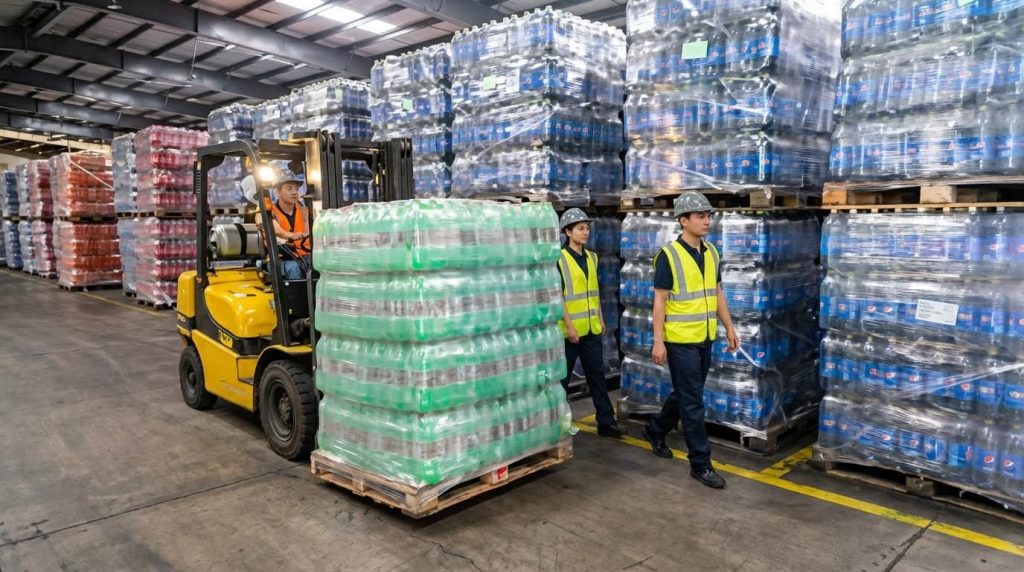
The core principle behind how high can a pallet lift is simple: stability drops as lift height and load center increase, so rated capacity must reduce and geometry must be tightly controlled. Safe design starts with understanding how height, load center, and key mast dimensions interact.
- Physics First: Higher, further-out loads shift the combined centre of gravity – this shrinks your safety margin against tip-over.
- Rated Curves, Not Guesswork: Capacity tables vs. height and load center govern safe limits – never rely on the nameplate number alone.
- Geometry Matters: Pallet size, overhang, and mast type change how high you can usefully and safely lift – this must match rack and aisle design.
- Environment-Dependent: Floor flatness, aisle width, and overhead obstructions cap safe lift height – these often limit you before the truck’s mechanical maximum.
💡 Field Engineer’s Note: In real warehouses, the “maximum fork height” is rarely the true limit; uneven floors, weak pallets, or flexible racks usually force you to set a lower operational ceiling to keep incidents under control.
How Lift Height, Load Center, And Stability Interact
Lift height, load center, and stability interact through a moving centre of gravity: as the pallet goes higher or further forward, the truck’s stability triangle is eaten away and safe capacity must drop.
- Lift Height: Raising the mast lifts the combined centre of gravity – this makes the truck more “top heavy” and sensitive to small tilts.
- Load Center: Increasing the load center (distance from fork face to load CG) lengthens the overturning lever arm – this accelerates forward tip risk.
- Stability Triangle: The truck and load must stay inside the triangle formed by the wheels – once outside, a tip-over is almost certain.
- Dynamic Effects: Braking, turning, or hitting floor joints at height adds extra forces – this can push a marginally stable system past its limit.
Manufacturers therefore derate capacity as height increases. For example, a reach truck that carries 2,000 kg at low level may only handle below 1,000 kg at around 13 m because of stability and mast deflection limits according to high-bay capacity examples. Tall, offset, or badly wrapped loads also raise the centre of gravity and increase sway, so the practical answer to “how high can a pallet lift” is often “lower than the spec sheet” once real load geometry is considered.
How to estimate a safe working height from the capacity plate
1) Find the rated capacity at the standard load center (typically 500 mm). 2) Check the capacity at your target lift height. 3) Compare with your actual pallet weight, including packaging. 4) If you are within 80–90% of the rated value, treat that as a red flag and either reduce height or weight.
💡 Field Engineer’s Note: On any truck that regularly lifts above 8–10 m, I assume at least 20–30% extra “real-world” derating to account for mast wear, floor unevenness, and operators occasionally nudging the tilt or sideshift at full height.
Key Forklift Height Terms: OALH, OARH, FFH, MFH
OALH, OARH, FFH, and MFH are the core mast dimensions that tell you how high a pallet can lift in the real building, not just on paper.
- Overall Lowered Height (OALH): Mast height when fully lowered – governs doorway and low-fixture clearance.
- Overall Raised Height (OARH): Mast height when fully extended – must clear ceilings, sprinklers, and beams.
- Free Fork Height (FFH): Fork height before mast stages extend – critical inside trailers and low mezzanines.
- Maximum Fork Height (MFH): Highest fork level with mast fully raised – sets the upper limit for usable rack beam elevations.
OALH and OARH are essential to check that the truck can enter doors and work below fixtures without striking them as highlighted in forklift measurement guidance. FFH defines how high you can stack or double-stack while keeping the mast within its lowered envelope, which is critical when loading semi-trailers so you do not pierce the roof if clearance is around 2,440–2,600 mm (8–8.5 ft). MFH tells you the theoretical answer to “how high can a pallet lift,” but safe practice demands a margin above the top rack beam for fork entry, pallet extraction, and mast deflection.
Practical way to translate MFH into rack beam height
Take MFH, subtract pallet height, subtract at least 150–200 mm for clearance and mast/fork deflection. The remainder is your maximum safe top-beam elevation. For example, with MFH 10,500 mm and a 1,200 mm-high pallet, you would typically cap the top beam around 9,200–9,300 mm.
💡 Field Engineer’s Note: When specifying new trucks, I always work backwards from the highest planned rack beam and trailer height, then choose a mast where FFH and MFH cover those tasks with at least 200–300 mm of safety clearance in real floors, not just on CAD.
Typical Lift Heights By Major Equipment Types
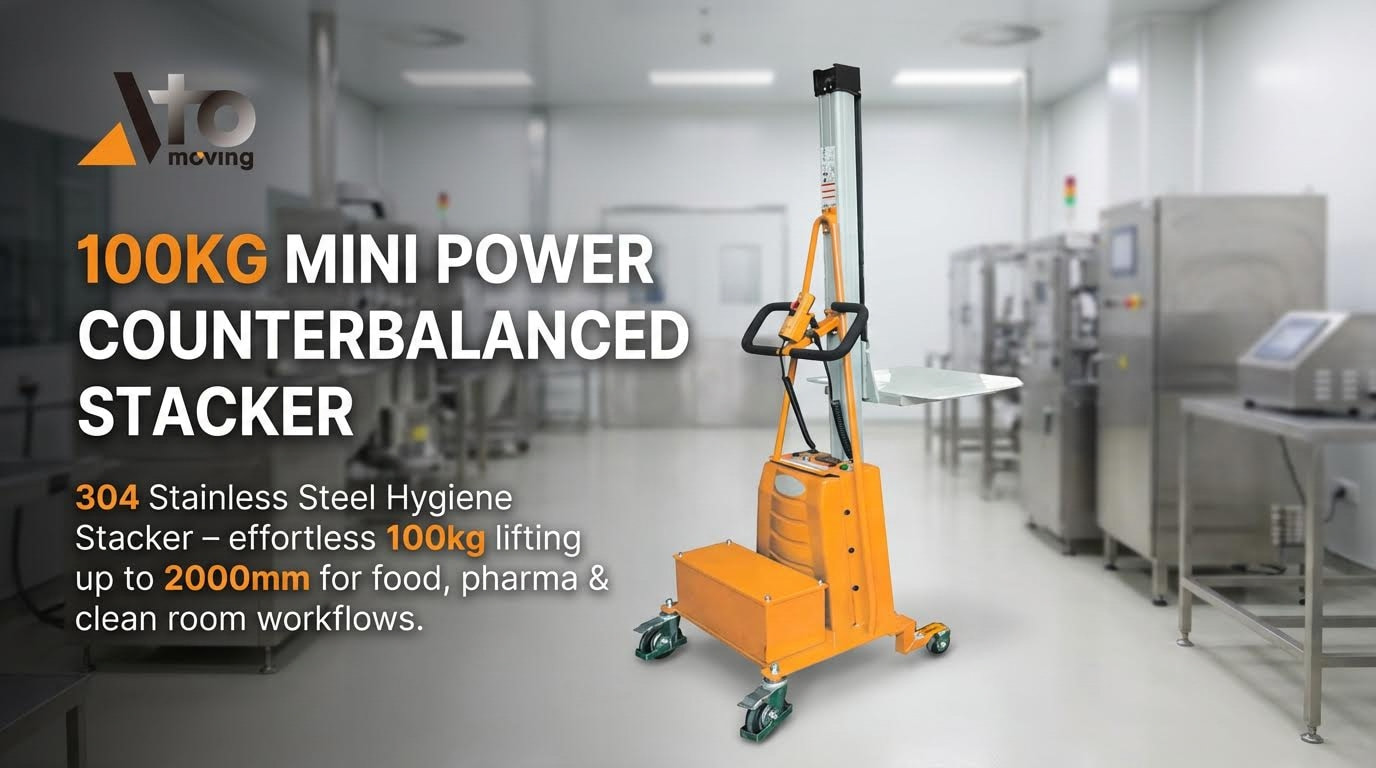
Typical safe pallet lift heights range from about 0.2 m for pallet trucks up to 13 m+ for high-bay reach and 16–17 m for large telehandlers, but the real limit for how high can a pallet lift safely always depends on capacity derating, load geometry, and aisle conditions. This section compares major equipment families so you can match lift height to rack design, floor space, and duty cycle.
| Equipment Type | Typical Max Lift Height (m) | Typical Load Range | Best For… | Operational Impact |
|---|---|---|---|---|
| Counterbalance forklift | 3–7 m; high-mast 7.5–8 m | Typically 1,500–3,000 kg | Truck loading, low–mid racking | Good all-rounder; needs wider aisles, height often limited by building and sprinklers. |
| Reach truck | 6–9.5 m typical; up to ~12.8–13.7 m high bay | Up to ~2,000 kg at lower levels, <1,000 kg near 13 m | Narrow-aisle high racking | Maximizes vertical storage; capacity derates sharply at top levels. |
| Walkie reach truck | ~4.5–5.0 m | Typically 1,000–1,600 kg | Short, narrow aisles, low–mid racking | Low cost and compact; not suitable for true high-bay work. |
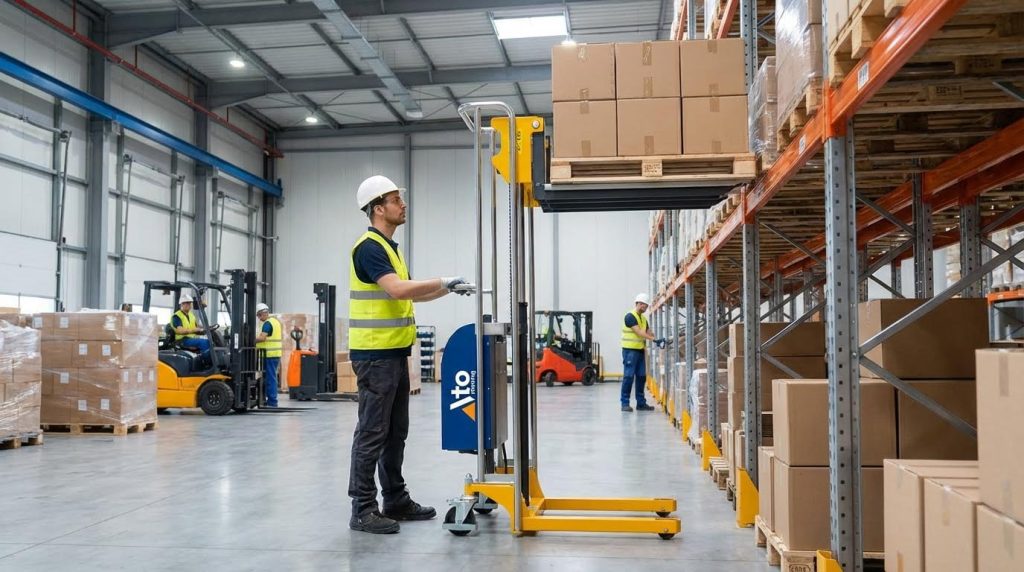
| Walkie / pedestrian stacker | 1.6–3.5 m typical; full-electric 2–6 m; some >7 m | ~1,000–1,600 kg | Light-duty stacking, small warehouses | Good for mezzanines and low racks; operator walks, so speed and range are limited. |
| Pallet truck (manual / powered) | 0.19–0.21 m (about 190–210 mm) | Up to 2,000–2,500 kg | Ground-level transport only | Cannot stack; only enough lift to clear floor and dock plates. |
| High-lift / scissor pallet truck | 0.7–1.0 m (700–1,000 mm) | Typically 800–1,000 kg | Ergonomic work height, not racking | Great for feeding machines or packing; unsafe for travelling with raised loads. |
| Order picker | Up to ~9 m (≈30 ft) for operator platform | Typically 500–1,200 kg picked items | Person-up piece picking | Defines maximum shelf height for case picking; requires very flat floors and fall protection. |
| Side loader | ~3–9 m (10–30 ft) depending on model | Often 2,000–5,000 kg | Long loads (timber, pipe) in narrow aisles | Height often limited by load length and aisle clearances, not mast rating. |
| Rough-terrain forklift | Up to ~7.5 m (≈25 ft) | 2,000–4,000+ kg | Construction sites, yards, uneven ground | Real limit often terrain stability, not mast height. |
| Telehandler (telescopic forklift) | Up to ~16–17 m (≈55 ft) | Capacity can fall below 1,000 kg at max reach | Placing loads on roofs, upper floors | Capacity derates heavily at full height and reach; boom angle charts are critical. |
💡 Field Engineer’s Note: When you ask how high can a pallet lift with a given truck, always check the capacity table at your actual load center and rack height; the nameplate rating at 3 m is almost meaningless at 10–13 m.
Counterbalance, Reach, Walkie Reach, And Stackers
These truck families define how high can a pallet lift in most warehouses, from simple floor stacking to 13 m high-bay racking.
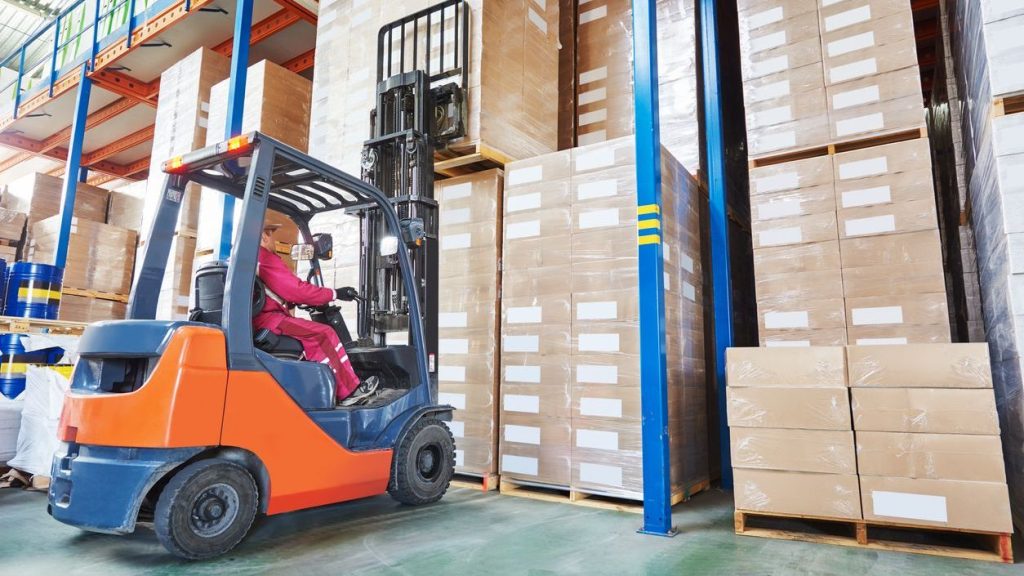
- Counterbalance forklifts: Typical maximum fork heights are 3–7 m, with high-mast designs reaching about 7.5–8 m in racking systems – covers most low-bay warehouses.
- Reach trucks: Mid-range models work around 6.0–9.5 m, while high-capacity units can place 900 kg loads at roughly 12.8 m, with overall heights near 13.7 m – core solution for modern high-bay storage.
- Capacity derating on reach trucks: A truck rated 2,000 kg at low levels may still lift that up to about 8 m, but its safe capacity can drop below 1,000 kg at 13 m – rack design must respect the derated capacity curve.
- Walkie reach trucks: Max lift heights are usually around 4.5–5.0 m, designed for aisles near 1.8–2.4 m wide – good compromise for small sites wanting narrow aisles without full sit-down trucks.
- Walkie / pedestrian stackers: Commonly rated for 1.6–3.5 m, with full-electric stackers covering roughly 2–6 m and some specialized units exceeding 7 m – ideal for light to medium pallet stacking without investing in full forklifts.
How to translate “maximum fork height” into usable rack height
To turn MFH into a working top-beam height, subtract the pallet height plus a safety clearance (usually 150–200 mm). For example, if MFH is 7,500 mm and you store 1,200 mm tall pallets, a practical top-beam level is about 6,100–6,200 mm.
Pallet Trucks, High-Lift Trucks, And Order Pickers
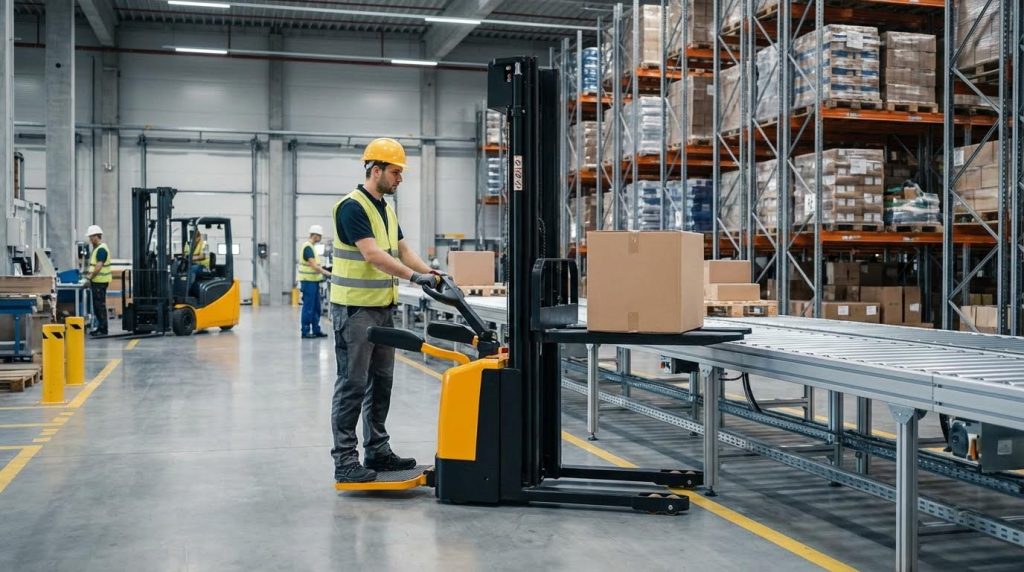
Ground-handling and person-up equipment answer how high can a pallet lift when you do not need full mast trucks but still must control work height and picking elevation.
- Standard pallet trucks (manual or powered): Typical lift is only 0.19–0.21 m, just enough to clear the floor and dock plates – they do not define storage height, only horizontal flow.
- High-lift / scissor pallet trucks: Lift heights around 700–1,000 mm put the pallet at a comfortable working level – excellent for feeding lines or packing benches, but not for travelling with raised loads or racking.
- Order pickers: Person-up order pickers lift the operator platform to roughly 9 m (≈30 ft) – this effectively caps how high small items can be picked safely without automation.
- Picking strategy vs. pallet lift height: In many e‑commerce sites, pallets sit at 3–6 m, but the picker’s platform height, not pallet lift height, drives rack design – you often separate “how high can a pallet lift” for replenishment from “how high can a person work.”
💡 Field Engineer’s Note: Treat high-lift pallet trucks like mini-lifts, not forklifts; moving more than a few hundred millimetres with a raised pallet on small casters is where most tip and foot-crush incidents occur.
Rough-Terrain, Side Loaders, And Telehandlers
These specialty machines answer how high can a pallet lift outdoors or with long loads, but their true limit is usually stability at reach, not the headline mast or boom height.
- Rough-terrain forklifts: Common maximum lift heights are up to about 7.5 m (25 ft) – enough to service site scaffolds, but ground slope and soil strength usually govern safe working height.
- Side loaders: Typical lift ranges around 3–9 m (10–30 ft) while carrying long loads like timber or pipe sideways – the longer the load, the more conservative you must be with height in narrow aisles.
- Telehandlers (telescopic forklifts): Booms can reach about 16–17 m (≈55 ft) – but capacity at full height and maximum reach may drop below 1,000 kg, so boom charts, outriggers, and slope limits control real-world pallet height.
- <
Engineering A Safe High-Bay And Aisle Strategy
Engineering a safe high-bay and aisle strategy means designing racks, floors, and equipment limits together so you always know how high a pallet can lift without losing stability, capacity, or throughput. This section turns height specs into a practical design playbook.
- Goal: Define safe maximum fork heights – So “how high can a pallet lift” is answered by engineering, not guesswork.
- Method: Combine capacity curves, rack stiffness, floor tolerances, and duty cycles – To keep trucks inside their stable operating envelope.
- Output: Clear rules for top beam level, aisle width, and equipment class – That operators can follow every shift.
Capacity Derating, Mast Deflection, And Rack Design
Capacity derating, mast deflection, and rack design together decide the real, safe answer to how high can a pallet lift in your building. Ignore any one of them and the nameplate rating becomes meaningless at the top beam.
As lift height increases, rated capacity drops and mast sway grows, so you must set rack elevations from the capacity tables, not from ceiling height. A reach truck that handles 2,000 kg at low levels may be limited to under 1,000 kg at about 13 m due to capacity derating and stability limits. Source Rack stiffness and pallet quality must then be matched to this reduced capacity.
Example Truck Type Approx. Safe Working Height Range Typical Capacity Trend With Height Rack / Design Implication Operational Impact Counterbalance forklift 3–7 m (up to ~8 m high-mast) Near full rating at 3–4 m, derating as you approach 7–8 m Limit top beam to where required pallet mass is within derated curve Good for mid-bay; top levels often for lighter SKUs only Reach truck 6–12.8 m, up to ~13.7 m May drop from ~2,000 kg to <1,000 kg near 13 m Engineer higher levels for reduced pallet mass and tighter pallet specs Ideal for high-bay, but heavy items must stay in lower levels Walkie reach / stacker Up to ~4.5–5 m (walkie reach) and 2–6 m (stackers) Derating noticeable above ~4 m, especially with long or overhanging loads Use for low–medium racks; avoid dense, heavy loads at top tier Good in small sites; not for 10 m+ high-bay work At higher levels, mast deflection becomes a major risk factor. Fork tips can sway several tens of millimeters or more at 10–13 m, increasing rack impact probability and slowing cycle times while operators wait for oscillations to damp out. Source Rack frames and beams must be designed with enough stiffness and protection to tolerate occasional low-energy contacts.
- Capacity Derating: Always size top-beam pallet weights from the truck’s capacity chart at that exact height and load center – This is the real limit on how high a pallet can lift safely.
- Mast Deflection: Treat mast as a flexible column; deflection grows roughly with the cube of height – Small increases in height can mean big increases in sway.
- Rack Stiffness: Use heavier uprights and bracing where heights exceed ~8–10 m – Reduces beam twist and post damage during minor contacts.
- Pallet Quality: Specify pallet type, deck board thickness, and allowable damage – Prevents collapse when forks are slightly misaligned at height.
How to pick a safe top rack height
1) Take the truck’s maximum fork height (MFH) from the data plate. 2) Subtract at least 150–300 mm for clearance and oscillation. 3) Check the capacity curve at that height and your pallet load center. 4) Set top beam so required pallet mass is comfortably below derated capacity.
💡 Field Engineer’s Note: In very tall aisles (10 m+), I often cap working height 200–300 mm below the truck’s MFH. That small sacrifice in storage height cuts mast sway problems dramatically and reduces rack repairs over the first few years.
Aisle Width, Floor Flatness, And Load Geometry
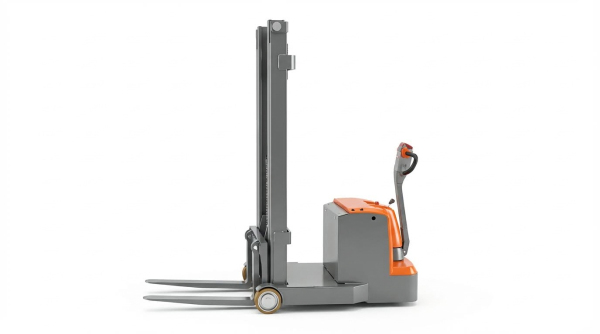
Aisle width, floor flatness, and load geometry define whether the truck can actually use its theoretical lift height day after day without rubbing racks, tripping stability controls, or damaging product. In practice, they often limit how high a pallet can lift before operations slow down or become unsafe.
Narrow-aisle systems frequently run reach trucks in aisles near 2.6 m wide and place pallets above 10 m, sometimes two positions deep. Source In these conditions, even small floor deviations cause chassis roll, which amplifies mast sway at the top, while tall or offset loads reduce stability margins.
Design Factor Typical Value / Range Effect On Lift Height Operational Impact Aisle width for walkie / pallet trucks ~1.8–2.4 m Only low lift (≤5 m) practical; turning and clearance dominate Good for ground-level moves; limited vertical storage Aisle width for reach trucks ~2.6 m narrow-aisle Enables 10 m+ high-bay storage with guidance Maximizes density but needs tight floor tolerances Standard pallet truck lift ~0.19–0.21 m No stacking; just enough to travel and load/unload “How high can a pallet lift?” is effectively “floor-only” here High-lift / scissor pallet truck 700–1,000 mm Ergonomic work height, not racking Good for workstations, not for high-bay design Load geometry is just as critical as mass. A low, compact pallet is more stable than a tall or overhanging one at the same weight. Tall or offset loads move the combined center of gravity forward and higher, increasing tip-over risk and making fork alignment harder, especially above 5–8 m. Source
- Aisle Width: Check truck manufacturer’s minimum aisle spec and add a safety margin – Prevents rack clipping and allows controlled steering at height.
- Floor Flatness: Tighten flatness and levelness tolerances as rack height grows – Reduces chassis roll and mast oscillation at upper levels.
- Load Footprint: Limit pallet overhang and set standard load heights – Makes truck behavior predictable across all SKUs.
- Guidance Systems: Consider rail or wire guidance in very narrow aisles – Keeps truck centered so operators can focus on forks, not steering.
Practical way to test floor and aisle suitability
Run your tallest truck empty, then fully loaded, up to the highest intended level. Watch mast and chassis movement from the side. If the operator must “fight” the sway or repeatedly reposition, your floor, aisle width, or load geometry is limiting effective lift height, even if MFH is higher.
💡 Field Engineer’s Note: In high-bay retrofits, I often see perfect rack drawings sitting on floors never designed for 10 m racking. Before you commit to new trucks, measure floor flatness and levelness; it is far cheaper to correct a few critical strips than to live with chronic slow, shaky lifts.
Batteries, Duty Cycles, And Digital-Twin Simulation
Batteries, duty cycles, and digital-twin simulation determine whether your trucks can repeatedly lift to the design height all shift without voltage sag, overheating, or throughput loss. They turn “how high can a pallet lift” from a one-time demo into a sustainable daily routine.
Lifting pallets to 10–13 m consumes much more energy per cycle than lifting to 3 m, especially with heavy loads and high lift speeds. High-lift reach trucks typically rely on robust traction batteries and efficient AC drives, plus regenerative lowering, to keep performance stable over multi-shift duty cycles. Source
Design Aspect Key Consideration Impact On Achievable Lift Height Best For… Battery capacity (Ah) Must support peak current for repeated high lifts Undersized battery may limit high-level work late in shift Sites with dense 8–13 m racking Duty cycle (lifts/hour) Number of heavy lifts to upper levels per hour High cycles at max height require derating or more powerful spec E‑commerce and fast-moving pallet operations Energy efficiency features AC motors, regenerative lowering, optimized hydraulics Reduce energy per pallet-meter lifted Multi-shift operations with limited charging windows Digital-twin simulation Virtual modelling of lifts, oscillations, and travel Identifies safe operational envelope before installing racks New-build high-bay and automation-heavy sites Engineers increasingly use digital twins to simulate truck behavior at target heights, including mast deflection, chassis roll, and oscillations under realistic duty cycles. This allows you to test different rack elevations, aisle widths, and traffic patterns virtually and to lock in a conservative height limit where trucks remain stable and energy use stays acceptable. Source
- Battery Sizing: Match ampere-hours and peak current to the worst-case lift pattern – So trucks still reach top levels at the end of the shift.
- Lift Speed vs Height: Consider slightly slower lift at top 10–20% of stroke – Reduces shocks, sway, and peak power draw.
- Charging Strategy: Plan fast or opportunity charging around peak high-bay activity – Prevents “soft” trucks when you need full height most.
- Simulation: Use digital twins to test “what-if” scenarios before buying steel – Avoids overbuilding height you cannot practically use.
What to include in a digital-twin model
Model: 1) Truck class and capacity curve; 2) MFH and mast stiffness; 3) Rack layout and beam elevations; 4) Floor flatness bands; 5) Pallet weights and geometries; 6) Shift profile (lifts/hour, travel distances). Then evaluate stability margins, energy use, and bottlenecks at each proposed top-beam height.
💡 Field Engineer’s Note: When we simulated a 12 m design for one client, the model showed trucks would hit thermal limits in peak season. Dropping the top beam to 11.4 m and optimizing lift speeds gave them higher annual throughput than chasing the last 600 mm of height.
Safety Systems, Operator Aids, And Maintenance
Safety systems, operator aids, and disciplined maintenance directly increase the safe usable height you can work at every day, even if the mechanical MFH stays the same. They answer how high can a pallet lift in real operations without frequent incidents.
At heights of 5–8 m and above, the risk of instability, rack strikes, and product damage rises sharply. Integrated height and tilt indicators, overload detection, and automatic travel-speed reduction at elevated forks help operators stay inside safe limits. Camera systems and fork-tip lasers improve alignment for upper rack levels, while height pre-selection and programmable stops standardize where trucks pause relative to beam levels. Source
Safety / Aid Feature Function Influence On Effective Lift Height Operational Benefit Height & tilt indicators Show fork elevation and mast angle Allow confident work closer to MFH without guesswork Faster, more accurate placement at top levels Overload detection Senses excessive load vs height Prevents lifting too-heavy pallets to upper racks Reduces tip-over risk and rack overstress Speed reduction at height Automatically slows travel with elevated load Mitigates dynamic instability when high Fewer near-misses and product drops Cameras and fork-tip lasers Improve visibility to fork tips and pockets Reduce mis-stabs and rack impacts at height Less damage, higher confidence for operators Programmable height stops Pre-set common beam levels Standardizes stopping points near beams Shorter training curve and fewer errors High-lift applications put extra stress on masts, chains, rollers, and hydraulic systems. Regular inspection and predictive maintenance based on lift counts and maximum reached heights help you catch wear before it becomes a failure. Operating above 4–5 m, especially with electric stackers and reach trucks, demands
Final Considerations For Selecting Lift Heights And Equipment
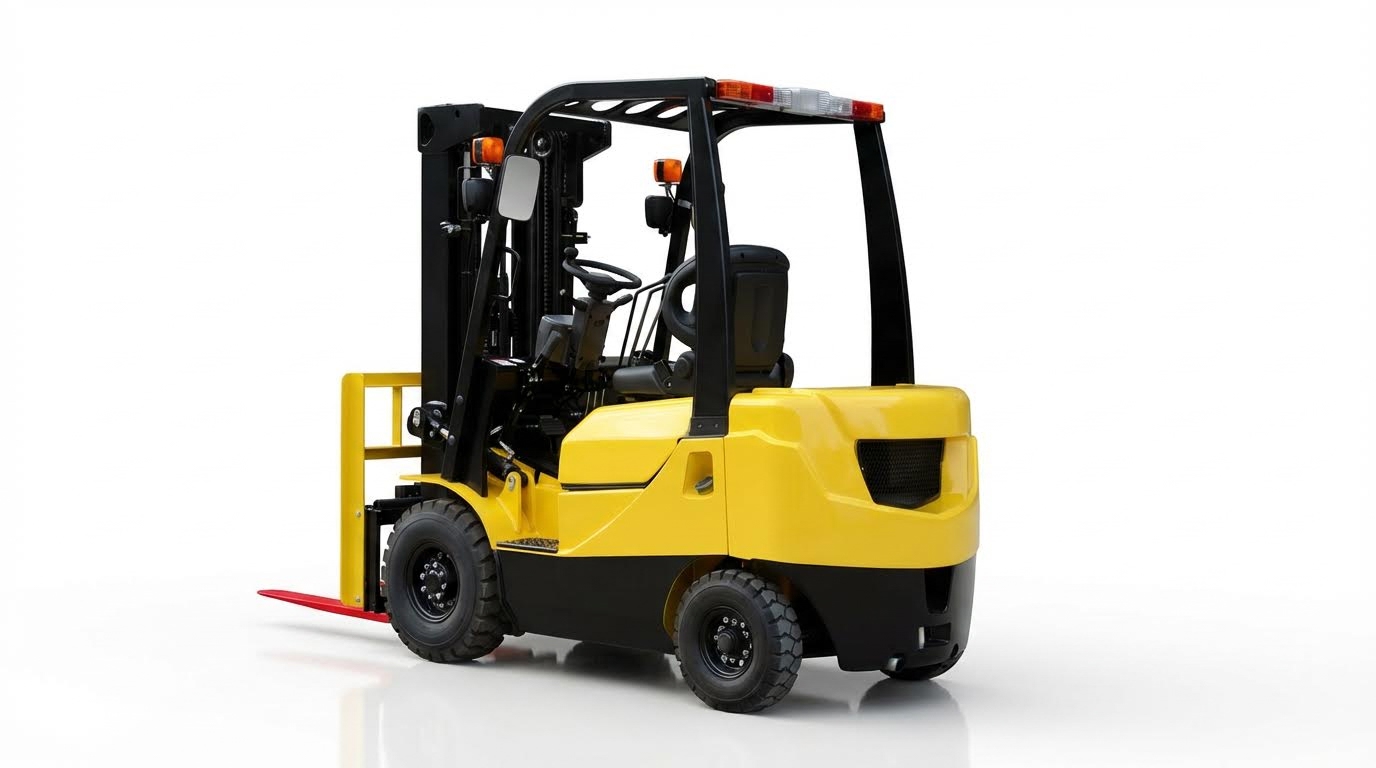
The final decision on how high a pallet can lift safely must balance rack design, equipment limits, and real-world operating conditions, not just catalog maximums or theoretical capacities.
Use this section as a checklist to turn the earlier engineering principles into a concrete equipment and height-selection decision.
- Start With The Load, Not The Truck: Define pallet size, weight range, and load height – this fixes your true load center and drives how high a pallet can lift safely.
- Fix The Top Beam Elevation First: Set maximum rack height from building, sprinkler, and local code limits – then choose trucks whose maximum fork height (MFH) clears that by 150–300 mm for maneuvering.
- Check Capacity Tables At Height: Use manufacturer derating charts at your real load center and target rack level – a truck that lifts 2,000 kg at 3 m may be under 1,000 kg at 13 m at full height.
- Match Equipment To Aisle Width: Compare actual clear aisle (rack-to-rack) with the turning or guided-aisle requirement – counterbalance trucks typically need wider aisles than reach or walkie reach units in high-bay layouts.
- Use The Right Class For The Height Band: Choose counterbalance up to about 7–8 m, reach trucks up to 12–13 m, and specialist systems beyond that – this keeps stability margins reasonable at each height band for palletized loads.
- Prioritize Floor And Rack Quality At High Bay: Specify flatness, rack stiffness, and seismic design for any racking above roughly 8–10 m – this directly limits mast sway and rack impact risk in narrow aisles.
- Factor Duty Cycle And Battery Into Height Decisions: Model how many lifts per hour go above 5 m, 8 m, and 10+ m – higher lifts consume more energy and may require larger batteries or extra charging to maintain performance.
- Build In Electronic Safety Margins: Specify height pre-selection, overload detection, and speed reduction at height – these systems effectively cap how high a pallet can lift in normal operation by blocking unsafe combinations of height, tilt, and travel speed on modern trucks.
- Use Digital Twins For Complex High-Bay Projects: For racks above roughly 10–12 m, use simulation to test truck paths, mast deflection, and oscillation – this validates how high a pallet can be lifted repeatedly without clipping racks or sprinklers before you pour concrete.
- Plan For Lifecycle Cost, Not Just Purchase Price: Recognize that every extra meter of mast height adds stress to chains, rollers, and hydraulics – slightly reducing the design height can cut long-term maintenance and energy use significantly in high-lift fleets.
- Align Procedures With Equipment Limits: Write SOPs that ban travel with elevated loads, define maximum allowed working height by load type, and require checks of MFH, OARH, and FFH before layout changes – this keeps daily practice aligned with engineered limits on how high a pallet can lift in your facility.
Quick Reference: Typical Safe Height Bands By Equipment Type
Use this as a rough screening tool before you dive into detailed capacity charts and simulations.
Equipment Type Typical Practical Lift Height Range (m) Best Use Case Operational Impact On “How High Can A Pallet Lift” Counterbalance Forklift 3–7 (up to ~8 with high mast) General warehouse, dock work, low–mid racking Economical up to mid-bay; beyond ~7–8 m, stability and capacity derating become limiting. Reach Truck 6–12.8 (up to ~13.7 max) Narrow-aisle high-bay racking Primary choice when you routinely store above 8–9 m with 900–1,500 kg loads. Walkie Reach Up to ~4.5–5 Short, narrow aisles, lighter loads Good bridge between stackers and ride-on reach; not ideal for deep high-bay work. Stackers (Manual/Walkie) 1.6–3.5 (up to 6–7 on full-electric) Small warehouses, mezzanines, light racking Cost-effective for low to mid heights; check floor slopes carefully above ~3 m. Standard Pallet Truck 0.19–0.21 Ground transport only Does not meaningfully affect storage height; only affects dock level differences. High-Lift / Scissor Pallet Truck 0.7–1.0 Ergonomic work height, packing Controls operator posture, not storage height; never used for racking. 💡 Field Engineer’s Note: When you are on the fence between two mast heights, I usually recommend picking the lower option and tightening your slotting strategy. An extra 1–2 m of theoretical lift often adds more mast sway, maintenance, and energy cost than the extra pallet positions are worth, especially if only a small percentage of SKUs ever need that very top level.
Final Considerations For Selecting Lift Heights And Equipment
Safe pallet lift height is never a single number from a brochure. It is the result of how geometry, stability, structure, and energy all interact in your building. Height and load center shift the combined center of gravity, so capacity must derate as masts extend. Floor flatness, aisle width, and pallet shape then decide whether operators can actually use that height without slowing down or hitting racks.
Engineering teams should start with the load and target rack height, then work backward through MFH, capacity charts, and aisle constraints. Set top beam levels below the mechanical maximum to allow for mast deflection, pallet height, and a clear safety margin. Match truck class to the height band, and upgrade floor and rack stiffness once you exceed about 8–10 m.
Operations teams should lock these limits into SOPs, training, and electronic aids, so operators cannot exceed safe combinations of weight, height, and speed. Use battery sizing, duty-cycle analysis, and digital-twin simulation where heights push 10 m and above. In practice, the best strategy is usually to accept slightly lower racks and shorter masts, then recover capacity through better slotting and equipment choice. That approach keeps trucks stable, maintenance predictable, and incidents rare while still delivering strong storage density.
Frequently Asked Questions
How high can a pallet lift?
A standard pallet lift, such as a manual or electric pallet jack, typically lifts to a height of around 150 mm (6 inches). However, specialized models, like scissor lifts or high-lift pallet trucks, can raise loads to heights of approximately 1630 mm (64 inches) or more. The exact lifting capacity depends on the design and intended application of the equipment.
- Standard pallet jacks: ~150 mm (6 inches).
- Specialized electric models: Up to 500 mm (20 inches).
- Scissor lifts or high-lift pallet trucks: Up to 1630 mm (64 inches).
For specific use cases, always refer to the manufacturer’s specifications. Pallet Jack Lift Guide.
What factors determine the maximum lift height of a pallet truck?
The maximum lift height of a pallet truck is influenced by several factors, including its design, load capacity, and operational environment. For instance:
- Manual pallet jacks are limited to lower heights (~150 mm or 6 inches).
- Electric pallet jacks can reach up to 500 mm (20 inches).
- Warehouse-specific equipment like scissor lifts can exceed 1630 mm (64 inches).
Always ensure the equipment matches the task requirements for safety and efficiency. Lift Height Guide.