A modern warehouse order picker lets you work safely in very narrow aisles while reaching high-bay storage locations that once needed wide-aisle forklifts or manlifts. This article walks through how these trucks function in tight geometry, the engineering behind their masts, platforms, and powertrains, and the safety standards that govern vertical picking. You will also see how to match equipment to your rack layout, which options and automation interfaces matter, and what to consider for long-term reliability and operator protection. Use it as a practical engineering guide to design, specify, and operate space-efficient high-bay storage with minimal risk and maximum throughput.
Core Functions Of Aerial Order Pickers In Narrow Aisles
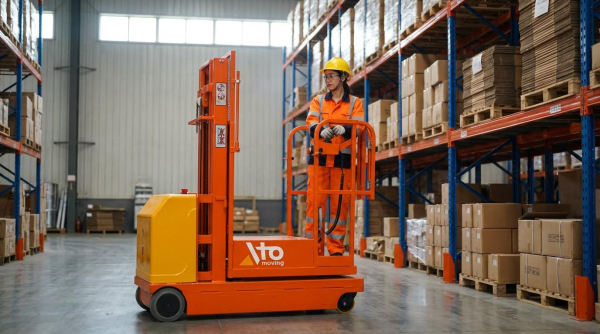
How Aerial Order Pickers Differ From Other Trucks
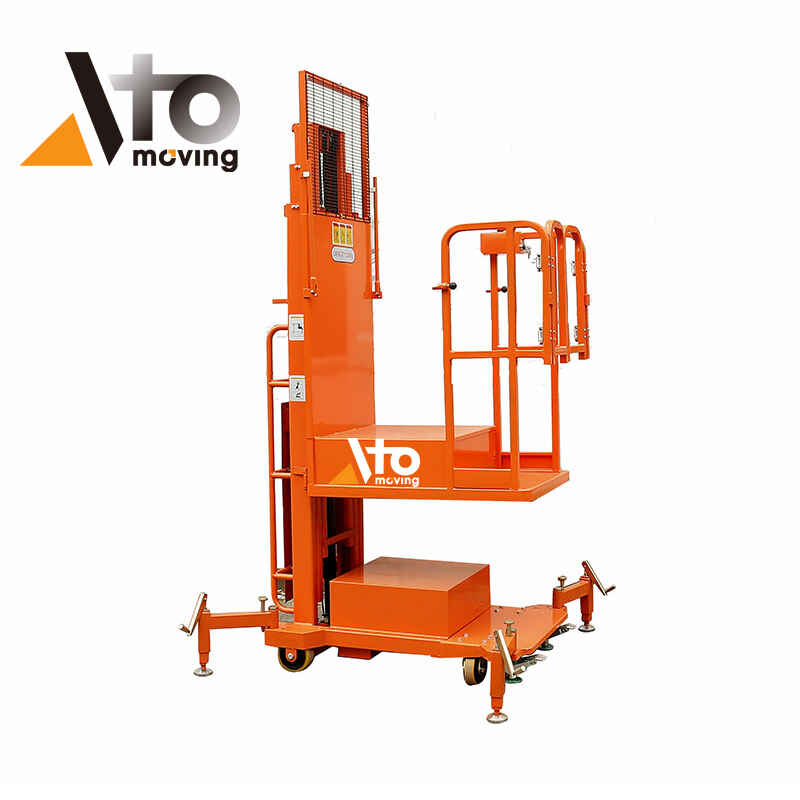
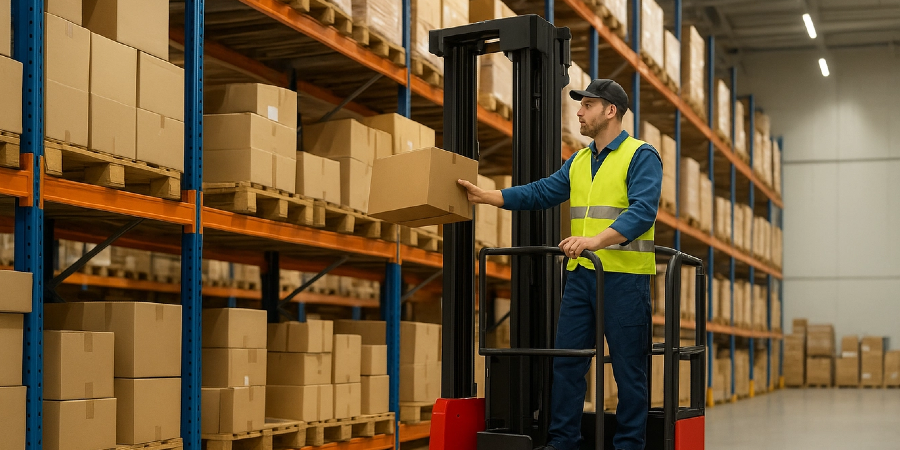
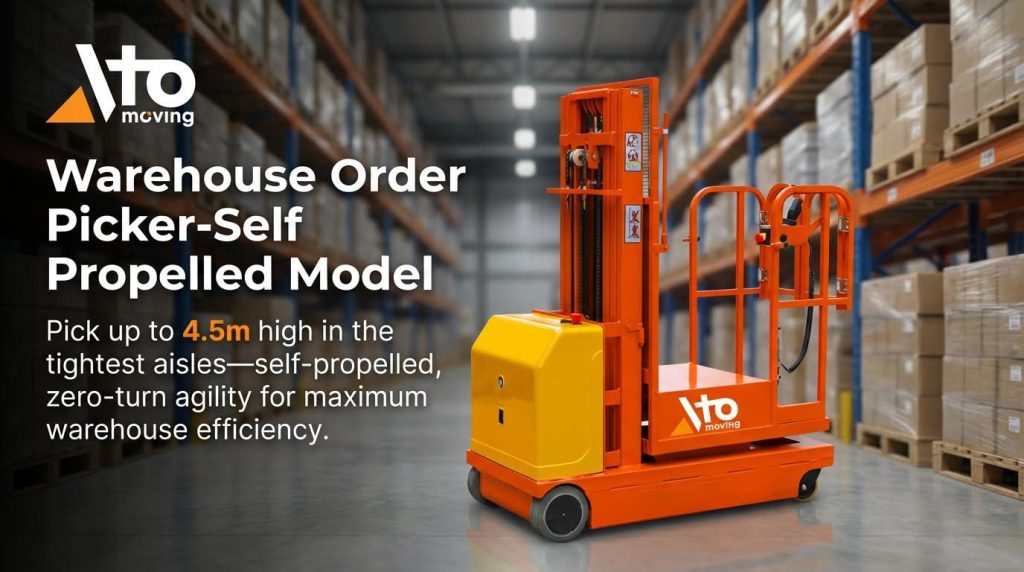
An warehouse order picker is a Class II electric narrow-aisle truck that lifts the operator with the load so individual items can be picked directly from rack locations, not just full pallets. That core function makes it very different from counterbalanced trucks and reach trucks in high-bay storage.
| Truck Type | Primary Role | Operator Position vs Load | Typical Aisle Width | Key Limitations / Notes |
|---|---|---|---|---|
| Counterbalanced truck | Floor-level pallet handling, dock work | Operator stays at floor level behind mast | ≈ 12 ft (144 in) or more for safe turning narrow aisle guidance | Consumes more aisle space; not suited for item-level picking at height |
| Reach truck | Pallet put-away and retrieval at height | Operator remains on chassis; load moves on pantograph or moving mast | Narrower than counterbalanced; still needs clearance for chassis and swing | Used for “high tiering”; heavy loads should not be lifted to maximum height for stability high tiering guidance |
| Aerial order picker | Person-up, item-level picking in high-bay racks | Operator platform and controls elevate with forks/load | Optimized for narrow-aisle systems under 12 ft; often guided in even tighter aisles specialized equipment | Requires fall protection, platform guarding, and strict speed limits when elevated |
Unlike a reach truck that moves full pallets, an aerial platform lets the operator step onto the rack face, handle cartons or eaches, and place them on a pallet or cage on the platform. This person-up design drives picking productivity but also triggers extra safety requirements.
- Operator must wear a properly fitted personal fall arrest system with lanyard rigged to prevent a free fall over 4 ft or contact with lower levels fall protection rule.
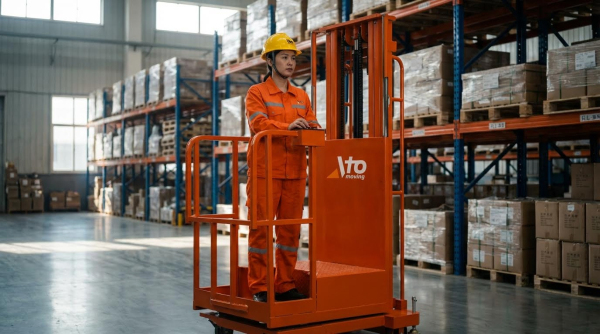
- The work platform must be at least 20 in wide with standard guardrails on all open sides and must be securely attached to the carriage and/or forks platform design.
- A flashing or rotating warning light between 4–6 ft elevation on the non-elevating portion must activate automatically when the platform is 6 ft or higher and the truck is moving warning light requirement.
Horizontal speed is also tightly controlled because the operator is elevated. When platform height exceeds 36 in, maximum travel speed must not exceed 2.5 mph (≈1.12 m/s), and travel is prohibited above 152 in unless the order picking machines is running in rails or an electronic guidance system speed restriction. These constraints are central to safe, repeatable vertical picking.
Load handling differences in practice
All powered trucks must keep loads within rated capacity and handle only stable or safely arranged loads. Order pickers add complexity because the operator may manually re-stack cartons at height. Tilting the load forward with the load engaging means elevated is not allowed, except when picking up or depositing a load over a rack or stack load handling guidance. That rule protects both rack integrity and operator stability.
Narrow-Aisle Geometry And High-Bay Capabilities

The main value of an aerial order picker is safe, repeatable access to high-bay storage while using less aisle width. Narrow-aisle rack systems increase storage density compared with conventional rack layouts, but they require trucks engineered specifically for tighter geometry and high lift heights narrow-aisle systems.
| Geometric / Performance Aspect | Typical Narrow-Aisle / High-Bay Value | Functional Impact for Vertical Picking |
|---|---|---|
| Aisle width | Less than 12 ft for narrow-aisle storage; guided order pickers can work in significantly tighter clearances than counterbalanced trucks aisle width reference | Higher pallet positions per bay and more storage locations per building footprint. |
| Lift height | Vertical order pickers can reach up to about 14.5 m with load capacities up to about 1,200 kg high-bay capability | Supports true high-bay storage with multiple rack levels while still enabling person-up picking. |
| Mast configurations | Standard masts around 8.5 m; triplex masts extending beyond 11–12 m for higher bays mast options | Triplex masts allow more lift in the same building height by nesting mast stages. |
| Turning radius and aisle fit | Example person-up units with triplex masts show turning radii around 2,300 mm and can operate in aisles around 1,820 mm for standard pallets along the forks turning radius | Geometry is optimized so the chassis, platform, and load clear rack uprights with minimal side clearance. |
| Horizontal travel speed | Some designs can travel up to about 13 km/h at low height, subject to local speed and elevation limits travel speed; elevated speeds must respect limits such as 2.5 mph above 36 in platform height elevation-based limit | High ground-level speed supports productivity; strict reduced speed or no-travel rules at height protect the operator. |
Because the operator is elevated close to rack beams and stored product, collision prevention is critical in narrow aisles. Where aerial order pickers or similar trucks operate, physical guide rails or electronic guidance systems are required to prevent contact with racks and loads collision prevention. Many modern units add personal safety sensors and warning lines to further reduce risk.
- Guide rails or wire/rail guidance keep the truck centered in the aisle so the operator can focus on picking instead of steering corrections.
- Speed reduction or travel cut-out when the platform passes defined heights reduces kinetic energy in any potential incident.
- Warning lights and audible alarms alert pedestrians when a truck is moving with the platform raised.
How narrow-aisle geometry influences your layout
When you design a high-bay layout around an aerial order picker, you can shrink aisle width compared with counterbalanced layouts and increase rack height to the limits of the building and local codes. The trade-off is that every dimension becomes critical: pallet overhang, rack beam deflection, floor flatness, and clearances at cross-aisles all affect safe operation. Properly matching truck geometry to rack design, guidance type, and pick profile is what turns narrow aisles into a safe, space-efficient system rather than a bottleneck.
Engineering Design, Safety Standards, And Performance
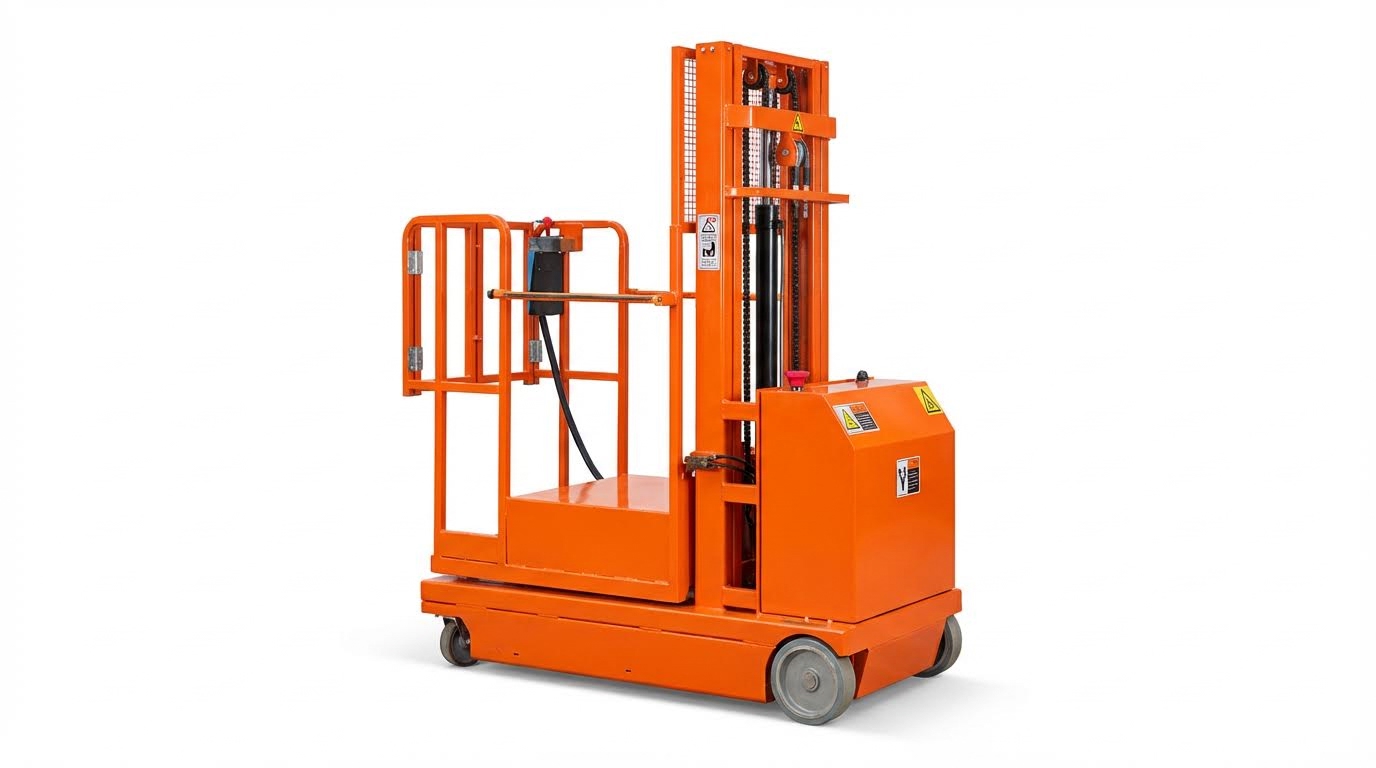
Engineering choices on the mast, platform, powertrain, and controls determine how safely and efficiently an warehouse order picker works in high-bay, narrow-aisle storage. This section focuses on structural design, operator protection, and maintenance strategies that keep vertical picking reliable over the long term.
Mast, Platform, And Load Capacity Engineering
The mast, platform, and load frame of an aerial platform must work as a single, stable structure. Design aims are simple: carry the rated load to full height, stay within deflection limits, and protect the operator if something goes wrong.
| Design Aspect | Typical Engineering Focus | Key Safety / Performance Notes |
|---|---|---|
| Mast type & height | Standard / duplex / triplex telescopic masts; heights up to ~14.5 m for vertical order pickers cited data | Higher masts need tighter deflection limits and electronic speed reduction at height. |
| Rated load capacity | Typically up to ~1,200 kg for high-level units cited data | Capacity is defined at a specific load center; heavy loads should not be lifted to maximum height. |
| Platform width | Minimum 20 in (≈510 mm) work platform width cited data | Ensures minimum standing space and lateral stability for the operator. |
| Guardrails | Standard guardrails on all open / exposed sides of the platform cited data | Critical for fall prevention, especially at high-bay levels. |
| Platform attachment | Platform rigidly attached to lifting carriage and/or forks cited data | Prevents separation under shock loads or emergency stops. |
| Warning light | Flashing/rotating light mounted 4–6 ft above floor on non‑elevating portion cited data | Auto-activates when platform ≥6 ft and truck is moving to warn pedestrians. |
Safe load handling on an order picking machines depends as much on process as on steel thickness. Only stable, properly arranged loads should be lifted, and operators must respect the rated capacity at the specified load center. Tilting forward with an elevated load is only acceptable when actually picking up or depositing over a rack or stack. cited data
- Keep the heaviest loads below the maximum lift height to maintain stability.
- Avoid off‑center loads; if unavoidable, reduce height and travel speed.
- Use guide rails or electronic guidance in narrow aisles to prevent rack strikes. cited data
Engineering checks for mast and platform integrity
Routine engineering reviews should include mast rail alignment, chain elongation measurement, weld inspection at critical joints, and verification that lift/lower speeds remain within specification under rated load. Chains and rails need cleaning and lubrication per OEM schedules, with any cracked links, tight spots, or flat‑spotted rollers triggering immediate repair. cited data
Operator Safety, Fall Protection, And Speed Control
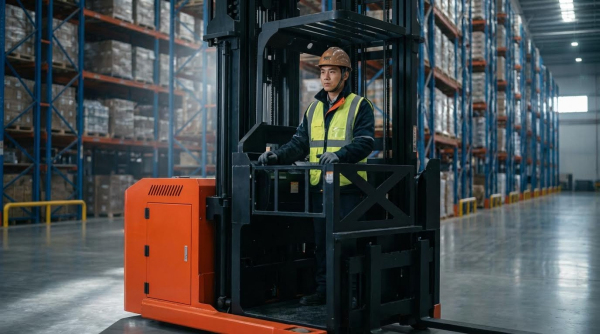
Because an semi electric order picker elevates the operator, fall protection and speed management are non‑negotiable design elements. Standards define how the platform, harness system, and travel controls must behave as height increases.
- Operators must wear personal fall arrest systems with lanyards rigged to limit free fall to under 4 ft and prevent contact with lower levels. cited data
- Side barriers and guardrails must be closed and locked before the truck can operate above defined heights (e.g., 1.2 m), using electrical monitoring to enforce compliance. cited data
- Emergency lowering valves must be accessible from ground level so a stranded operator can be brought down quickly. cited data
| Control / Limit | Typical Requirement | Purpose on an Aerial Order Picker |
|---|---|---|
| Platform travel speed limit | When platform > 36 in high, max horizontal travel ≤ 2.5 mph (≈1.12 m/s) cited data | Reduces risk of tip‑over and collision when elevated. |
| Travel prohibition at extreme height | No travel allowed when platform > 152 in (≈3.86 m), except on rail‑guided or electronic guidance trucks cited data | Prevents lateral instability and rack impact in free‑steering mode. |
| Warning light activation | Light auto‑activates when platform ≥ 6 ft and truck is moving cited data | Improves pedestrian awareness around high‑bay traffic. |
| Pedestrian safety zones | Red warning lines or projected light zones around truck path cited data | Visually defines “no‑go” areas for pedestrians in narrow aisles. |
| Collision avoidance | Mobile personal safety equipment (PSE) that stops truck when people or obstacles are detected cited data | Reduces impact risk in dense storage and blind‑corner zones. |
From an engineering perspective, these safety systems must be fail‑safe and testable. Daily pre‑shift checks should verify the horn, emergency stop, deadman controls, backup alarm, and any speed‑by‑height reductions are working correctly. Any defect requires immediate lockout and escalation to maintenance.
Checklist: Pre‑shift safety checks for vertical picking
Before using an aerial order picker, operators should:
- Inspect platform, guardrails, and gates for damage or loose fasteners.
- Confirm fall‑arrest anchor points and lanyards are present and undamaged.
- Test travel, lift, and lower controls for smooth, predictable response.
- Check warning lights, alarms, and any projected safety zones.
- Verify that elevated speed reduction and travel‑at‑height interlocks engage correctly during a short functional test. cited data
Powertrains, Batteries, And Predictive Maintenance
Most aerial order picker designs use electric powertrains for clean, controllable operation in narrow aisles. Travel speeds can reach about 13 km/h at ground level, depending on configuration, with automatic derating as the platform rises. cited data
- Encapsulated travel and lift motors protect against dust and reduce unplanned downtime. cited data
- Traction batteries must be correctly restrained, with connectors latched and state of charge kept above typical lower limits (often >20%). cited data
- Interlocks must prevent drive while charging and support smooth regenerative braking where fitted.
| Maintenance Layer | Typical Activities | Impact on Aerial Order Picker Performance |
|---|---|---|
| Daily operator checks | Visual inspection of forks, carriage, platform, mast, hoses; function test of horn, emergency stop, deadman, brakes, steering. cited data | Catches obvious defects before vertical operation, reducing risk of in‑aisle failures. |
| Weekly technical inspections | Check hydraulic oil levels, hoses, pump noise; inspect chains, mast rails, wheels, and stability‑related systems. cited data | Maintains smooth lift/travel, preserves mast alignment in narrow aisles. |
| Planned monthly / quarterly service | Cleaning, lubrication, hydraulic checks, full electrical tests, charger validation, battery capacity tests. cited data | Prevents gradual performance loss and unexpected lift or travel cut‑outs. |
| Annual professional maintenance | Structural inspection of mast and forks, calibration of limit switches, overload sensors, and speed maps; firmware updates. cited data | Keeps safety functions accurate and aligns truck behavior with current standards. |
Modern fleets use IoT and digital tools to move from reactive fixes to predictive care. Sensors on an aerial order picker can stream hour counts, lift cycles, motor currents, battery voltage curves, and shock events into dashboards. Engineers then predict wear on chains, brakes, and batteries before they fail and schedule work in low‑demand windows. cited data
Using data to improve uptime and safety
<
Selecting And Applying Order Pickers In Your Facility
Matching Truck Class To Aisle Design And Storage Profile
Choosing the right warehouse order picker starts with your aisle geometry, rack heights, and SKU profile. Narrow-aisle layouts typically run under 12 ft (144 in) wide, which rules out standard counterbalanced trucks and demands Class II narrow-aisle equipment such as reach trucks and order pickers. Narrow aisle storage systems use specialized reach and order picker trucks below 144 in aisle width. The goal is to match truck class and mast to your highest pick level while keeping loads well within rated capacity at that height.
| Design Factor | Key Questions | Implication For Aerial Order Picker |
|---|---|---|
| Aisle width | Are aisles < 12 ft (144 in)? Are there guide rails? | Requires Class II narrow-aisle trucks; consider rail or electronic guidance in very tight aisles. Narrow aisles need specialized trucks |
| Rack height / highest pick level | What is the top picking elevation, not just storage height? | Select mast height with reserve above top pick; vertical order pickers can reach about 14.5 m with capacities up to ~1,200 kg. High-level order pickers reach ~14.5 m |
| Load size and weight | Typical pallet dimensions and maximum load per pick? | Ensure rated capacity at full lift exceeds heaviest expected load; do not lift heaviest loads to maximum height as a routine practice. Heaviest loads should not be lifted to maximum height |
| SKU velocity and pick density | Are picks concentrated in a few levels or spread to full height? | High-bay, man-up order picker suit dense vertical picking; supplement with ground-level equipment for fast movers. |
| Turning radius and transfer aisles | Do you have enough space for turning in cross aisles? | Triplex-mast order pickers can turn in ~2.3 m radius and operate in ~1.82 m aisles with 800 × 1,200 mm pallets along forks. Example turning radius and aisle width |
For high-bay storage, the order picking machines usually work alongside reach trucks. Reach trucks handle pallet put-away and retrieval, while order pickers elevate the operator to pick cases or eaches. Stability margins are critical at height, so do not plan operating scenarios that push the truck to its maximum lift and capacity envelope at the same time. Loads must remain stable, within the truck’s rated capacity, and positioned to avoid off-center conditions that reduce stability. Only stable, safely arranged loads within rated capacity should be handled.
Practical matching examples
• Low-bay (up to ~6–7 m) with moderate SKU count: medium-level order picker, standard mast, shared aisles with reach trucks.
• High-bay (10–14 m) with dense case picking: high-level man-up order picker, triplex mast, rail-guided very narrow aisles.
• Mixed pallet and case picking: reach trucks for full pallets, aerial order picker for case picks in the same rack face, with speed limits enforced above 36 in platform height. Platform speed and travel limits apply above set heights
Specifying Options, Guidance, And Automation Interfaces
Once the basic truck class and mast are defined, you configure options that protect people, racks, and the truck itself. For narrow aisles, physical guide rails or electronic guidance reduce collision risk with uprights and stored loads. Guide rails or electronic guidance are required where order pickers operate in aisles. Integrated navigation and automation-ready interfaces then tie the aerial platform into your warehouse management and safety systems.
- Guidance and collision prevention
- Rail guidance in very narrow aisles to prevent rack strikes.
- Electronic guidance using sensors to keep the truck centered in the aisle.
- Mandatory protective measures when order pickers or side loaders operate in aisles with storage racks. Protective measures must prevent collisions with racks or stored material
- Speed, height, and warning systems
- Automatic speed reduction when the platform exceeds 36 in, with maximum horizontal speed limited to about 2.5 mph (1.12 m/s). Platform speed above 36 in must not exceed 2.5 mph
- Travel lockout when the platform is elevated above about 152 in, unless the truck is designed for guided travel at height. Travel is prohibited above 152 in except for guided trucks
- Flashing or rotating warning light mounted 4–6 ft high on the non-elevating portion of the truck, auto-activating when the platform reaches 6 ft and the truck moves. Warning lights must activate at 6 ft platform height during motion
- Platform and operator protection options
- Platform width of at least 20 in with standard guardrails on all open sides. Work platforms must be at least 20 in wide with guardrails
- Secure attachment of the platform to the lifting carriage and/or forks, verified during commissioning. Platforms must be securely attached to the lifting means
- Electrically monitored side barriers that prevent elevation above a set height (for example, 1.2 m) unless closed. Side barriers can be electrically monitored to prevent unsafe operation
- Personal fall arrest systems for operators, with lanyards rigged to prevent free fall over 4 ft or contact with lower levels. Fall protection must prevent free falls over 4 ft
For automation and digital integration, many modern aerial order pickers support navigation and AGV conversion kits. Some vertical order pickers can be upgraded with automation components to function as automated guided vehicles that work under warehouse management system control. Certain high-level order pickers can be transformed into AGVs. Optional integrated navigation allows the truck’s control computer to communicate directly with the WMS, guiding the machine to specific rack positions and heights.
| Option Category | Typical Features | Benefit In High-Bay Narrow Aisles |
|---|---|---|
| Automation-ready hardware | AGV conversion kits, safety scanners, remote stop interfaces. Vertical order pickers can be equipped as AGVs | Enables semi- or fully automated travel and positioning, reducing operator walking and search time. |
| Integrated navigation | Communication between truck controller and WMS, position feedback, height presets. Optional warehouse navigation systems are available | Faster, more accurate vertical and horizontal positioning; minimizes rack impact risk. |
| Predictive maintenance connectivity | IoT sensors, hour counters, shock and temperature monitoring. IoT-enabled trucks stream operating data for predictive care | Allows condition-based service on chains, brakes, and batteries, reducing unplanned downtime. |
| Ergonomic and safety add-ons | Vibration-damped floors, ergonomic controls, red warning lines, mobile personal safety equipment. High-level order pickers offer ergonomic cabs and warning systems | Reduces operator fatigue and improves pedestrian awareness in dense warehouse traffic. |
Maintenance and lifecycle planning tips
• Build pre-shift inspection checklists for forks, platform, mast, hydraulics, and safety devices; lock out trucks with defects. Pre-shift checks must cover structural and safety components
• Schedule weekly hydraulic and lifting-structure inspections, focusing on hoses, chains, and mast rails.
• Use IoT data (lift cycles, motor currents, shock events) for predictive maintenance, especially on high-cycle aerial order picker fleets. IoT signals support prediction of component wear
• Align software updates for controllers and WMS interfaces with planned downtime to avoid disrupting picking operations. Professional maintenance includes firmware and interface updates
“”
Final Considerations For Safe, Productive Vertical Picking
Aerial order pickers unlock high-bay, narrow-aisle storage by tightly coupling truck geometry, structural design, and safety controls. Mast stiffness, guarded platforms, and rated capacities set the hard limits for safe elevation. Guidance systems, speed-by-height limits, and warning devices then manage risk as the operator works close to racks and product. When engineers respect these limits in the layout, the result is dense storage without unstable loads or rack strikes.
Operations teams must treat each dimension as critical data, not approximation. Aisle width, pallet overhang, rack height, and turning space must match the actual truck envelope, not just catalog values. Maintenance and IoT monitoring keep chains, batteries, and safety interlocks inside their design window so elevated work stays predictable. Training then ties everything together, so operators understand why rules on fall protection, speed, and load placement exist.
The best practice is clear: design the rack system and aisle geometry around the order picker, specify guidance and safety options up front, and enforce strict inspection and operating rules. Used this way, Atomoving aerial order pickers deliver high-density, high-throughput vertical picking with controlled, engineered risk rather than trial-and-error compromise.
Frequently Asked Questions
What is an aerial order picker?
An aerial order picker, often referred to as a cherry picker in some contexts, is a type of aerial work platform (AWP) used to lift personnel to high shelves or areas in warehouses. It provides temporary access to otherwise inaccessible areas, usually at height. These devices are essential for efficient inventory management in large warehouses. Aerial Work Platform Overview.
What safety precautions should be taken when using an aerial order picker?
Falls are the most common cause of aerial lift accidents, often resulting from operator negligence or not using proper safety restraints. To ensure safety, always use the provided harnesses and follow manufacturer guidelines. Additionally, regular equipment checks can prevent accidents. Scissor Lift Safety Tips.
What is the difference between a boom lift and an aerial order picker?
Boom lifts generally complete jobs more quickly and are suitable for more complex tasks compared to aerial order pickers. However, they tend to be more expensive and may require additional training to operate effectively. Aerial order pickers are typically less costly and easier to handle. Boom Lifts vs. Cherry Pickers.