Warehouse teams that want to know how to increase picking efficiency in warehouse operations must engineer layout, equipment, and data as a single integrated system. This article walks through how to design fast picking zones, select the right handling and automation technologies, and use real-time information to continuously remove wasted travel and errors. From aisle geometry and slotting rules to warehouse order picker systems and analytics-driven labor management, each section connects practical engineering decisions to measurable gains in throughput and accuracy.
The complete guide targets operations leaders, industrial engineers, and logistics professionals who need to scale fulfillment performance while controlling cost per order and maintaining safety and ergonomics. By the end, you will have a structured framework to redesign your warehouse for higher picking productivity, lower error rates, and better use of labor and capital assets like scissor platform lift or walkie pallet truck.
Engineering Your Warehouse Layout For Fast Picking
Engineering the physical layout is the fastest lever for how to increase picking efficiency in warehouse operations. A well-structured design shortens walk distances, reduces touches, and stabilizes inventory accuracy. The goal is to align flows, aisles, and storage media with demand patterns and product characteristics so pickers move purposefully instead of wandering. This section focuses on how layout decisions translate directly into higher pick rates and fewer errors.
Separating flows: picking, returns, and value-add zones
Separating flows is fundamental when deciding how to increase picking efficiency in warehouse environments. Picking, returns, and value-add work should operate in distinct, clearly signposted zones with defined interfaces. Mixing returns with active pick faces historically created stock confusion, unrecorded put-backs, and mispicks. A dedicated returns area near receiving allowed inspection, disposition, and system updates before items re-entered stock. Value-add tasks, such as kitting, relabeling, or light assembly, ran best in their own cells adjacent to storage, not inside main pick aisles. This reduced ad hoc work in the picking area and kept pick paths clean, which cut congestion and improved safety. Clear material and information flows between these zones, supported by the WMS, ensured inventory status stayed accurate at all times.
Aisle design, pick paths, and congestion control
Aisle design directly affects travel time and congestion, which dominate labor cost in order picking. Wide aisles supported forklifts and high-throughput pallet moves, while narrow or very narrow aisles increased storage density for small-item picking. Facilities that optimized how to increase picking efficiency in warehouse operations often used a hybrid: wider main arteries with narrower picking aisles feeding them. Pick paths followed defined methods such as serpentine or U-shaped routes to avoid backtracking. A WMS or layout analysis identified high-traffic intersections and created one-way flows or alternate paths to reduce picker conflicts. Angled aisles sometimes improved sight lines and shortened routes in irregular buildings. Marked pedestrian lanes, equipment traffic rules, and staged overtaking points further reduced congestion and accident risk during peaks.
Slotting by demand, ergonomics, and product physics
Effective slotting combined demand data, human factors, and product physics. ABC analysis placed the highest-velocity SKUs closest to main pick stations and at waist-to-chest height to minimize bending and reaching. Slower movers went higher, lower, or deeper into the layout, preserving prime real estate for fast movers. Heavy or bulky items occupied lower levels to reduce lifting risk and allow pallet or cart access. Fragile goods avoided high-traffic or vibration-prone positions and often used dedicated shelving. Velocity-based slotting rules, maintained by a WMS or analytics tool, periodically rebalanced locations as demand shifted seasonally. This data-driven slotting approach reduced travel distance per line, cut fatigue, and lowered mispick rates, which directly improved how to increase picking efficiency in warehouse operations.
Pick modules, carton flow, and compact storage use
Pick modules concentrated high-velocity SKUs into multi-level structures that combined shelving, pallet positions, and conveyor or cart access. Carton flow racks within these modules used gravity to feed product from a rear replenishment aisle to a front pick face. This separation allowed forklifts or manual pallet jack to replenish from the back while pickers worked safely in front with minimal interference. Carton flow suited medium-turn items where continuous availability at the pick face mattered. Static shelving, sometimes in very compact footprints, handled slower SKUs without over-investing in flow hardware. Compact storage systems, such as drive-in or mobile pallet racking around the pick module, preserved floor space for high-density picking zones. By concentrating picks, integrating vertical space, and reducing travel between lines, well-designed pick modules and carton flow systems significantly improved line productivity and supported scalable strategies for how to increase picking efficiency in warehouse operations.
Selecting Equipment To Reduce Travel And Errors
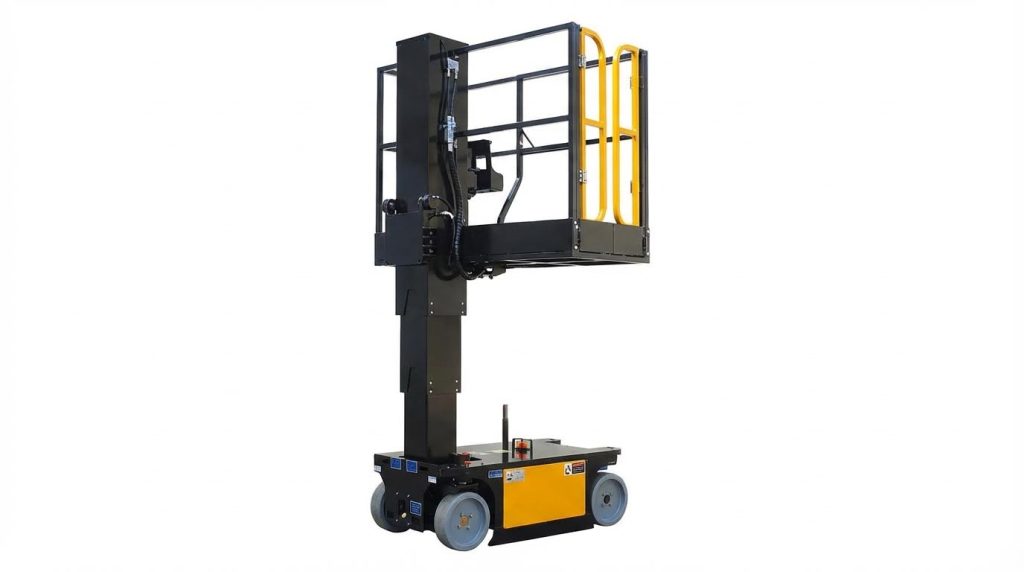
Equipment choices directly determine how to increase picking efficiency in warehouse operations. The goal is to cut travel distance, compress decision points, and engineer repeatable accuracy. Selecting the right mix of mechanization, automation, and operator guidance systems reduces mispicks and stabilizes cycle times across shifts.
Comparing person-to-goods vs. goods-to-person concepts
Person-to-goods systems kept pickers walking or riding to storage locations. These systems relied on optimized layouts, batch picking, and basic equipment like pallet jacks or order-picking trucks to control travel. Goods-to-person concepts reversed this flow and brought totes, cartons, or trays to fixed pick stations using conveyors, shuttles, or AMRs. Goods-to-person usually delivered higher lines-per-hour and lower error rates, because software sequenced work and minimized human routing decisions. However, person-to-goods remained more flexible for changing SKU profiles and lower volumes, while goods-to-person required higher capital and careful throughput modeling to avoid bottlenecks.
Conveyors, tote picking, and integrated pick modules
Conveyors reduced non-value-adding walking by moving cartons or totes between zones and consolidation points. In a typical tote-picking design, operators picked directly into destination totes that traveled on conveyors or carts, combining picking and consolidation in one pass. Integrated pick modules stacked pallet or carton flow, shelving, and conveyors vertically, so pickers stayed in dense SKU zones while cartons flowed past. Gravity-fed carton flow lanes ensured automatic replenishment of the pick face from rear aisles, which kept pickers continuously productive and cut waiting time. Engineering these modules required careful calculation of SKU velocity, carton dimensions, and ergonomic reach envelopes to avoid congestion and maximize picks per hour.
Picking assistance: RF, voice, and pick-to-light systems
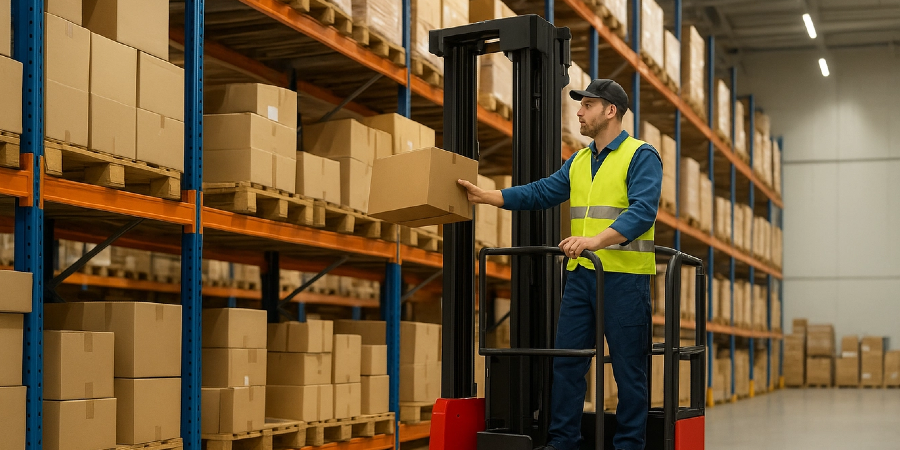
RF scanning devices connected to the WMS gave operators step-by-step instructions and real-time validation of picks. This reduced paper handling, improved traceability, and supported dynamic re-slotting strategies. Voice-picking systems used headsets and speech recognition to guide pickers hands-free, which improved ergonomics and allowed faster movement and carton handling. Pick-to-light arrays mounted on rack faces displayed location, quantity, and confirmation buttons, which minimized search time and visual confusion for high-velocity SKUs. These assistance technologies directly supported how to increase picking efficiency in warehouse operations by cutting cognitive load, enforcing scan or button confirmations, and feeding accurate timestamps into analytics.
Robotics, cobots, and AMRs in order fulfillment
Autonomous mobile robots (AMRs) transported totes or racks between storage and pick zones, removing long walking legs from picker workflows. In person-to-goods variants, AMRs met pickers at static workstations, while software optimized robot dispatching and route selection to avoid congestion. Collaborative robots assisted with repetitive pick-and-place tasks, pallet building, or kitting, particularly for heavy or awkward items that increased musculoskeletal risk. Robotic picking arms, combined with vision systems, handled high-throughput, small-item picking where consistent packaging and barcoding allowed reliable grasping. When engineered correctly, these robotic layers integrated with WMS logic, safety systems, and conventional equipment to deliver higher throughput, lower error rates, and more stable performance during demand peaks.
Data-Driven Optimization Of Picking Operations
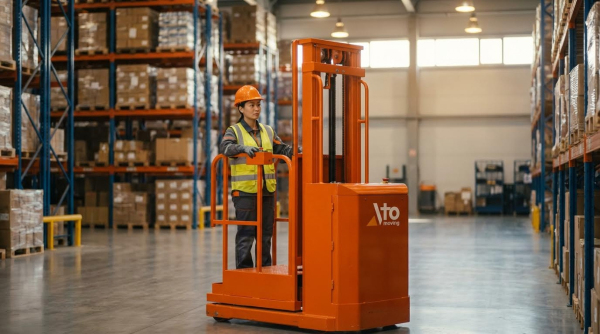
Data is the primary lever when you ask how to increase picking efficiency in warehouse operations at scale. Well-implemented digital systems reduce searching, rehandling, and mispicks, while also exposing bottlenecks that are invisible on the floor. The goal is closed-loop control: capture clean data, analyze it quickly, then drive layout, slotting, labor, and equipment decisions back into daily execution.
WMS, ERP integration, and real-time inventory control
A Warehouse Management System sits at the core of data-driven picking optimization. It tracks every SKU by location, batch, and status, enabling real-time inventory visibility and guided picking workflows. Integrating the WMS with the ERP synchronizes order data, stock levels, and shipping commitments, eliminating manual re-entry and timing mismatches. This integration allows orders to flow automatically into pick waves, with the WMS selecting strategies such as batch, wave, or zone picking based on rules. Real-time inventory control relies on RF or RFID capture at receiving, put-away, replenishment, and picking, so the system can prevent stockouts at pick faces and trigger timely replenishment. Accurate location data directly reduces search time and mispicks, which is central to how to increase picking efficiency in warehouse environments.
Choosing and tracking picking KPIs and cycle times
Clear KPIs translate raw data into operational decisions. Typical picking KPIs include lines picked per labor hour, picks per person-hour, order picking accuracy percentage, and internal order cycle time from release to completion. Measuring cycle time at each stage, such as travel, search, pick, verification, and exception handling, highlights where engineering changes will yield the largest gains. Automated data capture through WMS logs and labor management modules removes the bias of manual time studies. Dashboards should segment performance by zone, shift, and SKU family, so engineers can test layout changes, new equipment, or process tweaks and see the impact quickly. Consistent KPI tracking supports continuous improvement loops and justifies investments in automation or additional software capabilities.
Using analytics and AI to refine slotting and routes
Analytics and AI use historical and real-time data to answer how to increase picking efficiency in warehouse networks without constant trial and error. Velocity analysis ranks SKUs by order frequency and cube movement, providing the basis for ABC slotting and ergonomic placement. Advanced WMS or analytics tools can propose dynamic slotting rules that adjust locations based on seasonality, promotions, or demand peaks. Route optimization algorithms minimize travel distance by sequencing picks within an order or wave, reducing backtracking and congestion. AI models can also detect patterns in mispicks, such as similar SKU codes or problematic bin locations, prompting relabeling or physical reconfiguration. Over time, these tools turn the warehouse into a self-optimizing system where each new data set refines the next slotting and routing plan.
Labor balancing, training needs, and gamification
Data-driven labor management balances workload and supports targeted training. Labor management modules compare standard times with actuals by task, zone, and operator, revealing underloaded areas and overloaded bottlenecks. Supervisors can reassign pickers between zones or adjust pick wave release logic to smooth peaks and troughs. Performance data also highlights training needs, such as operators with high error rates in specific product families or storage systems. Structured training programs then focus on those weaknesses, improving both speed and accuracy. Gamification overlays, such as real-time leaderboards, badges, or picker-of-the-month programs, use the same performance data to increase engagement. When designed carefully, these mechanisms reward accuracy and safety as well as speed, aligning human behavior with the technical objective of how to increase picking efficiency in warehouse order picker operations sustainably.
Summary: Key Design, Equipment, And Data Takeaways
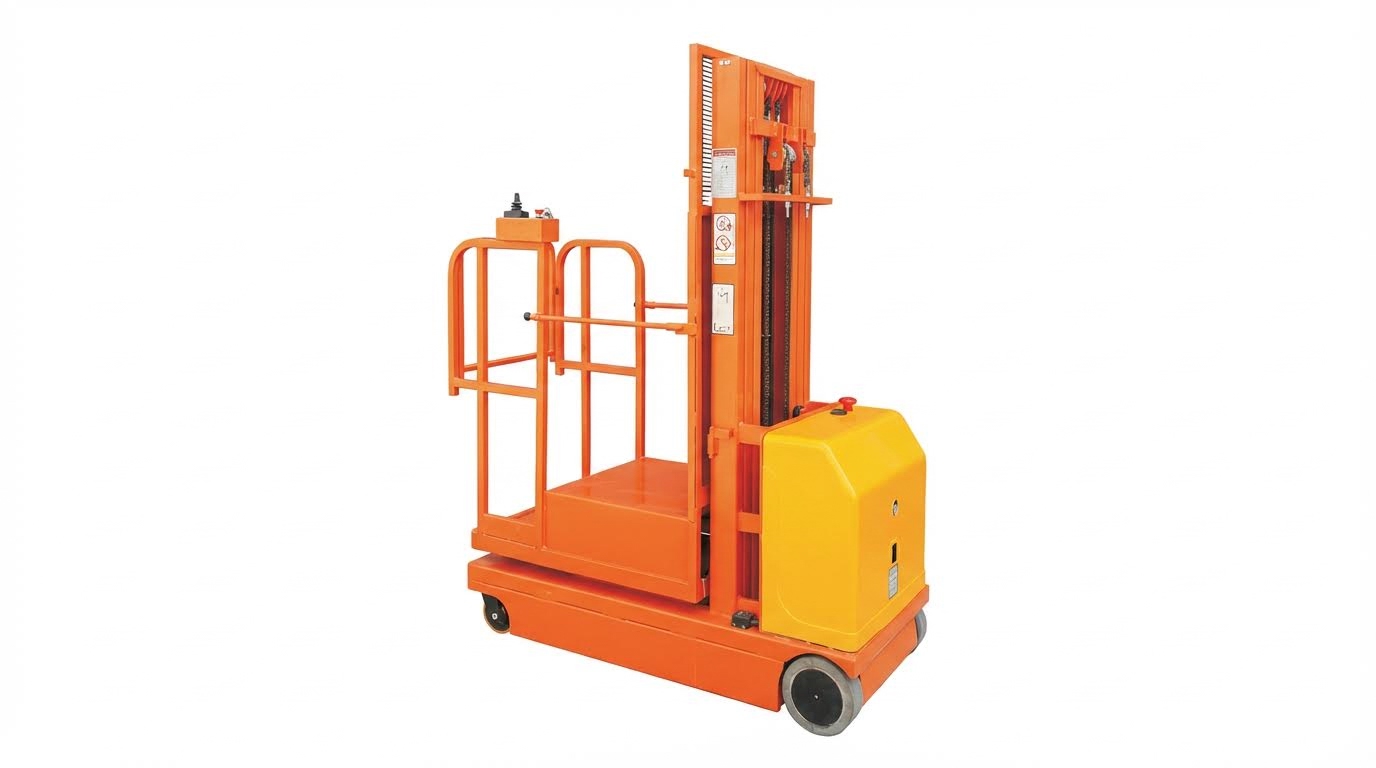
Engineering how to increase picking efficiency in warehouse operations required coordinated changes in layout, equipment, and data. The layout section highlighted physical flow separation, optimized aisles, and demand-based slotting to shorten travel and reduce congestion. The equipment section focused on choosing between person-to-goods and goods-to-person concepts, plus conveyors, picking assistance, and robotics to cut non-value-adding motion and error. The data section showed how integrated WMS/ERP, KPIs, and analytics continuously refine slotting, routes, and labor balance.
From a technical standpoint, the key design takeaway is to treat the picking area as a dedicated, engineered system. Clear separation of picking, returns, and value-add zones, supported by carton flow, pick modules, and compact storage, increases pick density and protects inventory accuracy. On the equipment side, the most impactful improvements come from automating repetitive travel with conveyors or AMRs, then guiding human decisions with RF, voice, or order picking machines. These tools standardize process steps, enforce pick sequences, and materially lower mispick rates.
Data closes the loop. A WMS integrated with ERP, real-time inventory capture, and analytics on cycle times and error patterns allow continuous recalibration of slotting rules, pick paths, and staffing. Predictive models adjust to seasonality and demand peaks, while labor dashboards expose training needs and support gamification. Looking ahead, warehouses will increasingly blend dense, automation-ready layouts with modular equipment and AI-driven decision support. Facilities that regularly review KPIs, refresh layouts, and right-size automation will stay flexible, control costs, and sustain high picking efficiency as order profiles and service expectations evolve. For instance, integrating tools like the scissor platform lift or the walkie pallet truck can further enhance operational efficiency.