Cherry pickers have become a core tool for reaching high storage locations, maintaining racking, and improving order fulfillment in modern warehouses. This guide explains what is cherry picking in warehouse operations, how the equipment works, and how to run it safely and efficiently. You will see where cherry pickers fit versus warehouse order picker, VLMs, and other systems, and what to consider in layout, throughput, and total cost of ownership. The goal is to help you match the right picking solution to your facility while protecting people, product, and uptime.
What Cherry Picking Means In A Warehouse
Definition And Core Use Cases
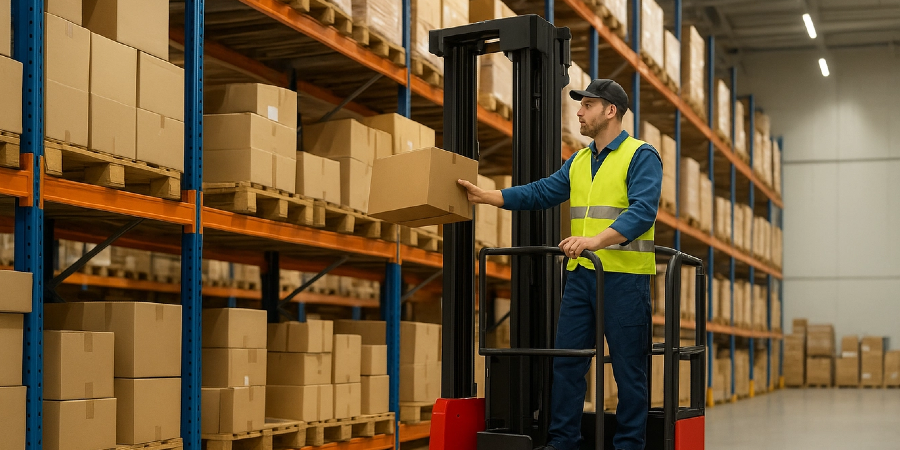
In warehouse operations, “cherry picking” means using a aerial platform to lift an operator to specific storage locations so they can pick individual items or small batches directly from high racks. When people ask what is cherry picking in warehouse environments, they usually refer to this targeted, SKU-level retrieval at height, not bulk pallet handling. A cherry picker (boom-type lift) lets the operator drive the base, elevate the platform, and position the boom so they can access high shelving that would otherwise require ladders or static platforms. These machines are widely used where storage heights exceed comfortable ground-level reach and where picks are relatively dispersed.
Typical warehouse use cases include:
- Retrieving slow-moving or high-value SKUs stored in upper rack positions to free up prime ground-level slots.
- Picking multiple cartons or cases from different rack locations on a single elevated trip, using the platform to carry the load, which reduces overall stock picking time by allowing operators to stand on a load‑rated platform and collect several products per lift.
- Lifting staff, tools, and small equipment to hard-to-reach areas in the warehouse for activities such as light repairs, label changes, or sensor installation in facilities that previously relied on less safe access methods.
- Supporting routine maintenance on racking, lighting, and building services, where the same vertical reach and maneuverability used for picking also improves access for inspections and minor works across shelving and structural elements.
From an engineering point of view, cherry picking is most efficient when travel distances between picks are moderate, SKU variety is high, and order profiles require frequent access to elevated storage but not full-pallet movements. In these situations, the combination of vertical reach, horizontal outreach, and a load-rated platform gives a better balance of safety and productivity than ladders or improvised access equipment.
Cherry Pickers Vs. Order Pickers
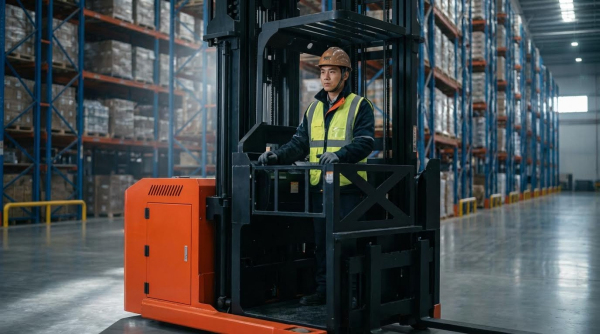
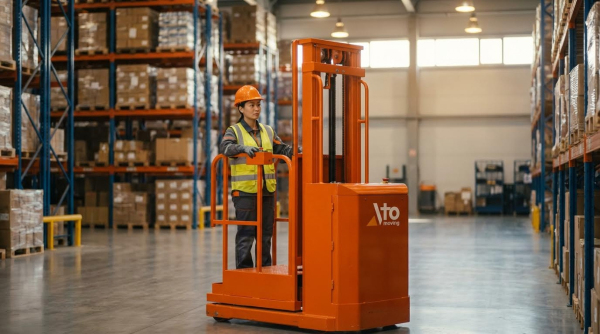
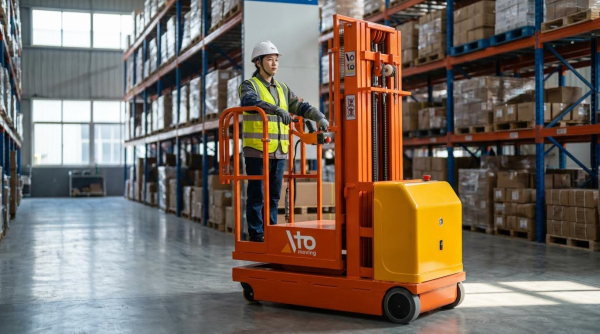
In a warehouse, cherry pickers and warehouse order picker both support item retrieval, but they are designed around different priorities. Understanding these differences is essential when evaluating what is cherry picking in warehouse workflows versus standard order picking. A cherry picker (boom lift) is a general-purpose elevating platform with significant vertical reach and, often, horizontal outreach. An order picker truck is a materials-handling machine purpose-built for repetitive picking along racking aisles, usually with the operator platform moving vertically within the truck’s mast envelope.
Key functional differences include:
- Primary application
Cherry pickers are multi-role access platforms used for selective picking, maintenance, and non-routine tasks at height such as lifting staff and equipment to hard‑to‑reach areas. Order pickers are optimized for high-frequency order fulfillment along defined pick faces, with platform heights typically grouped as low-, mid-, and high-level units up to about 12 m depending on the model. - Travel pattern and maneuverability
Order pickers usually operate inside racking aisles, often guided by rails or wire, and follow repetitive routes designed for dense picking. Cherry pickers move more freely around the warehouse and are better suited to point-to-point access where pick locations or maintenance points are scattered. - Picking ergonomics and throughput
Order pickers keep the operator at the same level as the pick face and are engineered for continuous, ergonomic case or each picking. They are typically integrated into structured methods such as zone, batch, or wave picking to minimize travel and increase efficiency. Cherry pickers, by contrast, trade some cycle-time efficiency for greater flexibility and reach. - Integration with automation
Order pickers increasingly work alongside automated systems such as vertical lift modules, which can deliver trays of SKUs to a fixed ergonomic height and significantly increase lines picked per hour. Cherry pickers remain largely manual assets, best used where task variety and building geometry make full automation impractical.
In practice, many facilities use both: order pickers or automated systems for high-volume, repeatable order fulfillment, and cherry pickers for exception handling, slow movers at height, and facility access tasks. The right mix depends on SKU velocity, rack heights, aisle design, and the safety standards governing work at elevation.
How Cherry Pickers Work In Warehouse Operations
Key Components And Operating Principles
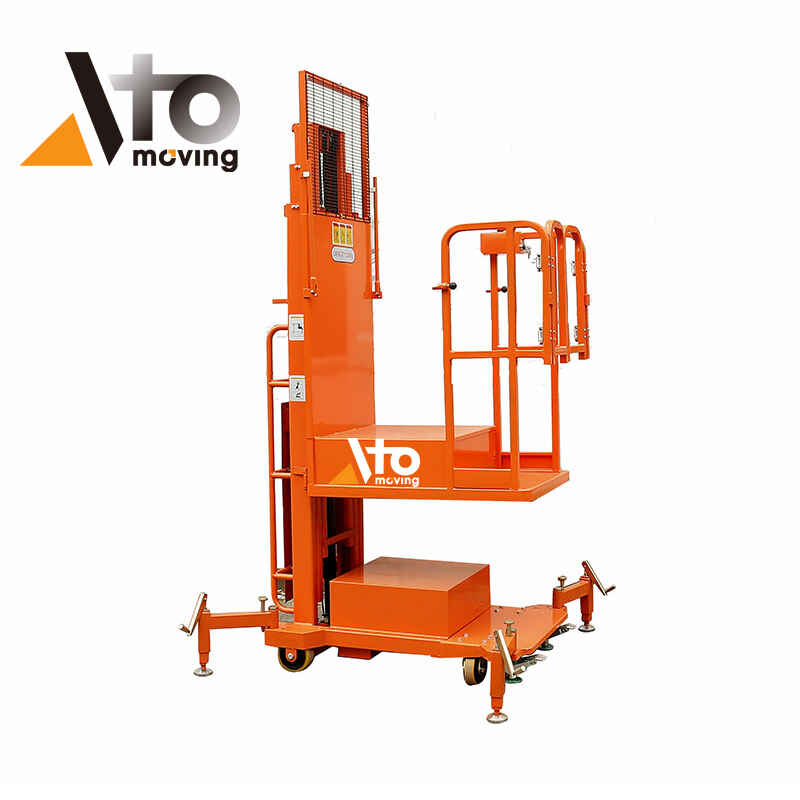
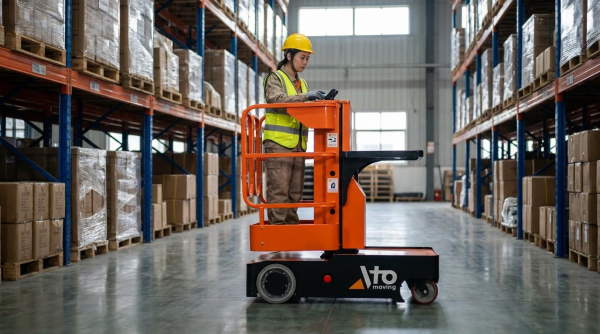
In a warehouse, understanding what is cherry picking in warehouse starts with the machine’s basic architecture. A typical cherry picker has a mobile base with drive wheels, a lifting structure (mast or articulated boom), and a guarded work platform where the operator stands. The platform is designed to carry the operator plus a rated load of cartons or cases, so they can pick multiple items in a single elevation, which cuts travel and handling time by consolidating several picks in one trip. Hydraulic or electric actuators control lift, lower, and sometimes reach or rotation, with proportional controls to position the platform precisely at the pick face.
For safe operation, the platform includes guardrails, toe boards, a control console, and an approved anchorage point for a full-body harness in boom-type machines as required by fall protection standards. Power and control cables are routed to avoid pinch points as the boom or mast moves. In warehouse cherry picking, the operator typically drives to the aisle, elevates to the required bay, and then performs horizontal fine-positioning with the steering and lift controls instead of climbing racking or ladders to access high shelving quickly and safely. This combination of vertical reach and mobile base makes cherry pickers a flexible tool for maintenance, cycle counting, and low-to-medium volume case picking.
Performance, Capacity, And Power Options
Key performance parameters for warehouse cherry pickers include platform height, horizontal reach (for boom types), rated load, travel speed, and duty cycle. In most warehouse applications, operators use the platform to lift both staff and equipment to hard-to-reach areas, such as upper rack levels or overhead services, which is far more efficient than ladders or static scaffolds for routine access at height. The platform structure and lifting system must therefore support a combined weight that includes the operator, tools, and cartons, staying within the manufacturer’s rated load to maintain stability and avoid tipping or structural overload.
Most indoor warehouse cherry pickers use electric power for low noise and zero local exhaust emissions, with battery capacity sized to cover a full or partial shift depending on pick density. Hydraulic systems convert this power into smooth lifting and steering, so operators can position the platform precisely at the pick face while maintaining control. Because the platform can carry several products in one elevation, the equipment significantly reduces time spent on stock picking compared with repeated trips up and down ladders. When you evaluate what is cherry picking in warehouse from a performance standpoint, you mainly look at how lift speed, travel speed, and load capacity interact with your order profiles and aisle layout to determine real throughput.
Safety, Standards, And Preventive Maintenance
Safe cherry picker operation in warehouses is governed by aerial lift and fall protection regulations. Operators in boom-type cherry pickers must wear a full-body harness connected to a lanyard or self-retracting lifeline, anchored to a designated point on the platform, and all gear must comply with ANSI Z359 and be inspected before each use and at least every six months by a qualified person to meet fall protection requirements. OSHA regulations for aerial lifts, including 29 CFR 1926.453, 1926.501(b)(1), and 1910.67, apply to many warehouse maintenance and stock access tasks and carry significant penalties for non-compliance if employers fail to enforce safe use. Common hazards include failing to tie off, leaning over guardrails, operating on uneven surfaces, and using damaged harnesses or missing anchor points all of which are preventable with proper training and supervision.
Preventive maintenance is central to safe cherry picking in warehouse environments. Each shift should start with a pre-operational inspection of controls, tires, hydraulic systems, and safety devices, with any defects reported and repaired before use to ensure equipment reliability. Emergency stop buttons must be tested so the machine can be halted instantly in case of a problem, and the unit must always be positioned on stable, level ground, using outriggers or wheel chocks when specified to maintain stability during elevation. Regular checks of hydraulic lines and control responsiveness, combined with trained and certified operators, create a closed loop where equipment condition, operator behavior, and regulatory standards work together to keep cherry picking both productive and safe in everyday warehouse operations.
Choosing The Right Picking Solution For Your Facility
When To Use Cherry Pickers, VLMs, Or Other Systems
To decide what is cherry picking in warehouse operations versus more automated options, start from your load profile and SKU mix. Cherry pickers are ideal when you need flexible access to many pallet positions at height, with relatively moderate order volumes. They let operators ride up to high racking, pick multiple items from the platform, and handle heavy loads in one trip, which reduces travel time for stock picking tasks by consolidating several picks per lift cycle. They also double as access equipment for maintenance of racks and building services, which can be useful in mixed-use facilities where staff and tools must be lifted safely to hard‑to‑reach areas.
Vertical lift modules (VLMs) are better when you have many small SKUs, high line counts, and limited floor space. They bring the tray to the operator, achieving high picking speeds of about 300 lines per hour and eliminating driving between aisles, which increases throughput and reduces accident risk compared with manual order pickers by automating travel and vertical movement. VLMs also use vertical cube very efficiently and can cut storage footprint by up to 90% versus static shelving, which is critical in high-rent buildings or retrofits by stacking trays in tall, enclosed towers.
Other automated systems fit specific patterns. Layer pickers suit pallet and layer handling in food and beverage, where they can process from 1,000 to 10,000 layers per day and handle about 98% of food retail products while working from -28°C to +40°C across a wide temperature range and product set. Automated picking with robotics or AGVs is justified in very high-volume operations that need rapid, repeatable fulfillment and can support higher capital costs for long-term labor and productivity gains where automation replaces most manual travel and lifting. In many facilities, a hybrid is best: cherry pickers for bulky pallets and maintenance, VLMs for small parts, and manual or semi-automated picking methods in remaining zones.
Quick decision guide
- Use cherry pickers when: pallet loads at height, variable tasks, and moderate volumes dominate.
- Use VLMs when: many small SKUs, high line counts, and space constraints drive the design.
- Use layer pickers or robotics when: volumes are very high and SKU or case handling is repetitive.
Layout, Throughput, And TCO Considerations
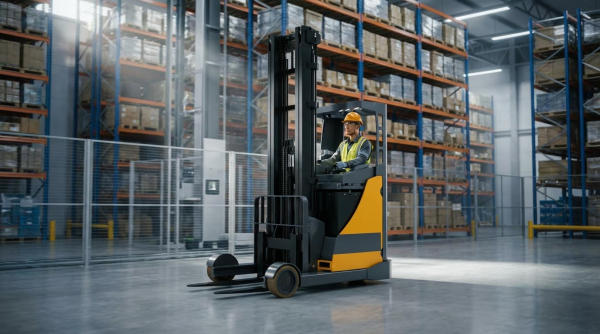
From a layout standpoint, cherry pickers need clear, wide aisles and stable, level floors to operate safely at height, so they fit conventional rack layouts but consume more travel distance per order. They integrate easily into existing buildings, but you must factor turning radii, charging or fueling areas, and safe passing zones into the design. VLMs, in contrast, concentrate storage vertically in a small footprint and free up horizontal space; they can store goods up to about 46 feet high, compared with order pickers that typically work around 32 feet, which allows very dense storage in tall buildings by using more of the available clear height.
Throughput analysis should combine picking method and technology. Zone, batch, and wave picking all reduce travel time by grouping work and are often layered on top of cherry picking or walk/ride picking to raise lines per hour by minimizing unnecessary movement. Light- or point-based systems further cut pick time and errors; for example, pick‑by‑light has been shown to deliver faster picking than paper and to reach stable performance after only a few passes, while pick‑by‑point achieved error rates near 1% with very low error rates and quick operator learning. When you assess what is cherry picking in warehouse throughput terms, compare its achievable lines per hour, including travel and lift time, against alternatives like VLMs or automated systems that remove most travel.
Total cost of ownership (TCO) goes beyond purchase price. Cherry pickers have lower initial cost but require ongoing spend on batteries or fuel, tires, hydraulic and control system maintenance, and operator training and certification, plus safety programs to manage fall protection and inspections including regular checks of emergency stops, hydraulics, and ground conditions. VLMs and layer pickers have higher capital cost but can reduce building footprint, cut labor by automating travel, and improve safety by keeping operators at ergonomic heights, which often lowers long-term injury and staffing costs through goods‑to‑person operation. A structured TCO model should include equipment, building, labor, maintenance, energy, and safety-related costs over the expected life of the system, then compare scenarios for cherry pickers, VLMs, and higher automation at your specific volume and service levels.
“”
Final Thoughts On Cherry Picking In Modern Warehouses
Cherry pickers sit at the intersection of access, storage density, and safe work at height. They turn vertical cube into usable picking and maintenance space, as long as engineers respect reach, rated load, and floor conditions. When you match platform height, outreach, and capacity to rack geometry and SKU profiles, you cut travel, reduce ladder use, and keep operators inside guarded platforms instead of on improvised access.
Safe use depends on more than hardware. Teams must enforce aerial lift and fall protection rules, run pre-shift inspections, and remove damaged units from service. This discipline keeps structural margins intact and prevents tip‑overs and falls. At the same time, layout and method choices decide whether cherry picking is economical. Wide, clear aisles, sensible pick paths, and batch or zone strategies raise lines per hour and protect TCO.
The best practice is to treat cherry pickers as one tool in a broader design. Use them where tasks are variable and elevated, combine them with order pickers, VLMs, or robotics where volumes justify it, and build a life‑cycle cost model before you buy. With that approach, Atomoving equipment can support high service levels while keeping people and product safe.
Frequently Asked Questions
What does “cherry picking” mean in a warehouse?
Cherry picking in a warehouse refers to the process of selecting and retrieving items from high-level shelving using specialized equipment like order pickers or stock pickers. These machines, often called cherry pickers, allow operators to safely access products stored at significant heights. The primary responsibility of a cherry picker operator is to efficiently pull products based on customer orders while ensuring safety and accuracy. Warehouse Jobs Guide.
What are the daily duties of a cherry picker operator?
A cherry picker operator’s daily tasks typically include fulfilling customer orders, restocking materials, and preparing shipments. They use motorized lifts to access hard-to-reach items in large warehouses or distribution centers. Operators must ensure that the correct items are picked efficiently and safely. This role requires certification and adherence to safety protocols. Warehouse Career Advice.