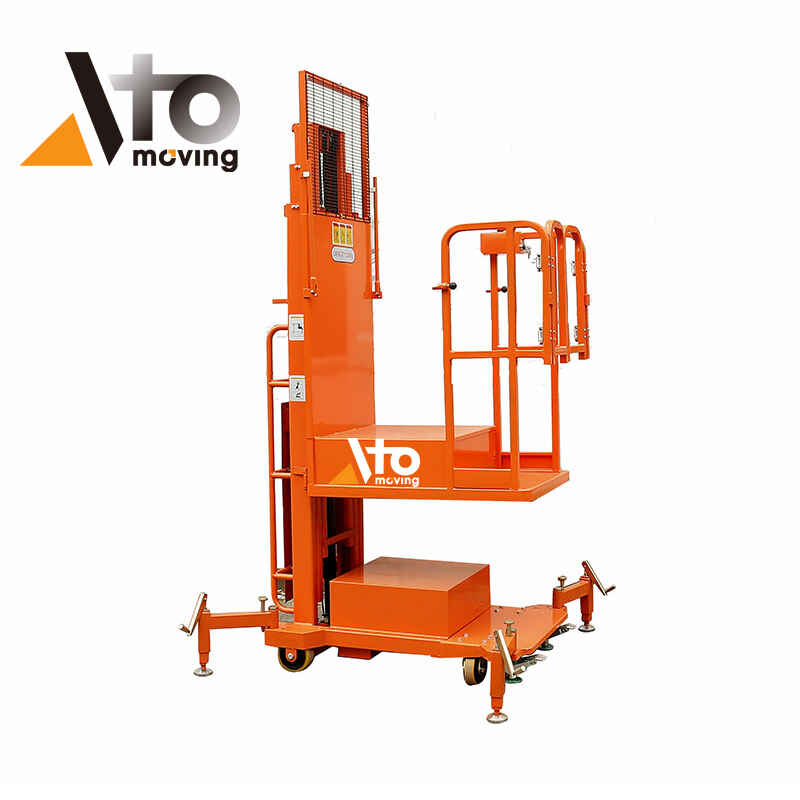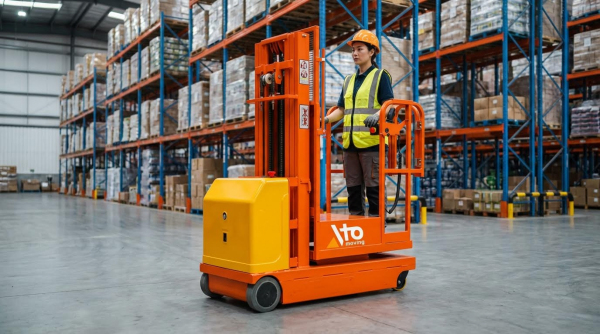
An electric order picker is one of the fastest ways to boost warehouse productivity, but only when you match the machine to the job and maintain it correctly. This guide explains how order picking machines work, where they fit best, and which specs actually matter on a busy floor. You will also see the key safety systems, OSHA-driven practices, and maintenance routines that keep uptime high and incidents low. Use it as a practical engineering checklist to balance speed, safety, and total cost of ownership for your next semi electric order picker investment.
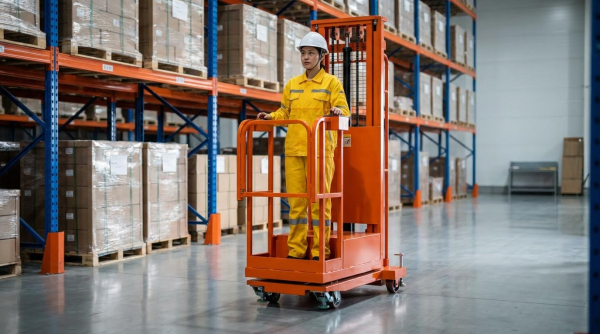
What Is An Electric Order Picker?
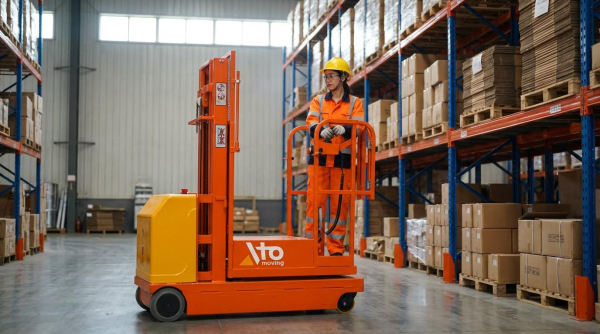
Core functions and narrow-aisle use
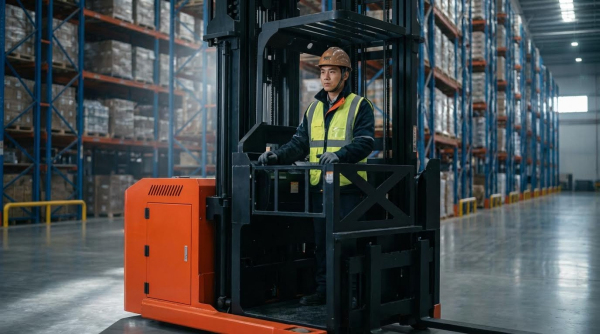
An electric order picker is a self-propelled, battery-powered truck that lifts the operator and a load platform together so items can be picked directly from racking. Unlike a pallet truck or counterbalance forklift, the main job is person-up order picking, not unit load transport. This makes the electric order picker ideal for high-density, narrow-aisle warehousing where operators must access individual cartons at multiple levels.
Typical core functions of an order picking machines include:
- Traveling along aisles to the pick location with powered traction.
- Raising the operator platform and load carrier to the target pick level.
- Allowing the operator to transfer cartons or pieces directly from rack to pallet or cage.
- Lowering and repositioning quickly for the next pick line.
- Combining travel and lift functions at the same time to cut cycle time. Many models support simultaneous driving and lifting
Electric order pickers are designed specifically for narrow aisles classified as electric motor narrow aisle trucks under powered industrial truck standards. Operators must receive training that covers hazards such as tipovers, falling loads, and working at height, and they must follow procedures for pre-shift inspections and safe travel in tight aisles. Training requirements and hazard controls are well defined for this truck class
From an engineering point of view, the electric order picker combines three subsystems: traction drive, lifting system, and energy storage/control. The traction system provides forward and reverse movement in narrow aisles. The mast and hydraulic system lift the operator platform and load. The battery, power electronics, and control architecture coordinate speed, acceleration, and braking so that the truck stays stable while carrying a person and load at height.
Why electric order pickers excel in narrow aisles
Electric traction allows precise low-speed control, which is critical when working close to racking and pedestrians. Regenerative braking can return energy to the battery during deceleration, extending runtime. Energy recovery systems also reduce heat and brake wear
Key performance specs and duty cycles
Key performance specs define how an electric order picker will behave in your warehouse and how well it will match the required duty cycle. Instead of long text, the table below summarizes typical specification ranges taken from current market data. These values are indicative and vary by model and configuration.
| Specification | Typical Range / Example | Engineering Impact |
|---|---|---|
| Rated lifting capacity | Up to 3,000 lb (≈1,360 kg) for many order picker trucks | Defines maximum pallet weight and carton density per pick level. |
| Maximum lift height | Up to 390 in (≈9.9 m) on high-level units for very tall racking | Determines highest usable rack beam; drives stability and fall protection needs. |
| Travel speed (platform lowered) | Up to about 6.5 mph under load on typical models | Affects horizontal travel time between pick zones. |
| Traction speed with elevated platform | Often limited to around 5 km/h when raised, versus up to 10 km/h when lowered to maintain stability | Reduces tipover risk and improves operator control at height. |
| Lift speed (loaded) | Approx. 33–80 ft/min depending on configuration and capacity for various mast options | Controls vertical cycle time; higher speeds boost picks/hour but increase energy draw. |
| Voltage system | Commonly 24 V or 36 V traction systems depending on truck size | Impacts current levels, cable sizing, and battery configuration. |
| Battery capacity | Typical batteries range from about 375 Ah to 500 Ah on comparable equipment supporting multi-shift use with charging | Defines runtime per charge and feasible duty cycle. |
| Energy efficiency features | Regenerative braking and optimized drive controls extend usable battery time | Reduce energy cost per pick and extend component life. |
| Operator access geometry | Step-in heights around 135 mm and access widths near 431 mm on some designs improve ergonomics | Impacts fatigue and cycle time for frequent mount/dismount. |
These parameters must align with the warehouse duty cycle. Duty cycle describes how intensively the electric order picker runs over a shift: hours of operation, proportion of time spent lifting versus traveling, and average load percentage. A truck that runs at or near maximum capacity for most of the shift needs higher battery capacity, efficient regenerative braking, and robust cooling for power electronics.
When specifying an electric order picker, engineers and warehouse managers should consider:
- Average and peak pallet weights compared to the 3,000 lb class rating.
- Maximum rack height and required lift height with safety margin.
- Number of picks per hour and vertical movements per shift.
- Shift pattern (single, 1.5, or 2–3 shifts) versus battery capacity and charging strategy.
- Aisle width and required turning radius in narrow-aisle layouts.
- Operator ergonomics, including step-in height and platform space, to avoid fatigue.
Digital multifunction displays and CAN-bus control systems on modern electric order pickers help monitor this duty cycle in real time. Operators and technicians can see battery discharge status, fault codes, and service indicators, while technicians can quickly adjust parameters and diagnose issues using the communication network. This reduces downtime and keeps performance consistent across different applications
Practical example: matching specs to a typical shift
In a medium-duty e-commerce warehouse, an electric order picker might run 6–8 hours per shift with frequent short lifts to mid-level racking and moderate travel distances. A 24 V system with a battery around 375–500 Ah and regenerative braking can usually cover a full shift with planned opportunity charging. Higher-intensity operations may require larger batteries or battery exchange
“”
Matching Order Pickers To Your Warehouse
Application fit, layout, and throughput
Choosing the right warehouse order picker starts with how your building, racking, and SKUs actually behave over a full shift. The goal is to match truck capability to aisle width, pick height, and line volume so you hit throughput targets without over‑specifying equipment.
Use the points below as a quick engineering checklist when mapping your warehouse to a specific electric order picker configuration.
- Aisle width and turning radius
- Confirm clear aisle width at rack face, not just drawing dimensions.
- Check turning and crossover areas at aisle ends and intersections.
- Use narrower chassis machines for dense, high-bay storage where pick aisles are tight.
- Rack height and pick frequency
- Match maximum lift height to your top pick level with safety margin, not just beam height. Some units reach up to 390 in, allowing access to very high racking reported in typical spec sheets.
- High-frequency picks at lower levels may justify low-level or mid-level order pickers; slower movers at the top can use higher lift ranges.
- Load profile and stability
- Quantify typical and peak pallet or case weights per stop.
- Many order picking machines handle up to about 3,000 lb, but you should choose capacity based on real load plus attachments and operator weight as shown in common rating charts.
- Heaviest SKUs should sit in lower bays to keep the center of gravity low and improve stability during travel and lift.
- Throughput and duty cycle
- Estimate picks per hour and stops per aisle to size travel and lift speeds.
- Typical travel speeds under load can reach about 6.5 mph, and lift speeds can range roughly 33–80 fpm on many units, which strongly affects cycle time per pick stop based on representative specs.
- For high-throughput operations, simultaneous drive-and-lift capability helps cut non-productive time between picks as shown in modern truck designs.
- Energy system and shift pattern
- Map shift length, breaks, and peak periods to battery capacity and charging strategy.
- Common systems operate at 24 V or 36 V, with battery capacities in the 375–500 Ah range for long duty cycles based on typical product data.
- Regenerative braking and energy‑efficient controls extend runtime between charges, which is critical in multi-shift warehouses as noted in energy‑focused designs.
- Operator access and ergonomics
- Measure step‑in height and platform access width against your operators’ anthropometrics and task frequency.
- Some platforms offer access widths around 430 mm with low step heights near 135 mm to reduce fatigue during frequent mounting and dismounting as indicated in sample specs.
- Evaluate control layout, visibility, and need for both‑hand operation in narrow aisles.
Quick mapping: layout and picker type
As a rule of thumb, very narrow aisles with tall racking and mixed‑weight SKUs benefit most from a stand‑on semi electric order picker with high lift, moderate capacity, and strong stability aids. Wider aisles with lower racking and high case‑pick rates might favor low‑level order pickers that prioritize travel speed and fast on/off access over extreme lift height.
Selection criteria and total cost of ownership

Once the physical fit is clear, selection shifts to lifecycle cost and supportability. Total cost of ownership (TCO) for an electric order picker is driven by energy use, maintenance, uptime, and how well the truck specification matches the real job profile.
The table below summarizes the main selection criteria and how they influence both performance and TCO.
| Selection criterion | Engineering focus | Impact on TCO / performance |
|---|---|---|
| Capacity & lift height | Match to max load and top pick level with safety margin. | Oversizing increases purchase cost; undersizing limits SKU placement and may create safety risks. |
| Travel & lift performance | Typical max travel ~6.5 mph; lift ~33–80 fpm on many units per example specs. | Higher speeds improve picks/hour but demand better operator training and aisle discipline. |
| Battery & voltage | 24 V vs 36 V; 375–500 Ah class batteries for longer shifts as seen in typical designs. | Right sizing avoids frequent battery swaps and reduces charging infrastructure load. |
| Energy recovery | Regenerative braking and efficient drive controls as described for modern trucks. | Lowers energy cost per pick and extends battery and brake component life. |
| Safety & braking systems | Electromagnetic braking proportional to load, automatic braking on control release, emergency stop acting on drive motor as highlighted in safety features. | Reduces incident risk and potential downtime from accidents or damage. |
| Diagnostics & electronics | Digital displays with maintenance indicators and fault codes; CAN‑bus architecture for quick parameter setup and troubleshooting noted in advanced systems. | Shortens fault‑finding time and supports condition‑based maintenance, improving uptime. |
| Mechanical accessibility | Modular design with good access to motors, chains, and hydraulics as seen in modular platforms. | Reduces labor hours per service and speeds component replacement. |
| Ergonomics & productivity | Low step‑in height, wide access, intuitive controls, and good visibility per ergonomic spec sheets. | Cuts operator fatigue, supports higher sustained pick rates, and helps with operator retention. |
To convert these criteria into a robust selection decision, treat the electric order picker as part of a system that includes training, maintenance, and layout discipline.
- Operational safety and training
- Ensure operator training meets powered industrial truck rules for narrow aisles, including fall protection, load handling, and pre‑shift inspections as outlined in safety guidance.
- Clear traffic lanes, speed control, and PPE standards are essential when you introduce higher‑performance trucks.
- Maintenance strategy
- Use the truck’s built‑in maintenance indicators, battery discharge alarms, and fault codes to drive scheduled service rather than waiting for failures as supported by modern displays.
- Plan daily checks on hydraulics, forks, chains, wheels, and electrical systems to prevent small issues from becoming unplanned downtime as recommended in maintenance checklists.
- Cost modeling
- Calculate energy cost per operating hour using battery capacity, charging efficiency, and local power rates.
- Estimate annual maintenance cost from inspection intervals, parts wear (chains, wheels, contactors), and labor requirements.
- Include productivity gains from higher travel/lift speeds and reduced operator fatigue when comparing models.
Simple TCO comparison method
For a practical comparison between two electric order picker options, build a three‑year model that includes: purchase or lease cost, estimated energy cost based on duty cycle, planned maintenance and expected repairs, and the value of productivity differences measured as picks per hour. This structured approach prevents over‑focusing on purchase price and highlights which truck actually moves more lines at lower total cost.
Final Thoughts On Safe, Efficient Order Picking
Electric order pickers deliver high throughput only when geometry, loads, and energy are engineered as one system. Aisle width, rack height, and load profile set hard limits on chassis size, mast design, and rated capacity. If you ignore these, you risk tipovers, blocked aisles, and restricted SKU placement. Travel and lift speeds must match real pick density, not marketing claims. Faster trucks demand tighter traffic rules, clear sightlines, and strong operator training to keep incidents low.
Battery voltage, amp‑hour capacity, and regenerative braking define how long the truck works between charges. When you size these correctly, you reduce battery swaps, keep voltage stable, and protect motors and electronics. Ergonomic access and clear controls cut fatigue and help operators hold target pick rates across a full shift.
The best practice is simple: treat each order picker as part of a warehouse system that includes layout, duty cycle, training, and a preventive maintenance plan. Use real shift data, not assumptions, to choose capacity, lift height, and energy system. Then back the machine with daily inspections and scheduled service. This approach lets Atomoving electric order pickers run fast, stay safe, and deliver low total cost over their full life.
Frequently Asked Questions
What is an Electric Order Picker?
An electric order picker is a type of forklift designed for clean indoor use, primarily in warehouses. It allows operators to pick items from high shelves efficiently. This equipment is essential for narrow aisle operations and helps improve productivity. Order Picker Guide.
What are the Different Types of Order Pickers?
There are several types of order pickers used in warehouses:
- Electric Order Picker: Best for clean indoor environments.
- Cherry Picker Lift Truck: Versatile for various picking tasks.
- Narrow Aisle & Warehouse Cherry Picker: Optimized for tight spaces.
Each type serves specific needs depending on the warehouse layout and operational demands. Order Picker Guide.