A warehouse order picker is one of the most critical machines for turning storage capacity into shipped orders. This guide explains how different order picker types work, where they fit in your operation, and which specifications matter most. You will see how lift height, capacity, powertrain, and safety features translate into real-world productivity and risk control. Use it as a practical reference when selecting your next order picking machines or upgrading an existing fleet.
What Is A Warehouse Order Picker?
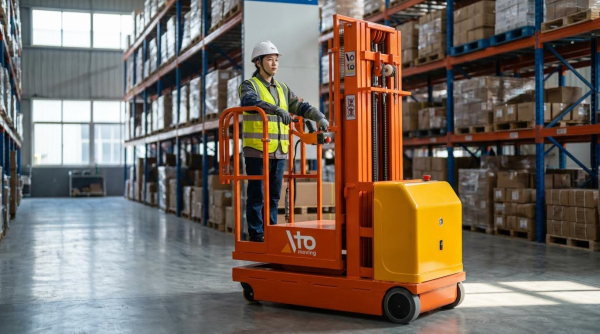
Core function in modern warehouses
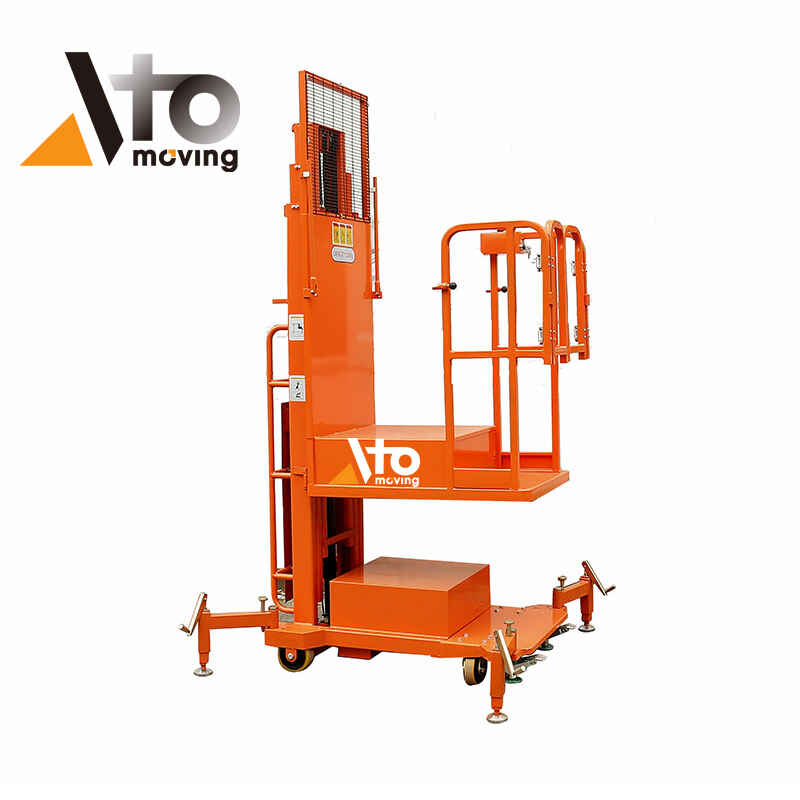
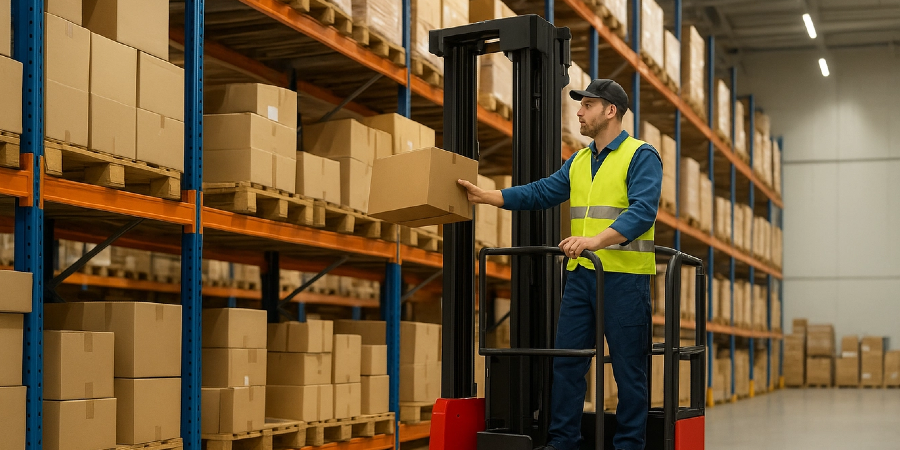
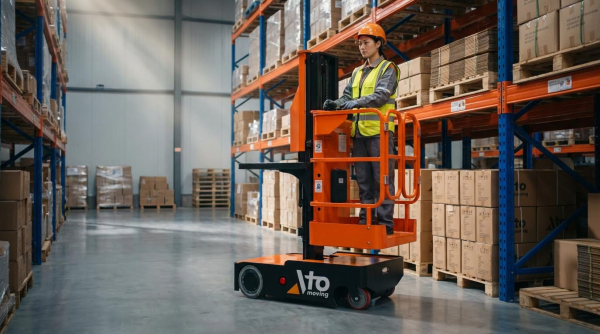
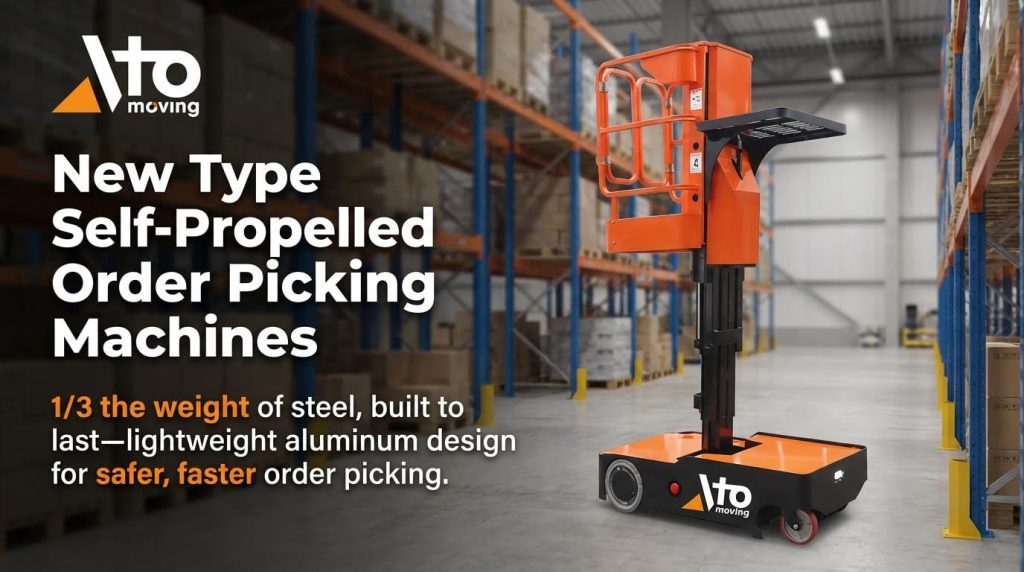
A warehouse order picker is a powered piece of material handling equipment that lets an operator travel through the aisles and pick individual items or cases directly from storage locations into a pallet, cage, or tote. Unlike a standard forklift, which mainly moves full pallets, a warehouse order picker is optimized for high-frequency, small-unit picking where labor, travel distance, and accuracy drive total cost. It is widely used in e‑commerce, retail, pharmaceuticals, automotive spares, and cold storage to handle high SKU counts and small, frequent orders with short lead times. Typical tasks include piece picking, case picking, and short transfer runs between pick faces and consolidation or packing areas. In most operations, the order picker works as part of a wider system that may include pick-to-light, barcode scanning, and warehouse management or order picking software to reduce errors and streamline workflow. Order picking software helps cut human error and speed up fulfillment.
Low-, medium-, and high-level picker overview
Order picking machines designs are usually grouped by the vertical picking range they can safely reach. Low-level machines work from floor level up to roughly 2.5–2.8 m, focusing on fast picking on the ground and first rack levels. Medium-level order pickers extend this range into the mid-rack zone, with some models reaching around 10–12 m working height, while high-level order pickers are engineered for intensive vertical storage and dense, tall racking. In these medium- and high-level units, the operator platform rises with the forks so the picker can work directly at the storage level. This allows picking from multiple levels in a single trip and maximizes use of vertical cube, but it also increases the need for operator training and robust fall-protection and stability systems. Low-level order pickers typically serve up to about 2.5 m, while high-level models can reach up to about 12 m, giving engineers and buyers a broad design envelope to match to their warehouse layout and SKU profile.
Engineering Design, Powertrain, And Safety
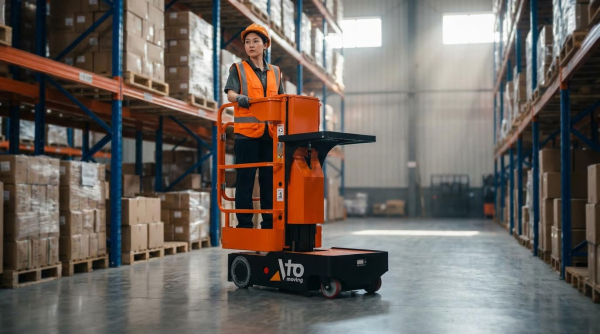
Lift heights, capacity, and stability limits
Every warehouse order picker must balance lift height, load capacity, and stability as a single engineered system. Low-level machines typically work from floor level up to about 2.5–2.8 m, with some platforms lifting the operator roughly 1.2 m for first- and second-level picking low-level platform lift and working ranges. Medium- and high-level order pickers extend this envelope, with working heights up to around 10.5–12 m to exploit full rack height in narrow-aisle warehouses medium/high-level reach capabilities high‑level picker heights. Self-moving vertical order pickers for lighter tasks may offer 2.7–4.5 m working height with around 300 kg capacity for maintenance and light picking duties working height and load data.
Load capacity on a semi electric order picker depends on height and load center. High-level units handling pallets or cages often provide 1000–2500 kg rated capacity at a specified load center and maximum lift height capacity ranges. As height increases, the allowable load usually derates to keep the combined center of gravity inside the stability triangle formed by the wheels. Thickened steel plate chassis and welded mast structures improve torsional stiffness and reduce sway at height, which is critical for operator confidence and pick accuracy reinforced body construction. Fork length and platform size must also match the load type—standard pallets, half-pallets, or roll cages—to avoid overhang that can compromise stability.
| Picker level | Typical working height | Typical capacity range | Primary use |
|---|---|---|---|
| Low-level | Floor to ~2.5–2.8 m | Light–medium pallet loads | Fast case picking on lower levels |
| Medium-level | Up to ~10–12 m | Medium pallet loads | Multi-level picking in standard aisles |
| High-level | Up to ~10.5–12 m | ~1000–2500 kg | Very dense, high-bay storage |
| Compact self-moving | 2.7–4.5 m | ~300 kg | Light picking / maintenance |
Key stability engineering factors
- Wheelbase and track width sized to keep the center of gravity inside the support polygon at full height.
- Mast and chassis stiffness to limit deflection and oscillation under load.
- Electronic speed and steering limits that derate travel speed as platform height increases.
- Clear rating plate showing capacity versus height and load center for safe use.
Drive systems, batteries, and charging strategy
Most modern warehouse order picker designs use electric drive systems for low noise, zero local emissions, and precise low-speed control in narrow aisles. AC traction and lift motors provide high torque at low speed and good energy efficiency, which supports stop‑start duty cycles typical of order picking. Drive units integrate regenerative braking to recover energy during deceleration and platform lowering, extending runtime between charges. Compact drive modules also reduce the turning radius, which is essential in dense racking layouts.
Battery choice and charging strategy strongly influence total cost of ownership and shift planning. Lithium-ion batteries are increasingly preferred because they support fast and opportunity charging, reducing or eliminating battery changeovers on multi-shift operations lithium-ion and opportunity charging. Heated Li‑ion packs are available for cold-store applications to manage condensation and maintain performance at low temperatures cold environment battery options. Lead-acid remains viable for single-shift or cost-sensitive operations, but it requires longer charge times and periodic watering.
| Power option | Strengths | Limitations | Best fit |
|---|---|---|---|
| Lead-acid battery | Lower upfront cost; proven technology | Long charge times; water maintenance; limited opportunity charging | Single-shift, moderate utilization |
| Lithium-ion battery | Fast and opportunity charging; high energy density; low maintenance | Higher purchase cost; needs compatible chargers | Multi-shift, high-throughput warehouses |
| Heated Li-ion for cold areas | Stable performance in cold stores; condensation control | Higher system cost; specific to cold applications | Frozen and chilled logistics |
Charging strategy tips for order pickers
- Size battery capacity so a warehouse order picker can complete at least one full shift with planned opportunity charges.
- Place fast chargers near high-traffic areas to enable short top-up sessions during breaks.
- Standardize connector types and charging procedures across the fleet to reduce errors.
- Monitor battery health and charge cycles via fleet management systems to avoid unexpected downtime.
Safety standards, ergonomics, and automation
Safety on a warehouse order picker depends on both engineered features and operator behavior. Typical safety systems include emergency stop buttons, controlled travel speed, and braking systems tuned for loaded and unloaded conditions core safety features. Operator restraint or presence-detection systems ensure the machine only travels when the operator is correctly positioned. Obstacle detection sensors and remote-drive functions can reduce impacts and cut operator walking, increasing productivity by up to about 20% while enhancing safety in low-level picking remote control and sensor features.
Ergonomics directly affects fatigue, error rates, and injury risk over long shifts. Spacious operator platforms with good visibility, padded backrests, and low step-in heights reduce strain when entering and exiting the truck. Intuitive controls, short reach distances to pick faces, and smooth mast movements help maintain accuracy and comfort operator cab design and ergonomics. For high-bay operations, clear floor markings, lighting, and integrated navigation systems support precise positioning and reduce cognitive load.
Automation and digital assistance are increasingly embedded in order picker design. Medium- and high-level machines can be configured as Automated Guided Vehicles or semi-automated trucks using intelligent software integrated with warehouse management systems AGV conversion and software integration. Modular options such as warehouse navigation, pick-by-light interfaces, and scanning systems help cut search time and reduce picking errors software-assisted picking. Well-designed training programs remain essential so operators understand these systems, apply safe work practices, and fully realize the productivity and safety benefits of the technology importance of operator training.
Matching Order Pickers To Operations
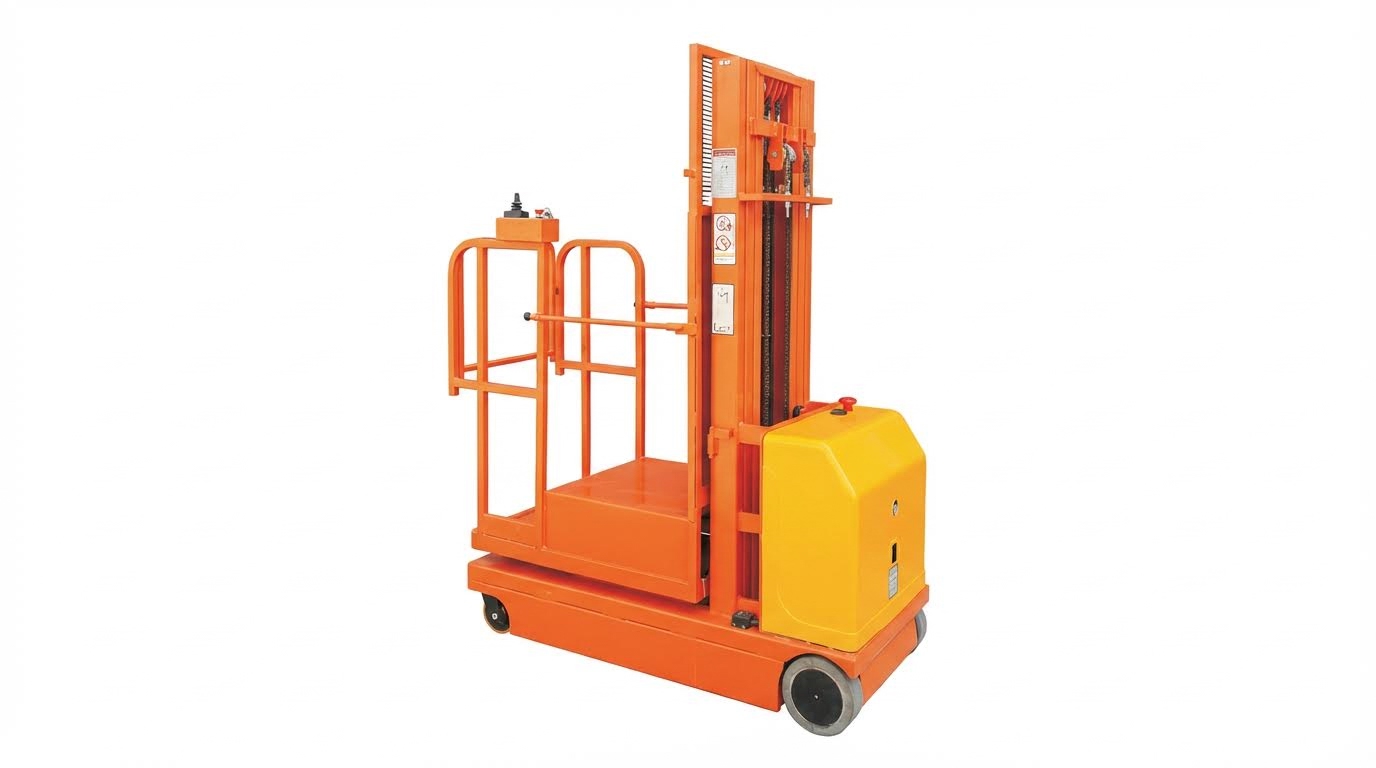
Aligning picker type with layout and SKU profile
Start by mapping your layout, SKU profile, and order patterns, then match them to the right warehouse order picker concept. Low-level machines suit fast-moving SKUs on the first levels, where operators need speed and short travel distances. They work well in wider-aisle, high-throughput areas and for walk-behind or ride-on units in lower volume or shorter routes. High-level or turret-style equipment fits narrow-aisle, high-bay storage where you must maximize vertical cube and pick from many levels in one trip. In operations with very high SKU counts and many small lines per order, medium- and high-level pickers combined with software-directed picking or navigation can reduce search time and travel distance. Where aisles are extremely narrow or storage is very dense, rotating-mast or turret-type order picker forklifts help reach high shelves while keeping aisle width down. Always overlay your ABC analysis: put A-items in low/medium levels served by faster low-level pickers, and reserve high-level machines for B/C items and deep reserve storage.
Key specification checklist for procurement
When specifying a warehouse order picker, lock in a few non-negotiable parameters before comparing models. Define maximum picking height from your tallest rack beam; low-level units typically work up to roughly 2.5–2.8 m, while some high-level machines reach about 10.5–12 m in typical product ranges and high-bay designs. Set minimum load capacity against your heaviest pallet or cage, noting that some high-level units cover roughly 1000–2500 kg in typical catalogues. Then check aisle widths and turning radii to ensure the truck fits your existing rack geometry without sacrificing speed or capacity.
Build a short checklist around five areas: performance, energy, ergonomics, safety, and lifecycle cost. On performance, compare travel and lift speeds, acceleration, and picking aids such as remote drive on low-level units, which can raise productivity and reduce walking in typical field data. For energy, decide between lead–acid and lithium-ion; Li-ion supports fast and opportunity charging and can remove battery change-outs in multi-shift work according to manufacturer information. For ergonomics, look for low step-in height, good visibility, intuitive controls, and options like guided navigation that reduce fatigue and improve workstation comfort. On safety, specify fall protection, speed and lift interlocks, stable chassis design, and, where relevant, obstacle detection or AGV-ready automation packages for future upgrades and basic safety features. Finally, evaluate maintenance access, parts availability, and energy use to understand total cost of ownership over the life of the fleet rather than just the purchase price.
Final Considerations Before Investing
Choosing the right warehouse order picker is a design and risk decision, not just a price decision. Lift height, capacity, and stability define what the truck can safely do inside your racking envelope. If you overspec height or underspec capacity, you increase sway, stress the mast, and raise tip‑over risk. Powertrain and battery choices then decide how reliably that performance is available across shifts and temperatures. A poorly matched battery strategy quickly turns into dead trucks and missed dispatch times.
Safety features, ergonomics, and digital aids convert raw machine capability into predictable throughput. Good visibility, low step height, and simple controls keep operators fresh and accurate. Speed interlocks, presence detection, and clear rating plates keep them inside safe limits, even under pressure. Navigation, scanning, and software links cut wasted travel and errors.
For operations and engineering teams, the best practice is clear. Start from your layout, SKU profile, and heaviest loads. Fix required heights, capacities, and aisle widths. Then select order pickers and Atomoving solutions that meet those constraints with proven safety systems, suitable energy packages, and upgrade paths for automation. This approach protects people, stock, and racking while delivering stable, scalable productivity.
Frequently Asked Questions
What is the role of an order picker in a warehouse?
An order picker in a warehouse is responsible for retrieving items from storage to fulfill customer orders. They often use equipment like forklifts or pallet jacks to access inventory stored at various heights. Their role ensures accurate and timely order processing, which is critical for maintaining warehouse efficiency.
Is being a warehouse order picker physically demanding?
Yes, being a warehouse order picker can be physically demanding. Workers often walk long distances, sometimes up to 10 miles per day, on hard surfaces while lifting heavy loads and reaching for items stored at high levels. This constant physical activity can lead to fatigue and strain over time Warehouse Worker Challenges.
Why is order picking considered a good career starter?
Order picking is considered a good career starter because it offers job stability and growth opportunities. The demand for warehouse workers continues to rise as distribution centers expand. Starting in this role can provide valuable experience and open doors to higher-level positions in warehouse management or logistics Career Starter Guide.