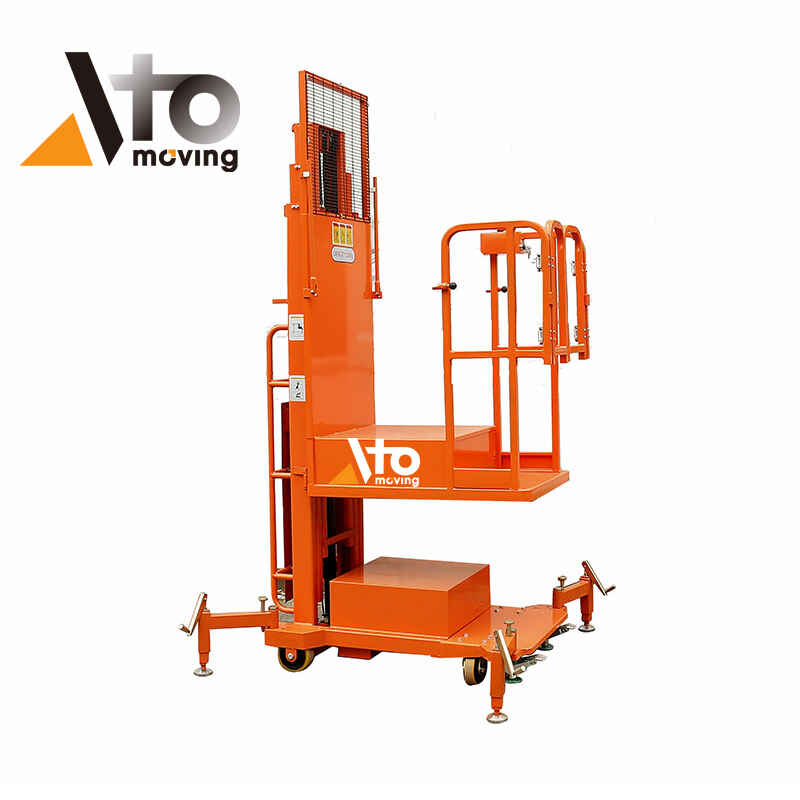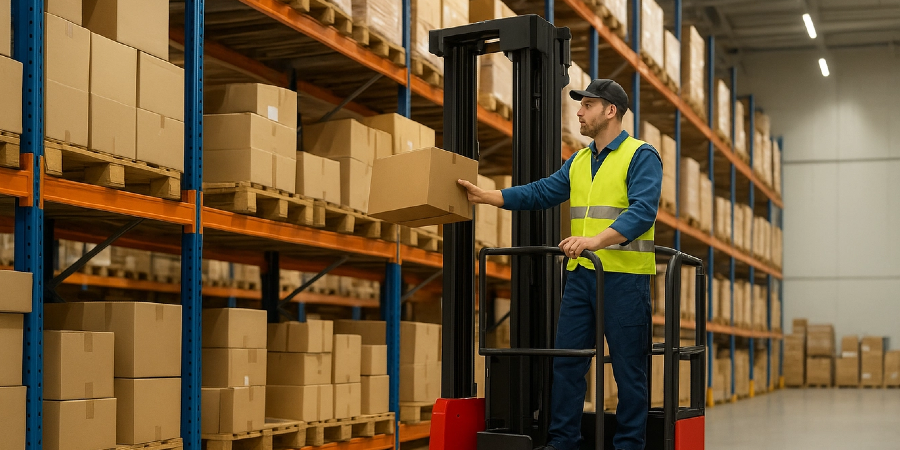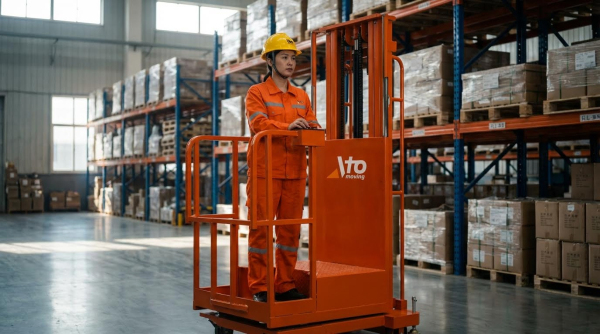
A warehouse stock picker, often called an order picker, is a purpose-built lift that raises the operator to rack level for piece picking. This article explains what a warehouse stock picker is, how it works, and where it fits among other lift types used in modern distribution centers.
Using the full outline, it covers core functions, components, classes, and how stock pickers interact with aisle design and throughput. It then contrasts stock pickers with forklifts, reach and turret trucks, stackers, layer pickers, and AGV solutions to guide correct equipment selection. Finally, it examines safety, OSHA Class II compliance, maintenance, energy use, and lifecycle cost before summarizing how to choose the right lift for a given warehouse strategy.
Core Functions Of Warehouse Stock Pickers
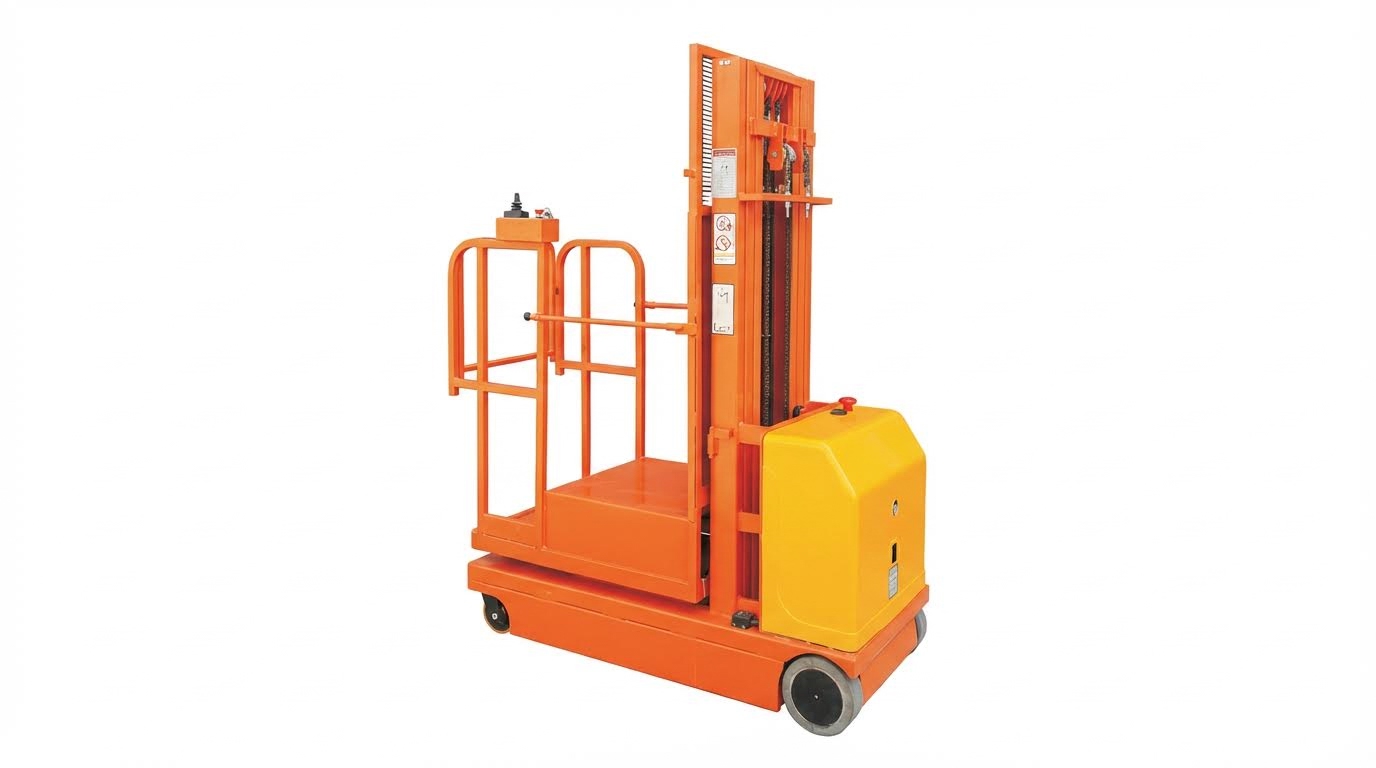
Core functions define how a warehouse stock picker supports high-density storage, fast order fulfillment, and safe operator elevation. Engineers and warehouse planners evaluate these functions when deciding what is a warehouse stock picker and where it fits in a material flow strategy.
What A Stock Picker Is And Typical Use Cases
A warehouse stock picker is a powered lift truck that raises the operator, not only the load, to rack level. It belongs to the family of order picking machines that supports piece and case picking rather than full-pallet handling. The operator stands on an elevating platform with controls, then drives and lifts to the required storage location. This configuration allows direct access to cartons, totes, or individual units stored in racking without removing full pallets. Typical use cases include e‑commerce fulfillment centers, retail distribution hubs, and spare-parts warehouses with high SKU counts and small order lines. Operations use stock pickers in narrow aisles where selective racking reaches heights from about 4 m up to more than 10 m. They handle tasks such as replenishing forward pick faces, picking multi-line customer orders, and supporting cycle counting at height.
Key Components And Operating Principles
A warehouse stock picker integrates several subsystems that work together to lift the operator safely and maneuver in tight spaces. Core components include the operator platform with guardrails and gates, a mast or lifting mechanism, drive unit, steering system, and load interface such as forks, a load tray, or a pallet platform. Electric traction motors drive the load wheels, while a separate lift motor powers the hydraulic or electric mast system. The operator uses a control console with travel, lift, and lower functions, often combined with proportional controls for precise positioning at rack level. Many designs support simultaneous travel and lift to reduce cycle time, so control logic limits speed and acceleration when the platform is elevated. Integrated safety systems typically include emergency stop buttons, deadman or presence-sensing pedals, interlocked gates, and travel-speed reduction based on lift height. Batteries, usually lead-acid or lithium-ion, supply energy for both traction and lifting, and onboard diagnostics help maintenance teams monitor system health.
Stock Picker Classes, Ratings, And Capacities
OSHA classified warehouse stock pickers as Class II electric motor narrow aisle trucks. This class covered equipment designed for tight aisles where right-angle stacking and high storage density were critical. Capacity ratings for stock pickers typically ranged from about 300 kg to roughly 1,360 kg. Engineers must consider combined weight, including the operator, picked load, pallets, tools, and any installed accessories. Manufacturers often provided multiple ratings for different areas, such as the main operator platform, auxiliary material tray, and rear carry deck. The truck’s data plate specified maximum platform height, rated capacity at that height, and any derating curves for higher elevations. Stability geometry, including wheelbase, load center, and mast deflection, influenced these ratings. When specifying a stock picker, planners matched capacity to the heaviest expected pick plus operator and equipment weight, then added a safety margin to maintain compliance with standards and site rules.
Ergonomics, Throughput, And Aisle Design
Ergonomics significantly affected productivity for operators spending full shifts on warehouse stock pickers. Design features such as low step-in height, cushioned floor mats, intuitive control placement, and clear sightlines reduced fatigue and musculoskeletal strain. Adjustable guardrails, secure anchor points for fall protection, and anti-slip platforms enhanced comfort and safety at elevation. Throughput depended on travel speed, lift and lower rates, acceleration limits, and the ability to drive while elevating. Shorter lift cycles between pick levels, along with optimized pick paths from the warehouse management system, increased lines picked per hour. Aisle design played a central role in realizing these gains. Narrow aisle widths, often in the 1.5 m to 1.8 m range, maximized storage density but required precise guidance and turning clearances. Engineers balanced rack height, bay configuration, and pick-face slotting with stock picker performance envelopes. Properly matched equipment and aisle design minimized dead travel, reduced congestion, and delivered predictable, repeatable picking performance.
Stock Pickers Vs Forklifts, Order Pickers, And Lifts
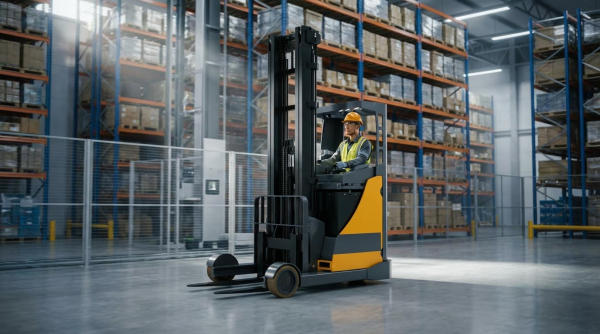
When engineers ask what is a warehouse stock picker, they usually compare it to other lift trucks. This section explains how stock pickers differ from counterbalance forklifts, reach and turret trucks, stackers, layer pickers, and automated guided vehicles. The focus stays on functional roles, layout impact, and selection criteria for real warehouse projects.
Stock Pickers Compared To Counterbalance Forklifts
A warehouse stock picker lifts the operator to the pick face, while a counterbalance forklift lifts only the load. Stock pickers target piece picking or carton picking from racking, typically in narrow aisles with high vertical storage. Counterbalance forklifts handle palletized unit loads, truck loading, and floor-to-floor transport over short distances. Their turning radius is larger, so they require wider aisles and more clearances around racking and dock positions.
From a capacity standpoint, stock pickers usually carry several hundred kilograms including operator, tools, and picked goods. Counterbalance forklifts frequently exceed 2,000 kg rated capacity and support higher mast heights for full pallets. Visibility and stability constraints differ. Stock pickers prioritize platform guarding, fall protection anchorage, and smooth vertical travel. Counterbalance forklifts prioritize load center stability, mast tilt control, and low center of gravity. When defining what is a warehouse stock picker in a layout, it often complements forklifts rather than replaces them.
Differences From Reach Trucks, Turret Trucks, And Stackers
Reach trucks, turret trucks, and powered counterbalanced stacker all move pallets, not people, to the rack face. A stock picker elevates the operator directly to the storage level for manual selection of individual items. Reach trucks extend their mast forward to place or retrieve pallets in deep racking within relatively narrow aisles. Turret trucks rotate forks 90° or 180° to service both sides of the aisle without turning the chassis. Stackers provide lower-cost vertical pallet handling over shorter distances, often in light-duty or backroom applications.
In contrast, the defining feature of a warehouse stock picker is the integrated operator platform that travels with the load deck. This design supports carton-level or each-level picking without needing ground-level pallet extraction. From a mechanical perspective, stock pickers use control logic, lift chains, and guidance optimized for frequent elevation cycles with lighter loads. Reach and turret trucks use stiffer mast designs and stability systems sized for pallet mass and higher load centers. When engineers evaluate what is a warehouse stock picker versus these lifts, the key difference is item-level access rather than pallet handling efficiency.
Stock Pickers Vs Layer Pickers And AGV Solutions
Layer pickers and automated guided vehicle (AGV) systems address different automation levels than stock pickers. A stock picker keeps a human operator on board, who visually identifies SKUs and physically handles items at height. Layer pickers remove one or more layers of product from a pallet using clamps or vacuum heads. They excel at building mixed-SKU pallets from full pallets, especially in beverage, grocery, and fast-moving consumer goods operations.
AGVs and other robotic platforms move loads autonomously along defined paths or via navigation sensors. They may transport pallets, carts, or totes between storage, picking, and shipping zones. When designers ask what is a warehouse stock picker in this context, it represents a semi-manual, flexible solution between fully manual trucks and fixed automation. Stock pickers adapt quickly to SKU changes and seasonal demand without software reconfiguration. Layer pickers and AGVs deliver higher throughput and labor savings but require higher capital investment, controls integration, and more detailed process engineering.
When To Specify A Stock Picker Over Other Options
Engineers typically specify warehouse order picker when the operation requires high SKU counts, frequent small-order picking, and vertical storage utilization. They suit e-commerce, spare parts, and retail replenishment where operators must access individual cartons or pieces at multiple rack levels. If the main task is moving full pallets between docks, bulk storage, and floor staging, counterbalance or reach trucks remain more appropriate. When defining what is a warehouse stock picker in a design brief, it becomes the primary tool for case and each picking above ground level.
Stock pickers also align with narrow-aisle strategies where maximizing cubic storage density is critical. They allow aisle widths smaller than typical counterbalance forklift requirements, provided racking and guidance are engineered correctly. Where labor flexibility, rapid slotting changes, and visual quality checks are important, stock pickers outperform highly automated alternatives. However, if order profiles favor full-pallet or layer-level moves with stable demand, layer pickers, AGVs, or turret trucks can deliver lower cost per case. The final specification should balance throughput targets, building geometry, labor costs, and safety requirements before selecting order picking machines as the dominant technology.
Safety, Compliance, And Lifecycle Management
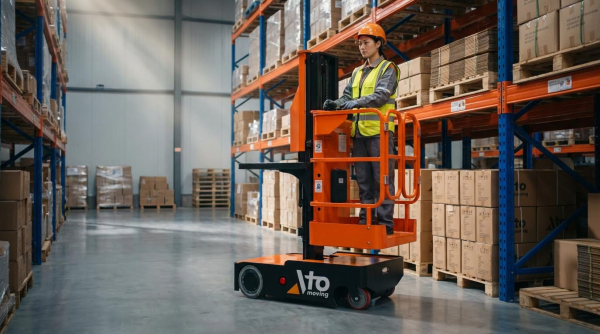
Safety, compliance, and lifecycle management defined how warehouses operated stock pickers within OSHA Class II rules. These topics covered operator training, fall protection, traffic control, PPE, inspection routines, and energy management. A structured program around these elements extended asset life, stabilized uptime, and reduced the total cost of ownership. Understanding what is a warehouse stock picker in this context meant treating it as a powered industrial truck with strict regulatory obligations rather than a simple lifting aid.
OSHA Class II Rules And Operator Training
OSHA classified warehouse stock pickers as Class II electric motor narrow aisle trucks. This classification placed them under the Powered Industrial Truck standard, which required formal training, evaluation, and certification before operation. Training covered what is a warehouse stock picker, its controls, stability limits, and emergency procedures. Programs also addressed load calculations that included the operator, tools, and picked goods within the rated capacity, often up to roughly 1,360 kg. Refresher training followed incidents, near misses, or observed unsafe behavior, and employers documented evaluations to demonstrate compliance during audits.
Fall Protection, Traffic Control, And PPE
Stock pickers elevated operators to rack height, so fall protection became critical. Facilities used full-body harnesses with approved anchor points, along with gated guardrails and interlocks at the operator platform. Traffic control plans separated stock pickers from counterbalanced stacker and pedestrian routes using marked lanes, speed limits, and right-of-way rules. Clear floor markings and mirrors at intersections reduced collision risk in narrow aisles. PPE policies usually specified safety shoes with slip-resistant soles, high-visibility vests, hard hats, safety glasses, and task-appropriate gloves to maintain grip on cartons and controls.
Inspection, Preventive Maintenance, And Uptime
Lifecycle management for stock pickers relied on a layered inspection strategy. Operators performed pre-shift checks of brakes, steering, mast, platform gates, guardrails, emergency stop, horn, and any load-handling attachments. They also inspected wheels, forks or load arms, and visible hydraulic lines for leaks or deformation. Maintenance teams scheduled monthly and six-monthly inspections that included drive systems, lift chains, electrical connections, and control logic, with worn parts replaced before failure. Digital logs tied each unit’s inspection history to fault codes and downtime events, supporting reliability analysis and higher uptime.
Energy Use, Batteries, And Total Cost Of Ownership
Most warehouse stock pickers used electric power, so battery management strongly influenced total cost of ownership. Operators disconnected chargers correctly before travel and avoided deep discharges below roughly 20% state of charge to extend battery life. Facilities compared lead-acid and lithium-ion options based on duty cycles, opportunity charging, and ventilation requirements. Energy-efficient drive and lift systems reduced kWh per pick, which mattered at scale in high-throughput operations. When warehouses evaluated what is a warehouse stock picker for long-term deployment, they included battery replacement intervals, charger infrastructure, and maintenance labor in lifecycle cost models, not just the purchase price.
Summary: Selecting The Right Lift For Your Warehouse
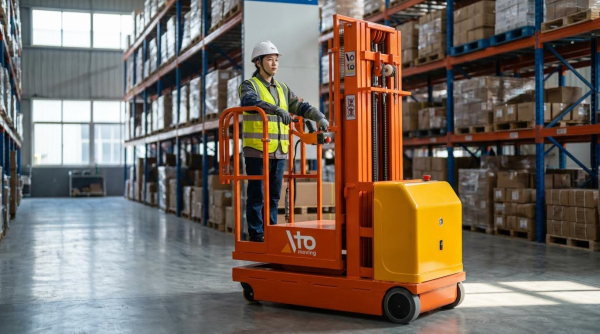
Understanding what is a warehouse stock picker is central to specifying the right lift for modern, high-density storage facilities. Stock pickers, classified as electric narrow-aisle trucks, elevated operators instead of only lifting pallets, which made them ideal for case and each-pick fulfillment. In contrast, counterbalance stacker, reach trucks, turret trucks, stackers, layer pickers, and AGV-based systems addressed different load profiles, travel distances, and automation levels. A structured comparison of these options allowed engineers to balance throughput, safety, and lifecycle cost against building constraints such as aisle width and clear height.
From a technical perspective, stock pickers excelled where operators routinely accessed multiple rack levels to retrieve individual items with minimal pallet handling. Their capacity ratings had to include the operator, tools, and picked load, while complying with OSHA Class II rules and fall protection requirements. Forklifts and reach-type trucks remained the better choice for full-pallet movements, dock work, and mixed indoor–outdoor duty. Layer pickers and AGVs supported high-volume, repeatable flows, especially in beverage and grocery logistics, but required higher capital investment, integration with warehouse management systems, and more complex change management.
Lifecycle management strongly influenced the optimal choice. Engineers needed to consider energy strategy (lead–acid versus lithium-ion batteries), charger placement, and maintenance intervals to protect uptime. Daily inspections, documented preventive maintenance, and periodic competency refreshers for operators reduced incidents and unplanned downtime across all lift types. Looking ahead, sensor-assisted navigation, semi-automation, and tighter WMS integration would continue to blur boundaries between manual stock pickers and automated solutions. A balanced approach used stock pickers as flexible, operator-centric assets, while selectively deploying more automated equipment where volume, SKU profile, and labor economics justified the additional complexity.