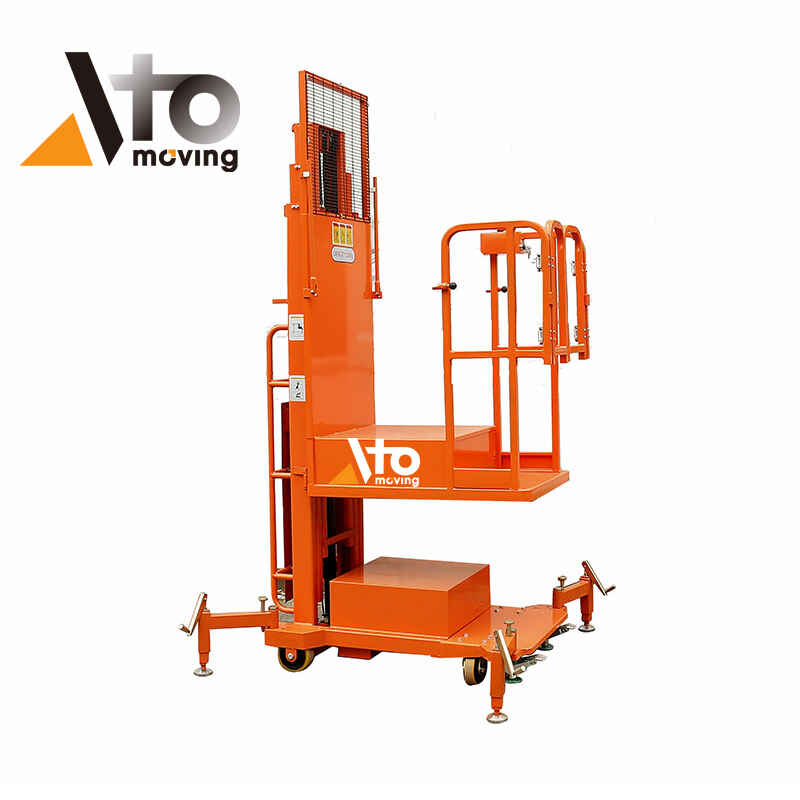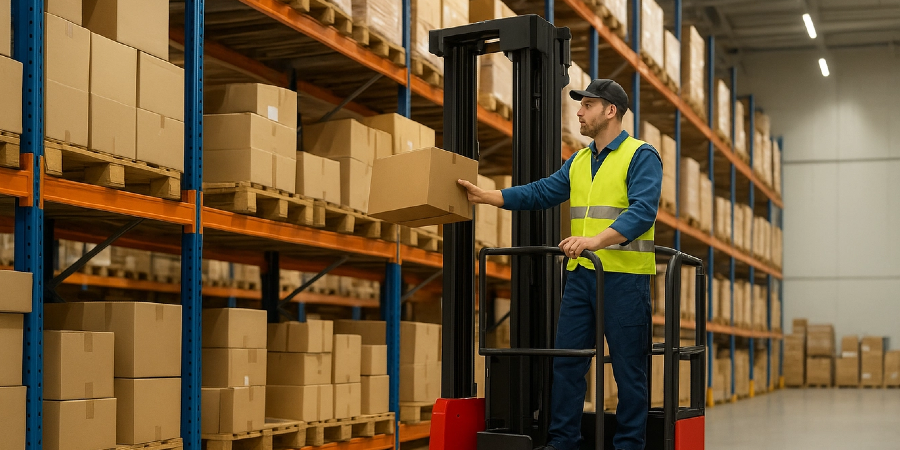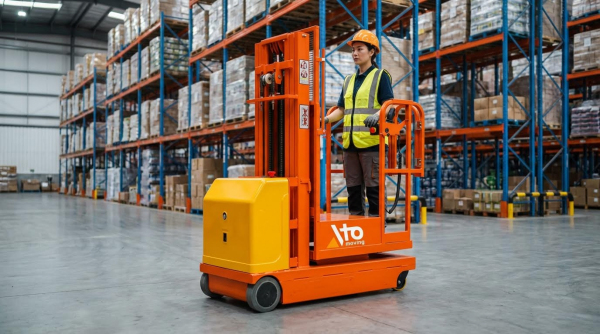
A wave order picker is a compact, high-lift vehicle designed to work hand-in-hand with wave-based warehouse planning to cut travel, boost accuracy, and keep operators safe at height. This guide walks through what these machines are, how they differ from other warehouse order picker, and the engineering behind their height, load capacity, and stability. You will also see how to integrate them with WMS wave logic, tune ergonomics and remote movement for productivity, and apply maintenance and inspection best practices. Use it as a specification checklist and an operational playbook to get more throughput from every meter of aisle and every operator-hour.
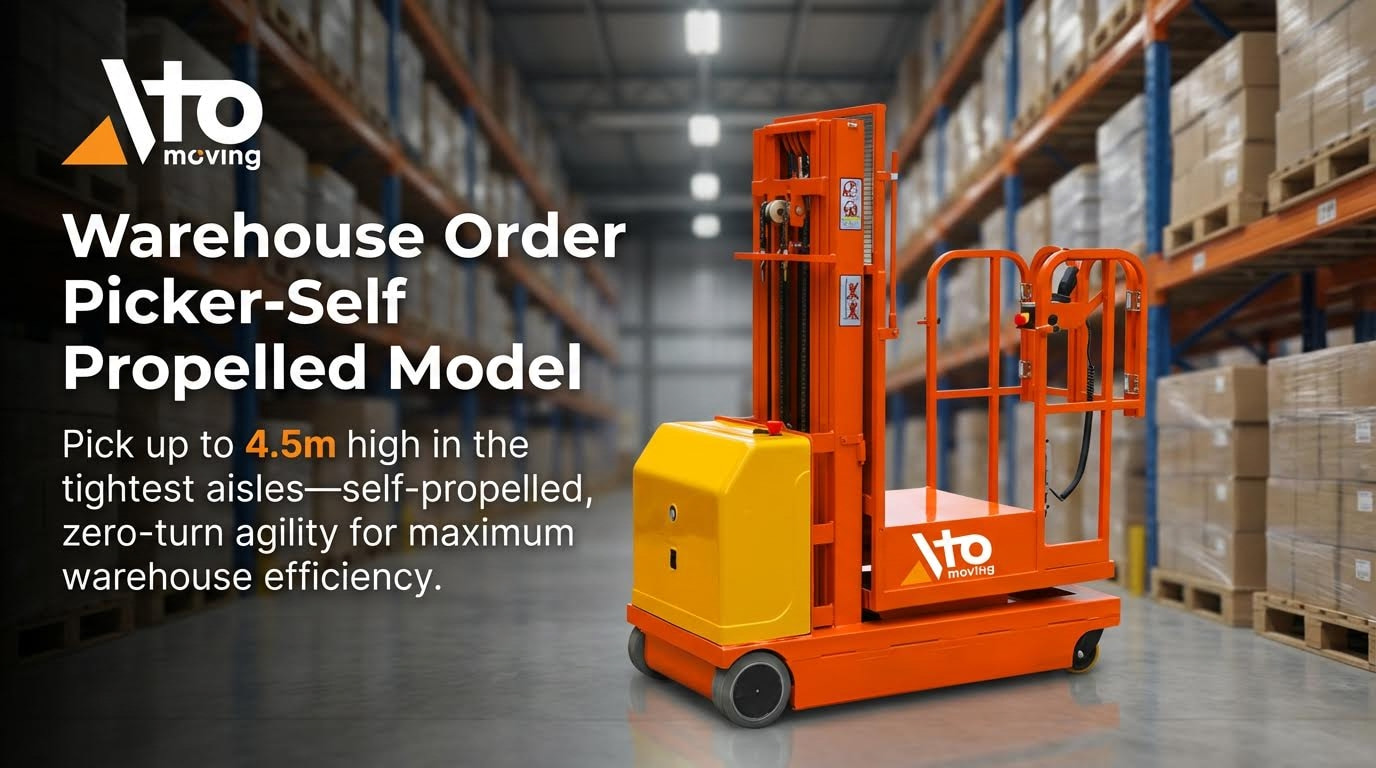
What Is A Wave Order Picker And How It Works
Definition And Role In High-Level Picking
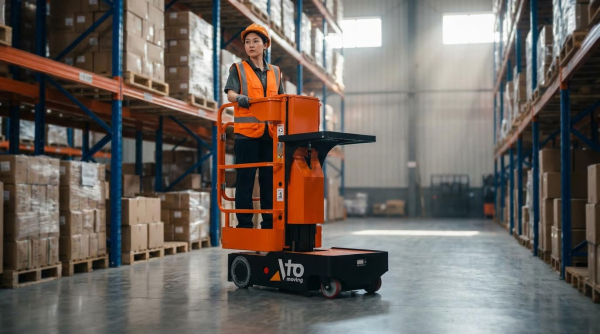
A wave order picker is a self-propelled, high-lift picking vehicle designed to let one operator travel, elevate, and pick directly from racking or shelving while grouped “waves” of orders are released from the Warehouse Management System (WMS). It combines vertical access (typically up to around 5 m working height) with horizontal travel to service many pick faces in one pass, instead of using ladders or separate lift equipment. The WMS groups similar orders into scheduled waves to minimize walking and align with shipping cutoffs. Wave picking groups multiple similar orders into a single batch and releases them at set times. This makes the warehouse order picker a key tool for high-level picking where throughput, safety, and order accuracy must stay high in narrow aisles and dense storage.
- Operator stands on an integrated platform with controls, fall protection, and load decks/trays.
- Vehicle travels in aisles while the platform raises to access higher pick locations.
- Orders are batched into waves by the WMS based on shipping times, zones, or product families. Typical criteria include delivery zones and carrier cutoffs.
- Operator follows a pick path for the active wave, often guided by scanners or pick-to-light, then items are sorted at packing. Post-pick sortation must be sized for peak batch releases.
Why wave order pickers suit high-level picking
High-level picking combines vertical travel, horizontal travel, and frequent starts/stops. A wave order picker reduces ladder use, cuts walking distance by batching orders into waves, and keeps the operator in a protected, ergonomic position while working at height. This is especially valuable in narrow-aisle environments and in operations with tight shipping windows, where waves can be aligned with carrier cutoffs and dock capacity. Aligning waves with dock and pack-station constraints stabilizes flow.
Key Differences Versus Other Order Pickers
Compared with standard low-level or mid-level order pickers, a wave order picker is optimized for one-person, high-level tasks in very tight spaces, often with integrated safety interlocks and high maneuverability. It typically operates at moderate speeds with automatic speed reduction at height to maintain stability. Some models reach platform heights around 3.0 m, giving roughly 5 m working height, and travel up to about 8 km/h with speed adjusted as the platform elevates. The table below highlights how a typical wave order picker compares with other common order picking machines.
| Aspect | Wave Order Picker | Conventional Low-Level Order Picker | Manual Ladder / Cart Picking |
|---|---|---|---|
| Main picking height range | Up to ~5 m working height with powered platform lift (platform height around 2995 mm) | Typically ground to first/second beam only; higher levels need extra equipment | Limited by ladder height and safety rules; frequent repositioning |
| Typical travel speed | Up to about 8 km/h, with automatic reduction at elevated heights to maintain stability | Similar or slightly higher at floor level; no elevated travel | Walking speed only; high fatigue over long shifts |
| Vehicle footprint & aisle suitability | Short and narrow chassis (e.g., ~1525 mm long, ~750 mm wide) for tight aisles and 0.8 m doorways enabling work in very confined spaces | Requires wider aisles; optimized for pallet-level picking and horizontal transport | Can enter narrow spaces but with poor ergonomics and slow cycle times |
| Load handling | Deck and tray for cartons/totes (e.g., ~90–115 kg per surface) sized for piece-picking | Usually handles pallets or multiple totes at floor level | Small quantities per trip; limited by operator strength and cart size |
| Safety systems | Integrated interlocking gates, hand and foot presence sensors, and under-platform sensors to prevent unsafe operation at height forming a multi-point safety envelope | Standard truck safety systems; less focused on frequent high-level work | Relies mainly on procedural controls; higher fall risk |
| Integration with wave picking | Designed to execute WMS-released waves efficiently in high-density storage; often paired with scanners and guided paths to reduce walking and meet shipping deadlines | Common in wave and batch picking but mainly at ground level | Can follow wave lists but becomes a bottleneck at volume |
From a process standpoint, the wave order picker also differs in how it supports WMS-driven batching and high-density storage. Wave picking groups multiple similar orders into one batch and schedules them for specific times during the shift, which reduces walking distance and improves labor utilization. Orders in each wave are released based on delivery zones, shipping times, or product types. A wave order picker is engineered to execute these batches at height, while low-level equipment or manual methods struggle to maintain the same throughput and safety.
- Better suited to narrow aisles and small pick faces at multiple levels.
- Built-in safety interlocks reduce the risk of falls and crush injuries during high-level picking.
- Supports leaner travel paths when combined with intelligent wave rules and good slotting. Placing high-demand SKUs close together increases batch efficiency.
- Reduces reliance on ladders and separate lift equipment, simplifying safety training and procedures.
When to choose a wave order picker over alternatives
A wave order picker is most effective when you have many small, carton-level picks spread vertically across several beam levels, tight aisles, and a WMS capable of creating efficient waves. It is less suitable where most demand is full-pallet or floor-level only, or where automation such as ASRS already presents items to an operator at an ergonomic height. In those cases, low-level order pickers or goods-to-person systems may be more economical. ASRS can further enhance wave picking by speeding retrieval and consolidation.
Engineering Design, Safety Systems, And Performance
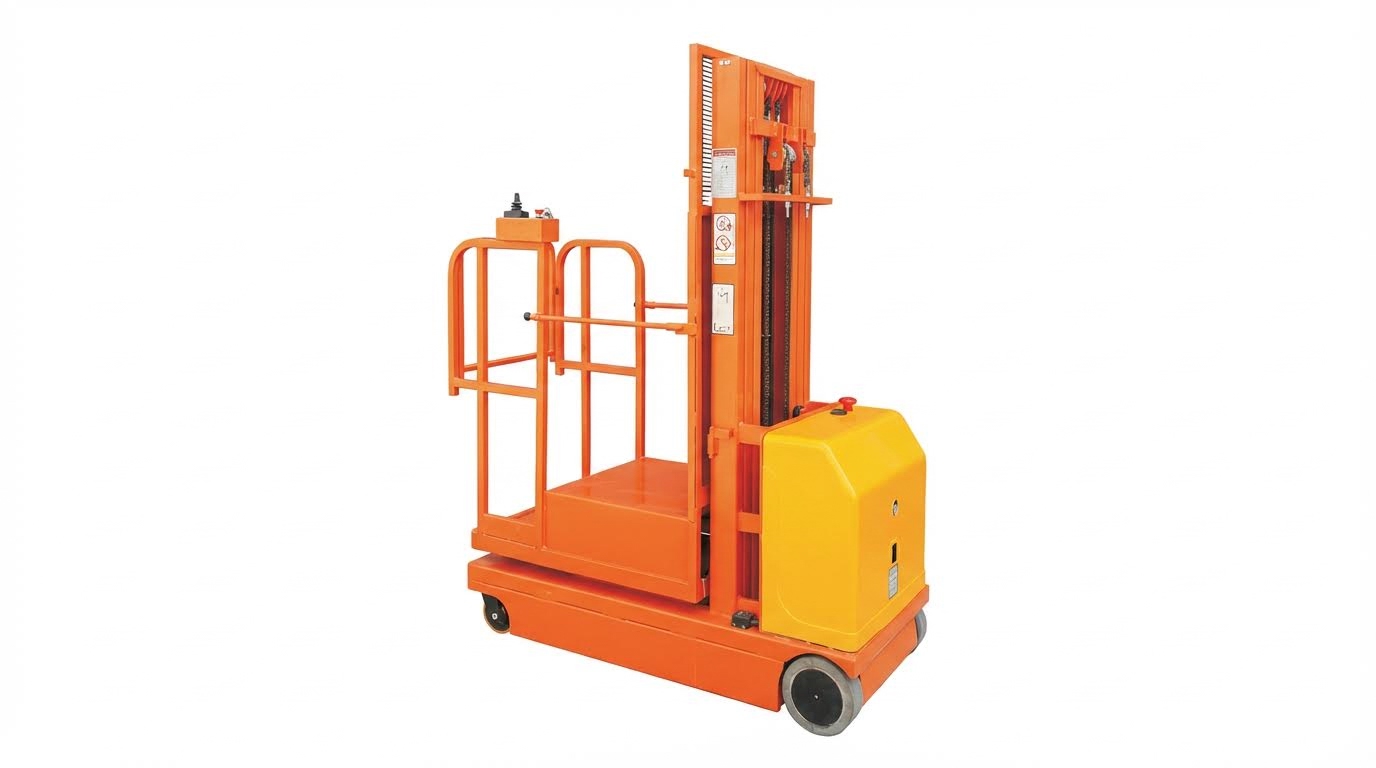
Engineering decisions on a warehouse order picker drive how high you can pick, how much you can carry, and how safely you can move in tight aisles. This section focuses on the hard numbers: lift height, capacity, stability, vehicle envelope, energy system, and maintenance strategy. Use these points as a checklist when comparing models or writing your equipment specification.
Platform Height, Load Capacity, And Stability
For high-level picking, platform working height, rated capacity, and built‑in stability controls determine what SKU locations you can serve and at what risk level. You must size the order picking machines to your top rack beam, carton weights, and floor flatness.
| Parameter | Typical Value / Range | Design / Safety Impact | Reference |
|---|---|---|---|
| Maximum platform lift height | ≈ 2,995 mm platform; ≈ 5 m working height | Defines maximum pick face elevation and required rack clearances | High-lift work-assist vehicle data |
| Load tray capacity | ≈ 90 kg | Suited to light cartons, small parts, and e‑commerce totes | Cited capacity data |
| Load deck capacity | ≈ 115 kg | Allows heavier cases or multiple totes per trip | Cited capacity data |
| Travel speed (loaded) | Up to ~8 km/h, auto‑reduced at height | Higher throughput on long runs, with speed‑height interlocks for stability | Speed specification |
| Stability controls | Speed reduction at height; overload / tilt interlocks | Reduces tip‑over risk during elevated travel and picking | Stability system guidance |
Modern wave order picker platforms use multiple interlocked safety channels to keep the operator secured at height. A typical high‑integrity design combines gates, hand/foot presence sensors, and under‑platform detection.
- Four‑point operator presence system with all functions disabled unless conditions are met (gates closed, hands on controls, both feet on pedals). Example safety concept
- Interlocking gates that must be closed before the platform can lift, preventing fall hazards at elevation.
- Hand sensors that require both hands on the control pod to move or lift, discouraging risky body positions.
- Dual foot pedals with sensors that stop travel and lift when either foot is removed, acting as a dead‑man control.
- Safety sensors below the platform that disable movement if they detect pressure, protecting pedestrians and goods under the machine. Under‑platform sensor example
Engineering tips for specifying height and capacity
Match maximum platform height to the top usable pick level, not the rack height, allowing for operator reach and required clearance. Derate capacity for off‑center loads or poor floor conditions, and confirm that speed‑at‑height curves, tilt alarms, and overload cut‑outs align with your racking configuration and typical carton weights.
Vehicle Dimensions, Maneuverability, And Aisle Design
The physical envelope of a wave order picker dictates aisle width, transfer aisle design, and how easily operators can navigate doors, mezzanines, and cross‑aisles. You should lock these dimensions into your warehouse layout model before committing to racking.
| Dimension / Feature | Typical Value | Design Consequence | Reference |
|---|---|---|---|
| Overall length | ≈ 1,525 mm | Short chassis improves turning radius in tight aisles | Dimension data |
| Overall width | ≈ 750 mm | Allows travel through doorways and aisles as narrow as 800 mm | Dimension data |
| Minimum aisle / doorway | ≈ 800 mm | Enables dense storage and easy access between zones | Doorway requirement |
| Ergonomic steering | One‑hand steering, movable laterally across battery cover | Operator stays within truck profile; better control and reduced fatigue | Ergonomic steering example |
| Remote movement | Walk‑along, remote‑control creep function | Reduces mounting cycles and walking distance during low‑level runs | Remote movement concept |
Maneuverability is not only about footprint; it is also about how the operator interacts with the controls while following wave picking routes. Good designs keep the operator fully inside the truck profile and minimize awkward reaches.
- One‑hand steering systems let the operator keep a stable stance while making fine corrections, which is critical when elevated. Ergonomic steering reference
- Lateral steering unit movement across the battery cover allows operators to choose a comfortable position without leaning outside the chassis.
- Remote movement functions let the operator advance the truck while walking alongside during ground‑level picks, reducing step count and mounting cycles. Remote movement reference
Aisle and layout guidelines for wave order pickers
Set clear aisle width at least 50–100 mm wider than the maximum truck width plus any load overhang to allow safe passing and corrections. Provide dedicated passing zones or cross‑aisles where multiple wave order picker units share the same rack run. Check turning radii at aisle ends, especially near fire exits and dock doors, and avoid placing heavy pedestrian flows where trucks reverse or swing.
Powertrain, Batteries, And Predictive Maintenance
The powertrain of a wave order picker is usually electric and optimized for short acceleration bursts, precise speed control, and frequent lift cycles. Battery chemistry and maintenance strategy directly affect uptime and total cost per pick line.
| Power / Maintenance Aspect | Typical Specification / Practice | Operational Effect | Reference |
|---|---|---|---|
| Electrical system voltage | 24 V DC | Simplifies wiring and supports compact drive and lift motors | Power system data |
| Battery capacity range | ≈ 105–210 Ah | Defines runtime window between charges; must match shift length and duty cycle | Battery capacity data |
| Battery technology options | Lead‑acid or lithium‑ion with opportunity charging | Lithium‑ion offers longer runtimes and faster top‑up charging without damage risk | Battery technology reference |
| Pre‑shift inspection | Check forks, mast, tires, wheels, battery, safety controls, fall protection | Finds defects early; unsafe units are locked out before operation | Inspection guidance |
| Battery maintenance | Keep charge above ~20% SOC; check terminals, insulation, charger output | Reduces failures and extends battery life | Battery maintenance reference |
| Hydraulic system checks | Weekly oil level and leak inspection; verify smooth lift/lower | Prevents lift failures and erratic platform motion | Hydraulic maintenance reference |
| Mast, chains, and rails | Scheduled cleaning, lubrication, and checks for elongation and cracks | Maintains straight, predictable mast movement at height | Mast maintenance reference |
| Wheels and brakes | Daily debris checks; weekly torque and brake performance tests | Ensures controlled stopping distances and stable travel | Wheel and brake checks |
| Predictive maintenance metrics | Motor current, lift cycle counts, brake actuations, battery voltage trends | Supports failure prediction and planned downtime | Predictive maintenance guidance |
- Technicians should verify stability‑related systems such as speed reduction with elevated mast, tilt or height interlocks, and overload alarms, because these directly affect safety during high‑level picking. Stability system checks
- Professional inspections every 6–12 months should include electrical diagnostics, sensor calibration, and insulation resistance tests to catch hidden faults early. Professional maintenance reference
- Predictive maintenance programs that log lift cycles and energy use help planners schedule service windows around wave picking peaks, minimizing impact on throughput. Predictive maintenance reference</li
Optimizing Wave Order Picking For Throughput And Accuracy
Integrating Wave Pickers With WMS Wave Logic
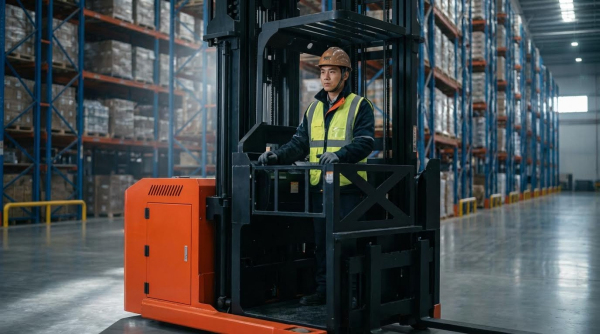
Optimizing a warehouse order picker starts with how it is driven by your Warehouse Management System (WMS). The goal is to align physical travel paths with digital wave logic so every platform lift and meter traveled moves maximum order volume. Use your WMS rules to control which SKUs, orders, and time windows each picker handles.
Core WMS concepts that impact a wave order picker
A WMS grouped orders into “waves” based on shipping times, zones, or product families to cut walking time and hit carrier cutoffs. Waves were released at defined times during a shift, and operators picked with scanners or devices before items were sorted at packing. Wave picking grouped similar orders into scheduled batches. Proper sizing of these batches had to consider pack and sorter capacity to avoid bottlenecks. Best-practice guidance emphasized balancing batch size with downstream capacity.
To make that logic work on a order picking machines, you must translate WMS rules into physical routing and tasking. Focus on how many lines per lift cycle, how often the operator changes aisle, and how often they reverse direction.
- Group dense SKUs for high-level picking in the same wave and physical zone to reduce mast lifts per order.
- Use WMS batching by SKU affinity and pick density so each platform elevation serves many lines. Intelligent batching rules used SKU affinity and order similarity.
- Align wave release times with carrier cutoffs and dock capacity so pickers are not rushed at the end of the shift. Waves were best staggered to match dock and packing throughput.
- Separate waves for single-line orders so the picker can run fast, low-height paths with minimal sortation. Grouping single-line orders into one wave reduced consolidation needs.
Slotting is the mechanical engineer’s lever in a digital process. Where you put SKUs decides how far and how often a semi electric order picker moves.
- Place high-frequency SKUs at comfortable reach heights to minimize platform travel and cycle time.
- Cluster SKUs that are often batched together in adjacent bays to enable “one lift, many picks.” Slotting guidance recommended locating frequently batched SKUs near each other.
- Keep heavy or bulky SKUs closer to ground level to reduce stability risk and handling strain.
- Review slotting quarterly using pick frequency reports; re-slot when 80/20 SKU profiles drift.
Automation around the wave order picker multiplies these gains. WMS-driven scheduling and analytics remove manual guesswork and stabilize throughput.
- Automate batch creation, wave release, and exception handling in the WMS, then push tasks directly to truck terminals. Automated batching and wave scheduling improved consistency and scalability.
- Use pick-to-light or similar guidance at consolidation or high-density pick faces to cut errors. Light-directed systems reduced picking errors to nearly zero.
- Integrate ASRS or shuttle systems to feed high-level zones so the wave order picker focuses on travel and final pick, not deep storage retrieval. ASRS integration improved retrieval speed and consolidation.
- Monitor KPIs such as lines per hour, on-time ship rate by wave, and pick accuracy, and feed them back into batching and slotting rules. Key metrics included lines per hour, cycle time, and accuracy.
Example: Mapping WMS waves to wave order picker routes
Imagine a WMS releases a high-priority wave of small-parcel orders for a single carrier cutoff. Batching rules group orders with overlapping SKUs in three adjacent aisles. The route plan sends each wave order picker down one aisle per pass, lifting once per bay to clear all lines at that level before moving on. Downstream, pack stations and sortation are sized to handle the known release volume without congestion.
Ergonomics, Remote Movement, And Operator Productivity

Mechanical design and ergonomic features of a wave order picker directly determine sustainable throughput. You do not just want peak picks per hour; you want that rate held safely across the shift.
Well-designed pick stations showed what is achievable: operators reached up to about 1,000 picks per hour when storage and picking carriers sat at the same height, minimizing bending and stretching. Advanced pick stations enabled up to 1,000 picks per hour with parallel order preparation. A wave order picker should mirror these principles at height.
- Keep pick faces within the operator’s neutral reach zone once the platform is positioned.
- Align totes, pallets, or trays on the truck so transfer is a straight, short move, not a twist and reach.
- Use height-adjustable secondary trays or deck levels where feasible to reduce repetitive bending.
- Standardize carton sizes and label positions so the operator’s motions stay uniform and quick.
- Remote travel lets the operator walk beside the truck and move it forward without climbing on, reducing mount/dismount cycles and fatigue. Some order pickers allowed remote-controlled movement for hands-free picking.
- One-hand steering with lateral adjustment keeps the operator fully within the vehicle profile while allowing relaxed arm posture. Ergonomic steering systems enabled safe, relaxed driving with one hand.
- Speed control linked to lift height (for example, limiting travel speed as the platform rises) protects stability without killing productivity on lower-level runs. Some vehicles traveled up to about 8 km/h with speed adjusted by lift height.
- Design pick paths so remote movement is allowed only in straight, clear travel lanes with defined rules.
- Use WMS task interleaving so each lift cycle collects as many lines as practical, reducing repetitive mast movements.
- Measure picks per hour by operator and by truck, then correlate with travel distance, lift cycles, and remote-move usage.
- Adjust wave sizes if operators consistently hit fatigue limits late in the shift, even when trucks are capable of more.
Remote movement and steering options on a wave order picker are major productivity levers, especially for low-to-mid-level picks and short moves between bays.
Checklist: Ergonomic configuration for a wave order picker
To convert ergonomic design into measurable productivity, link equipment features with process and training.Finally, remember that safety systems on a wave order picker also affect productivity. Interlocks, sensors, and gated platforms prevent unsafe shortcuts while keeping cycle times predictable. For example, multi-point safety systems used interlocking gates, hand sensors, and dual foot pedals to ensure the operator was correctly positioned before elevation. Safety sensors and interlocks disabled functions if conditions were not met. When operators trust these systems and the process around them, they maintain a steady, high picking rhythm without risky behavior.Final Thoughts On Specifying And Operating Wave Order PickersWave order pickers sit at the point where warehouse geometry, machine engineering, and WMS logic meet. Platform height, rated capacity, and stability controls decide which rack levels you can use and how safely you can work there. Compact chassis dimensions and tight turning radii then turn that vertical reach into real storage density in narrow aisles.Safety systems do more than meet rules. Interlocked gates, presence sensors, and speed‑at‑height limits create a controlled envelope so operators can work fast without unsafe shortcuts. Electric powertrains, right‑sized batteries, and structured inspections keep that safety and performance stable across the shift.On the process side, WMS wave design, smart slotting, and ergonomic layout convert the machine’s capability into lines per hour. Remote movement, one‑hand steering, and well-placed pick faces cut wasted steps and fatigue, which protects both throughput and long‑term injury rates.The best practice is clear. Specify wave order pickers by starting from your rack heights, aisle widths, SKU profile, and wave strategy, not from a generic data sheet. Then lock in a maintenance plan and operating rules that treat stability and ergonomics as non‑negotiable. Done well, a fleet of well-specified wave order pickers from Atomoving will raise storage density, accuracy, and operator safety at the same time.Frequently Asked QuestionsIs an order picker the same as a forklift?An order picker is technically a type of forklift. It falls under Class II – Electric Motor Narrow Aisle Trucks. Order Picker Guide.What class is an order picker?An order picker belongs to Class II – Electric Motor Narrow Aisle Trucks, which are designed for narrow aisle operations in warehouses. Order Picker Classification.