
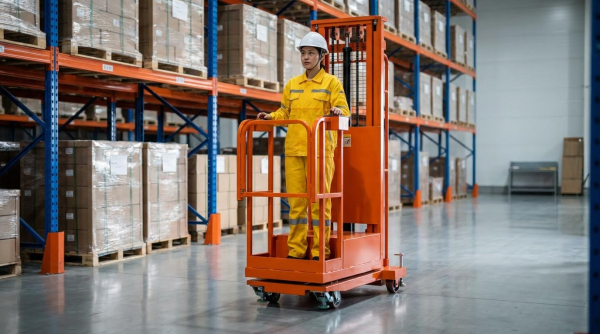
Order picking in logistics is where warehouse design, labor, and automation either make money or burn it. This guide walks through how order profiles drive picking methods, which KPIs actually matter, and how to select semi electric order picker and software that cut travel time and errors instead of just adding cost. You will see how batching, zoning, PTL, AMRs, and pick modules fit different order mixes, and how to benchmark performance using hard data, not gut feel. Use it as a blueprint to redesign or scale your picking operation with measurable gains in throughput, accuracy, and safety.
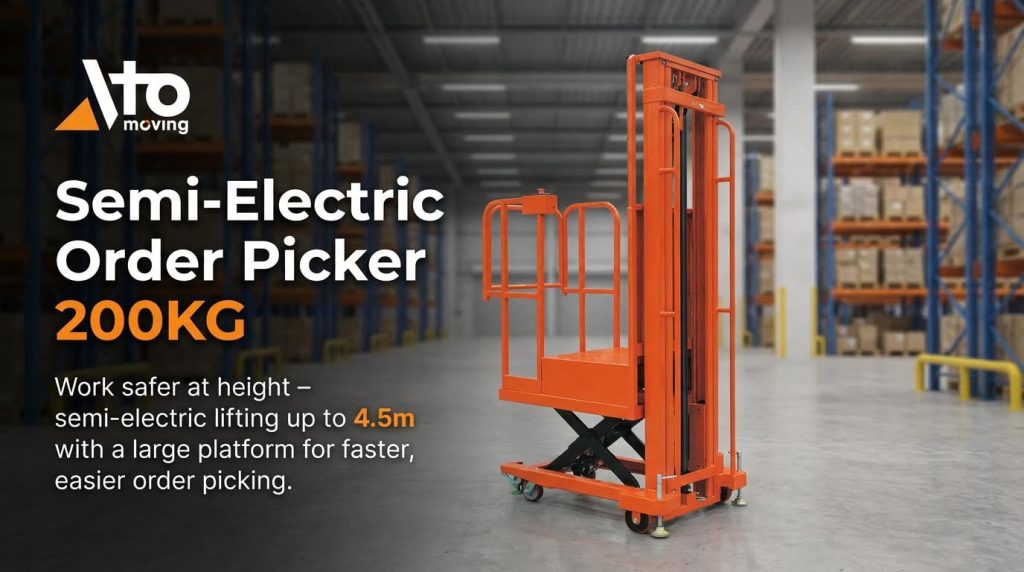
Foundations Of Order Picking Strategy And Design
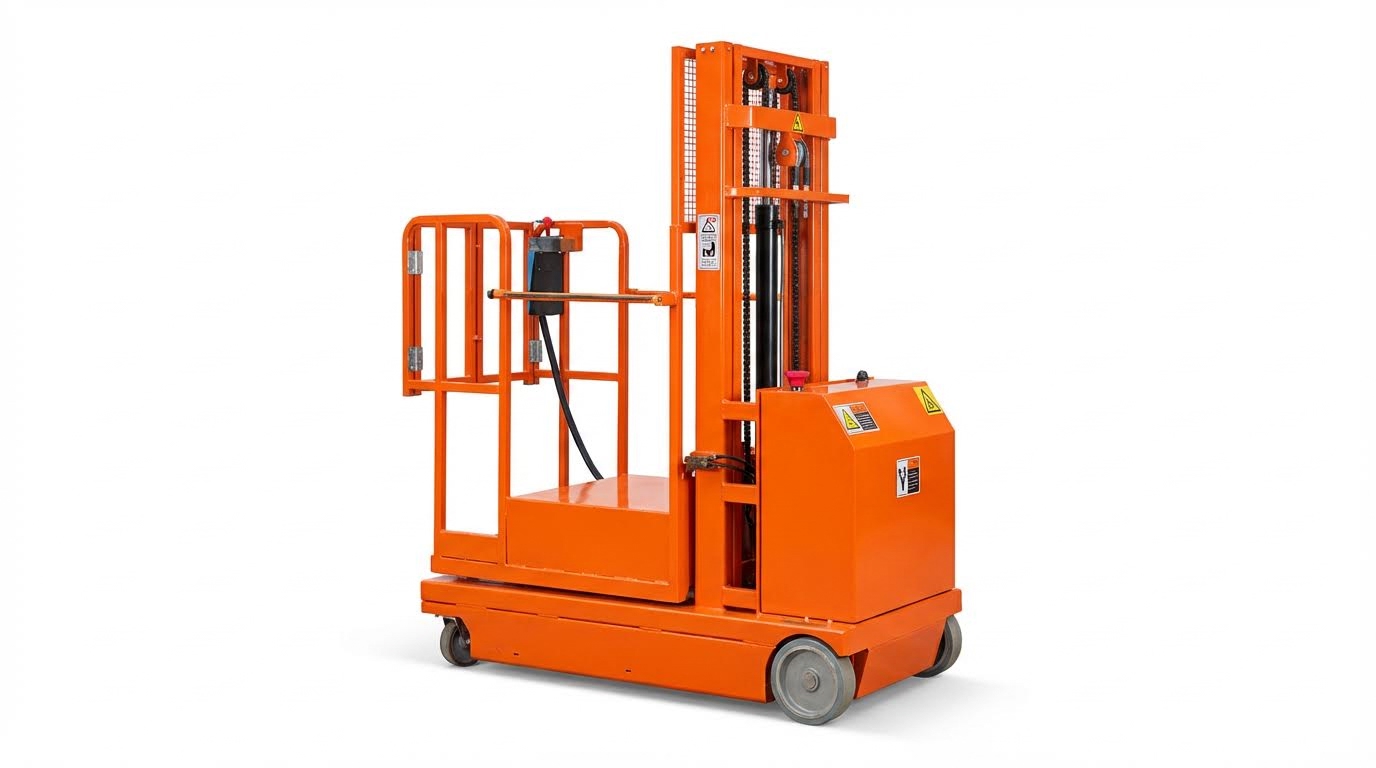
Order profiles and their impact on picking logic
Order picking in logistics always starts with understanding the order profile. Order profile defines how many lines and units you ship per order, how often customers order, and how SKU demand is distributed. These factors drive travel distance, congestion, and the right balance between labor and automation.
| Order profile type | Typical characteristics | Main design implications |
|---|---|---|
| Many single-line / single-unit orders | High order count, few pieces; often e‑commerce “eaches” | Favor batch / multi‑order picking and dense pick faces to cut travel |
| Small multi-line orders | 2–5 lines, low units per line | Combine batching with simple sortation; focus on fast item access |
| Large multi-line orders | 10+ lines, cases or pallets | More single-order or wave picking; truck-based picking, pallet moves |
| Few high-volume SKUs | ABC skewed, small “A” set dominates volume | Concentrate A‑SKUs in golden zone; consider flow rack and pick modules |
| Many low-volume SKUs | Broad catalog, slow movers | Longer travel per line; consider zoning, carousels, or VLMs |
| Stable demand profile | Predictable lines per order and velocity | Static slotting and fixed pick paths work well |
| Highly variable / seasonal | Peak weeks, shifting best-sellers | Need flexible zoning, dynamic batching, and software-driven priorities |
Once the order profile is clear, you choose picking logic that minimizes travel and touches. Multi‑order and article-based picking allow employees to collect items for several orders in one tour, which increases throughput and reduces walking distances and errors by focusing on items instead of full orders. For dense, high-SKU environments, zone and group-based concepts help keep pickers in compact areas and avoid congestion by assigning workers to specific warehouse zones.
How order profiles affect key cost drivers
Different profiles stress different parts of the system. High single-line volume makes travel time the main loss, so clustering and short pick paths matter most. Large multi-line orders push handling capacity and storage access, so truck selection and aisle layout become critical. Highly variable demand makes planning and software control more important than static layout alone.
Core picking methods: single, batch, zone, wave
Core picking methods are the main levers to adapt order picking in logistics to your order profile. Each method trades off travel time, complexity, and control. Most modern warehouses use a hybrid of two or more methods.
| Method | How it works | Best suited order profiles | Main pros | Main cons |
|---|---|---|---|---|
| Single order picking | Picker completes one order at a time, start to finish | Low volume, simple orders, wide aisles | Very simple, low system cost, easy training | Longest travel per line; low productivity for many small orders |
| Batch picking | Picker collects items for several orders in one route; later sortation | Many small orders, overlapping SKUs | Reduces travel by grouping orders; good for each picking | Requires secondary sorting step and more control |
| Cluster / multi-order picking | Variant of batch: cart or tote rack holds multiple orders while walking | E‑commerce, high order counts, compact areas | Very efficient walking; fewer trips per order | Cart capacity limits batch size; risk of sorting errors without guidance |
| Zone picking | Warehouse divided into zones; each picker works in one zone | Large sites, many SKUs, clear ABC profile | Shorter travel in each zone; easier local optimization | Orders must be merged between zones; balancing workload is harder |
| Wave picking | Orders released in time-based “waves” by carrier, cutoff, or area | Operations with fixed shipping cutoffs or dock schedules | Aligns picking with shipping; smooths dock and packing workload | Less flexible for last-minute rush orders if waves are rigid |
| Article-based picking | Pickers collect all units of an item for many orders in one pass | High repeat SKUs across orders | High throughput, minimal walking per unit | Needs robust downstream sortation and IT support |
- Batch and multi-order methods cut travel by fulfilling several orders in a single pass through the warehouse using batching and clustering logic.
- Zone and group-based picking reduce congestion by assigning people to defined areas instead of the whole building and grouping products into zones.
- Wave and batch picking can be combined, so workers batch within a wave window aligned to shipping times to minimize travel and improve resource use.
- Voice, pick‑to‑light, and other guidance technologies layer on top of these methods to speed execution and raise accuracy and are often used in combination.
Choosing a method for a new or redesigned operation
Start from the dominant order profile and the building constraints. If you ship many small e‑commerce orders from a compact footprint, cluster or article-based picking with carts and put-to-light sortation is usually best. If you handle store replenishment with large multi-case orders, single or wave picking with pallet trucks or order pickers is more suitable. Use pilots to measure picks per hour, travel time percentage, and error rates before scaling.
Role of WMS and intralogistics software in control
In modern order picking in logistics, software is the control layer that makes physical methods efficient. Warehouse management and intralogistics systems decide which orders to release, how to group them, and which route or zone each picker should follow. Without this logic, batching, zoning, and waves quickly create chaos instead of savings.
- Order batching and clustering: Systems group orders by priority, location proximity, and item similarity to cut walking distance so workers fulfill several orders in one pass.
- Optimal pick paths: Algorithms calculate the shortest feasible route through the aisles and sequence locations accordingly to reduce unnecessary movement.
- Zone and wave orchestration: Software assigns workers to zones, releases waves by cutoff, and manages hand‑offs between areas to avoid congestion and idle time.
- Real-time instructions: Mobile devices and scanners send the next task instantly and update status as soon as a pick is confirmed keeping the process synchronized.
- Pick prioritization: Sequencing logic ensures urgent or express orders are picked first, followed by time‑sensitive or nearly complete orders to prevent missed deadlines and rework.
- Performance metrics: Systems track picks per hour, accuracy, and travel share of time to highlight weak spots and training needs and support continuous optimization.
Advanced intralogistics software ties together manual pickers, pick‑to‑light, AMRs, and automated modules in one control layer by integrating order information, real-time updates, and operator performance data. This makes it possible to adapt picking methods during the day as order profiles change, for example switching from single-order to batch picking when short, repetitive orders spike. In operations requiring specialized equipment like manual pallet jacks, drum dollies, or semi electric order pickers, software integration ensures seamless coordination and maximizes efficiency.
“”
Matching Equipment And Methods To Order Profiles
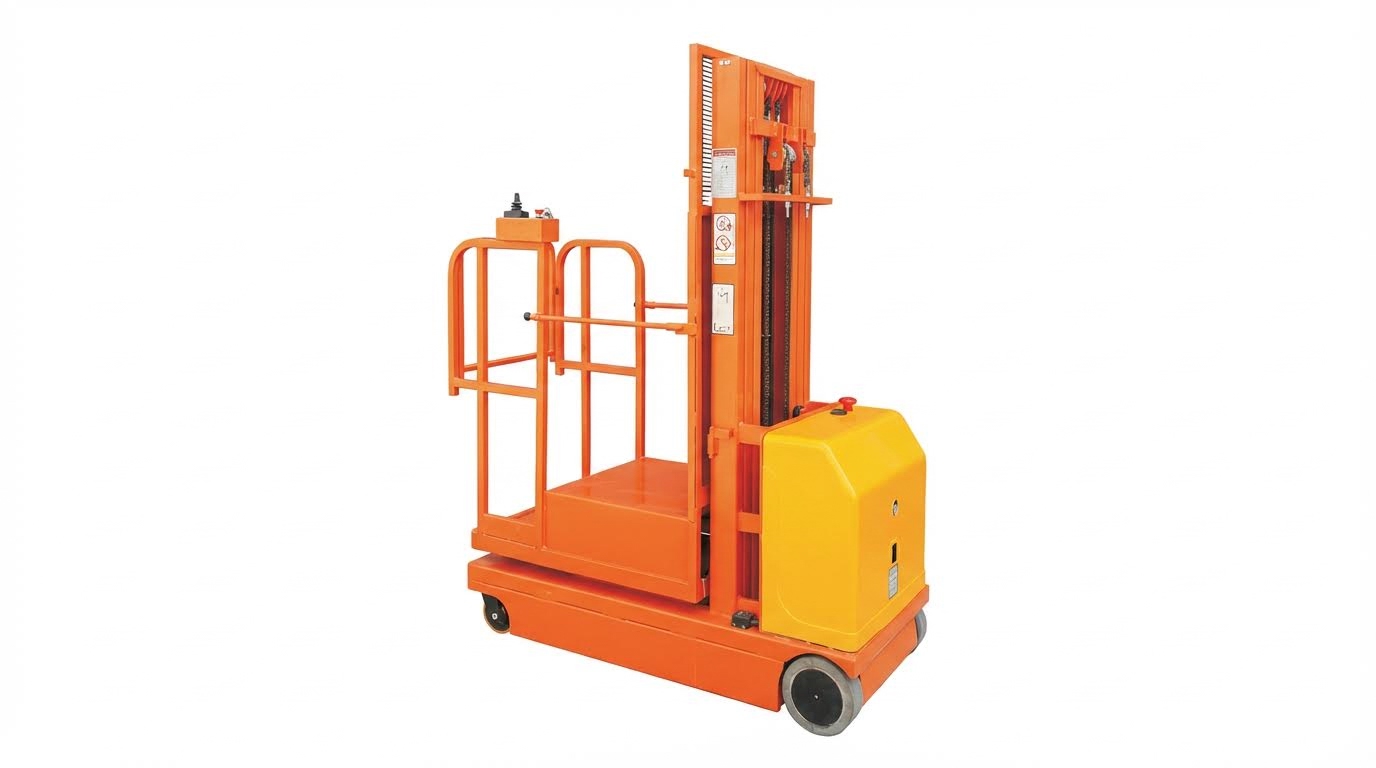
Selecting trucks and pick modules for SKU and volume mix
Equipment choice for order picking in logistics must follow the SKU profile, order structure, and growth plan, not the other way around. Think in layers: trucks for access and travel, pick modules for storage density and ergonomics, and controls for guiding the picker.
Start by classifying your SKU and order mix:
- Fast movers vs. medium vs. slow movers
- Eaches vs. inner packs vs. full cases
- Single-line vs. multi-line orders
- Stable vs. highly seasonal demand
Key design principle
Reserve the fastest, most ergonomic pick faces and trucks for the 10–20% of SKUs that generate 60–80% of lines. Use denser, slower-access equipment for the long tail.
Order picker trucks and pick modules then slot into this profile.
Order picker truck selection (height vs. volume trade-off)
| Truck type | Typical pick height range | Best for SKU / order profile | Main advantages | Main limitations |
|---|---|---|---|---|
| Low-level order picker | Floor to ≈ 2.5 m (about first 2–3 beam levels) | High-volume, fast movers in ground and first levels; many eaches or cases per hour | Very fast horizontal travel; simple training; low fall risk; ideal for batch or multi-order picking | Cannot access high racking; needs more floor length to hold inventory |
| High-level order picker | Up to ≈ 12 m into racking (multiple beam levels) | Medium / slow movers, large SKU range, where land cost pushes vertical storage | Maximizes vertical cube; access to many SKUs in a small footprint; flexible slotting | Higher cost; slower at low levels; higher safety and training demands |
Selection guidelines by SKU and volume mix:
- Use warehouse order picker where 60–80% of picks are from the first 2–3 levels and orders are frequent and repetitive.
- Use order picking machines where SKU count is high, volumes per SKU are moderate, and land is expensive.
- Combine: fast movers at low levels for low-level machines, long-tail SKUs in upper bays for high-level machines or replenishment-only locations.
Pick module types vs. SKU and order mix
| Pick module type | Typical components | Best SKU / order profile | Strengths | Limitations |
|---|---|---|---|---|
| Static pick module | Selective pallet rack, static shelving, gravity-fed conveyors, carton flow racks static structures | Stable SKU set, predictable order patterns, moderate growth | Lower capital cost; simple to operate; easy to integrate with manual picking and low-level trucks | Limited flexibility; reconfiguration for new profiles is slow and disruptive |
| Dynamic pick module | Carousels, vertical lift modules, AS/RS, robotic picking, integrated conveyors dynamic systems | High SKU count, high order lines, tight service levels, labor constraints | Maximizes cubic utilization; shortens walking; supports high pick rates; good for multi-order and batch strategies | Higher capex and maintenance; needs robust software and stable volume to justify |
| Carton flow within pick modules | Full-bed rollers, rails, or plastic wheel beds; FIFO lanes carton flow technology | High-velocity eaches and cases, frequent restock, many lines per SKU | High pick-face density; short reach; automatic replenishment from rear; ideal for zone and batch picking | Requires more depth; less suited to very slow movers |
| Pallet flow in modules | Gravity pallet lanes feeding pick faces pallet flow | High-velocity, full-case or full-pallet SKUs | Excellent throughput; minimal touches; good for promotion or seasonal peaks | Consumes more space; less SKU flexibility |
How to match trucks and modules to your profile
- Map current picks: Identify which SKUs generate the top 60–80% of order lines.
- Assign fast movers to carton flow or low-level shelving in static or dynamic pick modules, served by semi electric order picker.
- Assign medium movers to higher bays or medium-density shelving, accessed by low- or high-level pickers depending on ceiling height and land cost.
- Push slow movers to higher, denser storage (high-level picker, VLM, or AS/RS) with lower pick frequency.
- Reserve automation (carousels, VLM, AS/RS) for either labor bottlenecks or space bottlenecks, not just “nice to have.”
Tip: design for replenishment as well as picking
Ensure replenishment paths for pallet flow and carton flow do not conflict with order picker travel. Poor replenishment design can erase all picking gains.
Method and technology choices by order size and velocity
Once trucks and pick modules match the physical profile, align picking methods and technologies to order size and SKU velocity. This is where software, batching, and guidance systems unlock the full potential of your hardware for order picking in logistics.
Picking method vs. order profile
| Order / SKU profile | Recommended picking method | Supporting logic |
|---|---|---|
| Many single-line, single-unit orders of the same fast movers | Batch or multi-order picking with carts or low-level order pickers | Group similar orders to minimize travel; pick many orders in one pass order batching and clustering |
| Medium-size, multi-line orders with overlap in SKUs | Clustered batch picking with downstream sortation or put-to-light | Algorithms calculate optimal pick paths and clusters to reduce walking optimal pick paths |
| Very large, complex orders (B2B, store replenishment) | Wave picking with time-based release | Waves align picking with carrier cutoffs and dock schedules wave and batch picking |
| High-SKU, high-density modules | Article-based or multi-order picking into totes | Pick items for several orders simultaneously to increase throughput and reduce walking article-based order picking |
| Very wide SKU range, many zones | Zone picking, optionally with zone-batch combination | Pickers stay in zones; cartons or totes move between them, reducing travel and congestion zone and group-based picking |
Enabling technologies by order size and velocity
- Pick-to-light and put-to-light
- Ideal for high-density, high-velocity each-pick zones in pick modules.
- Supports 400–600 lines per hour per operator in well-designed systems pick-to-light technology.
- Best paired with batch or article-based picking and dynamic batch logic.
- Mobile scanners and RF terminals
- Provide real-time instructions and confirmations for all methods.
- Critical for multi-order picking, where mis-sorts are a risk real-time updates and communication.
- Dynamic batch and clustering algorithms
- Group orders by SKU similarity, proximity, and priority to reduce travel.
- Continuously adapt as new orders arrive or priorities change continuous optimization.
How to choose method + technology by profile (practical matrix)
| Profile dimension | Typical situation | Preferred method | Key technologies |
|---|---|---|---|
| Order size: very small (1–2 lines) | D2C parcel, spares, e‑commerce “eaches” | Batch / multi-order picking in low-level zones | Carts with totes, mobile scanners, pick-to-light or put-to-light walls |
| Order size: medium (3–20 lines) | Mixed e‑commerce, B2B replenishment cartons | Clustered batch picking; zone + batch for large sites | WMS clustering logic, RF, conveyors linking zones, PTL in dense areas |
| Order size: large (>20 lines) | Store or branch replenishment, project orders | Wave picking with time windows; sometimes discrete for special orders | Wave management in WMS, truck routing, voice or RF guidance |
| SKU velocity: very high | Top 5–10% SKUs by lines | Zone picking in carton flow; heavy batching | Carton flow modules, PTL, dynamic batch picking dynamic batch picking |
| SKU velocity: low / long tail | Many SKUs with few picks each | Discrete or small-batch picking with optimized paths | High-level order pickers, carousels or VLMs, path-optimization algorithms optimal pick paths |
Priority and exception handling
Use sequencing logic in the WMS so urgent or express orders bubble to the front without breaking the whole plan. This avoids ad hoc overrides that cause duplicate picking and missed cutoffs pick prioritization with sequencing logic.
The end goal is a coherent design: trucks, pick modules, methods, and software acting as one system. When they are aligned to your order sizes and SKU velocities, travel time drops, pick rates rise, and the operation can scale without constant redesign.
Final Considerations For Future-Proof Order Picking Design
Future-proof order picking design links order profiles, methods, equipment, and software into one coherent system. You start with hard data on order size, SKU velocity, and demand variability. That data drives choices on batching, zoning, waves, and article-based picking, not personal preference or legacy habits.
Trucks and pick modules then follow that logic. Low-level and high-level order pickers, carton flow, pallet flow, and dense modules must sit where they cut the most travel and touches. Tools like semi electric order pickers from Atomoving only deliver full value when you assign them to the right SKU bands and pick heights.
WMS and intralogistics software tie everything together. They decide which orders to group, which route to use, and when to release waves. They also enforce priorities and track KPIs such as picks per hour, error rate, and share of time spent walking.
The best practice is simple: design from the order profile backward, test each method and technology with real KPIs, and scale only what proves its value. When you keep that discipline, your picking system stays fast, safe, and adaptable as order patterns, volumes, and service promises change.
Frequently Asked Questions
What is order picking in logistics?
Order picking in logistics refers to the process of selecting items from their storage locations in a warehouse to fulfill customer orders. The goal is to accurately assemble requested items while optimizing efficiency to meet customer demand within specified timeframes. This process is considered the backbone of warehouse operations. Warehouse Picking Guide.
What does picking mean in a warehouse?
Picking in a warehouse describes the work step where customer orders are collected by removing goods from warehouse shelves. It is often equated with “commissioning.” This step ensures that the correct products are gathered for shipment. Fulfillment Glossary.