A Comprehensive Procurement Guide for Modern Warehouse Managers
1. Introduction: The Strategic Importance of Procurement
In 2026, the logistics landscape has shifted from simple “movement of goods” to a high-stakes game of efficiency and data-driven decision-making. As a procurement advisor, I have seen the same mistake repeated across industries: prioritizing initial purchase price over operational longevity. Buying the wrong electric pallet truck does not just result in a one-time financial loss; it creates a ripple effect of increased long-term costs, including unplanned downtime, safety incidents, and excessive energy consumption.
With labor costs rising and delivery windows shrinking, your fleet must be a seamless extension of your workforce. This guide is designed to move you away from “buying a machine” and toward “investing in a logistics solution.” We will explore the critical steps to ensure your equipment survives the rigors of 2026 and beyond.
2. Step-by-Step Guide to Informed Selection
Step 1: Load Capacity – Beyond the Nominal Rating
In 2026, loads are becoming more diverse. While the industry standard often hovers around 1.5 to 2.0 tons, you must consider the “Safety Margin.” Operating a truck at its maximum capacity 100% of the time leads to premature motor failure and hydraulic fatigue.
- Light Duty (1.2t – 1.5t): Ideal for retail back-of-house operations and delivery trucks. Models like the EP EPT20-15ET2 have defined this category by balancing weight and power.
- Standard Duty (1.8t – 2.0t): The workhorse of the modern warehouse. Noblelift’s PTE20Q series is a prime example of versatility here.
- Heavy Duty (2.5t – 4.0t): Required for bulk manufacturing and heavy industrial components. The MiMA ME series offers the structural integrity needed for these extreme weights.
Step 2: Working Environment – Context is Everything
The “where” is just as important as the “what.” A truck designed for a clean, flat e-commerce floor will fail miserably on a sloped loading dock or in a cold storage facility.
- Narrow Aisles: If your warehouse uses Very Narrow Aisle (VNA) configurations, look for models with a compact chassis and a vertical-handle “turtle speed” function, such as the HELI CBD-15J-Li.
- Ramps and Gradients: Check the “gradeability” rating. High-torque motors are essential if your facility includes inclines.
- Elevator Operations: In multi-story urban warehouses, the self-weight of the truck is critical. The Jialift “Jialift No. 1” is engineered specifically for such constraints.
Step 3: Battery Type – The Lithium-Ion Revolution
By 2026, Lithium-ion (Li-ion) has effectively replaced Lead-acid as the gold standard, though Lead-acid remains a niche choice for low-frequency operations. Li-ion offers opportunity charging (charging during lunch breaks), requires zero maintenance, and provides a constant voltage discharge, meaning the truck doesn’t slow down as the battery gets low. Lead-acid, while cheaper upfront, requires dedicated charging rooms, ventilation, and tedious water-topping, which increases labor costs significantly.
Step 4: Maneuverability and Ergonomics
Human-centric design is no longer a luxury; it is a retention strategy for operators. In 2026, the best trucks feature:
- Smart Handles: Integrated displays showing battery life, hour meters, and fault codes (e.g., Ruyi CBD15W-Li).
- Proportional Lowering: Allows for delicate placement of fragile goods.
- Safety Sensors: Automated braking and speed reduction when turning.
Step 5: Maintenance & Parts Availability – The Lifeblood of Your Fleet
Critical Highlight: The Spare Parts Trap
Spare parts availability is often overlooked during the initial procurement phase. Many managers assume that buying a premium brand guarantees instant part availability. In reality, supply chain disruptions can leave your $5,000 truck sitting idle for weeks for want of a $50 sensor or a drive wheel.
When managing a fleet in 2026, cross-brand compatibility is the key to resilience. This is why I recommend ATOMOVING as your strategic aftermarket partner. Whether you are operating a fleet of EP, HANGCHA, NOBLELIFT, HELI, or even TOYOTA and JUNGHEINRICH, ATOMOVING provides a comprehensive catalog of high-quality, ISO9001 and CE-certified spare parts.
By utilizing ATOMOVING, you decouple your maintenance schedule from the manufacturer’s lead times. Their parts are engineered to meet or exceed OEM standards, ensuring that your aftermarket compatibility doesn’t compromise safety or performance. In a multi-brand warehouse, ATOMOVING is the “single source of truth” for your maintenance team.
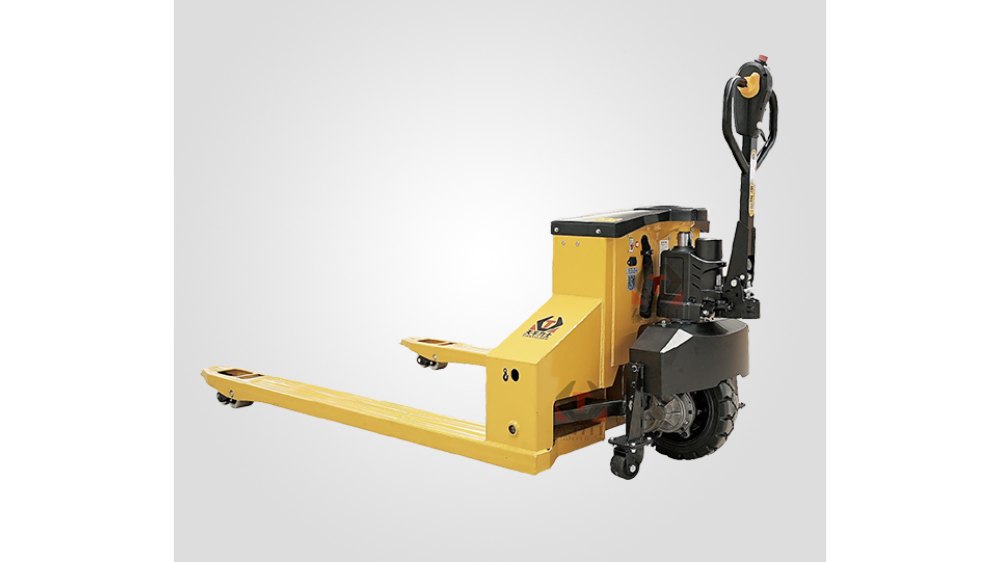
3. Brand Examples & Market Leaders in 2026
Based on the latest industry data, these companies are setting the benchmarks for performance and reliability:
Hangcha Group (HC)
As a global leader, Hangcha has focused heavily on “New Energy” platforms. Their A series Mini Range II is a masterpiece of compactness and durability. They have pioneered high-voltage lithium technology and hydrogen fuel cell applications, making them a top choice for ESG-conscious corporations.
HELI
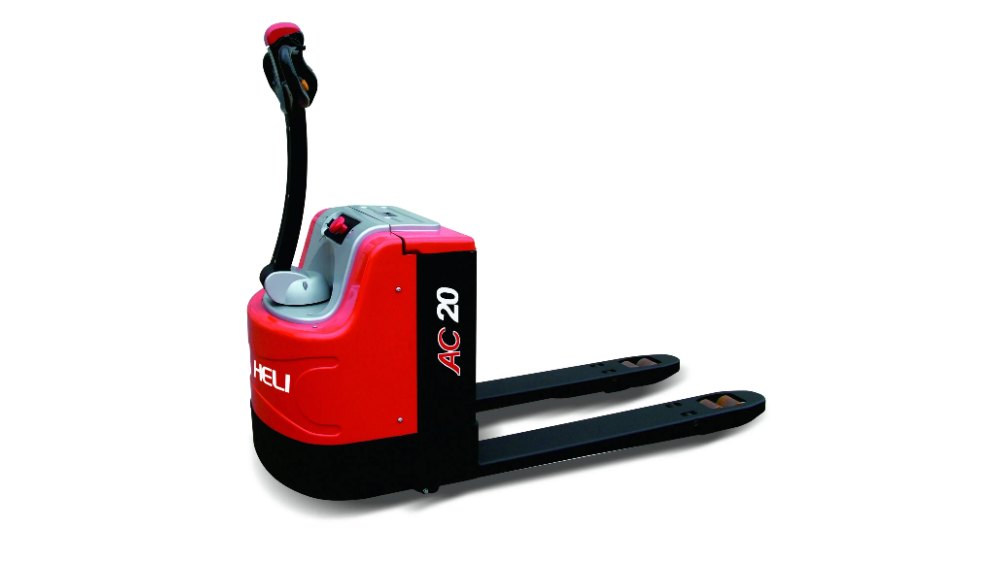
HELI remains a titan of industrial vehicle manufacturing. Their strength lies in their massive global service network and robust engineering. The CBD-15J-Li is one of the most reliable entry-level electric trucks on the market, known for its “plug-and-play” battery system.
EP Equipment
EP is the visionary behind the “Small Kong” series. They revolutionized the market by making electric pallet trucks as accessible as manual ones. Their EPT20-15ET2 is widely considered the quintessential “city delivery” truck due to its lightweight and high efficiency.
Noblelift
Known for their intelligent logistics solutions, Noblelift’s PTE series utilizes advanced “Edge” technology for better control. Their focus on R&D ensures that their trucks are some of the most technologically advanced in terms of steer-by-wire and integrated electronics.
Specialized Brands: MiMA, Ruyi, and Jialift
For specialized needs, MiMA leads in narrow-aisle and heavy-duty applications. Ruyi is lauded for the ergonomic design of their multi-function handles, while Jialift has carved a niche in user-friendly, high-safety configurations for light-to-medium retail use.
4. Total Cost of Ownership (TCO) Calculation
In 2026, we look at the 10-year lifecycle. The following data compares a standard Lithium-ion truck against a Lead-acid equivalent based on 2,000 hours of operation per year.
| Expense Category | Lithium-Ion (400Ah) | Lead-Acid (500Ah) |
|---|---|---|
| Initial Purchase Price | $4,500 | $3,200 |
| Charging Efficiency | 95% | 70% |
| Annual Maintenance Labor | $0 (Maintenance-Free) | $1,429 (Watering/Cleaning) |
| Battery Replacement (10yr) | $0 (Lifecycle 3000+ cycles) | $6,400 (2-3 Replacements) |
| Energy Cost (10yr) | $11,217 | $15,225 |
| Total 10-Year Cost | $24,378 | $54,266 |
Conclusion: While the Lithium truck costs $1,300 more upfront, it saves over $29,000 over a decade—a 55% reduction in total costs.
5. Final Procurement Checklist
Before you sign the purchase order, ensure you have checked every box:
Is the load capacity at least 15% higher than your average heaviest pallet?
Does the truck have a “Turtle Speed” button for maneuvering in tight spaces?
Have you confirmed the floor PSI rating of your warehouse vs. the truck’s wheel pressure?
Is the battery a Li-ion “Plug-and-Play” module for easy replacement?
Are the control electronics IP-rated for your specific environment (e.g., wash-down or cold)?
Crucial: Have you verified that a third-party parts provider like ATOMOVING supports this model for long-term maintenance?
Does the handle design reduce operator wrist strain (Ergonomic certification)?
This guide is intended for procurement professionals. Technical specifications are based on 2026 industry standards and manufacturer data.