Reducing warehouse picking errors with lean and WMS tools means combining disciplined process design with real-time digital control to drive accuracy above 99%. This guide shows you exactly how to reduce warehouse picking errors by attacking root causes, not just symptoms.
You will see how 5S, visual management, smart slotting, and guided picking can cut mis-picks by more than half, while WMS-driven validation and KPIs lock in the gains. The focus is practical: layouts, labor, ergonomics, and system rules you can implement step by step in an operating warehouse.

Lean Foundations For High-Accuracy Picking

Lean foundations reduce warehouse picking errors by removing process waste, standardizing work, and making deviations instantly visible. This section links classic lean tools directly to how to reduce warehouse picking errors in day-to-day operations.
Mapping Picking Error Types And Root Causes
Mapping error types and root causes creates a factual baseline so you attack the real problems, not symptoms or individual workers.
Start by classifying every picking error for at least 4–8 weeks. Use simple, repeatable categories and log them in your WMS, spreadsheet, or incident log.
| Error Type | Typical Root Causes | Lean Lens | Operational Impact |
|---|---|---|---|
| Wrong SKU (lookalike mis-pick) | Similar packaging, poor lighting, mixed locations | Defect + Overprocessing | Returns, re-picks, customer complaints |
| Wrong quantity | Complex UOM, unclear labels, rushed counting | Defect | Short shipments, inventory imbalances |
| Picked from wrong location | Out-of-date slotting, missing signs, poor map | Motion + Defect | Search time, mis-shipments, stockouts |
| Missed line (not picked) | Cluttered pick face, long paper lists, fatigue | Waiting + Motion | Backorders, second waves, lost sales |
| Damaged during pick | Poor ergonomics, wrong handling tools | Defect + Overburden | Scrap, rework, safety risk |
Once you see patterns, connect them to lean waste categories (defects, motion, waiting, overburden). A structured lean model that combined 5S, slotting optimization, traceability, and KPI monitoring cut picking errors from 15% to 5% and increased service level from 70% to 95%. Documented lean improvement model
- Standardize error codes: Use a short fixed list – Improves analysis and trend visibility.
- Capture context: Record zone, time, picker, and SKU – Helps isolate high-risk areas and shifts.
- Link to process step: Identify where the error occurred – Focuses fixes on the right point (picking vs packing).
- Review weekly: Discuss top 3 error types in toolbox talks – Drives continuous improvement, not blame.
How to start error mapping in a small warehouse
Begin with a simple paper or digital log at packing. For every mis-pick detected, mark error type, order number, SKU, and zone. After 2–3 weeks, you will see clear hotspots where lean tools (5S, visual controls, standard work) will give the fastest payback.
💡 Field Engineer’s Note: When you introduce error logging, keep it non-punitive for at least the first month. If operators feel every recorded error is a strike against them, they will hide problems and you lose the data you need to design robust, low-error processes.
Applying 5S And Visual Management To Pick Faces

Applying 5S and visual management to pick faces turns every location into a clear, standardized “visual script,” which sharply reduces mis-picks and search time.
5S in warehousing follows the classic steps but focuses on pick locations, labels, and travel paths. Lean warehousing that used 5S, better organization, and waste reduction significantly lowered errors and improved fulfillment flow. Lean warehousing overview
- Sort: Remove obsolete SKUs, duplicate labels, and unused containers – Eliminates confusion and hunting.
- Set in Order: Group SKUs logically (by family, velocity, or route) – Makes the “next pick” predictable.
- Shine: Clean shelves, repair torn labels, improve lighting – Reduces visual errors and eye strain.
- Standardize: Fix one layout and label format per area – New staff learn faster and make fewer mistakes.
- Sustain: Daily audits with checklists – Keeps conditions stable so accuracy gains don’t fade.
| 5S / Visual Tool | Practical Implementation | Impact on Picking Errors | Operational Impact |
|---|---|---|---|
| Standard label design | Same font, size, color code, and barcode position | Reduces mis-reads and scan failures | Faster training, fewer wrong-SKU picks |
| Color-coded zones | Each aisle or family has a unique color | Prevents “wrong aisle” and wrong-family picks | Speeds navigation, especially for new workers |
| Photo or silhouette labels | Small product image on bin label | Catches lookalike errors | Useful for visually similar packaging |
| Floor and rack markings | Clear bay, level, and slot IDs | Reduces location confusion | Supports RF/voice-guided picking |
| Lighting upgrades | Focused LED over dense pick faces | Visual errors cut by up to 45% | Better accuracy in small or detailed SKUs |
Improved lighting and standardized label placement reduced visual errors by 45% in a jewelry warehouse, while also lowering picker strain and complaints. Documented visual error reduction
- Step 1: Audit 10–20 high-volume pick faces – Find clutter, unclear labels, and mixed SKUs.
- Step 2: Redesign labels and locations using 5S – Create a “model area” to copy elsewhere.
- Step 3: Train pickers on the new visual rules – Align everyone on what “good” looks like.
- Step 4: Measure mis-picks before and after – Quantify how to reduce warehouse picking errors with 5S.
- Step 5: Roll out to remaining zones in phases – Maintain control and avoid disruption.
- Step 6: Consider using equipment such as a manual pallet jack or drum dolly to optimize material handling efficiency.
💡 Field Engineer’s Note: In dense pick areas, do not overload each bay with too many similar SKUs, even if you have space. It is better to leave 10–20% visual “white space” on shelves so operators can clearly separate items; this consistently beats over-packed bays for accuracy, especially on small parts.
WMS-Driven Controls For Error-Proof Picking
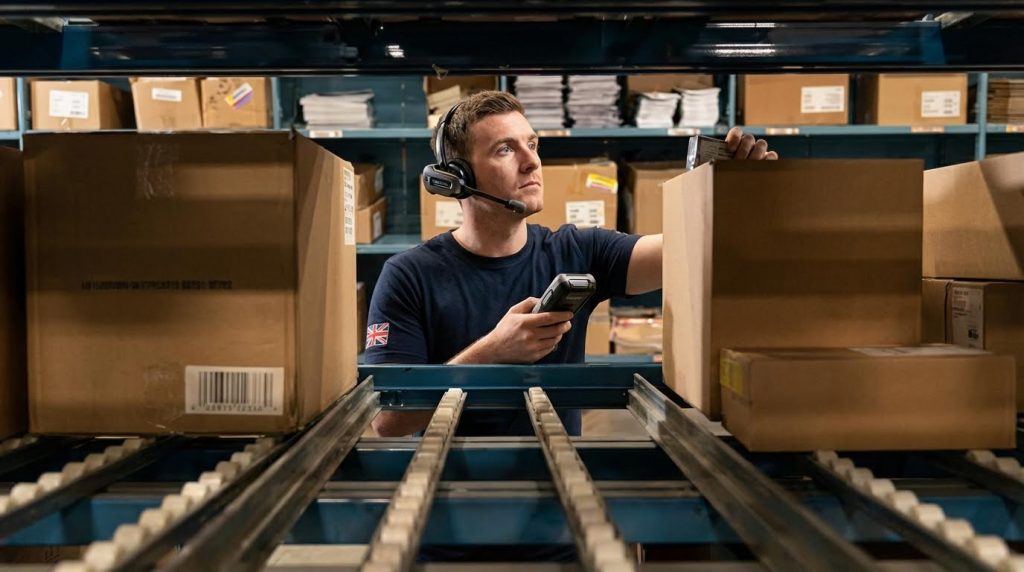
Warehouse management systems provide the digital discipline that turns lean theory into concrete controls for how to reduce warehouse picking errors every hour of every shift. The goal is to embed error-proofing into slotting, task execution, and verification, not just to “monitor mistakes.” When done well, WMS-driven controls cut mis-picks by double digits while increasing throughput, not slowing it down.
💡 Field Engineer’s Note: Treat your WMS rules like safety limits on a semi electric order picker: keep them tight. Every “temporary override” to skip scans or confirmations during peak season usually shows up later as a spike in mis-picks and chargebacks.
Slotting Optimization By Velocity And Error Risk
Slotting optimization by velocity and error risk uses WMS data to place SKUs where they are fast to reach but hard to confuse, which is central to how to reduce warehouse picking errors. A good WMS continuously reshuffles high-risk SKUs before they cause costly mis-picks.
- Velocity-based placement: Put high-turn SKUs in “golden zones” and near main aisles – shorter walking distance and less fatigue mean fewer slips in attention.
- Error-risk mapping: Flag lookalike SKUs (size, color, packaging) – prevents placing confusing items side-by-side.
- Dynamic re-slotting: Use live order history to adjust locations weekly or monthly – keeps layout aligned with real demand patterns.
- Ergonomic rules: Heavy SKUs low, small-count or fragile SKUs at eye level – reduces strain and handling-induced mistakes.
Studies showed that combining error-risk mapping with dynamic slotting in a WMS cut lookalike mis-picks by about 40% without extra headcount. Dynamic slotting and risk mapping results.
| Slotting Rule | Primary Driver | Typical Setting | Operational Impact |
|---|---|---|---|
| Golden zone locations | Pick velocity | Top 10–20% SKUs at 0.8–1.6 m height | Reduces bending and walking; supports 10–20% higher lines/hour |
| Separation of lookalikes | Error risk | Min. one bay or 2–3 m gap between similar SKUs | Cuts visual confusion; up to 40% fewer lookalike mis-picks |
| Heavy SKUs low | Ergonomics/safety | >15–20 kg stored below 0.8 m | Reduces strain injuries and drops; supports consistent accuracy late in shift |
| Periodic re-slotting | Demand change | Review every 4–12 weeks | Keeps travel paths short as demand shifts; stabilizes error rates |
How WMS data should drive re-slotting decisions
Use 3–6 months of order history to calculate lines picked per SKU, per location. Rank SKUs by velocity, then overlay error data (mis-picks, short picks) to identify “high-velocity, high-error” items. Prioritize these for relocation to clearer, better-lit, and ergonomically favorable slots.
Digital Workflows: RF, Voice, And Pick-To-Light

Digital picking workflows replace paper and memory with step-by-step electronic guidance, which is one of the most reliable levers for how to reduce warehouse picking errors at scale. RF, voice, and pick-to-light each enforce different levels of discipline and speed.
- RF scanning: Handheld or wearable devices display the next location and require barcode confirmation – simple, flexible, and ideal as a baseline control.
- Voice picking: Headsets tell pickers where to go and what to pick, with spoken confirmations – hands-free operation and good for mixed-SKU orders.
- Pick-to-light: Lights at pick faces show location and quantity, with button confirmation – very fast and intuitive in dense, high-volume zones.
Guided picking with scan-to-verify and pick-to-light in high-density areas achieved around 99.5% first-pass accuracy and cut pick time by about 30%. Guided picking performance data. Pick-to-light alone has been reported to reduce picking errors by up to 90% versus paper lists and increase speed by 30–40%, while making new staff productive within hours. Pick-to-light performance benchmarks.
| Technology | Typical Accuracy | Speed Effect | Best For… |
|---|---|---|---|
| Paper lists | 90–95% (highly variable) | Baseline | Very small sites; low SKU count; minimal IT |
| RF scanning | 97–99% with location and item scans | 5–15% faster than paper | Most pallet, case, and piece-pick operations |
| Voice picking | 98–99.5% with check digits | 15–25% faster | Grocery, cold chain, and hands-busy environments |
| Pick-to-light | Up to 99.9% in dense zones | 30–40% faster | High-velocity SKUs in compact pick modules |
- Step 1: Standardize one primary method per zone – reduces mental switching and training complexity.
- Step 2: Force location and item scans (or button presses) before confirmation – prevents “blind confirms.”
- Step 3: Use exception codes for shorts, damages, and substitutions – keeps inventory accurate and traceable.
- Step 4: Log every pick event with user, time, and method – feeds KPI and root-cause analysis.
Choosing between RF, voice, and pick-to-light
In wide-aisle pallet and case picking, RF is usually the most cost-effective. In multi-temperature or hands-busy environments, voice tends to win on ergonomics. In compact modules with hundreds of pick faces per aisle, pick-to-light delivers the best combination of speed and accuracy.
Real-Time Validation, Traceability, And KPIs

Real-time validation and traceability make every pick and pack event verifiable, which is the backbone of how to reduce warehouse picking errors sustainably rather than just react to complaints. Strong KPI frameworks then turn that data into continuous improvement.
- Scan-to-verify at pick and pack: Confirm location, item, and quantity at the source – stops errors before they leave the zone.
- Layered checks at packing: Weight checks and vision systems verify full orders – catch residual errors for high-value shipments.
- Serialization and nested IDs: Track items, cases, and pallets – near-zero mis-picks for regulated or high-value SKUs.
- Live KPIs and dashboards: Monitor accuracy and cycle time by zone and shift – pinpoints where and when errors actually occur.
Scan-to-verify and pick-to-light achieved 99.5% first-pass accuracy and 30% lower pick times in dense zones. Real-time validation results. At packing, automated weight checks and AI vision eliminated shipping errors for high-value bottles in one implementation, driving returns and replacement costs toward zero. Layered verification at packing. Nested serialization in pharmaceuticals pushed mis-picks for high-value SKUs to near zero while ensuring compliance. Serialization and traceability.
| Control Layer | Typical Technology | Main Effect | Operational Impact |
|---|---|---|---|
| Pick validation | RF scans, pick-to-light, voice check digits | Prevents wrong-location and wrong-SKU picks | Pushes first-pass accuracy toward 99–99.5% |
| Packing verification | Weight scales, vision systems | Detects missing or extra items in carton | Near-zero shipping errors for high-value orders |
| Serialization | Item/case/pallet barcodes or codes | Links each unit to order and batch | Enables rapid recalls and precise root-cause analysis |
| KPI monitoring | WMS dashboards and reports | Highlights error-prone zones, shifts, SKUs | Supports targeted training and process fixes |
A structured improvement model that combined 5S, optimized slotting, batch traceability, and KPI monitoring reduced picking errors from about 15% to 5%, while raising service level from 70% to 95% and halving returns. Lean logistics picking error reduction study.
- Step 1: Define core KPIs (pick accuracy, lines/hour, order cycle time) – clarifies what “good” looks like.
- Step 2: Ensure every pick and pack event is timestamped and user-tagged – creates a forensic trail for any error.
- Step 3: Review mis-pick reports weekly by SKU, zone, and method – reveals patterns you can design out.
- Step 4: Link corrective actions to WMS rules (slotting, scans, checks) – locks improvements into the system, not just training slides.
Using KPIs to drive continuous error reduction
Track pick accuracy by method (RF vs. voice vs. pick-to-light) and by zone. If one zone runs 0.5–1.0 percentage points lower, drill into SKUs and time of day. Many sites find a cluster of high-risk SKUs or specific shifts; they then re-slot, reinforce scan rules, or adjust staffing to stabilize accuracy.
Designing Low-Error Picking Operations
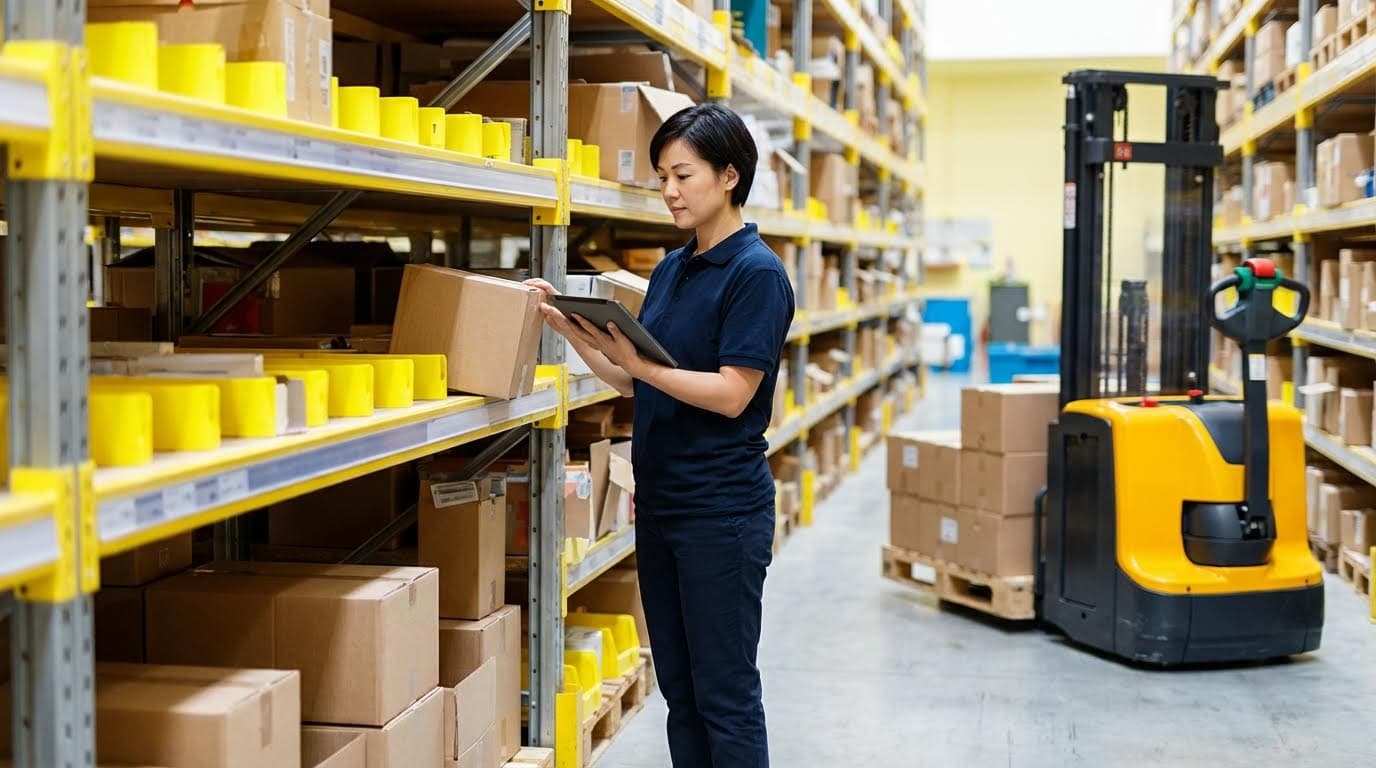
Designing low-error picking operations means shaping layout, storage systems, and work conditions so that the “easy way” for pickers is also the correct, error-free way. When you plan how to reduce warehouse picking errors, start with physical flow, then layer in ergonomics and controls.
- Goal Alignment: Design for accuracy first, then speed – rushing through a bad layout only multiplies mistakes.
- Lean + WMS: Combine lean principles with digital guidance – layout reduces choices, WMS removes guesswork.
- Human Limits: Assume fatigue, distraction, and turnover – engineer the system so average workers can perform at a high-accuracy level.
💡 Field Engineer’s Note: In most brownfield warehouses, I see accuracy jump faster from layout and ergonomics changes than from adding more software. Fix walking paths, heights, and lighting before you buy robots.
Layout, Micro-Zones, And Storage System Choices
Layout, micro-zones, and storage systems reduce picking errors by shortening travel, shrinking decision windows, and physically separating lookalike SKUs. This section shows how to organize space so the “wrong location” is hard to reach and easy to detect.
Micro-zones, smart slotting, and the right racking type work together to cut mis-picks by reducing visual confusion and cognitive load. Cluster and zone strategies have already shown up to 35% mis-pick reduction and 20% higher throughput when applied correctly. Evidence from micro-zone and cluster picking results
| Design Lever | Typical Specification / Practice | Error-Reduction Mechanism | Operational Impact |
|---|---|---|---|
| Micro-zones | Zones of 50–200 m² with 1–3 pickers | Limits SKU variety per picker round | Mis-picks cut by 35%, order throughput +20% in case studies Micro-zone and cluster data |
| Golden zone storage | Waist-to-shoulder band (~800–1,500 mm) | Reduces bending and reaching errors | Higher accuracy on fast movers; less fatigue late in shift |
| Fast-mover area | Dedicated block near main travel aisles | Shorter paths, fewer locations to scan | Supports batch and cluster picking with fewer route choices |
| Carton flow racks | Gravity lanes 600–1,200 mm deep | Always product at front; fewer empty-face mistakes | Ideal for high-velocity case picking with minimal walking |
| Static shelving with totes | Adjustable shelves every 50–75 mm | Clear segmentation of slow movers | Good for low-volume SKUs where labeling clarity is critical |
| Pallet positions | Single-SKU pallets, ground-level for high demand | Prevents mixed-pallet confusion | Speeds pallet picks and reduces forklift selection errors |
- Define Micro-Zones: Break the warehouse into stable zones aligned with order profiles – fewer SKUs per picker route means fewer chances to grab the wrong item.
- Use Cluster Picking: Group multiple orders per trip inside a micro-zone – travel distance drops while decision context stays familiar.
- Separate Lookalikes: Physically separate similar packaging or codes by at least one bay or aisle – prevents “auto-pilot” grabs from the wrong slot.
- Standardize Aisle Logic: Fix a single direction for travel and a consistent numbering pattern – reduces left/right confusion and skipped locations.
How micro-zones support WMS-driven picking methods
When you design micro-zones around velocity and error risk, WMS can assign wave, batch, or cluster picks inside those zones. This keeps walking short while RF, voice, or pick-to-light tools handle step-by-step guidance and confirmation. Digital workflows and validation
Storage system choice is a direct lever on how to reduce warehouse picking errors because it defines how many locations a picker sees at once and how clearly each is separated.
- Carton Flow for Fast Movers: Use flow lanes for SKUs with high line frequency – front-facing stock and labels reduce empty-slot and “reach-back” mistakes.
- Totes on Static Shelving for Long Tail: Keep slow movers in clearly labeled bins – picking is slower but more controlled, which is acceptable at low volume.
- Dedicated Pallet Slots: Assign one SKU per pallet position whenever possible – mixed pallets are a common cause of pallet-level mis-picks.
- Reserve vs. Pick Faces: Separate reserve storage from active pick faces – prevents pickers from entering dense, confusing reserve zones.
💡 Field Engineer’s Note: When you redesign layout, simulate walking paths with simple time studies before buying new racking. Often, relocating 10–15% of SKUs (top velocity and high error-risk) delivers most of the accuracy gain.
Labor Fatigue, Ergonomics, And Safety Compliance

Labor fatigue, ergonomics, and safety compliance reduce warehouse picking errors by keeping workers within safe physical and cognitive limits throughout the shift. You cannot get stable 99%+ accuracy from exhausted, uncomfortable, or unsafe pickers.
Real-world programs that rotated pickers every 90–120 minutes and rewarded accuracy over pure speed cut mis-picks by 25% in two months, without hurting throughput. Accuracy dashboards also revealed which zones and shifts drove most errors. Labor fatigue management results
| Ergonomic / Safety Factor | Typical Practice | Error-Reduction Effect | Operational Impact |
|---|---|---|---|
| Task rotation | Switch roles every 90–120 minutes | Reduces monotony and mental fatigue | Mis-picks down 25% with stable throughput in case studies Rotation and incentives |
| Lighting quality | LED lighting focused on pick faces | Improves label and SKU visibility | Visual errors reduced by 45% in one jewelry operation Lighting and labeling case |
| Pick height | Main picks at 800–1,500 mm | Limits awkward postures | Fewer strain complaints and steadier accuracy late in shifts |
| Floor comfort | Anti-fatigue mats at fixed pick/pack stations | Reduces leg and back fatigue | Supports consistent performance over 8–10 hour shifts |
| Incentive design | Gamified dashboards favor accuracy | Shifts focus from “speed only” to “right first time” | Prevents workers from trading accuracy for short-term speed |
- Design for Neutral Posture: Keep frequent picks in the golden zone and heavy items below shoulder height – less strain means fewer “shortcut” grabs from nearby wrong slots.
- Manage Cognitive Load: Limit SKUs per bay and avoid cluttered labels – the brain makes fewer sorting mistakes when screens and labels are simple.
- Use Visual and Digital Aids: Combine clear labels with RF, voice, or light prompts – multi-channel confirmation reduces reliance on memory.
- Align Safety and Accuracy: Safe walking paths, clear traffic rules, and good housekeeping – workers who feel safe move more deliberately and make fewer rushed errors.
How ergonomics ties into compliance and standards
Good ergonomics supports compliance with occupational safety guidelines by limiting overexertion, slips, and falls. Lean warehousing’s focus on 5S and clean, organized work areas also reduces accident risk and supports safe, repeatable picking routines. Lean warehousing, safety and space optimization
Fatigue management is an often-overlooked part of how to reduce warehouse picking errors, especially during peak seasons. Rotations, breaks, and ergonomic investments cost far less than the rework, returns, and customer damage caused by sustained high error rates.
💡 Field Engineer’s Note: When error rates spike late in the day, I look first at walking distance, pick height, and lighting before blaming training. If the body is tired and the eyes are strained, even your best picker will start making mistakes.

Final Thoughts: Building A Lean, Error-Resistant Warehouse
Reducing warehouse picking errors is not about a single tool or heroic picker. It comes from a system where layout, lean methods, and WMS rules all point workers toward the correct action every time. Clear pick faces, disciplined 5S, and micro-zones cut visual noise and decisions. Smart slotting and ergonomic design keep effort low so attention stays high through the whole shift.
WMS then hardens this design. Digital workflows guide each move and require confirmation, while real-time validation blocks errors before cartons leave the dock. Traceability and KPIs turn each exception into data for the next improvement round instead of a blame exercise. Ergonomics, rotations, and safety practices protect the workforce and stabilize accuracy during peaks.
The best practice is to treat accuracy as a design target, not an inspection result. Start with error mapping, fix the physical flow, then tighten WMS controls and KPIs. Standardize what works and make it hard to bypass. With this approach, supported by the right material handling equipment from Atomoving, warehouses can push accuracy above 99% while also improving speed, safety, and worker retention.
Frequently Asked Questions
How to reduce picking errors in a warehouse?
Reducing picking errors in a warehouse can be achieved through several proven strategies. First, optimize your warehouse layout to ensure fast-moving items are easily accessible. Second, integrate barcode scanners and other technology to improve accuracy during the picking process. Finally, invest in employee training programs to ensure workers understand best practices for order fulfillment. Warehouse Picking Guide.
- Audit and improve your warehouse layout.
- Use technology like barcode scanners to minimize human error.
- Train employees on proper picking techniques.
What are some effective ways to minimize errors in warehouse operations?
To minimize errors, implement robust procedures such as regular inventory checks and optimized picking routes. Leveraging technology like warehouse management systems (WMS) can also help track inventory more accurately. Additionally, fostering a supportive work environment that encourages open communication can reduce stress-related mistakes. Human Error Reduction Tips.
- Conduct frequent inventory audits.
- Adopt advanced picking technologies.
- Promote teamwork and clear communication.