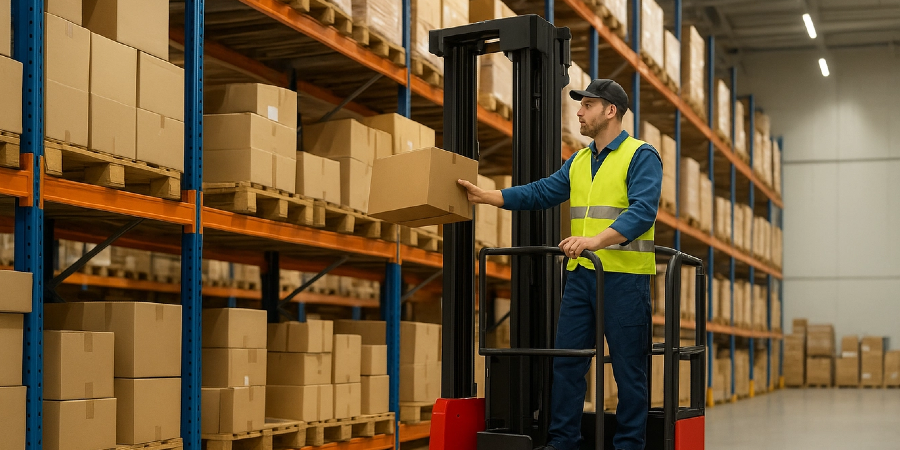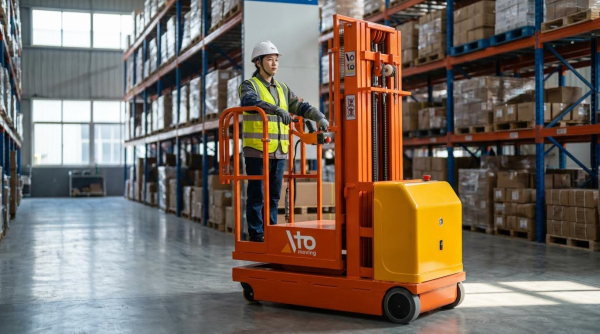
Order picking in logistics is the core warehouse process that turns stored inventory into shipped customer orders, so small design choices here massively impact cost, speed and accuracy. This guide breaks down picking methods, KPIs, layouts and semi electric order picker so you can match the right process to each order profile. You will see how routing, slotting, and enabling technologies like pick-to-light, voice and automation change travel distance, units per hour and error rates. Use it as a practical blueprint to redesign or scale your picking operation without sacrificing safety or control.
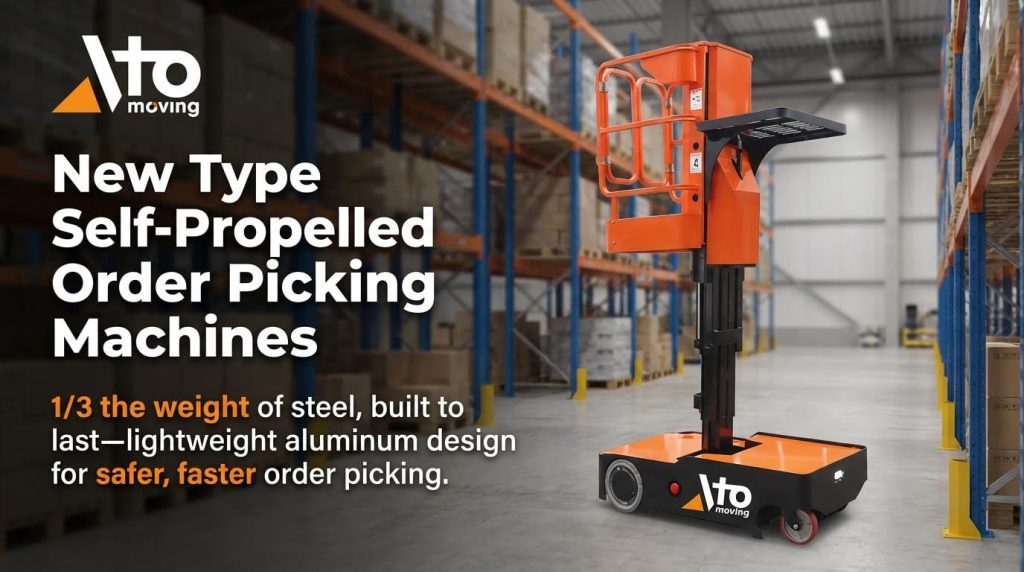
Core Order Picking Concepts And Process Types
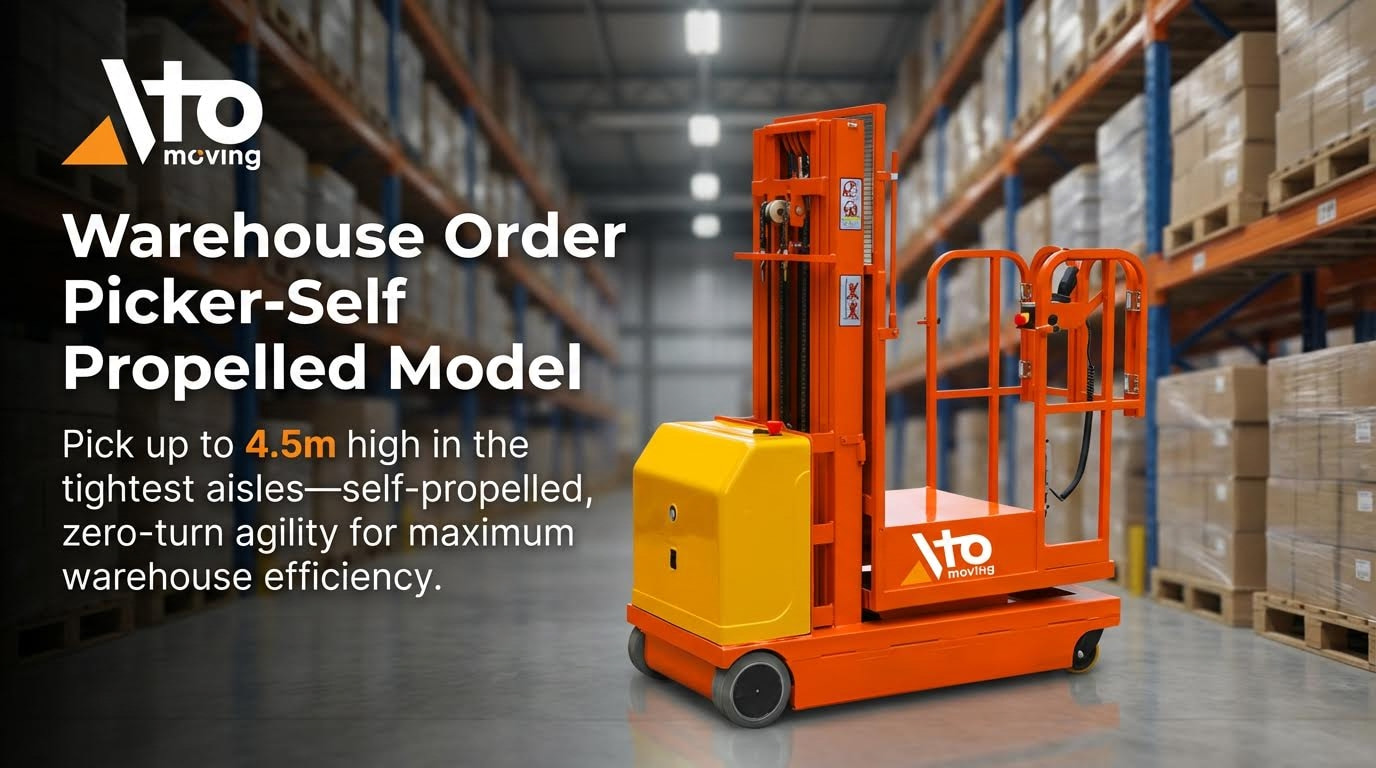
This section explains the main process types and pick levels used in order picking in logistics so you can match methods to order profiles, layout, and labor constraints.
At a high level, picking concepts break into two axes: how you group orders (discrete, batch, cluster, zone, wave) and what physical level you pick (unit, case, pallet). Each combination drives different travel distance, accuracy, and handling effort.
- Order grouping methods: Discrete, batch, cluster, zone, and wave picking – Control how many orders a picker handles per route.
- Pick level: Unit, case, pallet – Defines how “granular” each pick is and what equipment you need.
- Routing logic: WMS-driven paths and slotting – Turns methods into real travel and labor savings.
💡 Field Engineer’s Note: Before changing picking methods, walk an actual route with a picker and measure the path length in meters. The real floor distance and congestion often contradict what the WMS screen suggests.
Discrete, batch, cluster and wave picking
These four methods describe how many orders a picker handles per trip and how those orders are grouped, which directly impacts walking distance, lines per hour, and error risk in order picking in logistics.
- Discrete picking: One picker, one order at a time – Maximum simplicity, higher travel per order.
- Batch picking: One picker, many orders grouped by common SKUs – Less travel to popular SKUs, higher lines per hour.
- Cluster picking: One picker, multiple orders on a cart with bins – Balanced travel reduction with order-level accuracy.
- Wave picking: Orders released in timed waves – Synchronizes picking with packing and carrier cut‑offs.
Quick definitions and when to use each
Discrete picking: A picker walks the warehouse to complete a single order from start to finish. It is simple to train and ideal for low-volume operations or very variable orders where batching offers little overlap. It was described as best for small orders and low volume operations because it is easy to manage. Source on discrete picking.
Batch picking: The picker collects the same SKU for multiple orders in one route, then those picks are later sorted to orders. This drastically cuts repeated trips to high-frequency SKUs and is well-suited to high-volume operations with stable demand patterns. Source on batch picking benefits.
Cluster picking: The picker pushes a cart with multiple compartments or totes, each representing an order, and picks items for several orders in one pass. This reduces walking distance compared to discrete picking while keeping order separation clear. Accurate bin labeling and WMS support are crucial. Source on cluster picking workflow.
Wave picking: Orders are grouped and released in waves based on criteria such as carrier, shipping time, or zone, aligning picking with packing and shipping schedules. It improves labor coordination in high-volume environments with strict dispatch times and needs advanced WMS rules for dynamic adjustment. Source on wave picking implementation.
| Method | Orders per trip | Typical tools | Best for… | Operational impact |
|---|---|---|---|---|
| Discrete picking | 1 | Pick lists, basic carts | Low volume, simple SKUs | High meters walked per order, easy training and troubleshooting. |
| Batch picking | Many (grouped by SKU) | Carts, totes, WMS batching | High repeat SKUs, stable demand | Higher lines/hour, less travel to fast movers. |
| Cluster picking | Several (separate bins) | Multi-bin carts, scanners | Medium orders, mixed profiles | Good compromise between travel saving and order accuracy. |
| Wave picking | Dozens to hundreds per wave | Advanced WMS, dashboards | High volume with fixed cut-offs | Synchronizes docks, packing and labor; complex to tune. |
- Batch picking strategy: Grouping SKUs for multiple orders in one route reduces repeated trips and increases lines-per-hour metrics. Evidence for batch picking benefits.
- Cluster picking execution: Using carts with compartments and real-time inventory access reduces walking distance while maintaining order-level accuracy. Cluster picking execution details.
- Wave picking coordination: Aligning waves with shipping schedules and labor shifts enables real-time adjustment based on urgency and availability. Wave picking coordination.
How these methods affect KPIs
Travel distance analytics and picking strategies link directly. Software optimization can reduce walking distance by 20–50% through order clustering and optimized paths, which is especially effective when combined with batch and cluster picking. Source on travel-distance analytics and strategies.
Wave picking helps utilization and cycle time by aligning work with peaks and carrier cut-offs, while discrete picking trades higher travel for simplicity and fewer process errors.
💡 Field Engineer’s Note: When you move from discrete to batch or cluster, measure congestion at popular SKUs. If more than two pickers routinely queue at the same location, you may need to duplicate slots for that SKU to keep flow moving.
Unit, case and pallet picking levels
Unit, case, and pallet picking describe the physical level of the item you handle, which drives equipment choice, ergonomics, and realistic throughput for order picking in logistics.
- Unit (piece) picking: Individual items – Common in e‑commerce and spares, highest touches per order.
- Case picking: Full cartons – Suited to wholesale and retail replenishment, moderate handling effort.
- Pallet picking: Full pallets – Bulk flows with low handling per unit, but high mass per move.
| Pick level | Typical load | Common equipment | Best for… | Operational impact |
|---|---|---|---|---|
| Unit (piece) picking | Single items, often <5 kg each | Picking carts, shelving, totes, scanners | E‑commerce, spare parts, B2C | High picks/hour target, many bends and reaches; accuracy is critical. |
| Case picking | Cartons, often 5–25 kg | Pallet jacks, low-level order pickers, flow racks | Grocery, FMCG, store replenishment | Higher throughput per pick; needs good labeling and ergonomics. |
| Pallet picking | Full pallets, often 300–1,000 kg | Forklifts, reach trucks, pallet positions | B2B bulk orders, cross-docking | Very low labor per unit handled; requires skilled drivers and dock space. |
- Unit picking precision: Focused on individual items and often supported by barcode scanners to ensure accurate selection and reduced errors. Source on unit picking precision.
- Case picking efficiency: Using appropriate equipment to retrieve entire cases enhances speed and is especially effective in bulk-handling warehouses. Source on case picking efficiency.
- Pallet picking techniques: Selecting entire pallets for bulk orders reduces manual labor and increases throughput, but requires proper training on equipment and load handling. Source on pallet picking techniques.
How pick level interacts with picking method
Piece picking usually pairs with discrete, batch, or cluster methods and benefits from technologies like pick-to-tote, pick-to-cart, and pick-to-light to keep accuracy above 99% and travel under control. Source on pick-to-cart and pick-to-tote.
Case picking frequently uses pallet jacks or low-level order pickers in batch or zone setups, while pallet picking often runs in discrete or wave modes aligned to truck loading sequences and dock capacity.
💡 Field Engineer’s Note: When you downshift from pallet to case or unit picking in the same area, check rack beam heights and aisle widths. Operators often start “short-cutting” with unsafe fork positions if clearances are tight for mixed pick levels.
Technical Comparison Of Picking Methods, KPIs And Enabling Tech
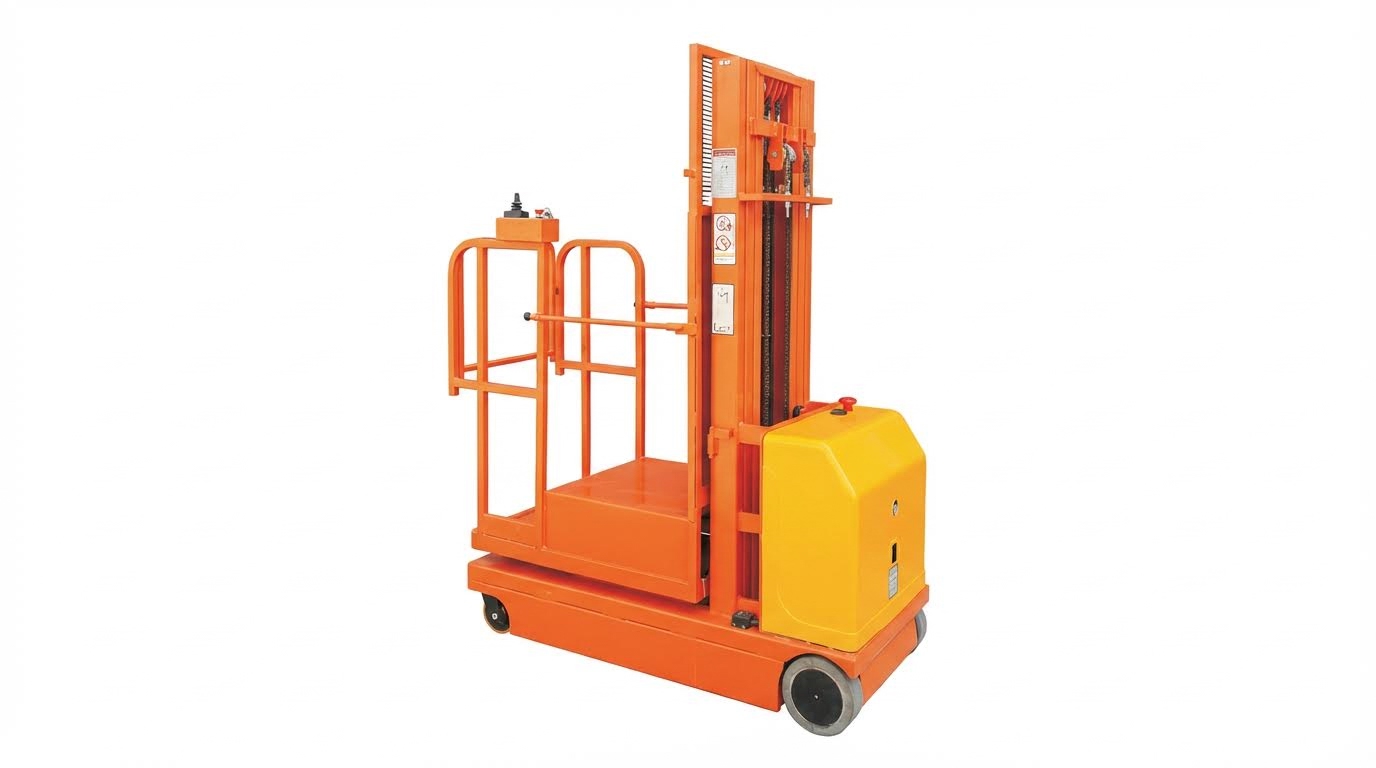
This section compares how different methods, KPIs and technologies change the physics and cost of order picking in logistics, so you can match process design to hard numbers, not gut feel.
We will link travel distance, throughput and accuracy to routing logic, slotting and technologies like pick-to-light, voice, AR and automation, using simple metrics and real-world constraints like aisle length, gradients and labor limits.
Travel distance, throughput and accuracy KPIs
Travel distance, throughput and accuracy are the three core KPIs that reveal whether order picking in logistics is constrained by walking, handling, or decision errors.
You use them together: distance shows wasted motion, throughput shows capacity, accuracy shows rework and customer impact.
| KPI | How It Is Calculated | Typical Good Range | Operational Impact In Order Picking In Logistics |
|---|---|---|---|
| Picking rate (items/hour) | Total items picked ÷ total picking hours | Around 70 items/hour in manual setups (industry example) | Defines labor needed per 1,000 order lines; critical for staffing and ROI on tech. |
| Pick accuracy (%) | (Error-free orders ÷ total orders) × 100 | 95–99%+ depending on tech level (example) | Directly drives returns, credits and re-picks; below 97% usually triggers customer pain. |
| Order picking cycle time | Time from order release to “ready to ship” | Highly profile-dependent; focus on trend reduction (definition) | Key for same-day / next-day promises; exposes bottlenecks beyond picking (packing, staging). |
| Travel distance per pick | Total walking distance ÷ number of picks | Software can cut walking 20–50% with path optimization (example) | Best early indicator of layout and routing waste; directly affects fatigue and injury risk. |
| Picking utilization (%) | Actual picking time ÷ available labor time | High but sustainable; avoid >85–90% for long periods (concept) | Shows if people are under-loaded (waste) or over-stressed (errors, injuries). |
| Pick quality | Composite of damage rate, complaints, returns | Target near-zero damage and complaint rates (definition) | Captures handling quality, packaging, and ergonomics beyond pure accuracy. |
- Travel-distance analytics: Use WMS logs or wearables to map routes – lets you see exactly where meters are wasted and where to re-slot or re-batch. Source
- Root-cause error tagging: Classify mis-picks (wrong SKU, quantity, location) – targets fixes in training, labeling, or tech instead of blaming people. Source
- Continuous improvement framework: Apply PDCA or DMAIC – turns KPI gaps into structured experiments, not random “projects.” Source
How to baseline your KPIs in 1–2 weeks
1) Export 1–2 weeks of orders from your WMS. 2) For each picker, capture start/stop times, lines picked, and distance (step counter or WMS map). 3) Calculate items/hour, distance/pick, and accuracy. 4) Mark outliers (very long routes, high-error zones). This gives a realistic “before” picture for any change in order picking in logistics.
💡 Field Engineer’s Note: When you push walking distance too low with dense storage but keep manual picking, you often see throughput stall because of congestion in 1.2–1.5 m aisles. Always check not just meters walked per pick, but how many pickers can physically work in the same aisle without blocking each other.
WMS routing, slotting and layout optimization
Routing, slotting and layout optimization use software and basic warehouse geometry to cut walking distance in order picking in logistics by double-digit percentages without changing your building.
The WMS decides who walks where and in what sequence; slotting and layout decide how far they must walk in meters.
| Optimization Lever | Key Features / Techniques | Typical Quantitative Effect | Best-For Scenario In Order Picking In Logistics |
|---|---|---|---|
| Routing in WMS | Dynamic pick-list generation, shortest-path routing, order clustering (features) | Path optimization can cut walking 10–20%; clustering can save 15–30% (examples) | Brownfield sites where building and racking are fixed but software can be upgraded. |
| Slotting (ABC) | Classify SKUs into A/B/C by velocity; place A near packing, B mid, C far or high (ABC method) | Fast movers can account for 70–80% of lines; moving them to forward pick zones cuts average route length dramatically. | E‑commerce or spare parts with clear fast/slow movers and many small lines per order. |
| Dynamic slotting | On-the-fly re-slotting, inbound placement rules, consolidation of partial pallets (dynamic slotting) | Maintains savings over time as demand shifts; quarterly audits recommended. | High-SKU, volatile demand (fashion, promotions) where static slotting decays quickly. |
| Layout shape | U-, I-, or L-shaped layouts based on docks and volume (layout guidance) | Improves flow and reduces cross-traffic; impact depends on building constraints. | New sites or major remodels where dock location and main aisles can be redesigned. |
| Aisle width & type | Narrow aisles for density vs wide aisles for flow and standard equipment (trade-offs) | Narrow aisles increase storage m² but can slow picks if congestion rises. | High land cost environments where storage density is more valuable than peak speed. |
| Forward pick zones | Small racks near packing for top SKUs (concept) | Travel for top SKUs can drop to a few meters per line; replenishment absorbs extra work. | Operations with many small orders where the same 5–10% of SKUs dominate demand. |
- WMS features to demand: Dynamic pick lists, real-time inventory, and labor tracking are the minimum set to optimize routes and utilization. Source
- Order clustering: Group nearby SKUs into one route – cuts repeated walking to the same bay, especially in batch or cluster picking. Source
- Balancing picking vs replenishment: Schedule replenishment outside peak picking windows and use buffer zones – prevents pickers from arriving at empty slots. Source
Simple slotting workflow for an existing warehouse
1) Run 3–6 months of order history and rank SKUs by lines picked (not units). 2) Mark the top 20% as A, next 30% as B, rest as C. 3) Move A SKUs to the 1.0–1.5 m “golden zone” near packing and main aisles. 4) Create a small forward pick area for the top 5–10% SKUs. 5) Review every quarter and adjust based on new data.
💡 Field Engineer’s Note: In cold storage or mezzanines, long walking distances are amplified by heavy PPE and stairs. When you simulate routing changes, convert saved meters into minutes and then into exposure time to cold or stair use. This often justifies extra forward pick zones or AMRs even when pure labor payback looks marginal.
Pick-to-light, voice, AR and automation options
Pick-to-light, voice, AR and automation options shift the constraint in order picking in logistics from human decision-making and walking to system-directed flows and machine movement.
They mainly attack errors and unproductive travel, but each suits different order profiles, SKU densities and labor conditions.
| Technology / Method | How It Works | Performance Impact | Best For… In Order Picking In Logistics | |||||||||||||||||||||||||||||||||||||||||||||||||||||||||||
|---|---|---|---|---|---|---|---|---|---|---|---|---|---|---|---|---|---|---|---|---|---|---|---|---|---|---|---|---|---|---|---|---|---|---|---|---|---|---|---|---|---|---|---|---|---|---|---|---|---|---|---|---|---|---|---|---|---|---|---|---|---|---|
| Pick-to-light | LEDs at locations show where and how many units to pick; picker confirms with a button press. Requires tight WMS integration. Source | Can reach 99%+ accuracy when implemented correctly (accuracy example); boosts lines/hour by reducing search time. | High-density pick faces with many small SKUs and short travel (e.g., put-walls, forward pick zones). | |||||||||||||||||||||||||||||||||||||||||||||||||||||||||||
| Pick-to-voice | Headsets give verbal instructions; pickers confirm verbally. Hands and eyes stay on the task. Source | Also achieves 99%+ accuracy when done well (accuracy example); improves productivity via hands-free work, especially in case/pallet picks. | Environments with long travel and lower pick density (grocery, case picking, chilled rooms) where screens are inconvenient. | |||||||||||||||||||||||||||||||||||||||||||||||||||||||||||
| Augmented reality (AR) | AR glasses overlay arrows, locations and quantities in the picker’s field of view. Source | Can boost units/hour by 15–30% by reducing search and confirmation time. Matching Equipment And Picking Design To Order Profiles
Matching equipment and picking design to order profiles means sizing trucks, carts, racks and automation to SKU velocity, order size, and service level so that travel distance, picks per hour and accuracy stay in a profitable band. This is the core engineering lever behind efficient order picking in logistics. At this stage you are translating process (discrete, batch, cluster, zone, wave) and pick level (unit, case, pallet) into concrete hardware choices, aisle geometry and the degree of automation. The goal is not “high tech”; the goal is the lowest total cost per order at the required lead time and quality.
How to read the rest of this sectionThe first subsection focuses on how different order profiles drive choices for trucks, carts, racks and aisles. The second explains when to stay manual, when to add assistance tech, and when goods-to-person systems start to make financial sense. Choosing trucks, carts, racks and aisles by profileChoosing trucks, carts, racks and aisles by profile means engineering the physical system so that the dominant order types move with the shortest possible path and fewest touches. Different profiles of order picking in logistics – small ecommerce orders, store replenishment, bulky B2B shipments – need very different material handling “toolkits”. Instead of one universal design, you deliberately mix equipment by zone, all driven by SKU velocity, cube and handling unit.
Quick rules of thumb for equipment selectionIf most orders are:
Balancing manual, assisted and goods-to-person systemsBalancing manual, assisted and goods-to-person systems means phasing technology so that each extra euro of automation delivers a clear gain in pick rate, travel reduction or accuracy for your specific order mix. In order picking in logistics you rarely jump from paper lists straight to full robotics. You usually move from manual, to WMS-directed and voice/light-assisted, and only then to AMRs, shuttles or full goods-to-person – often only in the most suitable zones such as fast-moving ecommerce SKUs.
Where AR, barcodes, RFID and vision fitBarcodes remain the low-cost default for most SKUs. RFID helps when you need bulk reads (garments, return bins). Vision systems and AR glasses add value for complex identification Final Thoughts On Designing A Future-Proof Picking SystemDesigning a future-proof picking system means treating methods, layout, KPIs and equipment as one integrated engineering problem, not separate projects. Order grouping, pick level and routing define how far people move and how often they touch each load. Slotting, aisles and forward-pick zones convert that logic into real meters walked, congestion hot spots and ergonomic risk. KPIs like distance per pick, lines per hour and accuracy turn these design choices into hard numbers. Teams must track them before and after each change. This protects safety and avoids chasing “speed” that only shifts errors and fatigue downstream. Information-assist tools, AMRs and goods-to-person then sit on top of a stable process, removing decision time and empty travel instead of masking bad layout. The best practice path is clear. Start with order profiles and ABC slotting. Fix routing, pick faces and aisle geometry. Then layer suitable trucks, carts and semi electric or manual solutions from Atomoving around those flows. Only after that, phase in voice, light, AR and automation where volume and stability justify it. Review data every quarter and adjust. In doing this, you build a system that stays fast, safe and adaptable as demand shifts. Frequently Asked QuestionsWhat is Order Picking in Logistics?Order picking is the process of selecting items from their storage locations in a warehouse to fulfill customer orders. The goal is to accurately assemble requested items while optimizing efficiency to meet demand within specified timeframes. This process is considered the backbone of warehouse operations. Warehouse Operations Guide. What Does Picking Mean in a Warehouse?Picking refers to the step where goods are collected from warehouse shelves to fulfill customer orders. It is often equated with “commissioning” and involves removing items from storage for order assembly. Fulfillment Glossary. |