Facilities that ask how much can a pallet jack lift need clear, engineering-based answers. This guide explains standard, low-profile, heavy-duty, and electric pallet jack capacities, then links those limits to structural design, hydraulics, wheels, and fork geometry.
You will see how steel grade, weld quality, and hydraulic safety margins control real-world load limits, not just catalog numbers. Later sections show how to match rated capacity to actual load cases, comply with OSHA and ANSI rules, and balance total cost of ownership against productivity.
The final summary section turns these points into a simple, defensible sizing method that safety, maintenance, and operations teams can share. This helps you choose between standard and heavy-duty pallet jacks with confidence for every route, shift, and load profile in your facility.
Key Pallet Jack Types And Capacity Ranges
Engineers and buyers often ask how much can a pallet jack lift in real sites. The answer depends on jack type, fork geometry, and duty profile. This section compares standard, low-profile, heavy-duty, and electric pallet jacks by rated capacity and use case. It helps you match catalog ratings to real pallet weights and traffic patterns.
Standard Manual Pallet Jack Load Ratings
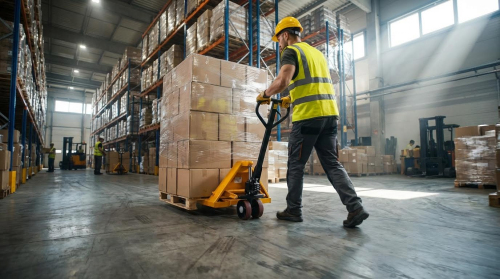
Standard manual pallet jacks covered typical warehouse loads. Most units lifted about 1 000 kilograms to 2 500 kilograms. Common catalog ratings listed 2 200 pounds to 5 500 pounds. A typical jack used 48 centimetre wide forks and 1 200 millimetre fork length for standard pallets.
When you ask how much can a pallet jack lift, you must check the data plate. The stamped capacity applied at the load center defined by the maker, usually mid-fork. Overloading increased handle force, fork deflection, and wheel contact stress. That raised the risk of seal leaks and bent forks.
Standard units worked well for mixed freight, retail distribution, and light manufacturing. They handled most general EUR and ISO pallets with room for safety margin. For loads near the upper rating, engineers usually applied at least 10% derating for rough floors or frequent use.
Low-Profile And Ultra-Low Profile Capacities
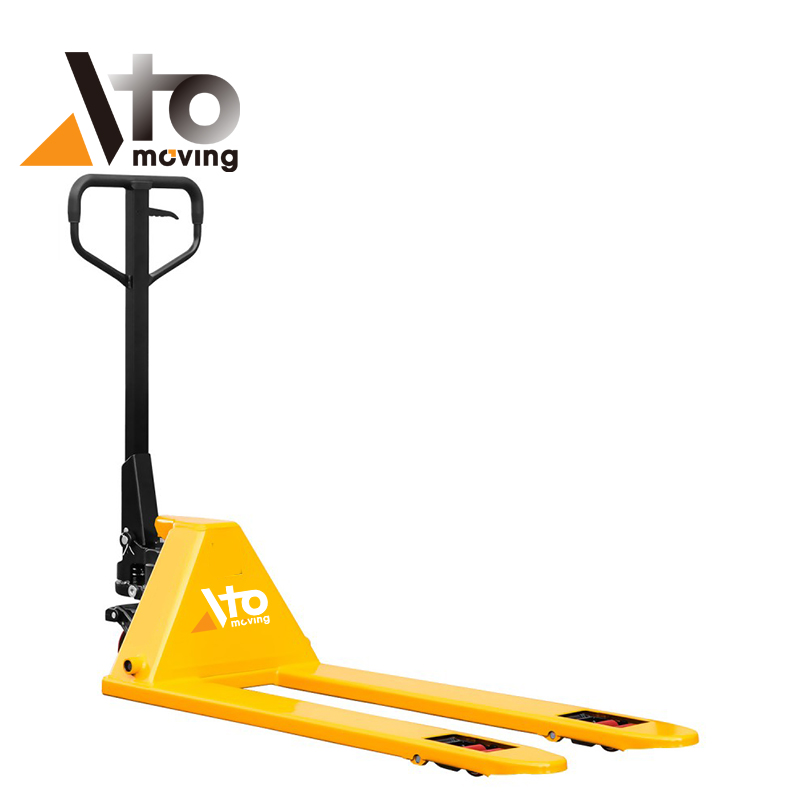
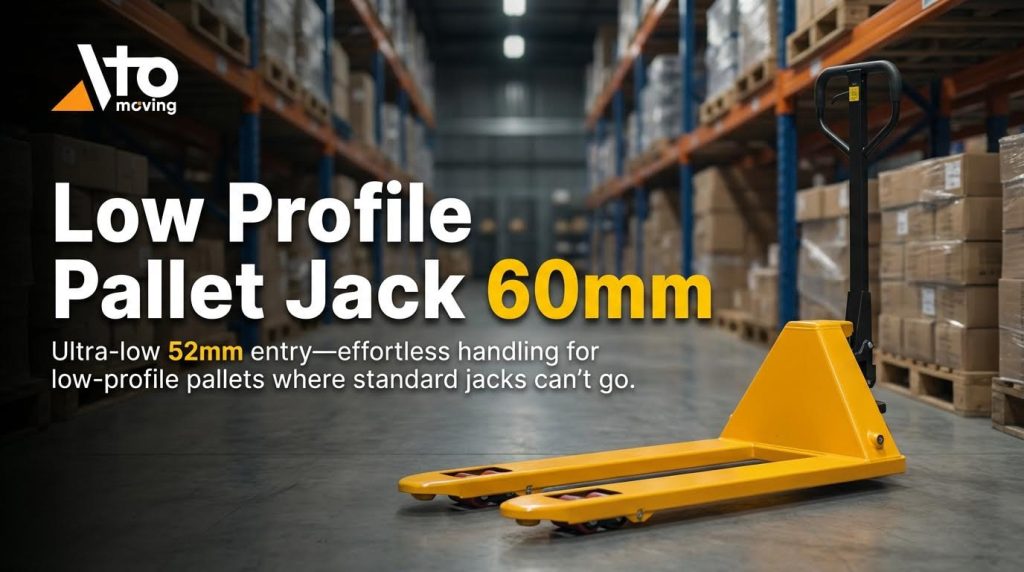
Low-profile pallet jacks served pallets with very low entry height. Typical lowered fork height ranged from 38 millimetres to about 45 millimetres. Capacity often stayed between 1 500 kilograms and 2 500 kilograms. Some high-spec models reached about 3 500 kilograms.
Ultra-low profile designs dropped even lower. They reached about 38 millimetres minimum height and lifted to roughly 170 millimetres to 200 millimetres. Catalogs listed capacities up to about 5 500 pounds for these units. The thin fork sections required careful steel selection and weld control to keep stiffness.
These jacks answered how much can a pallet jack lift when clearance was tight. Yet the low build left less section modulus in the forks. Engineers often avoided running them at full rating on poor floors or with off-center skids. They suited containers, slip-sheets, and low-deck import pallets.
Heavy-Duty And High-Capacity Pallet Jacks
Heavy-duty pallet jacks targeted dense loads like steel coils or stone. Many designs lifted 3 000 kilograms to 5 000 kilograms. Some specialty versions reached about 10 000 pounds. They used thicker fork plates, larger pins, and reinforced pump housings.
Fork lengths often increased to about 1 500 millimetres or more. Overall widths could reach 760 millimetres or higher to support wider pallets. Wheel groups used larger polyurethane or nylon rollers to spread contact pressure. That reduced floor indentation and bearing stress.
When teams asked how much can a pallet jack lift safely in heavy industry, heavy-duty units gave the answer. Still, the rated value assumed flat, strong floors and centered loads. Side-loaded coils or narrow crates reduced the real safe capacity. Engineers sometimes limited working loads to 80% of nameplate for high-risk products.
Electric Pallet Jacks And Duty Cycles
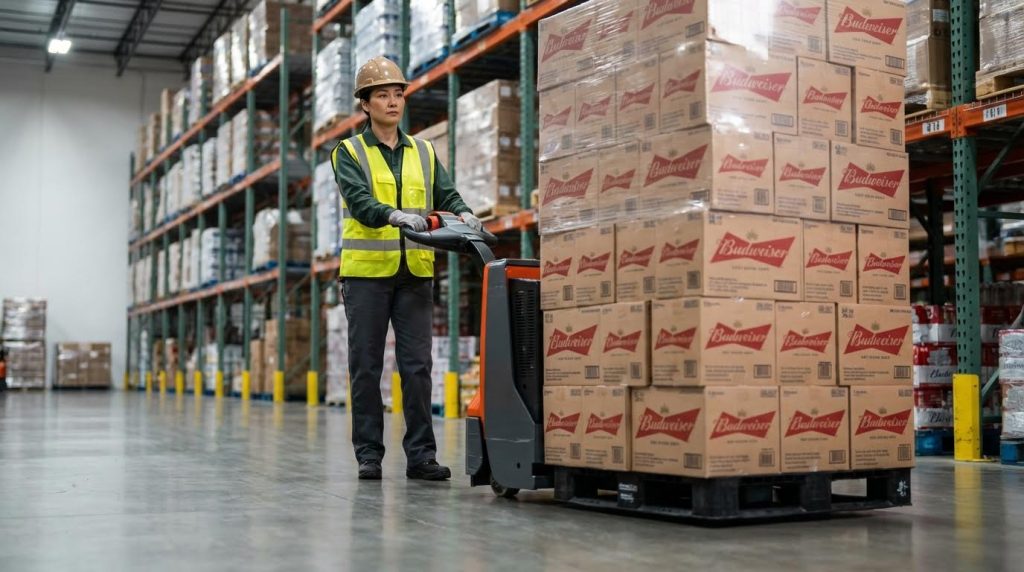
Electric pallet jacks combined manual steering with powered lift and travel. Typical rated capacities ranged from about 1 500 kilograms to 2 000 kilograms. Catalogs often showed 3 300 pounds to 4 400 pounds. Some ride-on versions reached higher values, similar to heavy-duty manual units.
For electric units, how much can a pallet jack lift was only part of sizing. Duty cycle also mattered. Frequent lifts with near-maximum loads heated motors, controllers, and hydraulic oil. Makers specified maximum cycles per hour and recommended rest periods at full rating.
Battery size, charger type, and shift pattern set practical throughput. Facilities with 150 or more pallet moves per day often favored electric units. They accepted similar capacity to manual jacks but gained higher sustained pallet-per-hour rates. Correct capacity selection reduced current draw peaks and extended battery and pump life.
Engineering Factors That Determine Jack Capacity

People ask how much can a manual pallet jack lift, but the answer depends on core engineering factors. Capacity is not only about the hydraulic rating. It comes from structure, hydraulics, wheels, forks, and the floor system working together. Each factor sets a hard limit. The lowest limit controls the safe working load.
Structural Design, Steel Grade, And Weld Quality
The frame and forks act as a beam under bending. High-strength low-alloy steel allows higher capacity for the same section size. Mild steel needs thicker plates to reach similar ratings. Designers size the fork section so bending stress stays below the steel yield stress with a safety factor, typically 1.5–2.0 for static loads.
| Aspect | Effect on capacity |
|---|---|
| Steel yield strength | Higher yield allows thinner forks at same rating |
| Fork section height | Larger section reduces deflection and stress |
| Cross-bracing under forks | Improves torsional stiffness for uneven loads |
| Weld throat size and length | Limits risk of fatigue cracks at high loads |
| Reinforcement plates in heel area | Raises local capacity where bending is highest |
In heavy-duty jacks rated near 5,000 kg, manufacturers used thicker fork plates and gussets around the pump mounting. Good weld penetration and quality control testing reduced crack risk under repeated loading. Poor welds would reduce the practical answer to how much can a hydraulic pallet truck lift, even if the hydraulic system could raise more weight.
Hydraulic System Design And Safety Margins
The hydraulic circuit sets the theoretical lifting limit. Designers size the pump piston area and operating pressure to exceed the rated load with reserve. Typical manual pallet jacks with 2,500–5,500 lb ratings used compact cast-iron or steel pumps with leak-resistant seals. The relief valve opens before pressure exceeds design limits.
Key design choices include:
- Rated working pressure versus burst pressure of cylinders and hoses.
- Relief valve setting relative to nameplate capacity.
- Seal material compatibility with temperature and fluids.
- Stroke length and pump lever ratio for ergonomic effort.
Safe designs ensure the relief valve activates before structural parts overload. That is why a jack may stop lifting if operators try to exceed its rating. For electric pallet jacks, duty cycle matters. Continuous lifting near maximum load raises oil temperature and can shorten seal life. Engineers size motor power and pump displacement so typical cycles stay within thermal limits.
Wheel Materials, Contact Stresses, And Floor Loads
Even when the structure and hydraulics can lift more, wheel contact stress can limit how much a pallet jack can lift. Polyurethane wheels usually carried warehouse loads between 2,200 and 5,500 lbs while protecting floors. Nylon wheels handled higher point loads but transmitted more vibration and noise. The small contact patch creates high local pressure.
Engineers check two things:
- Wheel bearing load rating versus maximum axle load.
- Floor slab capacity and surface hardness under concentrated loads.
On poor concrete or mezzanine decks, high-capacity jacks with narrow wheels risk floor damage. Wider tandem load rollers spread the load and lower contact stress. For heavy-duty models around 5,000 kg, designers often used larger diameter steer wheels and dual fork rollers to keep rolling resistance acceptable and reduce rutting in softer floors.
Fork Dimensions, Deflection, And Pallet Interface
Fork length, thickness, and spacing control both capacity and usability. Standard walkie pallet truck with 48 mm to 60 mm high forks and 48 inch fork length usually carried 2,500–5,500 lbs. Longer forks increased bending moment for the same load, so capacity dropped unless the section was reinforced. Narrow low-profile forks, down to about 38–45 mm, allowed entry into low pallets but needed stronger steel or shorter spans to keep stiffness.
Deflection limits are as important as ultimate strength. Excess fork sag causes pallet scraping, uneven load sharing, and difficulty exiting the pallet. Engineers often limit elastic deflection at full load to a small fraction of fork height so the operator still feels stable control. The interface with the pallet stringers also matters. If fork width or spacing does not match the pallet design, loads shift to fewer boards, raising local stresses. That mismatch can fail the pallet before the jack reaches its rated capacity, which in practice lowers how much a pallet jack can lift safely in that facility.
Selecting The Right Capacity For Your Facility
Engineers who ask how much can a pallet jack lift need more than a catalog value. They must link rated capacity to real load cases, safety rules, and long-term cost. This section explains how to size pallet jacks correctly for throughput, compliance, and integration with modern automation.
Matching Rated Capacity To Actual Load Cases
Start with real load data, not guesswork. List typical pallet weights, peak weights, and rare overload cases. Standard manual pallet jacks usually lift about 1 100–2 500 kilograms. Heavy-duty units can reach about 5 000 kilograms. Low-profile and electric models often sit between these ranges.
Use a clear margin between rated capacity and worst-case pallet weight. A common engineering practice is to size for at least 20% headroom. For example, if the heaviest pallet is 1 800 kilograms, select at least a 2 200 kilogram jack. Also consider dynamic effects. Tight turns, dock plates, and rough floors increase wheel and structure stress even when static weight is within limits.
Different areas in one facility may need different capacities. Dock staging may see dense loads on 1 000 millimetre pallets. Picking zones may handle lighter mixed SKU pallets. Use a simple matrix to map needs.
| Scenario | Typical pallet mass | Recommended jack rating |
|---|---|---|
| Light e‑commerce goods | ≤ 800 kg | 1 500–2 000 kg manual jack |
| General warehouse pallets | 800–1 800 kg | 2 000–2 500 kg standard jack |
| Dense industrial loads | 1 800–3 000 kg | 3 000–3 500 kg heavy-duty jack |
| Steel, paper, or stone | 3 000–5 000 kg | Up to 5 000 kg heavy-duty jack |
Check fork length and width as well. A jack that can lift the mass but does not support pallet stringers correctly will bend forks and damage pallets.
OSHA, ANSI, And Labeling Compliance Essentials
OSHA rules required that industrial trucks and pallet jacks show rated capacity in a place the operator can see. The label must match the actual configuration. If the manufacturer adds or removes counterweights or changes the design, the rating plate must change too. Operators must never exceed the posted capacity. This includes shared lifts where two trucks support one load. Each truck still must stay within its own rating.
ANSI B56.1 defined design and safety criteria for powered trucks. High-lift rider trucks needed overhead guards that met this standard. While basic manual pallet jacks are simpler, facilities often applied the same mindset. They kept labels clean, readable, and in the language used in training.
For engineers, compliance checks should cover:
- Presence and legibility of capacity and instruction labels.
- Match between label data and current attachments or modifications.
- Training content that explains how much a pallet jack can lift safely and why overloads matter.
Document these checks in preventive maintenance routines. That way audits can confirm that rated capacity is controlled, not theoretical.
Lifecycle Cost, TCO, And Productivity Trade-Offs
Capacity choice affects both safety and cost. Manual pallet jacks often cost about 300–600 USD. Electric pallet jacks can reach 2 000–5 000 USD. Yet higher purchase price does not always mean higher TCO. Electric units usually move more pallets per hour and reduce strain injuries. Studies reported manual jacks at about 15 pallets per hour and electric units near 27 pallets per hour. That difference changes labor cost per pallet.
When deciding how much a pallet jack can lift in one move, compare three elements:
- Labor cost per pallet moved.
- Maintenance and energy cost per year.
- Incident and injury cost linked to overloads and fatigue.
Maintenance often made up about 40% of ten-year TCO for manual gear and about 25% for electric units. Electric jacks also cut walking effort on long runs. Facilities that moved 50 or more pallets per day often saw payback for electric units in under two years. Lower volume sites usually gained more from several manual jacks with moderate capacity.
Avoid oversizing capacity without a reason. Very high-capacity jacks weigh more and roll harder. That can slow operators and raise floor wear.
Integrating Jacks With AGVs, Cobots, And Digital Twins
Modern warehouses increasingly linked pallet jacks with AGVs, cobots, and digital twins. Capacity planning then became a system question. The pallet jack’s rating had to align with AGV lift tables, conveyor limits, and rack beam ratings. If an AGV or cobot staged pallets at 1 200 kilograms, but operators used jacks rated only to 1 000 kilograms, the system design failed.
Digital twins helped test these limits in a virtual model. Engineers could simulate peak days, queue lengths, and travel paths. They could then ask in the model how much a pallet jack can lift before it bottlenecked flow or exceeded floor loading. The result guided choices between standard 2 500 kilogram jacks and heavier 5 000 kilogram units.
When integrating with automation, consider:
- Standardizing fork length so AGVs, manual jacks, and dock levelers share geometry.
- Using barcodes or RFID on jacks to log which capacity handled which pallet.
- Feeding overload events into the digital twin to refine safety margins.
This approach kept capacity decisions data-driven. It also reduced the risk that one undersized jack became the weak link in an otherwise automated flow.
Summary: Safe, Compliant Pallet Jack Sizing Decisions
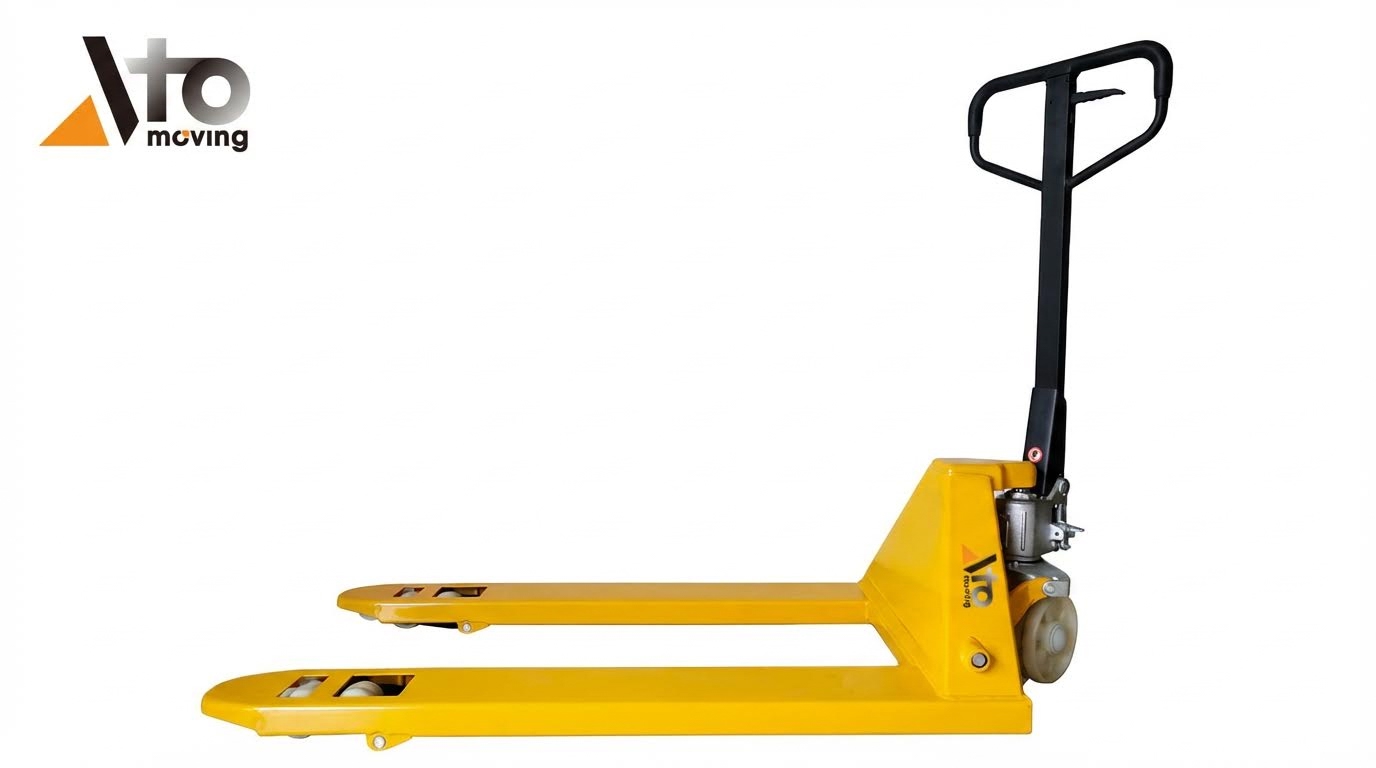
Safe pallet jack sizing starts with one question. You must know how much can a manual pallet jack lift in your real workflows. Typical manual jacks carry about 1,100 kilograms to 2,500 kilograms. Heavy-duty designs reach about 5,000 kilograms but demand stronger floors and better operator training.
Engineering limits come from steel structure, weld quality, hydraulic design, and wheel contact pressure. Rated capacity assumes level floors, centered loads, and sound pallets. Off-center loads, broken boards, or slopes can cut practical capacity far below the plate rating. Facilities should treat the nameplate as a hard upper limit, not a target.
Regulations required clear capacity labels and banned overloads or unapproved modifications. ANSI and OSHA rules tied capacity to stability, visibility, and safe controls. Digital tools, such as fleet telematics and load tracking, already helped enforce limits automatically. Future systems would likely link pallet weights, route planning, and jack selection in real time.
Practical programs combined right-size capacity, operator training, and routine inspection. Engineers matched jack type to pallet standard, floor thickness, and move distance. A balanced view favored conservative capacity choices, documented risk assessments, and a mix of manual pallet jack and walkie pallet truck units. That approach kept productivity high while keeping overload accidents and compliance issues low.