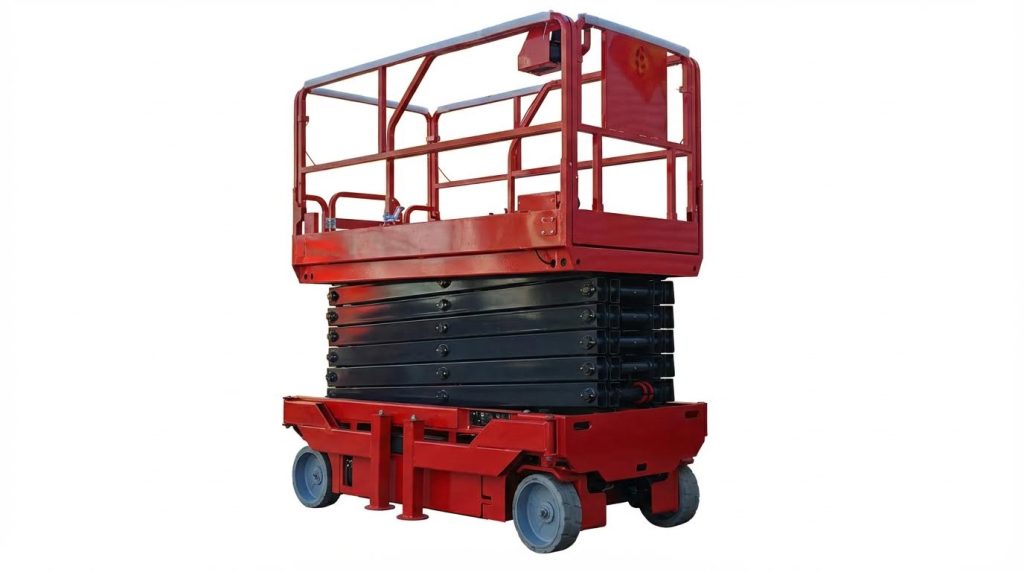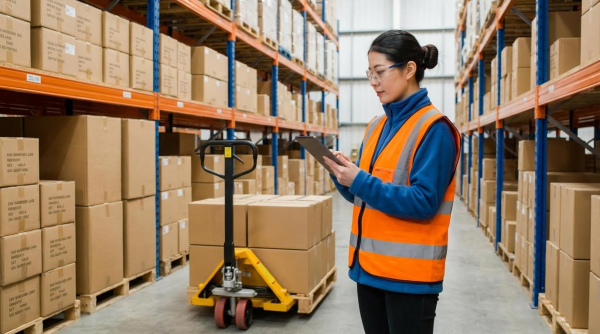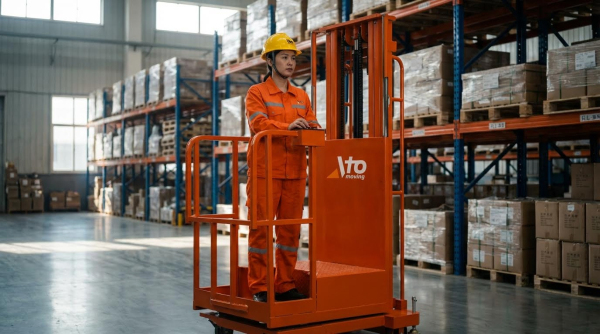
Automated warehouse order picking has shifted from a nice-to-have to a core design problem that decides labor cost, service level, and scalability. This guide walks through the main system architectures, how to engineer the warehouse layout, and how to size equipment for reliable throughput. You will see how choices in cube grids, shuttles, AMRs, slotting, and sortation interact, so you can design an automated warehouse order picker solution that actually hits its UPH targets. Along the way, we will connect physical design, software logic, and KPIs into one coherent engineering view.
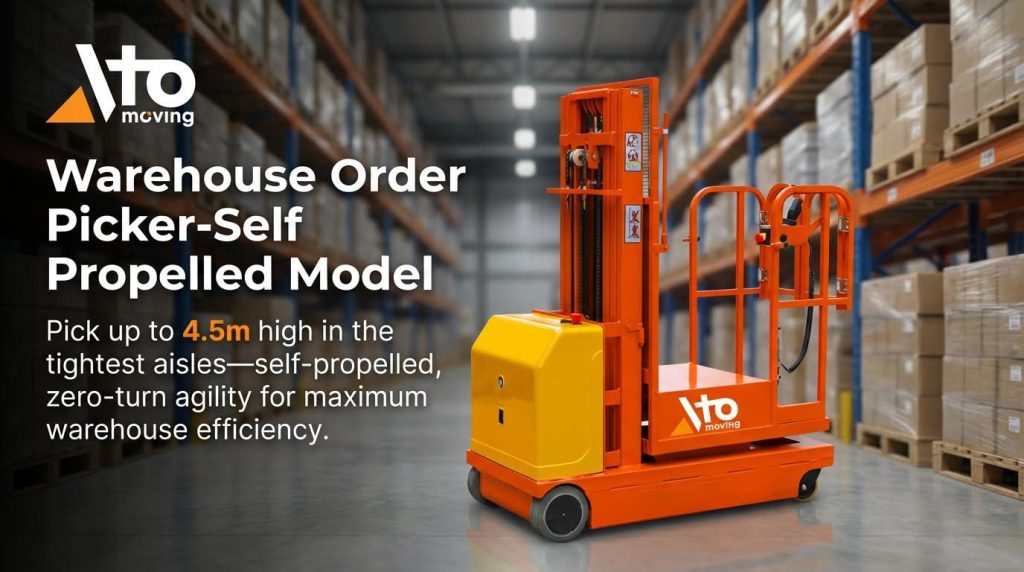
Core Architectures For Automated Order Picking
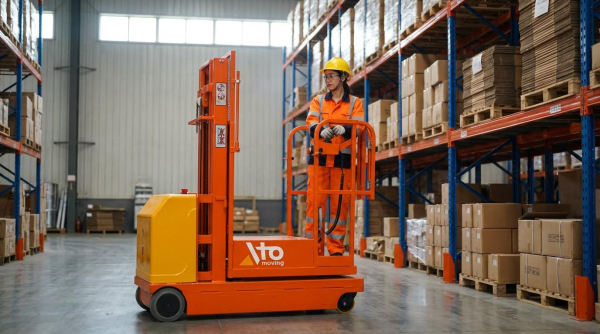
This section compares the three dominant system types used in automated warehouse order picking. The goal is to link physical architecture to throughput, space use, and scalability so you can choose the right backbone for your design.
Cube-based ASRS grids and robot fleets
Cube-based ASRS uses a dense 3D grid where totes or bins are stacked in vertical columns and accessed from the top by small robots. This design removes aisles inside the storage block and converts almost the entire footprint into storage volume. It is a strong fit for operations that need very high storage density in a constrained footprint and consistent, predictable order lines.
| Aspect | Engineering Notes | Typical Impact On Automated Warehouse Order Picking |
|---|---|---|
| Storage geometry | Bins stacked in vertical columns inside an aluminum grid; robots run on the grid roof and lift bins up and down through openings high-density grid structure | Eliminates internal aisles, raising storage capacity by up to roughly 70–75% versus conventional racking when well designed high storage density |
| Robot fleet | Many small robots share the grid surface, lifting and carrying bins to ports | Throughput scales primarily with robot count and number of ports; fleet sizing is a key UPH lever |
| Bin delivery speed | Robots can deliver bins to ports every ~2–10 s in normal operation 2–10 seconds between bin deliveries | Supports high and stable goods-to-person feed rates when ports are balanced and replenishment is well managed |
| Picking rate range | Reported 284–2430 bins/h depending on layout scale and robot count 284–2430 bins per hour | Large systems can exceed shuttle/miniload throughput; small systems behave like a compact high-density buffer |
| Scalability | Modular; capacity grows by adding grid modules and robots without major downtime seamless scalability | Lets you ramp from pilot to full-scale automated warehouse order picking with staged capex |
| Energy demand | Fleet energy use is low; 10 robots can consume on the order of a household appliance similar to a vacuum cleaner | Supports aggressive energy-per-line and TCO targets compared with many conveyor-heavy systems |
| Cost structure | Cost per bin often cited in the mid-hundreds of dollars, driven by compact footprint and simple mechanics lower initial installation costs | Attractive for brownfield sites where floor space is expensive or limited |
From an engineering standpoint, cube-based ASRS works best when SKUs are tote-compatible, order profiles are line-rich rather than case-heavy, and you can tolerate some dwell time for deep-stored bins. The main design constraints are grid footprint, maximum stack height, port count, and robot congestion at high utilization.
- Best suited for: high-SKU, small-item, e‑commerce and spare-parts profiles.
- Key bottlenecks to model: robot traffic on the grid, digging time for deeply buried bins, and port ergonomics.
- Critical decisions: number and placement of ports, bin-to-SKU strategy, and sizing the robot fleet for peak UPH.
When cube-based ASRS is a poor fit
Cube grids are less effective when you handle many oversized cartons, pallet loads, or items that cannot be stored in standardized totes. They also struggle in operations with extreme SKU volatility if re-slotting is constant and bin content turns over faster than the grid can be reconfigured.
Shuttle-based ASRS lanes and tray handling
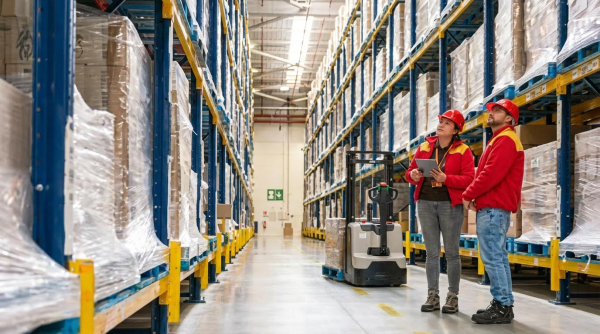
Shuttle-based ASRS stores trays or totes in long rack lanes with a shuttle vehicle running on each level. Vertical lifts or conveyors move trays between storage levels and picking stations. Compared with cube-based systems, shuttle architectures trade some storage density for higher point-to-point speed and larger load envelopes.
| Aspect | Engineering Notes | Impact On Automated Warehouse Order Picking |
|---|---|---|
| Storage geometry | Multi-level rack with deep or single-deep lanes; each level has rails for a shuttle that moves trays along the aisle shuttle-style systems employ trays moved by shuttles along tracks | Supports larger trays, cartons, or totes; easier to mix different unit sizes than in a tight cube grid |
| Access speed | Shuttles move directly to the target slot, then hand off to lifts; path is usually shorter than “digging” in a vertical stack | Very rapid item access and transport; well suited for high-throughput environments with tight SLAs rapid item access and transportation |
| Picking rate range | Typical picking rates around 500–800 trays/h per station, depending on configuration 500–800 bins per hour | Higher than many miniload cranes, but lower than large cube-based systems at scale |
| Scalability | Adding capacity often needs more shuttles, lifts, and rack extensions; retrofits can be complex require more extensive infrastructure for expansion | Good for greenfield high-throughput sites; less flexible for stepwise expansion in tight brownfields |
| Cost structure | Higher upfront cost per storage unit; trays can range in the low thousands of dollars each in some designs trays priced between $2,000 to $4,000 | Capex is concentrated in steelwork, shuttles, lifts, and controls; payback depends on very high daily utilization |
| Footprint efficiency | Needs service aisles, lifts, and maintenance access; density is lower than cube-based grids but higher than wide-aisle shelving | Best where throughput is more critical than absolute storage density |
- Best suited for: high-volume, repetitive order patterns, often with medium to large totes or cases.
- Key bottlenecks to model: vertical lifts, shuttle utilization on busiest levels, and accumulation at picking stations.
- Critical decisions: lane depth, number of shuttles per level, and strategy for balancing loads across aisles.
Shuttle vs cube-based ASRS: quick engineering trade-offs
Shuttle systems typically win on single-location access time and handling larger or heavier trays. Cube-based systems usually win on storage density, energy use, and modular scalability. For automated warehouse order picking, this often translates into shuttle systems dominating in very high UPH, SKU-rationalized operations, while cube-based systems dominate in SKU-rich, space-constrained environments.
AMR-based goods-to-person and hybrid concepts
AMR-based systems use autonomous mobile robots to move shelves, pallets, or totes between storage areas and workstations. In hybrid concepts, AMRs often feed or extract inventory from ASRS racks, buffer structures, or conveyor networks. This architecture favors flexibility and incremental deployment over maximum density.
| Element | Engineering Role | Effect On Automated Warehouse Order Picking |
|---|---|---|
| AMRs (mobile robots) | Navigate using onboard sensors and maps; load/unload bins or racks, often with single-depth forks or lift modules AMRs navigate autonomously, loading or unloading bins | Turn static shelving into goods-to-person; reduce walking distance and raise lines/h without heavy fixed infrastructure |
| Buffer racks | Dedicated racks for temporary storage and sequencing of bins between picking, packing, and replenishment buffer units for storage and retrieval | Smooth peaks by decoupling upstream storage from downstream workstations; reduce congestion at load/unload points |
| Access racks | Rack structures with pass-through tunnels so AMRs can drive inside or below the rack levels allowing AMRs to pass through the bottom of the rack | Increase storage density versus open floor storage while preserving robot access to many faces of the rack |
| Mixed unit-size racks | Racks designed with big, medium, and small compartments to match SKU dimensions different unit sizes accommodate various material dimensions | Boosts storage utilization significantly compared with uniform bins; reduces wasted volume in each location |
| Robot collaboration | Multiple AMRs share the same aisles and workstations; dispatch logic keeps spacing (e.g., ~2 s intervals) to avoid blocking interval time of 2 seconds between AMRs | Throughput scales with fleet size and charging strategy; congestion control in narrow aisles is crucial for stable UPH |
Compared with fixed ASRS, AMR-based architectures emphasize software-driven layout and flow. Racks and workstations can move as processes change, and capacity can grow by adding robots, not only steel. This is attractive for fast-changing e‑commerce networks where order profiles, SKU mixes, and service promises evolve quickly.
- Best suited for: operations that need layout flexibility, seasonal scaling, or multi-zone flows across storage, picking, and packing.
- Key bottlenecks to model: aisle congestion, workstation dwell time, and charge-cycle management for the AMR fleet.
- Critical decisions: ratio of AMRs to pick stations, design of buffer and access racks, and traffic rules at intersections.
Hybrid AMR + ASRS design patterns
In hybrid automated warehouse order picking systems, AMRs often shuttle totes between cube-based or shuttle-based ASRS, consolidation buffers, and packing. This removes long conveyor runs while keeping the high-density benefits of ASRS. Engineering focus shifts to interface design: handoff mechanisms, buffer sizing at each interface, and WMS/WCS logic that decides whether a tote travels via ASRS, AMR, or both.
Engineering The Layout For High Throughput
Layout engineering is where automated warehouse order picking either flies or chokes. Geometry, slotting, and buffer/sortation design must all support the target lines-per-hour, not fight it. The goal is simple: shortest paths, zero dead space, and no queues at pick or induction points.
Aisle geometry, rack types, and access concepts
Aisle and rack choices set the physical ceiling for throughput. They define how many concurrent vehicles, pickers, and robots can move without blocking each other.
- Design from the required pallet/bin moves per hour back to aisle count and width.
- Match aisle width to the handling equipment (manual, VNA trucks, AGVs, AMRs).
- Use rack types and access concepts that minimize cross-traffic at pick ports.
| Design Element | Typical Options | Impact on Throughput | When to Use |
|---|---|---|---|
| Aisle width | Wide (≥ 12 ft), Narrow (6–10 ft), Very narrow (≤ 5 ft) | Wide aisles ease traffic but reduce storage density; narrow and very narrow aisles increase density but need specialized or automated equipment Cited Text or Data | Wide for bulk + forklifts, narrow for high-density manual, very narrow for AGVs/ASRS |
| Aisle layout | Straight, angled, looped | Angled aisles can reduce congestion versus straight aisles in high-traffic zones Cited Text or Data | Use angled or looped layouts near high-velocity zones and packing |
| Rack type | Selective, double-deep, multi-deep, flow rack, buffer rack, access rack | Selective maximizes accessibility; multi-deep and flow maximize density; buffer/access racks reduce congestion and support AMR traffic Cited Text or Data | High-throughput picking zones favor selective/flow; reserve storage can use deep racks |
| Rack unit sizes | Uniform vs mixed (big/medium/small) | Mixed unit sizes can lift storage capacity by a factor of ~5 compared with same-size units for varied SKU dimensions Cited Text or Data | Use mixed units when SKU dimensions vary strongly and cube utilization is critical |
| Access concept | Conventional aisles, drive-in, AMR pass-through (access racks) | Access racks allow AMRs to pass through the rack base and reduce travel distance and congestion Cited Text or Data | Use AMR pass-through when goods-to-person or hybrid AMR concepts are deployed |
Practical layout rules for high-throughput aisles
- Keep main “spine” aisles wide enough for bidirectional traffic and accumulation.
- Use one-way travel rules in narrow aisles feeding high-velocity zones.
- Place vertical transport (lifts, VRCs) outside main pick aisles to avoid blocking.
- Separate induction/decanting from main picker or robot traffic wherever possible.
For automated warehouse order picking, integrate aisle geometry with automation type. Very narrow aisles pair well with ASRS shuttles or AGVs, while AMRs benefit from access racks and cross-aisles to shorten paths.
Slotting logic, ABC zoning, and vertical placement
Slotting logic converts demand data into physical locations. Done right, it cuts travel, congestion, and cycle time without adding hardware.
- Use ABC zoning to cluster fast movers near pick and pack.
- Exploit vertical ergonomics: waist-level for speed, top/bottom for slow movers.
- Align slotting refresh cycles with demand volatility and seasonality.
| Slotting Dimension | Best-Practice Approach | Throughput Effect |
|---|---|---|
| ABC zoning | Classify SKUs by turnover; place A-items closest to picking stations, B-items further, C-items in least accessible areas Cited Text or Data | Reduces average travel distance per line and boosts picks per hour |
| Vertical placement | Fast-moving SKUs at waist level; slow movers in higher or lower bins Cited Text or Data | Improves ergonomic speed and lowers fatigue; supports sustained high UPH |
| Slotting method | Dynamic slotting for fast-changing demand; fixed slotting for stable SKUs; zone-based slotting for temperature or handling constraints Cited Text or Data | Dynamic slotting keeps high-demand SKUs in optimal positions, sustaining throughput as demand shifts |
| Review frequency | Review high-demand items monthly; medium/low-demand items quarterly Cited Text or Data | Prevents “slot drift” where old patterns slow down picking |
| Proximity to packing | Keep high-velocity items closest to packing/shipping stations Cited Text or Data | Shortens end-to-end path from pick to ship, especially in batch picking |
Slotting tactics specific to automated warehouse order picking
- In cube-based and shuttle-based ASRS, bias A-items toward locations with shortest cycle time (fewer lifts, shorter travel) rather than just geographic “closeness.”
- For AMR-based systems, cluster A-items into dense “hot zones” to minimize empty travel legs.
- Use WMS-driven dynamic slotting to reassign hot SKUs into these zones during promotions or peak seasons Cited Text or Data.
For warehouse order picking, combine slotting with picking strategy. Batch and wave picking benefit most when A-items are tightly clustered and accessible from multiple sides or ports to avoid local bottlenecks.
Buffer design, consolidation, and sortation systems
Buffers, consolidation, and sortation decouple processes. They let storage, picking, and packing run at different speeds without starving or blocking each other.
- Design intermediate buffers wherever flow variability is high.
- Use consolidation to turn high-speed batch picking into order-ready flows.
- Size sortation to peak, not average, to avoid end-of-line queues.
| Function | Technology / Concept | Role in High Throughput |
|---|---|---|
| Buffering between storage and pick | Buffer racks with many buffer units; stacker operations with double commands Cited Text or Data | Absorbs bursty retrievals, reduces congestion at load/unload, and increases effective UPH |
| AMR loading/unloading | AMRs with single-depth forks and short interval times (e.g., ~2 s between robots) Cited Text or Data | Supports dense, continuous flow into and out of buffers and pick stations |
| Order consolidation | Batch picking + order consolidation area Cited Text or Data | Converts efficient batch picks into discrete customer orders; reduces travel and shipping cost |
| Put walls | Light-directed put walls; robotic put walls Cited Text or Data | Achieve high consolidation throughput (e.g., >450 lines/hour) with very high accuracy; robotic versions automate small-item sorting |
| High-speed sortation | Loop or unit sorters with up to ~9,600–13,300 items/hour Cited Text or Data | Handles peak item sort volumes; feeds multiple packing lanes evenly |
| Transport between zones | Conveyors and automated material handling systems Cited Text or Data | Automates movement between storage, buffers, consolidation, and shipping; cuts manual travel time |
Key engineering checks for buffer and sortation layout
- Check that buffer capacity (totes, bins, pallets) covers at least the longest upstream or downstream cycle time at peak flow.
- Ensure physical space for accumulation before and after sorters to avoid blocking in case of downstream stoppages.
- Separate inbound and outbound flows around put walls to prevent operator interference.
- For automated warehouse order picking, align sorter induction height and ergonomics with the main picking technology to avoid speed losses at interfaces.
When engineered as a system—aisles, slotting, buffers, consolidation, and sortation—layout becomes a throughput multiplier. The warehouse then supports the control strategies and automation discussed elsewhere, instead of forcing them to fight geometry and congestion every shift.
Final Thoughts On Designing Automated Picking Systems
Automated warehouse order picking only works at scale when architecture, layout, and controls act as one system. Cube grids, shuttles, and AMRs each offer clear strengths, but they also impose hard limits on storage geometry, access speed, and scalability. You must size fleets, ports, shuttles, and lifts from a clear UPH target, not from catalog rates.
Layout then decides whether that theoretical capacity reaches the dock. Aisle geometry, rack type, and access concepts set how many parallel moves you can run without blocking. Slotting and ABC zoning turn demand data into short paths and ergonomic picks. Buffers, consolidation, and sortation absorb real-world variability so upstream and downstream areas keep running during peaks and micro-stoppages.
The practical best practice is simple: start with required lines per hour and service level, then engineer backwards. Choose the architecture that fits SKU profile and space. Design aisles, racks, and buffers to keep robots and people moving. Use WMS/WCS rules to keep hot SKUs near fast paths and to balance loads across ports and stations. Treat automation as an ongoing program, not a one-time install, and review performance data often so your Atomoving-based solution stays aligned with the business as it grows.
Frequently Asked Questions
What is order picking in warehouse operations?
Order picking is the process of selecting items from their storage locations in a warehouse to fulfill customer orders. The goal is to accurately assemble requested items while optimizing efficiency to meet demand within specified timeframes. This process is considered the backbone of warehouse operations. Warehouse Picking Guide.
What are the methods of improving order picking efficiency?
To improve order picking, optimize your warehouse layout by storing high-demand items closer to the packing area to reduce travel time. Organize items by type, size, or demand to speed up the picking process. Additionally, maximizing vertical space can enhance storage capacity and organization. Improve Pick Rate Tips.
What is the primary goal of order picking in a warehouse?
The primary goal of order picking is order fulfillment. Warehouse managers often focus on goals that keep employees productive, effective, and healthy while optimizing the picking process. Order Picking Goals.