Modern e‑commerce fulfillment demands warehouse picking solutions that balance speed, accuracy, and total cost of ownership. This guide explains what are the best warehouse order picker solutions for e-commerce fulfillment for different order profiles, SKU mixes, and growth stages. You will see how manual, semi‑automated, and automated options compare on pick rate, error rate, and investment, and how to design a layout that is safe and automation‑ready. Use it as a practical framework to choose the right level of technology for your operation today, with a clear roadmap for tomorrow.
Core Principles Of Efficient E‑Commerce Picking
How E‑commerce Order Profiles Shape Picking
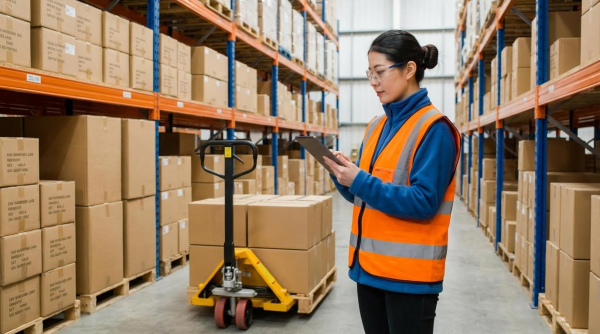
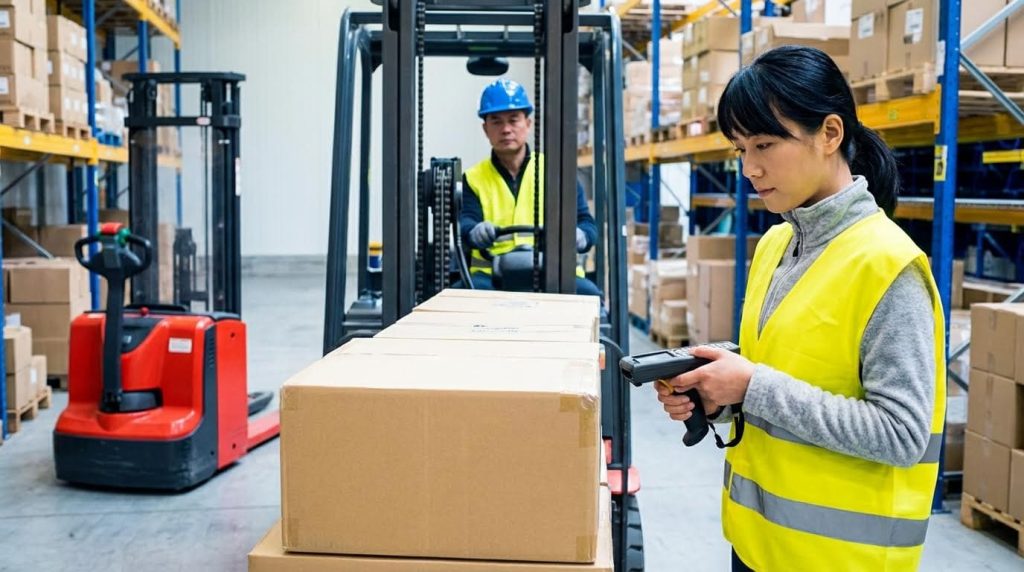
E‑commerce order profiles largely determine what are the best warehouse picking solutions for e-commerce fulfillment. Small, single‑line orders favor fast travel and simple processes, while multi‑line baskets need strong batching and consolidation. Operations with many SKUs and fragile products often benefit from methods like pick‑to‑tote, which support careful handling and accurate order grouping. In this process, a warehouse system generates optimized pick lists and routes, and each order travels in its own tote on a warehouse order picker, reducing walking distance and consolidating items by order for the next fulfillment stage.
Batching similar orders on the same cart lets pickers retrieve multiple units from one location, which is ideal for high‑volume, repeatable demand while still keeping orders separated in totes. Where order lines are few and product range is narrow, pick‑to‑carton can remove a packing step, at the cost of higher mis‑pack risk. High‑volume, fast‑moving profiles may justify pick‑to‑belt, which speeds flow but needs more capital and is less gentle on fragile goods compared with tote handling. Matching these methods to order size, SKU variety, and service promises is the foundation of an efficient, scalable picking design.
Key Metrics: Pick Rate, Accuracy, TCO
Core principles for evaluating what are the best warehouse picking solutions for e-commerce fulfillment revolve around three metrics: pick rate, accuracy, and total cost of ownership (TCO). Manual pickers typically achieve about 100–200 picks per hour, while automated bin‑picking systems can reach roughly 400–800+ picks per hour depending on item complexity with no fatigue‑related slowdown. Manual error rates often sit in the 1–3% range, whereas well‑designed automated systems can reduce mis‑picks to below 0.5% using vision and sensors even for randomly stacked items. Technologies such as barcode scanning, RFID, and automated sortation further improve both speed and accuracy by checking each item against the order and routing totes or cartons automatically to the correct downstream process.
TCO combines labor, equipment, energy, maintenance, space, and error‑related costs over the life of the system. Manual picking needs little upfront investment but carries ongoing labor, training, and injury‑prevention expenses and scales mainly by adding people. Automated and goods‑to‑person systems require higher initial capital and integration effort, yet they deliver consistent cycle times, lower error rates, and better space use which can defer building expansions. A simple ROI view uses (Annual Savings – Annual Costs) ÷ Investment × 100, where savings come from reduced labor, fewer returns, faster order cycles, and higher throughput over both the short and long term..
Comparing Manual, Semi‑Automated And Automated Picking
Pick‑to‑Tote, Carton And Belt: Process Trade‑offs
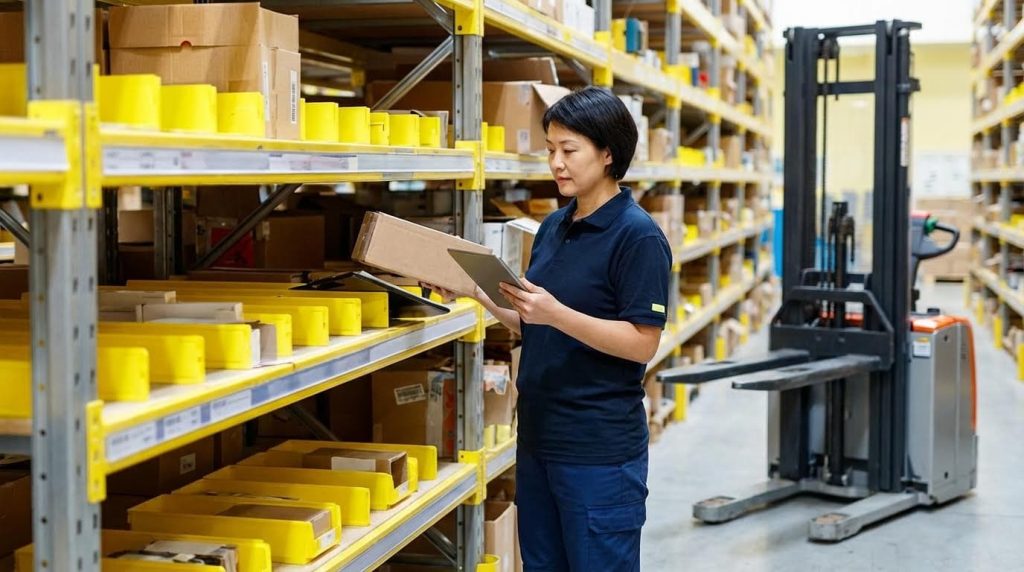
Manual pick‑to‑tote, pick‑to‑carton, and pick‑to‑belt are often the first options considered when asking what are the best warehouse picking solutions for e-commerce fulfillment. In pick‑to‑tote, a WMS generates an optimized pick list and route; the picker moves through the aisles, placing each order into its own tote on a cart, which minimizes back‑and‑forth travel and improves efficiency and accuracy by grouping items and reducing duplicate or missed picks. Pick‑to‑carton removes a separate packing step but forces pickers to decide packaging sizes on the fly, which can increase decision time and mis‑pack risk compared with tote workflows where packers validate contents downstream and catch mispicks before shipping. Pick‑to‑belt uses conveyors to move picked items quickly to packing, supporting higher throughput but requiring more capital, careful design for merges and diverts, and extra protection for fragile items compared with the gentler handling of totes which are better for delicate or diverse SKUs. In practice, pick‑to‑carton suits smaller product ranges and simple orders, pick‑to‑belt fits high‑volume, repeatable flows, and pick‑to‑tote is often the most flexible option for multi‑line e‑commerce orders where accuracy and SKU diversity are critical such as health and beauty or growing online brands.
Key trade‑offs at a glance
| Method | Capex Level | Accuracy Potential | Best For |
|---|---|---|---|
| Pick‑to‑tote | Low–medium | High (packer check) | Multi‑item, diverse SKUs |
| Pick‑to‑carton | Low | Medium | Simple SKU range, direct ship |
| Pick‑to‑belt | Medium–high | Medium–high | High‑volume, repeatable flows |
Voice, Scan And Pick‑To‑Light Guidance
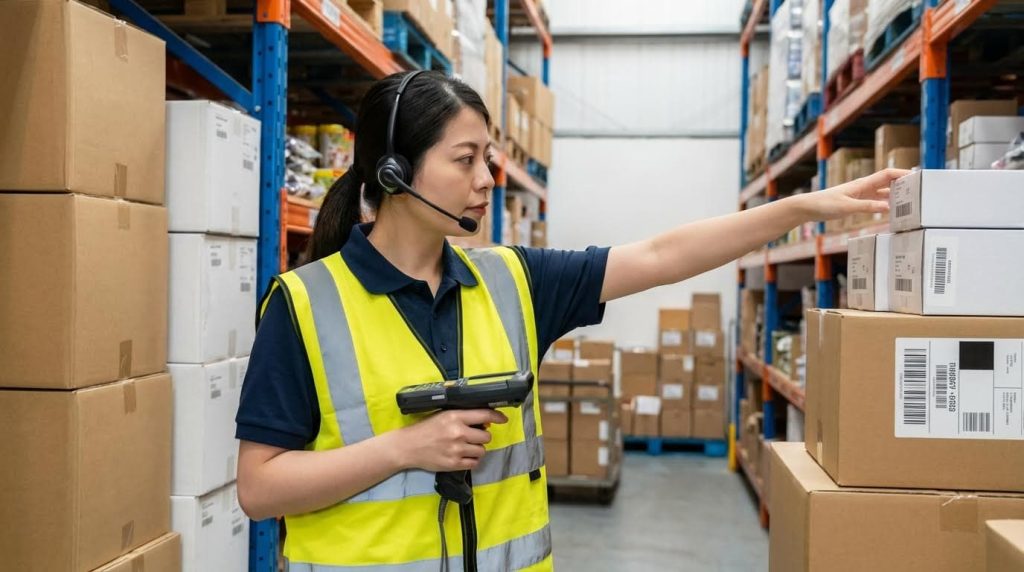
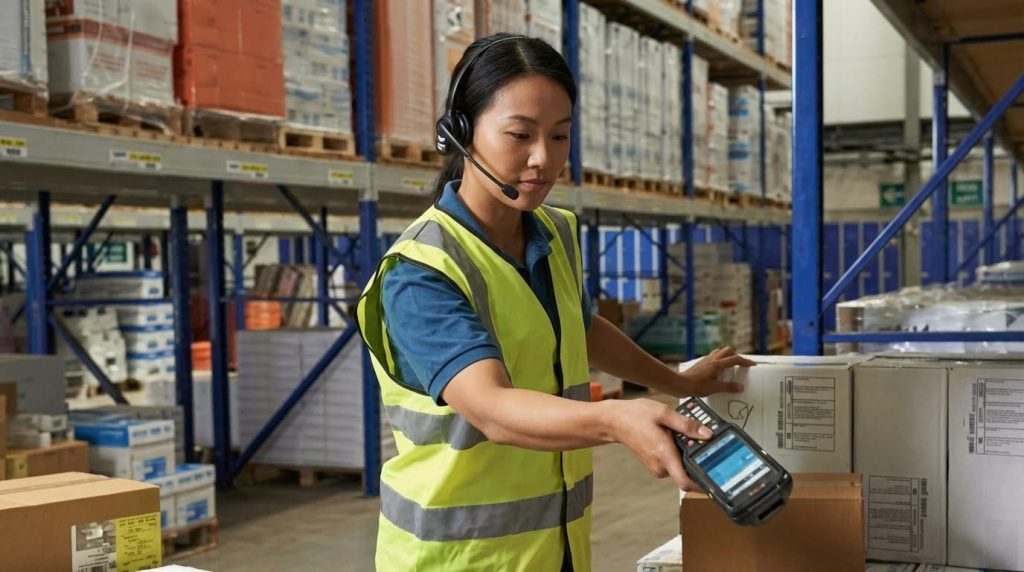
Semi‑automated guidance technologies bridge the gap between manual and fully automated systems and are central when evaluating what are the best warehouse picking solutions for e-commerce fulfillment. Barcode scanning verifies each item against the order in real time, improving accuracy and enabling automated sortation when combined with tote barcodes or RFID to route bins without extra walking and reducing travel time between zones. Voice‑directed picking uses headsets to give spoken instructions, keeping hands and eyes free; this typically raises pick rates and reduces errors because workers are not juggling paper lists or handheld screens while maintaining good ergonomics. Pick‑to‑light adds location‑mounted lights and displays that indicate which slot to pick from and how many units, which is particularly powerful for high‑density, small‑item e‑commerce where visual cues speed up decision‑making and reduce search time as part of a hybrid manual–automation strategy. These semi‑automated tools typically require modest investment compared with full robotics but deliver strong gains in pick rate, consistency, and training speed, making them attractive for operations with growing order volumes but still‑variable demand.
- Scanning: best baseline for accuracy and track‑and‑trace.
- Voice: best where hands‑free operation and mobility matter.
- Pick‑to‑light: best for dense pick faces and fast movers.
Goods‑To‑Person, AMRs And Robotic Bin Picking
Automated solutions such as goods‑to‑person systems, autonomous mobile robots (AMRs), and robotic bin picking redefine what are the best warehouse picking solutions for e-commerce fulfillment at scale. Goods‑to‑person systems use shuttles or automated storage and retrieval to bring totes or cartons to static workstations, delivering consistent cycle times, high space utilization, and strong inventory control for high‑volume, stable SKU profiles but requiring significant upfront capital and careful integration. AMRs keep pickers or packers in ergonomic zones while robots handle the travel, offering more layout flexibility than fixed conveyors but needing clear aisles, robust traffic rules, and adherence to safety standards for driverless vehicles such as ISO 3691‑4 and UL 583 when they share space with people including obstacle detection, safe speeds, and emergency stops. Robotic bin picking combines 3D vision, machine learning, and force control to extract items from totes or bins, achieving around 400–800+ picks per hour versus typical manual rates of 100–200 picks per hour, while reducing error rates below 0.5% and limiting fatigue‑related slowdowns even in high‑volume environments. These systems deliver strong long‑term ROI through labor savings, higher throughput, and fewer errors, but they suit operations with predictable demand, relatively stable product lines, and the capital and change‑management capacity to support automation projects and ongoing optimization where scalability and maintenance planning are built into the design.
Designing And Selecting The Right Picking Solution

Matching Picking Methods To SKU Mix And Volume
To decide what are the best warehouse picking solutions for e-commerce fulfillment in your operation, start with SKU mix and order volume. High-SKU, small-item catalogs with many multi-line orders usually benefit from batch or pick-to-tote workflows, because one route can feed many orders at once. In a pick-to-tote process, the WMS generates an optimized pick list and route, and the picker fills dedicated totes on a cart, minimizing walking and grouping order lines efficiently for downstream handling. Single-line or low-SKU assortments often run better with pick-to-carton or pick-to-belt, where items move directly toward shipping with less intermediate handling but tighter packaging decisions at pick.
Product physical characteristics further narrow the options. Fragile or irregular items are safer in pick-to-tote or cart-based flows that avoid long belt transfers, while robust, uniform cartons suit pick-to-belt at higher speeds with higher capital cost. Where labor is tight and order volumes are stable and high, goods-to-person systems or robotic bin picking can lift throughput from typical manual ranges of about 100–200 picks per hour to several hundred picks per hour per station, while cutting error rates below 0.5% through machine vision and guided handling. For volatile demand or frequent SKU changes, hybrid setups—manual carts with barcode or voice guidance—often give the best balance of flexibility, cost, and accuracy.
Quick design checklist by profile
- High SKU count, many multi-line orders: batch pick-to-tote, goods-to-person for A-movers.
- Low SKU count, many single-line orders: pick-to-carton or pick-to-belt with automated sortation.
- Fragile or premium products: cart or tote-based picking with gentle handling and QC at pack.
- Unstable demand, frequent new SKUs: manual or semi-automated flows with voice or scan guidance.
Layout, Aisles, Safety And Automation Readiness
Facility layout and aisle design determine how far you can push any picking method. Wide, straight aisles with clear travel paths support high-cart density and are essential if you plan to introduce AMRs or AGVs, which must comply with safety rules on obstacle detection, speed limits, and emergency stops in shared spaces under standards such as ISO 3691-4. Dense storage near packing and shipping reduces walking in manual environments and shortens conveyor runs in semi-automated systems, directly improving pick rate and total cost of ownership.
When evaluating what are the best warehouse picking solutions for e-commerce fulfillment over the long term, treat “automation readiness” as an engineering requirement, not an afterthought. That includes providing space and structural support for conveyors or shuttles, planning power and network routes, and ensuring line-of-sight and clearance for sensors on AGVs and robots. A formal risk analysis should consider load types, human–robot interaction points, and floor conditions so that braking distances and safety zones can be tuned during field testing without disrupting operations before full deployment. Finally, invest early in barcode infrastructure, WMS integration, and staff training, because these elements enable both manual and automated technologies—voice, scan, pick-to-light, or goods-to-person—to deliver higher accuracy and throughput with lower risk as your fulfillment volumes grow and as you scale automation over time.
“”
Strategic Takeaways For Fulfillment Leaders
The best warehouse picking solutions for modern e‑commerce link order profiles, layout, and technology into one coherent design. Order size, SKU range, and product fragility should drive the first decision: tote, carton, or belt flows, plus the right mix of batch and single‑order picking. Semi‑automated guidance such as scanning, voice, and pick‑to‑light then lifts accuracy and speed without locking you into heavy capital.
As volumes grow, goods‑to‑person systems, AMRs, and robotic bin picking can multiply picks per hour and cut error rates, but only if the building, aisles, and IT stack are ready. Leaders should treat safety and standards as design inputs, not checks at the end. Clear aisles, controlled speeds, and tested human‑robot zones protect people and uptime.
The most resilient strategy is usually phased. Start with strong WMS integration, barcode discipline, and ergonomic cart or tote workflows from Atomoving. Add guidance tech as demand stabilizes, then layer in automation where ROI is clear. Review TCO regularly, including labor, returns, space, and change costs. This disciplined, stepwise approach delivers higher throughput and accuracy today while keeping your options open for tomorrow’s automation.
Frequently Asked Questions
What are the different types of warehouse picking?
Warehouse picking strategies play a critical role in e-commerce fulfillment. The most common methods include:
- Discrete Picking: One order is picked at a time. Best for small warehouses with low order volumes.
- Batch Picking: Multiple orders are grouped and picked together. Reduces travel time and increases efficiency.
- Cluster Picking: Items for multiple orders are picked simultaneously using totes or bins. Ideal for high-volume operations.
- Zone Picking: Workers are assigned specific zones, and items are passed between zones. Effective for large warehouses.
- Wave Picking: Orders are grouped by specific criteria (e.g., delivery time) and picked in waves. Balances workload across shifts.
Each method has its strengths and is chosen based on warehouse size, order complexity, and fulfillment speed. For more details, see this guide on Effective Warehouse Picking Strategies.
How to improve picking in a warehouse?
Improving warehouse picking involves optimizing processes and tracking performance metrics. Here are some tips:
- Implement advanced picking strategies like batch or wave picking to reduce travel time.
- Use technology such as barcode scanners or RFID systems to enhance accuracy.
- Track key performance indicators (KPIs), including pick rate per hour, picking accuracy rate, and travel time per pick.
- Automate repetitive tasks with equipment like conveyor belts or automated guided vehicles (AGVs).
- Train staff regularly to ensure they understand best practices and safety protocols.
Monitoring KPIs can help identify bottlenecks and improve overall efficiency. Learn more about warehouse KPIs from this resource on Warehouse Performance Metrics.