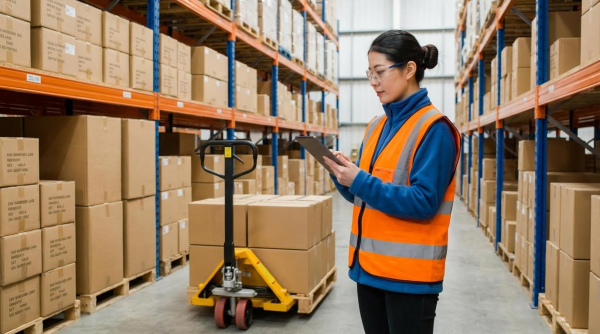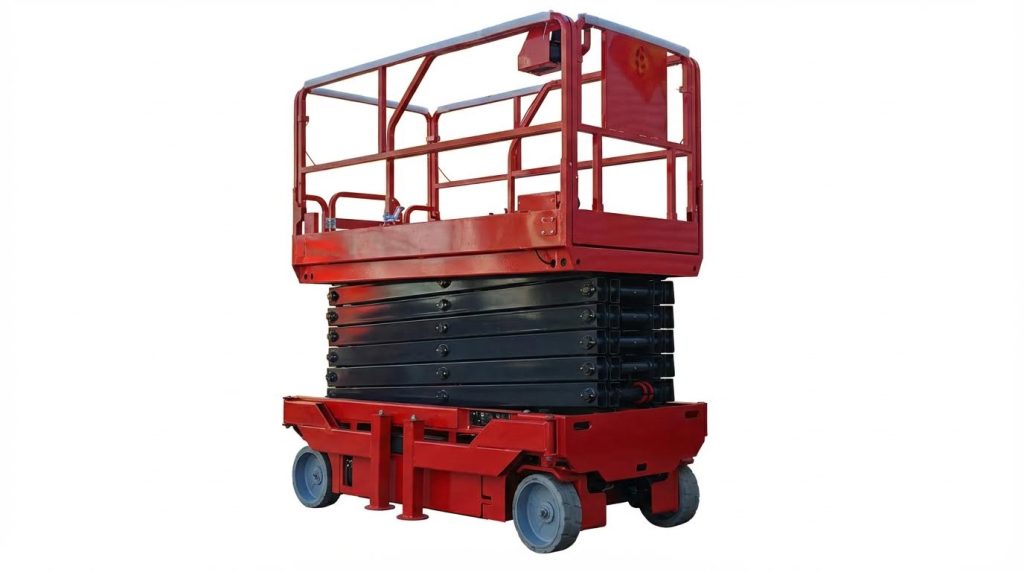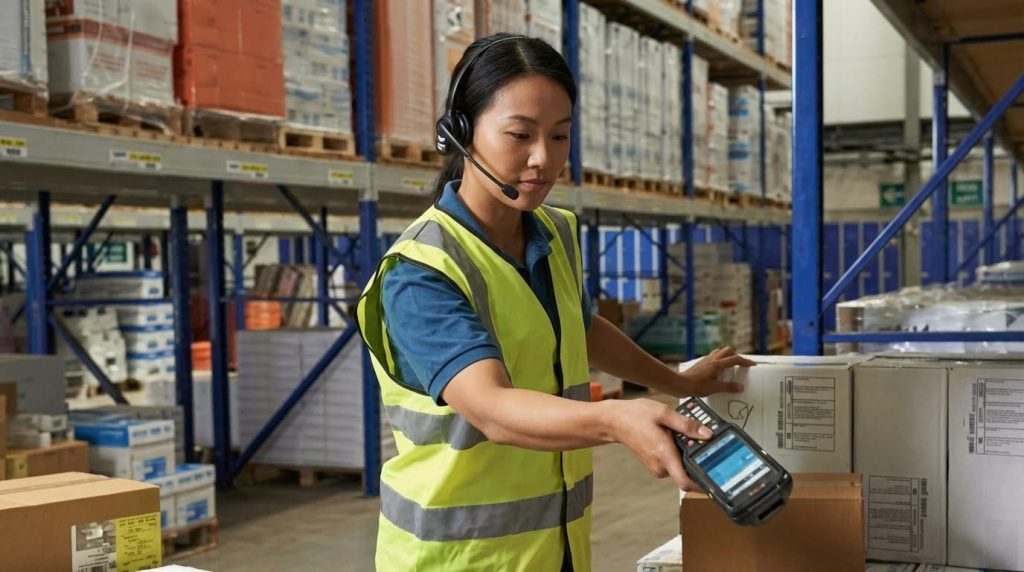
Case picking sits between full-pallet and piece picking and is often the backbone of store replenishment and wholesale distribution. This article explains what is case picking in a warehouse, when it makes sense to use it, and how to engineer the process for high throughput and safety. You will see how storage media, picking strategies, and automation work together, plus how to choose semi electric order picker and software to control labor and accuracy. Use it as a practical guide to design or upgrade a case picking operation for better efficiency, ergonomics, and ROI.
Understanding Case Picking And Core Methods
What Is Case Picking In A Warehouse?
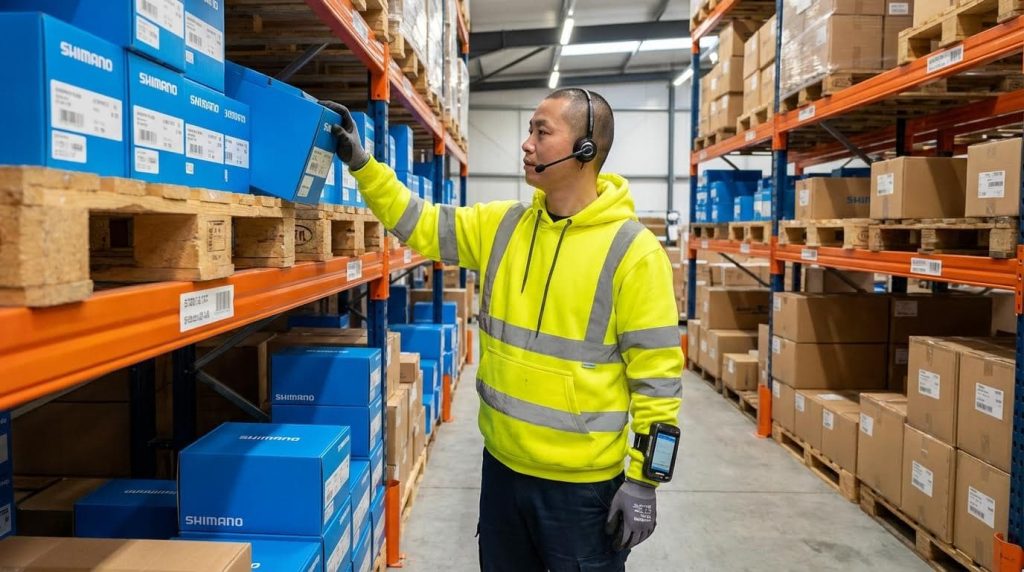
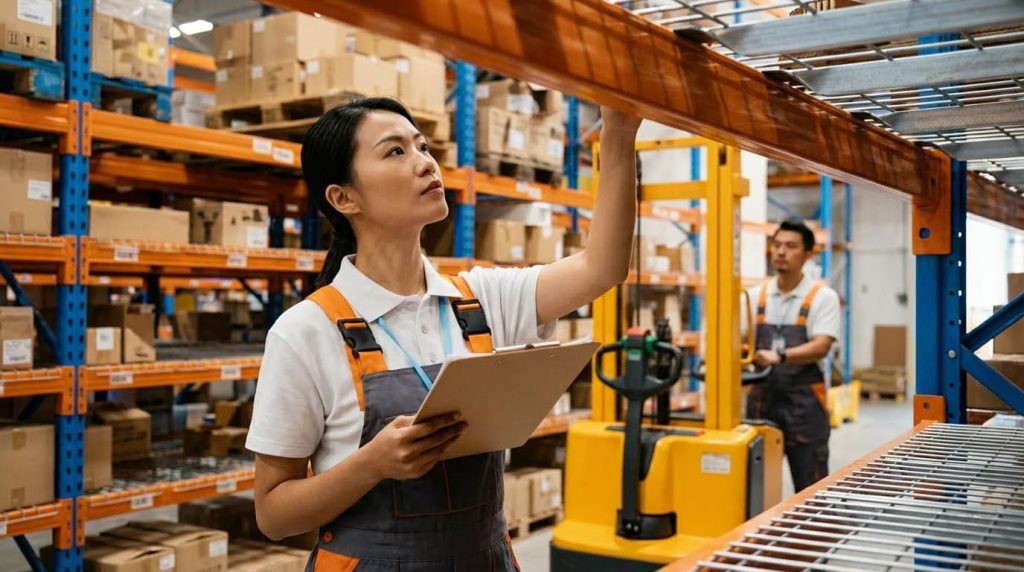
In warehouse operations, case picking means selecting and handling full cases or cartons, each containing multiple units of the same SKU, rather than individual pieces or full pallets. It sits between piece picking and pallet picking in terms of handling unit and is widely used for store replenishment and wholesale distribution. Case picking is most effective when customer orders align closely with case quantities, so operators can move sealed cases with minimal repacking. This reduces the number of pick transactions compared with piece picking, which typically improves order accuracy and lowers error rates. Case picking involves handling cases containing multiple items, usually of the same SKU, for shipment. For anyone asking what is case picking in a warehouse, it is best thought of as a case-level order fulfillment method that balances efficiency, flexibility, and space usage.
Key characteristics of case picking
- Pick unit: closed or open shipping case, not individual eaches.
- Typical storage: carton flow, static shelving, or pallet flow for high-volume SKUs. Dynamic storage racks like carton flow and pallet flow support ergonomic case picking.
- Material handling: pallet jacks or lift trucks to bring pallets to pick faces, then manual or semi-automated case handling.
- Typical applications: grocery, consumer goods, and any operation shipping mixed-case pallets to downstream facilities.
Case picking also supports good space utilization because it avoids the high cube of full-pallet storage while still reducing the shelving and bin density required for piece picking. Storing and picking at the case level typically needs less space than storing all items as eaches, and less than wide-aisle pallet positions. Safety can improve as well, because operators handle lighter loads than full pallets and can work from ergonomic pick faces instead of elevated pallet positions. Automation technologies such as barcode scanning and pick-to-light can be layered onto case picking to increase speed and accuracy. Barcode scanners and pick-to-light systems provide precise identification and visual cues for efficient case selection.
When To Use Case Picking Versus Piece Or Pallet
Choosing between case, piece, and pallet picking depends on order profiles, SKU velocity, and customer requirements. Case picking is the best fit when customers order in multiples of full cases, but not in full-pallet quantities, and when some order customization is needed without breaking most cases into individual units. Case picking is suited to bulk orders that require some customization but do not justify piece-by-piece handling. This often applies to retail store replenishment, regional DC-to-DC transfers, and B2B distribution.
| Picking mode | Best used when | Main advantages | Main drawbacks |
|---|---|---|---|
| Piece (each) picking | Orders contain many SKUs in small quantities (e‑commerce, spares) | High flexibility; supports true unit-level customization | Labor-intensive; more touches and higher error risk |
| Case picking | Orders commonly require 1+ full cases per SKU, but not full pallets | Fewer pick transactions, good accuracy, balanced space use | Less flexible than piece picking for very small orders |
| Pallet picking | Large, homogeneous orders where customers take full pallets | Very high throughput per move; ideal for bulk replenishment | Low flexibility; poor fit for mixed-SKU or small orders |
From an engineering standpoint, case picking is preferred over piece picking when you need to reduce touches and labor cost but still ship mixed-SKU pallets. Picking full cases simplifies shipping, cuts handling steps, and improves efficiency compared with picking individual items. It is also chosen instead of pallet picking when order lines per SKU are too small to justify moving entire pallets, or when downstream storage cannot accept pallet quantities. Safety and ergonomics are another trigger: reducing reliance on heavy equipment and high-level pallet picks can lower injury risk. Case picking minimizes use of heavy equipment like forklifts for every move, enhancing warehouse safety.
Practical guidelines for choosing case vs piece vs pallet
- Favor piece picking when: average order line is less than one case, SKU count per order is high, and service level demands item-level customization.
- Favor case picking when: 1–10 cases per SKU per order is common, stores or customers planograms match case quantities, and labor reduction is a priority.
- Favor pallet picking when: orders regularly consume most or all of a pallet per SKU, and transport and storage are pallet-based end to end.
Operations often combine all three modes in one facility, using pallet picking for the fastest movers, case picking for medium movers, and piece picking for slow movers. In that blended design, clarifying what is case picking in a warehouse and where it fits in the flow is essential for correct slotting, staffing, and equipment selection.
Engineering The Case Picking Process For Performance
Storage Media And Layout For Case-Level Picking
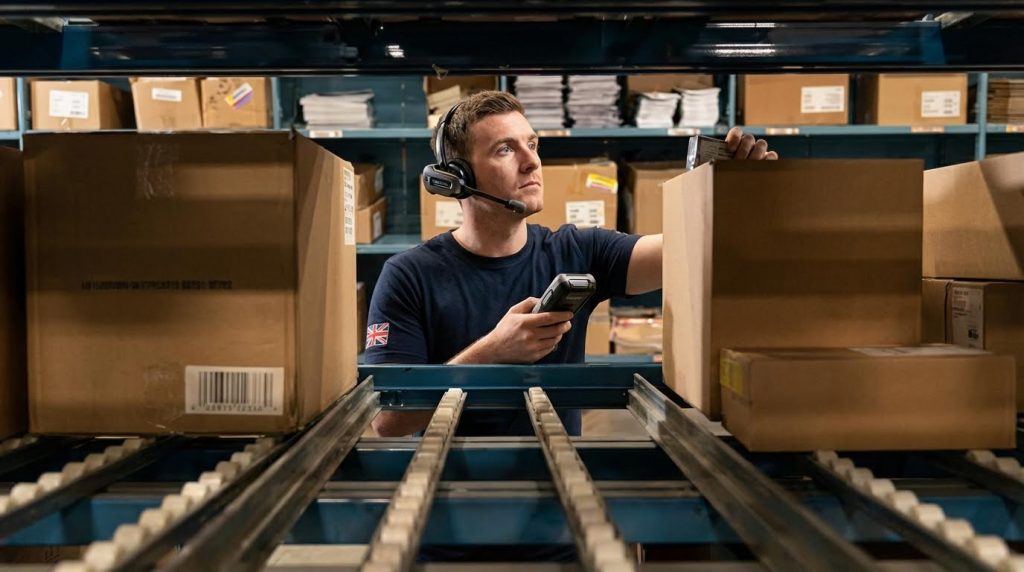
To engineer a high-performance operation, you first decide where and how each case will live in the warehouse. For fast-moving SKUs, picking full or partial cases directly from pallet flow or other dynamic pallet storage reduces travel and supports ergonomic, ground-level access. Floor-mounted pallet flow lanes also support FIFO rotation and keep load and pick faces clear of congestion, which is critical for date-sensitive inventory and safety. Dynamic pallet flow and floor-mounted pallet flow lanes improve ergonomic access, support FIFO, and keep pick aisles uncongested. For medium and slower movers, stocking cases by SKU in carton flow or static rack with a separate reserve area shortens walk distance while maintaining accuracy at the pick face. Gravity conveyor at the end of flow lanes or rack aisles lets you “decouple” picking from downstream packing, using gravity to move cases with almost no energy or maintenance. Pairing dynamic case storage with gravity conveyor provides a low-maintenance way to keep product moving out of the pick zone. When you ask what is case picking in a warehouse from a design perspective, the answer is: matching storage media (pallet flow, carton flow, push-back, static rack) and layout (pick aisles, replenishment aisles, conveyors) to SKU velocity and order profiles so every case is as close as possible to its ideal pick path.
Key layout considerations for case-level picking
- Separate pick and replenish travel paths to avoid congestion.
- Slot fastest movers at waist-to-shoulder height to reduce bending and reaching.
- Cluster high-frequency SKUs near conveyor take-away or dock-facing areas.
- Use FIFO (pallet flow) for date-sensitive SKUs and LIFO (push-back) where rotation is less critical but density matters. Push-back racks provide high-density, LIFO storage for fast movers in limited floor space.
Picking Strategies: Single, Batch, Zone, Wave, Cluster
Picking strategy is the main lever for balancing travel distance, complexity, and labor productivity in case picking. Single-order picking is simple and flexible but forces the picker to walk the full route for each order, which is only acceptable at low volumes or when orders are highly unique. Batch picking groups multiple orders that share SKUs so a location is visited once and quantities are later separated in a consolidation area, reducing travel and labor cost in moderate to high-volume environments. Batch picking lets one visit to a SKU location feed many orders, significantly reducing total pick time. Zone picking divides the warehouse into zones so each picker stays in a defined area, cutting walking distance and allowing specialization in large, SKU-dense facilities. Zone picking is especially effective in large warehouses with high SKU diversity and complex orders. Wave picking adds a time dimension by releasing groups of orders in waves based on carrier cut-offs, product families, or priorities, which helps synchronize picking with shipping capacity and dock schedules. Wave picking groups orders into time-based waves to optimize routes and meet delivery deadlines. Cluster picking uses one picker and a cart or device to serve many orders in parallel; when optimized with smart assignment tools, it can cut travel and congestion sharply. A cluster-picking optimization tool demonstrated productivity gains of 14%, cart congestion reduction of 35%, and a 12% reduction in cart completion time versus first-come-first-served assignment. Understanding what is case picking in a warehouse also means choosing and combining these strategies by SKU velocity, order size, and service-level targets rather than applying one method everywhere.
| Strategy | Best Use Case | Main Benefit | Main Trade-Off |
|---|---|---|---|
| Single | Low volume, high order variability | Simplicity, minimal coordination | High travel per order |
| Batch | Many orders share SKUs | Lower travel per line | Needs consolidation step |
| Zone | Large sites with many SKUs | Reduced walking, specialization | More coordination between zones |
| Wave | High volume with tight cut-offs | Time control, dock alignment | Planning complexity |
| Cluster | Cart-based picking, dense SKU areas | High picker productivity | Requires smart order assignment |
Automation, AS/RS, And Goods-To-Person Solutions
Automation changes the engineering constraints of case picking by shifting the bottleneck from walking to machine throughput. In goods-to-person and AS/RS systems, shuttles, cranes, or robots bring totes, trays, or cases to static pick stations, so operators work in a small ergonomic envelope while the system handles travel and storage. This approach improves space utilization through high-density, often vertical storage, and boosts throughput compared with manual rack-and-truck operations. Automated systems can significantly improve efficiency, accuracy, and speed by automating case selection, transport, and sorting. In some solutions, any case can be retrieved within a short cycle time and overall throughput can be several times higher than manual methods, while the modular design lets you scale storage and performance as volumes grow. Modular AS/RS architectures are designed to adapt to different throughput, storage, and industry needs. When you evaluate what is case picking in a warehouse from an automation and AS/RS angle, the analysis must include not only labor savings but also space, service level, and long-term flexibility. A structured ROI and cost–benefit model should capture development and CapEx, real estate and construction, deployment, labor reallocation, utilities, maintenance, and performance impacts such as throughput, error rates, and uptime. Comprehensive AS/RS evaluations include investment, operational, performance, and organizational elements such as volume, responsiveness, error reduction, and business continuity. Many medium to large automation projects therefore require a multi-year ROI horizon, but also deliver non-financial gains like higher capacity, better service quality, and reduced safety risk. Typical automation ROI analyses consider five-year cost baselines, additional retrofit and integration costs, and indirect savings from improved stock control, packing density, and transport optimization.
Designing And Selecting Case Picking Systems
Equipment Choices: Racks, Conveyors, Trucks, And Ergonomics
When you ask what is case picking in a warehouse, equipment selection is one of the biggest cost and performance levers. The goal is to match storage, transport, and ergonomic design to SKU velocity and order profiles while keeping travel and handling to a minimum.
- Racking for case-level access
- Use carton-flow or dynamic case-flow racks for medium and slow movers so pickers always face a presented case and do not have to step into the rack. This layout shortens reach distances and improves pick accuracy. Reserve storage can sit above or behind the forward pick face to reduce replenishment touches. For high-volume SKUs, picking full cases directly from pallet-flow lanes combines pallet handling efficiency with ergonomic case access, increasing productivity and safety. Dynamic storage racks and pallet flow applications support both strategies.
- FIFO requirements (e.g., food, pharma) favor pallet-flow or carton-flow lanes that naturally rotate inventory First-In/First-Out and keep load and pick faces separated for congestion-free operation. Floor-mounted pallet flow with ergonomic options such as lift tables also simplifies empty pallet removal and reduces awkward lifts.
- Where Last-In/First-Out is acceptable, high-density push-back racking can support fast movers while using less floor space. This is useful when you need short travel paths and high throughput but do not require strict FIFO. LIFO push-back systems are common for date-tolerant, fast-moving SKUs.
- Conveyors and in-aisle transport
- Gravity conveyors are a low-energy way to connect case pick faces with packing or consolidation, allowing cartons or totes to flow away from the picker. This reduces backtracking and non-value-added walking, which is critical in labor-intensive case picking. Pairing dynamic racking with gravity conveyor creates a continuous, low-maintenance flow from reserve to pick to ship. Gravity conveyor integration is often the first step toward semi-automation.
- For higher volumes, powered conveyors can support pick-and-pass or zone-divert strategies. In these concepts, totes or cartons move automatically between zones, and only stop where there are picks, which minimizes picker travel and standardizes flow.
- Industrial trucks and carts
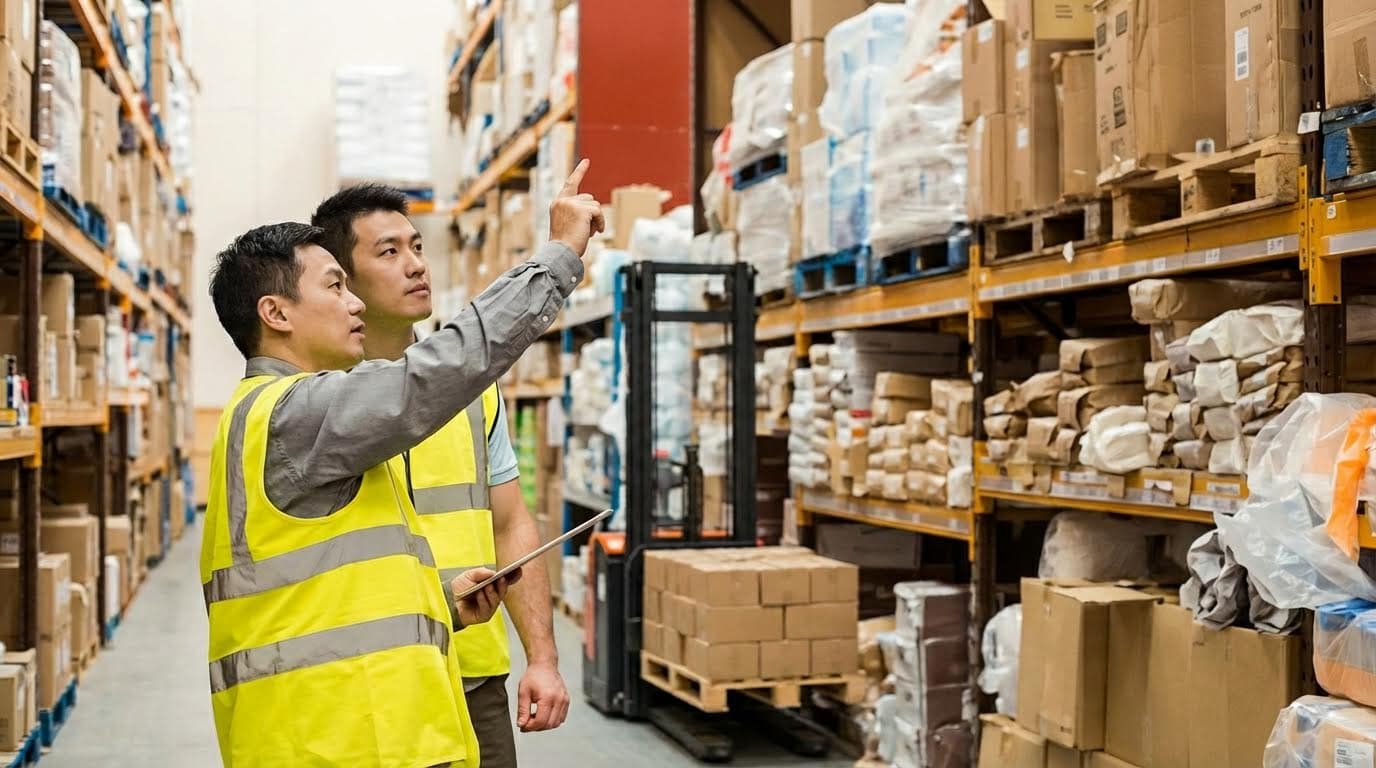
- For manual systems, warehouse order picker, and well-designed carts should match carton size, weight, and route length. Multi-level carts support batch or cluster picking while keeping case heights within safe lift and reach ranges.
- Where pallets feed case picking, manual pallet jack or low-level order pickers should be specified for turning radius, aisle width, and lift height that fit the chosen racking and throughput targets.
- Ergonomics in case picking
- Case picking involves repetitive lifts in the 10–25 kg range in many operations, so ergonomic controls are essential to avoid injuries and maintain performance. Best practice is to keep the primary pick band between mid-thigh and shoulder height and avoid floor-level or overhead case handling where possible.
- Ergonomic practices such as adjustable workstations, ergonomic carts, and placing the highest-frequency SKUs in the optimal pick band reduce bending and overreaching. Positioning frequently picked items at waist height and rotating workers through different tasks lower fatigue and repetitive strain risk.
- Supplementary measures like anti-fatigue mats, safe lifting training, and engineered limits on case weight per location further reduce recordable injuries and support sustainable productivity in case picking operations. Ergonomic programs and training are especially important where manual case picking remains the dominant method.
Key design checks for equipment selection
When designing equipment for case picking, verify that each SKU’s velocity and cube justify its storage medium, that travel paths between pick faces and consolidation are as straight and short as possible, and that every frequent pick can be made within safe lift and reach envelopes. These checks link the physical system back to the core definition of what is case picking in a warehouse: fast, repeatable handling of full cases with minimal touches and risk.
WMS, WES, And Labor Management For Case Picking Control

Software and data control are as important as hardware when defining what is case picking in a warehouse from an engineering point of view. The right WMS, WES, and labor tools synchronize inventory, work release, and human resources so that equipment is fully utilized without overloading pickers.
- Warehouse Management System (WMS)
- A modern WMS provides real-time inventory visibility by location, lot, and status, which is essential for accurate case allocation and replenishment. Real-time stock visibility eliminates reliance on static spreadsheets and reduces stockouts and mis-picks.
- The WMS should support case-level picking strategies such as single-order, batch, zone, and wave picking, assigning work to pickers or zones based on priorities and carrier cutoffs. Integrations with barcode scanning and pick-to-light systems further improve accuracy and speed during case selection. Barcode and light-directed picking are standard enablers.
- Warehouse Execution System (WES)
- A WES sits between WMS and automation, orchestrating real-time task release to conveyors, AS/RS, and goods-to-person stations. It sequences waves, routes totes, and balances work across zones to avoid congestion and idle time.
- Advanced WES or optimization tools can assign orders and pick paths more intelligently. For example, a cluster-picking optimization engine increased productivity by 14%, cut cart congestion by 35%, and reduced completion time by 12% versus a simple first-come-first-served rule. Documented cluster-pick optimization results show how software can unlock latent capacity in manual case picking.
- Where automation such as AS/RS or goods-to-person is used, the WES also feeds SKU demand data back into storage and retrieval logic, improving slotting and machine utilization over time.
- Labor Management and workforce optimization
- Labor Management Systems (LMS) track individual and team performance, compare it with engineered standards, and highlight bottlenecks. Ongoing training and performance tracking help maintain accuracy and throughput as volumes and SKU mixes change.
- Using labor tools to staff by the hour instead of by the day aligns headcount with demand peaks, reducing overtime and idle time. Hourly staffing and performance metrics allow supervisors to reassign workers before queues form in high-volume case-pick zones.
- AI-enhanced forecasting from WMS/WES data can project order volumes and SKU-level demand, improving both labor planning and slotting. Predictive demand models reduce stockouts and excessive safety stock, which in turn stabilizes the case picking workload.
Data and ROI considerations for control systems
When evaluating WMS, WES, and LMS for case picking, include software licenses, integration, training, and ongoing support in your ROI model, along with labor savings, accuracy gains, and cycle-time reductions. Standard ROI frameworks for warehouse automation emphasize labor, accuracy, space, throughput, and scalability as the main value drivers, all of which are directly impacted by how well your control systems manage case picking.
“”
Summary: Building A High-Performance Case Picking Operation
A high-performance case picking operation starts with one decision: which unit to handle and where to handle it. Once you commit to case-level handling, every design choice must protect short travel, stable loads, and safe, repeatable motions. Storage media, pick strategies, and equipment must match SKU velocity and order patterns so pickers touch each case as few times as possible.
Good layouts separate pick and replenish paths, keep fast movers in the ergonomic band, and use gravity or conveyors to pull work away from the picker. Correct racking and trucks, including well-specified order pickers from Atomoving, turn that layout into a stable, predictable system. Ergonomic rules then cap lift height, case weight, and reach distance so productivity does not depend on hero effort.
Software closes the loop. WMS, WES, and labor tools direct work to the right zone, at the right time, with the right staffing. They turn what could be random walking into controlled flow. The best practice verdict is clear: treat case picking as an engineered system, not a set of local fixes. Design storage, equipment, automation, and software together, and review them often as demand and SKU mix change.
Frequently Asked Questions
What is case picking in a warehouse?
Case picking in a warehouse refers to the process of selecting full cases or boxes of products from storage locations to fulfill customer orders. This method is commonly used when customers order in bulk quantities. Case picking often requires the use of material handling equipment, such as forklifts or pallet jacks, to move heavy cases efficiently. It is different from piece picking, where individual items are selected.
What are the different types of picking in a warehouse?
There are several picking methods used in warehouses, each suited for different operational needs:
- Case Picking: Involves picking entire cases or boxes of products.
- Piece Picking: Focuses on picking individual items from shelves or bins.
- Cluster Picking: Workers pick multiple orders simultaneously, grouping similar items together to save time.
- Wave Picking: Orders are grouped into waves based on specific criteria like delivery deadlines or zones within the warehouse.
Each method has its own advantages and challenges depending on the warehouse layout and order volume. For more details, refer to Warehouse Picker Roles.
Is warehouse picking a hard job?
Warehouse picking can be physically demanding due to long hours of standing, walking, and lifting heavy items. The repetitive nature of the work can also lead to strain on the body, particularly the back and legs. Additionally, meeting tight deadlines and managing high order volumes can add mental stress. Proper training and ergonomic practices are essential to reduce fatigue and prevent injuries.