Safe, repeatable technique matters more than power when lifting pallets of ae using a forklift. This guide walks through how to match truck type to pallet loads, set up stable geometry, and control speed, height, and visibility to avoid tip‑overs and product damage. You will see practical engineering rules for capacity, load center, and pallet inspection, plus clear operating steps and training expectations. Use it as a checklist-style reference to tighten your pallet handling program and reduce incidents around racking, docks, and production lines.
Fundamentals Of Safe Pallet Lifting
Matching forklift type to palletized loads
Choosing the right truck is the first engineering control when lifting pallets of ae using a forklift. The goal is to match aisle width, lift height, floor conditions, and load profile with a suitable machine so stability margins stay high and component stresses stay low.
Different forklift classes handle pallets very differently. Use this quick comparison before assigning equipment to a task.
| Forklift type | Best use with palletized loads | Typical environment | Key safety advantages | Main limitations |
|---|---|---|---|---|
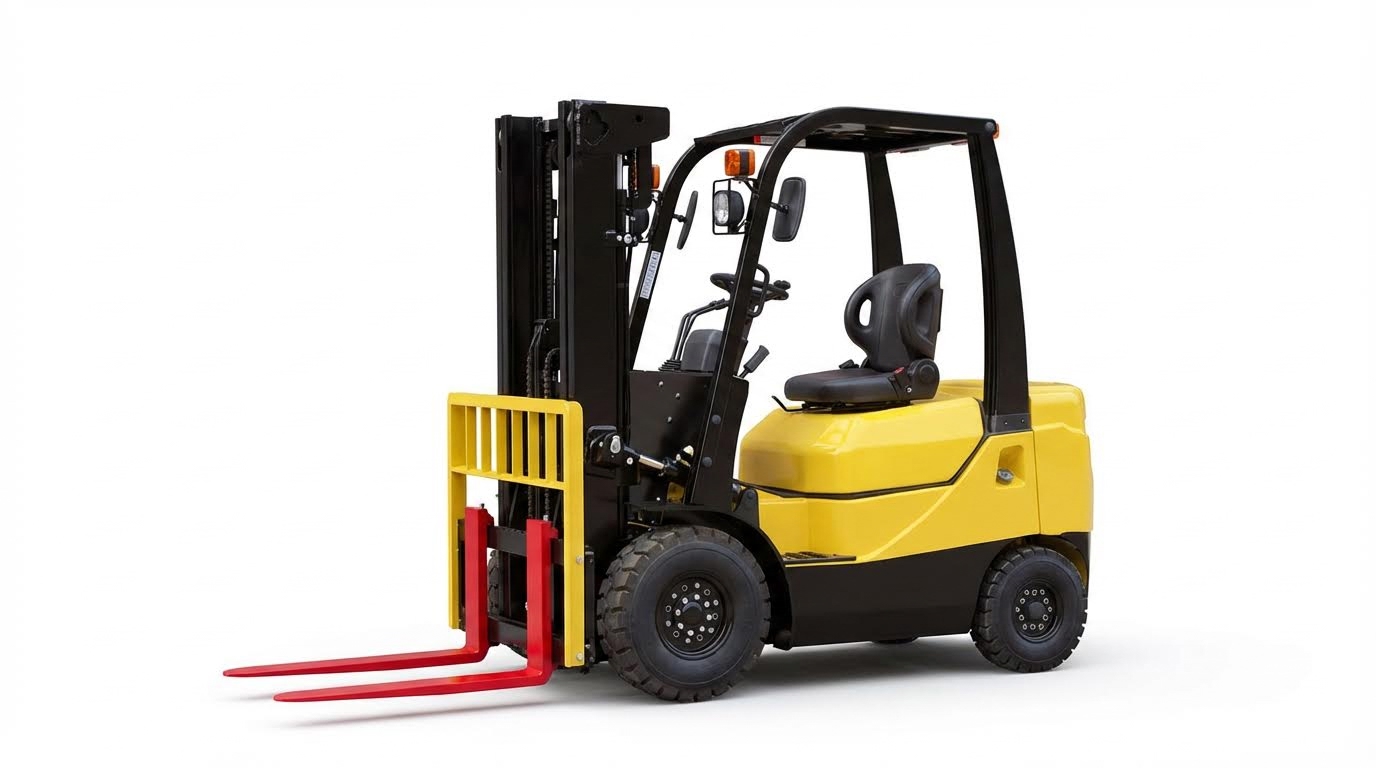
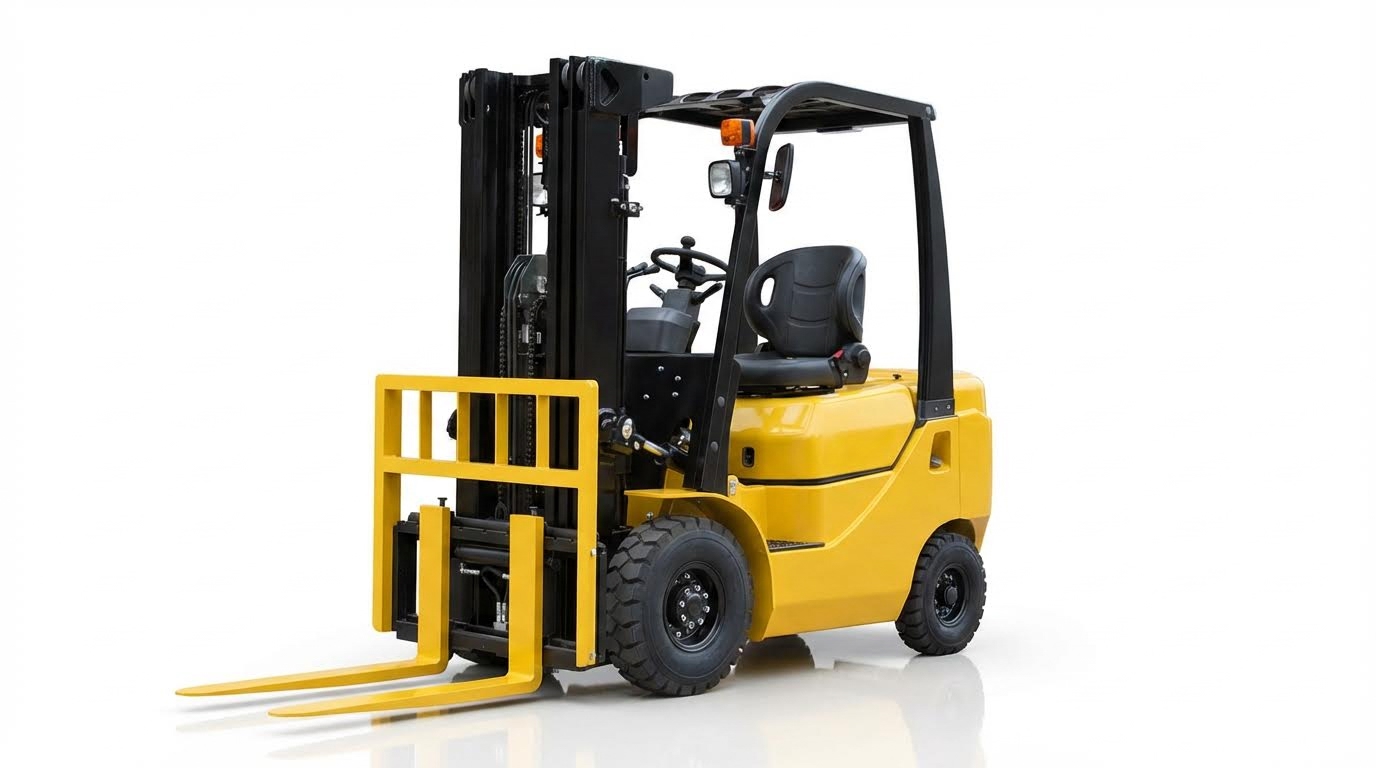
| Counterbalance forklift | General pallet handling, dock work, loading trucks, floor stacking | Indoor / outdoor, standard aisles | Simple to position; handles many pallet sizes; good on ramps when used correctly | Needs wider aisles; higher tip‑over risk at height if overloaded or side‑loaded |
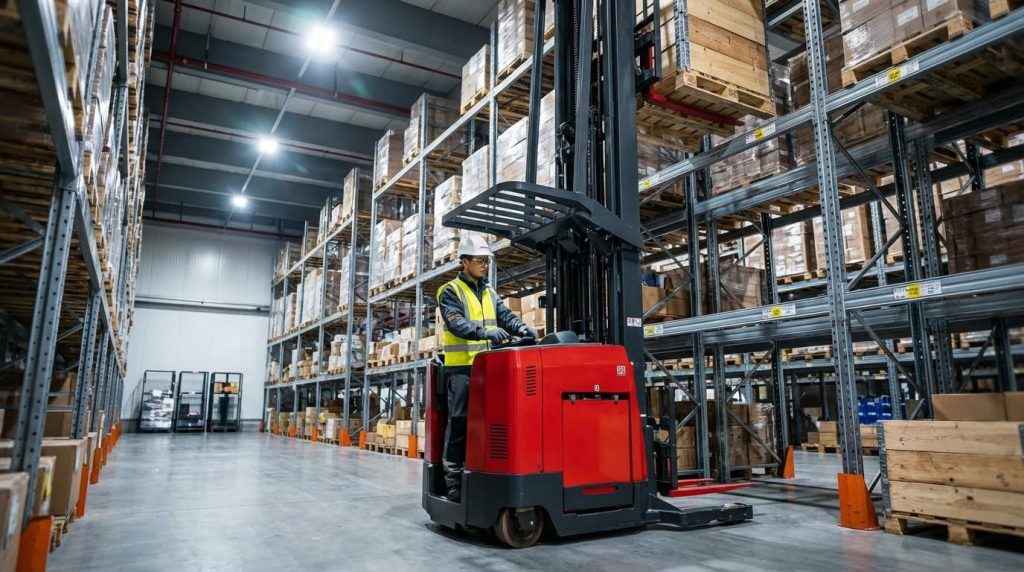
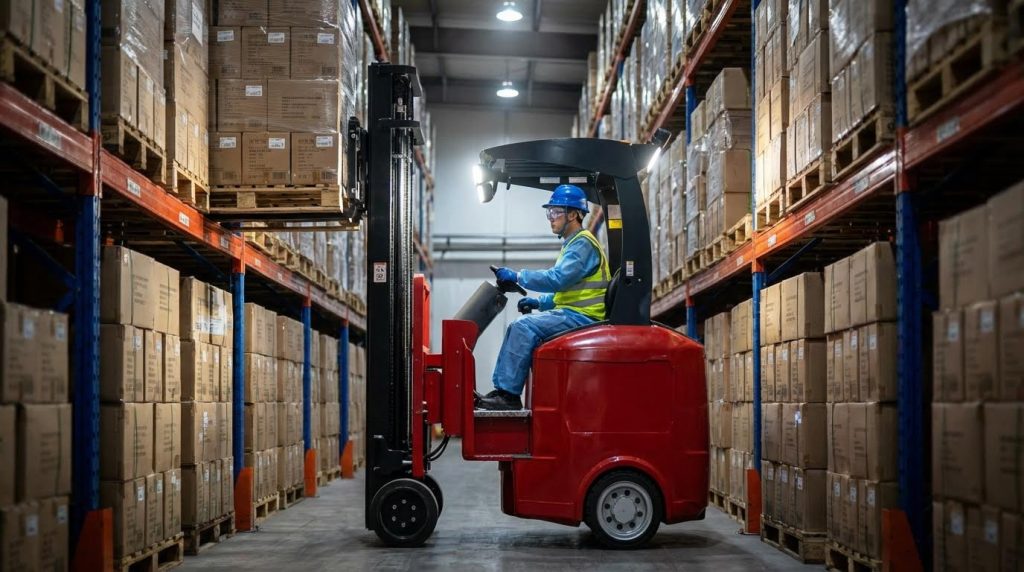
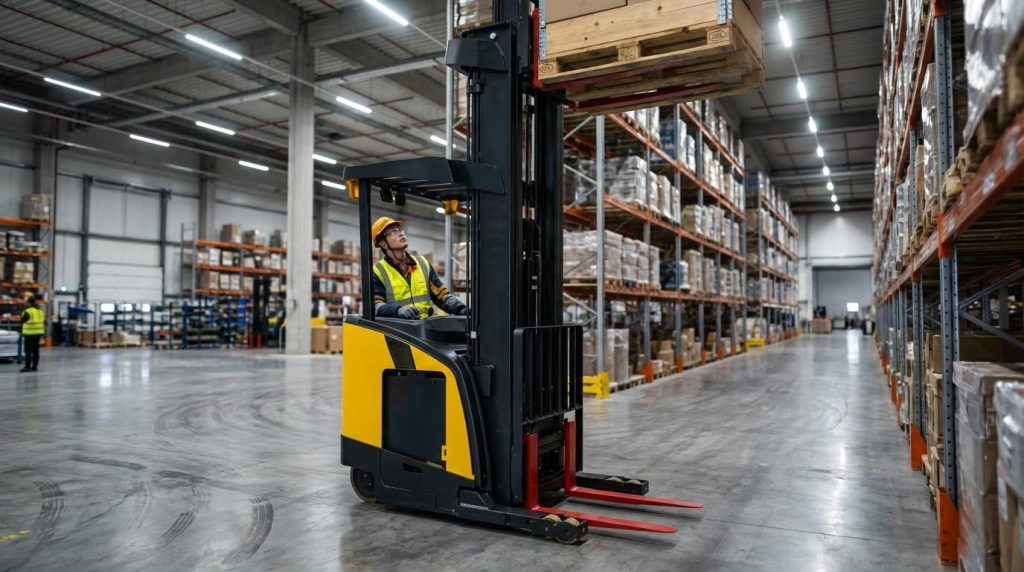
| Reach truck | Pallet put‑away and retrieval in rack, especially upper levels | Indoor, narrow aisles | Excellent in narrow aisles; extended reach into racking; improved visibility at height Cited Text or Data | Not suited to rough ground; usually lower capacity than similar‑size counterbalance |
| Powered pallet truck / pallet jack | Short‑distance pallet moves at floor level | Flat, smooth floors; loading docks | Very maneuverable; low lift height reduces tip‑over risk Cited Text or Data | Not for stacking; poor on slopes and uneven ground |
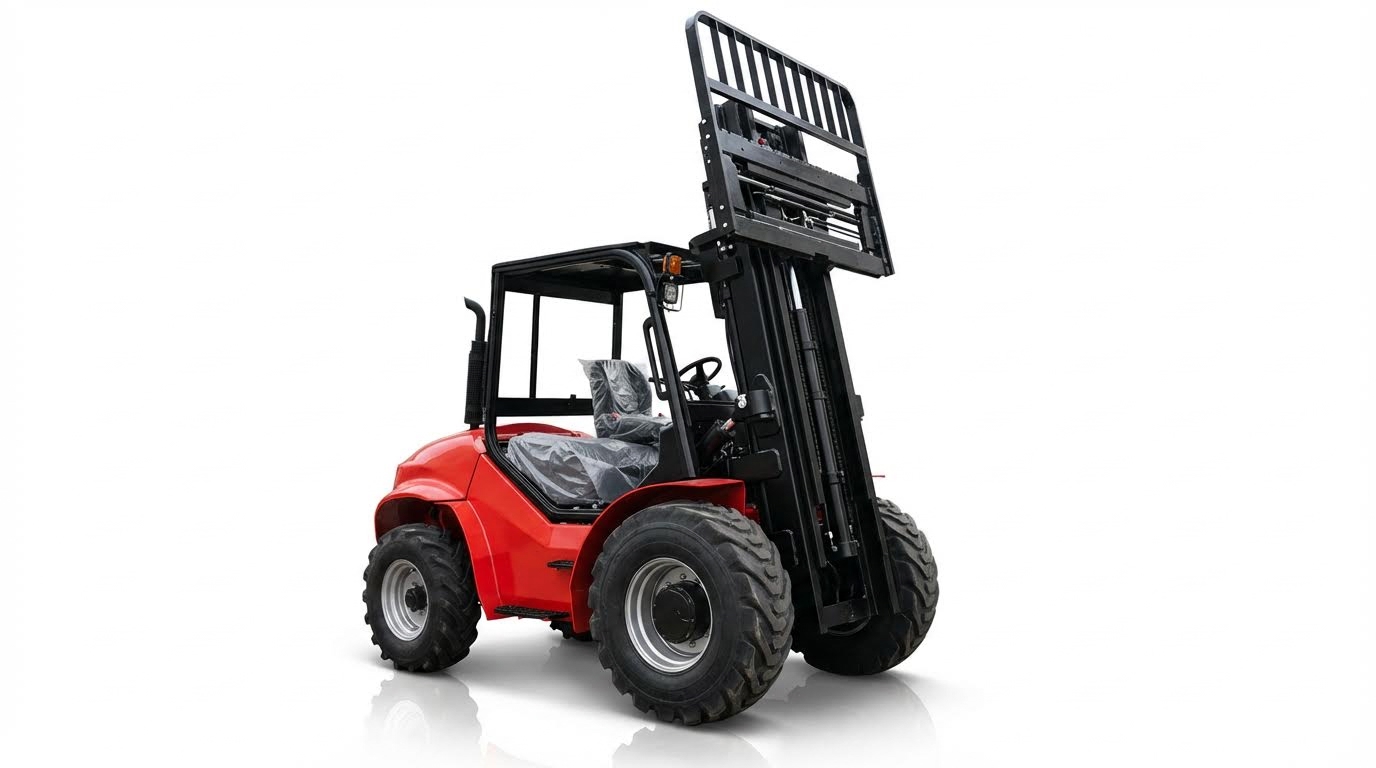
| Rough‑terrain / high‑clearance truck | Pallets on construction sites, yards, or unpaved surfaces | Outdoor, uneven or soft ground | Better traction and ground clearance; can use attachments to spread load on forks Cited Text or Data | Higher center of gravity; usually larger turning radius; emissions concerns indoors |
When lifting pallets of ae using a forklift in tight racking, a reach truck or narrow‑aisle solution normally offers a bigger safety margin than forcing a counterbalance into small spaces. For dock work and mixed tasks, a counterbalance unit is usually the safest “all‑rounder” as long as the floor is sound and the operator respects capacity limits.
Practical selection checklist
Use this quick list before assigning a forklift to a palletized job:
- Confirm pallet type and entry points (2‑way vs 4‑way, block vs stringer).
- Measure heaviest pallet weight and compare with truck plate rating at the needed lift height.
- Check aisle width against truck turning and right‑angle stacking clearance.
- Assess floor quality: slopes, potholes, dock plates, and thresholds.
- Decide if stacking height or just horizontal transport is required.
- Verify indoor ventilation if using internal‑combustion equipment indoors. Cited Text or Data
Understanding capacity, load center, and stability
Every safe move starts with the data plate. Capacity, load center, and stability define the safe working envelope when lifting pallets of ae using a forklift. If you change any variable—load length, attachment, mast height, or tilt—you change the stability picture.
At a basic level, the forklift behaves like a lever around its front axle. As the load center moves forward or upward, the overturning moment increases and the allowable load drops. Operators must keep the combined center of gravity inside the “stability triangle” taught in formal training programs. Cited Text or Data
| Concept | What it means | Why it matters for pallets |
|---|---|---|
| Rated capacity | Maximum load the truck can lift at a specified load center and mast height | Exceeding it increases tip‑over risk and can damage mast, forks, and axle |
| Load center (LC) | Horizontal distance from the fork face to the load’s center of gravity | Longer pallets or overhanging product push the LC out, reducing safe capacity |
| Stability triangle | Imaginary triangle between the two front wheels and the center of the rear axle | The combined center of gravity must stay inside this triangle to avoid tipping |
| Dynamic effects | Extra forces from braking, turning, bumps, and mast movement | Sudden stops or sharp turns can shift the center of gravity outside the triangle even with “legal” loads |
- Always read the capacity plate for the correct load center and mast height before using attachments or handling unusually long pallets. Cited Text or Data
- Center the pallet on the forks; shallow or uneven fork entry can split the deck and shift the center of gravity sideways. Cited Text or Data
- Keep the load low and slightly tilted back during travel to bring the center of gravity closer to the truck.
- Avoid overhanging or low‑hanging loads; if unavoidable, secure them with wrap or strapping to reduce movement. Cited Text or Data
Quick stability do’s and don’ts
Use these operator rules whenever you handle palletized loads:
- Do verify the load is within rated capacity at the required height, not just at ground level.
- Do keep forks as wide as possible under the pallet while staying inside the stringers.
- Do travel with mast tilted back and forks just clear of the floor.
- Don’t turn on slopes; travel straight up or down with the load upgrade.
- Don’t raise or lower the pallet while the truck is moving, except for minor leveling.
- Don’t push, drag, or “bulldoze” pallets; this damages pallets, tires, and driveline components and can introduce debris into production areas. Cited Text or Data
Engineering Techniques For Stable Pallet Handling
Engineering discipline is what keeps a stable truck under a shifting pallet. When lifting pallets of ae using a manual pallet jack, small setup errors in the pallet, forks, or travel speed quickly turn into broken product or a tipped truck. This section focuses on three control points you can standardize: what you lift, how you pick it up, and how you move it.
Pallet and load inspection criteria
Before you move a millimeter of mast, treat the pallet and load like lifting gear. If the platform fails, the best driving skills will not save the load. A short, consistent inspection routine is the fastest way to cut dropped-load incidents.
- Walk 360° around the pallet before inserting forks; look for broken deck boards, stringers, or blocks.
- Reject pallets with visible cracks, splits, crushed blocks, or pulled nails that can open under load Cited Text or Data.
- Check top deck boards for rot, delamination, or contamination that can reduce friction and let the load slide.
- Confirm there is no severe warping that could rock the load on two or three points only.
- Verify the pallet design and condition are suitable for the estimated weight if capacity is uncertain Cited Text or Data.
Load configuration is the second filter. Even a perfect pallet becomes unstable if the stack geometry is poor.
- Avoid excessive overhang beyond the pallet footprint; it increases collision and snag risks Cited Text or Data.
- Minimize product hanging below the pallet; low-hanging loads are more unstable than loads that fill the pallet Cited Text or Data.
- Look for leaning stacks, gaps, or mixed carton sizes that can settle during travel.
- Use stretch wrap, straps, or corner boards where the stack can breathe or shift under vibration Cited Text or Data.
Why this inspection matters when lifting pallets of ae using a forklift
Most tip-overs start with a marginal pallet or a badly stacked load that shifts just as the truck turns or brakes. A 20–30 second inspection removes weak pallets from circulation and identifies loads that need rework or extra securing before you lift them.
Fork positioning, entry, and mast tilt control
Once the pallet and load pass inspection, the next risk point is how the forks engage the pallet. Fork geometry directly controls load center, bending in the pallet deck, and the chance of punching through boards.
Approach and fork entry are where many operators rush. When lifting pallets of ae using a hydraulic pallet truck in tight aisles or near racking, slow and square is the safest and fastest over a full shift.
- Approach the pallet straight on at a controlled speed; avoid diagonal entries Cited Text or Data.
- Align the mast square to the pallet face before inserting forks to prevent racking or side loading.
- Adjust fork spacing so each blade sits as wide as possible while still clearing the pallet’s entry openings Cited Text or Data.
- Insert forks fully under the pallet until the heels almost contact the pallet; shallow entry can split deck boards and unbalance the load Cited Text or Data.
- Keep forks level when entering and exiting to avoid gouging or lifting one side first.
| Parameter | Good practice | Failure mode if ignored |
|---|---|---|
| Fork spacing | As wide as pallet allows | High bending stress, pallet cracking |
| Insertion depth | Full depth, heels near pallet | Pallet deck separation, dropped corner |
| Mast alignment | Square to pallet face | Twist in pallet, side-shifted load |
| Entry speed | Slow, controlled | Punched boards, impact damage |
Mast tilt is your fine control for stability. It moves the combined center of gravity back into the stability triangle and increases friction between the load and the forks.
- After lifting clear of the ground, apply slight back tilt to bring the load against the backrest.
- Avoid excessive back tilt with tall or top-heavy loads that can bring the center of gravity too high.
- Keep the mast as vertical as possible when stacking or unstacking at height for precise placement.
- Never travel with the mast tilted forward; this projects the load center outward and reduces stability margin.
Load center and mast tilt interaction
Tilting back shortens the effective load center by pulling the load toward the truck, which increases the available capacity within the stability triangle. Tilting forward extends the load center, which rapidly reduces safe capacity and increases the risk of tipping, especially with long or heavy pallets.
Lifting, travel height, and speed management
Even with a sound pallet and correct fork setup, poor lifting and travel technique can still cause incidents. When lifting pallets of ae using a drum dolly, treat every motion as a controlled engineering step, not just “up and go.”
- Lift the pallet smoothly, without jerks, to just clear the floor or rack beam.
- Use a safe travel height of only a few inches above the ground for horizontal movement Cited Text or Data.
- Lower slowly to the floor or rack to avoid impact and vibration that can damage pallets or cartons Cited Text or Data.
- Stop travel before final lowering; do not lower while moving.
| Phase | Key control | Engineering reason |
|---|---|---|
| Initial lift | Smooth, no jerks | Prevents sudden load shifts |
| Travel height | Few inches off ground | Lower overturning moment, more stability |
| Final placement | Slow, vertical motion | Minimizes impact, pallet damage |
Speed management is the last defense. Most real-world pallet incidents happened at “walking plus” speeds, not at full throttle. Speed, height, and steering angle combine to define lateral forces on the mast and load.
- Maintain a safe, reduced travel speed, especially on inclines or uneven floors Cited Text or Data.
- Keep the load low when turning; never corner with the load raised.
- Plan routes to avoid sudden stops, tight turns, or steep ramps with heavy pallets Cited Text or Data.
- Maintain clear spacing from pedestrians and other trucks to prevent forced emergency maneuvers Cited Text or Data.
Avoiding “pushing” and other bad habits
Do not slide or push pallets along the floor with the forks. This practice damages pallets and truck components and can drag debris into clean areas Cited Text or Data. Always lift, carry at low height, and set down under control instead.
Operational Controls, Training, And Technology
Pre-operation checks and safety devices
Robust pre-operation checks are the first defense against incidents when lifting pallets of ae using a forklift. Checks must be systematic, documented, and tied to clear “do not operate” rules.
- Inspect the forklift before each shift for leaks, tire damage, loose parts, and unusual noises. Daily pre-operation checks should cover oil levels, tire condition, fluid leaks, and key safety functions.
- Verify forks for cracks, bends, missing heel material, and secure locking pins before handling pallets.
- Confirm mast, chains, and tilt functions operate smoothly with no binding or abnormal movement.
- Check hydraulic system for visible leaks, damaged hoses, or jerky actuation.
- Test brakes, parking brake, steering, and transmission engagement in a controlled area.
- Confirm horns, lights, backup alarm, and any warning beacons work correctly. Engineering controls such as seat belts, overhead guards, reverse alarms, and warning lights must be present and functional.
When lifting pallets of ae using a forklift, operators must also verify the work environment.
- Confirm travel routes are clear of debris, spills, and loose materials that could affect stability.
- Check ventilation when operating internal combustion trucks indoors to control exhaust exposure. Indoor operation of diesel forklifts requires sufficient airflow to disperse exhaust fumes.
- Verify refueling/charging areas are clean, ventilated, and equipped with spill control and fire protection. Refueling or charging must occur in designated areas with fire extinguishers and no-smoking rules.
Minimum daily checklist items
At a minimum, daily checks should cover: structure (overhead guard, mast), forks and attachments, tires and wheels, hydraulics, brakes and steering, safety devices, controls and gauges, and visible leaks or damage. Any critical defect requires tagging the truck out of service until corrected.
Operator training, refresher cycles, and compliance
Structured training and disciplined refresher cycles are essential for safe pallet handling. Training must combine theory, hands-on practice, and site-specific risk awareness.
| Training Element | Key Focus | Typical Implementation |
|---|---|---|
| Initial certification | Core operating skills and hazard awareness | Classroom + practical evaluation before solo operation |
| Load handling | Capacity, load center, stability triangle | Hands-on exercises with typical palletized loads |
| Refresher cycles | Skill reinforcement and rule updates | Periodic retraining or after incidents/near-misses |
| Site-specific rules | Routes, speed limits, pedestrian zones | On-floor coaching and documented briefings |
When lifting pallets of ae using a forklift, training must emphasize load stability and route planning, not just basic driving. Comprehensive programs combine theoretical knowledge with practical skills and require operators to demonstrate safe performance before certification.
- Cover start-up/shut-down, speed control, turning, and parking rules as core operating procedures. Training includes operating procedures, safe speeds, and turning practices.
- Teach stability triangle, load charts, and how longer or higher loads shift the center of gravity. Operators are trained to understand the stability triangle and factors affecting load balance.
- Include safe load handling: full fork insertion, even weight distribution, and adherence to nameplate capacity. Courses emphasize correct load management and understanding load charts.
- Reinforce pedestrian awareness, blind spot management, and horn use at intersections. Training highlights pedestrian safety, intersections, and blind spots.
Refresher training should not wait for accidents. It should be time-based and triggered by risk indicators.
- Schedule periodic refreshers to maintain skills and update rules; many programs use a three-year cycle. One refresher model uses a 12-hour course with blended e-learning and workshops.
- Trigger additional training after near-misses, unsafe behaviors, equipment changes, or layout modifications.
- Include emergency response steps, such as correct actions during tip-overs. Courses teach specific response steps in rollover events.
Compliance and documentation essentials
To demonstrate compliance, keep records of operator certifications, evaluation dates, refresher sessions, and any corrective coaching. Link these records to incident investigations to identify training gaps. Ensure written procedures exist for load limits, pallet quality, and route usage when lifting pallets of ae using a forklift.
Automation, Li-ion, and telematics for safer handling
Modern technology can significantly reduce human error and improve control when lifting pallets of ae using a forklift. The focus is on better energy systems, data visibility, and partial automation rather than full replacement of operators.
| Technology | Primary Safety Benefit | Typical Use in Pallet Handling |
|---|---|---|
| Li-ion battery systems | Stable power, reduced voltage drop, lower maintenance risk | Consistent lift/tilt response, opportunity charging to avoid rushed operations |
| Telematics | Behavior monitoring and access control | Speed limiting, impact logging, operator authorization by ID |
| Automation / assistance | Error reduction and repeatable movements | Auto-speed reduction, height pre-select, aisle control |
Telematics and access-control systems help enforce rules that are often violated under time pressure.
- Use operator login to prevent unauthorized use and tie events to specific drivers.
- Configure speed limits by zone to control travel speed in high-pedestrian or rack areas.
- Log impacts automatically and require a digital checklist after any collision before the truck can be used again.
- Capture pre-operation checks electronically to eliminate undocumented inspections.
Li-ion power and automation features also support consistent, predictable behavior of the truck.
- Li-ion batteries provide more stable voltage, so lift and drive performance remain consistent as charge drops, reducing unexpected sluggishness that can encourage risky maneuvers.
- Fast, opportunity charging reduces the temptation to “stretch” depleted batteries or rush lifts at the end of a shift.
- Assistance features such as automatic mast tilt to preset angles, controlled acceleration, and travel interlocks with raised forks can prevent common operator mistakes.
Integrating technology into safety programs
Technology only improves safety if integrated into procedures and training. Update training content to cover telematics alerts, access rules, and any automation limits. Use telematics data to coach operators, refine speed limits, and adjust pallet-handling rules in zones with frequent hard braking or impacts. Align Li-ion charging procedures with fire safety and ventilation controls defined for refueling and charging areas.
Final Thoughts On Safe Pallet Handling Programs
Safe pallet handling depends on engineering discipline, not driver heroics. The right truck, within its rated capacity, creates a stable base. Correct load center, fork spacing, and mast tilt then keep the combined center of gravity inside the stability triangle. Pallet and load inspections remove weak platforms and bad stacks before they turn into dropped loads or tip-overs.
Controlled lifting height, low travel position, and conservative speed limit dynamic forces so the truck behaves as designed. Pre‑operation checks catch mechanical faults early, while clear “do not operate” rules stop unsafe trucks from entering service. Structured training turns these rules into habits and gives operators the judgment to reject unsafe loads, routes, or pallets.
Telematics, Li‑ion power, and assistance functions let you enforce limits and capture data, but they do not replace standards. You must embed them into your procedures, coaching, and audits. The best practice is to treat pallet handling as a defined engineering process: specify truck selection, pallet quality, load geometry, routes, speeds, and training in one integrated program. Review incident and telematics data often, then tighten rules. With this approach, Atomoving equipment can move pallets efficiently while keeping people, product, and structures safe.
Frequently Asked Questions
How do forklifts pick up pallets?
To lift a pallet with a forklift, approach the load squarely and insert the forks fully under the pallet. Ensure the pallet is stable before lifting. Once the forks are in place, lift the load slightly and tilt it back toward the mast to secure it. For unbalanced loads, keep the heavier side closer to the forklift. Always ensure the area is clear of pedestrians and obstacles before moving. Forklift Safety Guide.
What are the proper safety practices when operating a forklift?
When operating a forklift, always fasten your seat belt and adhere to the speed limits. Slow down at corners and blind spots to avoid accidents. Give way to pedestrians and separate forklift traffic from foot traffic whenever possible. Keep the load close to the ground while moving and check behind you before reversing. These practices help maintain a safe working environment. Safe Forklift Operation Tips.