Knowing how to lift a heavy pallet safely starts long before you touch the controls. It depends on pallet integrity, the right lifting equipment, and operators who understand limits and regulations. This guide walks through core safety principles, compares common manual pallet jack machines, and shows how to match them to your loads and floor conditions. Use it as a practical reference to reduce injuries, protect equipment, and keep your material flow efficient and compliant.
Core Principles Of Safe Heavy Pallet Lifting
Understanding pallet load, design, and integrity
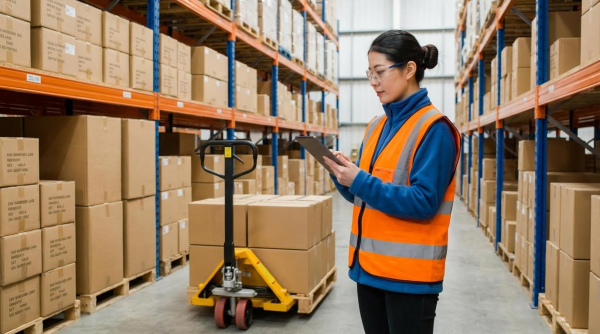
Knowing how to lift a heavy pallet safely starts with the pallet and load itself, not the manual pallet jack or truck. If the pallet is weak, damaged, or overloaded, no equipment can make the operation truly safe. Focus first on load characteristics, pallet construction, and visible damage before you move a millimetre.
- Confirm the load weight and centre of gravity
- Estimate or verify pallet weight from packing lists or scales.
- Compare against the rated capacity of your pallet jack, stacker, or forklift at the required lift height.
- Check if the load is top‑heavy, uneven, or offset; a high or shifted centre of gravity increases tip‑over risk.
- Check load stability and packaging
- Look for tight stretch wrap, banding, or strapping to keep units from shifting.
- Ensure boxes or bags are not bulging, crushed, or leaking.
- Reject pallets with visibly unstable stacks that could slide or collapse during lifting.
- Inspect pallet condition before lifting
- Visually check for broken or missing deck boards, cracked stringers, or exposed fasteners.
- Reject pallets with severe rot, warping, or loose blocks that compromise bearing area.
- Remove or repair pallets with protruding nails or splinters that can cut operators or puncture product.
Regulations require pallets used in hoisting to be built and maintained so they can safely support the handled loads, with fastenings such as bolts and nuts, drive screws, annular threaded nails, or equivalent mechanical fasteners for reusable pallets used in hoisting. Disposable single‑use pallets must not be reused for hoisting because they were not designed for repeated lifting stresses and can fail unexpectedly under load.
Key pallet design points that affect safe lifting
Wing or lip‑type pallets used in hoisting should have an overhanging wing or lip of at least 7.6 cm and be lifted using bar bridles or suitable lifting gear, not wire slings alone, to avoid local overstress at the edges as specified in federal regulations. Bridles for flush end or box‑type pallets must be arranged so they cannot disengage while carrying the load, and stacked pallets must be arranged to prevent falling or collapsing hazards to protect workers below and nearby. Where hooks or clamp‑type lifting devices are used with palletized loads or plates, bent or sprung hooks must be discarded, teeth must be maintained in safe condition, and loads must be applied only in the throat of the hook to avoid dangerous stress concentrations that can cause sudden failure.
Common injuries in pallet handling include strains and sprains to the back, shoulders, and arms, as well as cuts, splinters, foot crush injuries, and slips or trips around poorly stacked or broken pallets according to pallet safety training materials. Understanding how to lift a heavy pallet safely therefore means controlling both ergonomic risk to the operator and structural risk in the pallet and load.
Regulatory requirements for pallet lifting safety
Safety regulations give a clear framework for how to lift a heavy pallet in a way that protects operators and bystanders. They focus on training, equipment limits, stacking rules, and guarding against falling loads or tip‑overs.
- General duty and training
- Employers must provide a workplace free from recognized hazards such as manual lifting injuries, falling loads, and improper use of handling equipment under general safety obligations.
- Workers must complete compliant training before operating forklifts or powered pallet equipment, including inspection, load handling, and emergency procedures for powered industrial trucks.
- Stacking and aisle control
- Materials on pallets must be stacked, blocked, interlocked, or limited in height so they cannot slide or collapse during normal operations.
- Aisles and access ways must remain unobstructed so equipment can manoeuvre without forcing unsafe turns or emergency stops.
- Handling equipment must be used to avoid dropping or dislodging pallets when lifting or lowering especially at dock edges and racking.
- Equipment capacity and modification rules
- Mechanically powered vehicles must display their rated capacity in a visible location, including capacities with and without removable counterweights so operators can match load to rating.
- Any modification that affects capacity or safety must be approved by the original manufacturer or a qualified professional engineer, not improvised in‑house to keep ratings valid.
- When multiple trucks lift a single load together, the total weight must not exceed their combined safe lifting capacity to avoid structural overload.
| Regulatory focus area | Key requirement | Impact on heavy pallet lifting |
|---|---|---|
| Operator training | Formal training before operating forklifts or powered pallet equipment is required | Reduces tip‑overs, dropped pallets, and collision incidents. |
| Pallet construction | Reusable pallets for hoisting must use robust fasteners and be maintained in safe condition with single-use pallets excluded from reuse | Prevents pallet collapse under the forks or in mid‑air. |
| Stacking and aisles | Stacks must not be high or loose enough to slide or collapse; aisles must stay clear during handling | Improves visibility and manoeuvring space when moving heavy pallets. |
| Equipment capacity | Rated capacities must be clearly marked; modifications require engineering approval to remain compliant | Helps operators avoid overloading trucks when lifting dense or tall pallets. |
| Operator protection | Forklifts and bulk cargo vehicles must have overhead guards and backrest extensions where needed to resist falling loads | Protects the operator from dislodged boxes or slipping pallets during lift and travel. |
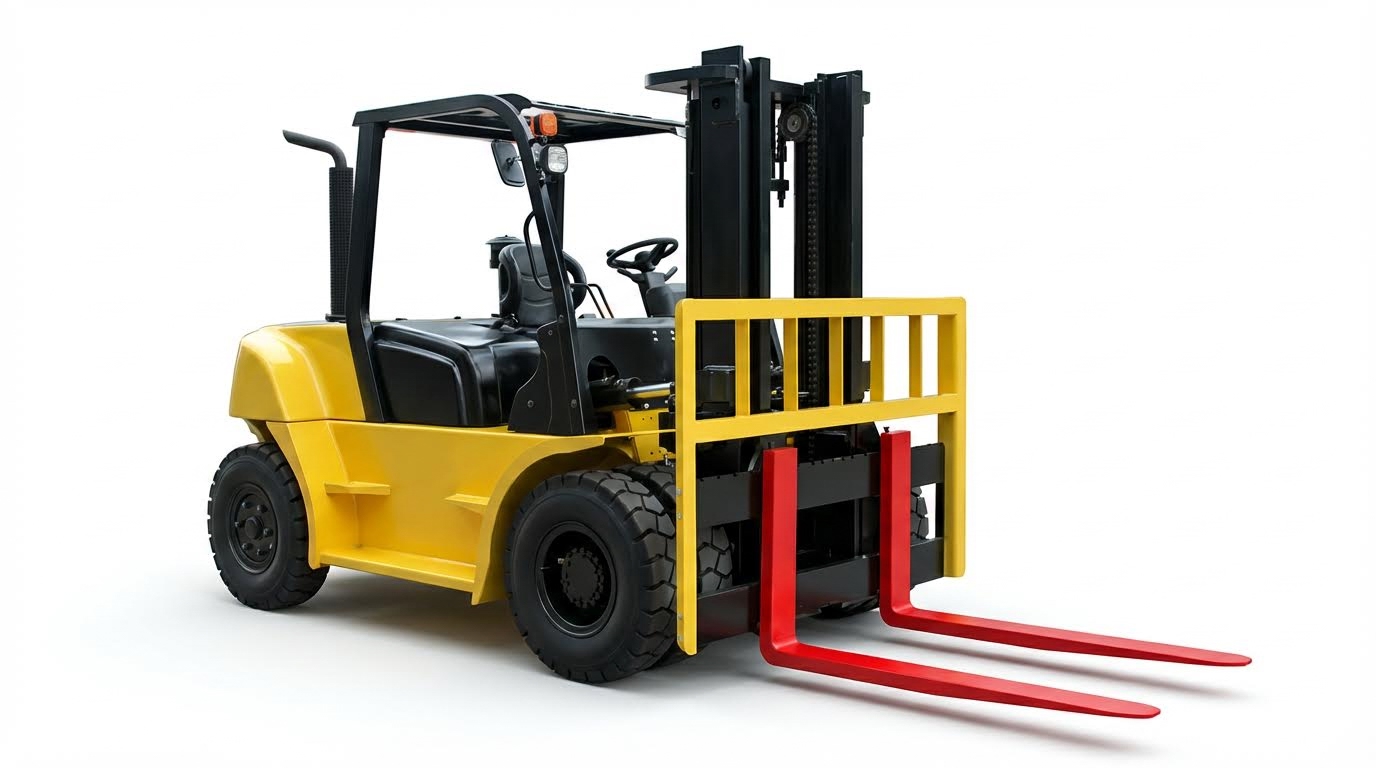
Forklift trucks used to lift heavy pallets must include overhead guards that are securely attached, do not unduly obstruct the operator’s view, and can withstand failure of the mast tilting mechanism, with openings small enough that the smallest unit of cargo cannot pass through under normal operations. Where required, vertical load backrest extensions must be fitted to prevent loads from striking the mast at maximum backward tilt, which is especially important when transporting tall or loosely stacked pallets in confined warehouse aisles.
“”
Selecting The Right Solution For Your Application
Matching equipment to load, aisle, and floor conditions
Choosing how to lift a heavy pallet safely starts with your load, space, and floor, not with the catalog. The wrong truck in the right warehouse still creates strain, damage, and instability. Use the factors below as a quick engineering screen before you specify equipment.
| Selection Factor | Key Questions | Better Suited Equipment Types |
|---|---|---|
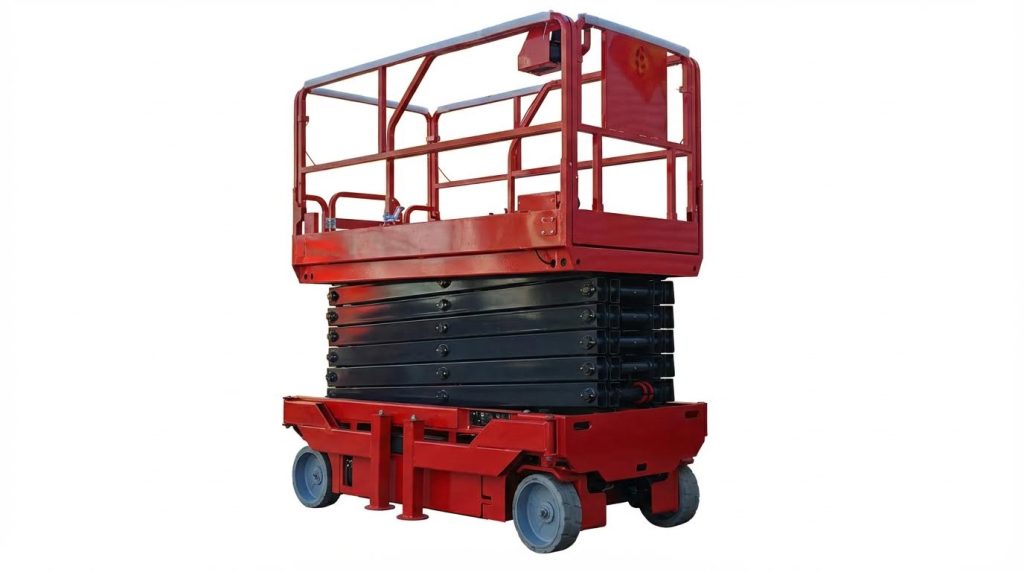
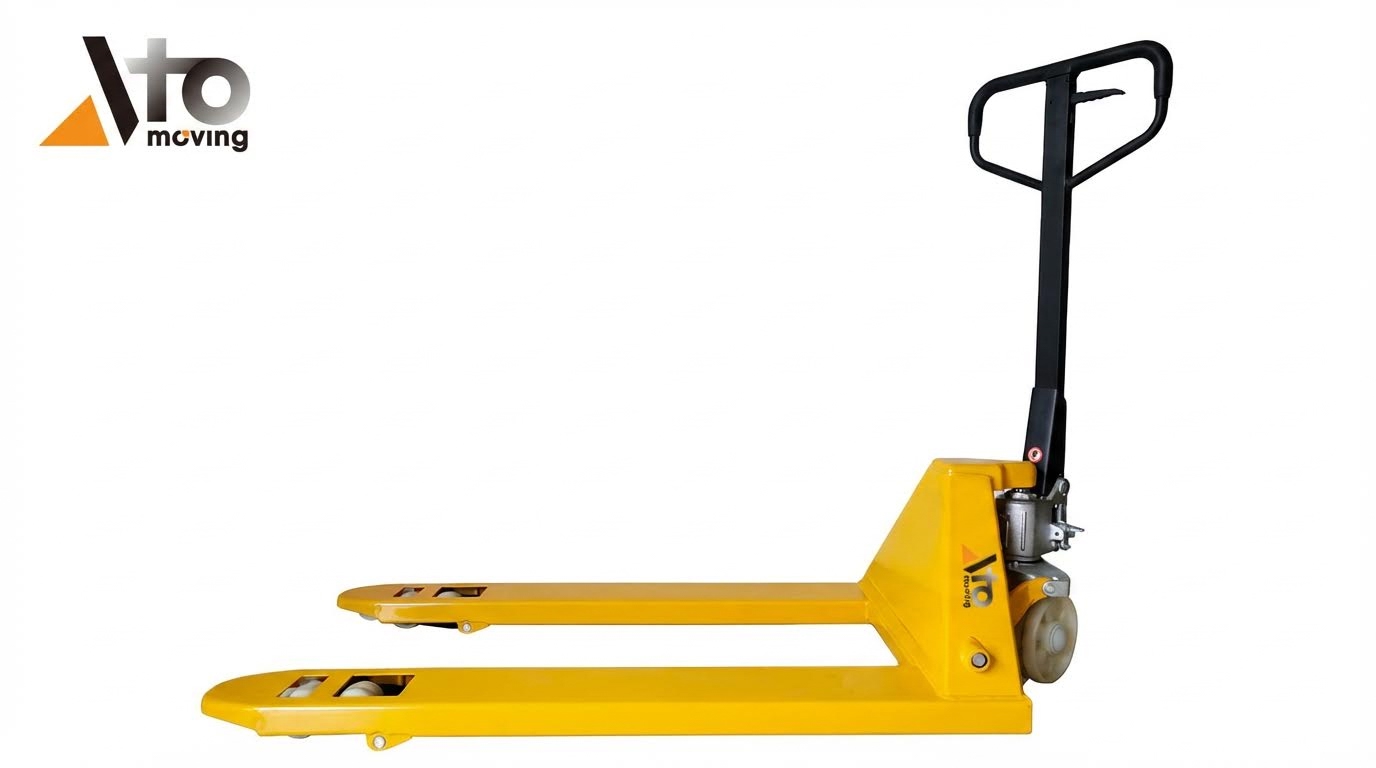
| Load weight & center of gravity | How heavy is the pallet? Is the load tall or uneven? | • Manual pallet jacks for lighter, compact loads • Electric pallet jacks/stackers for heavier or high-frequency loads • High-lift or scissor tables when loads must be raised to work height |
| Pallet condition & design | Is the pallet reusable, intact, and rated for hoisting? | • Only use pallets that are constructed and maintained to safely support the load Reusable pallets used for hoisting must use secure fastenings and not be re-used if disposable • Replace damaged pallets or handle by alternative means offering equivalent safety |
| Aisle width | How much clear width is available under load? | • Narrow aisles: compact manual or electric pallet jacks • Standard aisles: walkie stackers, small counterbalance trucks • Wide aisles / docks: forklifts, high-lift trucks, scissor tables |
| Lift height | Do you only need ground transfer or racking/ergonomic height? | • Ground-level moves: pallet jacks, low-lift powered trucks • Up to workstation height: high-lift pallet jacks and scissor tables (approx. 0.8 m working height) High lift pallet jacks can reach about 32″ (81 cm) • Racking: stackers or forklifts |
| Floor quality & slope | Is the floor smooth, damaged, or sloped? | • Smooth, level concrete: manual or electric pallet jacks • Ramps / rougher areas: powered trucks with anti-roll-back and industrial drive wheels Electric pallet trucks handle slopes and rougher terrain better, using power-assisted anti-roll-back systems |
| Throughput & frequency | How many pallets per shift? | • Low volume / occasional moves: manual jacks • Medium–high volume: electric pallet jacks or stackers Electric lifters can move roughly 60–70 pallets per hour vs ~30 for manual units |
| Ergonomics & operator exposure | Are operators pushing all day? Any history of strains? | • Use electric pallet jacks or stackers to cut pushing forces and fatigue Manual handling is a major source of musculoskeletal injuries |
When you decide how to lift a heavy pallet in a specific area, always confirm that the pallet itself is structurally sound and stacked to prevent sliding or collapse. A safe truck under an unsafe pallet still creates a high-risk system. Aisles must remain unobstructed so operators can maneuver without sudden steering corrections that destabilize loads. Materials should be stacked, blocked, interlocked, or height-limited to prevent sliding or collapse, and aisles must be kept clear.
Quick decision checklist before choosing equipment
- Confirm typical and maximum pallet weights and sizes.
- Inspect pallet condition and design; remove damaged or non-compliant pallets from hoisting service. Disposable pallets intended for single use must not be reused for hoisting.
- Measure aisle widths and turning clearances under load.
- Check floor flatness, surface damage, and any slopes or ramps.
- Define target lift heights (dock-to-dock vs. racking vs. ergonomic work height).
- Estimate pallets moved per hour and per shift.
- Review incident history: strains, near-miss collisions, dropped pallets.
TCO, maintenance, and compliance considerations
Two trucks with the same capacity can have very different total cost of ownership (TCO). To choose the right way to lift heavy pallets over years, not months, you must look beyond purchase price to labor, downtime, maintenance, and regulatory exposure.
| Decision Dimension | Manual Equipment (e.g., hand pallet jacks) | Electric / Powered Equipment |
|---|---|---|
| Upfront cost | Low purchase price; minimal infrastructure needed. | Higher purchase price; may need charging points and power supply. |
| Labor & ergonomics | High physical effort; fatigue rises over shift; higher risk of strains and sprains. Manual lifting and pushing are major contributors to musculoskeletal injuries. | Low physical effort; helps maintain pace through full shift and reduces injury risk. Electric lifters reduce physical strain and fatigue. |
| Productivity / throughput | Suited to low–medium volume; speed drops as operators tire. | Suited to medium–high volume. Electric units can move around 60–70 pallets per hour vs ~30 for manual, and sustain higher shift totals. |
| Routine maintenance | Basic mechanical checks: wheels, forks, hydraulic seals; low parts cost. | Requires hydraulic, electrical, and battery maintenance. Hydraulic fluid, hoses, seals, and lubrication must be monitored routinely. Battery terminals and charging equipment require regular inspection. |
| Downtime risk | Low complexity; failures are usually mechanical and quick to fix. | Higher complexity; failures can affect electronics, hydraulics, or batteries, but good preventive maintenance reduces unplanned stops. |
| Service life | Moderate life in typical use. | Electric models often achieve longer lifespans (around 7–10 years) than manual units (around 5–7 years) under similar conditions. |
| Energy & sustainability | Human energy only; no direct emissions but higher ergonomic load. | Battery-powered; can support low-emission operations, especially with efficient charging or renewable power sources. Electric lifters support cleaner operations, particularly when paired with sustainable charging. |
| Battery technology choice (if powered) | Not applicable. | Lithium-ion batteries offer higher efficiency, 3–4 times the life cycle of lead-acid, shorter charging times, and no daily maintenance. |
| Regulatory compliance | Lower complexity but still must comply with general material handling and pallet safety rules. | Must comply with industrial truck safety standards such as EN ISO 3691-1 and ANSI B56.1 for powered pallet trucks. Powered pallet trucks are subject to specific safety standards. |
Compliance is not just about the truck; it also includes how you use it. Loads must never exceed the marked rated capacity, and the nameplate must stay readable. Modifications that affect vehicle capacity or safety must be approved by the manufacturer or a qualified engineer, and rated capacities must be visibly marked. Operators must be trained, and powered equipment must only be used with all safety devices in place.
- Plan a preventive maintenance schedule for any powered solution, including daily pre-use checks and periodic hydraulic and electrical inspections. Pre-operation safety checks should cover forks, mast, wheels, battery, controls, and emergency stops. Routine schedules should include hydraulic pressure checks, lubrication, structural inspections, and environmental protection measures.
- Factor injury reduction into TCO: fewer strains, fewer dropped pallets, and fewer near-misses directly cut hidden costs and downtime. Employers must minimize manual lifting by using mechanical aids and ensure proper lifting techniques to reduce injuries.
- Document your selection logic (load data, aisle surveys, risk assessments) to show that your chosen method of how to lift a heavy pallet aligns with safety, ergonomics, and regulatory requirements.
Environmental and long-term protection tips
To protect your investment, control corrosion, dust, and contamination around your pallet-handling equipment. Applying protective coatings, managing humidity, using quality filtration, and training operators to avoid contamination all help extend equipment life and keep performance predictable.
Final Thoughts On Safe Heavy Pallet Handling
Safe heavy pallet lifting depends on the full system, not a single truck or jack. Pallet design, load stability, and equipment capacity must work together or the weakest link will fail first. When you confirm weight, centre of gravity, pallet integrity, and stacking before every move, you cut the risk of collapse and tip‑over at the source.
Regulatory rules on pallet construction, operator training, guarding, and capacity marking are not paperwork; they translate directly into fewer injuries and fewer surprises on the floor. Correct equipment selection then turns those rules into daily practice. Matching truck type to aisle width, floor quality, lift height, and throughput protects operators from strain while keeping loads stable.
For most sites, the best long‑term answer is a mixed fleet sized by risk and volume: manual units for light, occasional work and well‑specified powered equipment with strong braking, modern batteries, and planned maintenance for heavier, frequent moves. Operations and engineering teams should document load cases, inspect pallets, keep nameplates legible, and enforce training and pre‑use checks. That approach lets you lift heavy pallets with confidence, keep productivity high, and keep people, product, and Atomoving equipment safe over the full life of the system.
Frequently Asked Questions
What is the best way to lift a heavy pallet without a forklift?
Manual pallet jacks or electric pallet jacks are a safe and efficient way to lift and move heavy pallets when a forklift isn’t available. These tools allow you to handle heavy loads with minimal effort. Forklift Alternatives Guide.
How can I safely lift a heavy pallet manually?
To lift a heavy pallet manually, always use your legs, not your back. Place your feet shoulder-width apart for stability, keep your upper back straight, and lift with your knees. This technique minimizes the risk of injury. Pallet Lifting Safety Tips.
- Use your legs to lift, not your back.
- Keep your spine straight and maintain a neutral posture.
- Ensure a wide base of support by placing feet shoulder-width apart.