Operations teams asking how many pallets fit in a semi truck must look beyond a single number. Real capacity depends on trailer dimensions, pallet footprints, loading patterns, and legal axle limits across the full vehicle.
This article walks through core trailer and pallet dimensions, then links those to layout patterns and stacking strategies that change pallet counts in 53‑foot and 48‑foot trailers, box trucks, and containers. It then connects pallet capacity to axle ratings, weight distribution, and bridge rules so loads stay legal as well as full.
Finally, the article brings these elements together into a practical summary for designing safe and efficient pallet loads that protect cargo, control freight cost, and keep semi‑trailers compliant on every route.
Core Trailer And Pallet Dimensions For Capacity
This section links real trailer sizes and pallet footprints to the core question: how many pallets fit in a semi truck. It explains typical interior dimensions, common pallet formats by industry, and how these drive single-layer and stacked pallet counts. Worked examples for 53‑foot and 48‑foot trailers give practical reference numbers. The final part connects box trucks and containers so planners can design one rule set across a mixed fleet.
Standard Trailer Sizes And Interior Clearances
Standard dry van semi trailers set the baseline for pallet capacity planning. A typical 53‑foot trailer had an internal length around 13.5 metres, width about 2.6 metres, and internal height near 2.8 metres. These clearances limited both pallet count and stacking height. A 48‑foot trailer was about 1.5 metres shorter, with similar width and height, so it held fewer rows.
For standard 1 219 millimetre by 1 016 millimetre pallets, planners used the interior length divided by pallet length to estimate rows. They then used interior width divided by pallet width to estimate pallets per row. Roof height and door opening height set the maximum safe stack layers. Operators also allowed clearance for floor unevenness, pallet deflection, and air circulation.
When teams asked how many pallets fit in a semi truck, they first confirmed usable length. Nose cavities, logistics posts, and rear frame intrusions reduced effective space. Some fleets also used logistic tracks or load bars, which slightly reduced interior width but improved restraint and damage control.
Common Pallet Footprints By Industry
Pallet footprint drove layout efficiency more than any other single factor. In North America, the 1 219 by 1 016 millimetre pallet dominated fast‑moving consumer goods. Telecommunications, paint, and chemical sectors often used 1 067 by 1 067 millimetre pallets. Bulk chemicals used 1 219 by 1 219 millimetre pallets. Automotive plants favoured 1 219 by 1 143 millimetre footprints. Beverage and dairy lines sometimes used 914 by 914 millimetre pallets. Euro‑style pallets near 1 200 by 800 millimetres appeared in global supply chains.
Each footprint produced a different answer when teams calculated how many pallets fit in a semi truck. Larger square pallets reduced pallet count but simplified stacking of drums or totes. Smaller pallets increased count but raised handling touches and sometimes instability. When shippers mixed footprints in one load, they often lost one or two pallet positions due to voids.
Engineers also checked pallet construction. Block pallets allowed turned or pinwheel patterns more easily than stringer pallets. This flexibility helped squeeze extra pallets into the same trailer length without unsafe overhang.
Worked Examples: 53-Foot And 48-Foot Trailers
With 1 219 by 1 016 millimetre pallets in a 53‑foot trailer, straight loading gave a clear baseline. The usable length of about 16.15 pallet lengths (636 centimetres divided by 121.9 centimetres) allowed 13 full rows. The width supported two pallets across. This produced 26 pallets in a single layer. By rotating pallets and using pinwheel patterns, operators could reach 28 to 30 pallets if product and pallets allowed tight packing.
Stacking changed the answer dramatically. With internal height near 279 centimetres and a loaded pallet height around 120 to 130 centimetres, two layers were often possible. That configuration raised capacity to roughly 52 pallets, subject to weight and stability checks.
In a 48‑foot trailer, the same method produced fewer rows. Usable length was roughly 60 inches shorter, so common practice achieved 24 to 28 pallets in one layer. The exact count depended on pattern and overhang tolerance. These worked examples helped planners quickly answer how many pallets fit in a semi truck for standard lanes.
| Trailer length | Standard pallet | Typical range |
|---|---|---|
| 53‑foot | 1 219 × 1 016 mm | 26–30 pallets |
| 48‑foot | 1 219 × 1 016 mm | 24–28 pallets |
Box Trucks, Containers, And Mixed Fleet Planning
Smaller trucks and containers required the same method but different numbers. A 26‑foot box truck usually carried about 12 to 14 standard pallets in one layer. When freight and height allowed safe stacking, counts rose to about 24 to 28 pallets. A 16‑foot box truck often handled 6 to 8 pallets. A 24‑foot unit handled 12 to 14 pallets.
Standard maritime containers followed similar rules. A 12.2 metre container typically held 20 to 24 standard pallets. A 13.7 metre high‑cube container often fit about 24 to 26 pallets. Operators still had to check door openings, internal corner castings, and lashing points.
Mixed fleets forced planners to translate one load plan across several vehicle types. They used simple length‑over‑pallet and width‑over‑pallet formulas to estimate capacity for each unit. They then chose whether to run full pallet counts or stop earlier to stay under weight limits. This approach gave a consistent, data‑based answer whenever a shipper asked how many pallets fit in a semi truck or in a smaller box truck or container.
Pallet Layout Patterns And Stacking Strategies
Layout strategy decides how many pallets fit in a semi truck before height or weight limits stop the load. Engineers use simple geometry, trailer clearances, and product constraints to pick patterns and stacking rules. The goal is to reach target pallet counts without unstable stacks, crushed product, or axle overloads. This section links layout choices to real pallet counts in 53‑foot and 48‑foot trailers.
Straight, Turned, And Pinwheel Loading Patterns
Straight loading places 48 × 40 pallets lengthwise, two across, in repeated rows. In a 53‑foot trailer this pattern typically gives 26 pallets in one layer. Straight loading is fast to load and easy to secure, so fleets use it for most general freight.
Turned loading rotates each pallet so the 40 centimetre side runs along the trailer length. This pattern can raise capacity to about 30 pallets in a 53‑foot trailer. It works best with uniform pallet quality and tight dimensional control.
Pinwheel loading mixes straight and turned pallets inside each row to close voids. In a 53‑foot trailer with 48 × 40 pallets, pinwheel patterns usually reach 28 pallets per layer. Operators choose pinwheel layouts when they need a small pallet count gain but still want good access and tie‑down paths.
Stacking Rules, Height Limits, And Load Stability
Stacking can double how many pallets fit in a semi truck, but only when product, pallet, and trailer allow it. Engineers first compare pallet stack height with interior trailer height, then check centre of gravity and tie‑down options. They also confirm pallet load ratings, especially when mixing recycled and virgin plastic pallets.
Typical checks before stacking include:
- Maximum product crush strength per layer
- Pallet dynamic load rating under braking and cornering
- Trailer roof, bow, and sprinkler clearance where relevant
- Door opening height versus top layer height
Many operations cap stacks at two pallet levels in dry vans, even when height allows more. This limit keeps the centre of gravity low and reduces damage from sway, potholes, and emergency braking.
Calculating Pallet Counts With Simple Formulas
Capacity planning starts with a simple floor layout formula. For one layer, engineers calculate pallet rows along the length and pallet positions across the width, then multiply.
The base method is:
- Rows = trailer interior length ÷ pallet length in the travel direction
- Positions across = trailer interior width ÷ pallet width
- Pallets per layer = rows × positions across
For 48 × 40 pallets in a 53‑foot trailer, straight loading uses 636 centimetres ÷ 122 centimetres to get 13 rows, and 259 centimetres ÷ 102 centimetres to get 2 across. That yields 26 pallets in a single layer. Turned and pinwheel layouts change which pallet side aligns with trailer length, so they change the row count and final pallet total.
To estimate stacked loads, users multiply single‑layer capacity by the number of safe layers. That layer count comes from trailer interior height divided by pallet stack height, then reduced as needed for stability and product limits.
Managing Overhang, Void Space, And Damage Risk
Real loads rarely match ideal geometry, so teams must manage overhang and voids. Box overhang beyond the pallet edge can block a full extra row from fitting, cutting capacity by two pallets or more per trailer. It also raises damage risk at walls, doors, and dock plates.
Engineers review three areas when they ask how many pallets fit in a semi truck for a given SKU:
- Outer case dimensions versus pallet footprint
- Required airflow or inspection gaps at walls and doors
- Void space needed for load bars, straps, and dunnage
Small controlled voids can improve stability by giving room for load securement hardware. However, large unplanned gaps allow pallets to shift and twist. Good practice packs rows tightly, uses minimal but defined clearances at the rear door, and blocks or straps any partial rows.
Damage risk often sets a lower practical pallet count than pure geometry suggests. High‑value or fragile goods may run fewer pallets per semi trailer to keep forces low during transport and handling.
Axle Limits, Weight Distribution, And Compliance
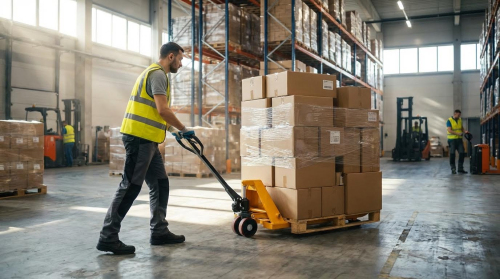
Axle limits decide how many pallets fit in a semi truck in real operations. A 53-foot trailer might hold 26 to 30 pallets by space, yet weight and axle balance often cut that number. Heavy freight can reach legal limits with far fewer pallets than the trailer can cube. Engineers and fleet managers must match pallet counts with axle ratings, bridge rules, and real weight data to avoid fines and failures.
GVWR, Axle Ratings, And Bridge Formula Basics
GVWR sets the maximum legal total weight of tractor, trailer, fuel, driver, and cargo. In the United States, a typical highway combination had an 80,000 lb GVWR limit. Standard legal axle caps were about 12,000 lb on the steer axle and 34,000 lb on both the drive tandem and trailer tandem. These values often limited how many pallets fit in a semi truck before it weighed out.
The Federal Bridge Formula linked allowed weight to axle spacing. Longer wheelbases could legally carry more mass for the same axle count. Short wheelbase day cabs with short trailers hit bridge limits sooner than long combinations. For dense palletized freight, engineers had to check both GVWR and bridge outputs, not only pallet capacity by floor area.
Balancing Steer, Drive, And Trailer Axles
Even when total weight stayed under 80,000 lb, single axle groups could overload. A semi truck filled with 26 to 30 pallets of heavy product might push drive or trailer tandems past 34,000 lb. Correct balance between steer, drive, and trailer axles protected tires, brakes, and handling. Poor balance increased stopping distance and rollover risk.
Operators aimed for typical highway distributions such as:
- Steer axle: near but under 12,000 lb
- Drive tandem: near but under 34,000 lb
- Trailer tandem: near but under 34,000 lb
Load planners placed heavier pallets low and near the trailer center. They avoided heavy clusters at the nose or tail. Mixed-density loads used alternating light and heavy pallet positions to smooth axle loads while still reaching target pallet counts.
Fifth Wheel Adjustments And Verification Weighing
The fifth wheel was the main fine-tuning tool for axle balance. Sliding it forward shifted weight from trailer axles to steer and drive axles. Sliding it back moved weight off the tractor and onto the trailer tandem. Each notch changed axle readings by a repeatable amount that depended on geometry.
When teams planned how many pallets fit in a semi truck, they paired layout models with scale checks. A typical process used three steps:
- Plan pallet layout by count and density.
- Load and obtain steer, drive, and trailer weights at a certified scale.
- Adjust fifth wheel in small steps and reweigh until each axle sat within limits.
This loop prevented guesswork and reduced roadside violations. It also fed better data back into warehouse loading rules for future trips.
Inspections, Preventive Maintenance, And Safety
Safe pallet counts depend on a sound chassis, suspension, and braking system. Overloaded axles accelerated wear on springs, air bags, bushings, and tires. Regular inspections of these parts helped fleets keep legal loads stable and predictable. Drivers checked for sagging suspensions, uneven tire wear, and leaking air lines during pre-trip walks.
Preventive maintenance supported higher utilization of each semi truck without crossing risk thresholds. Typical programs included scheduled torque checks on suspension fasteners, air suspension pressure checks, and fifth wheel lock inspections. When operators asked how many pallets fit in a semi truck, maintenance history and component condition were part of the real answer. A well-maintained unit handled legal axle loads with better control and shorter stopping distances.
Summary: Designing Safe And Efficient Pallet Loads
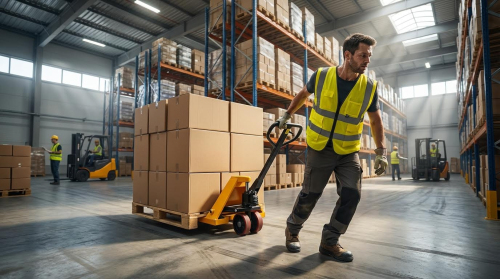
Designers who ask how many pallets fit in a semi truck must balance space, weight, and stability. A 53-foot trailer usually holds 26 to 30 standard 48 × 40 pallets in one layer. Stacking can raise this to about 52 pallets if the freight and pallet ratings allow it. Shorter trailers and box trucks take fewer pallets and reach weight limits faster with dense products.
Across the article, three themes linked capacity decisions. First, interior length, width, and height set the theoretical pallet count for each trailer or container. Second, loading patterns such as straight, turned, and pinwheel layouts changed how well the floor area was used. Third, axle limits and bridge rules decided whether the legal weight was reached before the trailer volume was full.
For industry, this means pallet layout and weight distribution must be planned together, not in isolation. Simple formulas help estimate pallet counts, but operators still need scale checks and visual inspections. Digital tools and layout optimizers supported planners, yet safe blocking, securement, and conservative stacking rules stayed essential.
Future practice will likely combine smarter planning software with stricter enforcement of axle weights and damage reduction targets. Fleets can gain efficiency by standardizing pallet sizes, training loaders on pattern selection, and using feedback from scale tickets. Over time, these steps cut claims, reduce fuel use, and improve trailer utilization while keeping loads legal and stable.
,
Frequently Asked Questions
How many pallets can fit in a semi-truck trailer?
A standard 53-foot dry van trailer can hold 26 pallets when single-stacked or up to 52 pallets when double-stacked. The exact number depends on the type of pallets and how they are loaded. For example, europallets may allow for more efficient use of space compared to block pallets. Trailer Capacity Guide.
What factors affect how many pallets fit in a semi-truck?
The number of pallets that fit in a semi-truck depends on several factors:
- Type of trailer (e.g., closed box, open trailer, combination trailer).
- Pallet size (e.g., europallets vs. block pallets).
- Loading method (single-stacked vs. double-stacked).
- Weight limits imposed by regulations.
For instance, a 53-foot trailer can hold 26 standard GMA pallets loaded straight. Pallet Loading Tips.