If you are asking what lifts pallets in a warehouse, the answer ranges from simple pallet jacks to fully automated stacker cranes. This guide explains how each option affects safety, throughput, and long-term cost so you can match the right machine to your operation.
We will compare low-lift pallet trucks, stackers, forklifts and automation using real lift heights, capacities and labor impacts. You will see where manual tools are enough, and where powered or automated solutions pay back fast in demanding multi-shift environments.
Core Types Of Pallet-Lifting Equipment
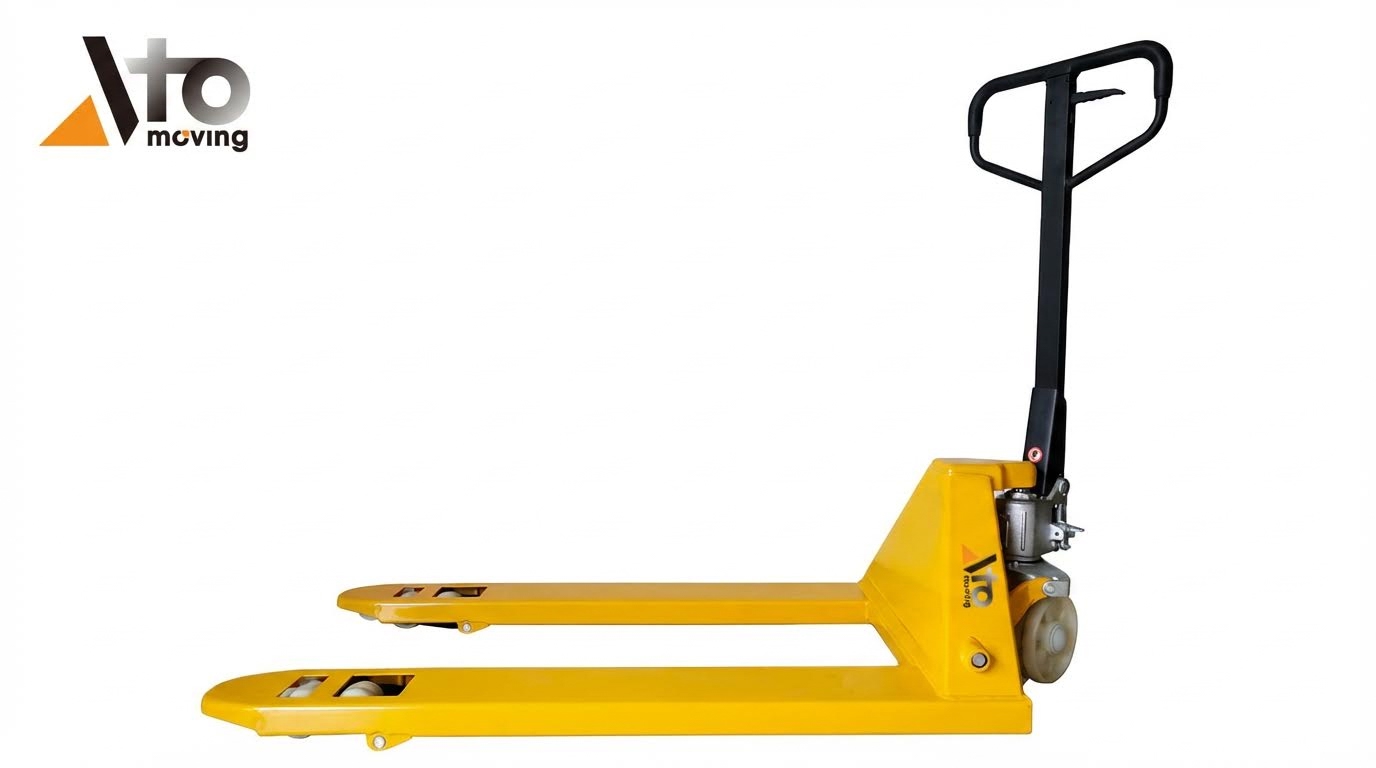
This section explains what lifts pallets in most warehouses, from low-lift trucks to medium-height stackers, and where each type makes economic and operational sense. Use it to shortlist the right gear before you dive into detailed specs.
In practice, “what lifts pallets” in your building will fall into two broad groups: low-lift pallet trucks/jacks for ground-level moves, and stackers for putting pallets into racking up to medium heights.
Low-lift pallet trucks and jacks
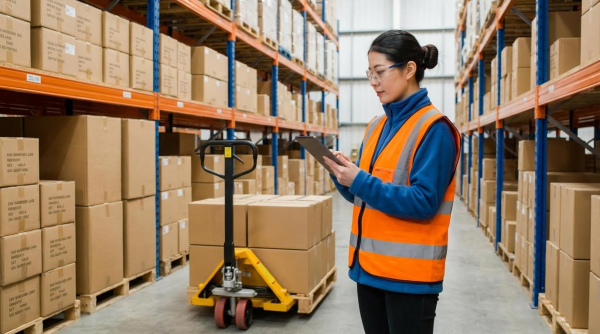
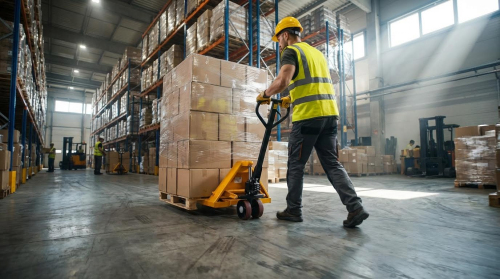
Low-lift pallet trucks and jacks are simple wheeled devices that raise pallets just enough off the floor for horizontal transport, usually within 50–200 mm of lift. These are the most common answer to what lifts pallets over short distances in small to medium facilities.
The two main variants are manual pallet jacks and electric pallet jacks. Both work under the pallet, between the deck boards, and transfer the load to small load wheels so one operator can move 1,000–3,500 kg safely when floor conditions are good.
| Equipment Type | Typical Capacity (kg) | Lift Height Range (mm) | Best Working Range | Operational Impact / Best For… |
|---|---|---|---|---|
| Manual pallet jack | 1,000–2,500 kg capacity data | ≈50–200 mm | Short indoor moves on flat floors | Lowest-cost way to move full pallets between dock, staging and backroom; ideal for low-throughput sites. |
| Electric pallet jack | ≈2,500–3,500 kg capacity data | ≈50–200 mm | Medium distances, frequent cycles | Reduces operator effort and increases pallet moves per hour; better where you run multiple hours per shift. |
- Manual pallet jack: Hand-pumped hydraulic unit – Good when budget is tight and daily pallet volume is modest.
- Electric pallet jack: Battery-powered drive and lift – Best when operators move pallets for many hours or over longer routes.
How low-lift trucks actually support the load
The forks slide into the pallet, then a small hydraulic cylinder raises the fork frame so the load shifts from pallet bearers to the jack’s load wheels. With only 50–200 mm of lift, the centre of gravity stays low, which minimizes tip risk but also means these trucks are for floor-level transport only, not stacking.
💡 Field Engineer’s Note: Manual jacks become unsafe on slopes above about 2% when loaded near their rated capacity because braking relies on operator force and floor friction, not a service brake. If you have ramps or dock slopes, specify electric pallet jacks with controlled travel and braking.
Stackers for medium-height pallet storage
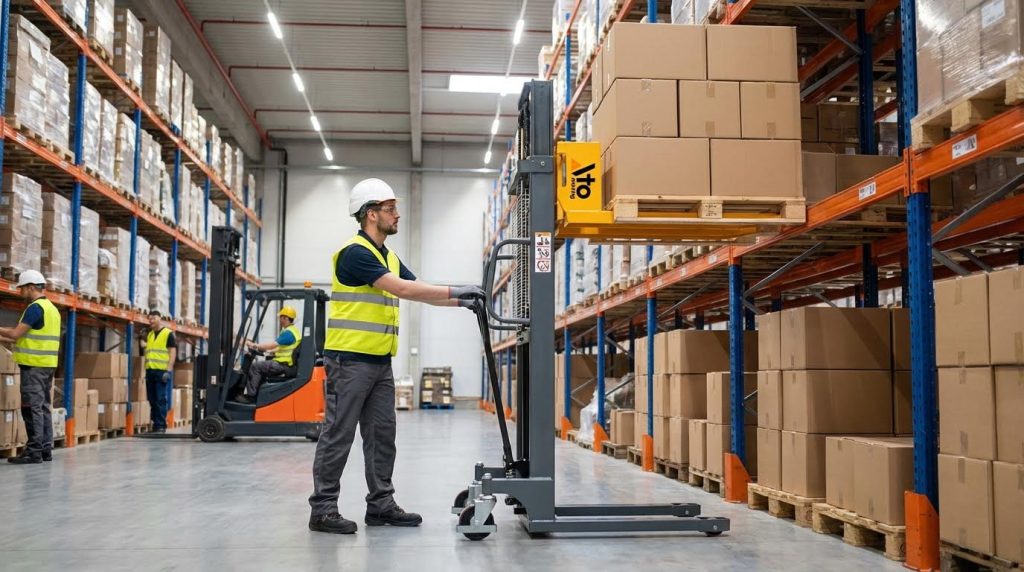
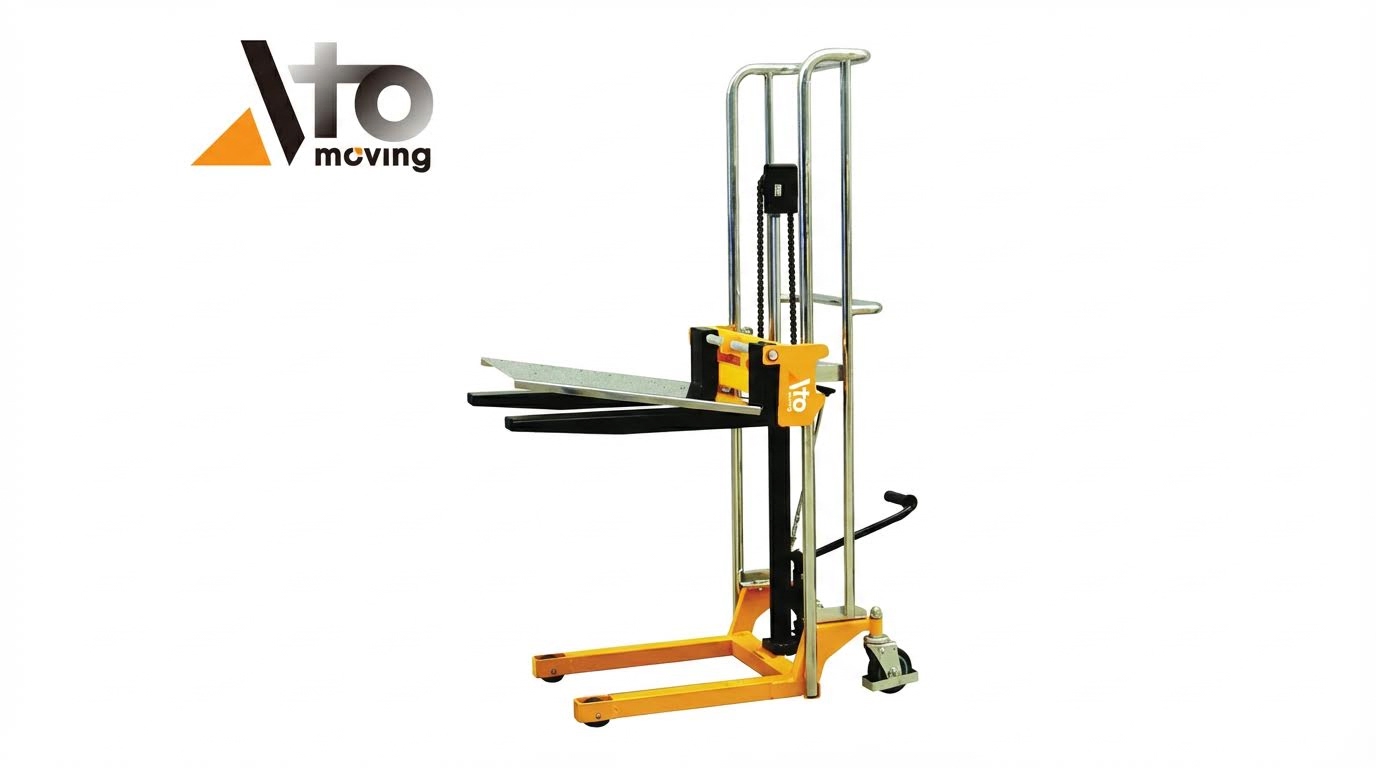
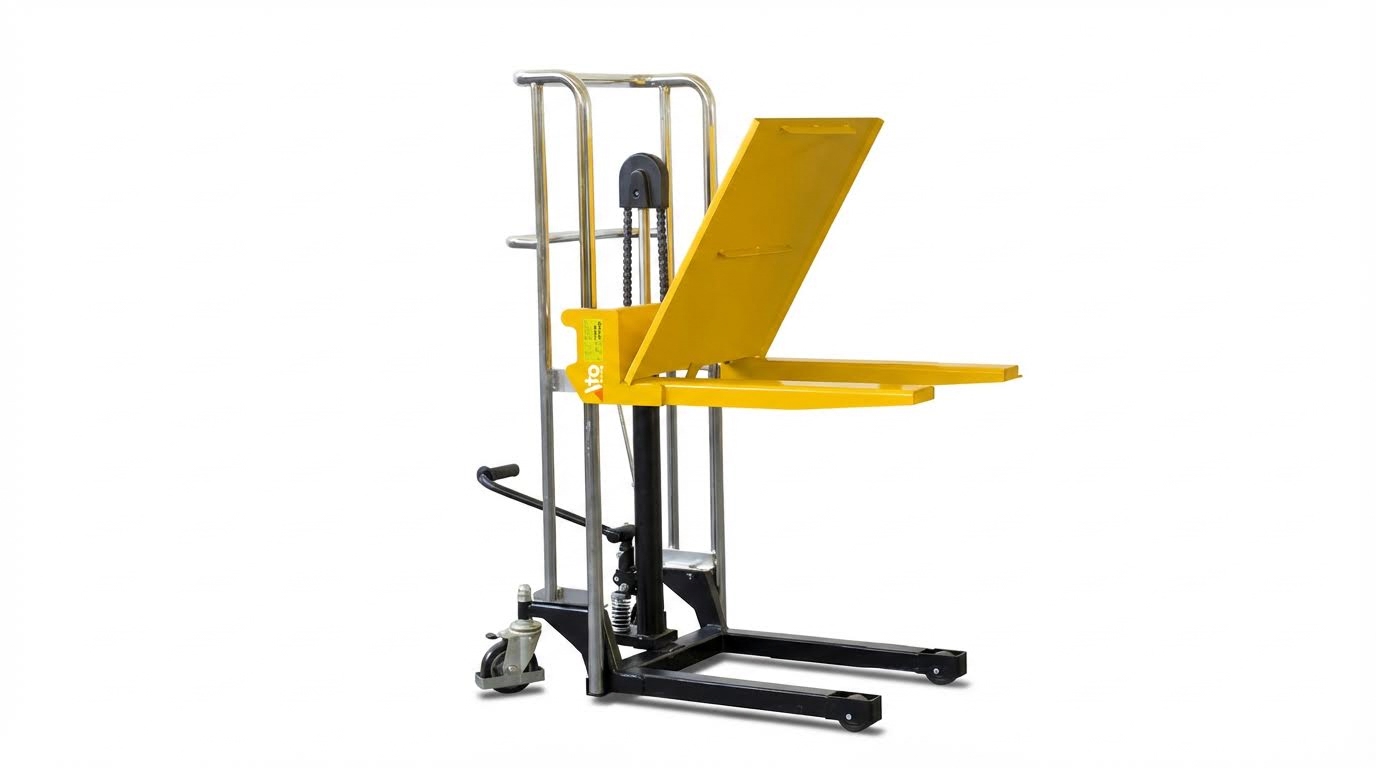
Stackers are compact lifting machines that raise pallets into racking at medium heights, typically around 3–6 m, and are the next level up from pallet jacks in both capability and cost. They are often the most economical answer to what lifts pallets when you need vertical storage but cannot justify full forklifts.
Stackers use mast-mounted forks and can be manual, semi-electric, or fully electric. They bridge the gap between low-lift pallet trucks and counterbalanced forklifts, especially in narrow aisles and light to medium-duty operations.
| Stacker Type | Typical Capacity (kg) | Typical Lift Height (m) | Power / Operation | Operational Impact / Best For… |
|---|---|---|---|---|
| Manual pallet stacker | ≈1,000–1,500 kg capacity range | Up to ≈3–4 m height data | Manual push; manual or foot pump lift | Very low-cost entry into vertical pallet storage; suitable for occasional stacking in small warehouses. |
| Semi-electric stacker | ≈1,000 kg (1.0 ton) example rating | ≈3 m | Electric lift, manual travel | Reduces strain during lifting while keeping purchase price moderate; good for low to medium pallet volumes. |
| Full-electric walk-behind stacker | ≈1,000–2,000 kg capacity range | ≈4–6 m height range | Electric drive and lift, walk-behind | Efficient for regular stacking into medium-height racking with narrow aisles and low to medium throughput. |
| Ride-on stacker | ≈1,000–2,000 kg capacity overview | Typically up to ≈4–6 m | Electric drive and lift with standing platform | Higher travel speed and lower operator fatigue over longer routes; good in mid-sized DCs with moderate racking heights. |
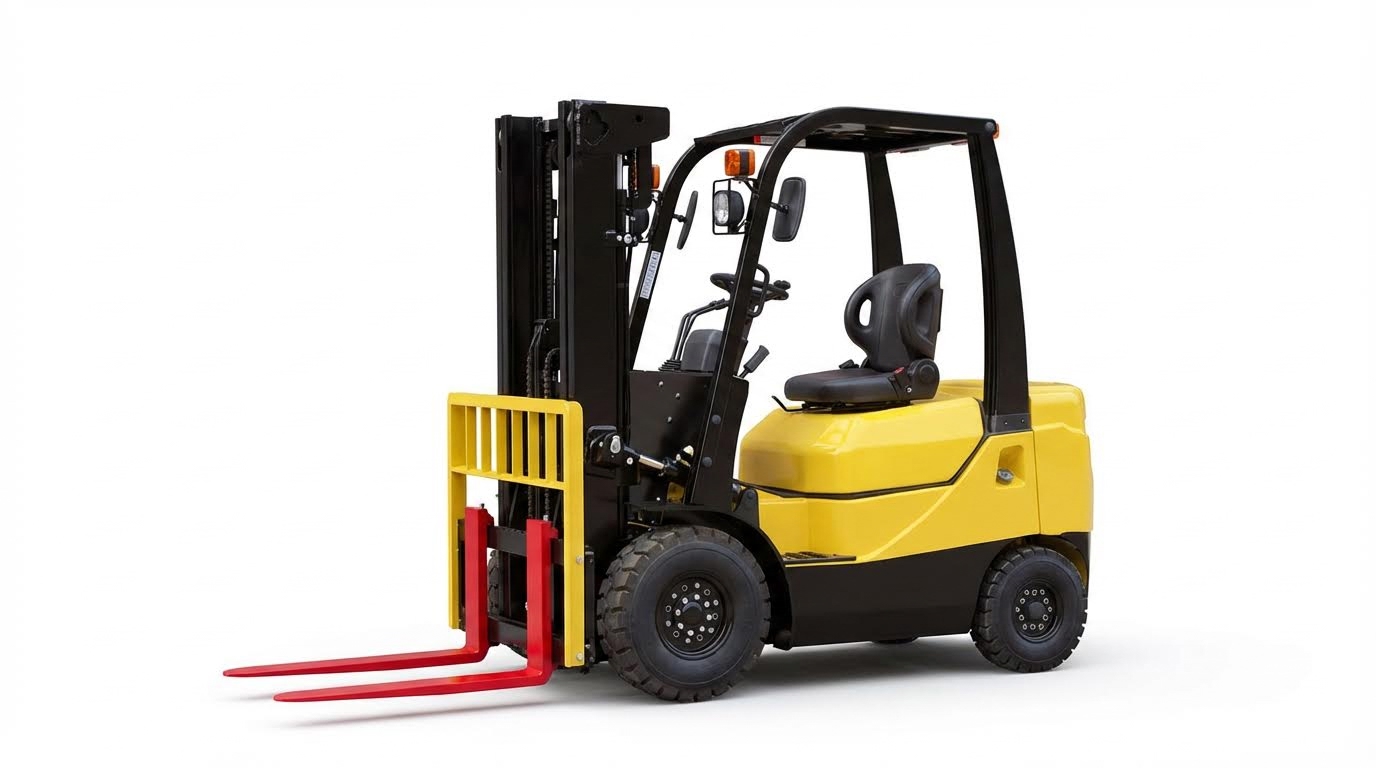
- Pallet stackers vs. forklifts: Stackers usually lift 1,000–2,500 kg up to about 3–4 m, while forklifts can reach 10 m and beyond with much higher capacities. Comparison data
- Duty level: Stackers fit light to medium-duty work; forklifts are engineered for heavy-duty, multi-shift operations indoors and outdoors.
- Training and compliance: Stackers are simpler to learn, while forklifts require formal, certified operator training and stricter supervision.
Cost and throughput benchmarks for stackers
One study showed a basic hand stacker at about $450 FOB versus $2,150 for an entry-level 1.2-ton electric stacker, with five-year cash costs of roughly $625 and $3,060 respectively, excluding labor. Electric units, however, lifted faster (0.12 m/s vs 0.08 m/s) and cut cycle time on a 2.7 m rack from 55 seconds to 28 seconds, enabling up to 180 pallets per day with one operator, versus about 60 pallets with two operators for hand stackers. Cost and throughput data
💡 Field Engineer’s Note: Once you regularly exceed about 60 pallets per day of stacking work, electric stackers typically recover their higher purchase price through labor savings within months, not years. But check floor flatness and aisle width first; stackers need smooth, level floors and struggle with uneven joints or steep dock slopes.
Matching Equipment To Your Operation
Matching what lifts pallets to your operation means sizing equipment to real throughput, labor cost, building layout, and future automation so you do not overpay for capacity you never use or under-spec and choke your warehouse.
- Start from pallets, not machines: Count daily pallets, peak hour loads, and storage heights – this tells you what lifts pallets efficiently in your case.
- Balance CAPEX vs OPEX: Compare equipment price against 5–10 year labor and energy costs – the “cheapest” truck often has the highest lifetime bill.
- Design around constraints: Check aisle width, door height, ramp slopes, and floor quality – many great trucks become useless if they cannot physically move where needed.
- Plan for automation: Choose gear compatible with future conveyors, AMRs, or AS/RS – this avoids writing off trucks early when you automate later.
💡 Field Engineer’s Note: I always walk the building with a tape measure before shortlisting trucks. Half of “bad truck choices” came from ignoring a 2.6 m low beam, a 2.4 m door, or a 2.8 m turning circle requirement.
Throughput, shifts and labor cost modeling
Throughput and labor modeling converts “we’re busy” into numbers that show whether manual, semi-electric, or full-electric pallet equipment will deliver the lowest cost per pallet for your site.
Use the data below to connect daily pallet volume, shifts, and labor cost to the right type of stacker or truck.
| Equipment Type | Typical Capacity & Lift | Throughput Example | Labor Pattern | Best For… |
|---|---|---|---|---|
| Manual pallet jacks | 1,000–2,500 kg up to ~200 mm lift Manual pallet jack spec | Low pallets/hour; limited by operator fatigue | Many walking hours; high strain | Very small sites, truck loading, retail backrooms |
| Electric pallet jacks | 2,500–3,500 kg, low lift Electric pallet jack spec | Medium pallets/hour; faster travel | One operator per truck | Dock work, cross-dock, ground-level moves |
| Manual pallet stackers | ~1,000–1,500 kg, 2–3 m lift | Up to 60 pallets/day recommended Daily throughput guidance | 2 operators for 8 h shift to move 60 pallets Labor pattern | Very low volume racking, budget-constrained sites |
| Electric pallet stackers | 1,000–2,000 kg, 3–6 m lift Walk-behind stacker spec | Up to 180 pallets/day with one operator Throughput example | 1 operator per 8 h shift | Small–medium warehouses with moderate racking |
| Semi-electric stackers | ~1,000 kg / 3 m Semi-electric spec | ~25 pallets/hour Throughput rate | Moderate walking effort | Growing sites stepping up from manual gear |
| Full-electric stackers | 1,500–2,000 kg / 4–5 m Full-electric spec | ~40 pallets/hour Throughput rate | High productivity per operator | Busy small–mid warehouses, 1–2 shifts |
| Counterbalanced forklifts | 1,500–5,000+ kg, 3–8 m Forklift spec | Very high pallets/hour including loading trucks | Certified drivers; higher wage band | Heavy-duty sites, mixed indoor/outdoor work |
| Reach trucks | 1,000–2,500 kg, up to 10+ m Reach truck spec | High pallets/hour in narrow aisles | Skilled drivers; often multi-shift | High-bay racking, 2–3 shifts |
| AS/RS stacker cranes | Up to 20+ m, automated Stacker crane spec | 24/7, very high pallets/hour | Minimal direct labor | Very high volume, automation-driven DCs |
To decide what lifts pallets in your warehouse, model three layers together: throughput, shifts, and labor cost.
- Throughput band: Below ~60 pallets/day, manual stackers and jacks can cope; above that, electric assistance becomes cheaper overall Decision scenarios.
- Shift pattern: Single-shift sites tolerate slower manual equipment; double shifts magnify productivity gaps and favor electric stackers or forklifts.
- Labor cost: At higher hourly wages, saving even one operator per shift dwarfs the extra machine CAPEX.
Example: Manual vs electric stacker payback
Using published data, a hand stacker costs about $625 over five years, while an electric stacker costs about $3,060, excluding labor 5-year cost comparison. Yet the electric unit allows one operator to handle 180 pallets/day versus two operators to move 60 pallets/day with hand stackers Throughput and labor. At $15/hour, two shifts, 250 days/year, that labor difference saves about $30,000 per year Labor savings. The extra machine investment of roughly $1,700 pays back in weeks, not years ROI example.
- Key takeaway: For any site above very light volume, the “expensive” electric option usually wins once you price labor per pallet, not just truck purchase price.
Environment, layout and future automation
Environment, layout, and automation plans determine whether what lifts pallets today will still be safe, efficient, and compatible when you add more racking, conveyors, or robots later.
Before choosing equipment, map how your building and future projects will constrain or enable different pallet-lifting options.
- Ceiling and rack height: If racking is under 4–5 m, walk-behind or ride-on stackers are often enough; above that, reach trucks or AS/RS become candidates Lift height ranges.
- Aisle width: Wide aisles can accept counterbalanced forklifts; narrow aisles push you toward reach trucks, stackers, or automated cranes.
- Floor quality and gradients: Poor floors and slopes punish small wheels on pallet jacks and stackers; forklifts or larger-diameter wheels cope better.
- Temperature: In cold storage at around -25°C, hydraulic oils thicken in manual stackers, while electric stackers with heated lithium batteries keep working reliably Cold store guidance.
- Indoor vs outdoor: Counterbalanced forklifts handle yards and loading aprons; most walk-behind stackers and pallet jacks are strictly indoor tools.
| Site Condition | Implication | Better Choices for What Lifts Pallets |
|---|---|---|
| Aisles ≥3.5 m, racks ≤4 m | Plenty of space, low height | Electric pallet stackers, small counterbalanced forklifts |
| Aisles 2.5–3.0 m, racks 6–8 m | Narrower aisles, medium–high racking | Reach trucks or compact ride-on stackers |
| Very narrow aisles, racks ≥10 m | High cube utilization | Reach trucks or AS/RS stacker cranes |
| Cold storage around -25°C | Oil thickening, battery stress | Electric stackers with cold-rated batteries; avoid purely manual hydraulics Cold store guidance |
| Mixed yard and warehouse | Need curb and ramp handling | Counterbalanced forklifts with suitable tires |
Future automation considerations
If you plan to add AMRs, conveyors, or AS/RS later, choose today’s pallet lifters with that in mind. AS/RS stacker cranes lift pallets to multi-level racking above 20 m and run in very narrow aisles
Final Thoughts On Choosing Pallet Lifting Gear
Choosing what lifts pallets in your warehouse is a design decision, not just a shopping choice. Lift height, capacity, and aisle width must work together so every move stays within the truck’s stability envelope. When you keep the center of gravity low and inside the wheelbase, you cut tip risk and protect people and stock.
Throughput and labor modeling turn that safe design into profit. Manual gear suits low pallet counts and short shifts. Once you push past about 60 pallets per day or run longer shifts, electric stackers and trucks usually deliver a lower cost per pallet, even with higher purchase price. They move more pallets per hour, with less fatigue and fewer strain injuries.
Layout and environment then decide which powered option fits. Narrow aisles, poor floors, cold rooms, and outdoor yards each favor different machines. Measure clearances, slopes, and rack heights before you commit.
The best practice is simple. Start from real pallet flows and site constraints. Select the lightest, lowest-complexity equipment that can safely meet peak demand. Then check that it fits your future automation path. With that method, your next pallet lifter from Atomoving will stay safe, productive, and cost-effective for years.
Frequently Asked Questions
What is the thing called that lifts pallets?
The equipment commonly used to lift pallets is called a pallet jack. Also known as a pallet pump, it features forks, wheels, and a handle, allowing you to slide the forks under a pallet and lift it for movement. Types of Pallet Jacks.
How to lift a pallet without a forklift?
If you don’t have a forklift, you can use a pallet stacker or walkie stacker. These are electric pallet jacks with a 3-stage mast designed for lifting pallets in narrow spaces. Forklift Alternatives.
What does OSHA say about pallets?
OSHA guidelines state that cargo, pallets, and other materials should be stacked to ensure stability and prevent sliding or collapse. This helps maintain safety in warehouse operations. OSHA Pallet Stacking Rules.