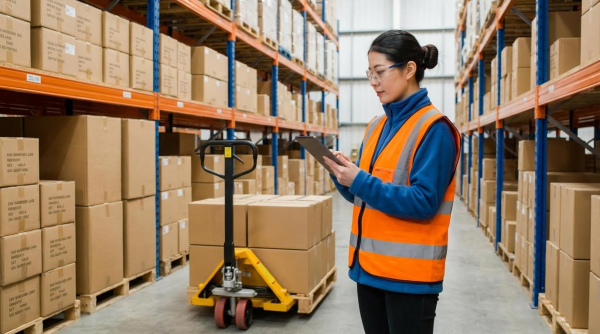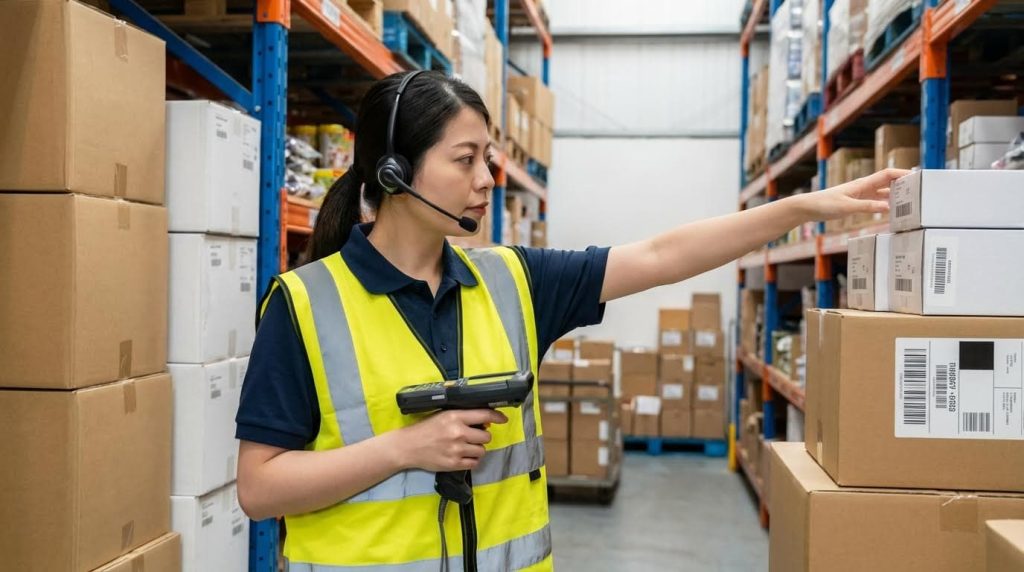
Voice picking in a warehouse uses speech-guided instructions to direct operators through picking and related tasks. The system connects headsets and mobile devices to warehouse software so workers receive tasks by voice and confirm actions verbally while keeping hands and eyes free. This article explains what voice picking is in a warehouse, how voice-directed workflows operate from receiving to loading, and how hardware and software integrate with WMS, ERP, and automation systems. It also examines operational benefits, engineering trade-offs, technical limitations versus scanning and vision-based systems, and best practices, future trends, and implementation considerations for modern distribution centers.
Core Principles of Voice-Directed Warehousing
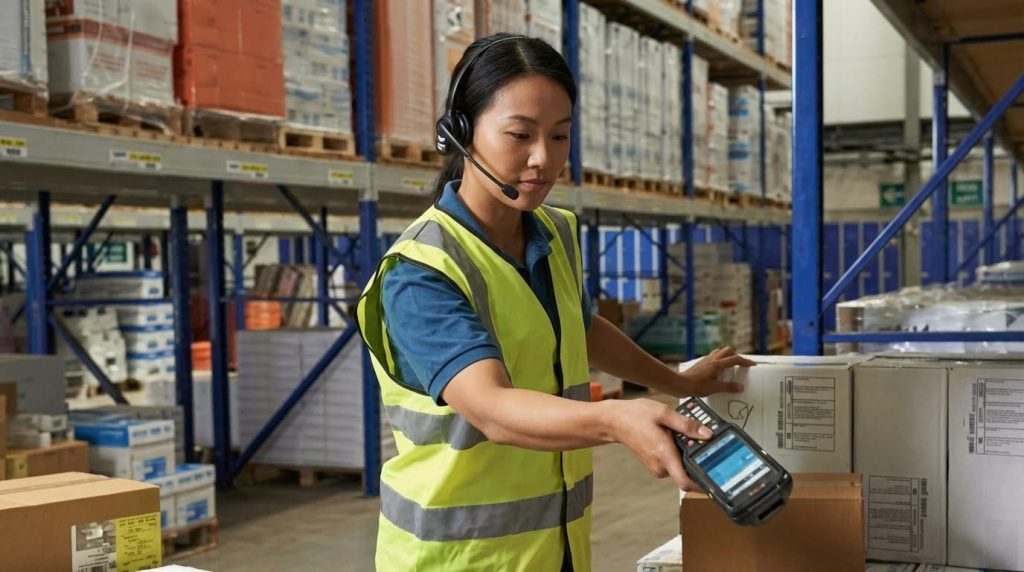
Voice-directed warehousing answers a central question: what is voice picking in a warehouse and how does it change core processes. At its heart, voice technology replaces paper lists and handheld terminals with spoken instructions and confirmations. These systems connect to warehouse management and enterprise platforms, orchestrate end‑to‑end workflows, and synchronize with automation. Understanding the underlying principles helps engineers and operations leaders judge when voice is the right fit and how to integrate it with wider intralogistics designs.
How Voice Picking Works in Modern DCs
Voice picking in a warehouse uses speech as the primary human–machine interface. The operator wears a headset with microphone, linked via a mobile device to voice software and the warehouse management system. The WMS sends task data to the voice engine, which converts instructions into synthesized speech, such as location, product, quantity, and any checks. The operator confirms each step using short voice responses and check digits, which the recognition engine interprets and returns as structured data to the WMS in real time. Modern systems often support multiple languages and speaker‑independent recognition, and they can combine voice with barcode or RFID scans for higher validation where risk or value justifies it.
Typical Workflows: From Receiving to Loading
Voice-directed warehousing originally focused on order picking, but engineers increasingly extend it across inbound and outbound flows. In receiving, voice can guide dock workers through unloading, damage checks, and pallet or case identification, while parallel scanning or RFID captures item IDs. Put-away tasks use voice to direct operators to target storage locations, confirm bin coordinates, and register quantities, which helps maintain inventory accuracy without constant screen checks. Replenishment, cycle counting, and cross-docking follow similar patterns: the system issues sequenced instructions, the worker navigates hands-free, and each confirmation updates inventory and task status. On the outbound side, voice can coordinate carton picking, consolidation, packing checks, and trailer loading, reducing paper manifests and supporting real-time load verification.
Hardware Options: Wearables, Vehicles, and Mobile Devices
Voice-directed systems rely on a combination of audio and computing hardware that must suit the warehouse environment. Core components include industrial or commercial headsets with noise-cancelling microphones and a mobile computing platform that runs the client software. This platform may be a belt-worn terminal, a rugged handheld, a smartphone, or a multimodal device that combines screen, scanner, and voice. In larger distribution centers, engineers often deploy vehicle-mounted computers on walkie pallet trucks or counterbalanced stackers, pairing them with wireless headsets to support travel-intensive tasks such as pallet moves and replenishment. Environmental factors drive hardware selection: cold stores require insulated or heated devices and sealed headsets, while dusty or humid zones need high ingress protection ratings. The hardware stack must balance durability, battery autonomy over a full shift, ergonomics, and total cost of ownership.
Integration with WMS, ERP, and Automation Systems
From a systems engineering view, voice picking in a warehouse functions as a front-end layer on top of existing control and planning platforms. The voice middleware exchanges task and status messages with WMS, ERP, order management, or warehouse control systems using standard APIs, message queues, or direct database calls. In a typical design, the WMS generates work assignments, while the voice system manages dialogue logic, task sequencing, and local validations, then feeds confirmations back to the host in real time. This integration must preserve transaction integrity, support exception handling, and align with cybersecurity policies, including authentication and encryption across the wireless network. When automated conveyors, sorters, or goods-to-person systems are present, the voice solution must synchronize with their control logic so that human tasks and machine tasks remain coordinated. Well-architected integration lets operations combine voice with scanning, vision, or automation, selecting the optimal interaction mode for each workflow stage.
Operational Benefits and Engineering Trade-Offs
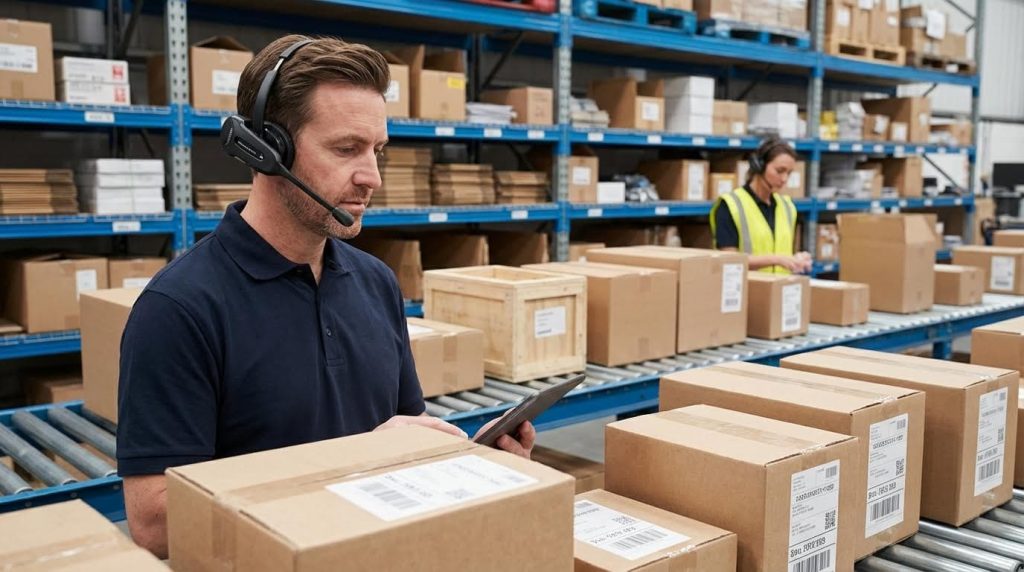
Voice-directed warehousing reshaped how engineers answer the question “what is voice picking in a warehouse” from a performance and cost perspective. Operations teams evaluate voice not only on speed and accuracy, but also on ergonomics, training effort, and lifecycle cost. The following subsections examine measurable benefits and the engineering trade-offs that influence system design and technology selection.
Productivity, Accuracy, and Safety Metrics
Voice picking guided operators through tasks using spoken prompts and confirmations. This removed non-value-added time linked to handling paper lists or handheld scanners. Documented productivity gains ranged from 10% up to 90%, with typical order picking productivity improvements near 30–40% in distribution centers. These gains depended on product mix, slotting quality, and travel distances.
Accuracy also improved. Facilities that already achieved 99.9% line accuracy with scanning still reported 25% or more reduction in residual picking errors after migrating to voice. Error rates as low as 0.08% were reported versus approximately 1.5% for paper-based methods. Check-digit confirmations and real-time validation against the host system reduced mis-picks and short-picks, though poorly designed check-digit schemes sometimes introduced reading errors or extra motion.
Safety metrics benefited from hands-free, heads-up operation. Operators could maintain three points of contact on semi electric order picker and better situational awareness in aisles. Sites reported fewer trip, collision, and strain incidents once workers no longer carried clipboards or scanners. However, engineers had to consider auditory masking in noisy areas; if workers focused on blocking ambient noise, cognitive fatigue could offset some safety benefits. Proper headset selection, noise-cancelling tuning, and clear speech design were therefore key engineering controls.
Labor, Training, and Seasonal Workforce Impacts
When evaluating what is voice picking in a warehouse from a labor perspective, managers saw it as a way to stabilize throughput despite high turnover. Voice-directed workflows shortened training time because new hires followed stepwise prompts rather than memorizing locations or complex screen flows. Operations commonly trained new pickers to work independently in less than one day, with full proficiency reached within one to two weeks.
This rapid ramp-up was critical for seasonal peaks. Temporary workers could join mid-season and still achieve acceptable pick rates and accuracy, reducing reliance on overtime from experienced staff. Voice systems supported multiple languages and accents, which improved inclusivity of diverse labor pools. However, language mismatches or unclear phrasing of prompts sometimes caused comprehension errors, especially under time pressure.
From an engineering standpoint, workforce acceptance represented a non-trivial constraint. Some workers perceived continuous interaction with a synthetic voice as isolating, which could affect morale and long-term retention. Others preferred visual feedback from wearable scanners or smart glasses. Successful deployments therefore involved workers early in design, tuned vocabularies to local speech patterns, and combined voice with occasional screen or scan confirmation to balance guidance with autonomy.
Ergonomics, Cognitive Load, and Worker Wellbeing
Voice picking improved physical ergonomics because operators no longer gripped a scanner or paper while lifting cartons. This reduced asymmetric loading on wrists and shoulders and limited repetitive reach for holstered devices. In cold stores or heavy-glove environments, eliminating small-button interfaces greatly reduced fine-motor strain. Picking vests and lightweight headsets further distributed load and supported long shifts with minimal musculoskeletal impact.
Cognitive ergonomics required more careful engineering. Voice workflows kept workers in a continuous audio dialog, which could either streamline decision-making or create mental fatigue. In simple, repetitive picking, short prompts and limited command vocabularies reduced cognitive load versus reading dense screens. However, in complex orders involving quality checks, substitutions, or hazardous materials, purely verbal instructions sometimes overloaded short-term memory and increased error risk.
Noise conditions also mattered. In high-noise retail or cross-dock environments, workers had to concentrate on distinguishing prompts from background sounds, which increased stress. Misrecognition events forced repeated corrections, further raising frustration. Some organizations therefore adopted multimodal designs: voice for navigation and confirmations, plus visual overlays or scanning for exceptions and quality-sensitive tasks. Compared with traditional scanning-only systems, well-designed voice workflows could improve perceived wellbeing, but poor dialog design and inadequate noise engineering had the opposite effect.
ROI Expectations and Lifecycle Cost Drivers
From a financial engineering perspective, the answer to “what is voice picking in a warehouse” often centered on payback time. Typical projects reported return on investment within six to twelve months, driven by higher pick rates, fewer errors, lower rework, and reduced administrative tasks such as paperwork handling. The strongest gains appeared in high-volume, labor-intensive picking where each second of travel and confirmation time mattered.
Capital expenditures included headsets, mobile devices or wearables, batteries, chargers, network upgrades, and voice software licenses. Integration with warehouse management and enterprise systems added implementation and testing costs. Over the lifecycle, battery replacement, headset wear, software maintenance, and WLAN support formed the main operating cost drivers. Engineering teams evaluated total cost of ownership against alternatives such as advanced scanning wearables or vision-based systems.
Voice delivered the best ROI where workflows were stable, task complexity was moderate, and labor turnover was high. In environments requiring rich visual information or intensive quality control, vision or multimodal solutions sometimes offered better long-term economics despite higher initial investment. A rigorous engineering assessment considered throughput targets, error cost per line, device life, and support overhead before committing to a voice-first architecture.
Technical Limitations and Competing Technologies
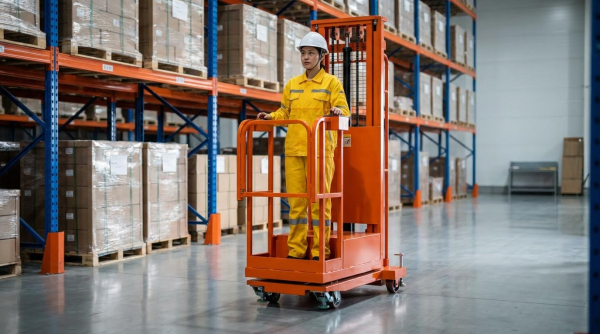
Voice-directed warehousing answered the question “what is voice picking in a warehouse” from a productivity perspective, but engineering teams must also understand its technical limits and alternatives. This section analyzes recognition constraints, process complexity boundaries, competing picking modalities, and infrastructure risks. The goal is to support objective technology selection for modern distribution centers.
Noise, Language, and Recognition Constraints
Voice picking relied on robust speech recognition, yet warehouse acoustics often degraded performance. High background noise from conveyors, pallet movers, and packaging lines reduced signal-to-noise ratio at the headset microphone. This interference increased false recognitions and forced workers to repeat confirmations, which reduced net pick rate. Modern engines used phonetic and word-based models and supported multiple languages and accents, but strong regional accents, code-switching, and non-native pronunciation still challenged algorithms. Common words embedded in casual speech sometimes matched command vocabularies, causing unintended state changes. Workers also faced cognitive load from constantly filtering noise and focusing on diction, which increased fatigue over long shifts. For operations evaluating what voice picking is in a warehouse context, acoustic surveys and pilot tests in peak-noise conditions were essential before full deployment.
Complexity Limits vs. Quality and Special Handling
Voice workflows excelled in high-volume, repetitive tasks with short, unambiguous instructions. They struggled when orders required dense information, conditional logic, or multi-step quality checks. Describing detailed inspection criteria, packaging hierarchies, or hazardous-material handling via audio alone overloaded workers’ short-term memory. Operators either requested repeated prompts or misapplied instructions, which increased defect risk. Complex kitting, value-added services, and pharmaceutical or cosmetic quality checks typically demanded richer visual cues or checklists. Voice could still contribute by driving location and quantity while delegating verification to scanning or visual interfaces. Engineers designing processes around what voice picking is in a warehouse often adopted multimodal flows: voice for navigation and confirmations, barcodes or images for quality and special handling. This hybrid approach balanced speed with compliance and traceability requirements.
Comparing Voice, Scan, and Vision-Based Picking
Voice, scan-based, and vision-based systems each optimized different constraints. Voice delivered hands-free, heads-up operation and removed non-value-added scanner handling time, which improved travel-intensive case picking. However, it depended on accurate speech recognition and concise instructions. Scan-based workflows used handheld or wearable readers with small displays. These systems offered precise digital code reading, reduced misidentification, and provided clear visual prompts, but occupied at least one hand and added motion for aiming scanners. Vision-based picking used smart glasses or similar devices to overlay text, symbols, and color-coded highlights onto the worker’s field of view. These systems supported complex instructions, images, and dynamic routing, and they reduced errors by visually pinpointing locations and items. Training time often decreased because interfaces were intuitive. The trade-off included higher device cost, camera line-of-sight requirements, and stricter lighting constraints. When deciding what voice picking is in a warehouse technology stack, many operators benchmarked all three modalities by measuring pick rate, error rate, and ergonomic impact for their specific SKU mix and order profiles.
Connectivity, IT Security, and System Reliability
Voice solutions depended on stable wireless connectivity between mobile devices, headsets, and back-end systems. Dead zones, high latency, or interference in dense racking areas caused prompt delays and session drops, directly slowing operators. Engineering teams had to validate WLAN coverage at full load and implement roaming optimization. Reliability also included battery management for mobile terminals and headsets; insufficient battery capacity or poor charging discipline caused mid-shift interruptions. From an IT security standpoint, voice systems exchanged operational and sometimes personal data over wireless networks. Implementations therefore required encryption, authenticated device access, and controlled integration with WMS, ERP, and automation layers. Misconfigured interfaces risked data inconsistency between voice middleware and host systems, which affected inventory accuracy. For organizations exploring what voice picking is in a warehouse, infrastructure readiness assessments, redundancy planning, and cybersecurity reviews formed critical steps before scaling deployment across multiple facilities.
Best Practices, Future Trends, and Conclusion
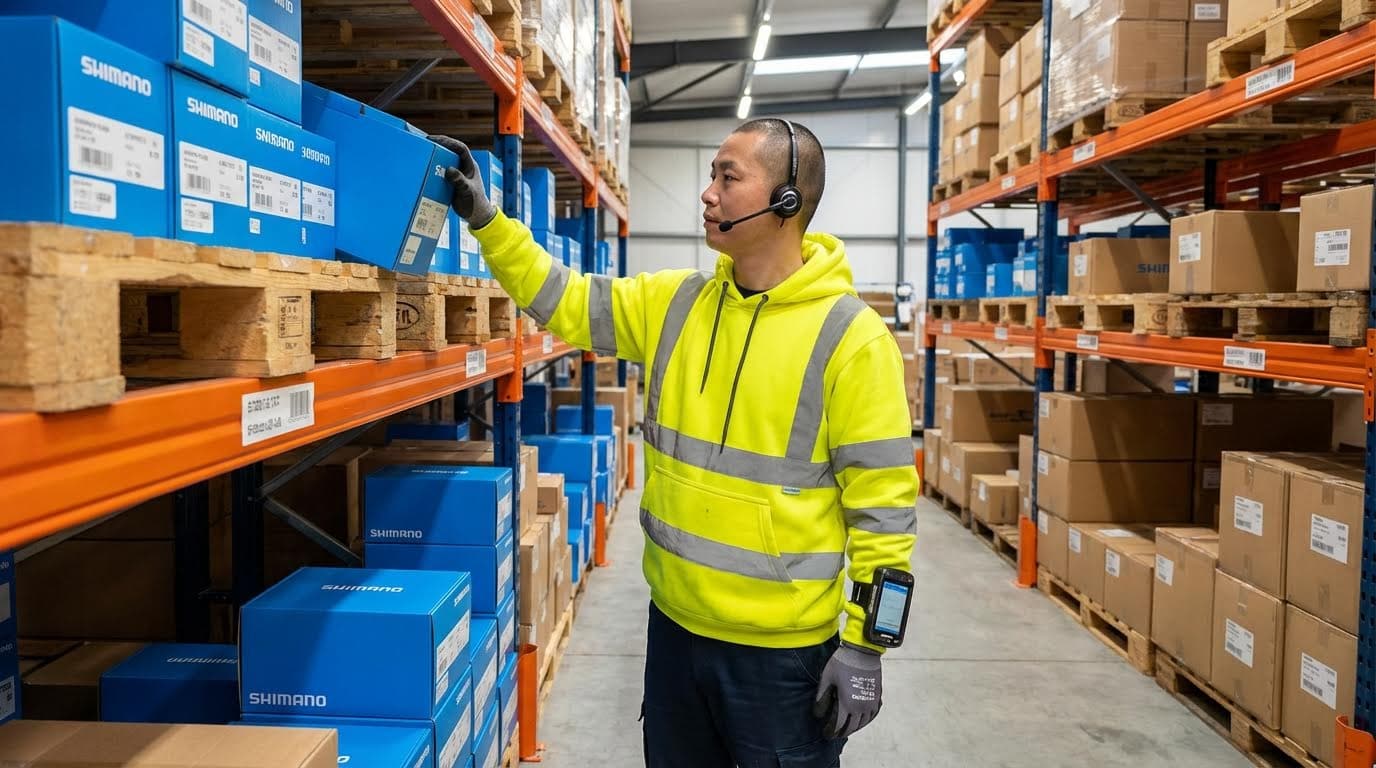
Engineering teams that ask “what is voice picking in a warehouse” usually stand at a decision point: whether, where, and how to deploy it at scale. This section summarizes proven implementation practices, highlights emerging technology directions, and distills a balanced view of voice-directed warehousing as part of a broader intralogistics strategy.
Implementation should start with a detailed process and data-flow study, covering receiving, put-away, replenishment, picking, packing, and loading. Map current pick paths, dwell times, and error hotspots, then define where voice adds measurable value versus scan or vision support. Design workflows to remain hands-free and heads-up wherever possible, but allow multimodal steps, for example voice plus barcode scan for high-value or regulated SKUs. Involve operators early through pilots; collect feedback on prompts, phrasing, and error-handling dialogs to minimize cognitive load and frustration.
From an IT perspective, treat voice as another front-end to the warehouse management or ERP layer rather than a standalone island. Use standard interfaces or APIs for task orchestration, inventory updates, and exception handling. Validate wireless coverage, latency, and security policies before rollout; poor connectivity can erase productivity gains. Select hardware based on environment: rugged wearables for freezer zones, vehicle-mounted clients for bulk areas, and possibly consumer-grade devices for light-duty tasks, all with industrial headsets that offer adequate noise rejection.
Looking forward, voice picking will increasingly blend with analytics, AI, and computer vision. Vendors already used machine learning for smart batching, dynamic slotting, and predictive workforce planning, and similar methods will further optimize task assignment and travel paths. Voice biometrics can strengthen worker authentication, while voice analytics can flag training needs or process anomalies in near real time. Integration with smart glasses, sensor-rich vests, and collaborative robots will enable richer, context-aware instructions, where voice becomes one channel in an augmented workflow rather than the only interface.
For organizations exploring what voice picking is in a warehouse and whether it fits their roadmap, the key is to treat it as an engineering trade-off, not a universal answer. Voice excels in high-volume, repetitive tasks with moderate complexity, where speed, accuracy, and safety metrics dominate. Vision-based and advanced scanning solutions may outperform voice for complex assemblies, intensive quality checks, or extremely noisy environments. The most resilient designs will remain technology-agnostic, combining voice, scan, and vision so each task uses the most suitable human–machine interface. Done this way, voice-directed warehousing can deliver rapid ROI while staying adaptable to future automation trends.