
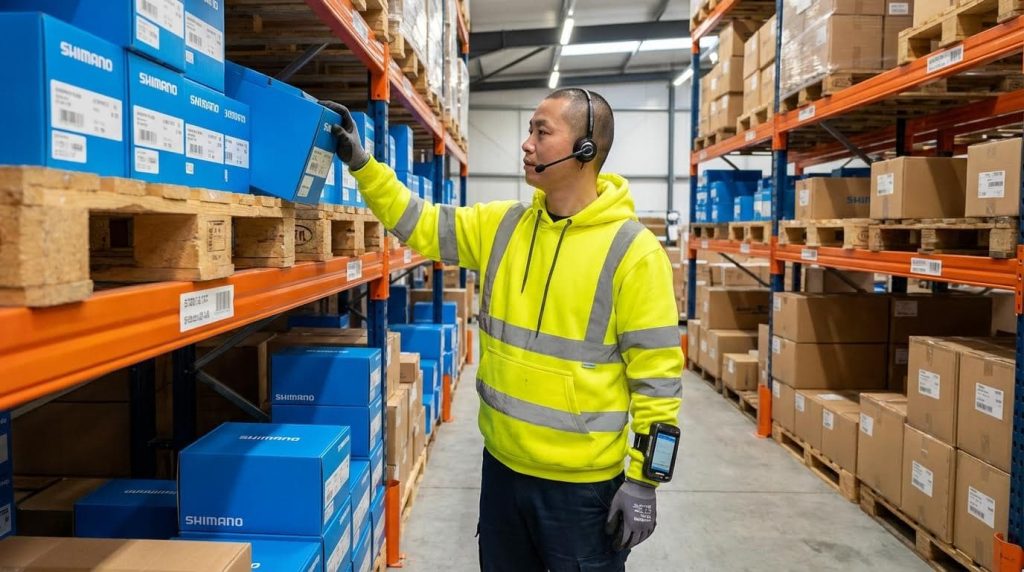
Warehouse picking strategies are the engineered methods your team uses to walk, find, grab, and confirm items so orders ship fast, accurately, and safely. Poorly chosen methods waste metres of travel per pick, inflate cost per line, and drive error rates above 1%, while the right design cuts travel time by up to 40–60% and boosts productivity by 30–50% in real facilities. This guide explains how discrete, batch, cluster, zone, and wave picking really work on the floor, why engineers mix them, and how WMS logic, automation, and layout constraints shape your options. If you have ever asked “what are the three strategies of picking in a warehouse” (typically discrete, batch, and zone), you will see how those core methods extend into hybrid, AI-driven, and technology-assisted models that fit modern operations. To optimize these strategies, equipment like semi electric order picker, warehouse order picker, and order picking machines play a crucial role. Additionally, tools such as aerial platform can enhance efficiency in high-reaching tasks.
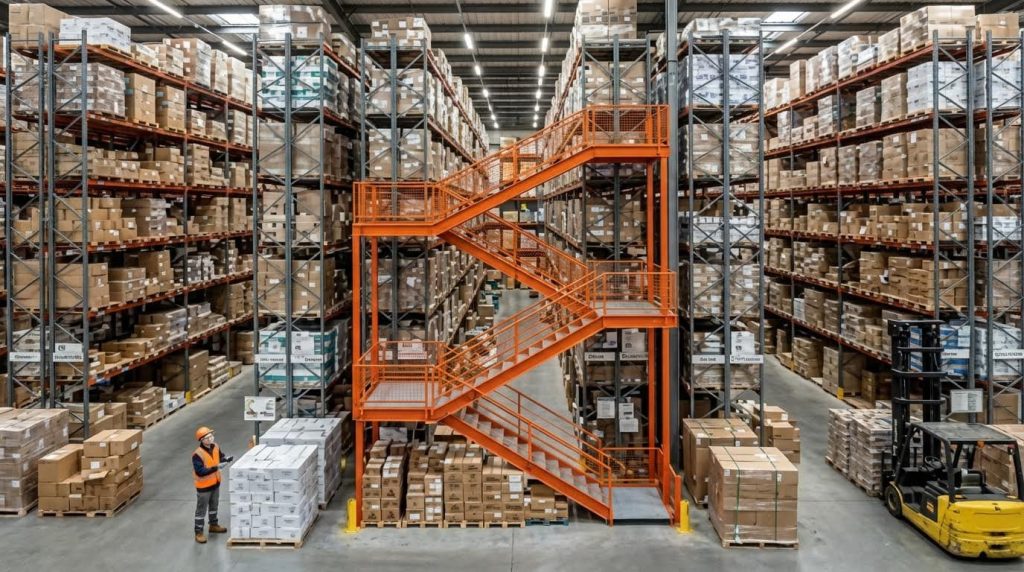
Core warehouse picking methods define how people and equipment move through storage locations to convert orders into picked lines, directly driving travel distance, pick rate, accuracy, and cost per pick in any facility.
When people ask “what are the three strategies of picking in a warehouse,” operations usually start from three foundational patterns: discrete (one order), batch/cluster (many orders together), and zone/wave (people fixed, orders flow). Each variant you choose simply re‑balances walking vs. handling vs. planning complexity.
💡 Field Engineer’s Note: Don’t lock into one “favorite” method. The highest-ROI facilities mix at least two strategies by time of day or order profile—e.g., discrete for exceptions, batch for e‑commerce, wave/zone for carrier cut‑offs.

Discrete order picking means one picker completes one order at a time, following a route through the warehouse until that single order is finished, which maximizes simplicity and accuracy but inflates travel distance.
| Aspect | Typical Characteristic | Field Impact |
|---|---|---|
| Basic definition | One picker → one order → one complete trip through pick locations (discrete picking overview) | Very easy to train and audit; order ownership is clear for each picker. |
| Best-fit environment | Low to moderate order volume; wide order variability; limited WMS sophistication (discrete characteristics) | Ideal for start-up operations, custom/B2B orders, and sites without advanced planning tools. |
| Travel distance per order | Highest of all methods (many full-length walks per order) | Pickers can spend >60% of shift walking instead of picking, capping lines/hour. |
| Pick rate & accuracy | Baseline speed, often ~50–75 lines/hour with ~95–99% accuracy in practice (method comparison ranges) | Good quality but poor throughput in larger facilities; labor cost per pick rises quickly. |
| Planning complexity | Very low; can run using printed pick lists or basic WMS prioritization | Supervisors spend less time on planning but must accept lower productivity. |
| Typical use cases | After-sales parts, project-based orders, made-to-order production feeds | Order individuality matters more than maximum speed or consolidation. |
How discrete picking actually looks on the floor
In a 5,000 m² warehouse, a discrete picker might start at receiving, walk 300–600 m through aisles to collect 10–20 lines, then return to packing. Every new order restarts that full loop, so even if the picker is fast at each location, the physics of walking distance caps throughput.
In the context of “what are the three strategies of picking in a warehouse,” discrete picking is usually the “default” method that companies start with before layering in batch and zone/wave models as volume grows.
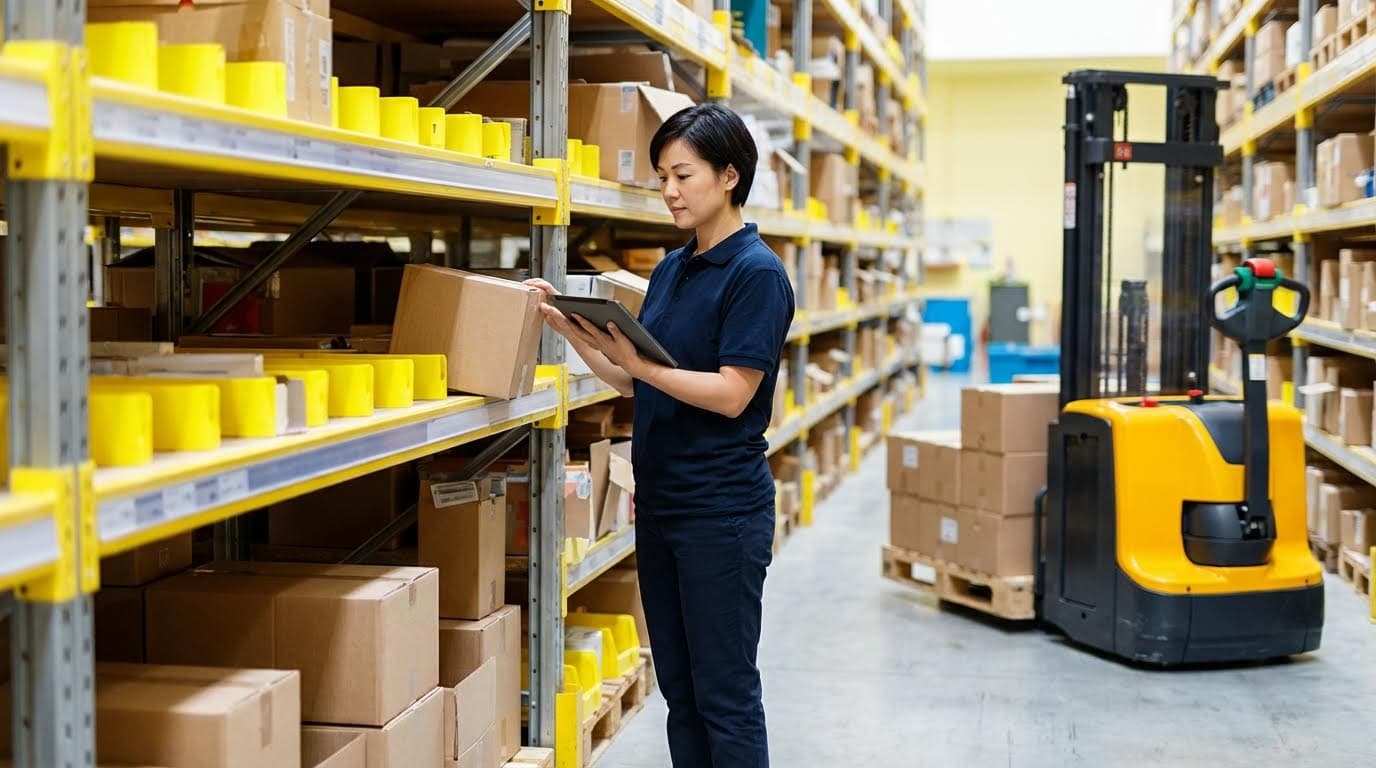
Batch and cluster picking group multiple orders into one tour so a picker walks each aisle once for many orders, cutting travel time by roughly 30–60% and lifting lines per hour significantly versus discrete.
| Method | Operational Definition | Typical Performance Effect | Field Impact |
|---|---|---|---|
| Batch picking | Picker collects items for multiple orders in a single route, then orders are separated at packing (batch picking) | Travel time cut by ~30–60%; productivity up ~30–50% vs. discrete (productivity gain) | Best when many orders share overlapping SKUs, e.g., e‑commerce apparel or electronics. |
| Cluster picking | Picker pushes a cart with multiple totes, each tote = one order, and picks into the correct compartment simultaneously (cluster concept) | Speed gains around 35% with accuracy up to ~99% when guided by voice/light systems (cluster performance) | Reduces secondary sorting at packing; ideal for small items and dense pick faces. |
| AI-driven batch | Orders are grouped and sequenced by machine-learning logic that forecasts demand and optimizes routes (AI batch) | Reported up to 50% faster fulfillment with ~99.9% accuracy in advanced setups (performance claims) | Maximizes consolidation while respecting constraints like carrier cut-offs and congestion. |
| Robotic/assisted cluster | Cobots or AMRs bring shelves or totes to pickers or follow them, handling repetitive transport tasks (robotic cluster) | Error reductions up to ~60% and major walking-time cuts are reported in practice | Lets each human focus on confirmation and exceptions while robots absorb the walking. |
💡 Field Engineer’s Note: The hard limit on batch or cluster size is not software—it’s cart footprint, aisle width, and human ergonomics. Once carts exceed ~0.8–0.9 m width in 1.2 m aisles, turning and congestion kill your theoretical gains.
When batch and cluster picking go wrong
Common failures include over-batching (too many orders per cart), which spikes search time at each location, and poor SKU slotting, which scatters high-frequency items across distant aisles. The result is theoretical travel savings on paper but no measurable gain in lines/hour on the floor. Tight ABC slotting and WMS rules that cap orders per batch by cube and weight are critical.

Zone, wave, and hybrid models divide space into zones and time into waves so pickers stay in smaller areas while the WMS releases and routes orders in controlled batches, which boosts throughput and handles peaks efficiently.
| Method | Operational Definition | Performance & Use Case | Field Impact |
|---|---|---|---|
| Zone picking | Warehouse split into zones; each picker stays in one zone while orders pass through required zones (zone concept) | Travel distance per picker shrinks; speed gains around 30% and accuracy near 98% are reported in large facilities (zone metrics) | Builds local SKU expertise, simplifies training, and scales well to 10,000+ orders/day. |
| Wave picking | Orders released in time-based “waves” aligned to carrier cut-offs, dock capacity, or production slots (wave definition) | Can cut costs up to ~35% by leveling labor and reducing dock/aisle congestion (wave benefits) | Excellent for multi-client 3PLs with different shipping cut-offs and dock constraints. |
| Dynamic / AI wave | Waves adjusted in real time based on inventory, priorities, and congestion feedback (dynamic waves) | Improves punctuality and absorbs peaks by continuously rebalancing workload and routes | Reduces peak overloads and late trucks by matching pick release to real dock status. |
| Hybrid zone–batch–wave | Combines zone picking with batch or wave logic; orders grouped by time and SKU, then split by zone (hybrid methods) | Adoption of hybrid batch-wave approaches is already above 60% in some modern operations (adoption data) | Maximizes dock and packing utilization while keeping walking distances low per picker. |
💡 Field Engineer’s Note: The real constraint in zone and wave systems is not software—it’s choke points at merges, cross-aisles, and packing. Always simulate or pilot-test wave sizes against conveyor and dock capacities before going live.
How zone and wave models answer “what are the three strategies of picking in a warehouse?”
In many textbooks and RFPs, the “three strategies of picking in a warehouse” are simplified to discrete, batch, and zone. In the field, wave is layered on top of these to time-release work. A practical design might run zone picking with batched carts inside each zone and then release those batches in waves matched to outbound carrier departures. The physics: shorter walking paths per picker and controlled order flow to docks.
Zone, wave, and hybrid models are typically the third stage of maturity after discrete and batch/cluster; they require a capable WMS but unlock the highest throughput and the best control of shipping punctuality in complex, high-volume facilities.
For operations requiring specialized equipment, solutions such as manual pallet jack, drum dolly, and semi electric order picker can enhance efficiency. Additionally, tools like hydraulic pallet truck and hydraulic drum stacker play a crucial role in material handling.
“”
Applying Picking Methods To Real-World Facilities
Designing real-world picking strategies means engineering a mix of methods around your actual layout, SKU profile, and safety rules so you cut travel, lift smarter, and hit 99%+ accuracy without breaking operators or floors.
💡 Field Engineer’s Note: When managers ask “what are the three strategies of picking in a warehouse,” they usually mean discrete, batch, and zone picking—your job is to blend them per area, not pick a single winner.
Matching methods to layout, SKU profile, and volume
Matching picking methods to your building starts with layout geometry, SKU velocity, and order volume, then assigns discrete, batch, and zone (plus wave/cluster) where each gives the best pick rate per metre walked.
| Facility / Profile Factor | Best-Fit Picking Approaches | Why It Fits | Field Impact (Speed / Errors / Labour) |
|---|---|---|---|
| Small warehouse (<5,000 m²), simple aisles | Discrete; light batch | Short travel paths make one-order-at-a-time workable; WMS can still group obvious overlaps. | Simple training and control; adequate pick rates at low volume; accuracy ≈95–99% with scanners for basic discrete picking. |
| Large warehouse (>10,000 m²) with long aisles | Zone; zone–batch; wave | Dividing into zones and batching waves slashes walking distance and congestion by consolidating picks. | Higher lines/hour (often 100+); better labour balance; easier to scale to 10,000+ orders/day with 0.5–1% error rates. |
| High SKU count, many slow movers | Discrete in reserve; batch/cluster for fast movers | Slow, unique SKUs don’t batch well; fast movers near packing can be batched or clustered efficiently. | Reduces hunting for rare SKUs; maximizes throughput on A-items; better slotting ROI. |
| High-volume eCommerce (small items) | Batch; cluster; wave–batch | Many orders share the same SKUs, so one tour can feed multiple orders cutting travel time by up to 40–60%. | 30–50% productivity gain vs discrete; strong fit for apparel, electronics, and D2C brands; cost per pick drops significantly. |
| Case / layer distribution (grocery, beverage) | Case picking; layer picking; wave | Larger handling units (cases/layers) minimize touches and support mechanized or robotic selection with big throughput gains. | Cases/hour per resource can increase several-fold; fewer bends and reaches per item; dock and wave planning become critical. |
| Highly variable daily peaks | Wave; dynamic wave; hybrid zone–wave | Time-based waves align picks with carrier cut-offs and dock capacity improving punctuality and levelling labour. | Fewer dock jams; better on-time dispatch; 30–35% cost reduction through coordinated releases. |
| Labour constrained but tech-ready | AI batch; robotic cluster; voice | Automation and AI routing increase speed and accuracy with fewer people by optimizing routes and sharing work with cobots. | Travel time <60% of shift; 99–99.9% accuracy; 30–50% labour cost reduction and higher resilience to staff shortages. |
To apply “what are the three strategies of picking in a warehouse” in practice, treat discrete, batch, and zone as your base building blocks and overlay wave timing and cluster carts only where density justifies complexity.
How to choose methods for each area (quick field checklist)
- Receiving to reserve storage: Focus on put-away and replenishment; discrete or simple batch for occasional picks.
- Fast-pick / forward area: Batch, cluster, or zone–batch to exploit high order overlap and short travel.
- Bulky / pallet area: Case and layer picking with clear MHE routes and minimal manual touches.
- Value-add / kitting cells: Discrete or small batch with tight quality control.
💡 Field Engineer’s Note: Walk your building with a tape measure and a heat map of orders. Anywhere pickers walk more than 60–70% of their shift is a candidate for zone or batch; anywhere congested needs wave control, not more people.
Safety, ergonomics, and standards compliance
Designing safe, ergonomic picking means selecting methods and equipment that keep loads, heights, and walking distances within human limits while complying with OSHA/ISO rules and still hitting 99%+ order accuracy.
- Walking distance and fatigue: Batch, zone, and wave picking reduce walking to under ~60% of a shift which directly cuts fatigue and trip risk.
- Lift frequency and load weight: Case and layer picking move heavier units, so designs must limit manual lifts and use clamps or suction tools where possible to protect backs and shoulders.
- Pick height and reach: Slot fast movers in the golden zone (about shoulder to mid-thigh) to cut bending and overreach; this also reduces pick time by roughly a quarter when engineered correctly.
- Traffic and equipment interaction: Zone, wave, and case/layer methods increase MHE density, so you need clear aisle markings, speed limits, and guarding around mechanized cells to align with machinery safety rules.
- Error prevention as safety: Voice, barcode, and RFID systems push accuracy toward 99.5–99.9% which also reduces rework, rush picks, and unsafe shortcuts.
- Training and method complexity: Discrete picking is easy to teach; hybrid zone–batch–wave with automation needs structured training and SOPs so operators understand routing, confirmations, and exception handling.
Compliance and design considerations (OSHA / ISO mindset)
- Manual handling: Engineer pick methods and slotting so typical lifts stay within national ergonomic guidelines; use manual pallet jack for anything beyond safe one-person limits.
- Machine guarding: For layer-pick robots, clamps, and conveyors, provide guarding, emergency stops, and safe access paths in line with relevant machinery safety standards.
- Lighting and visibility: Adequate lux levels and clear line-of-sight in pick aisles reduce trips and MHE collisions, especially in dense batch or zone areas.
- Procedural controls: Standard work for batch and wave releases avoids last-minute chaos that drives risky behaviour and picking in congested aisles.
💡 Field Engineer’s Note: Every time you speed up picking—batch more orders, add waves, bring in cobots—re-run a simple risk assessment: walking paths, lift weights, and line-of-sight. Throughput gains are worthless if they quietly drive up recordable incidents.

Final Thoughts On Optimizing Warehouse Picking Strategies
Optimizing warehouse picking is an engineering problem, not a guessing game. Each method changes travel distance, touch count, and error risk, which in turn drives labour cost and safety exposure. Discrete picking protects accuracy but caps throughput. Batch, cluster, and zone models cut walking sharply but demand tighter slotting, clearer traffic rules, and stronger WMS control.
The safest and most productive facilities do not chase a single “best” method. They map order flows, aisle geometry, and SKU velocity, then assign discrete, batch, zone, and wave where each gives the best lines per hour per metre walked. They also size carts, waves, and zones to match aisle width, dock capacity, and human limits, not software ambition.
Technology and equipment, from voice systems to Atomoving order pickers and pallet trucks, only deliver full value when they sit inside this engineered design. Operations and engineering teams should review walking time, error rates, and incident data at least yearly, then adjust methods, slotting, and tools together. The best practice is clear: design the picking strategy mix as a continuous improvement loop, with safety, ergonomics, and standards compliance built in from the first sketch.
Frequently Asked Questions
What are the three most common picking strategies in a warehouse?
Warehouses use different picking strategies to optimize order fulfillment. The three most common strategies are zone picking, wave picking, and batch picking.
- Zone Picking: The warehouse is divided into specific zones, and each picker is responsible for picking items within their assigned zone. This reduces travel time and improves efficiency. Warehouse Picking Guide.
- Wave Picking: Orders are grouped into waves based on specific criteria like delivery routes or deadlines. Pickers collect items for multiple orders at once, which is ideal for high-volume operations. Wave Picking Explained.
- Batch Picking: Pickers retrieve items for multiple orders simultaneously, reducing repetitive trips to the same locations. This method is particularly effective for small, frequent orders.
How do picking strategies improve warehouse efficiency?
Picking strategies streamline the order fulfillment process by organizing tasks logically. Zone picking minimizes picker movement, wave picking aligns orders with operational goals, and batch picking reduces redundant trips. Implementing the right strategy depends on warehouse size, order volume, and product types. NetSuite Picking Strategies.