Dieser Leitfaden erklärt, wie Sie einen Kommissionierer im Lager während jeder Schicht sicher bedienen – von den Kernfunktionen und der Stabilität bis hin zu Inspektionen und modernen digitalen Steuerungen. Sie erfahren, wie Tragfähigkeit, Absturzsicherung und tägliche Kontrollen zu weniger Unfällen und höherer Kommissioniereffizienz im realen Lagerbetrieb führen.
Kernfunktionen und Sicherheitsgrundlagen
Dieser Abschnitt erläutert die Funktionsweise eines Kommissionierstaplers im Lager und die Aufteilung der wichtigsten Sicherheitsverantwortlichkeiten zwischen Arbeitgebern, Bedienern und Vorgesetzten. Er stellt einen direkten Zusammenhang zwischen den Konstruktionsmerkmalen der Maschine und den täglichen Risikokontrollen her.
Was ein Kommissionier-System für Kirschpflücker ist
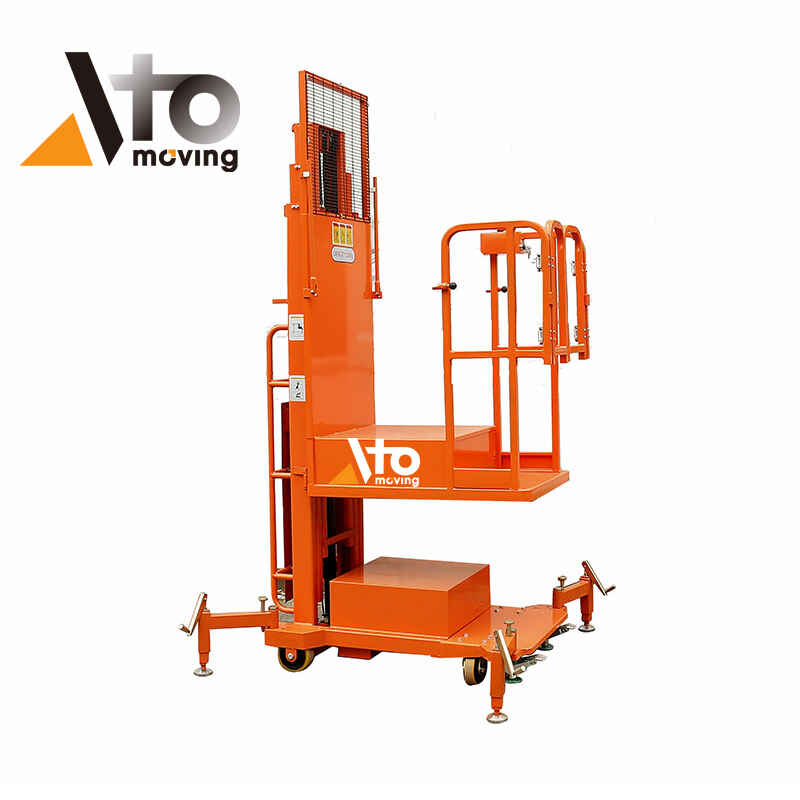
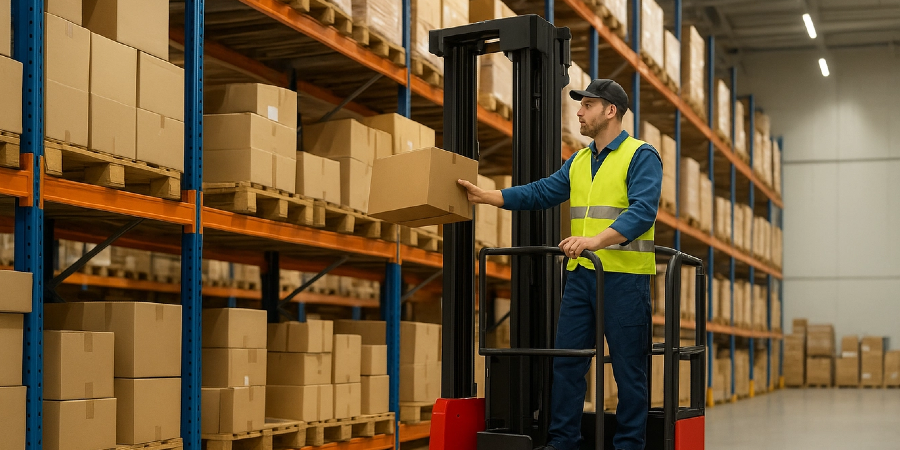
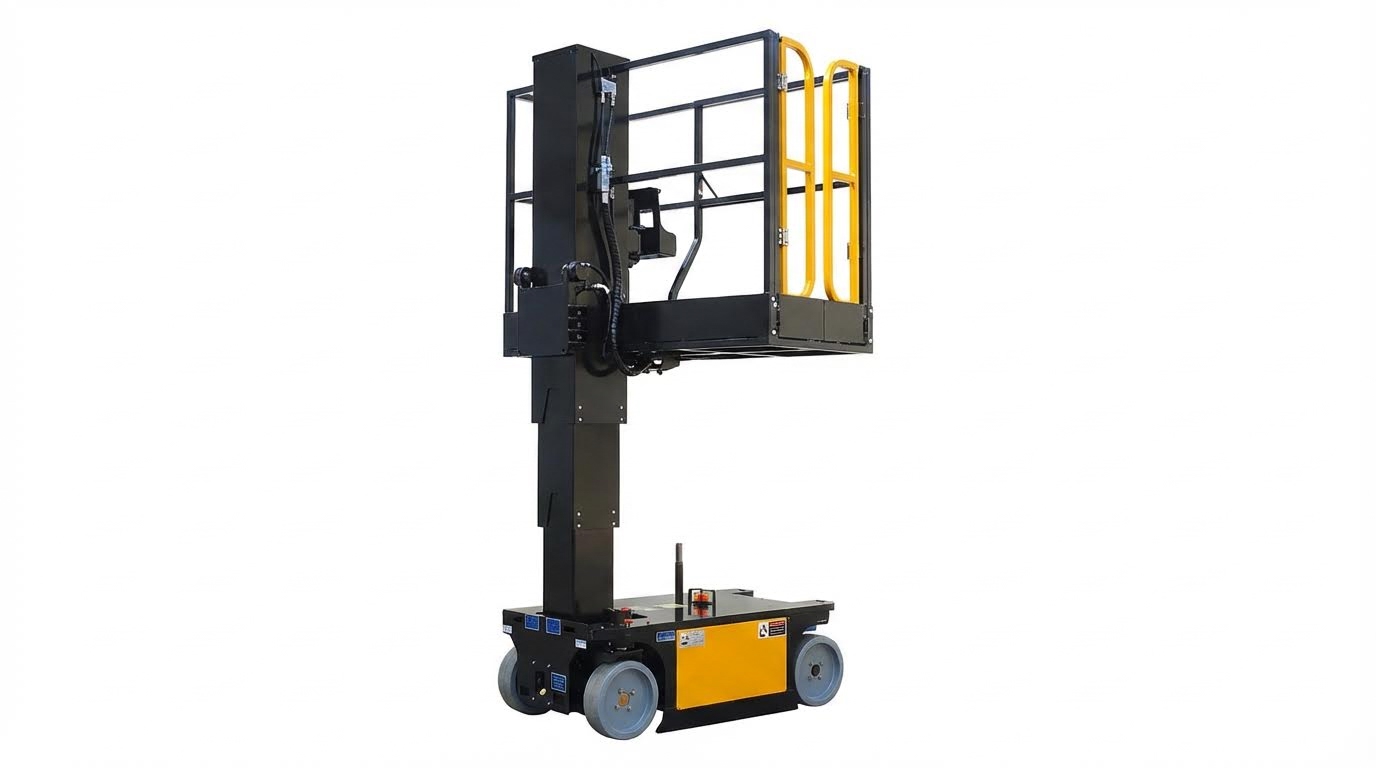
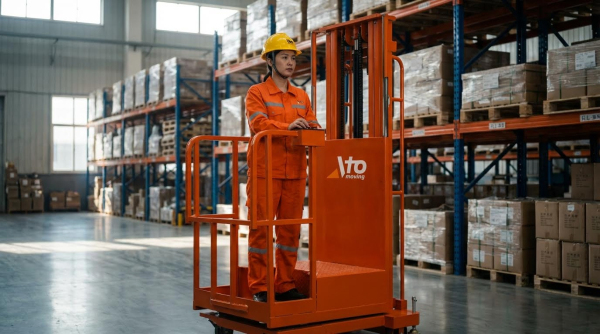
Ein Kommissionierstapler ist ein motorisierter Flurförderzeug, der den Bediener samt Last anhebt, sodass dieser Artikel direkt aus Regalen entnehmen kann. Er vereint vertikales Heben, horizontale Bewegung und eine geschützte Arbeitsplattform in einer Maschine.
In einem typischen Lager fährt ein Kommissionierstapler in den Gängen zwischen den Palettenregalen und hebt die Bedienerplattform auf 6–12 m an, damit der Fahrer Kartons oder Artikel entnehmen und auf einer Palette oder einem Tablett vor sich abstellen kann. Anders als bei einem Standard-Gabelstapler steht der Bediener auf der Hubplattform und nicht hinter dem Hubmast. Daher sind Absturzsicherung und Plattformkonstruktion entscheidende Sicherheitsvorkehrungen. Plattformen müssen mindestens 500 mm breit sein und mit oberen und mittleren Handläufen, Fußleisten und einem selbstschließenden, verriegelnden Tor an allen offenen Seiten ausgestattet sein, um Stürze während der Fahrt und der Kommissionierung zu verhindern. Zu den Anforderungen an das Absturzsicherungssystem gehört auch ein Ganzkörpergurt, der an einem zugelassenen Anschlagpunkt auf der Plattform befestigt ist. Die Seillänge muss so eingestellt sein, dass ein freier Fall etwa 1.2 m nicht überschreitet.
- Kernfunktion – Vertikaler Zugang: Ermöglicht dem Bediener das Aufnehmen von Kisten oder Einzelteilen in der Höhe – Ersetzt Leitern und verringert die Entfernung für manuelle Handhabung.
- Kernfunktion – Horizontale Bewegung: Fährt mit angehobener Plattform in kontrollierter Geschwindigkeit entlang der Gänge – Verbessert die Kommissionierraten bei langen Regalläufen.
- Kernfunktion – Integrierter Absturzschutz: Geländer plus Gurtzeug und Anschlagpunkt – Verringert das Risiko von Stürzen aus der Höhe, während der Bediener die Hände frei hat.
- Kernfunktion – Feinpositionierung: Präzise Hub-/Senk- und Tippsteuerung – Ermöglicht eine sichere Ausrichtung an den Greifflächen und minimiert den Kontakt mit dem Regal.
Wie sich ein Kommissioniergerät für Hubarbeitsbühnen von anderen Gabelstaplern unterscheidet
Ein Kommissionierstapler hebt den Bediener zusammen mit der Last an, während Schubmaststapler und Gegengewichtsstapler den Bediener auf Bodenhöhe halten und nur die Gabeln oder Anbauteile anheben. Dadurch verlagert sich das Hauptrisiko von Lastabfall und Kollision zu einem kombinierten Risiko von Sturz, Umkippen und Kollision. Aus diesem Grund sind Plattformschutzvorrichtungen, die Verwendung von Sicherheitsgurten und Geschwindigkeits-/Höhenverriegelungen unverzichtbare Konstruktionselemente.
💡 Hinweis für den Servicetechniker: In schmalen Gängen unter 1.8 m Breite kann selbst ein geringer seitlicher Plattformaufprall für einen Bediener in der Höhe schwerwiegend sein. Durch die Einhaltung einer Plattformbreite von 500–800 mm und den Einsatz von Führungsschienen oder elektronischer Führung werden Kollisionen mit Regalen und ungeplante Notstopps deutlich reduziert.
Wichtige Standards, Rollen und Verantwortlichkeiten
Die sichere Bedienung eines Kommissionierhubwagens setzt die Einhaltung der geltenden Normen und die klare Zuweisung von Verantwortlichkeiten an Arbeitgeber, Bediener und Wartungsteams voraus. Die eingebauten Schutzvorrichtungen der Maschine funktionieren nur, wenn sie korrekt bedient, geprüft und gewartet werden.
Regulatorische Rahmenbedingungen stufen Kommissioniergeräte für Hubarbeitsbühnen üblicherweise als motorisierte Flurförderzeuge oder mobile Hubarbeitsbühnen ein und unterliegen daher den Vorschriften für das Heben von Personen, den Absturzschutz und die Prüfung von Hebezeugen. Das bedeutet, dass Arbeitgeber sicherstellen müssen, dass die Bedienungsanleitung am Gerät vorhanden und lesbar ist, die gesetzlich vorgeschriebenen Prüfbescheinigungen (z. B. LOLER oder gleichwertige Bescheinigungen) gültig sind und ein Notfallplan existiert und allen Beteiligten bekannt ist, bevor die Arbeiten in der Höhe beginnen. Die Überprüfung der Dokumentation vor Arbeitsbeginn umfasst auch die Bestätigung, dass die Notfallabseilverfahren und die Kommunikationsprotokolle mit dem Bodenpersonal vorhanden sind.
| Funktion / Rolle (Role) * | Wichtigste Sicherheitsaufgaben | Betriebliche Auswirkungen |
|---|---|---|
| Arbeitgeber-/Standortmanagement | Bereitstellung von konformer Ausrüstung, Schulungen, Verkehrsplänen und Inspektionsverfahren. | Gewährleistet Kommissioniermaschinen Durch die Abstimmung von Gangbreite, Regalhöhe und Bodenbeschaffenheit wird das Risiko von Umkippen und Kollisionen verringert. |
| Vorgesetzter / Teamleiter | Die Standortregeln durchsetzen, die täglichen Kontrollen überprüfen, die Betriebserlaubnis kontrollieren. | Verhindert, dass ungeschultes Personal die Geräte bedient, und stoppt die Nutzung, sobald Mängel oder unsicheres Verhalten auftreten. |
| Operator | Tägliche Kontrollen durchführen, Gurtzeug und Schutzgeländer benutzen, Geschwindigkeits- und Höhenbegrenzungen einhalten. | Verhindert die meisten Zwischenfälle im Einsatz, wie Stürze, Bremsversagen und Lenkungsverlust während einer Schicht. |
| Wartung / Kompetenter Techniker | Führen Sie planmäßige Inspektionen und Reparaturen durch; geben Sie gesperrte Lkw für die Wartung frei. | Gewährleistet die Zuverlässigkeit von Bremsen, Hydraulik und Verriegelungen, sodass die konstruktionsbedingten Sicherheitsfaktoren über die Zeit erhalten bleiben. |
- Schulung und Autorisierung: Nur geschultes und autorisiertes Personal darf einen Kommissionierer an einer Hubarbeitsbühne bedienen. Verringert Fehler wie Überlastung, Umgehung von Verriegelungen oder Fahrten in unsicheren Höhen.
- Tägliche Zustandsprüfungen: Die Bediener müssen vor der Benutzung Räder, Hydrauliksysteme, Struktur, Plattform und Bedienelemente überprüfen – Erkennt Lecks, Risse in Schweißnähten und Bremsprobleme, bevor es zu Zwischenfällen kommt.
- Verwendung von PSA: Auffanggurt, Schutzhelm mit Kinnriemen, Schutzbrille und rutschfestes Schuhwerk sind Pflicht – Schützt vor Stürzen, Kopfverletzungen und Ausrutschen auf der Plattform.
- Tag‐Out bei Defekt: Jegliche Mängel, die die Lenkung, die Bremsen, die Hebevorrichtung oder den Absturzschutz beeinträchtigen, erfordern die sofortige Außerbetriebnahme. Verhindert, dass man unsichere Geräte noch einmal bedient.
Typische Prüfpunkte vor der Verwendung für Kommissionierer
Vor Fahrtantritt muss der Fahrer das Fahrzeug auf strukturelle Schäden, Risse in Schweißnähten, lose Befestigungselemente, Reifen- oder Felgenmängel sowie Hydraulik- oder Batterielecks überprüfen und die einwandfreie Funktion von Not-Aus-Schaltern, Totmannschaltern, Hebe-/Senkvorrichtungen, Lenkung und Bremsen sicherstellen. Sollte ein kritisches System nicht wie vorgesehen reagieren, muss der Stapler bis zur Reparatur und Freigabe durch einen qualifizierten Techniker außer Betrieb genommen werden. Diese täglichen Kontrollen entsprechen den empfohlenen Prüfverfahren für Kommissionierstapler.
💡 Hinweis für Außendiensttechniker: Viele Lager sind in der Hochsaison auf den Einsatz von halbelektrischen Kommissionierstaplern angewiesen , um den Durchsatz zu gewährleisten. Daher besteht Druck, den Stapler betriebsbereit zu halten. Legen Sie eine Regel fest, die besagt, dass der Stapler automatisch außer Betrieb genommen wird, wenn Zweifel an den Auffangpunkten, Geländern oder Notabsenksystemen bestehen – ohne Eingriff des Vorgesetzten. Dies schützt sowohl die Mitarbeiter als auch die Anlagenverfügbarkeit, indem rechtzeitige Wartung anstelle riskanter Improvisationen erzwungen wird.
Sichere Betriebstechniken und technische Kontrollmaßnahmen
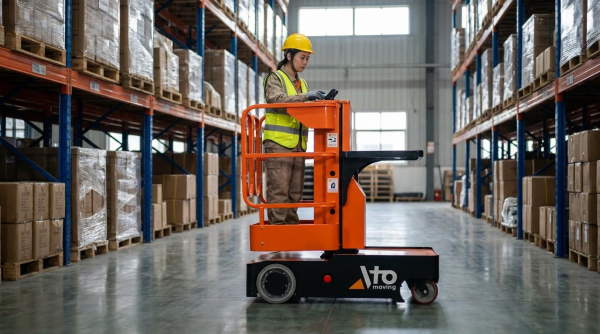
Sichere Betriebstechniken für jeden Kommissionierer im Lager basieren auf der Einhaltung der Lastgrenzen, der Kontrolle von Fahrhöhe und -geschwindigkeit sowie dem Einsatz technischer Systeme wie Führungssysteme, Sensoren und Alarme, um zu verhindern, dass menschliches Versagen zu einem Zwischenfall führt.
In diesem Abschnitt werden die Normen und die Elektronik in einfache, wiederholbare Fahrregeln übersetzt, die Ihre Bediener in jeder Schicht befolgen können.
Tragfähigkeit, Stabilität und sichere Fahrhöhe
Bei Kommissioniermaschinen definieren Tragfähigkeit, Stabilität und sichere Fahrhöhe, wie viel man heben, wie hoch man fahren und wie schnell man sich bewegen kann, ohne dass die Gefahr des Umkippens besteht.
Jede sichere Schicht beginnt damit, dass das Typenschild korrekt positioniert ist, und endet damit, dass die Plattform bei horizontalen Fahrten stets niedrig und langsam gehalten wird.
| Parameter | Typischer Wert / Regel | Technischer Grund | Betriebliche Auswirkungen |
|---|---|---|---|
| Maximale Nennkapazität | Wie auf dem Typenschild des LKW angegeben (Plattform, Ladefläche, Zusatzdecks) | Vom Hersteller festgelegte hydraulische, strukturelle und Stabilitätsgrenzen. | Überschreiten Sie niemals die niedrigste zulässige Belastung für ein Deck; berücksichtigen Sie dabei Bediener, Werkzeuge und die aufgenommene Ladung. im Gesamtgewicht |
| Schwerpunkt (CoG) | Muss innerhalb des „Stabilitätsdreiecks/-polygons“ bleiben. | Verlagert sich der Schwerpunkt außerhalb des Radstands, entsteht ein Kippmoment. | Vermeiden Sie plötzliche Lenkbewegungen, versetzte Lasten oder das Herauslehnen aus der Plattform in der Höhe, um den Schwerpunkt zentral zu halten. |
| Sichere Reisehöhe | Frei vom Boden, aber unterhalb der Achsenhöhe | Niedrigerer Schwerpunkt und kleinerer Kipphebelarm während der Fahrt | Senken Sie den Bahnsteig vor dem Abbiegen, Überqueren von Kreuzungen oder Verlassen der Gänge auf diese Höhe ab. um das Kipprisiko zu verringern |
| Reisegeschwindigkeit oberhalb einer Plattformhöhe von ca. 0.9–1.0 m | ≈1.1 m/s maximal | Ein höherer Schwerpunkt macht die Seitenbeschleunigung kritischer. | Rechnen Sie damit, dass der Lkw beim Anfahren automatisch abbremst; betrachten Sie jedes „schnelle Verhalten in der Höhe“ als Fehler. |
| Fahren Sie ohne Führung über ≈3.8–3.9 m. | Verboten | Kleine Lenkeingaben erzeugen in der Höhe einen großen seitlichen Versatz. | Fahren Sie nicht in Kommissionierhöhe, es sei denn, die Schienen- oder elektronische Führungsschiene ist aktiv. und gemäß den Website-Regeln genehmigt. |
| Endschalter und Drehzahlregelungsschaltungen | Werkseitig eingestellt; darf nicht umgangen werden | Festverdrahtete Schicht zur Verhinderung von Übergeschwindigkeit oder Überhöhe | Behandeln Sie jeden Versuch, die Sicherheitsvorkehrungen zu umgehen, als schwerwiegenden Sicherheitsverstoß; melden Sie jeden Verdacht auf Manipulation. |
- Lastdisziplin: Bediener, Werkzeuge, Palette und kommissionierte Kartons addieren – Sie arbeiten mit der niedrigsten Kapazität, die irgendwo auf dem Typenschild angegeben ist, nicht mit einer „Faustregel“.
- Stabile Körperhaltung: Füße flach auf dem Bahnsteig halten, nicht auf die Geländer klettern und nicht über das Geländer hinausgreifen – Ihre Körperhaltung beeinflusst direkt den Schwerpunkt.
- Zuerst vertikal, dann horizontal: Vor dem Lenken oder Abbiegen auf sichere Fahrhöhe absenken – Dadurch werden die Kippkräfte bei einer Notbremsung drastisch reduziert.
- Respektiere die Herabstufung: Wenn der Lkw über einen Lastsensor verfügt, der das Anheben bei Überladung blockiert, Das Problem muss behoben werden; suchen Sie nicht nach einer Umgehungslösung.
Wie man das Gewicht auf der Plattform berücksichtigen sollte
Behandeln Sie den halbelektrischen Kommissionierer wie einen beweglichen Kragarm. Eine Personenbewegung von 20–30 kg oder ein schwerer Karton, der bis an den Rand geschoben wird, kann den effektiven Schwerpunkt um mehrere hundert Millimeter verlagern. Deshalb ist plötzliches Vorlehnen, Ziehen oder Schieben in voller Höhe verboten, selbst wenn die Gesamtlast unter der Nennlast liegt.
💡 Hinweis des Außendiensttechnikers: In realen Lagerhallen entstehen die meisten Beinahe-Kippunfälle durch ruckartiges Bewegen von „leichten“ Ladungen, nicht durch offensichtliche Überladung. Die physikalischen Auswirkungen einer schnellen Kurve in 4–5 m Höhe sind deutlich gravierender als eine unbemerkte Überschreitung der Kapazität um 10–15 % am Boden. Die Bediener sollten daher Geschwindigkeit und Lenkverhalten in der Höhe mehr beachten als den einzelnen zusätzlichen Karton.
Gangführung, Sensoren und digitale Sicherheitssysteme
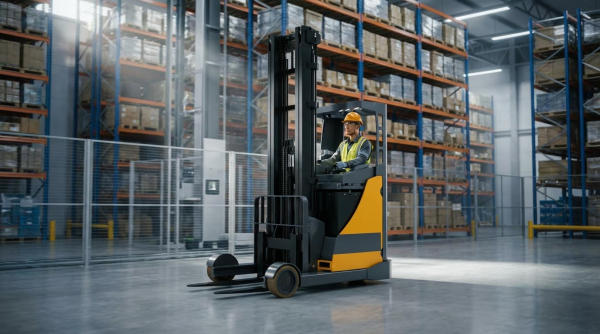
Gangführung, Sensoren und digitale Systeme verwandeln einen Kommissionierstapler in einen halbtechnisch konstruierten Sicherheitsbereich, der enge Gänge, schlechte Sichtverhältnisse und menschliches Versagen kompensiert.
Die Bediener müssen verstehen, was jedes System leistet und was nicht, und Alarme als absolute Stopps und nicht als Vorschläge behandeln.
| System | Typische Implementierung | Was es steuert | Beste für… |
|---|---|---|---|
| Führungsschienen | Stahlschienen entlang der Gestellfüße | LKW mittig halten; seitliches Abdriften einschränken. | Sehr schmale Gänge, in denen der Abstand auf jeder Seite nur wenige zehn Millimeter beträgt. |
| Bodendrähte / induktive Führung | Eingebetteter Draht im Beton | Elektronische Lenkung zum Folgen einer festgelegten Bahn | Hochdurchsatz-Gänge, in denen die berührungslose Steuerung die Ermüdung des Bedieners und Regalkollisionen reduziert. |
| Elektronische Leitsysteme | Sensoren plus Steuereinheit | Automatische Korrektur der Lenkung und teilweise auch der Geschwindigkeit | Fahren Sie oberhalb von ≈3.8–3.9 m, wo die manuelle Steuerung zu empfindlich ist. für sicheres und freies Reisen |
| Höhenbegrenzungsschalter | Mechanisch oder elektronisch in festgelegten Masthöhen | Antrieb oberhalb programmierter Pegelstände unterbrechen oder begrenzen. | Durchsetzung des Gebots „Fahren über X m ohne Führung verboten“ und Geschwindigkeitsreduzierung in mittleren Höhen. |
| Näherungs-/Hindernissensoren | Infrarot, Ultraschall oder Laser | Langsam fahren oder in der Nähe von Regalen, Säulen oder anderen Lkw anhalten. | Reduzierung von Regalschäden und seitlichen Kollisionen in beengten Kommissionierbereichen |
| Lastsensoren | Hydraulikdruck oder Dehnungsmessstreifen | Kapazität reduzieren, Hubblock bei Überlastung | Verhindert versteckte Überlastungen beim Stapeln schwerer Gegenstände auf der Ladefläche. |
| Geschwindigkeitsbegrenzer in Verbindung mit Höhe/Lenkung | Steuerlogik im Ansteuerkreis | Reduzieren Sie die Geschwindigkeit, wenn sich die Plattform hebt oder der Lenkwinkel zunimmt. | Stabilitätsreserve bei scharfen Kurven oder erhöhter Fahrt beibehalten ohne sich allein auf das Urteilsvermögen des Bedieners zu verlassen |
| Digitalanzeige und Fehlercodes | Bordbildschirm an der LKW-Konsole | Batteriezustand, Fehler, manchmal Last/Höhe | Schnelle Diagnose und Entscheidung, ob der Lkw weiterhin sicher genutzt werden kann. |
| Warnleuchten und akustische Alarme | Blinklichter und Summer | Aktivieren, wenn die Plattform über ≈1.8 m ansteigt und der LKW sich bewegt | Fußgänger und andere Verkehrsteilnehmer darauf aufmerksam machen, dass eine Person in der Höhe arbeitet. im Gang |
- Kennen Sie Ihren Führungsmodus: Prüfen Sie vor dem Anheben, ob Sie sich im manuellen, schienengeführten oder drahtgeführten Modus befinden. Die Regeln für Reisehöhe und Geschwindigkeit ändern sich mit dem Fahrmodus.
- Behandeln Sie Alarme wie rote Ampeln: Wenn ein Näherungssensor oder ein Überlastalarm ausgelöst wird, Anhalten, diagnostizieren und beheben; den LKW nicht „vorwärts schieben“.
- Nutzen Sie den Bildschirm, nicht das Rätselraten: Fehlercodes und Batteriestatus auf dem Display ablesen – Niedrige Spannung kann die Hydraulik verlangsamen und die sichere Steuerung beeinträchtigen.
- Sicherheit niemals vernachlässigen: Sensoren, Summer und Überbrückungsschalter dürfen nicht abgeklebt werden. Hierbei handelt es sich um kalkulierte Gewinnspannen, nicht um Annehmlichkeiten.
Wie die Fahrbahnführung Ihr Fahrverhalten verändert
Bei aktivierter Schienen- oder Drahtseilführung übernimmt der Kommissionierer die Steuerung innerhalb des Ganges, Geschwindigkeit und Höhe bleiben jedoch in Ihrer Hand. Die meisten Zwischenfälle ereignen sich dann an Gangenden und Kreuzungen, wo die Führung deaktiviert wird und die Bediener vergessen, dass sie wieder die volle manuelle Kontrolle haben. Verringern Sie die Geschwindigkeit, bevor Sie den Führungsbereich verlassen, und seien Sie auf freies Lenken vorbereitet.
💡 Anmerkung des Außendiensttechnikers: Bei der Auswertung der Aufpralldaten an verschiedenen Standorten zeigte sich, dass 70–80 % der Regalkollisionen innerhalb von 1–2 m von den Gangenden und nicht in der geführten Mitte stattfanden. Die Lösung war einfach: Die Steuerung wurde so programmiert, dass die Geschwindigkeit auf den letzten 3–5 m vor dem Ende automatisch reduziert wird, und die Bediener wurden angewiesen, die Führung ab diesem Punkt zu deaktivieren.
Geschwindigkeitsbegrenzungen, Abbiegen, Rampen und Fußgängersicherheit
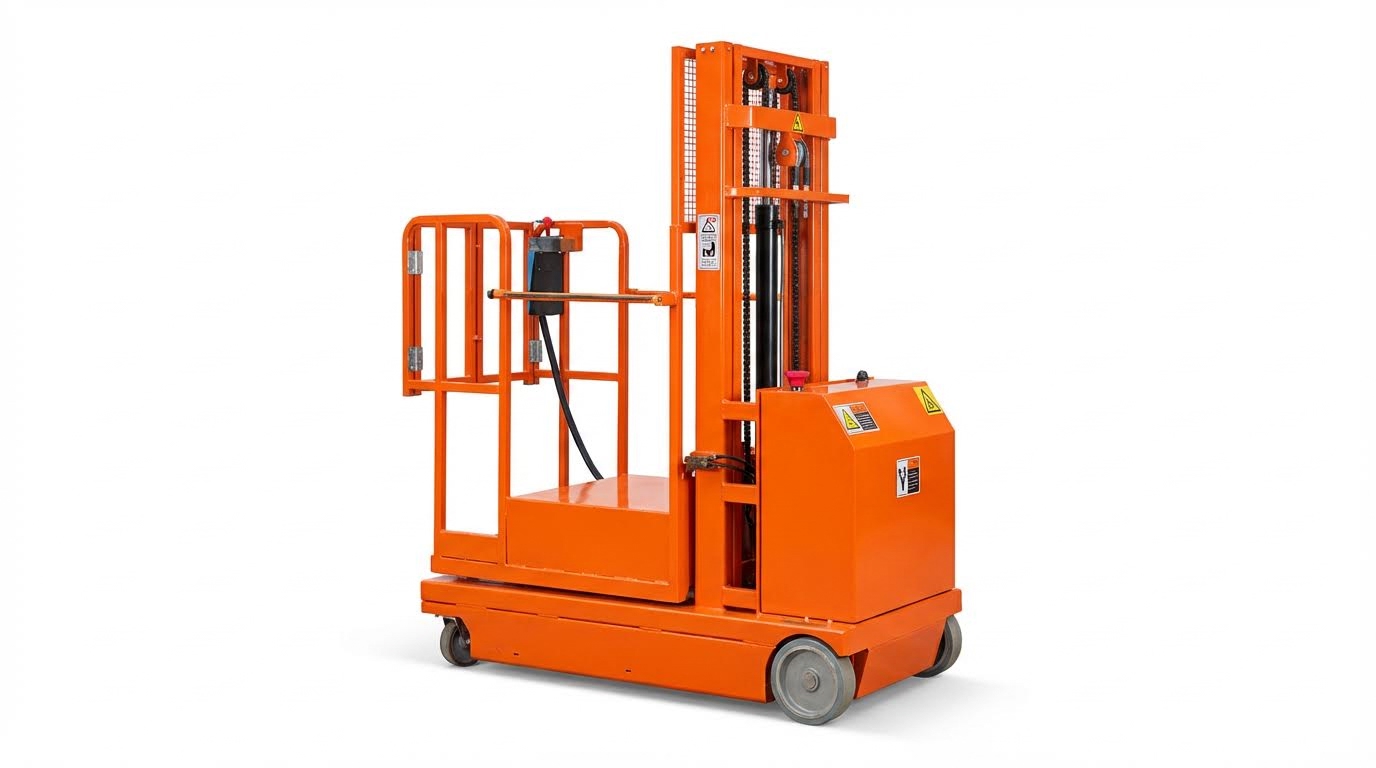
Geschwindigkeitsbegrenzungen, Abbiegeregeln, Rampenverfahren und Fußgängerprotokolle machen aus der reinen Leistungsfähigkeit eines Kommissionierhubwagens eine kontrollierte, vorhersehbare Bewegung, in deren Nähe sich andere Personen sicher bewegen können.
Die meisten schweren Verletzungen entstehen durch das Zusammentreffen von Geschwindigkeit, Höhe und Personen. Deshalb müssen die Baustellenregeln unbedingt eingehalten werden.
| Szenario | Wichtigste Regel / Grenze | Grund | Betriebliche Auswirkungen |
|---|---|---|---|
| Allgemeine Reise auf ebener Fläche | Beachten Sie die Geschwindigkeitsbegrenzungen und die Einstellungen des Geschwindigkeitsbegrenzers für Lkw. | Stopps und Kurven müssen innerhalb des Stabilitätsbereichs liegen. | Rechnen Sie mit unterschiedlichen Limits je nach Zone (Schüttgut, Kommissionierbereich, Docks) und passen Sie Ihre Fahrweise entsprechend an. basierend auf der Beschilderung |
| Fahrt mit Plattform über ≈0.9–1.0 m | Die horizontale Geschwindigkeit ist auf ≈1.1 m/s begrenzt. | Ein höherer Schwerpunkt erhöht das Risiko des Umkippens bei jedem Ausweichmanöver. | Planen Sie Ihre Route; vermeiden Sie unnötige Fahrten in erhöhten Lagen zwischen den Abholorten. um effizient und sicher zu bleiben |
| Reise oberhalb von ≈3.8 m | Verboten, es sei denn, Schienen- oder elektronische Wegführung ist aktiv. | Die manuelle Lenkung ist in der Höhe zu empfindlich. | Falls die Führung versagt, senken Sie das Flugzeug unmittelbar vor der horizontalen Bewegung. |
| Abbiege- oder Ausstiegsgänge | Vor dem Abbiegen auf sichere Fahrhöhe absenken. | Verringert das seitliche Kippmoment | Fahren Sie Kurven langsam; betrachten Sie jedes Schwanken oder Aufschaukeln als Warnsignal, weiter abzubremsen. oder aufhören |
| Rampen und Hänge | Lasterhöhung beibehalten, wenn beladen; kein Wenden an Hängen. | Die Schwerkraft beeinflusst Bremskraft und Traktion. | Anfahrtsrampen gerade und mit niedriger Geschwindigkeit anfahren und mitten auf der Rampe nicht anhalten, wo ein Zurückrollen möglich ist. |
| Rückwärtsfahren, insbesondere in der Höhe | Rückwärtsfahren nur bei freier Sicht oder mit geschultem Einweiser | Eingeschränkte Sichtbarkeit von der Plattform | An unübersichtlichen Kreuzungen hupen; anhalten, wenn der Sichtkontakt zum Einweiser abbricht. oder Fußgänger |
| Gemischter Verkehr mit Fußgängern | Fußgänger haben immer Vorrang. | Reaktionszeit und Zerbrechlichkeit des Menschen | Verlangsamen Sie Ihr Tempo auf Schrittgeschwindigkeit oder bleiben Sie stehen, wenn Personen Ihren Arbeitsbereich betreten; gehen Sie niemals davon aus, dass sie Sie gesehen haben. selbst mit Lichtern und Alarmen |
| Notstopps und Kippreaktion | Bei Kontrollverlust Not-Aus oder Totmannschalter betätigen; beim Lkw in Kippstellung bleiben. | Springen erhöht die Wahrscheinlichkeit, zerquetscht zu werden. | Füße abstützen, Bedienelemente festhalten und warten, bis die Bewegung zum Stillstand kommt; der Lkw muss vor der Wiederverwendung überprüft werden nach jedem Vorfall |
- Zonenbasiertes Fahren: Geschwindigkeit an Beschilderung und Bodenmarkierungen anpassen – Dockbereiche, Kreuzungen und Pick-up-Bereiche sollten Ihre langsamsten Zonen sein.
- Blickkontakt mit Fußgängern: Verlassen Sie sich nicht nur auf Leuchtfeuer oder projizierte Lichter – Warten Sie auf eine eindeutige Bestätigung, bevor Sie sich Personen nähern.
- Kontrollierte Lenkung: Verwenden Sie gleichmäßige, progressive Lenkbewegungen – Ruckartige Korrekturen in der Höhe sind eine häufige Ursache für Plattformschwankungen.
- Keine Überschreibungskultur: Fahrgeschwindigkeitsbegrenzer oder Geschwindigkeitsbegrenzer dürfen niemals umgangen werden – Wenn sich der Lkw „zu langsam“ anfühlt, sollte man die Anordnung oder die Abläufe anpassen, nicht die Sicherheitssysteme.
Praktische Überlegungen zu Rampen und Gefälle
In Handbüchern wird oft eine maximale Note in Prozent angegeben.
Inspektionsroutinen, Wartung und neue Technologien
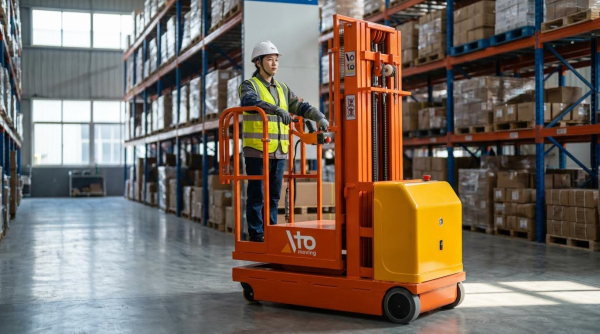
In diesem Abschnitt wird erläutert, wie man durch strukturierte Inspektionen, vorbeugende Wartung und moderne Diagnosetechnik, die Ausfälle und schwerwiegende Zwischenfälle reduziert, die Sicherheit und Zuverlässigkeit jedes Kommissioniergeräts im Lager gewährleisten kann .
Bei einem halbelektrischen Kommissionierer decken tägliche Kontrollen offensichtliche Gefahren auf, planmäßige Wartungsarbeiten kontrollieren den Verschleiß, und datengestützte Diagnosen sagen Ausfälle voraus, bevor sie Ihr Lager lahmlegen.
Tägliche Überprüfungen der mechanischen, elektrischen und Absturzsicherungen
Tägliche Kontrollen an einem Kommissioniergerät müssen sicherstellen, dass die Konstruktion, die Bedienelemente und der Absturzschutz vor dem ersten Hub der Schicht einwandfrei funktionieren.
Betrachten Sie dies als eine kurze, aber disziplinierte Routine: Rundgang, Funktionstest, dann Überprüfung des Absturzschutzes, wobei jeder kritische Defekt eine sofortige Außerbetriebnahme des Geräts zur Folge hat.
| Prüfbereich | Was zu überprüfen ist | Typische Probleme | Betriebliche Auswirkungen |
|---|---|---|---|
| Dokumentation | Bedienungsanleitung vorhanden; aktuelle Prüfbescheinigungen; Rettungsplan zugänglich | Fehlendes Handbuch, abgelaufene Zertifikate | Kann gegen die Hausordnung oder gesetzliche Pflichten verstoßen; verzögert die Nutzung, bis die erforderlichen Unterlagen vorliegen. |
| Fahrgestell, Mast und Plattform | Risse, verformte Abschnitte, Rost, lockere Befestigungselemente, beschädigte Schweißnähte, Plattformbefestigungspunkte | Gerissene Schweißnähte, fehlende Bolzen, verbogene Leitplanken | Schwächt den Lastpfad und die Absturzsicherung; Risiko eines Strukturversagens in der Höhe |
| Gabeln / Lastarme | Gabelfußdicke, Biegungen, Risse, Verriegelungsbolzen | Beschädigung der Gabelspitze, Haarrisse | Beeinträchtigt die Kapazität; höheres Risiko, dass Paletten oder Fässer herunterfallen |
| Räder / Reifen | Verschleiß, Schnitte, Ausbrüche, Luftdruckschäden, Radbeschädigung | Flachstellen, niedriger Reifendruck, lockere Radmuttern | Verringert Stabilität und Bremsleistung; erhöht die Kippgefahr in Kurven |
| Hydraulik | Ölstand, sichtbare Lecks, Schlauchabrieb, beschädigte Anschlüsse | Tropfen an Zylinderdichtungen, weiche Schläuche | Kann zu unkontrollierter Absenkung, Umweltverschmutzung und Brandgefahr führen |
| Elektrisches System | Akkuladung, Anschlüsse, Kabelisolierung, sichtbare Schäden | Verbrannte Kontakte, gerissene Isolierung | Unerwartete Abschaltungen, Lichtbogengefahr, reduzierter Arbeitszyklus |
| Steuerungen und Antriebe | Lenkreaktion, Antrieb, Heben/Senken, Neigen, Notabsenken | Verzögerte Reaktion, ruckartiges Anheben, Driften im Leerlauf | Erschwert präzises Kommissionieren; kann in engen Gängen zu Zusammenstößen führen. |
| Bremsen & Totmann | Betriebsbremse, Feststellbremse, Totmannschalter oder Aktivierungsschalter | LKW kriecht den Hang hinauf, Pedal klemmt | Verlust der kontrollierten Bremswirkung; ernsthafte Gefahr in der Nähe von Kanten oder Rampen |
| Warngeräte | Hupe, Alarmanlagen, Warnleuchten, Bodenprojektionsleuchten | Stummes Horn, ausgefallenes Leuchtfeuer | Fußgänger können Annäherungsvorgänge nicht erkennen; erhöhte Kollisionswahrscheinlichkeit |
| Leitplanken und Tore | Obere/mittlere Geländer, Fußleisten, Tor-/Kettenverschlüsse und Riegel | Lockerer Torriegel, verbogene Schienen | Reduzierter Kantenschutz; höheres Absturzrisiko in der Höhe |
| Persönliche Schutzausrüstung gegen Absturz | Ganzkörpergurt, Verbindungsmittel, Karabiner, Anschlagpunkte | Ausgefranste Gurtbänder, verbogene Haken, fehlende Etiketten | Der Gurt kann unter Last versagen; entspricht nicht den Absturzsicherungsvorschriften |
- Täglicher Rundgang: Beginnen Sie an der Basis und arbeiten Sie sich nach oben – stellt sicher, dass Ihnen keine kritischen strukturellen oder hydraulischen Mängel entgehen.
- Funktionsprüfung der Erdung: Heben, Senken, Fahren, Lenken, Not-Aus prüfen – Bestätigt die sichere Reaktion vor dem Aufstieg.
- Plattformsteuerungstest: Überprüfen Sie alle Bewegungen aus dem Korb – gewährleistet, dass der Bediener Störungen in der Höhe beheben kann.
- Sturzsicherungscheck: Gurtzeug, Verbindungsmittel und Anschlagpunkt prüfen – verhindert die Verwendung beschädigter Schutzausrüstung, die unter Belastung reißen könnte.
- Auskennzeichnungsregel: Außer Betrieb nehmen, wenn Bremsen, Lenkung, Hebevorrichtung oder Verankerungspunkte defekt sind – stoppt „nur noch einen Auftrag“ mit unsicherer Ausrüstung.
Empfohlener Ablauf der täglichen Checkliste für Vorgesetzte
Verwenden Sie eine einseitige Checkliste, die der obigen Tabelle entspricht. Verlangen Sie von den Bedienern eine Unterschrift zu Schichtbeginn und bewahren Sie die Aufzeichnungen mindestens 12 Monate lang auf, um Audits und Vorfalluntersuchungen zu ermöglichen.
💡 Hinweis des Außendiensttechnikers: Sollten Sie jeden Morgen wiederholt nasse Stellen unter demselben Lkw feststellen, füllen Sie nicht einfach nur Hydrauliköl nach. Lokalisieren und beheben Sie das Leck umgehend; langsame Lecks führen oft zu Schlauchplatzern während der Erntespitzen, wenn das Öl am heißesten und der Druck am höchsten ist.
Vorbeugende Wartung, Diagnose und Prognosewerkzeuge
Durch planmäßige Wartung und moderne Diagnoseverfahren bleibt der Kommissionierer einer Hubarbeitsbühne innerhalb der Konstruktionsgrenzen, wodurch die Lebensdauer der Komponenten verlängert und ungeplante Ausfallzeiten reduziert werden.
Sie kombinieren zeitbasierte Aufgaben (monatlich, halbjährlich, jährlich) mit Daten aus der Bordelektronik, um zu entscheiden, wann ein Lkw repariert, in seiner Leistung reduziert oder außer Dienst gestellt werden soll.
| Intervall / Werkzeug | Typische Aufgaben | Wichtige berührte Komponenten | Beste für… |
|---|---|---|---|
| Tägliche Bedienerprüfungen | Sichtbare Lecks, Schäden, Bedienelemente, Bremsen, Alarme | Hydraulik, Reifen, Struktur, Steuerung | Offensichtliche Gefahren vor dem ersten Lift erkennen. |
| Monatliche technische Inspektion | Hydraulikölstand, Filter, Verkabelungsintegrität, Notabsenkung, Neigungs-/Überlastalarme | Pumpen, Zylinder, Schläuche, Kabelbäume | Sicheres Heben und kontrolliertes Absteigen gewährleisten |
| halbjährlicher Service | Weiterführende Funktionstests, PSA- und Verankerungsprüfungen, Software-Updates | Verankerungspunkte, Gurtzeugbestand, Steuergeräte | Einhaltung der Absturzsicherungs- und Sicherheitsregeln |
| Jährliche oder größere Wartung | Zerlegen, Ketten, Rollen, Bolzen, Buchsen und Verriegelungen ersetzen | Mast, Steuerung, Antriebseinheiten, Sicherheitsverriegelungen | Zurücksetzen des Lkw auf die „vorgegebene“ Leistung |
| On-Board-Diagnose | Fehlercodes lesen, Batteriestatus überwachen, Überlastungen protokollieren | Motoren, Wechselrichter, Sensoren, Batterie | Schnelle Fehlererkennung und Vermeidung wiederholter Ausfälle |
| Telemetrie-/Flottenportal | Trendstunden, Hubzyklen, Stöße, Alarme bei allen Lkw | Nutzungsprofil der gesamten Flotte | Anpassung der Flottengröße und gezielte Fokussierung auf Hochrisikoeinheiten |
| Predictive Analytics | Schätzen Sie die Restlebensdauer anhand der Spannungs-, Strom- und Temperaturtrends. | Batterien, Hydraulikpumpen, Antriebsmotoren | Planung des Austauschs von Fenstern mit geringer Nachfrage |
- Schritt 1: Festlegung von OEM- oder standortspezifischen Serviceintervallen – Die Garantie bleibt gültig und entspricht den LOLER- oder ähnlichen Hebevorschriften.
- Schritt 2: Standardisierung von Service-Checklisten – stellt sicher, dass jeder Techniker jedes Mal die gleichen kritischen Punkte überprüft.
- Schritt 3: Verwenden Sie Fehlercodes, nicht Vermutungen – Verkürzt die Diagnosezeit und vermeidet unnötige Teileaustausche.
- Schritt 4: Nutzungsdaten analysieren (Betriebsstunden, Hubzyklen, Überlastereignisse) – Identifiziert Lkw, die in bestimmten Gängen oder Schichten missbräuchlich verwendet werden.
- Schritt 5: Lkw mit hohem Risiko sollten vorrangig einer frühzeitigen Überholung unterzogen werden – verhindert Störungen im Regalgang, die den Kommissioniervorgang blockieren.
- Schritt 6: Daten zu Vorfällen und Beinaheunfällen in die Instandhaltungspläne einfließen lassen – Fügt zusätzliche Prüfungen hinzu, wenn Ihre Website in der Vergangenheit tatsächlich Probleme hatte.
Wie die Diagnostik den täglichen Betrieb verändert
Moderne Kommissioniersysteme protokollieren, wann Überlastsensoren auslösen, Fahrwegbegrenzungsschalter ansprechen und Not-Aus-Schalter betätigt werden. Vorgesetzte können diese Daten auswerten, um einzelne Bediener zu schulen und Geschwindigkeits- oder Höhenbegrenzungen in Problembereichen anzupassen.
💡 Hinweis für den Außendiensttechniker: Wenn die Telemetrie gegen Ende der Schicht häufig Unterspannungsalarme anzeigt, sollten Sie nicht einfach weitere Ladegeräte anschließen. Überprüfen Sie die Ladedisziplin und die Ausgleichszyklen. Chronisches Unterladen schädigt die Batterien und kann zu Spannungseinbrüchen mitten in der Schicht führen, wodurch Bediener in der Höhe festsitzen.
""
Abschließende Gedanken zu sicheren und effizienten Kommissioniervorgängen
Die sichere Bedienung von Kommissioniergeräten basiert auf einem einfachen Prinzip: Konstruktion, Verfahren und Verhalten müssen sich gegenseitig unterstützen. Geometrie, Stabilitätsgrenzen und die Schutzvorrichtungen der Plattform schützen den Bediener nur dann, wenn die Teams in jeder Schicht die Lastdiagramme, die Vorschriften zur Arbeitshöhe und die Anforderungen an die Absturzsicherung beachten. Führungssysteme, Sensoren und Geschwindigkeitsbegrenzer bilden eine zusätzliche Sicherheitsebene, die Lenkfehler und überhöhte Geschwindigkeit erkennt, bevor es zu einem Umkippen oder einem Aufprall auf das Regal kommt.
Tägliche Inspektionen schließen den Kreislauf. Die Bediener nehmen beschädigte Lkw außer Betrieb, bevor eine gerissene Schweißnaht, eine schwache Bremse oder ein defekter Kabelbaum zu einem schweren Sturz oder einer Kollision führen kann. Geplante Wartung, Diagnose und vorausschauende Systeme sorgen dafür, dass die Flotte innerhalb ihrer ursprünglichen Spezifikationen bleibt, sodass Bremsen, Hydraulik und Verriegelungen auch Jahre nach der Inbetriebnahme noch wie vom Ingenieur vorgesehen funktionieren.
Die beste Vorgehensweise für Betriebs- und Entwicklungsteams ist eindeutig: Wählen Sie Kommissioniergeräte, die zur Gangbreite, Regalhöhe und Bodenbeschaffenheit passen. Führen Sie strenge Vorabprüfungen und Kennzeichnungsregeln durch. Behandeln Sie Alarme und Verriegelungen als feste Grenzwerte, nicht als Ziele, die umgangen werden können. Nutzen Sie Telemetrie- und Fehlerdaten, um Layouts, Schulungen und die Einstellungen der Atomoving-Geräte zu optimieren. Wenn Sie die Leistungsfähigkeit der Geräte, die technischen Steuerungen und disziplinierte Arbeitsabläufe aufeinander abstimmen, erzielen Sie höhere Kommissionierraten, weniger Beinaheunfälle und Mitarbeiter, die jeden Tag gesund nach Hause kommen.
Häufig gestellte Fragen
Ist ein Kommissionierer dasselbe wie ein Gabelstapler?
Ein Kommissionierer ist technisch gesehen ein Gabelstapler der Klasse II – Schmalgangstapler mit Elektromotor. Kommissionierer-Leitfaden.
Welche Aufgaben hat ein Kommissionierer im Lager?
Kommissionierer im Lager sind für das Zusammenstellen von Artikeln aus den Regalen zur Auftragsabwicklung verantwortlich. Diese Tätigkeit erfordert häufig das Zurücklegen langer Strecken, das Heben schwerer Lasten und das Erreichen hoher Lagerbereiche. Die Arbeit kann körperlich anstrengend sein, da die Mitarbeiter täglich 10 bis 6 Kilometer auf harten Böden zurücklegen. Herausforderungen im Lager.
Welche Fähigkeiten benötigt man als Kommissionierer?
Für die Tätigkeit als Kommissionierer ist es hilfreich, den Umgang mit Flurförderzeugen wie Gabelstaplern oder Hubwagen zu beherrschen, wobei viele Stellen eine Einarbeitung am Arbeitsplatz bieten. Zu den wichtigsten Voraussetzungen gehören die Fähigkeit, schwere Gegenstände zu heben, eine hohe Arbeitsmoral und gute Kommunikationsfähigkeiten. ( Kenntnisse im Bereich Kommissionierung )