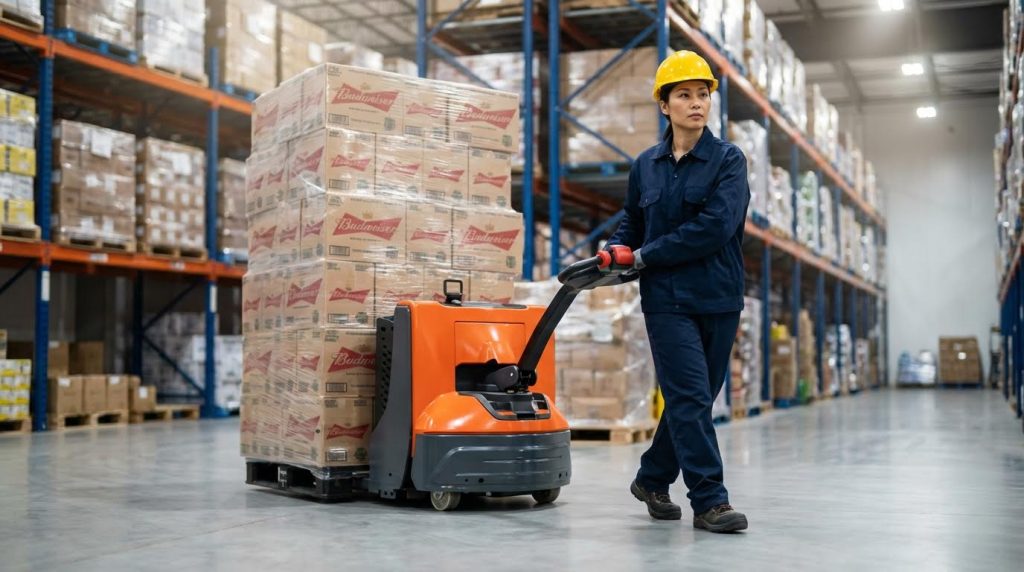
Un remplissage d'huile correct de votre transpalette garantit un levage fluide, prévient l'endommagement des joints et réduit les temps d'arrêt coûteux. Ce guide vous accompagne dans le choix de l'huile, le remplissage étape par étape, la purge d'air et les vérifications simples pour assurer la sécurité, la fiabilité et le bon fonctionnement de votre transpalette .

Comprendre les bases de l'huile hydraulique des transpalettes

Cette section explique le fonctionnement du circuit hydraulique du transpalette et pourquoi le niveau et la viscosité de l'huile sont essentiels avant même de penser à la manière de remplir le transpalette d'huile en toute sécurité et correctement.
Fonctionnement du système hydraulique du transpalette
Le système hydraulique du transpalette convertit les mouvements de la poignée en un flux d'huile à haute pression qui soulève les fourches en douceur et maintient les charges en toute sécurité à la hauteur voulue.
À l'intérieur du groupe hydraulique, on trouve généralement une petite pompe, un réservoir, des clapets anti-retour, une vanne de descente et un vérin de levage simple effet. Lorsque vous actionnez la poignée, la pompe aspire l'huile du réservoir et la refoule dans le vérin, ce qui repousse le piston et soulève les fourches. Lorsque vous déplacez le levier de commande sur la position « DESSOUS », une vanne s'ouvre et permet à l'huile de retourner au réservoir, ce qui permet aux fourches de descendre de manière contrôlée. Si le niveau d'huile est trop bas ou si de l'air est emprisonné, la pompe ne peut pas générer une pression stable ; les fourches se lèvent alors lentement, par à-coups ou n'atteignent pas leur hauteur maximale. Les symptômes typiques incluent un levage lent ou saccadé, une hauteur de levage maximale réduite et des fourches qui s'enfoncent sous la charge, autant de signes indiquant qu'une vérification ou un appoint d'huile est nécessaire. Les symptômes hydrauliques typiques et les recommandations de remplissage soulignent également que les suintements d'huile visibles autour des joints constituent un signe avant-coureur de problèmes du système.
- Pompe et réservoir : Les mouvements de la poignée pressurisent l'huile – Génère la force qui soulève effectivement la charge.
- Vérin de levage : Convertit la pression de l'huile en mouvement linéaire – Lève les fourches selon une trajectoire droite et contrôlée.
- Clapets anti-retour: Maintenez la pression lorsque vous arrêtez de pomper – Empêche les fourches de s'affaisser sous la charge.
- Vanne d'abaissement : Refoule l'huile vers le réservoir – Contrôle la vitesse de descente de la fourche pour plus de sécurité.
- Joints et tuyaux : Empêcher l'huile de s'échapper et les contaminants d'entrer – Maintenir la pression et réduire l'usure.
Comment le niveau ou l'aération de l'huile modifie-t-il le comportement du système ?
Un niveau d'huile insuffisant permet à l'air de pénétrer dans l'entrée de la pompe. L'air étant plus compressible que l'huile, le mouvement de la fourche devient saccadé et imprécis. Après le remplissage, actionner la barre de remorquage 10 à 15 fois permet d'évacuer l'air du système et d'assurer un levage stable. Les procédures de remplissage et de purge insistent sur cette étape d'évacuation.
💡 Note du technicien : Si un cric ne se soulève plus après une période de stockage, ne présumez pas qu’il est hors service. Vérifiez d’abord le niveau d’huile, puis purgez l’air en pompant avec le levier en position basse ; la présence d’air emprisonné est une cause fréquente de dysfonctionnement sur les équipements peu utilisés. Une purge standard confirme cette solution simple.
Pourquoi le niveau et la qualité d'huile corrects sont importants
Un niveau d'huile et un grade de viscosité corrects sont essentiels car ils contrôlent la vitesse de levage, le maintien de la charge, l'usure des composants et la sécurité à long terme du transpalette.
L'huile hydraulique d'un transpalette lubrifie les pièces mobiles, transmet la pression et protège les surfaces internes contre la corrosion et l'usure. Un niveau d'huile trop bas augmente la friction et l'usure, ce qui peut endommager la pompe, les soupapes et les joints, et à terme provoquer une panne hydraulique et un fonctionnement dangereux. Un entretien régulier de l'huile permet donc de prévenir les dommages, d'éviter les arrêts imprévus et de prolonger la durée de vie de l'équipement. Les recommandations relatives au niveau et à l'état de l'huile soulignent qu'un remplissage correct est une mesure de sécurité essentielle, et non une simple commodité.
| Facteur | Recommandation typique | Raison technique | Impact opérationnel |
|---|---|---|---|
| Niveau d'huile dans le réservoir | Environ 1 à 2 cm sous l'orifice de remplissage lorsque les fourches sont complètement abaissées Niveau de remplissage recommandé | Laisse un espace de dilatation à l'huile lorsqu'elle se réchauffe et se déplace. | Empêche les surpressions susceptibles d'endommager les joints et de provoquer des fuites pendant l'utilisation. |
| Grade de viscosité (ISO VG) | ISO 22, 32 ou 46 selon le climat et la charge grades de viscosité courants | Adapte la résistance à l'écoulement à la température et à la pression. | Assure un levage en douceur en hiver et une résistance stable du film sous de lourdes charges. |
| Intérieur, climat modéré | Huile hydraulique ISO VG32 (≈30 cSt à 40°C) Guide d'utilisation de la norme ISO 32 | Flux et lubrification équilibrés aux températures typiques d'un entrepôt. | Choix standard pour la plupart des transpalettes d'intérieur ; réponse de levage prévisible. |
| stockage frigorifique ou basse température ambiante | ISO VG22 pour un débit de démarrage à froid plus facile Recommandation pour un environnement froid | Une viscosité plus faible réduit l'épaississement à basse température. | Empêche les levages lents ou non réactifs dans les zones réfrigérées. |
| utilisation à haute température ou intensive | ISO VG46 pour un film plus résistant aux températures de fonctionnement plus élevées Conseils pour climats chauds et charges lourdes | Une viscosité plus élevée assure la lubrification sous des contraintes thermiques et de charge plus importantes. | Réduit l'usure et maintient la capacité de levage pendant les périodes de travail intensives. |
| Additifs (anti-usure, anti-mousse, inhibiteurs de rouille) | Huile hydraulique de haute qualité avec additifs anti-abrasion, anti-mousse et anticorrosion Aperçu du package additif | Protège les surfaces, empêche la formation de bulles d'air et résiste à la rouille. | Prolonge la durée de vie des pompes, vannes et cylindres en conditions humides ou en fonctionnement à cycles élevés. |
| Compatibilité du type d'huile | Huile hydraulique non détergente, généralement de type ISO 32–46 ou huile hydraulique industrielle 10W Guide de sélection de l'huile | Adapté aux matériaux d'étanchéité et à la conception hydraulique ; évite les détergents agressifs. | Prévient le gonflement, le ramollissement ou la fissuration des joints pouvant entraîner des fuites chroniques. |
Utiliser une huile inadaptée (type ou viscosité) peut être aussi néfaste qu'un niveau d'huile insuffisant. Les huiles moteur automobiles et les huiles de cuisson sont à proscrire, car leurs détergents et additifs ne sont pas conçus pour les petits systèmes hydrauliques et peuvent attaquer les joints ou provoquer la formation de mousse. Les recommandations de choix d'huile insistent également sur la compatibilité avec les joints en NBR courants afin de réduire les risques de fuite.
- Niveau correct : 1 à 2 cm sous le niveau de remplissage lorsque les fourchettes sont abaissées – Laisse de l'espace pour la dilatation thermique et évite la surcharge du joint.
- Note correcte : ISO 22 / 32 / 46 adapté au climat – Permet de maintenir une vitesse de levage prévisible et de réduire la contrainte sur la pompe.
- Huile propre : Absence de coloration laiteuse ou de débris visibles – Prévient la formation de rouille et l'usure abrasive dues à l'eau à l'intérieur du cylindre.
- Additifs appropriés : Anti-usure et anti-mousse – Protéger contre le contact à haute pression et la cavitation induite par l'air.
- Huile de base appropriée : Huile hydraulique sans détergent, pas huile moteur – Assure la bonne étanchéité et la stabilité du système pendant des années.
Pourquoi ceci est important avant d'apprendre à remplir un transpalette d'huile
Bien comprendre le niveau et la viscosité de l'huile permet, lors du remplissage, de choisir une huile adaptée à la plage de températures, qui protège les composants et n'endommage pas les joints. Ainsi, le remplissage rétablit les performances au lieu de créer de nouveaux problèmes.
💡 Note du technicien : Dans les entrepôts à climat mixte, j’ai standardisé l’utilisation de l’huile ISO 32 pour les transpalettes intérieurs et de l’huile ISO 22 uniquement pour les unités de congélation. L’utilisation de différentes qualités d’huile entre ces parcs de transpalettes a entraîné des plaintes répétées concernant la lenteur des transpalettes par temps froid, jusqu’à ce que nous séparions les huiles par zone, conformément aux recommandations en matière de viscosité. Ces recommandations, basées sur le climat, confortent cette pratique.
Procédure étape par étape pour remplir le réservoir d'huile du transpalette
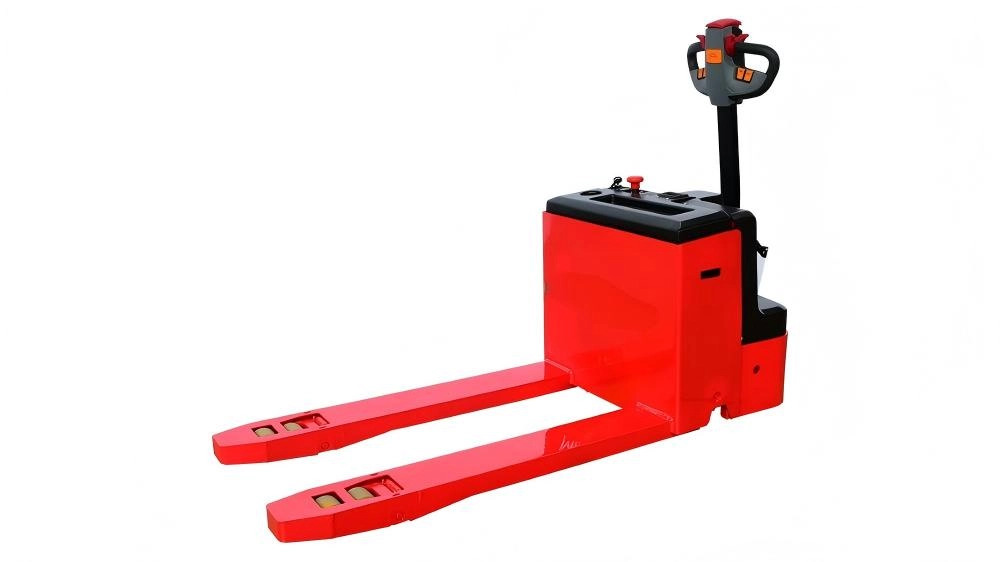
Cette section décrit une procédure claire, sûre et applicable en atelier pour remplir un transpalette d'huile sans provoquer de fuites, d'air emprisonné ni de panne hydraulique. Suivez chaque étape dans l'ordre et ne dépassez jamais le niveau du réservoir.
Préparation du cric et de la zone de travail sécurisée
Cette étape permet de stabiliser, de nettoyer et de sécuriser le transpalette afin d'éviter que des saletés ne s'accumulent dans le système hydraulique ou que le chariot ne se renverse lorsqu'il est ouvert.
- Sol plat et de niveau : Positionner le transpalette sur une surface solide et plane – empêche le roulement et assure la précision des relevés du niveau d'huile.
- Fourche complètement abaissée : Pompez la poignée pour soulever légèrement si nécessaire, puis déplacez le levier de commande vers le bas jusqu'à ce que les fourches reposent sur le sol. Cela permet de renvoyer le pétrole dans le réservoir et de réduire la pression interne.
- Position neutre de la poignée : Laissez le levier de commande au NEUTRE une fois complètement abaissé – évite les levages ou abaissements involontaires pendant le travail.
- Calez les roues si la pente est légère : Placer des cales derrière/devant le volant – stoppe les mouvements imprévus pendant le remplissage.
- Nettoyer autour de l'unité hydraulique : Essuyez la poussière, les gravillons et la graisse du corps de la pompe et de la zone de remplissage – réduit la contamination qui accélère l'usure et la défaillance des joints dans le circuit hydraulique.
- Protection personnelle: Portez des lunettes de sécurité et des gants légers – protège la peau et les yeux des projections d'huile lors de l'ouverture du bouchon de remplissage.
- Huile correcte prête : Préparer l’huile hydraulique non détergente spécifiée (généralement ISO VG 32–46) dans un récipient propre – évite les erreurs de dernière minute liées à l'utilisation de types d'huile inappropriés qui peuvent endommager les joints. et les parties internes.
Pourquoi les fourches doivent être complètement abaissées avant le remplissage
Lorsque la fourche est relevée, de l'huile stagne dans le cylindre. Si vous effectuez le remplissage dans cette position, une fois la fourche abaissée, l'huile qui retourne au réservoir risque de le remplir excessivement et de saturer les joints, provoquant des fuites et des débordements.
💡 Note du technicien : Dans les entrepôts à forte activité, il arrive souvent que les techniciens fassent l’appoint d’huile alors que des impuretés sont encore présentes sur le corps de la pompe. Ces particules se mélangent à l’huile et rayent l’alésage du cylindre. Un nettoyage de 60 secondes suffit ; il prolonge considérablement la durée de vie d’un groupe hydraulique.
Localiser le bouchon de remplissage et vérifier le niveau d'huile
Cette étape permet d'identifier l'orifice de remplissage approprié et de confirmer si vous avez réellement besoin d'huile, évitant ainsi le surremplissage et le remplissage incorrect d'un autre orifice comme une vis de purge.
- Localisez l'unité hydraulique : Placez-vous au niveau de la poignée et regardez la base où la barre de remorquage rejoint le châssis – Ce bloc représente l'ensemble pompe et réservoir.
- Repérez le bouchon de remplissage : Recherchez un petit bouchon à vis ou un capuchon en plastique sur le dessus ou le côté du corps de la pompe, souvent fendu pour un tournevis plat – C'est à ce moment-là qu'on ajoute de l'huile. selon les guides de service.
- Nettoyez à nouveau la zone de la prise : Essuyez directement autour de la prise avant de l'ouvrir – empêche les saletés de tomber dans le réservoir lorsque le bouchon est retiré. et contaminant le pétrole.
- Retirez soigneusement le bouchon de remplissage : Utilisez le tournevis plat ou la clé hexagonale appropriée, appuyez fermement et tournez lentement – empêche d'abîmer la tête de vis ou de fissurer un capuchon en plastique.
- Vérifier le niveau d'huile actuel : Avec les fourches toujours complètement abaissées, regardez dans l'ouverture ou plongez un collier de serrage propre ou une petite tige directement vers le bas – L'huile doit se situer environ 10 à 20 mm en dessous du fond de l'orifice de remplissage, et non au niveau du haut. pour éviter le surremplissage.
- Évaluer l'état de l'huile : Observez la couleur et la clarté de la tige de trempage ou du nœud – Une huile laiteuse indique la présence d'eau, tandis qu'une huile foncée ou granuleuse signale des débris d'usure et une contamination. et appelle à un changement complet.
- Décidez : complément ou monnaie complète : Si le niveau est bas mais que l'huile est propre, vous pouvez faire l'appoint. Si elle est laiteuse ou très foncée, prévoyez une vidange et un remplissage. Cela évite de fonctionner avec un fluide contaminé, ce qui augmente la friction et l'usure. et peut provoquer une défaillance hydraulique.
Quelle quantité d'huile contient généralement un transpalette ?
La plupart des transpalettes manuels consomment environ 0.3 à 0.4 litre d'huile hydraulique au total, le niveau recommandé étant d'environ 0.3 litre pour un remplissage standard, selon le modèle et les instructions du fabricant. Consultez toujours le manuel d'utilisation.
💡 Note du technicien : Si le niveau d’huile est difficilement visible, éclairez l’ouverture avec une petite lampe torche, et non directement vers le bas. La lumière latérale permet de mieux distinguer la surface de l’huile et les bulles éventuelles dans un réservoir sombre.
Remplissage, purge d'air et tests post-remplissage
Cette dernière étape explique précisément comment remplir le transpalette d'huile jusqu'au niveau correct, éliminer l'air emprisonné et vérifier le bon fonctionnement du levage avant de remettre le transpalette en service.
- Étape 1 : Préparer un outil de remplissage propre – Utilisez un petit entonnoir propre ou une pompe manuelle réservée uniquement à l'huile hydraulique – Cela minimise la pénétration de saletés et d'humidité qui, autrement, obligerait à un entretien plus fréquent. en raison d'une pollution.
- Étape 2 : Ajouter l'huile lentement – Versez ou pompez l'huile de grade ISO approprié (généralement ISO 32 à environ 30 cSt à 40 °C) en petites quantités – Le remplissage lent réduit la formation de mousse et l'emprisonnement d'air dans le réservoir. ce qui peut provoquer des mouvements saccadés lors de la levée des poids.
- Étape 3 : Surveillez fréquemment le niveau – Faites une pause toutes les quelques secondes et vérifiez le niveau à l'orifice de remplissage. Arrêtez-vous lorsque l'huile se situe à environ 10–20 mm sous le trou, et non pas jusqu'en haut, afin d'éviter un remplissage excessif. et contrainte d'étanchéité.
- Étape 4 : Remettre le bouchon de remplissage – Une fois le niveau correct atteint, nettoyez toute trace d'huile renversée, puis réinstallez et serrez le bouchon. Cela empêche les fuites et empêche la poussière en suspension dans l'air de pénétrer dans le réservoir.
- Étape 5 : Purger l’air du système – Avec le levier de commande en position BASSE, pompez la poignée plusieurs fois (10 à 15) – Cela permet de faire circuler l'huile et d'éliminer les poches d'air responsables d'une levée de pied spongieuse ou saccadée. du circuit hydraulique.
- Étape 6 : Test de fonctionnement à vide – Déplacez la commande sur RAISE et actionnez la poignée sur toute sa course à plusieurs reprises – Les fourchettes doivent monter de manière fluide et régulière, sans à-coups ni pauses. si l'air a été purgé correctement.
- Étape 7 : Vérifier l'étanchéité – Inspectez la pompe, le bouchon de remplissage et la tige du vérin tout en actionnant le cric. Toute suintement d'huile récent indique un surremplissage ou des joints usés qui nécessitent une attention particulière. avant que le cric ne soit remis en service.
- Étape 8 : Test de charge légère – Placez une charge modérée sur les fourches et soulevez-les à leur hauteur maximale, puis maintenez la position pendant 1 à 2 minutes. Les fourchettes ne doivent pas s'enfoncer de manière perceptible ; un enfoncement indique une fuite interne ou la présence d'air résiduel nécessitant un diagnostic plus approfondi. et éventuellement le remplacement du joint.
- Étape 9 : Nettoyage final et documentation – Nettoyez toute trace d'huile résiduelle du cadre et notez la date et le type d'huile utilisée. Cela permet le suivi de la maintenance et le respect des calendriers d'inspection. pour l'entretien futur.
Que se passe-t-il si le cric continue de mal lever après le remplissage ?
Si la levée reste lente ou saccadée après un remplissage et une purge corrects, vérifiez à nouveau la présence d'air en actionnant la poignée plusieurs fois avec le levier en position BAS. Des problèmes persistants, des fourches qui s'enfoncent ou des fuites visibles indiquent généralement des joints usés ou des problèmes de valve interne nécessitant une réparation ou un remplacement plutôt qu'un simple ajout d'huile.
💡 Note du technicien : La plupart des problèmes de levage « mystérieux » après un remplissage sont dus à un excès d’huile. En chauffant, l’huile se dilate et ne peut s’échapper que par les joints. Veillez à toujours laisser un espace de 10 à 20 mm sous l’orifice de remplissage ; il s’agit d’une zone de dilatation.
Choix de l'huile, intervalles d'entretien et dépannage
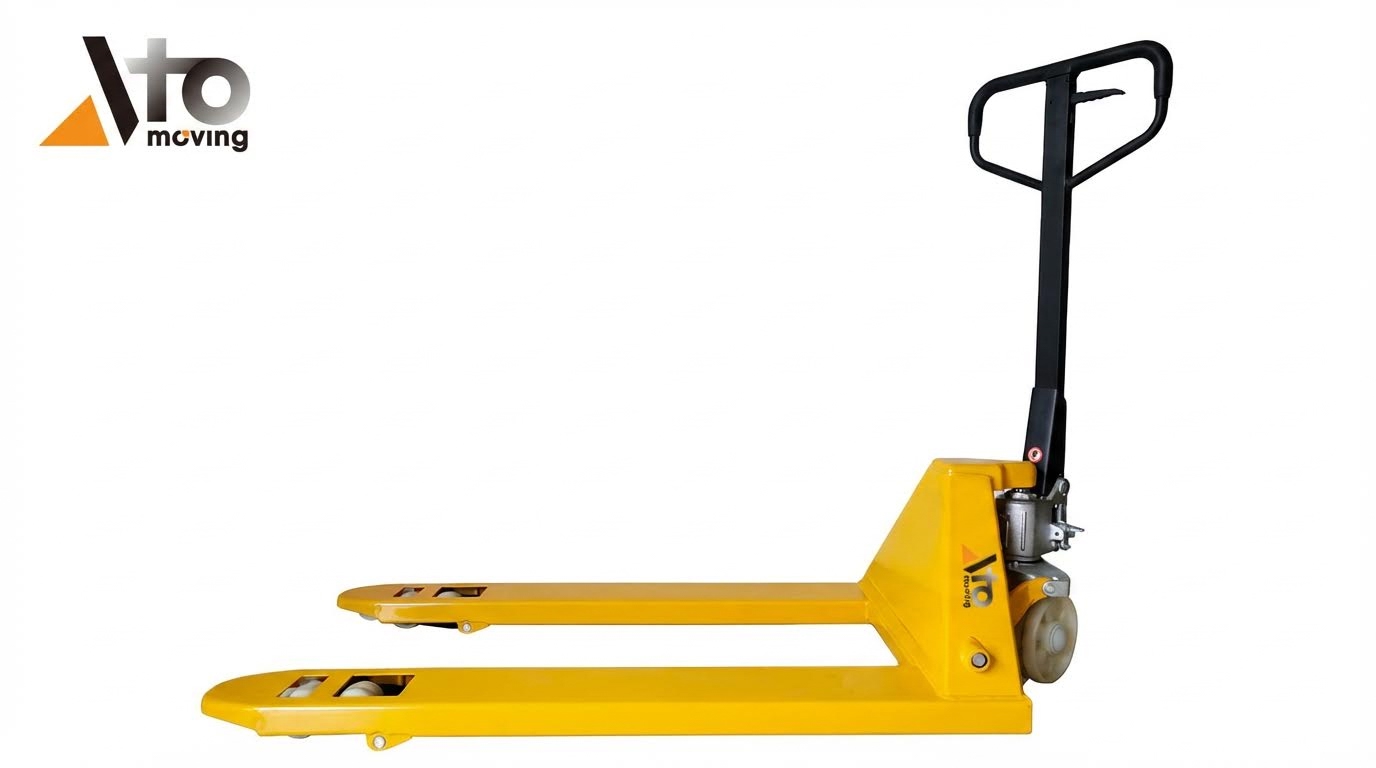
Cette section explique quelle huile hydraulique utiliser, à quelle fréquence la contrôler et comment éviter ou résoudre les problèmes liés au remplissage correct du transpalette . Le respect de ces trois points permet d'éviter les fuites, les à-coups lors du levage et les pannes inattendues du transpalette.
Choisir l'huile hydraulique et la viscosité appropriées
L'huile adaptée à un transpalette est une huile hydraulique non détergente présentant le grade de viscosité ISO approprié à votre climat et à votre cycle d'utilisation. L'utilisation d'un grade ou d'un type d'huile inadapté réduit les performances de levage et peut endommager les joints.
| Classe ISO / Type | Cas d'utilisation typique | Température / Environnement | Additifs et caractéristiques clés | Impact opérationnel |
|---|---|---|---|---|
| ISO 22 | Entrepôts frigorifiques intérieurs, entrepôts non chauffés | Climats froids ; favorise la circulation à basse température | Inhibiteurs d'usure, anti-mousse et antirouille décrit pour les huiles de transpalette | Pompage facilité par temps froid ; réduit la difficulté de remontée à basses températures. |
| ISO 32 | transpalettes d'intérieur standard | Climats tempérés ; utilisation typique en entrepôt | Une viscosité d'environ 30 cSt à 40 °C (ISO VG32) est recommandée pour de nombreux camions à transmission manuelle. pour transpalettes | Débit et résistance du film équilibrés ; levée douce et homogène pour la plupart des utilisateurs. |
| ISO 46 | Charges plus lourdes, environnements plus chauds | températures ambiantes plus élevées | Film plus résistant, protection contre l'usure et la rouille réputé pour son service de transpalette | Meilleure protection en cas d'utilisation intensive ; la pompe peut sembler plus difficile à actionner par temps froid. |
| Huile hydraulique sans détergent (10W industrielle) | Huile de remplacement générale lorsque le manuel préconise une huile 10W | Respectez la plage de température indiquée par le fabricant | Formulé sans détergents pour huile moteur qui attaquent les joints. comme recommandé | Sans danger pour les joints NBR classiques ; évite la formation de mousse et de boues dues à des types d'huile inappropriés. |
| Huiles avec agents d'entretien des joints / anti-fuite | Vérins vieillissants avec de légères infiltrations | N'importe lequel, mais seulement à titre temporaire | Agents d'étanchéité ou additifs anti-fuites mentionné pour les fuites mineures | Peut ralentir les petites fuites, mais les joints usés doivent tout de même être remplacés pour une fiabilité à long terme. |
- Utilisez une huile hydraulique sans détergent : Suivez les instructions du manuel d'utilisation, généralement pour l'huile hydraulique ISO 32–46 ou 10W – prévient les dommages que les huiles moteur peuvent causer aux joints. Matériau
- Adapter le climat à la viscosité : ISO 22 pour le froid, ISO 32 pour une utilisation intérieure normale, ISO 46 pour une utilisation plus chaude ou intensive – maintient l'effort de pompage et la vitesse de levage constants. Matériau
- Vérifier la compatibilité du joint : Vérifier que l'huile convient au NBR ou au matériau du joint utilisé – évite le gonflement, les fissures et les fuites. Matériau
- Privilégiez les huiles contenant des additifs anti-usure et anti-mousse : Ces protections préservent les pièces soumises à haute pression et limitent les bulles d'air. réduit la cavitation et les à-coups lors du levage. Matériau
💡 Note du technicien : Dans les chambres froides, un vérin rempli d’isolant ISO 46 peut sembler « mort » lors des premières pressions. Le passage à l’isolant ISO 22 ou à un isopropylique ISO 32 à basse température rétablit généralement une levée normale sans surpompage.
Comment le choix de l'huile influe sur la manière de remplir un transpalette avec de l'huile
Pour le remplissage d'huile d' un transpalette , commencez par déterminer la norme ISO, puis prévoyez une capacité d'environ 0.3 à 0.4 L, car de nombreux transpalettes manuels préconisent environ 0.3 à 0.4 litre d'huile ISO VG32 à 40 °C. Un guide de remplissage et une autre source d'entretien pour transpalettes indiquent tous deux une capacité d'environ 0.3 à 0.4 L.
intervalles d'inspection et contrôle de la contamination
L'huile hydraulique d'un transpalette doit être vérifiée régulièrement et maintenue propre afin de prévenir l'usure, les fuites et les pertes soudaines de capacité de levage. Un entretien régulier et une bonne propreté autour du bouchon de remplissage suffisent généralement.
| Tâche | Fréquence recommandée | Que vérifier / faire | Raison / Impact opérationnel |
|---|---|---|---|
| vérification rapide quotidienne | Chaque quart de travail ou jour | Contrôle visuel d'étanchéité, élimination des débris, essai hydraulique à 3 pompes décrit dans la routine quotidienne | Détecte rapidement les niveaux d'huile bas ou la présence d'air emprisonné ; évite les pannes soudaines sous charge. |
| Lubrification hebdomadaire et contrôle visuel | Hebdomadaire | Graisser les roues, les essieux et les articulations ; resserrer les fixations ; vérifier si les fourches s'enfoncent. et des contrôles hebdomadaires | Réduit la friction et l'usure ; maintient la structure étanche pour un fonctionnement hydraulique correct. |
| Inspection mensuelle de l'huile | Mensuel | Vérifier le niveau et la couleur de l'huile ; inspecter les joints et l'unité hydraulique pour détecter toute fuite ou trace de rouille. et conseils mensuels | Détecte la contamination ou les fuites lentes avant qu'elles ne provoquent des pannes. |
| Contrôle du niveau d'huile (formel) | Tous les 6 mois | Vérifier le niveau après avoir retiré le bouchon de remplissage ; faire l’appoint si nécessaire. intervalle recommandé | Maintient le réservoir au volume correct, évitant ainsi la cavitation et les à-coups lors du levage. |
| Remplacement de l'huile | Au moins une fois par an pour les crics fréquemment utilisés | Vidanger, rincer si nécessaire, remplir d'huile hydraulique neuve ; remplacer plus tôt si l'huile est laiteuse ou très foncée. pour les intervalles de changement | Élimine l'eau et les impuretés ; rétablit une protection complète pour la pompe et le cylindre. |
- Gardez les récipients d'huile fermés hermétiquement et hors du sol : Stockez les fûts et les bouteilles fermés et surélevés. réduit la pénétration de poussière et d'humidité dans l'huile. Matériau
- Utilisez des entonnoirs propres dédiés ou des pompes de transfert : Ne jamais mélanger avec des huiles moteur – empêche la contamination croisée et l'entrée d'additifs attaquant le joint dans le cric. Matériau
- Essuyez le pourtour du bouchon de remplissage avant d'ouvrir : Enlever d'abord la saleté – empêche les gravillons de tomber directement dans le circuit hydraulique lors du remplissage. Matériau
- Réparez rapidement les joints qui fuient : Ne vous contentez pas de faire le plein – Les fuites continues attirent davantage de saletés et d'humidité, accélérant l'usure et augmentant les coûts d'entretien. Matériau
💡 Note du technicien : Si vous constatez de la condensation autour du piston ou du corps de pompe, considérez-la comme un risque de contamination et non comme un simple problème esthétique. Les petites fuites entraînent la poussière dans les joints ; un nettoyage et un ré-étanchéification précoces sont moins coûteux qu’un remplacement complet de la pompe ultérieurement.
Lier l'inspection à la procédure de remplissage d'huile du transpalette
Lors de l'inspection mensuelle, si le niveau d'huile est bas ou si l'huile est laiteuse, il est temps d'appliquer la procédure complète de remplissage d'huile du transpalette , incluant la vidange, le remplissage et la purge d'air, conformément aux instructions de remplissage. Un guide et un article de maintenance relatifs au remplissage correct insistent tous deux sur l'importance d'une inspection préalable.
Erreurs courantes de remplissage et comment les éviter
La plupart des problèmes hydrauliques des transpalettes proviennent de quelques erreurs répétées lors du remplissage : utilisation d’une huile inadaptée, surremplissage, purge insuffisante et négligence des premiers signes d’alerte. Éviter ces erreurs garantit la sécurité et le bon fonctionnement du transpalette.
 Dernières réflexions sur l'entretien fiable de l'huile des transpalettes : Un entretien correct de l'huile hydraulique transforme un transpalette, outil fragile, en un dispositif de levage fiable. L'huile appropriée, versée au niveau correct, permet à la pompe d'atteindre une pression stable et préserve les joints de leurs contraintes nominales. Une manipulation propre et une purge soigneuse permettent ensuite d'éliminer l'air et les impuretés, principales causes de mouvements saccadés et d'usure prématurée. Pour les équipes d'exploitation, le message est simple : standardiser les types d'huile par zone, former le personnel à toujours abaisser les fourches avant de vérifier le niveau et veiller au respect d'un espace d'air de 10 à 20 mm sous l'orifice de remplissage. À combiner avec une brève inspection mensuelle et une vidange annuelle. Ces bonnes pratiques réduisent les pannes et protègent les opérateurs des variations de pression inattendues sous charge. Pour les responsables de l'ingénierie et de la maintenance, considérez le circuit hydraulique comme un élément de sécurité, et non comme un consommable. Définissez des intervalles clairs, utilisez des outils propres dédiés et réparez les joints qui fuient au lieu de procéder à des appoints d'huile incessants. En suivant les étapes de remplissage et d'inspection décrites dans ce guide, vos transpalettes Atomoving fonctionneront en douceur, supporteront les charges nominales et dureront plus longtemps, réduisant ainsi les coûts du cycle de vie. Questions fréquentes : Comment remplir un transpalette d'huile ? Pour remplir un transpalette d'huile, assurez-vous d'abord que le levier de commande est en position basse, en vous tenant derrière la barre de remorquage. Ne desserrez ni ne retirez le bouchon d'huile pendant cette opération. Actionnez la poignée et pompez le transpalette plusieurs fois pour purger l'air du circuit hydraulique. Cela permet d'éviter les poches d'air qui pourraient affecter les performances. Une fois le système purgé, repérez le tuyau d'aspiration et remplissez-le soigneusement d'huile hydraulique. Remontez le tuyau d'aspiration sur le raccord cannelé et serrez fermement le collier. La pompe est alors amorcée et prête à l'emploi. Guide d'entretien du transpaletteQue faire si votre transpalette ne se lève pas ? Si votre transpalette ne se lève pas, cela peut être dû à de l'air emprisonné dans le circuit hydraulique ou à un niveau d'huile insuffisant. Commencez par mettre le levier de commande sur « descente » et actionnez le transpalette plusieurs fois pour évacuer l'air. Si le problème persiste, vérifiez le niveau d'huile et faites l'appoint d'huile dans le circuit hydraulique si nécessaire. Assurez-vous que tous les raccords, y compris le tuyau d'aspiration, sont bien serrés et étanches. Un entretien régulier, notamment des contrôles d'huile fréquents, permet d'éviter la plupart des problèmes de levage. Pour obtenir des conseils de dépannage supplémentaires, consultez un professionnel ou reportez-vous au manuel d'utilisation de votre appareil. Conseils d'amorçage des pompes hydrauliques.
| Erreur | Commande | Prévention / Correction | Impact opérationnel |
|---|---|---|---|
| Utiliser de l'huile moteur ou de l'huile de cuisson | Dommages aux joints, boues, lubrification insuffisante met en garde contre cela | Utilisez uniquement une huile hydraulique non détergente de grade ISO spécifié dans le manuel. | Réduit les risques de panne et assure un levage fluide sous les charges nominales. |
| Réservoir trop rempli | Contraintes d'étanchéité, pression interne plus élevée, fuites Problèmes de surcharge des notes |